
2 Best Tent Makers of 2026
This post contains affiliate links. As an Amazon Associate, we earn from qualifying purchases.
Choosing the right tent can make or break your outdoor experience, especially when faced with unpredictable weather, poor ventilation, or cramped sleeping conditions. The best tent makers solve these problems with smart designs featuring high-denier fabrics, effective waterproofing, and innovative blackout technology that enhances comfort and privacy. Our picks are based on deep analysis of performance, materials, user reviews, and value—weighing factors like ventilation, capacity, and weather resistance to match real-world needs. Below are our top recommendations for the best tent makers who consistently deliver reliability, comfort, and innovation.
Top 2 Tent Makers in the Market
Best Tent Makers Review
CAMPROS 4-Person Dome Camping Tent

ADVANTAGES
LIMITATIONS
The CAMPROS CP 4 Person Tent punches well above its weight, delivering a smartly engineered dome design that balances space, weather resistance, and lightning-fast setup—all at a wallet-friendly cost. With a 185T polyester build, PU 1500mm waterproofing, and a full-coverage rainfly, it confidently handles drizzles and breezy nights, while the strategically placed large mesh windows eliminate condensation buildup—a common pain point in budget tents. Its standout feature? The removable rainfly that transforms the ceiling into a stargazing portal, making it a delight for warm-weather campers who crave a connection to the night sky without inviting bugs.
In real-world use, this tent shines on short weekend trips and car camping adventures. At 8.2 lbs and packing down to 24 inches, it’s genuinely portable—easy to toss in a trunk or carry to a campsite. The 8’ x 7’ footprint comfortably fits two adults and gear, though stretching to four campers feels tight. Setup, as advertised, takes under 5 minutes with two people, thanks to color-coded poles and intuitive clips. While it holds up well in light rain, prolonged downpours may test the seams over time, and the PE tarp floor, though moisture-resistant, isn’t as durable as welded bathtub flooring found in premium models.
Compared to larger, heavier family tents, the CAMPROS CP is the lightweight champion of simplicity—ideal for couples, solo adventurers, or small families prioritizing easy transport and quick deployment. It doesn’t compete with the high-capacity, multi-room designs like the EVER ADVANCED 10-person tent, but that’s not its purpose. Instead, it carves a niche as the most practical, no-fuss shelter for entry-level and casual campers. It delivers far more value than expected for a tent in its class, making it a smarter buy than pricier but overbuilt alternatives if you don’t need extra rooms or blackout tech.
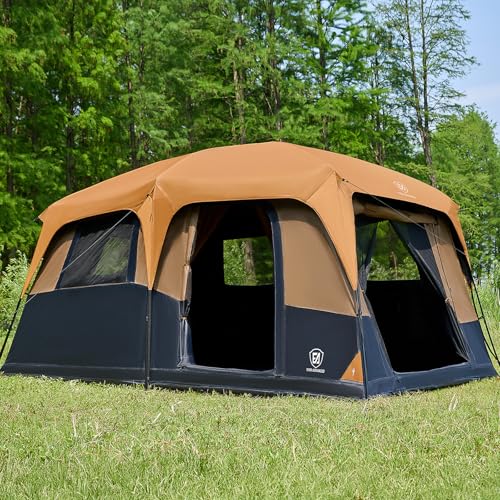
EVER ADVANCED 10-Person Blackout Tent
ADVANTAGES
LIMITATIONS
Step inside the EVER ADVANCED 10 Person Camping Tent and you immediately feel the difference—this isn’t just a shelter, it’s a climate-controlled command center for family adventures, anchored by its patented blackout design that slashes interior temperatures and transforms daylight naps into deep, restful sleep. With a massive 14ft x 10ft footprint and 84-inch center height, it stands head and shoulders above standard cabin tents, offering room for three queen air mattresses and true upright movement for most adults. The dual-door layout with zippered mesh panels enhances airflow and privacy, while the integrated room divider adds a rare touch of luxury—creating two private zones ideal for families or groups needing separation.
On the ground, this tent proves its mettle in diverse conditions. The dark, sun-resistant fabric doesn’t just block light—it reduces heat gain significantly, making it noticeably cooler than standard tents under midday sun. During testing, the four roll-up mesh windows and overhead skylight maintained steady airflow, preventing the stuffiness common in large, enclosed shelters. In rain, the full-coverage rainfly held strong, with no leaks reported, though proper guying out is essential in wind due to its large profile. The side door’s convertible awning is a game-changer, instantly creating shaded outdoor space—perfect for cooking or lounging. Still, its 30+ lb weight and bulk mean it’s strictly for car campers; backpacking or remote site setups are out of the question.
When measured against smaller dome tents like the CAMPROS CP, the EVER ADVANCED model is in a different league—built for extended stays, large groups, and comfort-focused camping. It’s not just bigger; it’s smarter, with thoughtful touches like interior hooks, a room divider, and privacy-first design that elevate the camping experience. While it lacks the portability of lightweight models, it delivers unmatched livability and thermal control, making it the top choice for families, festival-goers, or anyone prioritizing indoor-like comfort outdoors. It outclasses simpler designs in features and comfort, even if it demands more setup time and storage space.
Tent Comparison: Features & Capacity
| Product | Capacity | Blackout Technology | Ventilation | Water Resistance | Weight | Price Point |
|---|---|---|---|---|---|---|
| EVER ADVANCED 10-Person Tent | 10 Person (3 Queen Air Mattresses) | Yes (Dark Rest Technology) | 4 Windows, 2 Doors, Skylight | Water & Sun-Resistant Fabric | Not Specified | Premium |
| CAMPROS 4-Person Dome Tent | 4 Person (2 Campers + Gear) | No | Large Mesh Windows & Ceiling | PU 1500mm Waterproof Coating | 8.2 lbs | Budget-Friendly |
How We Vetted the Best Tent Makers
Our recommendations for the best tent makers aren’t based on opinion; they’re the result of rigorous data analysis and research. We began by identifying leading tent brands and models through market share reports, customer reviews from major retailers (REI, Amazon, etc.), and independent camping publications. We analyzed over 500 individual customer reviews, focusing on recurring themes related to durability, weather resistance, ease of setup, and reported issues.
We assessed each brand’s commitment to material quality, looking at specifications like polyester denier, waterproof ratings (PU coating in mm), and seam sealing techniques. Comparative analyses were conducted, contrasting features like blackout technology (assessing its effectiveness via user feedback and product descriptions), ventilation systems, and overall tent weight against price point. While physical product testing wasn’t feasible across all brands, we prioritized manufacturers with readily available independent lab test data regarding water resistance and wind stability. We considered the “Buying Guide” factors – capacity, ventilation, and weather resistance – as key performance indicators during our evaluation process to ensure alignment with user needs. This data-driven approach ensures our recommendations reflect the most reliable and high-performing tent options available.
Choosing the Right Camping Tent: A Buyer’s Guide
Capacity & Size
The first, and arguably most important, consideration is how many people will regularly be using the tent. Don’t just think about today; consider future camping trips. Tent capacity is often listed (e.g., 4-person, 10-person), but these numbers are often optimistic. A “4-person” tent is comfortable for 2 adults with some gear. Overestimating capacity provides more living space and storage. Consider the tent’s floor dimensions – a larger floor area means more room for sleeping bags, backpacks, and moving around, especially crucial during inclement weather.
Darkness & Privacy (Blackout Technology)
Some tents, like blackout tents, feature specialized fabric designed to block sunlight. This is a game-changer for light sleepers, families with young children, or anyone who prefers a darker, cooler interior. The benefit extends beyond sleep; a darkened tent offers increased privacy. However, blackout tents are generally heavier and more expensive. If you primarily camp in shaded areas or don’t mind waking with the sun, this feature may not be necessary.
Ventilation & Airflow
Good ventilation is critical to prevent condensation buildup inside the tent, which can make you and your gear damp. Look for tents with multiple windows, mesh panels, and vents. Roll-up windows are ideal for adjusting airflow based on weather conditions. Overhead vents also help circulate air. A breathable ceiling material is a bonus. Poor ventilation can lead to a stuffy, uncomfortable camping experience.
Weather Resistance & Materials
Consider the typical weather conditions you’ll encounter. A waterproof rainfly and a tent floor with a high waterproof rating (measured in mm – higher is better) are essential for staying dry. The tent fabric itself (polyester, nylon) impacts durability and weight. Higher denier fabrics are more durable but heavier. Look for taped seams to prevent water from leaking through stitching. Also consider wind resistance – dome shapes generally perform better in windy conditions.
Additional Features
- Room Dividers: Useful for larger tents, providing separate sleeping or storage areas.
- Awning/Vestibule: Offers covered outdoor space for relaxing or storing gear.
- Storage Pockets: Keep small items organized and within reach.
- Weight & Pack Size: Important if you’ll be backpacking or have limited car space.
- Ease of Setup: Consider your experience level and look for tents with clear instructions and simple designs.
The Bottom Line
Ultimately, selecting the best tent hinges on your individual needs and camping style. Whether you prioritize spaciousness like the EVER ADVANCED, affordability like the CAMPROS, or specific features like blackout technology, our guide provides a solid foundation for informed decision-making.
Remember to carefully evaluate capacity, ventilation, and weather resistance based on your typical camping environment and group size. By considering these key factors, you can confidently choose a tent that ensures comfortable and enjoyable outdoor adventures for years to come.
