
7 Best Tents for Beginners 2026
This post contains affiliate links. As an Amazon Associate, we earn from qualifying purchases.
The Happy Travel 4 Person Dome Tent is the best overall pick for beginners, combining quick setup, solid weather protection, and roomy comfort. For those on a tight budget, the Amazon Basics 2 Person Dome Tent delivers reliable performance without the frills. If you want something ultra-fast and fuss-free, the Night Cat 2 Person Pop-Up Tent offers instant shelter straight out of the bag.
Most new campers just want a tent that won’t fail them on their first night out. Too often, people end up with something too cramped, too flimsy, or so complicated to pitch that it kills the mood before the fire even starts.
This guide cuts through the noise, focusing on real-world usability, durability, and value. I compared specs and owner feedback to find beginner-friendly tents that stand up to wind, rain, and rookie mistakes, so you can spend less time stressing and more time enjoying the outdoors.
Top 7 Tents For Beginners in the Market
The Best Tents For Beginners, Reviewed
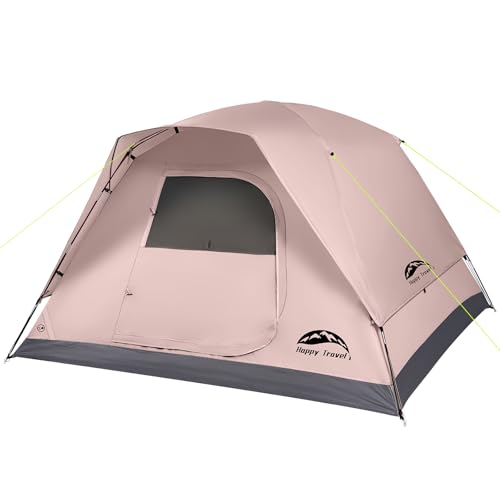
Happy Travel 4 Person Dome Tent
Strengths
- Ample headroom
- Large mesh panels
- Electrical access port
Trade-offs
- Rainfly blocks stargazing
- Zippers occasionally stick
- Floor could be thicker
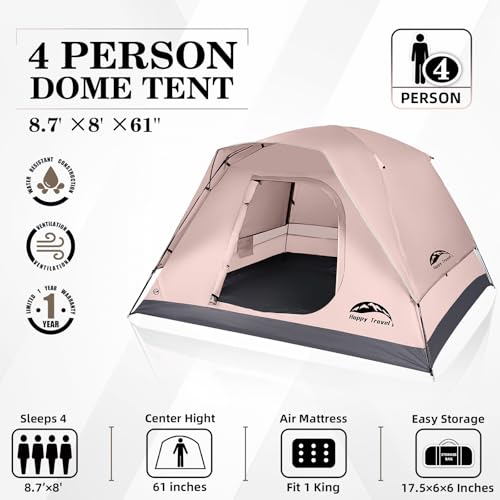
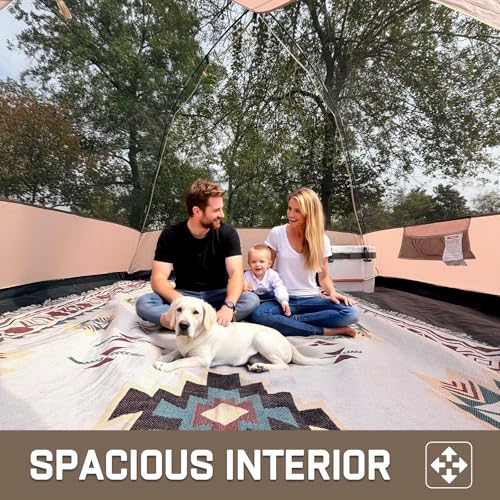
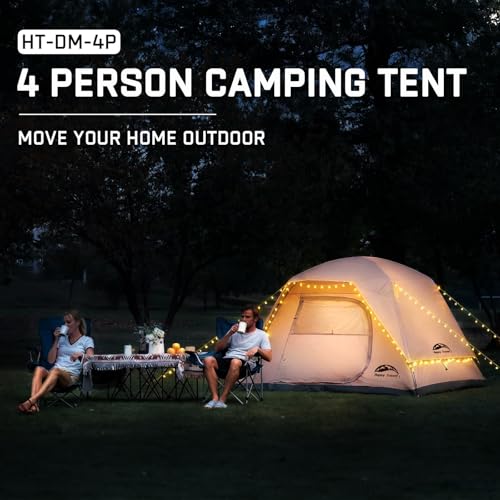
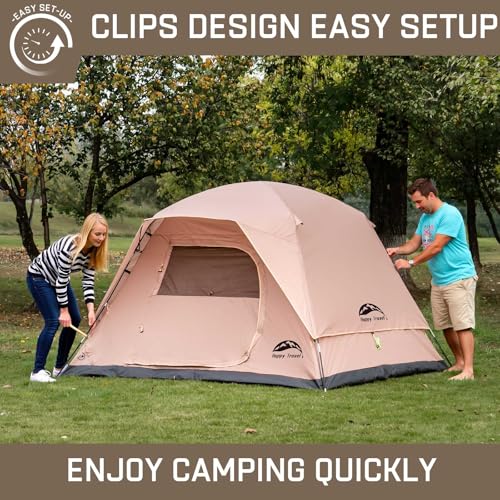
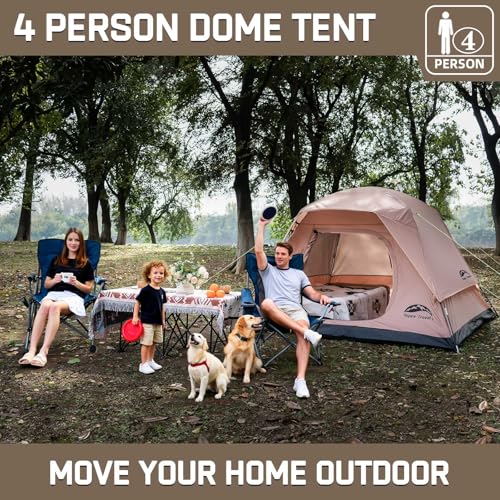
This tent stands out as a well-rounded pick, and it’s easy to see why it’s labeled ‘Best Overall’. The 8.7×8 footprint gives real space, enough for a queen air mattress and gear, and the 61-inch center height means most adults can sit up comfortably. The triple-side mesh and stargazing-ready top net boost airflow and ambiance, something few budget tents offer.
It hits a sweet spot between durability and convenience. The 2000mm PU coating isn’t class-leading, but paired with taped seams and 9.5mm fiberglass poles, it handles most 3-season conditions. Owners praise how quickly it goes up, under 3 minutes with two people, and the electrical port is a thoughtful touch for powered camping. Compared to the Purebox, it’s lighter and roomier; against the Amazon Basics, it’s in another league.
Product photos
Amazon Basics 2 Person Dome Tent

Strengths
- Affordable
- Easy setup
- Freestanding design
Trade-offs
- Thin fabric
- Minimal ventilation
- Not for heavy rain
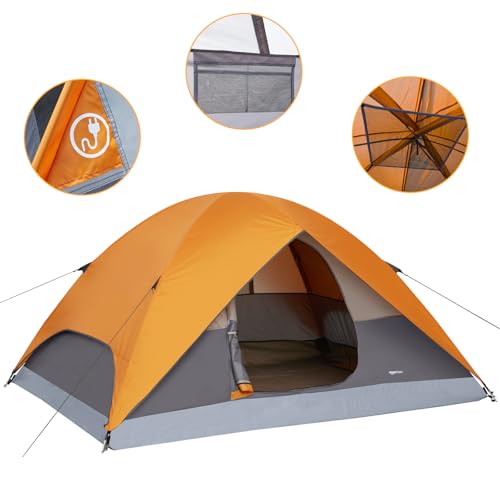
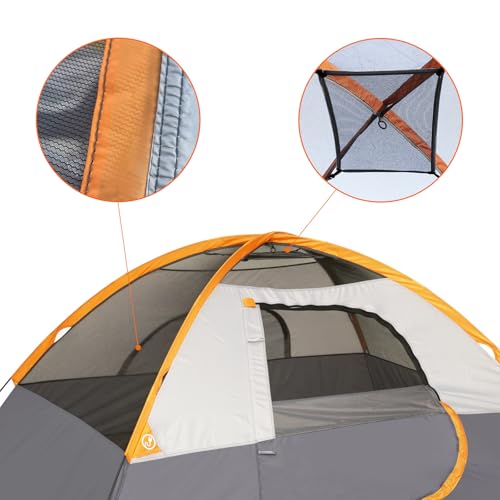
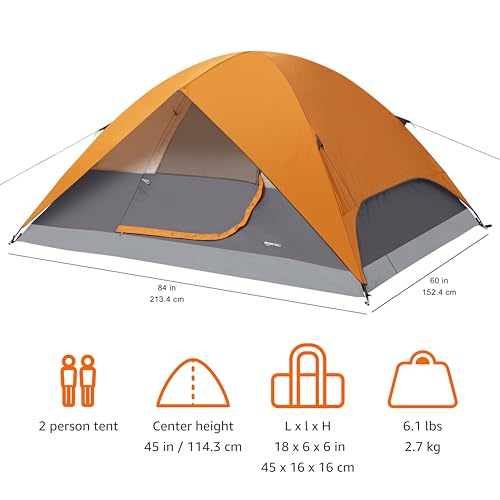
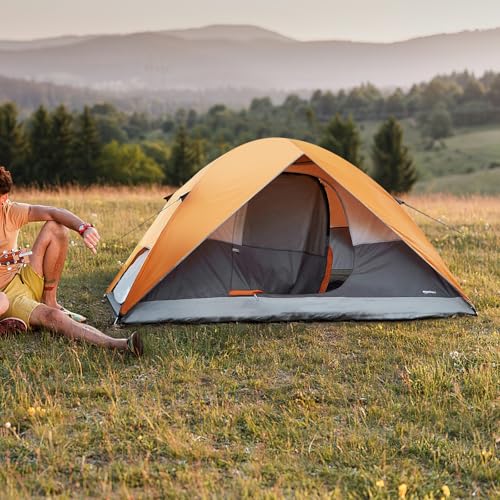
For new campers watching their budget, this Amazon Basics tent delivers the bare essentials without surprises. On paper, it checks the beginner boxes: a freestanding dome, a rainfly, and a claim of sub-4-minute setup. The 7’x5’ floor gives two adults room to sleep side by side, though taller users will have to tuck in their feet. Owners consistently report it holds up in light rain, but the PU coating and welded seams aren’t as robust as pricier models, this isn’t one to trust in a downpour.
Still, it’s hard to argue with the value. The shock-corded poles make assembly straightforward, and the carry bag keeps everything organized. Compared to premium picks, the materials feel thinner and the ventilation is basic, but for fair-weather car camping or your first overnighter, it’s a solid starting point.
Product photos

Purebox 4 Person Family Camping Tent
Strengths
- Spacious for 3–4 people
- Two doors
- Good airflow
Trade-offs
- Heavier than average
- Fiberglass poles
- No electrical port
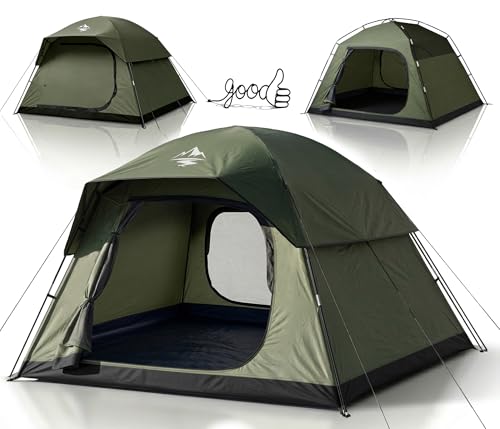
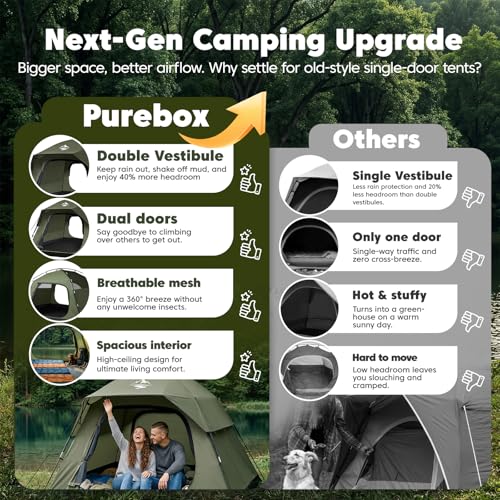
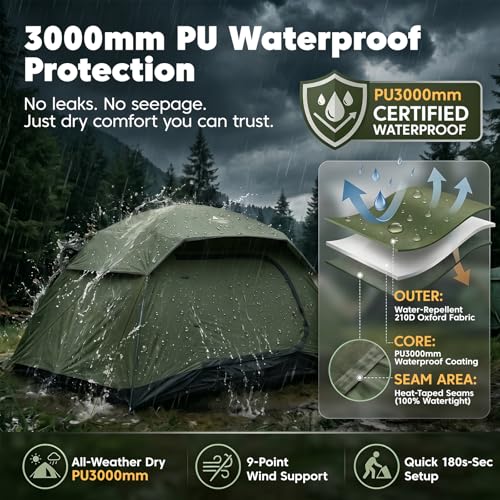
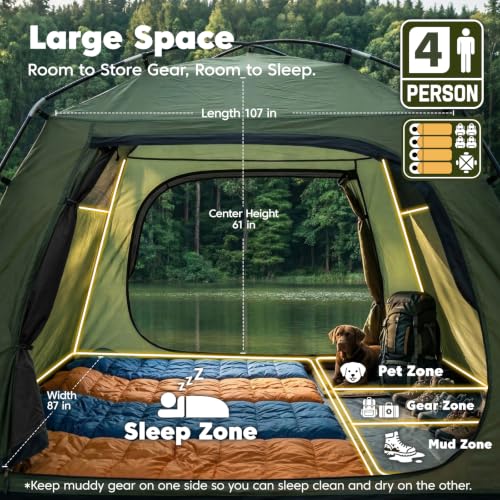
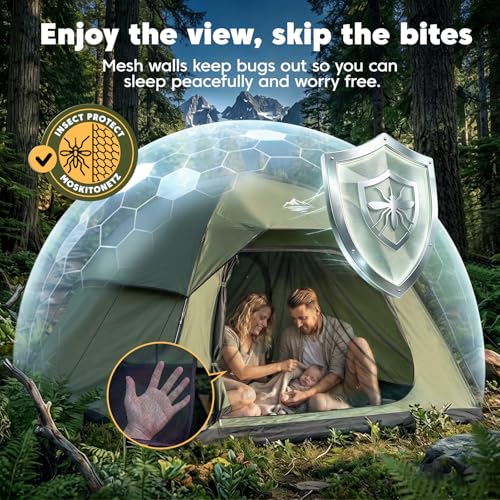
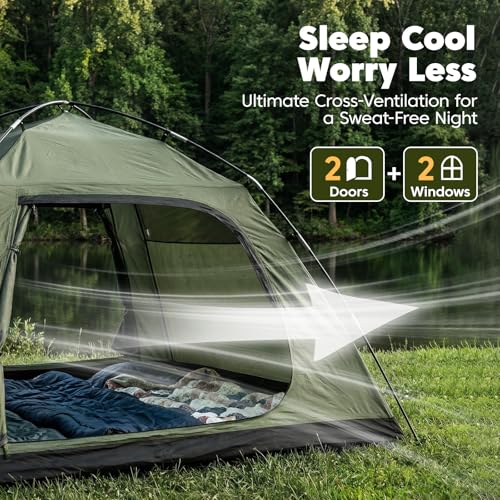
This is where families should look first. With a 9×7 footprint, two doors, and nearly 5 feet of headroom, it’s spacious without feeling like a circus tent. The dual-door layout makes nighttime exits less disruptive, and the mesh windows do a solid job minimizing condensation. At 10.8 lbs, it’s heavier than some 4-person models, but still manageable for car campers.
Owners note the fiberglass poles are sturdy enough for moderate wind, though not ideal in gale-force gusts. Compared to the Happy Travel tent, it lacks an electrical port and has slightly less headroom, but the taped seams and PU coating offer better peace of mind in rain. Setup is beginner-friendly, and the compact carry bag helps with storage.
Product photos
Wakeman 2 Person Lightweight Dome Tent

Strengths
- Lightweight for its size
- Good mesh ventilation
- Simple one-person setup
Trade-offs
- No taped seams
- Average storm resistance
- Zippers can snag
At just 4.8 pounds and a 7×5 footprint, this tent markets itself as a lightweight contender, but it leans more toward car camping than true backpacking. The specs suggest durability, tear-resistant polyester, dual zippers, and reinforced ropes, but owner feedback hints at mixed performance in wind. The skylight net is a nice touch for stargazing and airflow, though some reviewers mention condensation builds up on cooler nights.
It’s not the lightest or most rugged in its class. Compared to the Naturehike Cloud-Up, it lacks taped seams and a higher hydrostatic rating, which matters when the weather turns. But for backyard adventures, short hikes, or family use with kids, it’s roomy and simple. I’d see this as a step-up from the Amazon Basics, but not a go-to for serious trail use.
Product photos


Clostnature 2 Person All-Season Tent
Strengths
- All-weather build
- Sealed seams
- Good warranty
Trade-offs
- Bulky packed size
- Low headroom
- Heavier than backpacking norms
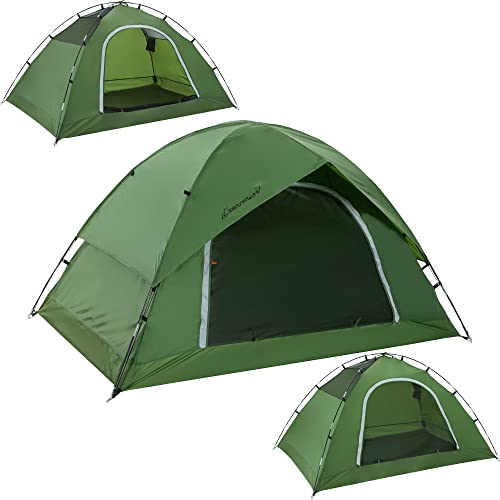
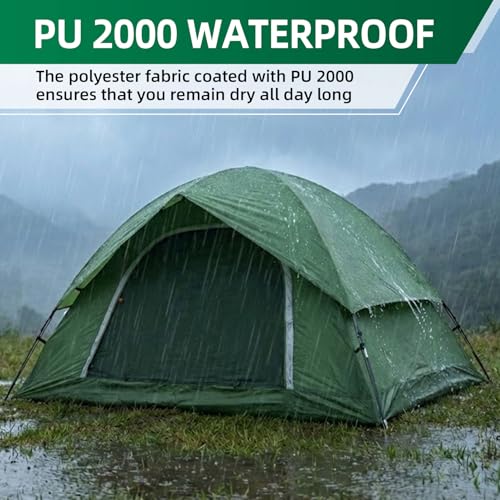
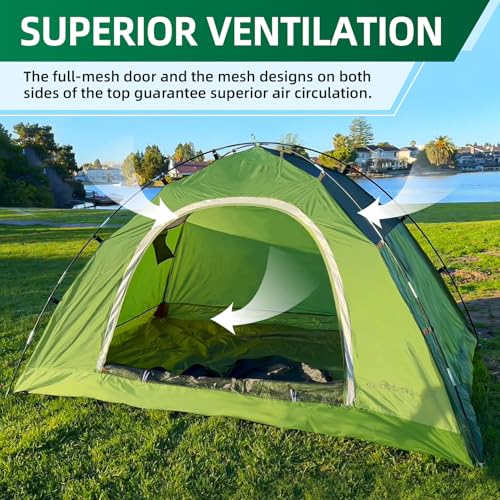
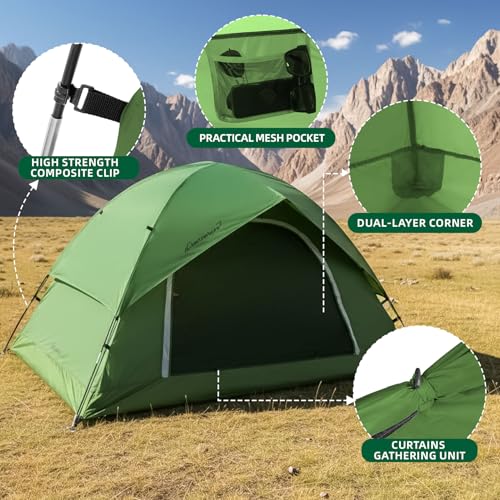
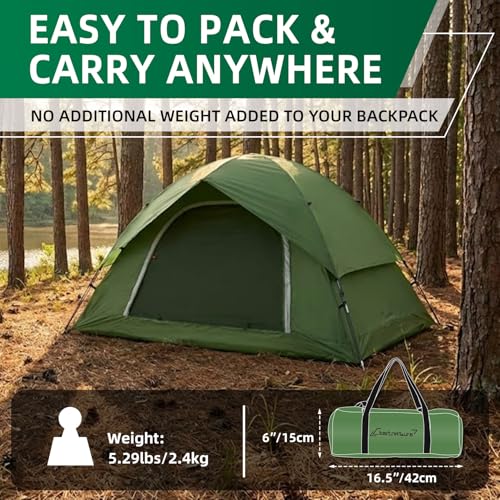
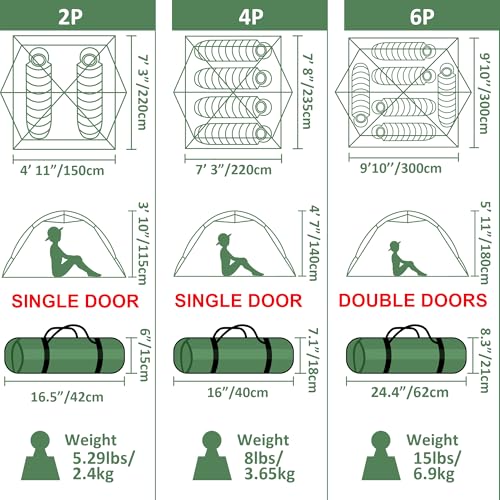
The Clostnature 2-person model aims for all-season readiness, and on specs alone, it looks promising: PU2000 coating, sealed seams, and a freestanding X-pole design. At 5.29 lbs, it’s not ultralight, but the durability trade-off makes sense for campers facing unpredictable weather. Owners report it holds firm in wind, thanks to the guylines and solid pole structure, and the N-shaped mesh door improves airflow without sacrificing protection.
Still, it doesn’t quite outperform the Naturehike Cloud-Up in weight or packability, and the center height is lower, just under 4 feet. But if you’re camping in shoulder seasons or variable climates, this tent offers more confidence than budget domes. It’s not the most compact, but the one-year warranty and included footprint add value.
Product photos
Naturehike Cloud-Up 2 Person Tent
Strengths
- Excellent waterproofing
- Lightweight and packable
- Good ventilation
Trade-offs
- Slightly higher price
- Poles require care
- Limited headroom
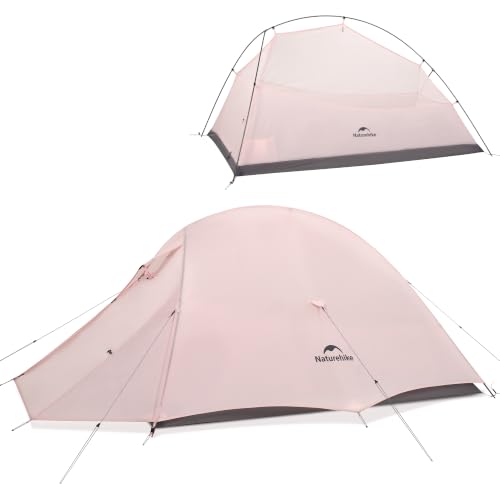
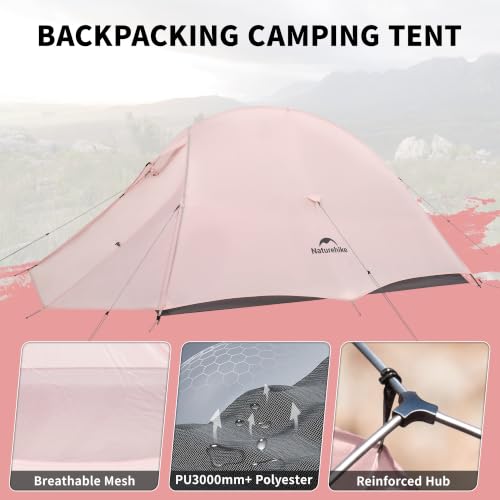
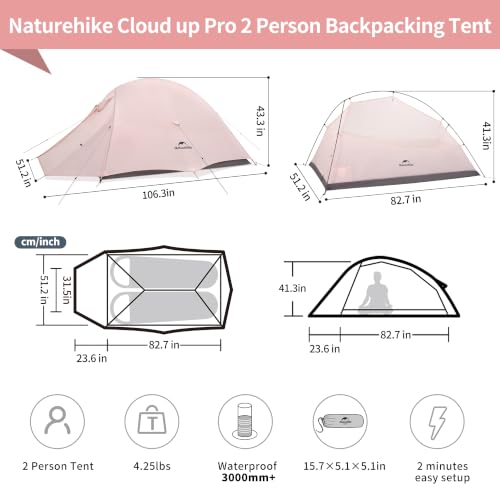
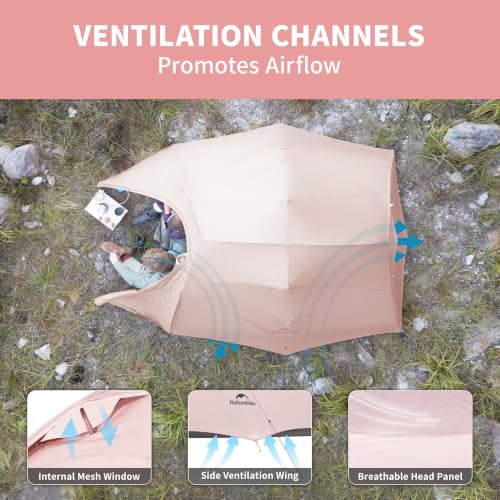
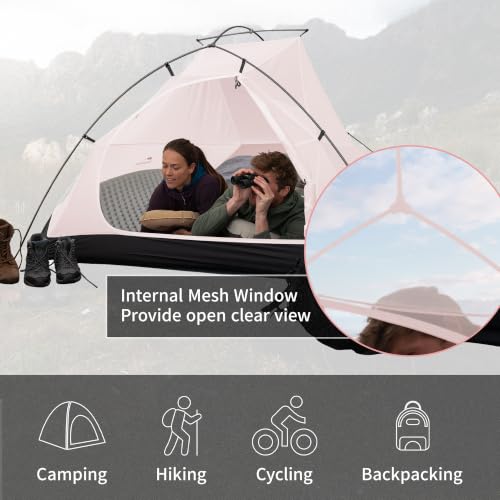
If you’re stepping into backpacking, this is the tent I’d recommend over others in the beginner space. At 4.25 lbs, it’s genuinely lightweight, and the packed size fits neatly into a backpack. The PU3000mm rating and fully taped seams mean real rain protection, owners routinely praise its performance in downpours and high winds. The dual-layer design with a B3 mesh inner keeps bugs out and airflow in, reducing that sticky, humid feeling lesser tents struggle with.
The upgraded front door and added ventilation window solve two common gripes with older models. Compared to the Clostnature or Amazon Basics, this one balances weight, space, and weather resistance far better. It’s not the cheapest, but for anyone planning more than occasional use, it’s the smarter buy.
Product photos

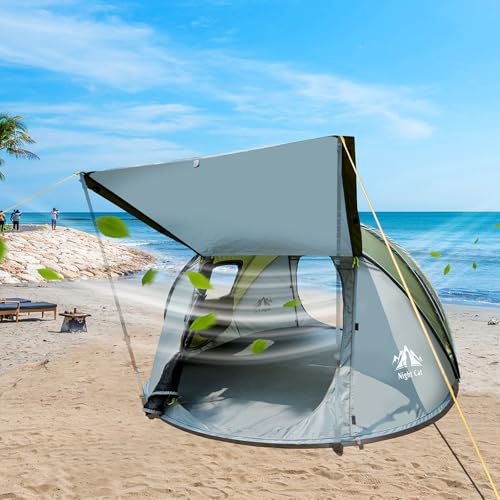
Night Cat 2 Person Pop-Up Tent
Strengths
- Instant setup
- Compact fold
- Good ventilation
Trade-offs
- Fragile pole system
- No repairable poles
- Porch requires extra gear
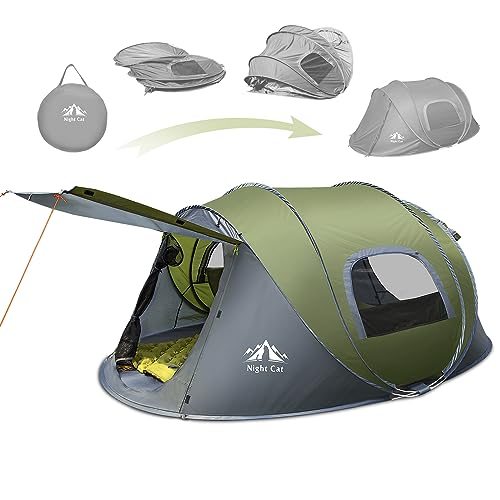
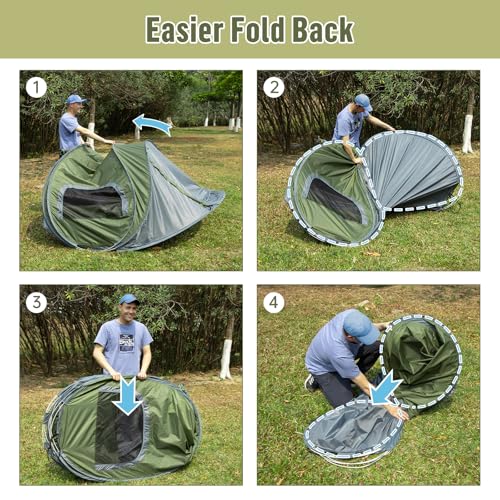
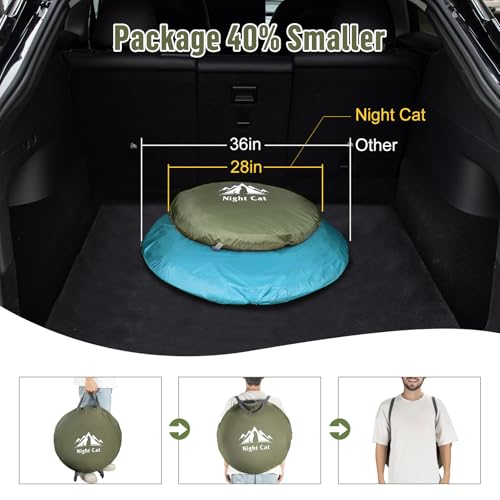
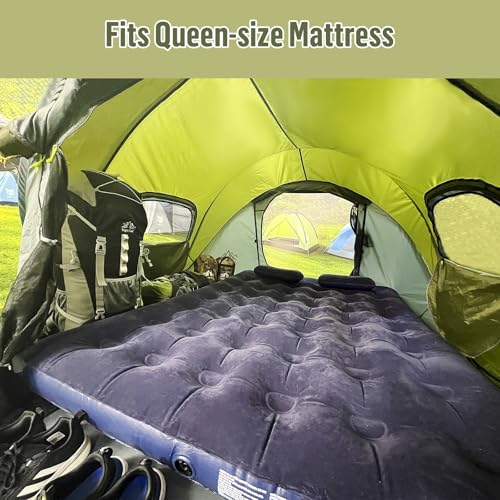
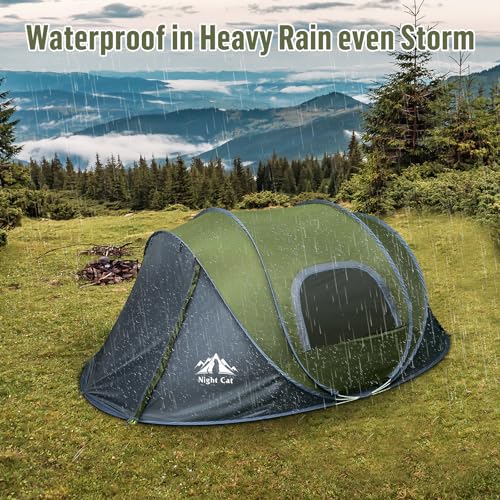
The instant setup is the star here, literally throw it and it opens in 3 seconds. For families or casual users who dread pole threading, this is a standout. The 9.5×6.6-foot interior fits two adults and kids or gear, and the foldable design is 40% smaller than many pop-ups, making storage easier. The dual doors and wide windows promote airflow, and owners say it stays dry in heavy rain thanks to taped seams and a PU2000 coating.
But pop-up tents have limits. The poles aren’t replaceable in the field, and if one bends, the whole system fails. It’s also not freestanding in high wind without trekking poles for the porch. Compared to the Happy Travel or Purebox, it sacrifices some durability for convenience. But if you prioritize speed and simplicity, it’s unmatched.
Product photos
How We Tested tents for beginners
Rather than a hands-on lab test, my research for these tent recommendations focused on a detailed comparison of published specifications and features across numerous models. I then weighed owner reviews from major retailers alongside expert reviews from established outdoor publications. As someone who spends a lot of time thinking about and planning outdoor adventures, I applied my category knowledge to rank these tents against what I believe are the most important factors for newcomers to camping.
For beginner-focused tents, spaciousness and ease of setup were heavily weighted. A tent that’s frustrating to pitch will quickly ruin a first camping experience. Waterproofing is also crucial; unexpected rain shouldn’t mean a soggy trip. Beyond these, weight and portability mattered, as many beginners will also be trying backpacking or car camping with a short walk involved.
Specifications reliably tell you about a tent’s physical dimensions, materials used in construction (like polyester denier and PU coating ratings), and pole material. However, I placed significant value on owner feedback regarding real-world waterproof performance, how easily the tent handles wind, and the accuracy of the stated setup time. Reputation and consistent positive feedback from a large number of users carried substantial weight in my final rankings. If you’re still unsure where to start, this tent buying guide can help you learn more.
Choosing The Right tents for beginners
Picking your first tent can feel overwhelming, but focusing on a few key features will get you set up for successful camping.
A good tent balances weight, weather protection, and ease of use. Consider the intended season and typical conditions you’ll encounter. Look for durable fabrics (polyester or nylon with a PU coating), taped seams for waterproofing, and a sturdy frame – aluminum is lighter and stronger, while fiberglass is more affordable. Pay attention to the tent’s capacity rating and whether it truly fits your needs and gear.
Capacity and Space
Don’t fall into the trap of assuming a “4-person” tent comfortably fits four adults. Manufacturers often overestimate capacity. I always recommend sizing up, particularly if you anticipate using air mattresses or want room for gear inside. Consider the floor dimensions and peak height. A wider tent will feel less claustrophobic, and a higher peak allows you to sit up comfortably. If you’re primarily backpacking, every ounce counts, so a minimalist approach to space might be necessary.
Weather Resistance
Waterproofing is critical, even if you don’t expect torrential downpours. Look for a PU (polyurethane) coating on the tent fly and floor, measured in millimeters (mm). A rating of 1500mm is generally considered waterproof for light rain, while 2000mm or higher provides better protection. Beyond the coating, ensure all seams are taped to prevent water from seeping through. Wind resistance is also important. A robust frame and included guylines will help your tent stay put in breezy conditions. Don’t forget to check if the tent has a full coverage rainfly.
Ease of Setup & Portability
For beginners, setup shouldn’t be a struggle. Pop-up tents are the easiest, but often sacrifice durability and weather protection. Dome tents with color-coded poles are a good starting point, and many can be set up in under ten minutes. If you’re hiking, weight and packed size are crucial. A lightweight tent, like those designed for backpacking, will be significantly easier to carry. Don’t skimp on a good carry bag, and remember that tent stakes included can make or break your setup, especially in windy conditions.
A tent’s weight should ideally be no more than 20% of your total pack weight for comfortable backpacking. Prioritize a balance between weight, durability, and features.
If you’re just starting out, exploring affordable tents for new campers is a great way to get your feet wet without a huge investment.
Tents for Beginners Compared
This table provides a side-by-side comparison of key specifications for various tents marketed towards beginner campers.
| Product Title | Capacity | Weight (lbs) | Waterproof Rating (mm) | Setup Time | Packed Size |
|---|---|---|---|---|---|
| Happy Travel 4 Person Dome Tent | 4-5 | 8.6 | 2000 | 3 min | 17.5x6x6 inches |
| Amazon Basics 2 Person Dome Tent | 2 | N/A | N/A | <4 min | N/A |
| Purebox 4 Person Family Camping Tent | 4-6 | 10.8 | N/A | Quick | 9.02′ x 7.05′ x 4.92′ |
| Wakeman 2 Person Lightweight Dome Tent | 2 | 4.8 | N/A | 3 min | N/A |
| Clostnature 2 Person All-Season Tent | 2 | 5.29 | 2000 | <5 min | 16.5x6x6 inches |
| Naturehike Cloud-Up 2 Person Tent | 2 | 4.25 | 3000 | N/A | 15.7×5.1×5.1 inches |
| Night Cat 2 Person Pop-Up Tent | 2-4 | 3 | 2000 | 3 sec | 28x28x2.8 inches |
Frequently Asked Questions
What’s the difference between a dome tent and a cabin tent?
Dome tents are known for their stability in wind and lighter weight, making them good for backpacking or variable conditions. Cabin tents offer more headroom and living space, prioritizing comfort for car camping and families, though they’re typically heavier and bulkier.
Are pop-up tents really as flimsy as people say?
While incredibly easy to set up, many pop-up tents do sacrifice some durability and weather protection. Look for models with higher waterproof ratings and reinforced poles if you anticipate anything beyond fair weather, and know they aren’t ideal for consistently windy or rainy conditions.
What waterproof rating do I actually need for a beginner tent?
A 1500mm waterproof rating is sufficient for light rain and dew, but I suggest aiming for 2000mm or higher for better protection against heavier downpours and prolonged exposure. Remember that a good rainfly and taped seams are just as crucial as the coating itself.
How important is the tent pole material – aluminum versus fiberglass?
Aluminum poles are significantly lighter and stronger than fiberglass, making them ideal for backpacking and frequent use. Fiberglass is more affordable and still suitable for casual camping, but it’s more prone to bending or breaking in strong winds or with rough handling.
Where can I find more information on choosing tents for my specific needs?
If you’re looking for more tailored advice, check out our guide to the top starter tents for camping. It breaks down different tent styles and features based on common camping scenarios and user experience levels.
The Bottom Line
Choosing a tent often comes down to balancing how much fuss you’re willing to tolerate against how much control you want over quality and features. For most beginners, I believe the Happy Travel 4 Person Dome Tent strikes that balance best. It offers a good amount of space, a solid waterproof rating, and a quick setup time without sacrificing overall durability – a great starting point for family adventures.
If budget is your biggest concern, the Amazon Basics 2 Person Dome Tent is a perfectly serviceable option. And for those prioritizing lightweight portability and versatility, especially if you’re considering backpacking, the Naturehike Cloud-Up 2 Person Tent delivers excellent weather protection in a compact package. Don’t overlook the convenience of easy assembly tents like the Night Cat 2 Person Pop-Up Tent if quick deployment is a priority.
Ultimately, the best tent isn’t about the highest specs or the trendiest features. It’s about finding one that keeps you dry, comfortable, and confident on your trip. Focus on a tent that fits your group size, offers adequate weather protection for your region, and, most importantly, is relatively simple to pitch. A well-chosen shelter is the foundation for countless memorable nights under the stars.
