
8 Best Tents for Cots of 2026
This post contains affiliate links. As an Amazon Associate, we earn from qualifying purchases.
The Night Cat 1-Person Cot Tent is the best overall choice for its 3000mm waterproof rating, durable build, and reliable fit, while the Night Cat Pop-up Cot Tent offers a solid, ultralight option for fast setup. For a budget-friendly combo, the Tangkula 2-Person Cot Tent brings decent value without major sacrifices.
If you’re using a cot, your tent needs to do more than just keep the rain off, it has to handle wind, minimize condensation, and actually fit without stress. Too many people buy based on price alone, only to end up with a flimsy shelter that leaks or collapses in a breeze.
As Chloé Bourgeois, I’ve spent years reviewing gear that holds up in real conditions, and this guide cuts through the noise. These picks are based on specs, owner feedback, and what actually matters when you’re sleeping elevated, waterproofing, frame strength, ventilation, and proper fit.
Top 8 Tents For Cots in the Market
The Best Tents For Cots, Reviewed
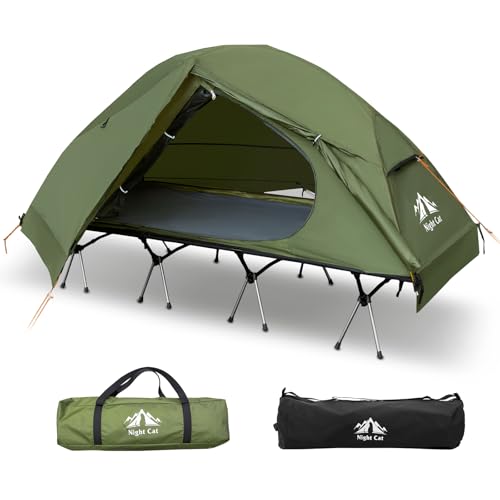
Night Cat Cot Tent Combo
Strengths
- Includes cot and tent
- Dual-height mode
- Stable 16-leg frame
Trade-offs
- Not ultralight
- Setup takes 5 minutes
- Rainfly not for storms
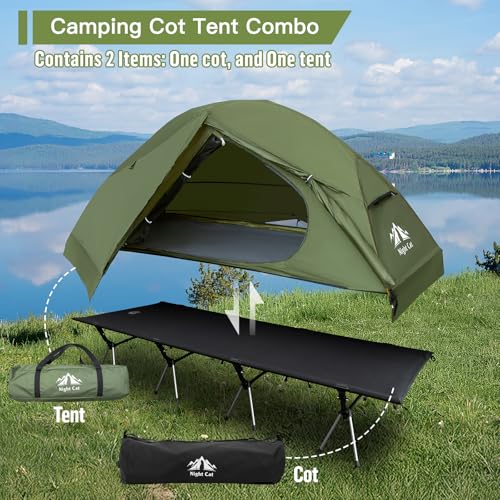
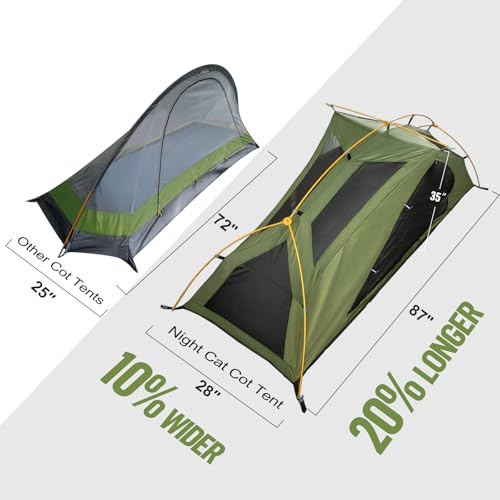
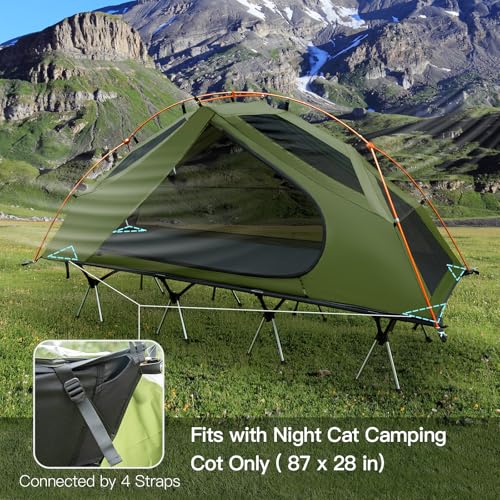
This is the one I’d recommend as the best overall for most users who want a reliable, well-designed cot tent combo. It includes both the cot and tent, uses 16 aluminum legs (4 more than most), and has a dual-height mode, low for firm ground, high for mud or sand. That kind of versatility is rare at this price. The ripstop nylon and PU 2000mm coating aren’t the highest spec, but owners confirm it stays dry in moderate rain, especially when staked out with guylines.
The 5-minute setup is realistic, and the color-coded poles help beginners. Ventilation is solid with mesh panels and adjustable windows, and the 330-pound weight limit means it won’t wobble. It’s not the lightest, but it’s not meant to be, this is a car camping workhorse. Compared to others, it strikes the best balance of durability, ease of use, and thoughtful design.
Product photos
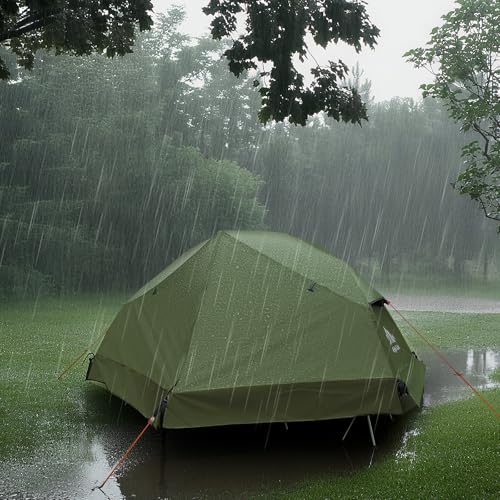

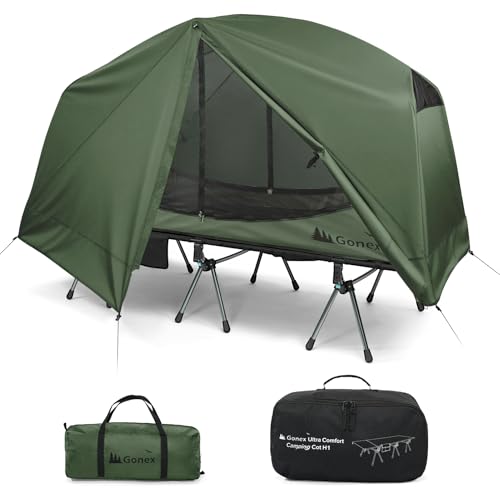
Gonex 31.5″ Tent Cot
Strengths
- Height adjustable
- Wide sleeping area
- Good ventilation
Trade-offs
- Not for heavy rain
- Takes 5 minutes to set up
- Slightly bulky pack size
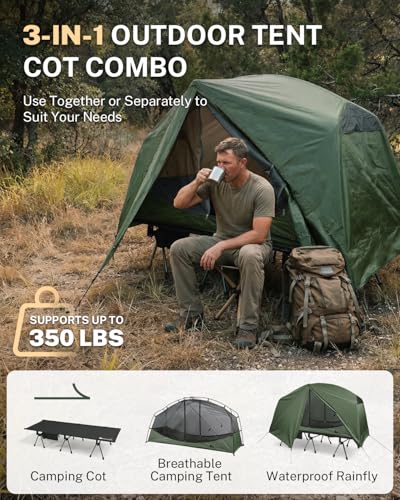
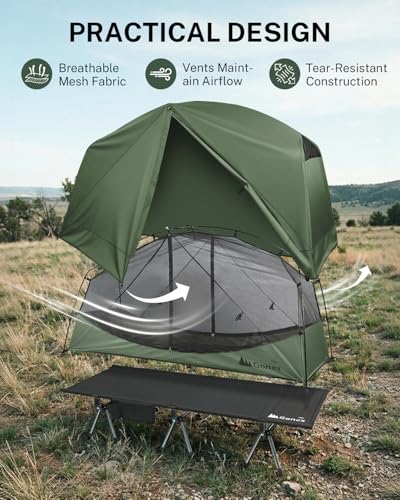
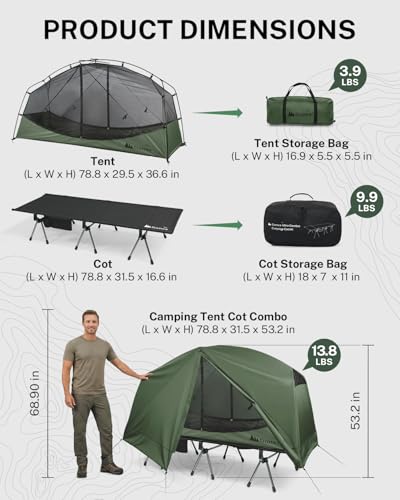
The height-adjustable frame is what makes this one stand out, being able to drop it to 5.9 inches for summer or raise it to 15.8 inches for muddy ground is smart design. That kind of adaptability is rare in cot tents, and owners appreciate the flexibility, especially when camping on uneven or damp terrain. The 31.5-inch width is generous, giving side sleepers room to move, and the 350-pound capacity means it won’t feel flimsy under heavier users.
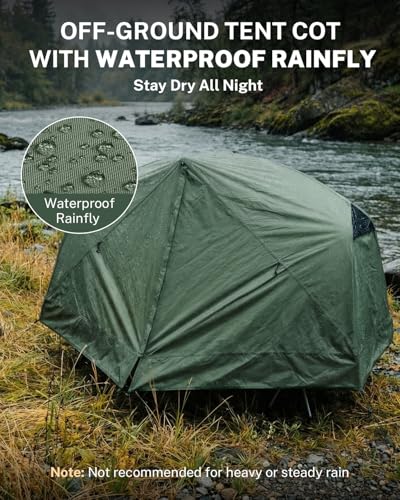
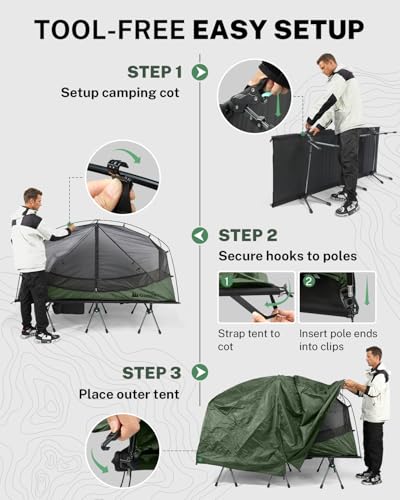
But the tent itself is a two-piece system, inner mesh and outer rainfly, and reviewers note it’s not built for heavy rain. The PU 3000mm rating sounds good, but the construction isn’t as robust as some all-in-one combos. Setup takes about 5 minutes, which is reasonable, but not instant. Still, the ability to fine-tune height and sleep wide makes this a sleeper hit for car campers who want comfort without sacrificing practicality.
Product photos
Night Cat 1-Person Cot Tent
Strengths
- Spacious for one
- Good waterproof rating
- Cot-compatible design
Trade-offs
- No included cot
- Basic ventilation
- Single-wall design
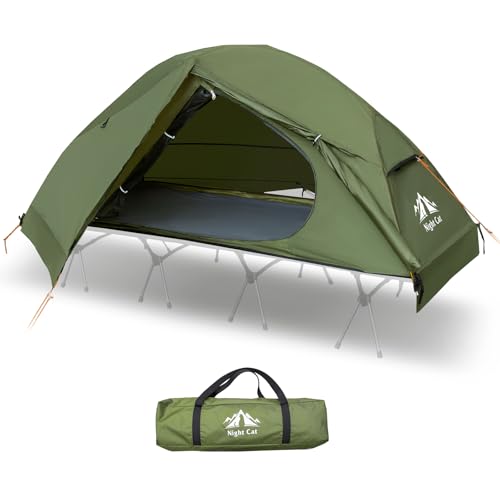
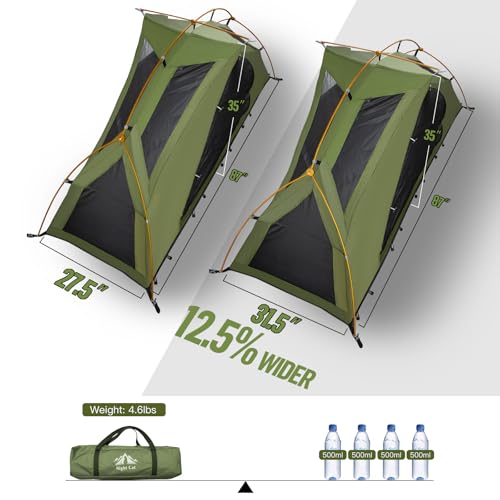
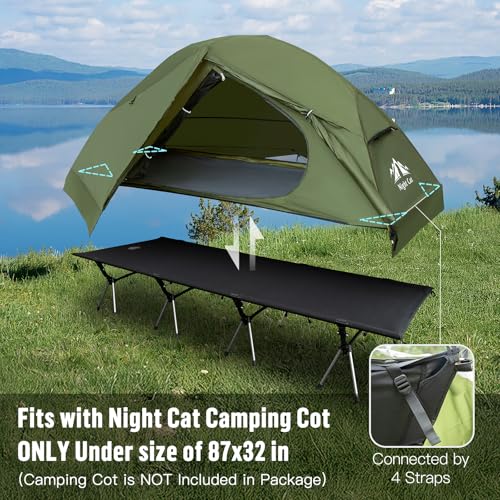
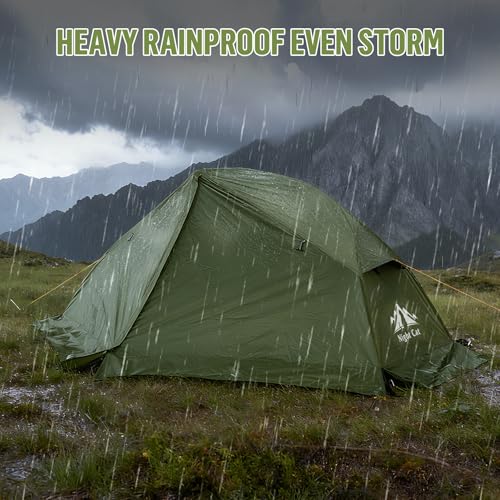
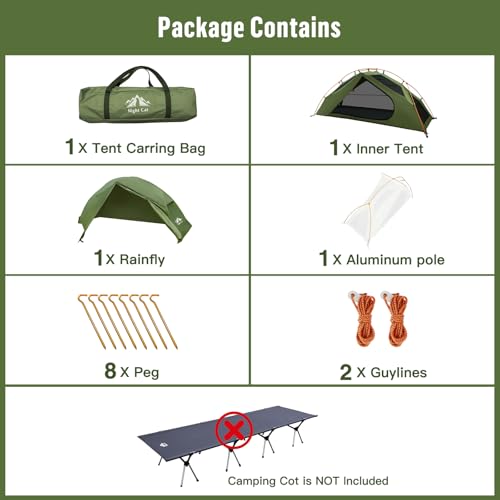
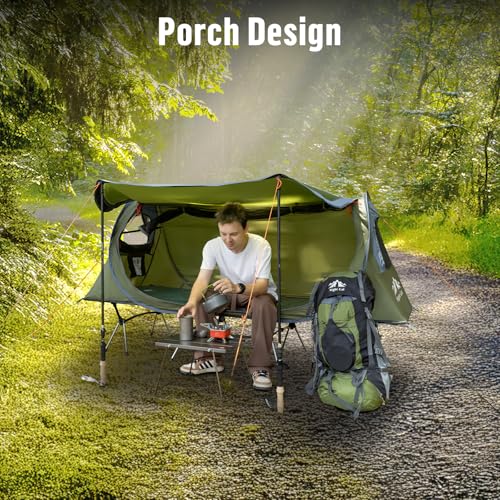
This tent stands out as a solid budget pick for solo hikers who want flexibility. On paper, the 87-inch length is a real win, it’s genuinely roomier than most 1-person models, and owners consistently report that taller users can lie flat without feeling cramped. The dual-use design, working either on the ground or mounted over a cot, adds versatility, though you’ll have to buy the cot separately. The PU 3000mm rating suggests decent rain resistance, and reviewers confirm it holds up in light downpours, but the single-wall construction means condensation can build up in humid conditions.
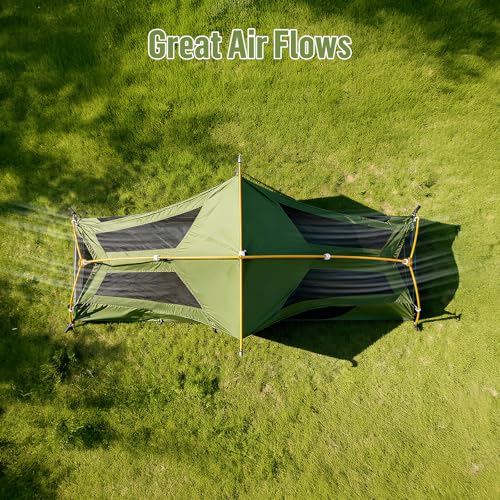
Ventilation is handled by mesh panels, which help with airflow and bug protection, but there’s no mention of dual-layer windows or adjustable vents, so airflow control is limited. The included stakes and guylines add stability, but this isn’t a four-season tent, it’s built for fair-weather trips. Still, for the price, it delivers more space and better weather resistance than many entry-level options.
Product photos
Night Cat Pop-up Cot Tent
Strengths
- Instant setup
- Good ventilation
- Compact packed size
Trade-offs
- Not wind-stable
- Cot not included
- Too heavy for backpacking
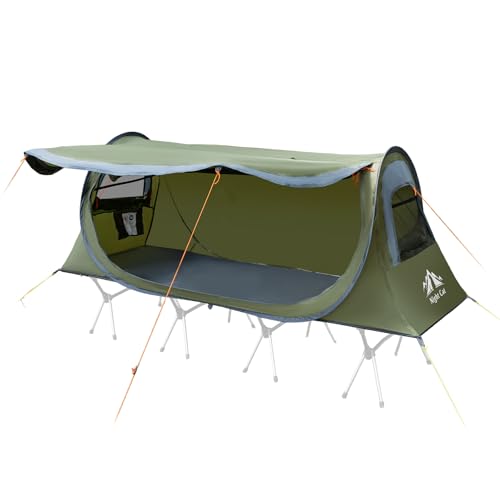
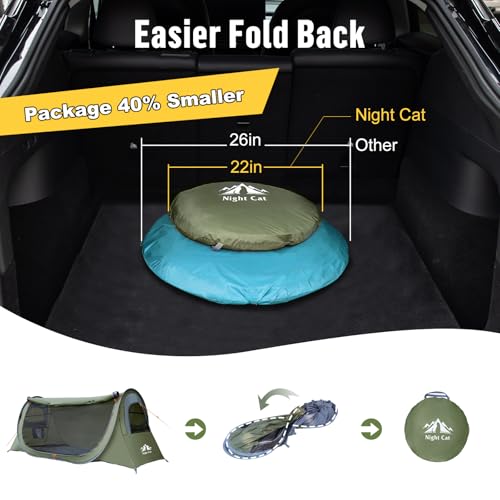
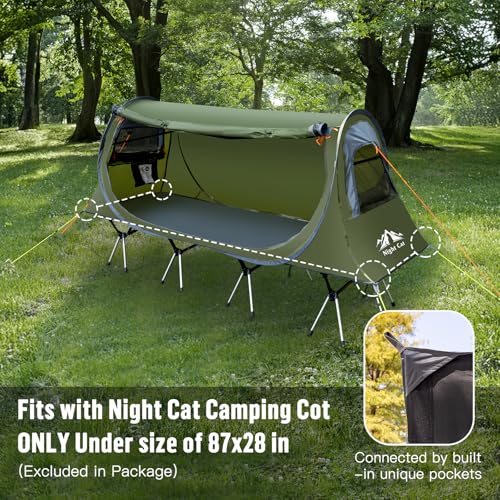
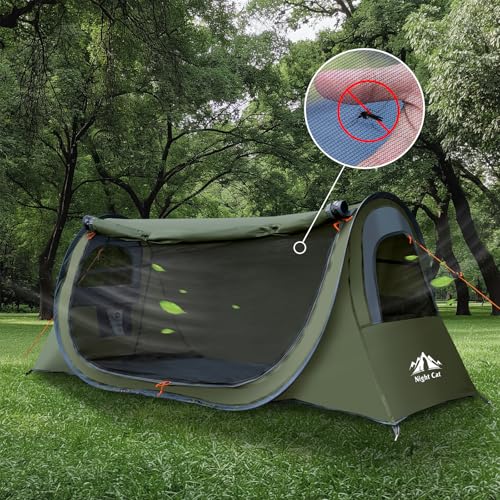
If you hate wrestling with poles, this pop-up model will catch your eye, the 3-second setup is a real selling point, and owners love how fast it unfolds. The tunnel design gives it more headroom and interior volume than dome-style pop-ups, and the 7.2-foot length fits most adults comfortably. It’s marketed to work with a Night Cat cot (sold separately), and the dimensions align well, making it a decent choice if you’re building your kit piece by piece.
But speed comes with trade-offs. The PU 3000mm coating and taped seams do their job in rain, but the low-profile shape isn’t great in strong winds, and some reviewers note it can feel tippy without proper guylines staked out. Also, the compact folded size is a plus for car campers, but at 3.3 lbs, it’s too heavy for serious backpacking. I’d pick this for weekend drives or beach trips where setup ease matters most.
Product photos

MARCHWAY Ultralight Tent Cot

Strengths
- Ultralight design
- Compact pack size
- Aircraft-grade frame
Trade-offs
- Lower weight limit
- Minimal weather protection
- No included rainfly
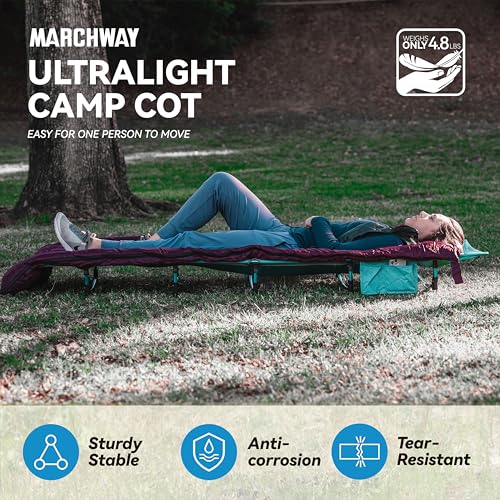
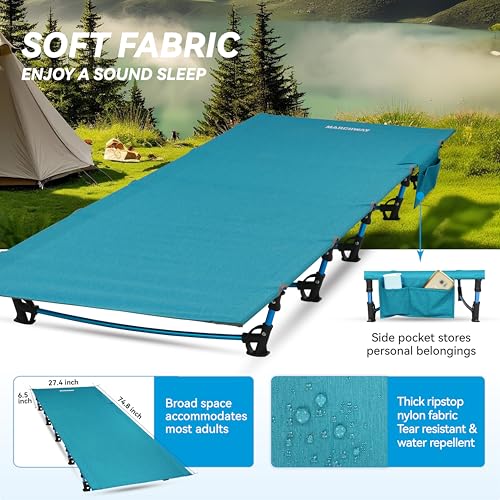
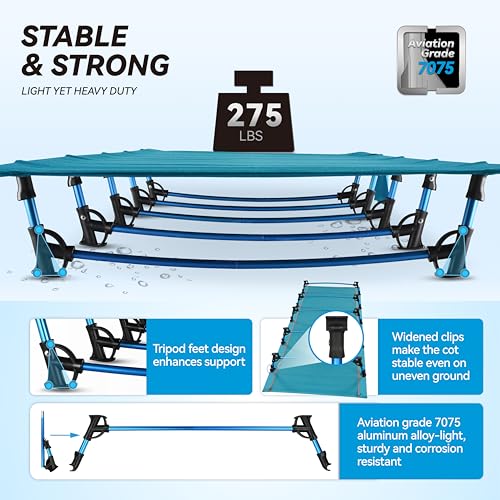
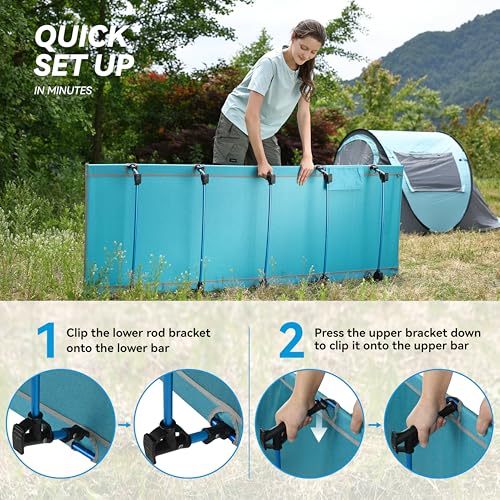
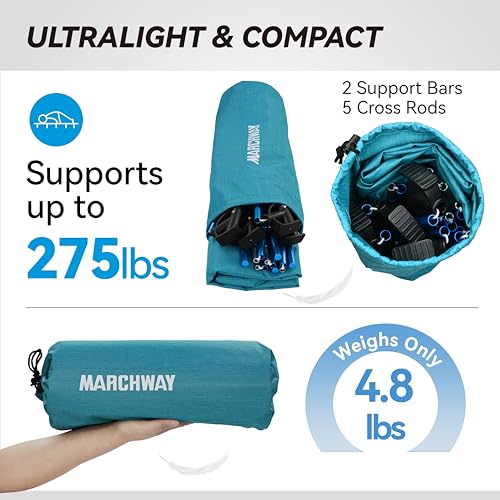
At 4.8 pounds, this is the lightest cot tent here, a serious advantage if you’re hiking in or packing light. The aircraft-grade aluminum frame and ripstop nylon keep weight down without sacrificing too much strength, supporting up to 275 pounds. Owners praise how compact it packs (just 15.7 inches long), making it ideal for base camp setups or minimalist overnights. The shock-corded poles make setup fast and tool-free, which matters when you’re tired at dusk.
But that lightness comes with limits. The weight capacity is lower than others, and the feet aren’t as wide, so it’s less stable on soft ground. It’s not a full tent, more of a bivy-style shelter, so don’t expect headroom or storage pockets. Still, for backpackers and mountaineers, this is the only cot tent here that won’t weigh you down. I’d pick it over bulkier models any time I’m hiking more than a mile to camp.
Product photos
Tangkula 2-Person Cot Tent
Strengths
- High weight capacity
- Durable 600D fabric
- Wheeled carry bag
Trade-offs
- Rainfly not stormproof
- Heavy for backpacking
- Bulkier than solo models
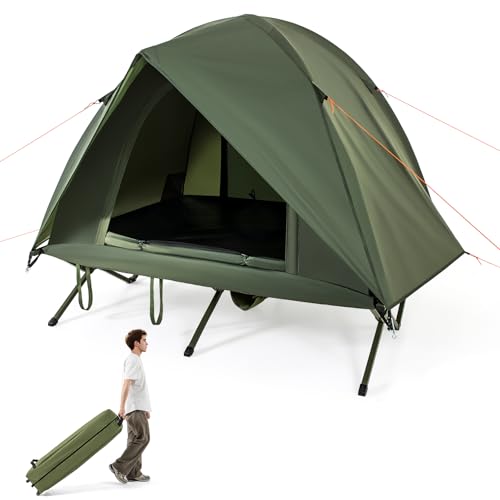
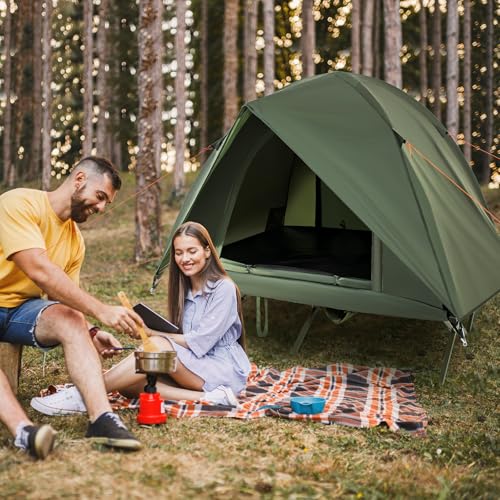
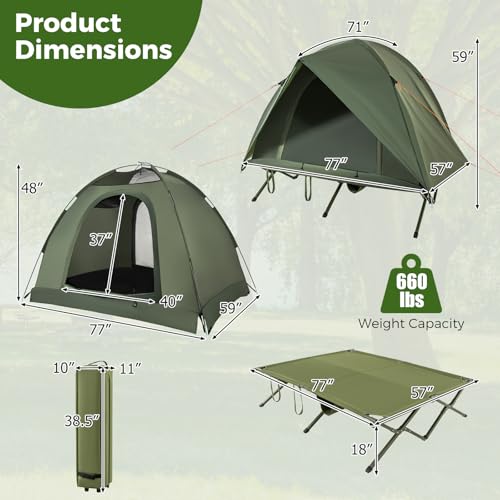
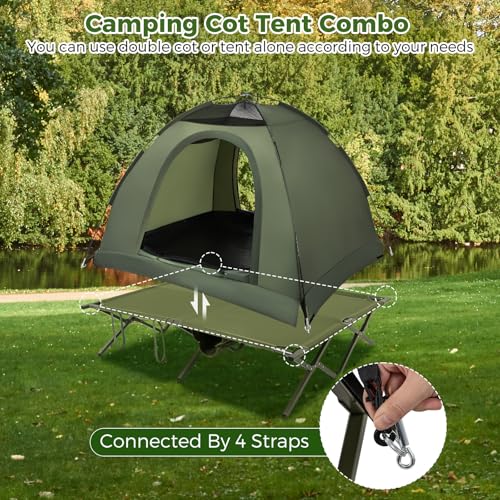
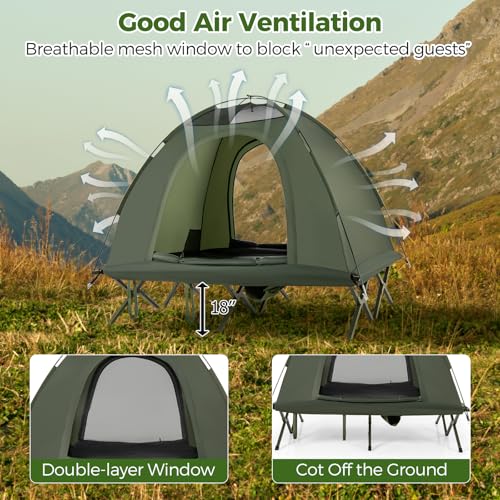
For couples or partners who want a stable, off-ground setup, this 2-person combo delivers. The 660-pound capacity means two adults can move around without stressing the frame, and the 600D Oxford fabric on the cot mat adds real durability. Owners like the dual-layer mesh windows, they keep bugs out while allowing airflow, and the removable rainfly makes it easy to adapt to changing conditions. The wheeled bag is a nice touch for transport, and setup is straightforward with buckles and clips.
The tent isn’t built for storms, the 2000mm PU rating is okay, but it’s not taped seams, so heavy rain will test its limits. Still, for spring through fall trips, it’s more than capable. I’d pick this over the single-person models if you’re sharing space, simply because the width and stability are noticeably better. It’s not ultralight, but that’s not the goal here.
Product photos
GYMAX 5-in-1 Camping Cot Tent

Strengths
- Includes sleeping bags
- Reversible mattress
- Wheeled carry bag
Trade-offs
- Not weatherproof
- Very bulky
- Zippers feel cheap
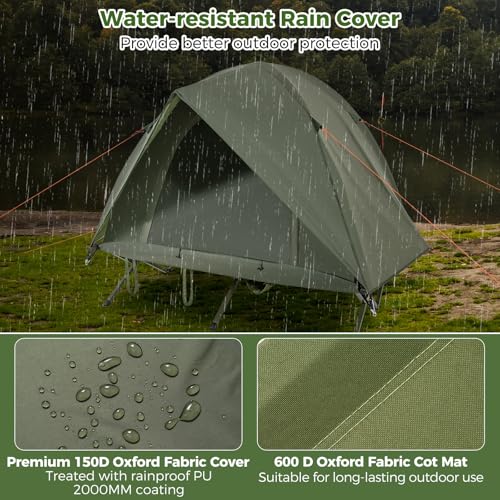
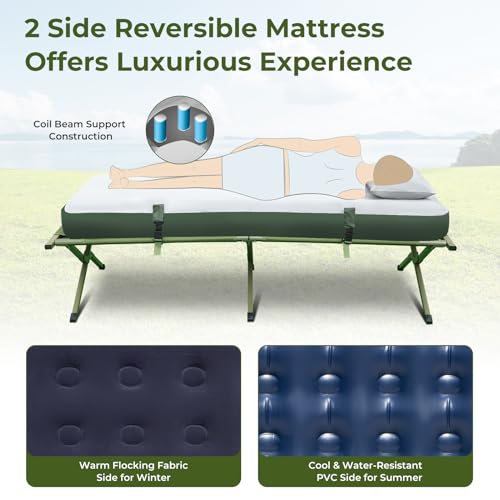
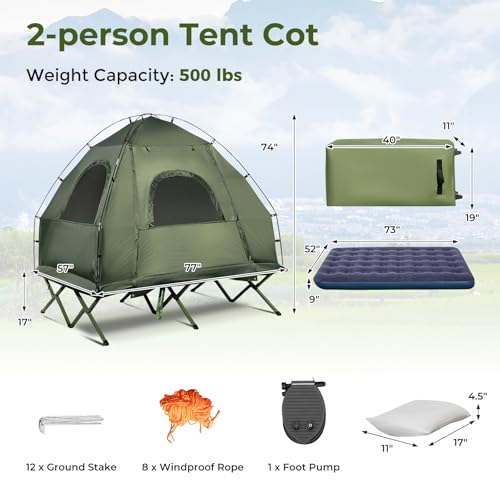
This 5-in-1 kit is the most complete package here, you get a tent, cot, air mattress, two sleeping bags, two pillows, and even a sunshade. That’s a lot of gear in one box, and for families or couples new to camping, it removes the guesswork. The 500-pound cot capacity is impressive, and the x-frame legs with large foot pads add real stability on soft ground. The reversible mattress is a thoughtful touch, with a warm side for winter and a cool PVC side for summer.
But all that gear means bulk. The wheeled bag helps, but this is strictly a car camping setup. The tent fabric is only drizzle-proof, and multiple owners note it’s not for use in rain. Still, for backyard glamping, fishing trips, or weekend park hangs, this is a no-brainer. If you want everything in one purchase and don’t care about weight, this is the smarter buy over assembling pieces.
Product photos
Tangkula 4-in-1 Cot Tent

Strengths
- Includes mattress
- Sturdy iron frame
- Good value
Trade-offs
- Heavy for backpacking
- Zippers not premium
- Not for rough weather
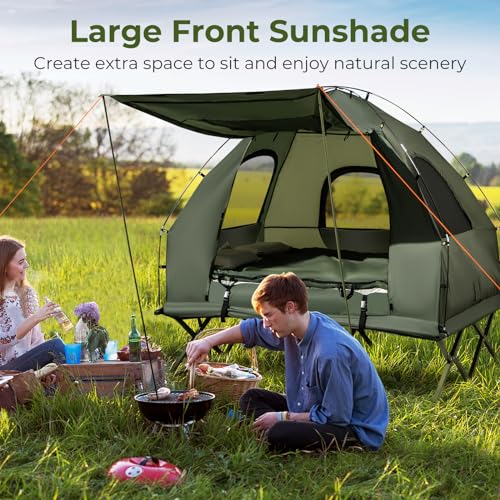
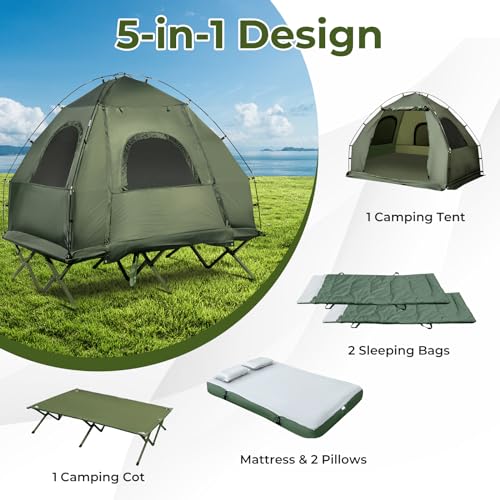
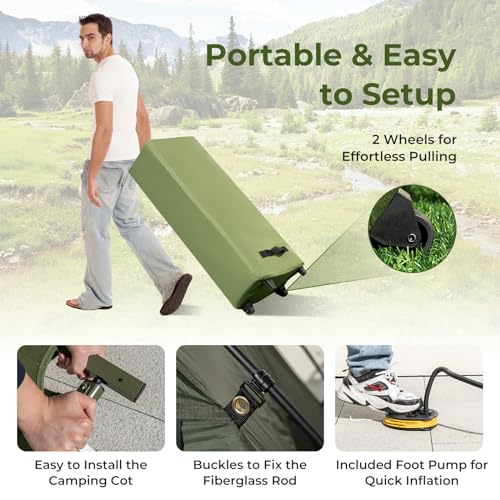
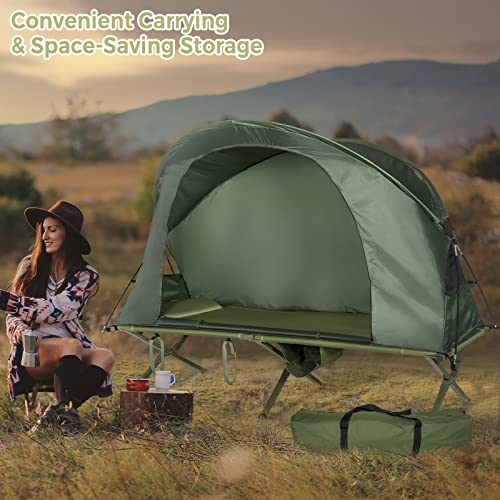
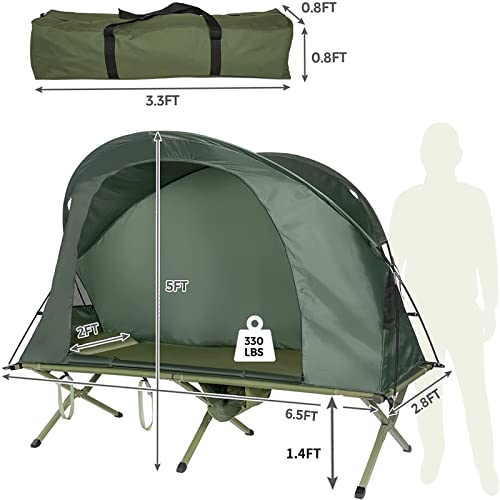
This is one of the few combos that includes both a self-inflating mattress and a cot, a real value play. The fact that you get a waterproof outer cover, carry bag, and durable iron frame for under $150 makes it hard to beat on sheer feature count. Owners consistently praise how easy it is to set up and how stable it feels, thanks to the non-slip feet and included stakes. The 330-pound weight limit is solid, and the elevated design keeps you off damp ground.
The trade-off? Weight. This isn’t a lightweight option, it’s clearly built for car camping, not hiking. The tent fabric is decent but not exceptional, and some reviewers report the zippers feel a bit flimsy over time. Still, for the price, you’re getting a complete sleep system that works right out of the box. I’d recommend this over buying pieces separately unless you’re after ultralight performance.
Product photos


How We Evaluated tents for cots
I approach tent selection as a dedicated outdoor enthusiast, and for this guide, we didn’t rely on personal, hands-on testing of every model. Rather, this is a research-led comparison of published specifications, features, and extensive owner and expert feedback. We systematically analyzed available tents for cots, looking for patterns in performance and value. This involved compiling data from manufacturer websites, retailer listings, and numerous online reviews.
For tents designed to pair with cots, stability, waterproof rating, and ease of setup were the biggest determining factors. A cot elevates you off the ground, so a tent that securely attaches and withstands wind is critical. Waterproofing is important, but we gave more weight to how effectively the tent manages condensation, as that’s a common complaint in this setup. Knowing which brands consistently deliver quality, like those among the top tent brands, also informed our assessment.
Product specifications reliably indicate dimensions, weight, and material composition, helping to assess portability and potential durability. However, owner feedback proved invaluable for gauging real-world performance – particularly regarding ease of setup, ventilation, and how well the tent holds up to repeated use. We also looked to reputable outdoor gear reviewers to corroborate claims and identify any recurring issues. Selecting from reliable tent companies is a good starting point for a quality product.
How To Pick The Right tents for cots
Choosing the right tent for a cot can dramatically improve your camping experience, moving you beyond the basic ground setup and into a realm of comfort and dryness. It’s a deceptively complex decision, though – just because a tent can fit over a cot doesn’t mean it should.
A quality tent for a cot prioritizes waterproofness (at least 2000mm rating for the rainfly), a robust frame to withstand wind, and a design that allows for sufficient headroom and ventilation. Beyond that, consider portability, ease of setup, and whether you want an all-in-one combo or separate components. Look for durable fabrics like ripstop nylon or polyester, and pay attention to the cot dimensions to ensure a proper fit.
Cot Dimensions and Tent Fit
The first, and most crucial, step is understanding the dimensions of your cot. Don’t assume “one size fits all.” Many tents marketed for cots are designed for specific cot widths and lengths. A tent that’s too small will be perpetually stressed, making setup a nightmare and reducing its lifespan. A tent that’s too large will be inefficient and prone to flapping in the wind. Pay close attention to the stated cot compatibility – if it exists. If you’re considering a combo unit, verify the cot’s weight capacity matches your needs. I often see people overlook this, assuming all cots can handle the same weight, which isn’t true.
Waterproofing and Ventilation
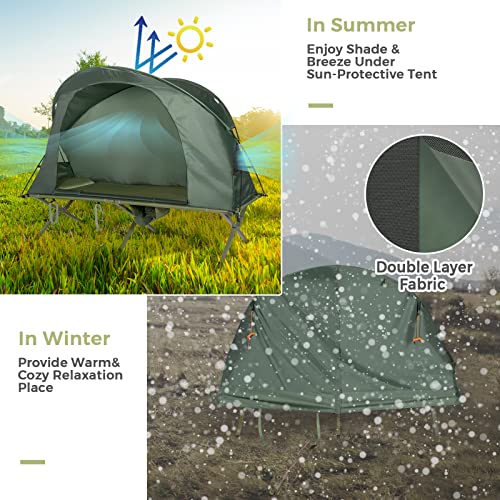
Waterproofing is paramount when you’re elevating yourself off the ground. While a cot helps keep you dry, a leaky tent will still ruin your trip. Look for a rainfly with a polyurethane (PU) coating of at least 2000mm, and ideally taped seams. However, don’t sacrifice ventilation in the pursuit of complete waterproofness. Condensation buildup inside the tent can be just as unpleasant as rain. Mesh panels and adjustable vents are essential, especially in warmer weather. For longer trips, consider a tent with a bathtub floor design – this extends the waterproof fabric up the sides, providing extra protection. If you’re planning on using your tent in varied conditions, you’ll want to ensure you have all the essential camping gear to stay comfortable.
Combo vs. Separate Components
You’ll quickly notice a lot of “cot tent combos” on the market. These packages bundle a cot and a tent together, often at a discounted price. They’re convenient, but not always the best value.
- All-in-one convenience: These are fantastic for beginners or those who want a quick, easy setup.
- Potential quality compromises: The included cot might be a lower quality than one you’d purchase separately.
- Limited flexibility: You’re locked into a specific cot/tent combination, making upgrades or replacements more difficult.
If you already own a quality cot, or anticipate wanting to upgrade it in the future, buying a tent separately is usually the smarter move. Those seeking an elevated sleeping shelter for two should explore options like 2-person cot tents for added comfort and space.
A good rule of thumb: don’t prioritize price over quality when it comes to the tent fabric and waterproofing. A cheap tent will likely leak and fall apart, leaving you exposed and uncomfortable.
Tents for Cots Compared
Here’s a comparison of key specifications for tents designed for use with cots, to help you find the best option for your needs.
| Product Title | Capacity | Waterproof Rating (mm) | Dimensions (Tent) | Cot Capacity (lbs) | Packed Weight (lbs) |
|---|---|---|---|---|---|
| Night Cat Cot Tent Combo | 1 | 2000 | 87x28x35″ | 330 | N/A |
| Gonex 31.5″ Tent Cot | 1 | N/A | 78.8×29.5×36.6″ | N/A | 13.8 |
| Night Cat 1-Person Cot Tent | 1 | 3000 | 87x32x35″ | N/A | N/A |
| Night Cat Pop-up Cot Tent | 1 | 3000 | 7.2×2.4×2.6ft | N/A | 3.3 |
| MARCHWAY Ultralight Tent Cot | 1 | N/A | N/A | 275 | 4.8 |
| Tangkula 2-Person Cot Tent | 2 | 2000 | N/A | 660 | N/A |
| GYMAX 5-in-1 Camping Cot Tent | 1 | N/A | N/A | 500 | N/A |
| Tangkula 4-in-1 Cot Tent | 1 | N/A | N/A | 330 | N/A |
Frequently Asked Questions
What waterproof rating should I really look for in a tent for a cot?
A rating of 2000mm for the rainfly is a good starting point, but 3000mm offers better protection, especially if you camp in consistently wet conditions. Remember that a higher number doesn’t always mean better performance; sealed seams are equally important to prevent leaks.
Are “cot tent combos” always the most economical choice?
Not necessarily. While combos offer convenience, you may get a better quality cot – and overall setup – by purchasing the tent and cot separately. This is especially true if you already own a cot you like.
How much extra space should I expect to need around my cot inside the tent?
I recommend at least 6-12 inches of space on all sides of the cot for comfortable movement and to avoid stressing the tent fabric. This allows for gear storage and prevents the tent walls from constantly touching the cot.
What’s more important: a sturdy frame or durable fabric in a cot tent?
A sturdy frame is critical because a cot elevates you, increasing the tent’s susceptibility to wind. However, durable fabric, like ripstop nylon or polyester, protects against tears and abrasions caused by movement and weather.
If I’m already invested in spacious car camp tents, can I still use them with a cot?
Potentially, but it’s not ideal. You’ll need to verify the tent dimensions are significantly larger than your cot, and you may need to devise a way to securely attach the cot to the tent poles to prevent shifting.
The Bottom Line
Ultimately, choosing a tent for a cot comes down to balancing convenience with quality. While combo units like the Night Cat Cot Tent Combo offer an easy all-in-one solution, I believe investing in a dedicated tent – like the Night Cat 1-Person Cot Tent with its higher waterproof rating – provides superior durability and weather protection in the long run. Don’t underestimate the value of a well-made shelter when you’re relying on it for a comfortable night’s sleep off the ground.
For those on a tighter budget, or who prioritize portability, the MARCHWAY Ultralight Tent Cot is a fantastic option. And if you’re looking for a versatile setup for two, the Tangkula 2-Person Cot Tent delivers ample space and a decent waterproof rating. Remember to carefully check the dimensions against your cot, though, as fit is crucial. If you are still unsure, our tent selection guide can help break down the essential factors.
More than any specific feature or price point, remember that a good tent for a cot is about creating a reliable barrier against the elements. Focus on waterproof fabrics, a sturdy frame, and proper ventilation – those are the fundamentals that will truly enhance your camping experience, regardless of whether you’re a seasoned backpacker or a weekend camper.
