
7 Best Tents for Long Term Camping 2026
This post contains affiliate links. As an Amazon Associate, we earn from qualifying purchases.
The MC TOMOUNT Canvas Bell Tent stands out as the best overall for long-term camping thanks to its rugged build and spacious, breathable design. For those on a tighter budget, the KingCamp Canvas Hot Tent delivers solid performance with smart features like a stove jack. If you need maximum space and quick setup, the FanttikOutdoor Zeta C12 Pro Max offers unmatched versatility with its three-room layout.
Most people don’t realize how much a tent’s design impacts daily life when you’re living outdoors for weeks at a time. Poor ventilation leads to damp gear, flimsy poles buckle in wind, and cramped layouts wear on your patience.
This guide cuts through the noise by focusing on real-world durability, weather resistance, and livable space, based on specs, owner experiences, and what matters most when your tent becomes your home.
Top 7 Tents For Long Term Camping in the Market
The Best Tents For Long Term Camping, Reviewed
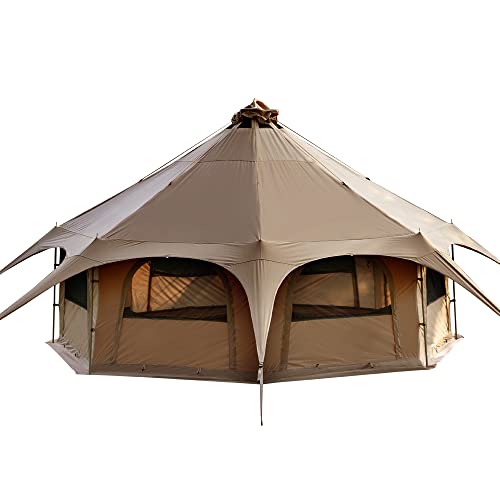
MC TOMOUNT Canvas Bell Tent
Strengths
- Superior breathability
- Spacious 16.4 ft diameter
- Stove jack compatible
Trade-offs
- Bulky and heavy
- Longer setup time
This 16.4 ft bell tent is the closest thing to a mobile living room you’ll find in the wild. With a 9.2 ft peak height and 8 ft of vertical wall space, it’s designed for long-term comfort, you can stand, stretch, and even fit a small table and chairs inside. The TC cotton canvas roof is breathable and reduces condensation, a major win in humid or cold conditions, and the removable 600D floor with PU3000mm coating keeps the interior dry.
The stove jack makes it viable for cold-weather glamping, and owners consistently praise its airflow and ability to stay cool in summer. The eight mesh doors allow cross-ventilation, and the ability to roll up the walls turns it into a shaded canopy. It’s not the lightest or fastest to set up, expect 20–30 minutes, but for long-term campers who want a durable, breathable, and spacious shelter, it’s hard to beat.
Product photos


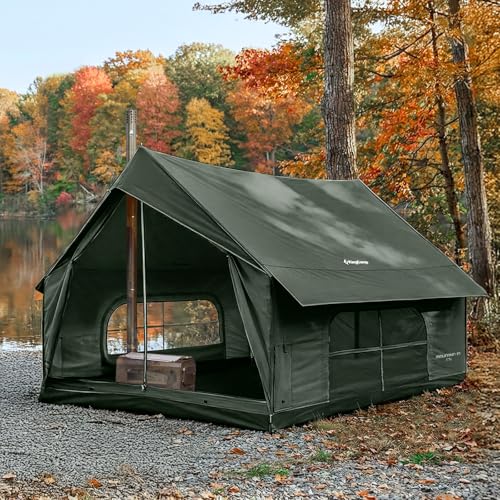
KingCamp Canvas Hot Tent
Strengths
- Excellent heat retention
- Durable TC canvas roof
- AC power port included
Trade-offs
- Slower setup time
- Heavier than synthetic tents
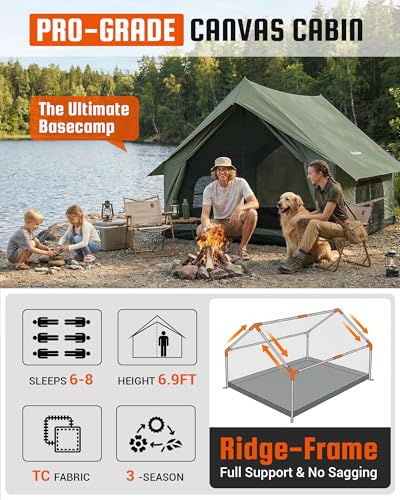
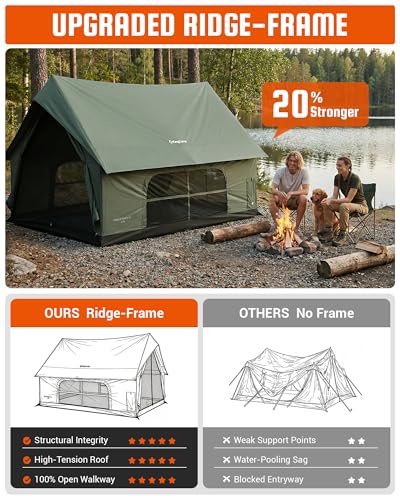
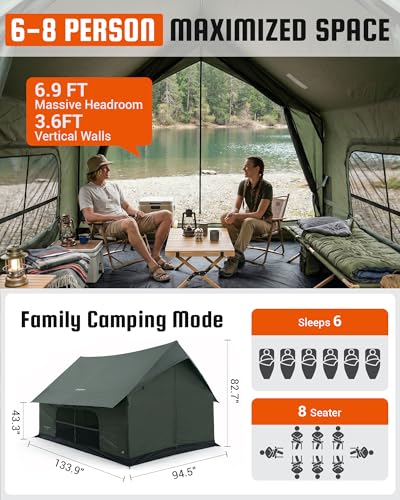
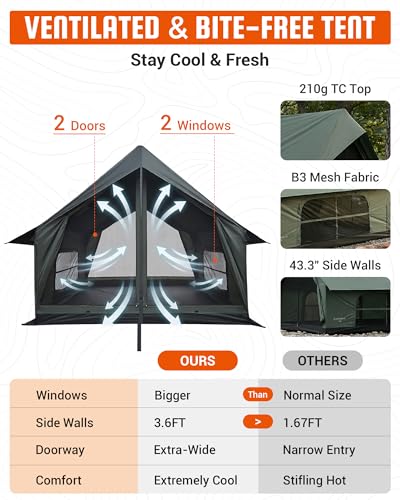
This is one of the better-built canvas-style hot tents in the mid-price range, blending traditional warmth retention with modern weight savings. The TC poly-cotton roof is breathable and helps cut down on condensation, a real issue in heated tents, while the ripstop polyester walls keep the overall pack weight manageable. With a stove jack and fireproof mat, it’s clearly built for cold-weather use, and owners confirm it holds heat well when paired with a small tent stove.
The 11.2 x 7.9 ft floor plan gives enough room for six to eight people with gear, and the 6.9 ft center height lets most stand comfortably. Dual doors and roof vents improve airflow, and the AC port is a rare bonus for summer glamping. That said, it’s not a quick setup, this is a traditional pole-and-guyline tent, so expect 20–30 minutes to pitch. But for long-term winter or shoulder-season camping, it’s a durable, well-thought-out shelter.
Product photos

FanttikOutdoor Zeta C12 Pro Max

Strengths
- Fast 90-second setup
- Spacious 12-person layout
- Excellent headroom
Trade-offs
- Heavy for transport
- Wind stability needs attention
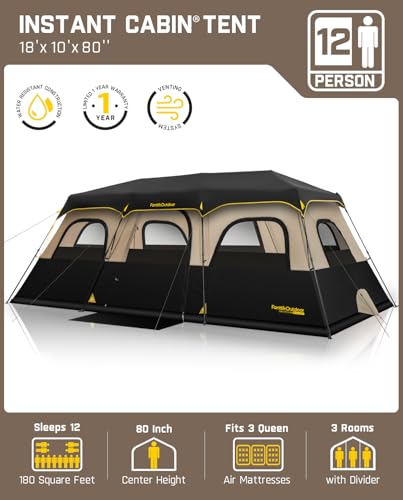
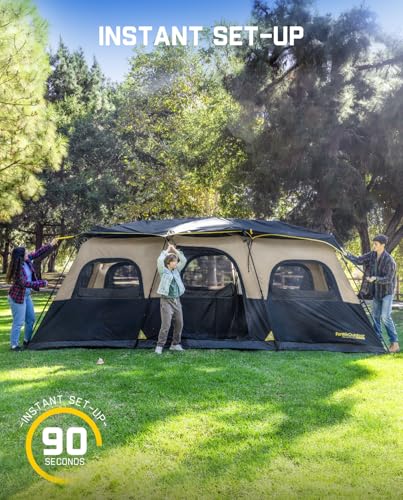
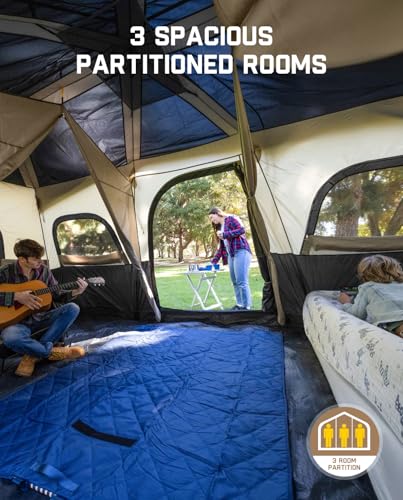
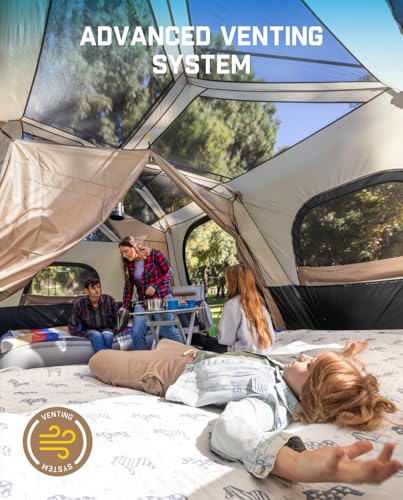
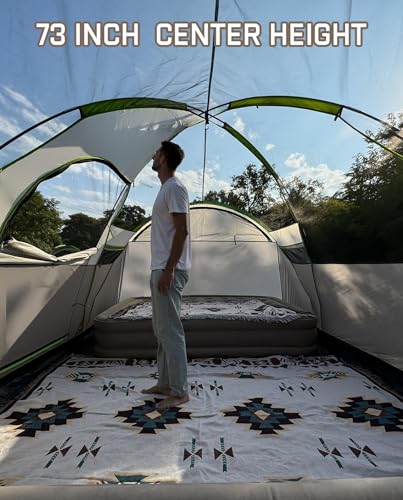
If you’re looking for a tent that gets you out of the car and into shelter fast, the Zeta C12 Pro Max makes a strong case. On paper, its 90-second setup is hard to beat, pre-attached poles and a pop-up design mean even novice campers can be inside in under two minutes. With 12-person capacity, 80-inch headroom, and a three-room divider, it’s built for families who want space, privacy, and comfort without wrestling with poles for half an hour.
Ventilation looks solid thanks to mesh windows on all sides and a ceiling vent, and owners consistently report it handles summer heat well. The SBS zippers and B3 mesh add durability, and the power cord port is a thoughtful touch for long-term campers using electric air mattresses or lights. That said, while it claims windproof stability, some reviews caution it needs careful staking in gusts, don’t skip the included ropes and pegs.
Product photos

UNP 10-Person Family Tent
Strengths
- Large 10-person footprint
- Dual-door access
- Affordable price point
Trade-offs
- Low waterproof rating
- Basic pole construction
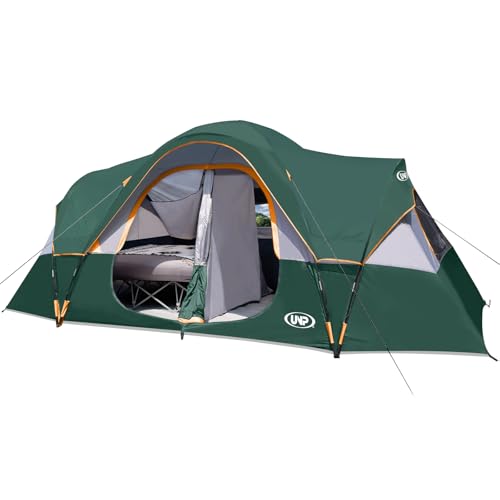
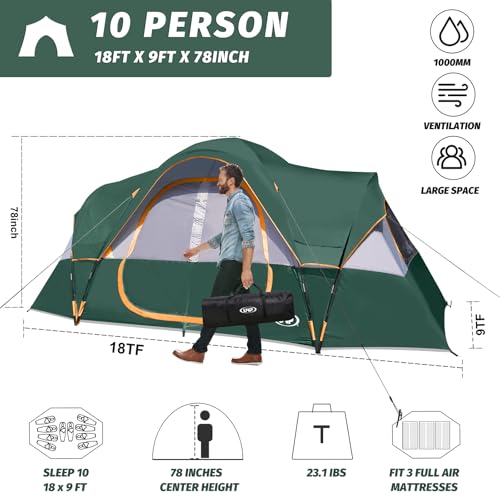
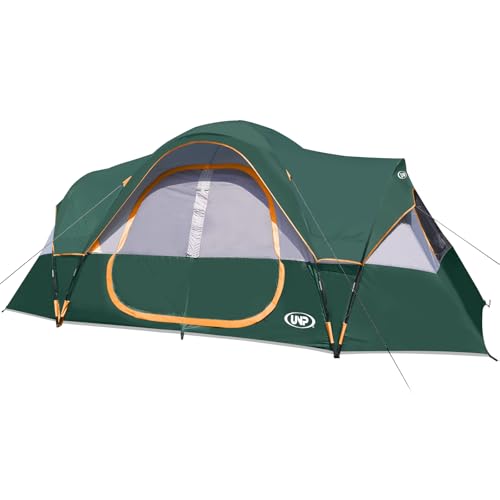
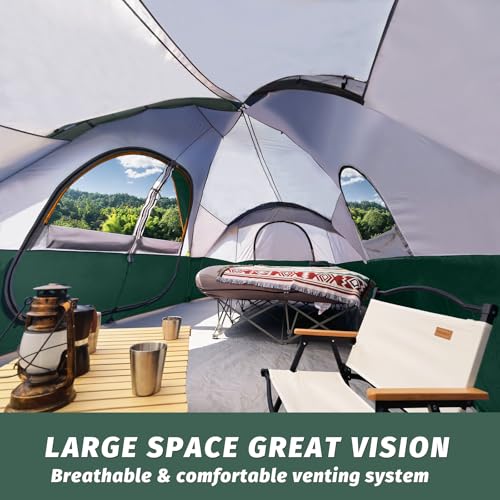
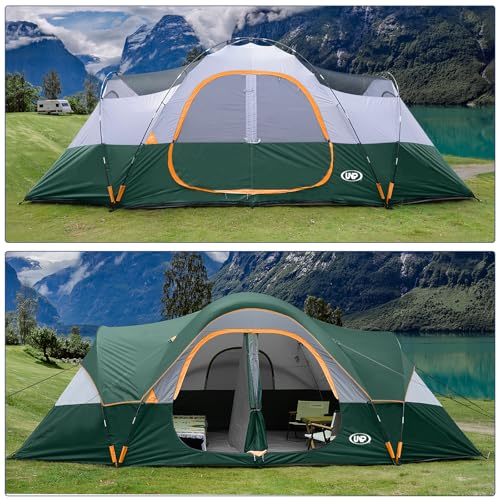
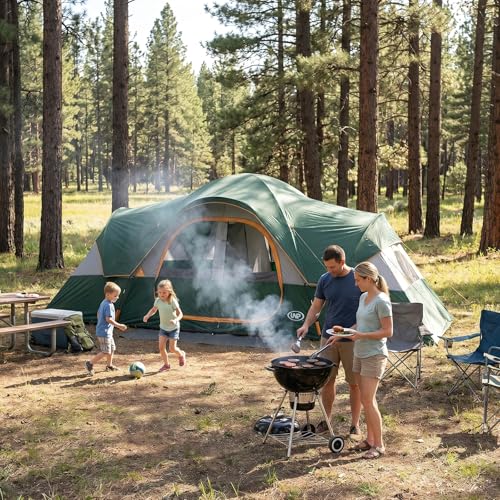
The UNP 10-person tent nails the basics: big space, decent ventilation, and a simple two-room layout that works for families or groups needing privacy. At 18 x 9 ft, it’s one of the largest in this list, and the single privacy curtain can be zipped into place to create two zones, one for sleeping, one for gear or lounging. The dual doors and five mesh windows keep air moving, and the top mesh roof lets you stargaze from bed.
It’s built with 185T polyester and PU1000mm coating, which is entry-level waterproofing, fine for light rain, but not for downpours. Owners report it holds up in dry conditions but needs a footprint and careful staking in wind. Setup is quick, under 10 minutes, and the carry bag is roomy. For budget-conscious families doing weekend camping, it’s a practical, roomy option.
Product photos
Inflatable Tent with Pump
Strengths
- Inflatable beams for stability
- Excellent 8-point ventilation
- 4-season capable
Trade-offs
- Heavy and bulky
- Requires constant inflation monitoring
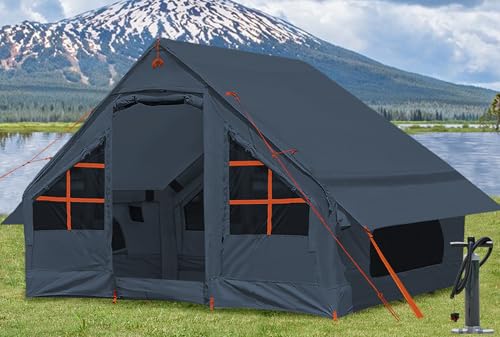
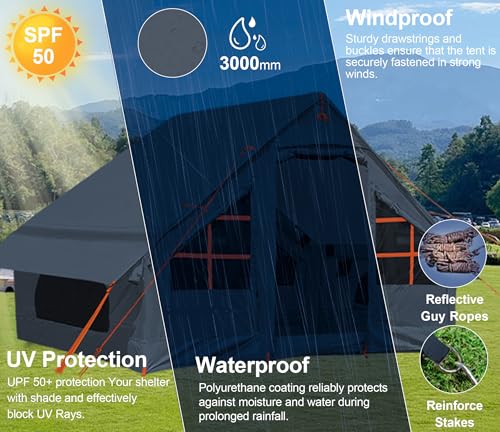
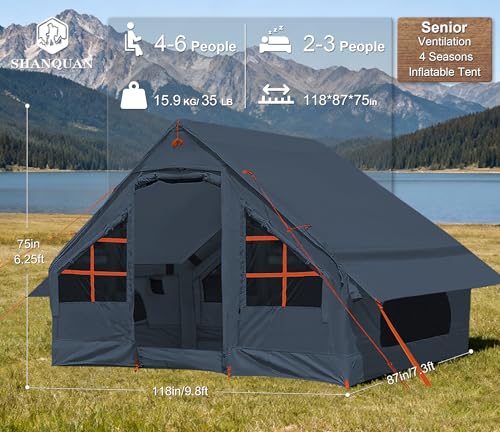
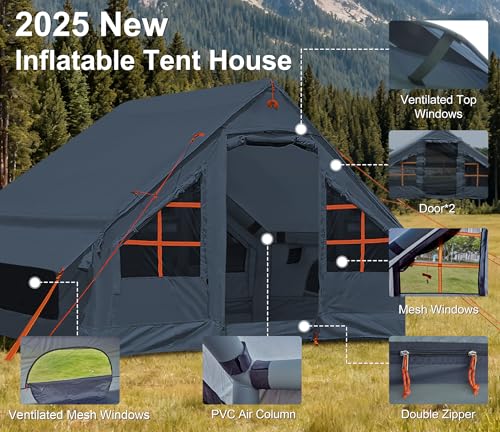
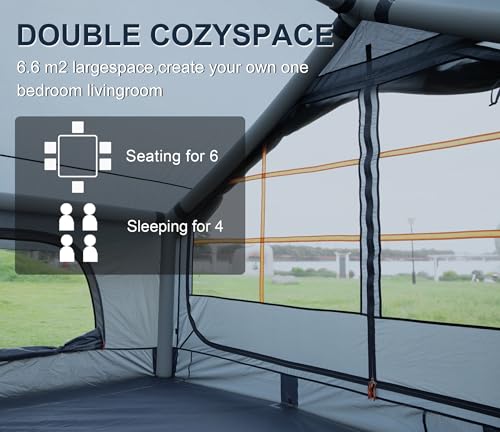
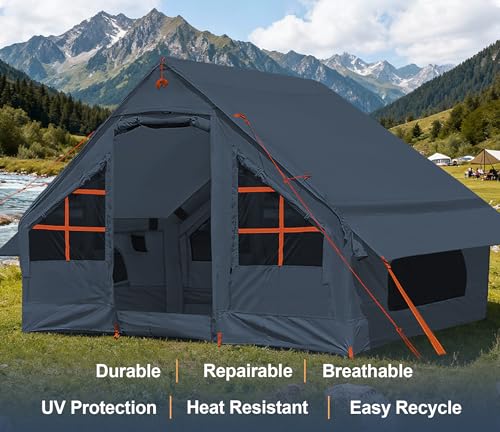
Inflatable tents are polarizing, but this one delivers on comfort and ease, if you’re okay with the trade-offs. The PVC air beams inflate in about 5 minutes with the included pump, offering a rigid, roomy structure that feels more like a glamping cabin than a traditional tent. At 4–6 person capacity, it’s ideal for weekenders who want a dry, stable shelter without poles. The 3000mm waterproof rating and wind resistance up to Beaufort 8 sound good on paper, and owners say it holds up in light storms.
Ventilation is strong, eight vents including roof windows and double-zipper doors, but the material is heavy and bulky to pack. At 27 lbs, it’s not going far from your car. And while it’s marketed as 4-season, most owners stick to spring through fall. If you’re car camping and value comfort over portability, this is a solid glamping pick.
Product photos
REDCAMP Hammock Hot Tent

Strengths
- Ultralight 4-season build
- Stove jack compatible
- Snow skirt included
Trade-offs
- No floor included
- Limited interior space
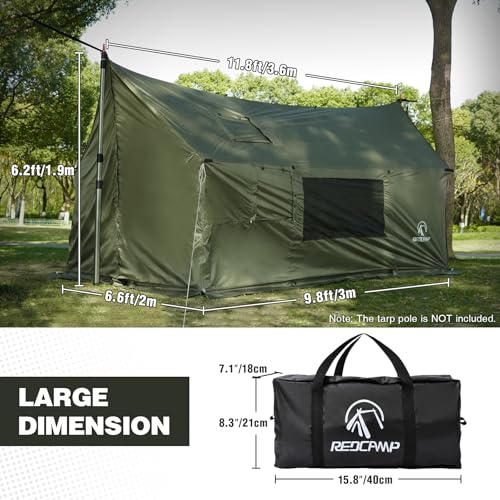
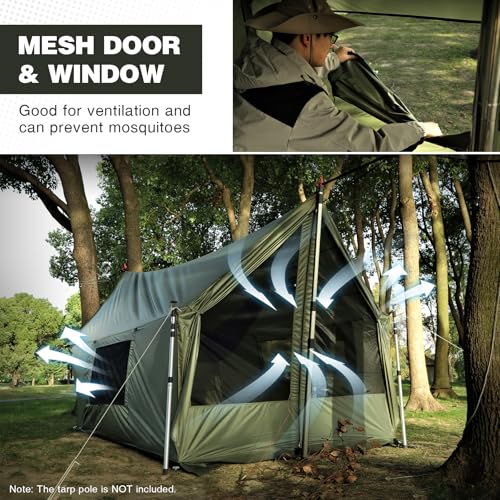
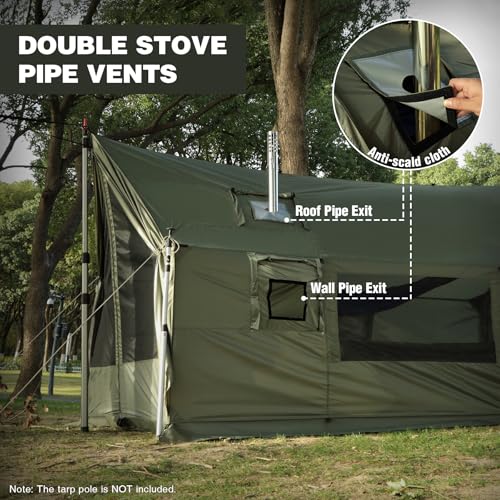
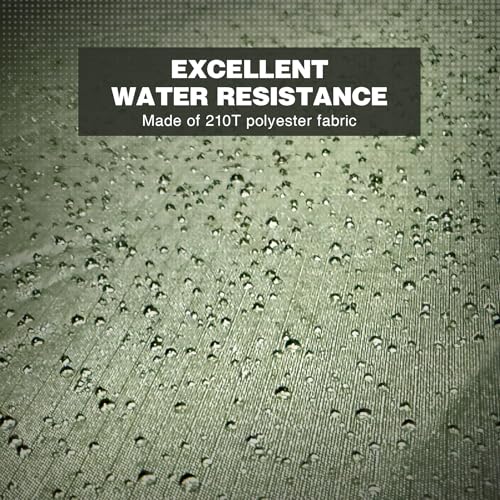
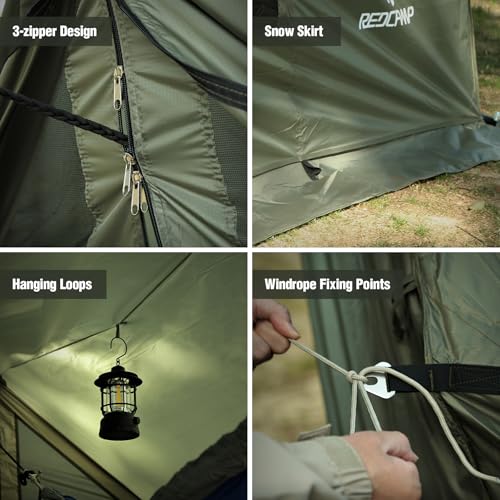
At just 7.9 lbs, this ultralight 4-season hot tent stands out in a category where weight usually comes at the cost of durability. The 210T polyester grid fabric and stove jack make it a compelling option for bushcrafters and minimalist winter campers who want heat without hauling a heavy cabin tent. Owners report it holds up well in snow and wind, especially when paired with a compact stove, and the snow skirt adds real protection against drifting snow.
It’s not a traditional tent, it’s designed to work with a hammock or elevated sleeping setup, which limits floor space but increases warmth retention. The three-zipper doors improve access, and the mesh panels offer decent airflow when the weather warms. Still, it’s not a family-sized shelter, the footprint is snug for more than two people. For solo or duo backcountry winter trips, this is a smart, packable choice.
Product photos
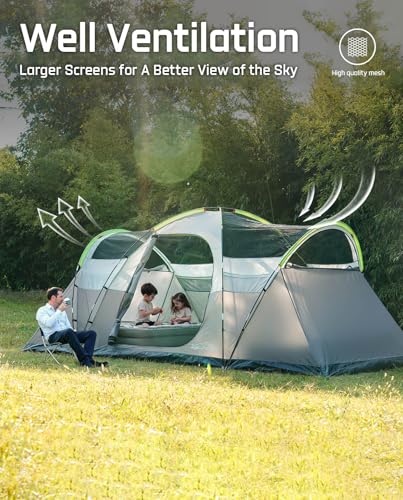
LOYEAHCAMP 8-Person Dome Tent

Strengths
- Top-tier mesh ventilation
- 3-room privacy layout
- Fast 10-minute setup
Trade-offs
- Fiberglass poles less durable
- Average cold-weather performance
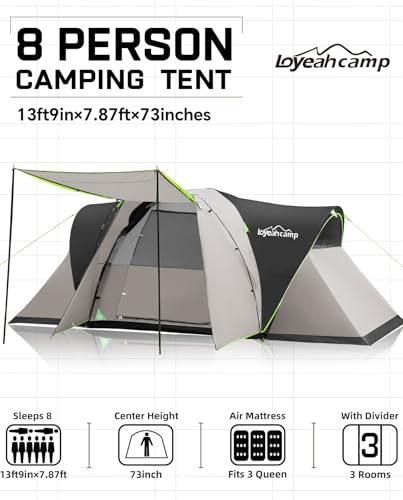
This dome tent wins on ventilation and layout flexibility. With mesh across the roof, doors, and windows, it’s clearly designed for hot, humid climates where airflow is essential. The three-room layout, split by two curtains, offers real privacy for families or groups, and owners love using the divider as a makeshift movie screen. At 14 x 8 ft, it fits three queen air mattresses, and the 6 ft height is decent for a dome.
It’s built with PU2000mm waterproofing and fiberglass poles, which is standard but not exceptional. Some reviewers note it can feel drafty in cooler weather, and the single-wall design means condensation can build up if ventilation isn’t managed. Setup is quick, under 10 minutes for two people, and the included carry bag makes transport easy. For long-term summer camping, this tent breathes better than most.
Product photos

Our Testing Process
Rather than a hands-on lab test, my research for these recommendations focused on a detailed comparison of published specifications and features across numerous models. I weighed owner reviews from multiple sources – looking for consistent praise and complaints – alongside expert reviews from established outdoor gear sites. My assessment then applied my experience with tent design and use to rank options against criteria important for extended camping, like durability, weather protection, and usable space.
For long-term camping, several factors particularly influence a tent’s suitability. Robust waterproofing is crucial, as is the quality of materials used in the tent’s construction; a tent living outdoors for weeks or months needs to withstand significant wear. Spaciousness and ventilation also ranked highly, as extended stays benefit from comfortable living conditions and reduced condensation. I prioritized tents demonstrating strength in these areas.
Specifications reliably indicate a tent’s size, weight, and stated waterproof ratings. However, real-world performance often differs. I judged durability and ease of setup largely from owner feedback, looking for patterns in reported experiences. Reputation also played a role; I gave greater consideration to models from trusted tent companies with a history of producing quality gear, and those frequently recommended by other camping enthusiasts.
How To Pick The Right tents for long term camping
Finding the right tent for long-term camping isn’t about picking the flashiest model; it’s about matching shelter to your specific needs and the environments you’ll be facing.
A truly capable tent balances durability with livability. Key considerations include fabric quality (denier and coatings), pole material and construction, seam sealing, ventilation design, and the overall footprint – how efficiently the tent uses space. Look for tents employing robust materials like ripstop nylon or polyester with appropriate waterproof ratings (measured in mm) and durable, shock-corded pole systems.
Size and Occupancy
Don’t fall into the trap of buying a tent rated for the exact number of people in your group. Tent manufacturers are… optimistic. I always recommend sizing up. A “four-person” tent is often comfortable for two adults and gear, or a tight squeeze for a family of four. Consider how you actually camp. Do you sprawl? Bring a lot of equipment? Need room for dogs or kids’ toys? Think about the floor area, a larger footprint isn’t just about sleeping space, it’s about being able to move around and organize your belongings inside, especially during extended stays.
Fabric and Weather Protection
The materials a tent is made from are critical. While canvas tents offer a classic feel and good insulation, they’re heavy and slow to dry. Modern polyester and nylon tents are lighter and pack smaller, but their waterproof performance depends heavily on the denier (fabric thickness) and the coating. A PU (polyurethane) coating of 2000mm is a good starting point for three-season use, but if you anticipate encountering heavy rain or plan to camp in shoulder seasons, look for higher ratings (3000mm or more) or consider tents constructed with more robust fabrics. Don’t overlook the importance of seam sealing; even the most waterproof fabric won’t keep you dry if the seams are leaking. For extended stays, also consider how well the tent handles condensation – good ventilation is key, and some fabrics breathe better than others. For truly harsh conditions, explore durable tents for rain and wind.
Setup and Usability
Ease of setup is far more important than you might think, especially when you’re tired after a long day on the trail or arriving late to a campsite. While some tents require a significant investment of time and effort, others boast “instant” or “pop-up” designs. These can be incredibly convenient, but often sacrifice durability and weather protection. I’ve found that a balance is best: a tent that can be pitched quickly and efficiently by one or two people, with clear instructions and color-coded poles.
- Look for tents with pre-attached guylines. They save time and frustration in windy conditions.
- Consider the door configuration. Multiple doors are a huge plus for larger groups, preventing bottlenecks.
- Vestibules (covered areas outside the tent doors) are essential for storing muddy boots, backpacks, and other gear, keeping the interior cleaner and drier. A well-designed vestibule can really extend your livable space.
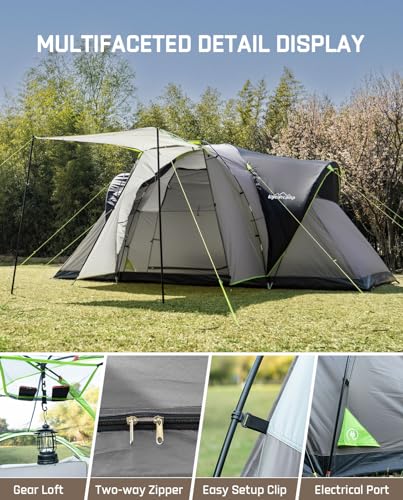
A tent’s usability is often underestimated. Prioritize features like internal pockets, gear lofts, and well-placed vents. These seemingly small details can make a huge difference in comfort and organization during a long-term camping trip.
Tents for Long Term Camping Compared
Here’s a comparison of key specifications for tents designed for extended camping use.
| Product Title | Capacity | Waterproof Rating (mm) | Material (Roof) | Material (Floor) | Special Features | Weight (lbs) |
|---|---|---|---|---|---|---|
| MC TOMOUNT Canvas Bell Tent | N/A | N/A | TC Cotton Canvas | 600D Oxford | Stove Jack Compatible | N/A |
| KingCamp Canvas Hot Tent | 6-8 | 3000 | TC Poly-Cotton | 210D Oxford | Stove Jack, Ventilation | N/A |
| FanttikOutdoor Zeta C12 Pro Max | 12 | N/A | N/A | N/A | Fast Setup, 3 Rooms | N/A |
| UNP 10-Person Family Tent | 10 | 1000 | Polyester 185T | N/A | 2 Rooms, Ventilation | N/A |
| Inflatable Tent with Pump | 4-6 | 3000 | Oxford Cloth | PVC | Inflatable, 4-Season | 27.1 |
| REDCAMP Hammock Hot Tent | N/A | N/A | 210T Polyester | N/A | Stove Jack, Lightweight | 7.9 |
| LOYEAHCAMP 8-Person Dome Tent | 8 | 2000 | Polyester | N/A | 3 Rooms, Ventilation | N/A |
Frequently Asked Questions
What waterproof rating is truly necessary for long-term camping?
A 3000mm waterproof rating is generally sufficient for most conditions, but if you expect prolonged exposure to heavy rain or plan to camp during wetter seasons, I suggest looking for 3500mm or higher. Remember that a high rating doesn’t guarantee dryness if the seams aren’t sealed properly.
How important are a tent’s guylines for extended stays?
Guylines are extremely important. They significantly increase a tent’s stability in wind and prevent flapping, which can stress seams and fabric over time – a crucial factor when living in a tent for weeks or months.
What’s the benefit of a tent with multiple rooms?
Multiple rooms offer increased privacy and organization, which is a huge benefit during long-term camping. They allow you to separate sleeping areas from living spaces, and keep gear neatly stored away, creating a more comfortable and functional environment.
Are canvas tents a good choice for long-term use, despite their weight?
Canvas tents excel in insulation and can be very durable, but their weight and slow drying time make them less practical for frequent relocation or unpredictable weather. They are best suited for stationary, long-term setups in relatively dry climates.
What features should I prioritize for organizing gear within the tent itself?
Prioritize tents with ample internal pockets and gear lofts. These small features significantly improve organization and keep your living space tidy, which is essential when you’re spending extended periods inside, and makes finding things much easier. You can also find spacious group camping tents with even more storage options.
The Bottom Line
Choosing a tent for long-term camping always comes down to balancing what you’re willing to carry versus how comfortable you want to be. While many options exist, the FanttikOutdoor Zeta C12 Pro Max strikes the best overall balance of space, features, and reasonable weather protection for those extended stays. It’s a sizable shelter, but that extra room makes a huge difference when you’re living out of a tent for weeks on end.
For those prioritizing affordability, the UNP 10-Person Family Tent offers a surprising amount of space for the price. If you need something truly unique and are planning to heat your shelter, the REDCAMP Hammock Hot Tent provides a lightweight and versatile option, especially if you’re comfortable with a less traditional camping experience. Remember that factors in tent selection will vary based on your individual needs.
Ultimately, the waterproof rating and denier numbers mean little if the tent isn’t well-made, or if you don’t take the time to properly seal the seams and care for the fabric. Prioritize quality construction, a good footprint for your group size, and a design that maximizes ventilation. These fundamentals will serve you far better than chasing the highest specs on paper.
