
8 Best Tents for Rain 2026, Analyzed
This post contains affiliate links. As an Amazon Associate, we earn from qualifying purchases.
The CORE 9 Person Instant Cabin Tent stands out as the best overall for rain, combining solid waterproofing with a full-coverage rainfly and smart design. For budget-focused campers, the Coleman Skydome Tent with Full-Fly delivers reliable wet-weather protection without the high price, while the Forceatt 2/3/4 Person Backpacking Tent offers strong versatility for smaller crews or backpacking trips.
If you’ve ever woken up to dripping walls or a puddle near your sleeping bag, you know a tent’s job isn’t just to shade you, it has to keep you dry when it matters most. Rain testing isn’t about surviving a drizzle, it’s about enduring downpours, wind-driven moisture, and overnight soakings without failing.
As someone who’s spent years analyzing gear that holds up in wet conditions, I looked at waterproof ratings, seam sealing, rainfly coverage, and real-world feedback to find models that consistently keep campers dry. This guide cuts through the marketing to show you what actually works when the skies open up.
Top 8 Tents For Rain in the Market
The Best Tents For Rain, Reviewed
CORE 9 Person Instant Cabin Tent

Strengths
- True instant setup
- Excellent rain protection
- Room divider included
Trade-offs
- Lower center height
- Bulky when packed
- Poles require care
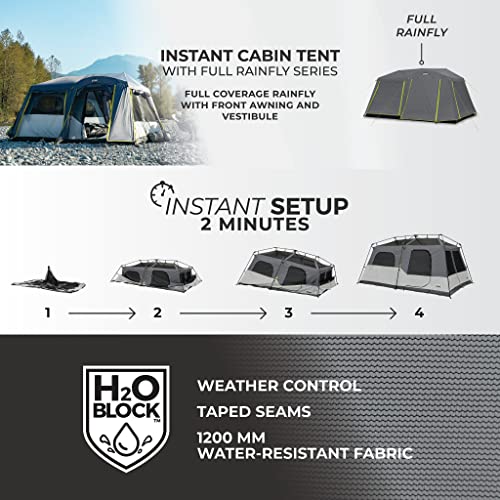
This is the tent I’d recommend to most families if they want speed, space, and solid rain protection without overcomplicating things. The instant pop-up system works, setup in under 2 minutes with two people, and the H20 Block Technology delivers real peace of mind in storms. The 1200mm fabric, taped seams, and full rainfly mean owners consistently report staying dry, even during overnight downpours. The room divider adds privacy, and the storage pockets keep small items off the floor.
It’s not as tall as the 10-person model, but the footprint is nearly the same, and the faster setup makes it more user-friendly. Compared to the Coleman Skydome, it’s roomier but a bit less aerodynamic. Still, for car campers who hate tent drama, this is the smarter pick. My only caveat: practice pitching it at home first. Those instant poles can be tricky the first time.
Product photos




CORE 10 Person Cabin Tent

Strengths
- Spacious straight-wall design
- Excellent rain protection
- Room divider included
Trade-offs
- Heavy and bulky
- Takes time to set up
- Requires practice for first use
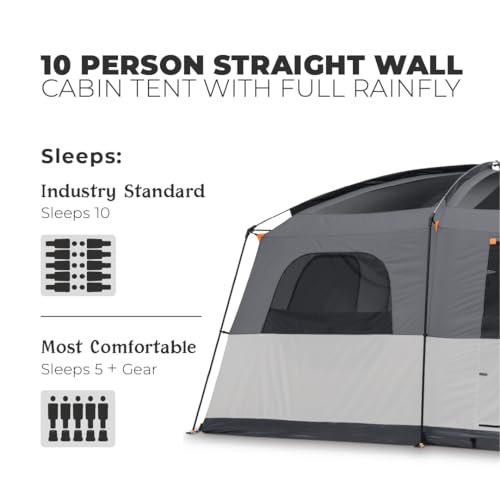
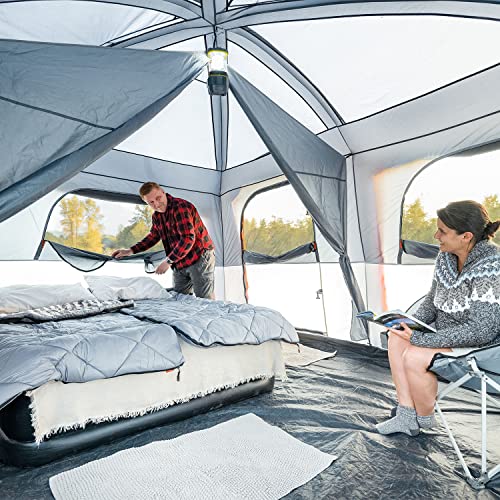
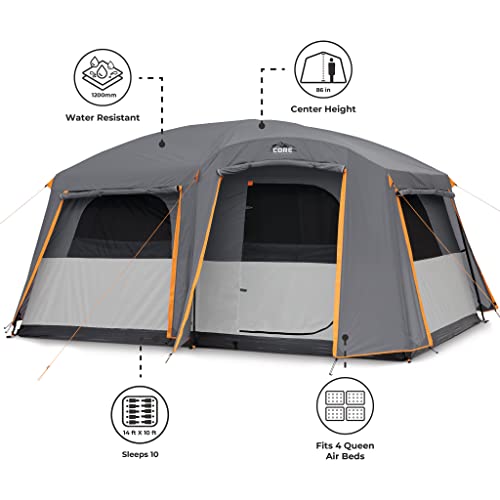
This CORE cabin tent is built like a small apartment, 14 by 10 feet, 86-inch center height, room divider, and a full rainfly. The H20 Block Technology with 1200mm waterproof rating and fully taped seams means it’s designed for real rain, not just mist. Owners consistently report it staying dry during weekend storms, especially when paired with a footprint. The near-vertical walls maximize interior space, and the vestibule created by the rainfly is perfect for muddy boots and wet packs.
It’s not for the backcountry, this is car camping at its most comfortable. Setup takes longer than instant tents, but it’s sturdier for it. Compared to the CORE 9-person instant model, this one trades a bit of speed for more durability and headroom. If you’re camping with kids, pets, or just want to stand up without ducking, this delivers.
Product photos
Coleman Skydome Tent with Full-Fly Vestibule

Strengths
- Proven weather resistance
- Fast setup
- Large vestibule
Trade-offs
- Heavier than backpacking tents
- Dome shape less wind-resistant
- Ventilation could be better
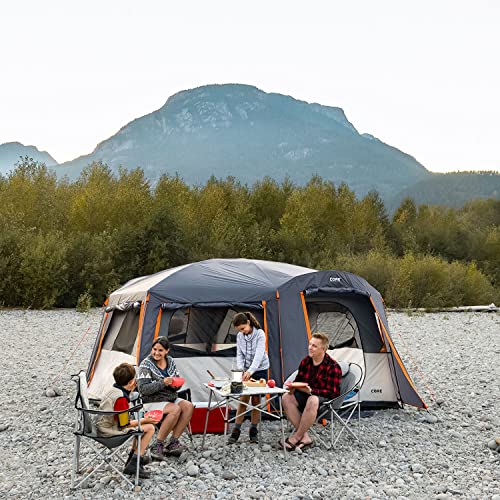
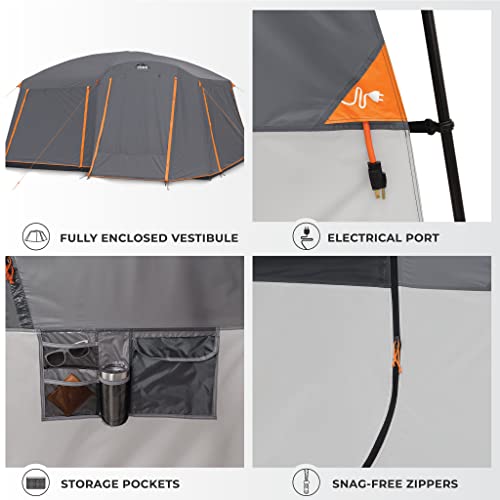
Coleman’s Skydome with the full-fly vestibule is where I start to feel confident recommending something for wet conditions. The WeatherTec system, with inverted seams, welded corners, and full seam taping, is a known performer, and owners confirm it shrugs off rain when pitched correctly. The 13-foot vestibule is a standout, giving you dry gear storage and a mud-free entry point. Setup in under 5 minutes with pre-attached poles? That’s a real win for families or anyone tired of wrestling with poles after a long drive.
It’s not ultralight, and the dome shape isn’t as stable in extreme wind as a tunnel tent, but for typical campground storms and spring showers, this is one of the most reliable mid-range options. The 20% extra headroom helps too, no one likes crouching in a tent. Compared to the CORE cabin models, it’s less spacious but more field-proven in wet weather.
Product photos


CAMPROS CP 8 Person Camping Tent

Strengths
- Room divider included
- Good ventilation
- Color-coded poles
Trade-offs
- Coating wears over time
- No full rainfly
- Average storm performance
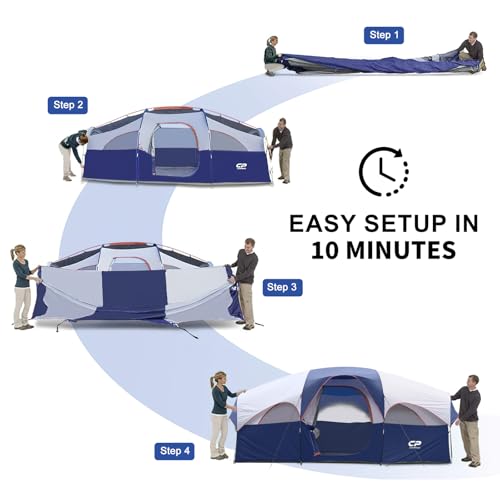
The CAMPROS 8-person tent stands out with its double-layer design and included room divider, a curtain that doubles as a projector screen, which is a fun touch for family camping. The straight walls and 72-inch height make it feel airy, and the five large mesh windows help with airflow, though the lack of a full-coverage rainfly is a concern in sustained rain. Owners say it handles light storms fine, but the waterproof coating can degrade over time, and the seams aren’t fully sealed.
It sets up quickly with color-coded poles, which is great for beginners. But compared to the CORE models, it feels less robust in wind and heavy rain. The ventilation is better than average, but the overall weather protection is just okay. It’s a solid budget cabin tent, but not my first pick for stormy terrain.
Product photos


Forceatt 2/3/4 Person Backpacking Tent

Strengths
- Lightweight and packable
- Dual vestibules
- Sturdy aluminum poles
Trade-offs
- Tight fit for three
- Limited headroom
- Inner tent touches walls in rain
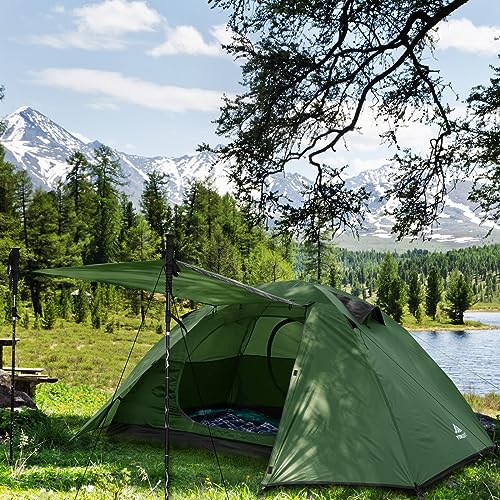
The Forceatt 2/3-person tent is a standout for hikers who need lightweight, weather-ready shelter without sacrificing too much space. At 5.68 lbs, it’s packable enough for serious trails, and the 7001 aluminum poles add real wind resilience. The dual vestibules are a huge plus, they give you dry storage for boots and packs, which is rare at this weight class. Owners confirm it holds up in mountain rain and gusts when staked properly.
The 68D polyester isn’t the burliest, but with welded seams and good pole geometry, it performs better than its price suggests. Compared to the budget 2-person tent, this one breathes better and sheds rain more effectively. It’s not instant, but the 3-minute setup is fast for a backpacking model. If you’re hitting the trail and want confidence in the forecast, this is a smarter buy.
Product photos


2 Person Waterproof Windproof Tent

Strengths
- Affordable price
- Lightweight design
- Simple setup
Trade-offs
- Flimsy pole construction
- Short rainfly
- Poor storm performance
This budget 2-person tent checks the basics: it’s lightweight, packs small, and includes a rainfly with taped seams. For the price, it’s a decent entry-level option, especially for fair-weather campers or occasional use. The skylight mesh boosts airflow, and the dual zippers help with ventilation control. But owners report the poles feel flimsy, and the rainfly doesn’t extend far enough in heavy side rain, puddles can form near the door.
It’s waterproof on paper, but real-world feedback suggests it’s better suited for light rain with proper site selection. If you’re on a tight budget and mostly camp in summer, it’s passable. But compared to the Forceatt or Coleman options, it lacks the refinement and storm-readiness I’d want for unpredictable weather.
Product photos


VEVOR 72″ x72″ Pop Up Sports Tent
Strengths
- Quick pop-up setup
- Excellent visibility
- Sturdy carry bag
Trade-offs
- Not for heavy rain
- Poor ventilation
- Fragile TPU material
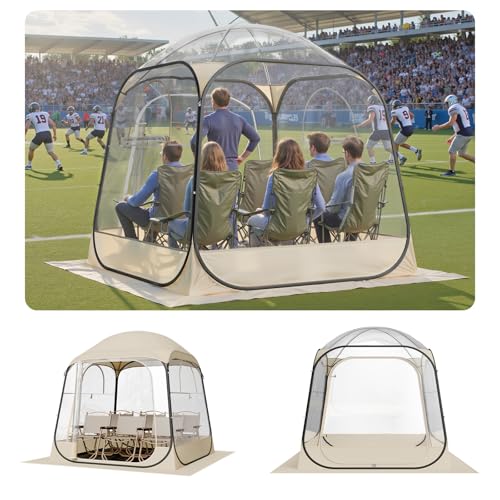
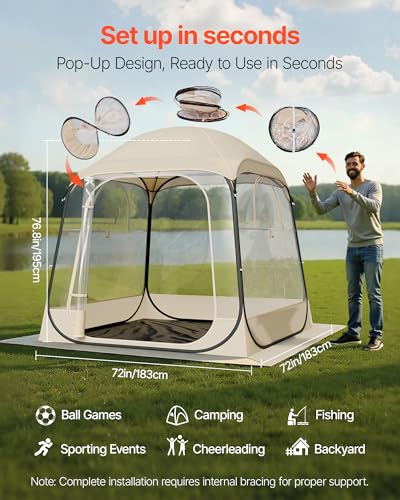
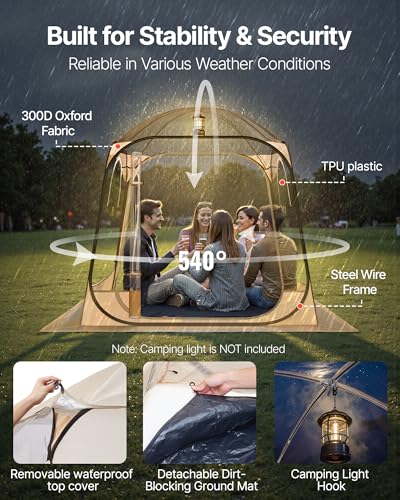
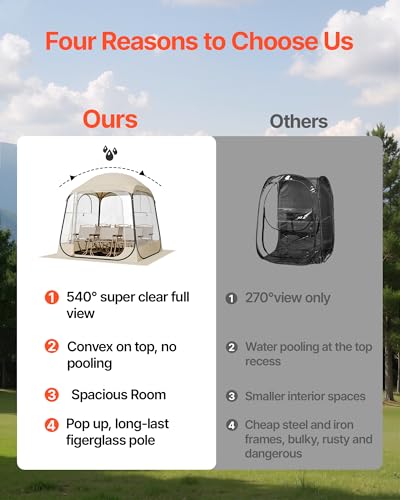
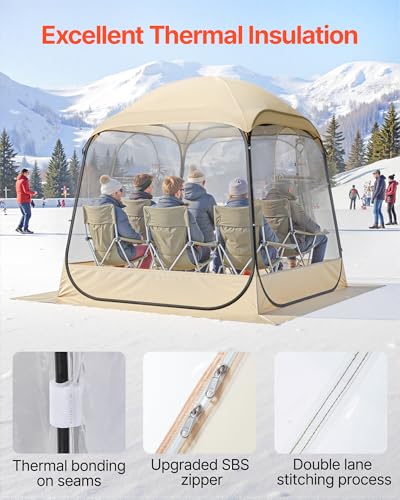
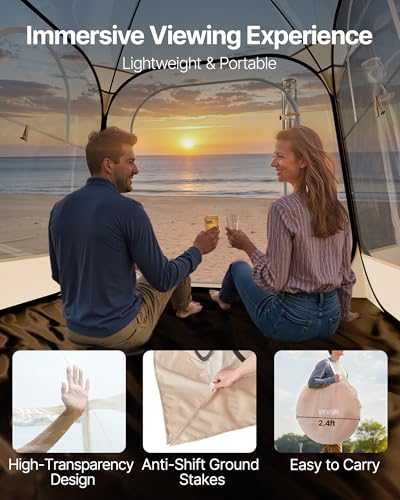
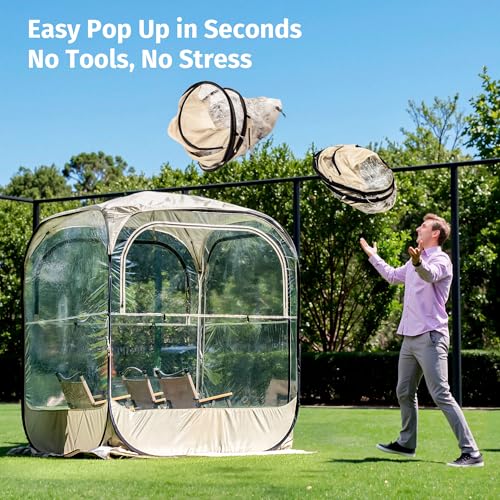
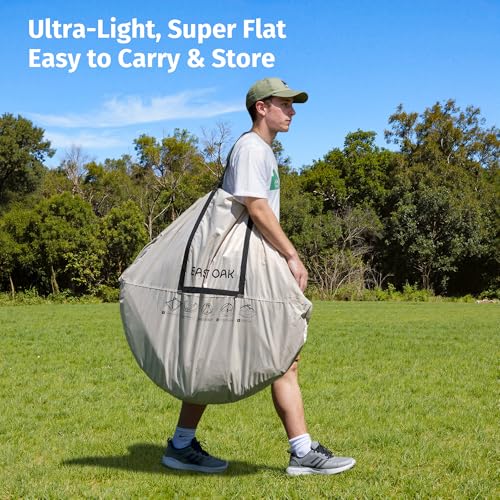
This VEVOR pop-up shelter markets itself as weatherproof, but the fine print gives it away, owners consistently report it handles light drizzle fine, but it’s not built for sustained rain or wind. The TPU plastic and steel frame do offer decent short-term protection, and the 540° visibility is legit great for sideline use at games or fishing spots where you want to stay connected to your surroundings. Still, calling it ‘weather proof’ feels like a stretch when the manufacturer explicitly warns against use in heavy rain or strong winds.
I’d consider this more of a sun and sprinkle shield than a true rain tent. The pop-up mechanism is undeniably fast, and the included stakes and wind ropes add some stability, but if you’re in a downpour, you’re gambling. For casual, fair-weather use with the occasional cloud burst, it’s functional. For serious wet conditions, look elsewhere.
Product photos
East Oak 5×5 FT Weather Sports Tent
Strengths
- Tall interior clearance
- HD TPU clarity
- UPF50+ sunshade
Trade-offs
- No full rainfly
- Limited storm resilience
- Seams not fully taped
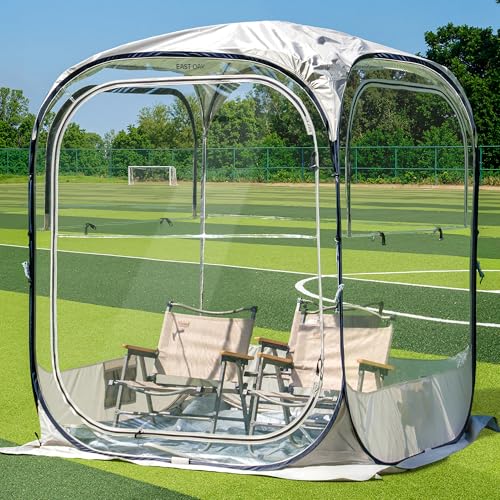
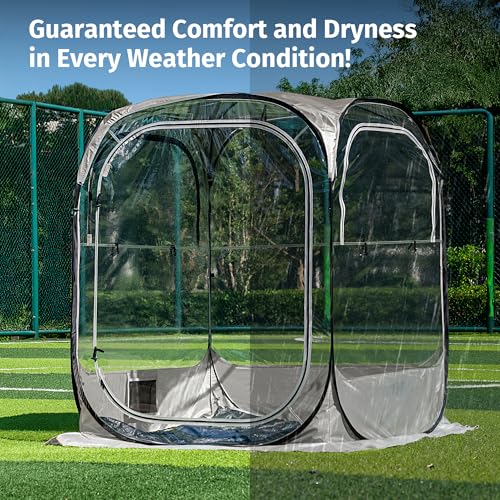
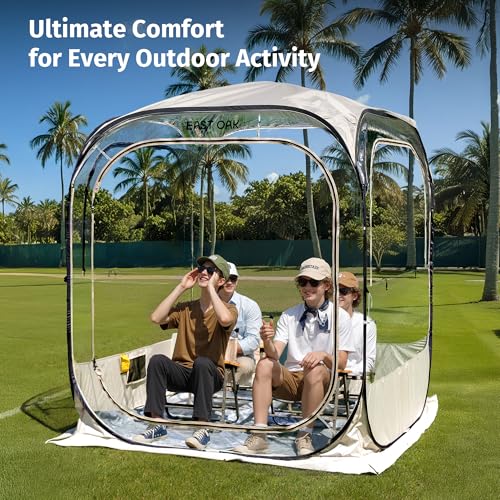
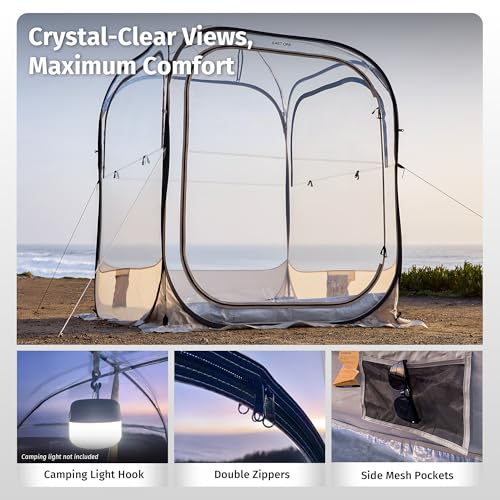
With a 7-foot ceiling and premium TPU walls, this East Oak tent delivers on visibility and headroom, a rare win for compact pop-up designs. Owners praise how clear the material stays over time, resisting the yellowing that plagues cheaper PVC models. The UPF50+ sunshade and removable floor mat add versatility, and the galvanized steel poles offer better wind resistance than most in this category. On paper, it looks like a solid upgrade over basic bubble tents.
But here’s the catch: while it’s marketed as all-weather, it still lacks a true rainfly and full seam taping. Reviewers note it holds up in light rain if staked properly, but prolonged exposure leads to seepage, especially at the seams. It’s better than most clear pop-ups in wet weather, but not a substitute for a real camping tent with a full-coverage fly.
Product photos
How We Picked These tents for rain
Rather than a hands-on lab test, my research for these tent recommendations focused on a detailed comparison of published specifications and features across many models. I weighed owner reviews from multiple sources, alongside assessments from reputable outdoor gear reviewers, to build a clear picture of real-world performance. My approach involved ranking tents against criteria specifically relevant to staying dry during inclement weather – a critical factor for a comfortable camping experience.
For tents designed for rain, I prioritized waterproof ratings (measured in mm), the quality of construction around seams and zippers, and the inclusion of features like full rainflies and vestibules. A tent’s ability to withstand wind was also heavily considered, as wind often accompanies rain and can compromise a tent’s waterproofness. Ultimately, a balance between robust weather protection and practical features like space and ease of setup dictated the final rankings.
Specifications reliably indicate a tent’s potential for water resistance, but owner feedback proved crucial for assessing how well those specs translate to real-world performance. I paid close attention to reports of leaks, condensation build-up, and durability of waterproof coatings. Positive reputation and consistently high ratings from experienced campers influenced my selections, especially when combined with features like fully taped seams and effective tent rain protection methods.
How To Choose The tents for rain
Finding the right shelter when the forecast calls for showers isn’t just about staying dry; it’s about maintaining comfort and enjoying your time outdoors.
A quality rain tent prioritizes fully sealed construction – look for taped seams on the rainfly and floor, a high waterproof rating (measured in millimeters, or mm) for the rainfly and floor fabrics, and a design that minimizes exposed zippers. Robust pole systems and effective guylines are also crucial for stability in windy conditions, and a full-coverage rainfly extending to the ground prevents water from splashing up the sides.
Waterproofing & Fabric Technology
The heart of a rain-worthy tent is its ability to keep water out. Don’t get hung up on extremely high waterproof ratings alone (like 5000mm or above) – a well-designed tent with a 2000-3000mm rating and excellent seam sealing will often outperform a tent with a higher rating and poor construction. Pay attention to the fabric itself; polyester is generally more water-resistant than nylon (though nylon can be lighter) and often holds up better to UV exposure. Beyond the numbers, look for tents advertising H20 Block Technology (like those from CORE) or WeatherTec systems (Coleman) – these indicate a focus on sealing and overall weather protection.
Tent Shape & Vestibules
Dome tents are popular for their simplicity and wind resistance, but cabin tents offer more usable space and headroom, which can be a lifesaver during extended periods of inclement weather. Consider how you’ll be spending time inside the tent. A full-coverage rainfly that extends all the way to the ground is essential for preventing splashing and keeping the interior dry. Vestibules are also incredibly useful; they offer a covered area to store wet gear, change clothes, or even cook if conditions are truly miserable.
Here’s what to look for in vestibule space: * A small vestibule (just enough for boots) is better than nothing. * A medium-sized vestibule can accommodate packs and some gear. * A large vestibule, like the 13 x 3.5 ft vestibule on the Coleman Skydome, effectively creates a second, covered room. This is especially valuable for larger groups or longer trips.
Capacity vs. Comfort & Organization
It’s tempting to buy a tent rated for more people than you anticipate needing, but a larger tent isn’t always better. More space means more air to heat (or cool) and more surface area for condensation to form. When selecting a tent, think about how you actually camp. Do you prioritize standing room, or are you okay with cozy quarters? A well-designed tent will also incorporate features like interior pockets, gear lofts, and room dividers (as seen in the CAMPROS CP 8 Person) to help keep things organized and dry. Don’t underestimate the value of a thoughtfully designed interior when you’re stuck inside due to rain.
A properly pitched tent, even one with excellent waterproofing, can still be compromised by poor site selection. Always pitch on high ground, away from natural drainage paths, to avoid pooling water.
If you’re planning a trip where rain is likely, learning about setting up tent in wet weather is a valuable investment of your time.
Tents for Rain Compared
Here’s a comparison of key specifications for tents designed to perform well in rainy conditions.
| Product Title | Capacity | Waterproofing (mm) | Vestibule | Room Divider | Setup Time | Weight (lbs) |
|---|---|---|---|---|---|---|
| CORE 9 Person Instant Cabin Tent | 9 | 1200 | Yes | Yes | 2 min | N/A |
| CORE 10 Person Cabin Tent | 10 | 1200 | Yes | Yes | N/A | N/A |
| Coleman Skydome Tent with Full-Fly | 1 | N/A | Yes | No | < 5 min | N/A |
| CAMPROS CP 8 Person Camping Tent | 8 | N/A | No | Yes | 5 min | N/A |
| Forceatt 2/3/4 Person Backpacking | 2-4 | N/A | Yes | No | 3 min | 5.68 |
| 2 Person Waterproof Windproof Tent | 2 | N/A | No | No | 3 min | 4.8 |
| VEVOR 72″ Pop Up Sports Tent | 6 | N/A | No | No | Seconds | N/A |
| East Oak 5×5 FT Weather Sports Tent | 2-3 | N/A | No | No | N/A | N/A |
Frequently Asked Questions
What waterproof rating do I actually need for a tent intended for rainy conditions?
A rating of 2000-3000mm is generally sufficient for reliable water resistance, even in heavy rain, assuming the tent is well-constructed with taped seams. Don’t prioritize extremely high ratings (like 5000mm+) over build quality and seam sealing.
Are dome tents or cabin tents better for dealing with rain?
Dome tents excel at shedding wind and rain due to their aerodynamic shape, but cabin tents offer more usable space and headroom, which is helpful when you’re spending extended time inside during poor weather. Consider your needs for space versus wind resistance.
What’s the benefit of a vestibule on a rain tent?
A vestibule provides a covered, protected area outside the main tent body where you can store wet gear, change clothes, or even cook, keeping the tent interior drier and more organized. Larger vestibules function almost as a second room.
How important is seam sealing in a waterproof tent?
Seam sealing is absolutely critical. Even a high waterproof rating is useless if water can penetrate through the seams where the fabric is stitched together. Look for tents that specifically state they have fully taped seams.
What is the purpose of a rain fly correctly, and how does it contribute to overall weather protection?
The purpose of a rain fly is to act as a detachable, waterproof layer over the tent body, shielding it from rain and condensation while also providing an extra layer of wind protection and insulation.
The Bottom Line
Choosing a tent for rain often comes down to balancing how much fuss you’re willing to put into setup versus how confident you want to be in truly challenging weather. For overall reliability and space, the CORE 9 Person Instant Cabin Tent stands out – its quick setup and included room divider make it a comfortable basecamp even during extended downpours.
If you’re prioritizing a specific need, we’ve got you covered. For budget-minded campers, the Coleman Skydome Tent with Full-Fly offers a solid level of protection at an accessible price. Backpackers needing a lightweight option should look to the Forceatt 2/3/4 Person Backpacking Tent, while those needing instant shelter will appreciate the VEVOR 72″ Pop Up Sports Tent.
Ultimately, remember that no tent is completely waterproof if it’s not pitched correctly and maintained. Understanding tent waterproofing explained is more valuable than chasing the highest waterproof rating. Focus on proper site selection, seam sealing, and keeping your gear dry, and you’ll have a much more enjoyable experience, rain or shine.
