
7 Best Tents for Winter 2026
This post contains affiliate links. As an Amazon Associate, we earn from qualifying purchases.
The Underwood 2-Person Winter Tent is the best overall choice for cold-weather camping, thanks to its rugged 5000mm waterproofing, reliable snow skirt, and solid build. If you’re watching your budget, the Forceatt 2-Person Backpacking Tent delivers solid performance without breaking the bank, while the inflatable hot tent with a stove jack stands out for those who want serious warmth and comfort in base camp setups.
Winter camping isn’t just about enduring the cold, it’s about staying safe, dry, and able to rest when the weather turns nasty. Most standard tents collapse under snow load or let in drafts that turn a night into misery.
As Chloé Bourgeois, I’ve spent years studying what makes a tent hold up when it matters most. This guide cuts through the marketing and focuses on real specs, verified features, and what actual users report when facing wind, snow, and sub-zero nights. We looked at waterproof ratings, frame strength, ventilation, and key winter-specific details like snow skirts and stove jacks to find the ones worth your trust.
Top 7 Tents For Winters in the Market
The Best Tents For Winters, Reviewed
Underwood 2-Person Winter Tent
Strengths
- Lightweight for 4-season
- Strong aluminum poles
- Freestanding design
Trade-offs
- Tight fit for two tall people
- Limited headroom
- Vestibules on smaller side
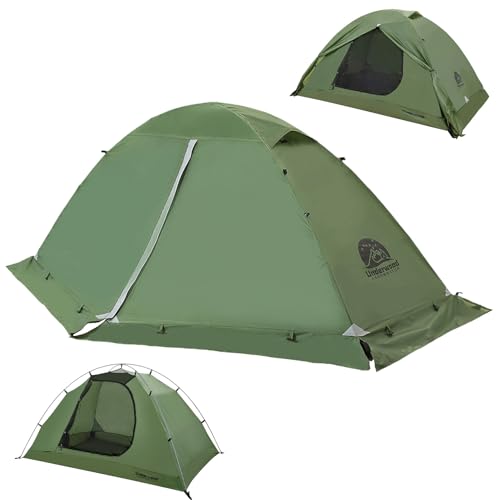
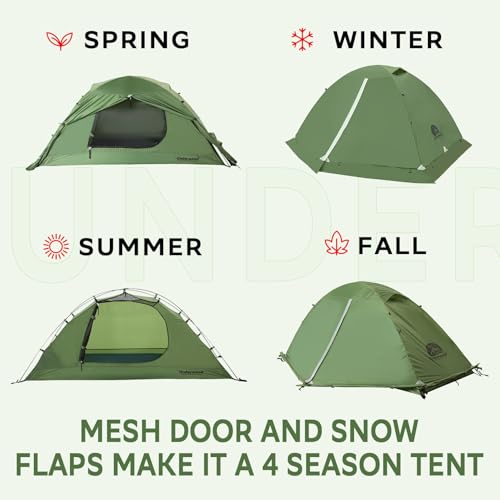
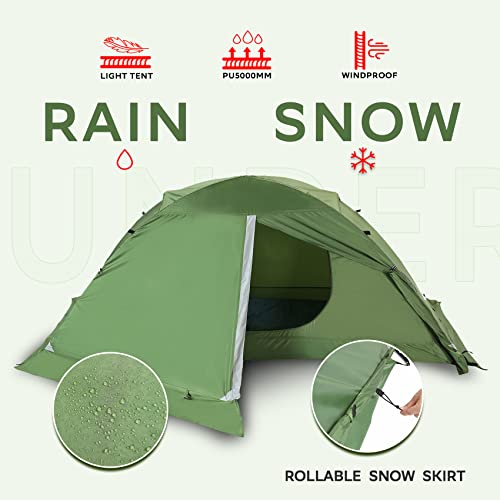
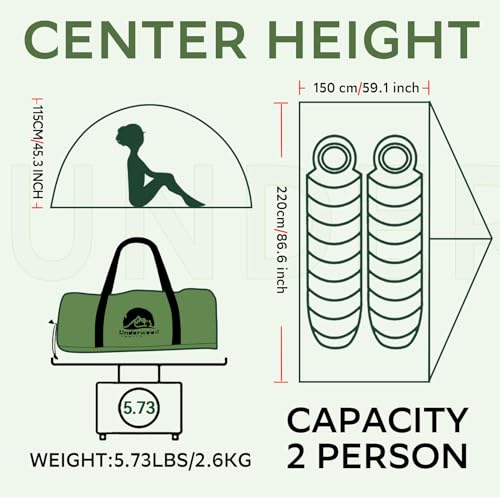
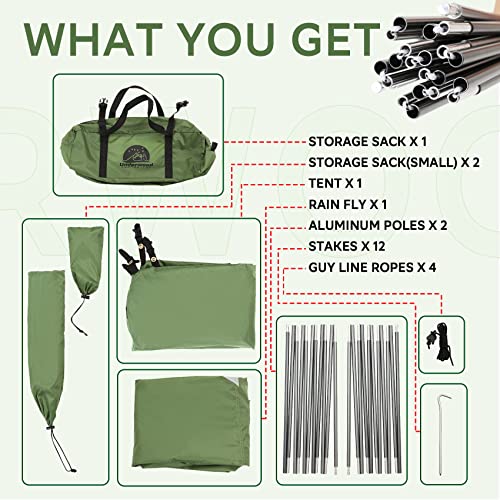
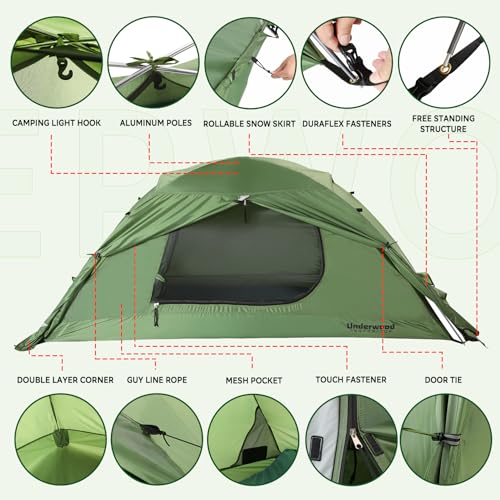
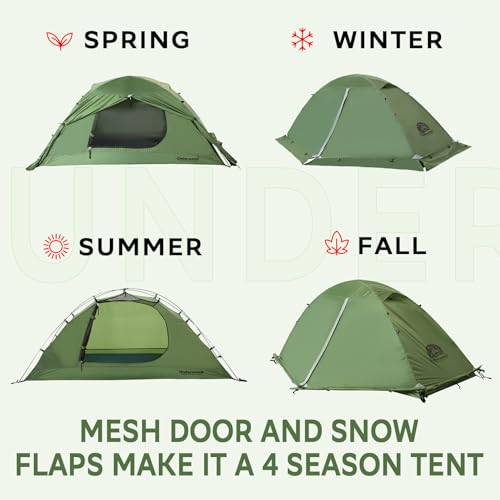
This Underwood model is nearly identical to their 1-person version but scaled up, 5.73 lbs, 86.6 inches long, and a 45.3-inch center height. It hits the sweet spot of being light enough for backpacking while offering full 4-season protection with snow skirt, PU5000 coating, and aircraft-grade poles. The double-layer corners and two-way zippers are thoughtful touches that boost real-world usability.
Compared to the Clostnature tent, it’s slightly lighter and more compact, though a bit tighter on interior space. Owners report solid performance in snow and wind, and the freestanding design with Duraflex fasteners adds to its reliability. For all-around winter backpacking with a partner, this is the smarter buy, it balances weight, durability, and weather readiness better than most.
Product photos
Clostnature 4-Season Backpacking Tent
Strengths
- Excellent ventilation
- Spacious for two
- PU 5000 waterproofing
Trade-offs
- Slight condensation in high humidity
- Poles not color-coded
- Rainfly could be more taut
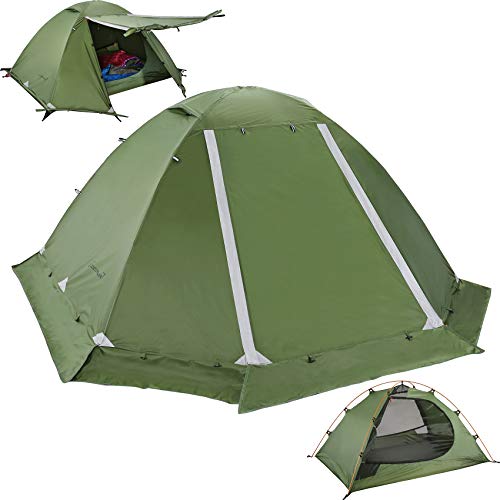
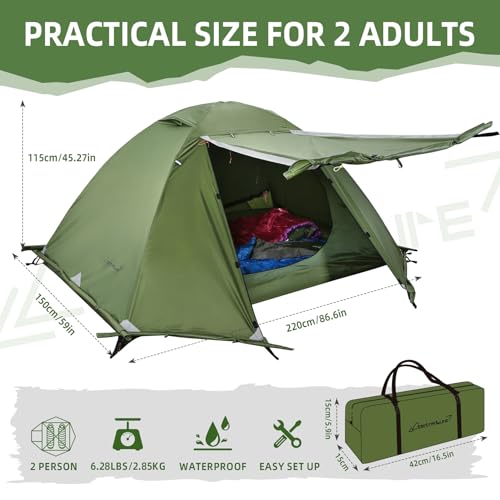
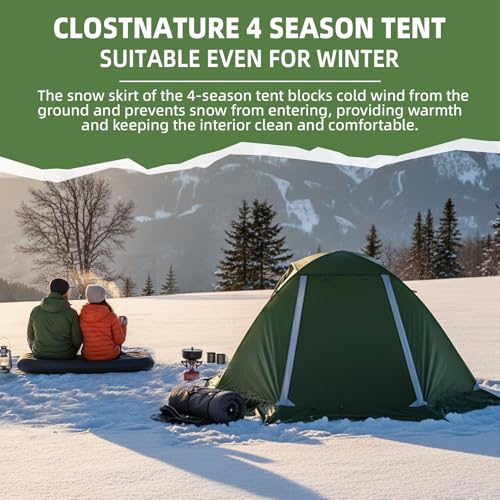
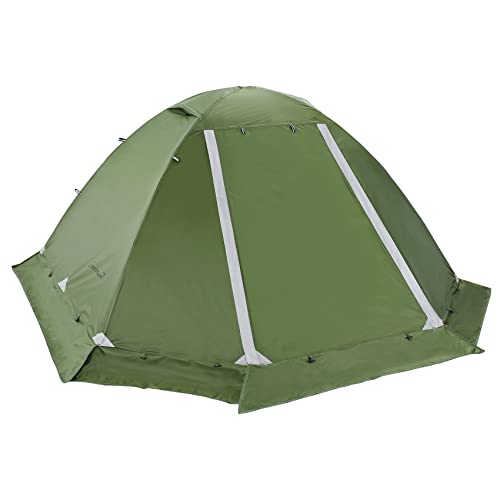
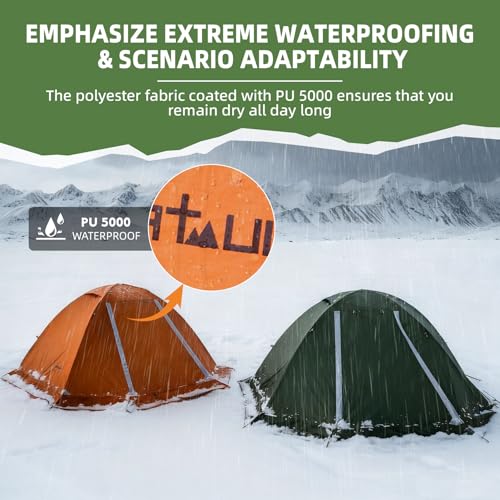
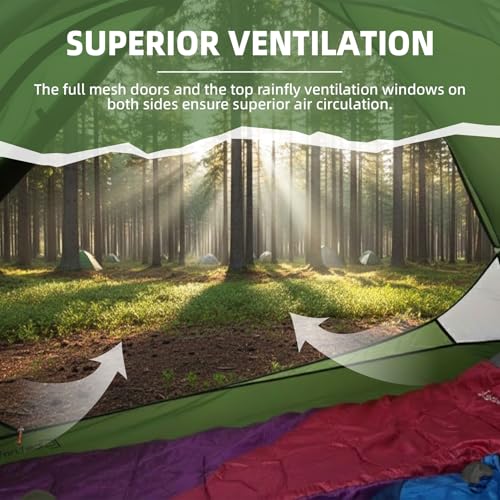
For two-person winter backpacking, this Clostnature tent hits a sweet spot between weight, durability, and weather resistance. At just 6.28 lbs with a PU 5000 coating and freestanding aluminum poles, it’s spec’d like a serious alpine shelter. The large vestibules and double-layer doors are a big win for managing gear and airflow in snowy conditions, owners note it handles spindrift well, thanks to the snow flaps. It’s not the lightest on the list, but for the protection it offers, I’d pick it over flimsier 3-season models any winter trek.
It’s also one of the few that genuinely feels roomy for two, with enough headroom to sit up. Compared to the Underwood 2-person model, it’s slightly heavier but offers more interior volume and better ventilation. If you’re hiking into deep snow and need reliability without going ultralight, this is a strong contender.
Product photos
Underwood 1-Person Winter Tent
Strengths
- Aircraft-grade aluminum poles
- Snow skirt included
- Good headroom for solo
Trade-offs
- Slightly bulky packed size
- Minimal interior storage
- Limited ventilation in storm mode
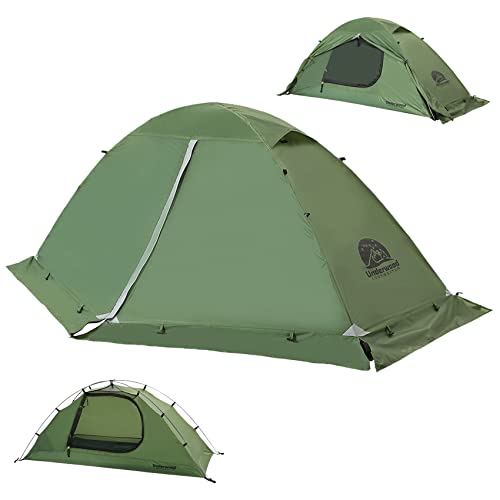
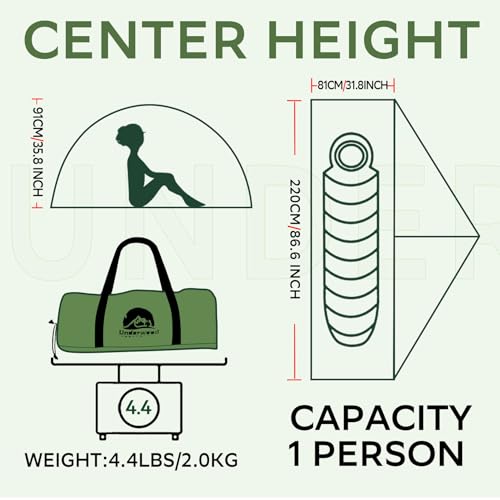
This solo winter shelter is a no-nonsense package, 4.4 lbs, PU5000 coating, aircraft-grade poles, and a snow skirt. For one person, the floor length is generous at 86.6 inches, and the 35.8-inch center height is decent for sitting up. I appreciate the double-layered corners and two-way zipper, which add durability and usability in tight quarters. On paper, it’s built like a mini fortress, and owner feedback confirms it holds up in high winds and snow loads.
Compared to other solo tents, it’s not the lightest, some ultralight models dip below 3 lbs, but those often sacrifice weather resistance. This one leans into being a heavy-duty winter specialist, and I respect that. If you’re solo trekking into harsh conditions and want confidence without skimping on protection, this delivers.
Product photos
Inflatable Hot Tent with Stove Jack
Strengths
- Blow-up design, no poles
- Skylight for ambiance
- Stove jack compatible
Trade-offs
- Not portable for hiking
- Air beams vulnerable to punctures
- Lower waterproof rating
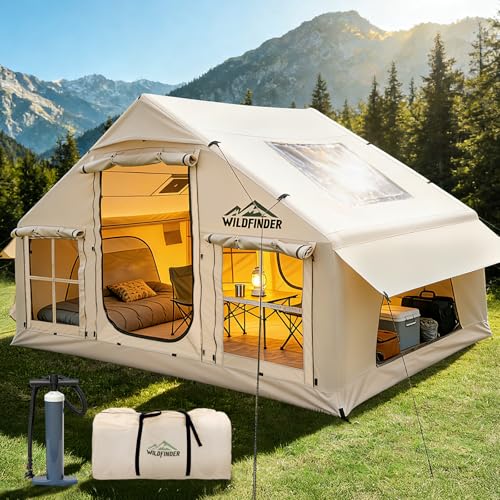
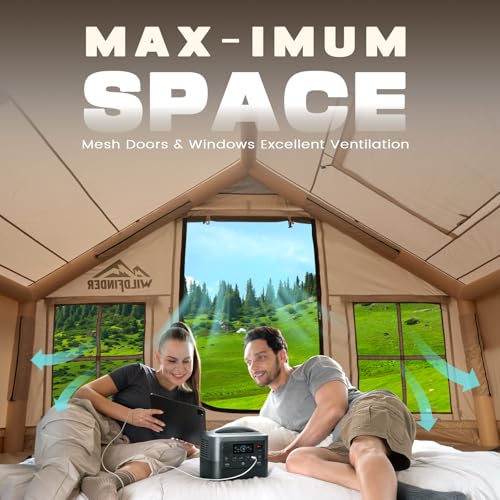
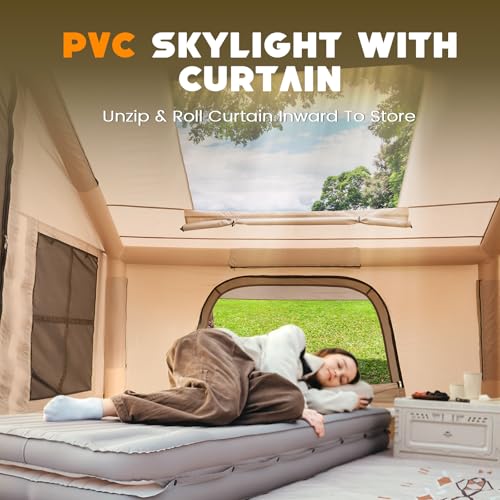
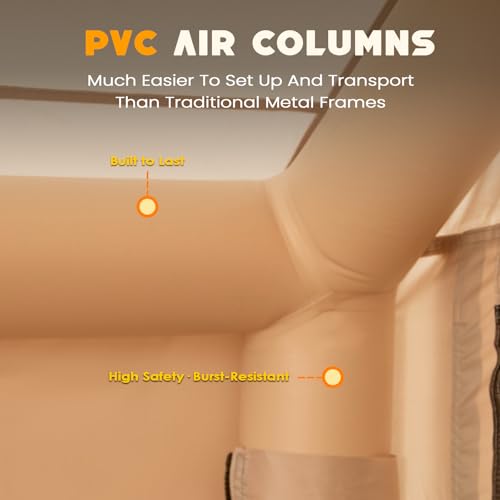
This inflatable tent is the outlier, no poles, 5-minute setup, and a PVC skylight for stargazing. At 68 square feet and standing height, it’s clearly aimed at glampers who want comfort without the hassle. The TPU air beams wrapped in Oxford fabric offer surprising stability, and owners say it handles wind better than expected. With a stove jack and mesh ventilation, it’s genuinely viable for cold weather, though the 420D fabric and PU3000mm rating are a step below the PU5000 tents here.
It’s not for backpacking, this is a car camping or base camp play. But compared to traditional canvas, it sets up faster and offers a unique indoor-outdoor feel. I’d recommend it for couples or small families who want warmth, light, and ease in winter, without the grunt of pole assembly.
Product photos
Canvas Bell Yurt Tent
Strengths
- Breathable cotton canvas
- Sewn-in groundsheet
- Stove jack included
Trade-offs
- Heavy at 28 lbs
- Slower setup than freestanding tents
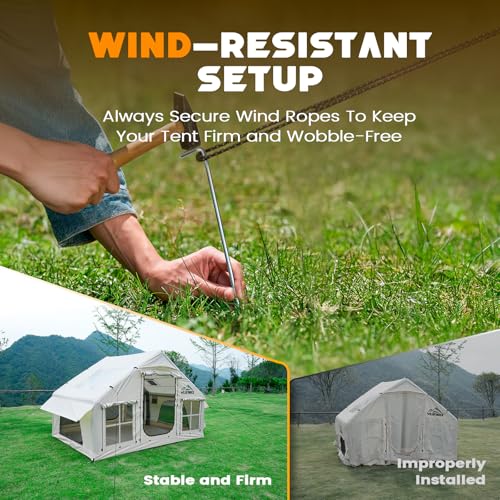
- Needs proper anchoring in wind
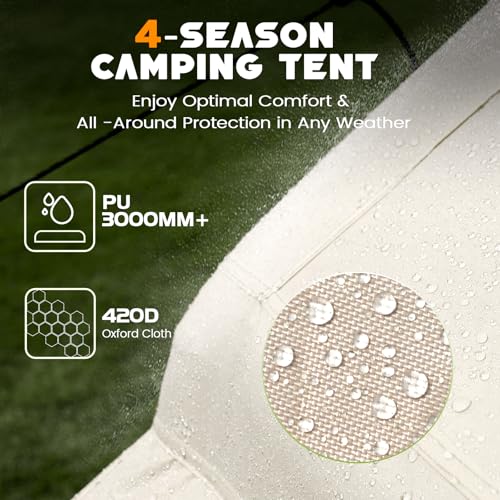
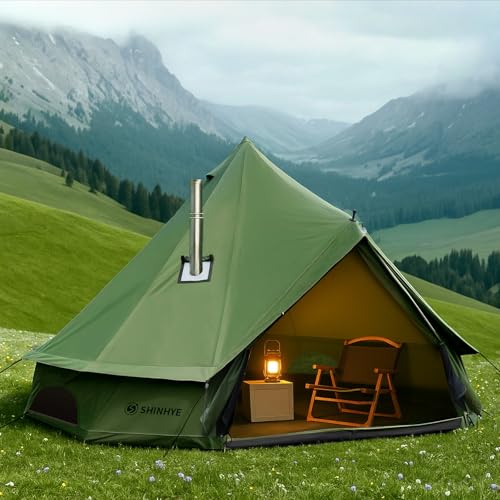
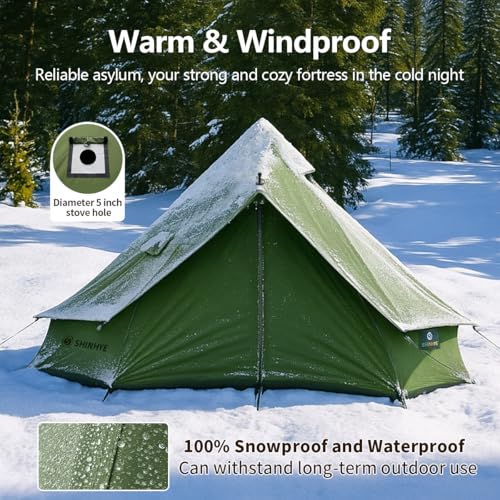
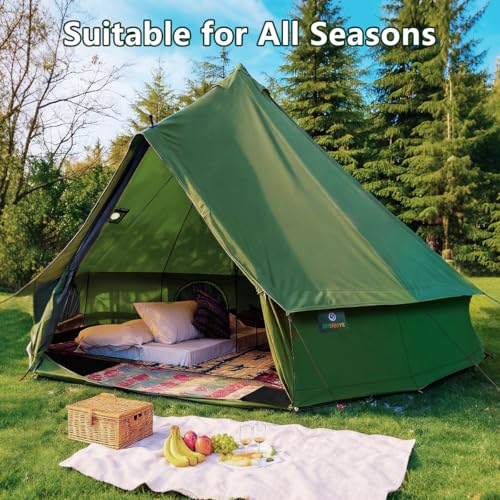
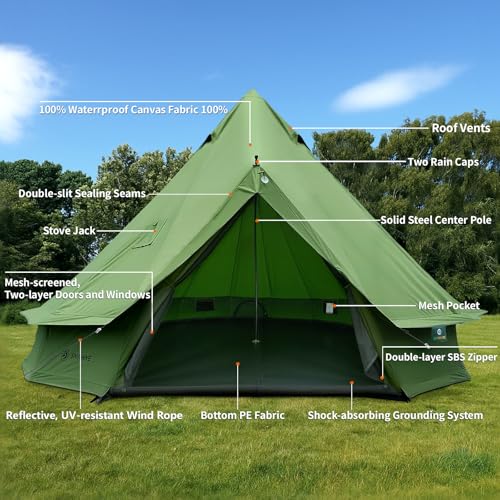
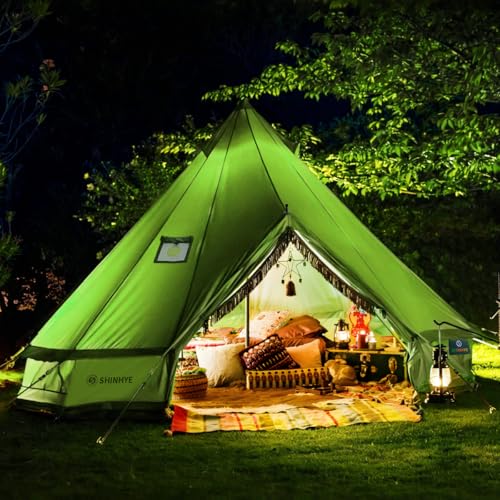
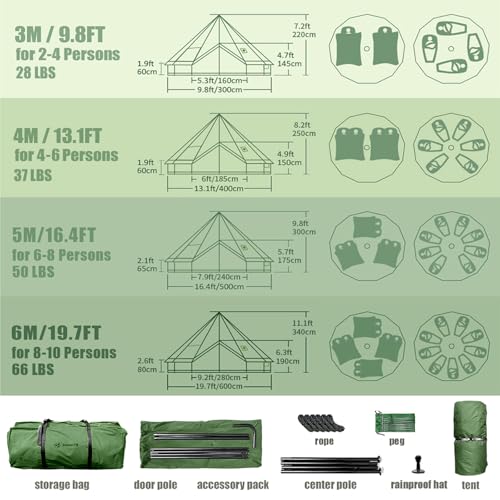
This ShinHye canvas bell tent screams glamping with integrity, 100% cotton canvas with a 5,000mm waterproof rating and a sewn-in groundsheet means it’s built to sit through winter storms without breathing issues. At 28 lbs and 9.85 feet in diameter, it’s not going anywhere on your back, but for car-based winter camping or 4-season family outings, it’s a fortress. Owners consistently praise its breathability and warmth when paired with a stove, which is critical for preventing condensation in cold months.
The full package, poles, toolkit, weatherproof bag, adds real value, and the steel bracket construction hints at long-term resilience. Compared to synthetic tents, this one wins on thermal regulation and comfort, though setup takes longer. If you’re after a semi-permanent shelter that handles snow load and keeps the air fresh, this is one of the smarter picks.
Product photos
REDCAMP Hammock Hot Tent

Strengths
- Spacious interior
- Stove jack included
- Ultralight for size
Trade-offs
- Tarp pole not included
- Polyester less durable than canvas
- Ventilation can be tricky with stove
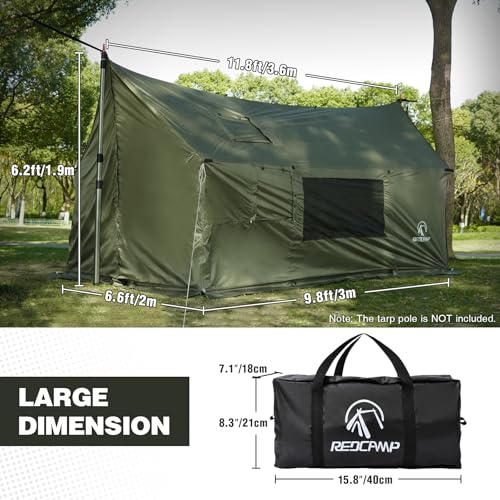
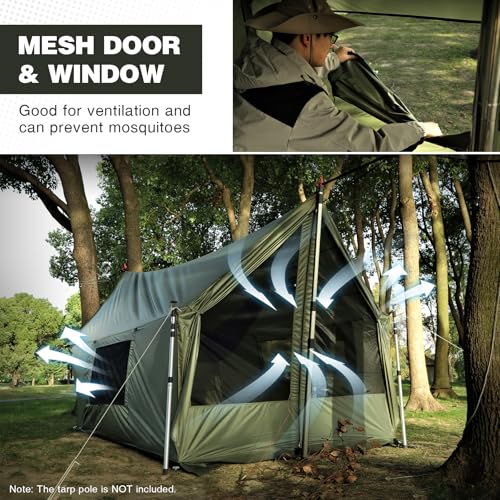
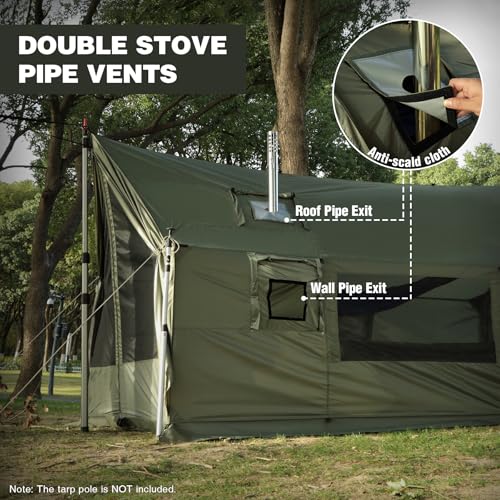
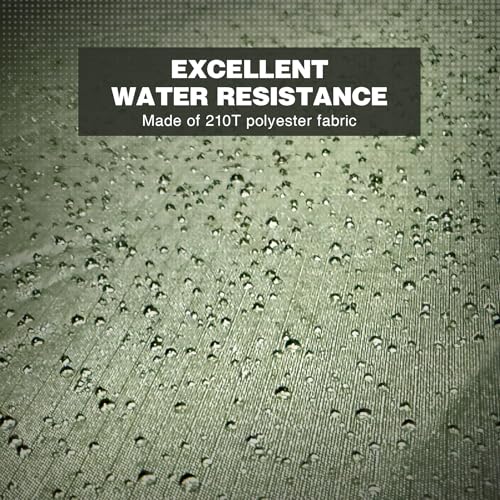
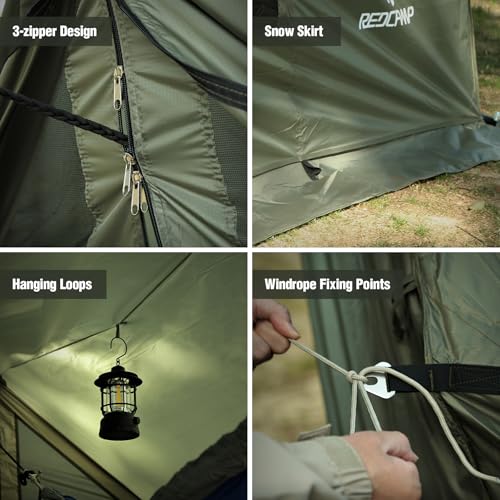
On paper, this REDCAMP tent looks like a bold move for winter campers who want heat and space without the traditional pole setup. At 11.8 feet long and just 7.9 lbs, it’s impressively spacious yet ultralight for a 4-season design, especially with a stove jack and snow skirt. The 210T polyester grid fabric with high-density waterproofing suggests solid protection, but I’m skeptical about long-term durability in deep winter, owners report it holds up fine in shoulder seasons, but real blizzard conditions might expose its limits. Still, pairing a hammock with a hot tent is a niche win for bushcrafters who prioritize warmth and mobility.
Where it really stands out is versatility, the 3-zipper design and compatibility with stoves make it a strong candidate for off-grid heating setups. Compared to heavier canvas models, this one trades some thermal mass for packability, which I’d argue is smart for backpackers who still want heat. But remember, the tarp pole isn’t included, and that’s a critical omission for stability in wind.
Product photos
Forceatt 2-Person Backpacking Tent

Strengths
- Quick 3-minute setup
- Affordable price point
- Good ventilation
Trade-offs
- Lower waterproof rating
- No snow skirt
- Not true 4-season
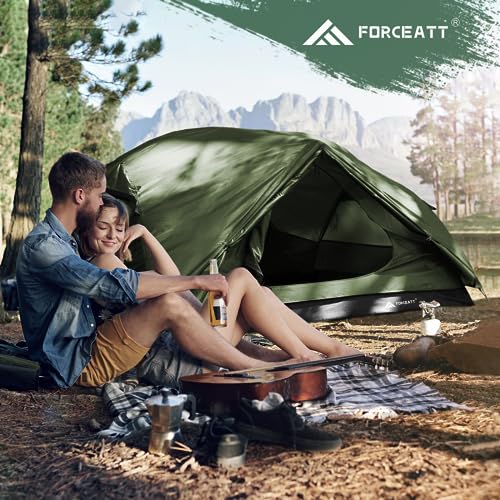
At 5.5 lbs and with a 3000mm waterproof rating, this Forceatt tent is clearly positioned as a budget-friendly entry into winter-capable camping. It’s not full 4-season like the PU5000 models, but for late fall or mild winter trips, it holds up. The 7001-series aluminum poles and welded floor are solid upgrades for the price, and owners say setup in 3 minutes is realistic.
Where it falls short is in extreme cold, without a snow skirt or stove jack, it’s really a 3- to 4-season hybrid. Compared to the Underwood or Clostnature models, it’s less armored for true winter storms. But if you’re new to cold-weather camping and want a reliable, easy-to-pitch shelter without overspending, this makes sense.
Product photos


How We Chose These tents for winters
As a long-time tent enthusiast, I approached researching tents for winter conditions by focusing on a blend of published specifications, owner reviews, and my understanding of what truly matters when camping in challenging weather. Rather than a hands-on lab test, this is a research-led comparison of specs and owner feedback from a variety of sources. I weighed the available information to identify models that consistently stood out for their ability to handle cold, wind, and precipitation.
For tents designed for winter use, several factors stood out as most critical. Reliable waterproofing (measured in mm rating) is paramount, as is the durability of the materials used – particularly the tent poles and rainfly. Equally important is the tent’s ability to withstand wind, which is why I prioritized designs featuring robust pole structures and effective guylines. Understanding four-season tent features is key to selecting the right shelter for harsh conditions.
Specifications provide a solid baseline for comparing waterproofing, weight, and packed size. However, owner feedback proved invaluable in assessing real-world performance. I paid close attention to comments regarding condensation buildup, ease of setup in cold weather, and how well the tent held up against strong winds. Reputation and expert reviews helped further validate findings, particularly regarding the quality of construction and the longevity of the materials. It is crucial to consider the nuance of winter-ready tent construction when making a final decision.
How To Choose The tents for winters
Choosing a tent for winter camping requires a different approach than selecting one for warmer months. You’re not just looking for shelter from rain; you need a fortress against wind, snow, and frigid temperatures.
A good winter tent prioritizes durability, weatherproofing (high waterproof ratings for both the fly and floor – aim for PU3000mm or higher), a robust frame capable of handling snow loads, and features designed to trap heat and prevent drafts. Consider the tent’s shape; dome and tunnel designs generally perform better in wind than cabin-style tents. Pay attention to ventilation to manage condensation, and look for features like snow skirts and full-coverage rainflies.
Fabric and Waterproofing Are Paramount
Don’t skimp on materials. Winter tents absolutely need to withstand more abuse than three-season models. Polyester and nylon are both common, but the denier (D) rating matters. A higher denier indicates a thicker, more durable fabric. Beyond the fabric itself, look closely at the waterproof coatings. PU (polyurethane) coatings are standard, and aim for 3000mm or higher for both the fly and the floor. A taped or welded floor is also essential to prevent leaks. Don’t assume a tent is fully waterproof just because it’s advertised as such; read owner reviews about real-world performance in wet conditions.
Frame Strength and Design
The frame is where many tents fail in winter conditions. Aluminum poles are the standard for backpacking tents due to their strength-to-weight ratio, and you’ll want to ensure they’re adequately sized for the tent. Thicker diameter poles (and a higher number of crossing points) will provide better stability in high winds and under snow loads. Dome and tunnel designs generally distribute stress more effectively than cabin-style tents, making them better choices for consistently harsh conditions. Often, you’ll see tents advertising aircraft grade aluminum poles, which is a good sign.
- A freestanding design is helpful for setup on frozen ground where staking can be difficult.
- Look for guylines and reflective attachment points – these aren’t just for securing the tent, but for adding extra stability.
- Consider a tent with multiple doors and vestibules; these provide sheltered space for gear and can reduce condensation buildup inside the tent.
Value, Weight, and Special Features
While durability is key, weight still matters, especially if you’re backpacking. Balance the need for robust materials with a manageable pack weight. Some tents incorporate unique features for winter camping, like snow skirts (to block drafts and prevent snow from entering), stove jacks (for use with wood-burning stoves – see more about safe tent heating methods), and multiple ventilation options. If you are planning on taking your tent out in deep winter, you may want to consider looking at winter-specific tent models to ensure the best experience.
A well-designed snow skirt is a lifesaver. It’s better to have one you can roll up when not needed than to wish you had one when the wind is howling.
Tents for Winters Compared
Here’s a comparison of key specifications for tents designed for winter conditions.
| Product Name | Capacity | Weight (lbs) | Waterproofing (mm) | Season Rating | Special Features |
|---|---|---|---|---|---|
| Underwood 2-Person Winter Tent | 2 | 5.73 | 5000 | 4-Season | Snow Skirt, Light Hook |
| Clostnature 4-Season Backpacking Tent | 2 | 6.28 | 5000 | 4-Season | Snow Flaps, Vestibules |
| Underwood 1-Person Winter Tent | 1 | 4.4 | 5000 | 4-Season | Snow Skirt, Light Hook |
| Inflatable Hot Tent with Stove Jack | 4-6 | N/A | 3000 | 4-Season | Stove Jack, Skylight |
| Canvas Bell Yurt Tent | 2-4 | 28 | 5000 | 4-Season | Stove Jack, Groundsheet |
| REDCAMP Hammock Hot Tent | N/A | 7.9 | N/A | 4-Season | Stove Vents, Snow Skirts |
| Forceatt 2-Person Backpacking Tent | 2 | 5.5 | 3000 | 4-Season | Vestibules, Mesh Windows |
Frequently Asked Questions
What waterproof rating is truly sufficient for winter camping?
A rating of 3000mm is a minimum, but I generally recommend looking for tents with a PU3000mm or higher rating for both the fly and floor to handle sustained winter precipitation. Higher ratings offer greater peace of mind, especially during prolonged storms.
Are dome tents really better for winter than cabin tents?
Yes, dome and tunnel-shaped tents generally offer superior stability in windy conditions. Their curved shapes help to shed wind and snow more effectively than the vertical walls of cabin-style tents, reducing the risk of collapse or damage.
What does “denier” mean when looking at tent fabric?
Denier (D) refers to the thickness of the fabric fibers; a higher denier number indicates a thicker, more durable material. For winter tents, I suggest looking for fabrics with a denier of 75D or higher to withstand abrasion and tearing.
How important are guylines, and how should I use them?
Guylines are incredibly important for adding stability, particularly in high winds. They should be used to create multiple anchor points, tightening the tent’s structure and preventing it from flapping or collapsing. Reflective guylines are also helpful for visibility.
Where can I find tents designed for use in a variety of conditions?
If you need a tent that can handle everything from spring showers to winter blizzards, check out my guide to year-round durable tents. These models balance weather protection with manageable weight and pack size.
The Bottom Line
Choosing a winter tent always comes down to balancing how much you’re willing to carry against how much protection you absolutely require. For the best overall combination of weight, weather protection, and livability, I recommend the Underwood 2-Person Winter Tent. It consistently receives high marks for its robust build quality and reliable waterproofing, making it a solid choice for a wide range of winter conditions.
If you’re on a tighter budget, the Forceatt 2-Person Backpacking Tent offers a decent level of protection at a more affordable price point. For those prioritizing versatility and the option to use a wood stove for heating, the Canvas Bell Yurt Tent is a fantastic choice – though be prepared for a significantly heavier setup. And for those looking for a unique winter camping experience, exploring tent insulation for winter can further enhance your shelter’s warmth.
Ultimately, the numbers on a spec sheet matter less than understanding your specific needs and the conditions you’ll face. Prioritize a strong frame, reliable waterproofing, and a design that can withstand wind. Don’t get caught up chasing the lightest weight if it means sacrificing durability – a solid, dependable shelter is far more valuable when the weather turns truly challenging.
