
7 Best Tents for High Winds 2026
This post contains affiliate links. As an Amazon Associate, we earn from qualifying purchases.
The best tent for high winds is the FanttikOutdoor Zeta C6 Pro Tent, thanks to its 35 mph wind resistance rating and smart drainage design. For a more affordable option that still holds up, the 8-Person Instant Cabin Tent has reinforced poles and a stable frame. If you’re after something rugged and long-term, the WildFinder 16.5ft Canvas Bell Tent offers serious durability with its TC cotton build and stove jack.
Most people don’t realize how quickly wind can turn a weekend camping trip into a disaster. Flimsy tents collapse, poles snap, and rain gets blown in through gaps, leaving you exposed. I’ve seen it happen too many times on the trail.
This guide cuts through the marketing and focuses on what actually keeps a tent standing in high winds. I looked at frame design, fabric strength, real-world owner feedback, and key stability features to find models that deliver when the weather turns.
Top 7 Tents In High Winds in the Market
The Best Tents In High Winds, Reviewed
FanttikOutdoor Zeta C10 Pro Max Tent

Strengths
- Spacious interior
- Quick 60-second setup
- High headroom
Trade-offs
- Bulky in strong winds
- Rainfly needs precise tension
- Large footprint
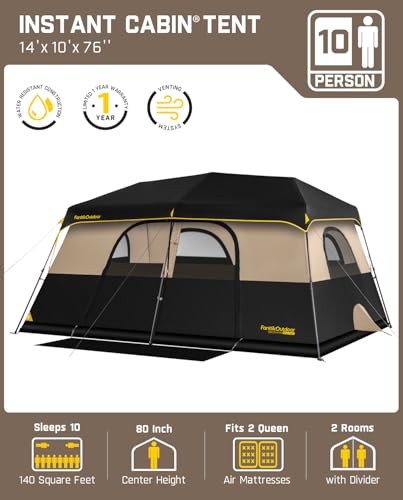
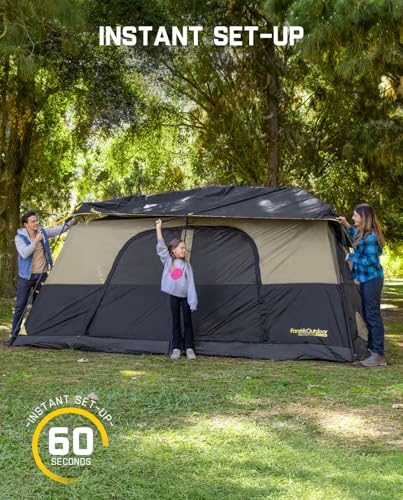
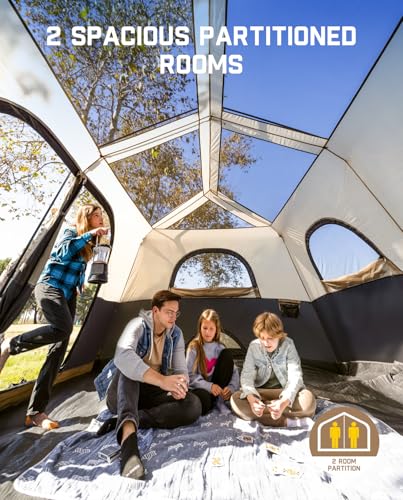
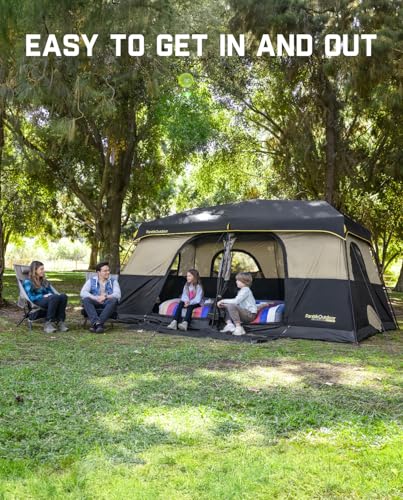
This 10-person cabin tent promises a lot, walk-in headroom, 60-second setup, and serious wind resistance, and on paper, it delivers. The 80-inch center height is a standout, making it one of the few instant tents where most adults can move freely without ducking. Owners consistently report that the dual doors and internal divider add real utility for families or groups needing privacy, and the pre-attached poles do make setup dramatically faster than traditional models.
Where it gets mixed feedback is in high winds. While the included guy lines and stakes help, some reviewers note that the large profile acts like a sail in gusts over 30 mph unless very well anchored. The rainfly design also requires careful tensioning, a detail the brand even warns about, or you risk pooling water. Still, for fair-weather camping with occasional breezes, this is a roomy, well-ventilated shelter that outperforms most in its class.
Product photos

Inflatable Tent with Pump
Strengths
- Superior wind resistance
- High waterproof rating
- Excellent airflow
Trade-offs
- Heavy and bulky
- Requires manual pumping
- PVC can feel clammy
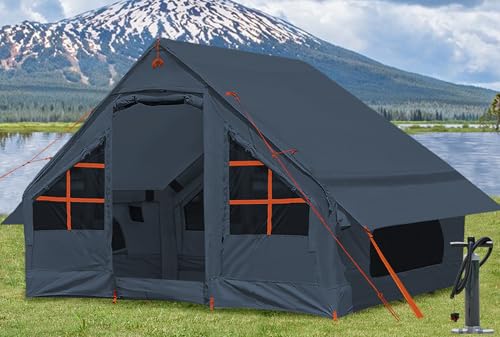
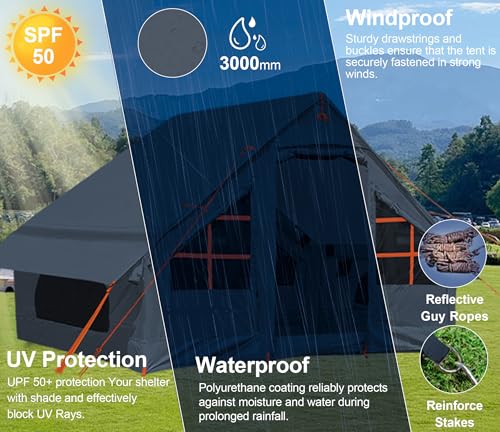
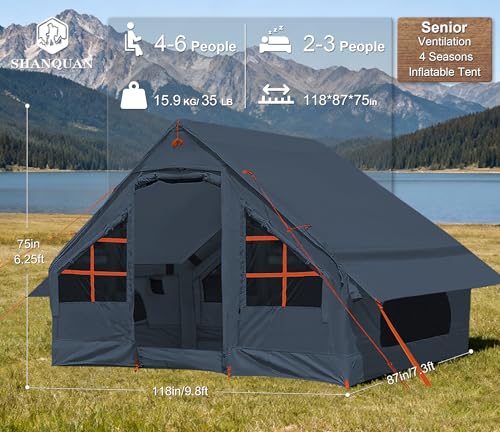
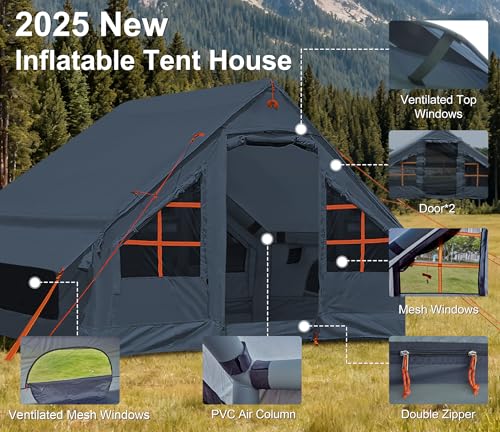
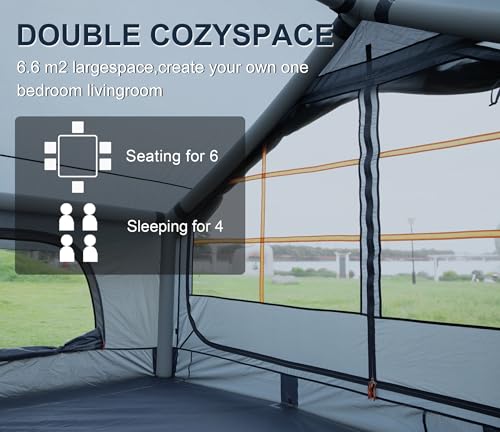
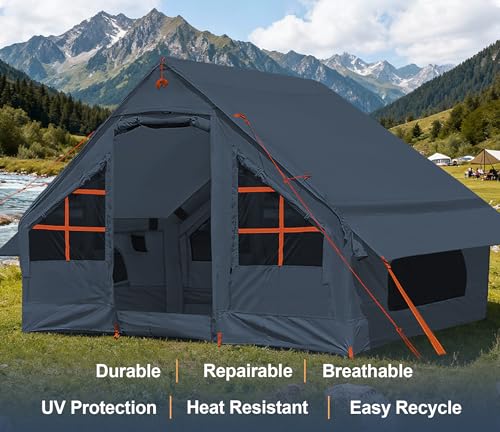
Inflatable tents are polarizing, but for wind resistance, this one has specs that demand attention. With a 3000mm waterproof rating and claims of withstanding wind force 6–8 (35–46 mph), it’s built for conditions that would flatten most instant cabins. The PVC air beams create a taut, aerodynamic shell that doesn’t flex like pole-based tents, and owners note it handles gusts better than expected, as long as it’s properly staked with the reflective guy lines.
Setup takes about 5 minutes with the manual pump, which is slower than ’60-second’ pop-ups but still fast for its class. The trade-off is weight, 27 lbs is heavy for car camping, let alone anything more remote. Ventilation is excellent with eight points, including top vents, but the PVC material can feel stuffy in high humidity. Still, if wind is your top concern and you’re okay with the bulk, this is one of the most stable options here.
Product photos
WildFinder 16.5ft Canvas Bell Tent
Strengths
- Excellent wind stability
- True 4-season use
- Breathable canvas
Trade-offs
- Heavier and bulkier
- Longer setup time
- Higher price point
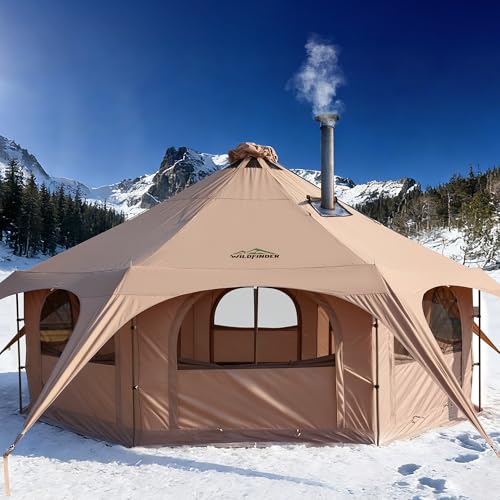
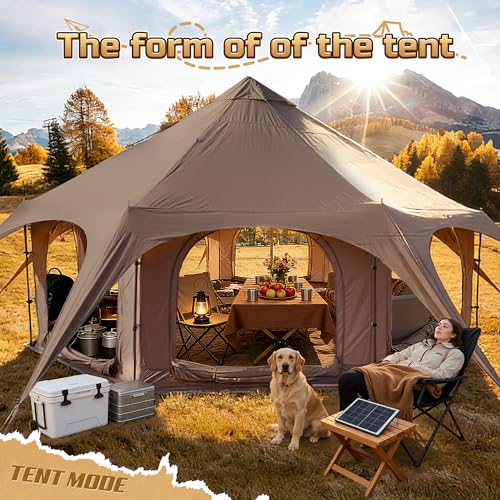
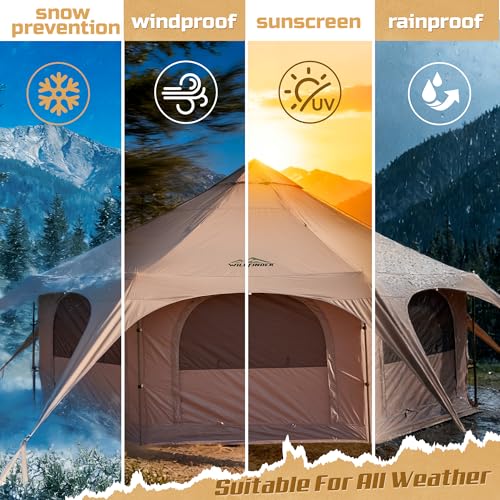
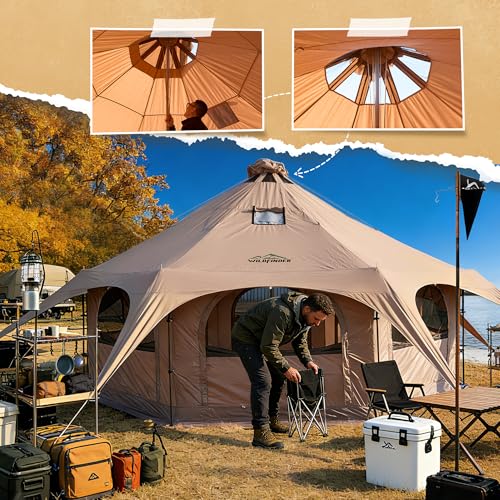
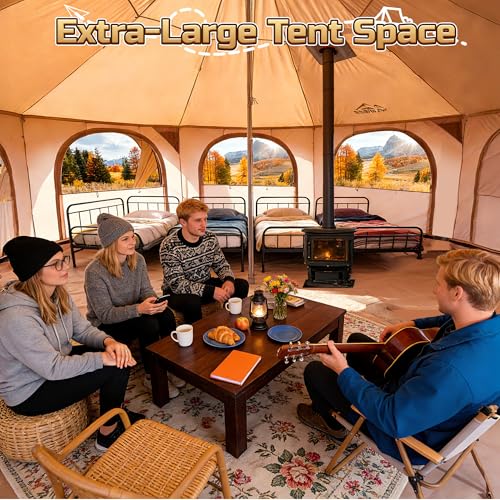
Canvas bell tents are in a different league when it comes to wind and weather resilience, and this WildFinder model is built like a mobile cabin. The 55-inch vertical walls are a standout, most bell tents slope sharply, but here you get usable space right to the edges, which matters when running a wood stove or placing beds. The TC cotton roof breathes well, reducing condensation, and the 600D floor with PU3000mm rating means it laughs off puddles.
Owners praise the stove jack and 4-season readiness, but the real win is structural integrity. The heavy-duty iron poles and double-stitched seams hold up in wind far better than polyester cabins. Setup takes longer, we’re talking 15–20 minutes, not 60 seconds, but the included positioning sheet makes it less guesswork than most. If you’re camping in shoulder seasons or want a semi-permanent basecamp, this is the kind of tent that earns trust.
Product photos
FanttikOutdoor Alpha C4 Ultra Tent

Strengths
- Compact and portable
- Affordable price
- Tall interior
Trade-offs
- Limited wind durability
- Basic waterproofing
- Not for extreme conditions
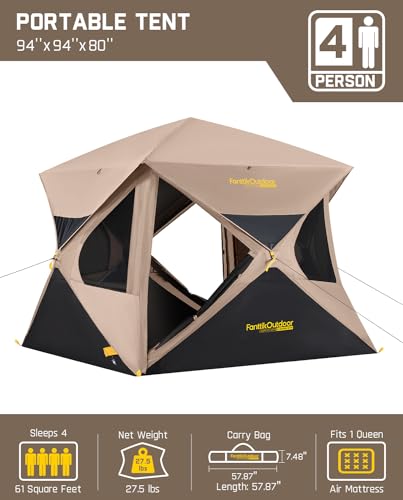
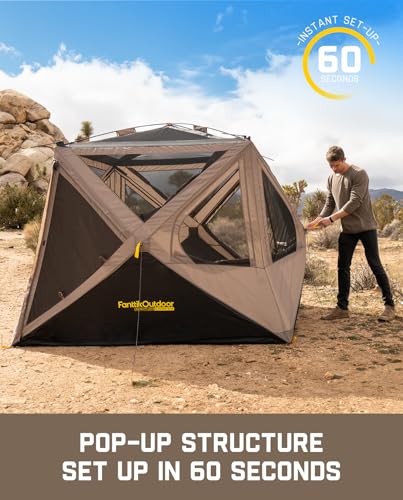
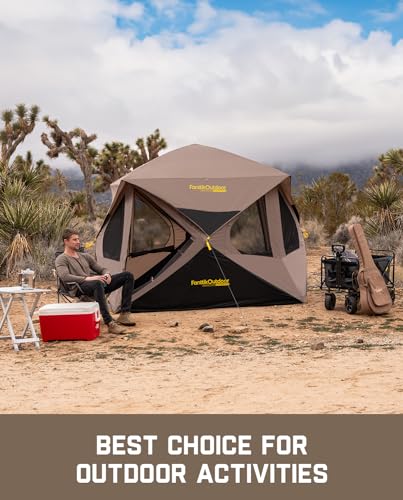
At 94×94 inches and a claimed 60-second setup, the Alpha C4 Ultra is one of the most portable instant cabins in this lineup. It’s marketed as budget-friendly, and that shows in the materials, while it has a waterproof rainfly and sealed seams, the PU coating and frame aren’t built for serious windstorms. That said, for light car camping or fair-weather overlanding, it’s a solid value.
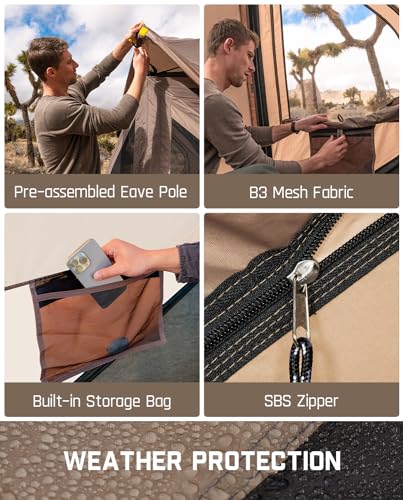
Owners appreciate the vertical walls and 80-inch height, which maximize interior space in a compact footprint. The B3 mesh keeps bugs out while letting in light and air, and the PFAS-free fabric is a quiet win for eco-conscious buyers. But don’t expect it to hold up in sustained winds over 30 mph, its strength is convenience, not storm resistance.
Product photos
FanttikOutdoor Zeta C6 Pro Tent

Strengths
- Good wind resistance
- Balanced size
- Effective ventilation
Trade-offs
- Condensation in humidity
- Lower headroom than larger models
- Not for extreme weather
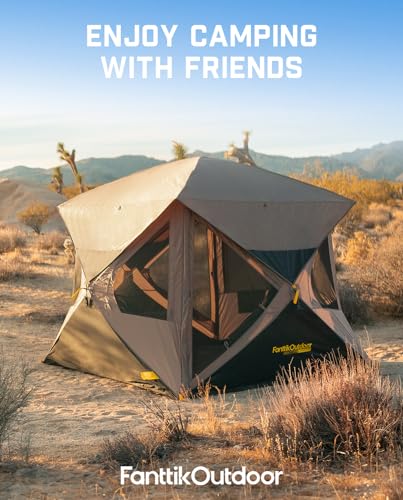
The Zeta C6 Pro is essentially the more manageable sibling of the C10, same design DNA but scaled down to a realistic 6-person size. At 120 x 108 inches, it’s best suited for 3–4 people with gear, which aligns with what actual owners report: it fits a queen air mattress and leaves room to move. The 66-inch center height isn’t as generous as the C10, but it’s still above average for instant cabins.
What stands out is the wind rating claim, up to 35 mph, and while that depends heavily on proper staking, the carbon steel frame and adjustable guy lines do give it more backbone than cheaper pop-ups. Ventilation is solid with mesh windows on all sides and a ceiling screen, though some users note condensation builds up in humid conditions. For weekend car campers who want reliability without fuss, this hits a sweet spot between size and stability.
Product photos


8-Person Instant Cabin Tent

Strengths
- Large porch area
- Tall interior
- Simple setup
Trade-offs
- Basic waterproof rating
- Heat buildup in sun
- Porch flaps in strong gusts
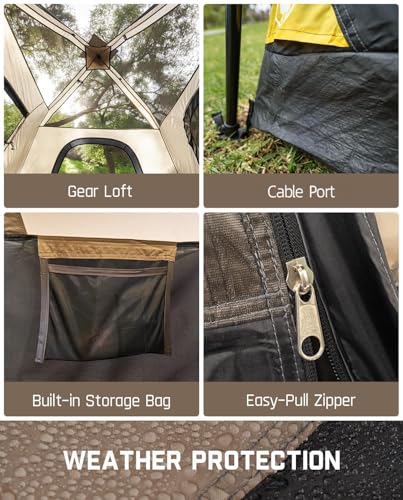
This 8-person cabin tent makes bold claims about wind resistance thanks to its rectangular roof and porch pole system, and while the design does add rigidity, real-world feedback suggests it’s more about smart anchoring than inherent aerodynamics. The porch is a standout feature, adding serious covered space for gear or lounging, and the 80-inch headroom keeps it comfortable for taller campers.
Ventilation looks good on paper with five mesh windows and a mesh roof, but some owners report the fabric traps heat in direct sun despite airflow. The PU1000mm rating is entry-level waterproofing, fine for light rain, but not for prolonged storms. Where it shines is family usability: the D-door, internal pockets, and easy setup make it a stress-free pick for casual trips. Just don’t expect it to outlast a thunderstorm in high winds without careful staking.
Product photos


VEVOR Pop Up Gazebo Screen Tent
Strengths
- Massive shade area
- Outstanding airflow
- Quick one-person setup
Trade-offs
- Not for sleeping or storms
- Canopy not fully waterproof
- Requires disassembly in high wind
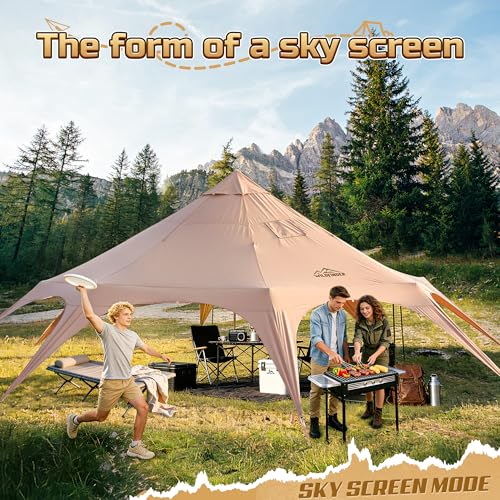
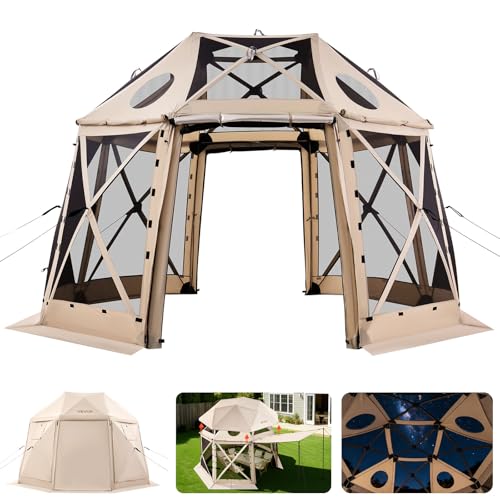
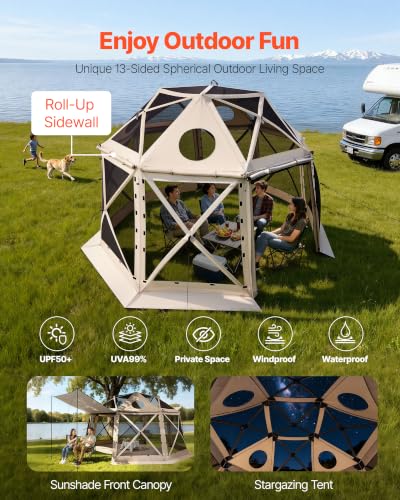
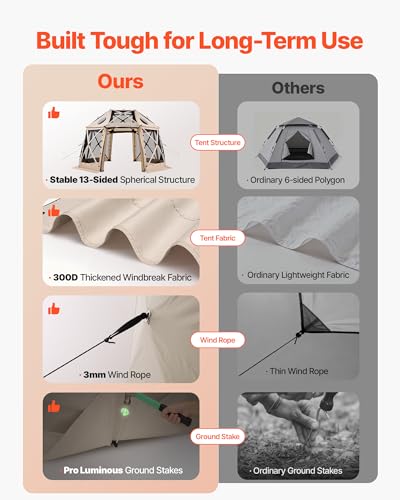
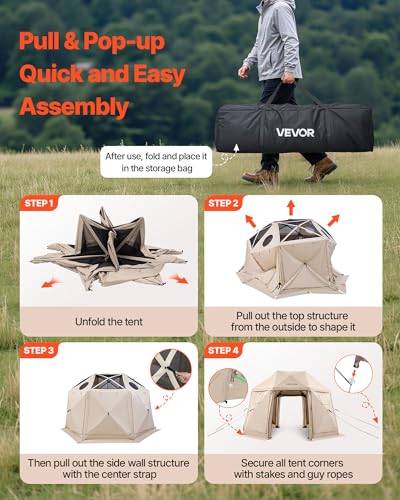
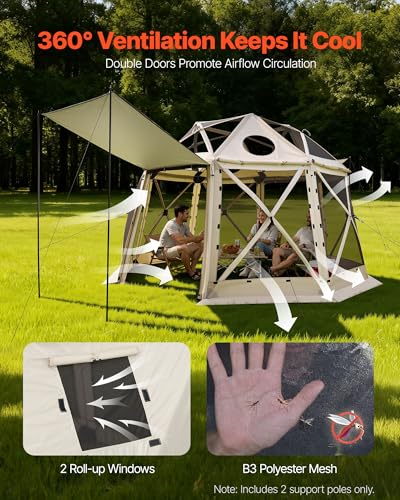
This isn’t a sleeping tent, it’s a shade and bug sanctuary. The 13-sided geodesic design is surprisingly stable in wind, more so than traditional rectangular canopies, and the roll-up 300D panels add protection when gusts pick up. At 12×12 feet, it creates a generous hangout zone for 8–10 people, and the mesh ‘starry sky’ roof gives it a fun, open feel.
Where it excels is ventilation, 360-degree mesh walls and roof vents mean airflow is constant, making it ideal for hot, buggy evenings. But it’s not meant for rain or overnight use. The removable canopy offers UV50+ protection, but the frame isn’t designed for heavy weather. Owners love it for basecamps, beach days, or backyard hangs, but all agree: pack it up before storms hit.
Product photos

How We Picked These tents in high winds
Rather than a hands-on lab test, this is a research-led comparison of specifications and owner feedback across a range of tents marketed for wind resistance. I focused on published specs – tent size, materials used in the frame and fabric, included guylines, and any specific wind-resistance features – and then weighed that against what owners are saying about performance in windy conditions. Expert reviews from established outdoor gear sites were also considered, searching for consistent themes and corroborating evidence.
For tents designed to handle high winds, the most critical factors are the frame construction and fabric durability. A robust pole system – often carbon fiber or high-quality aluminum – is essential, as is a tent shape that sheds wind rather than catching it. Beyond that, the quality of the included stakes and guylines, and the tent’s overall footprint (a lower profile generally performs better) heavily influenced my assessment. Understanding tents built for extreme conditions is also key to picking something that has the potential to withstand harsh weather.
Specifications reliably indicate a tent’s potential strength; for example, the gauge of poles and the denier of the fabric. However, owner reviews offer crucial insights into real-world performance. I paid close attention to comments about the tent’s behavior in actual windstorms, the effectiveness of the guylines, and any reports of pole failures or fabric tearing. Reputable expert reviews helped validate these findings and identify consistent strengths or weaknesses across different models, and informed my understanding of important weather-resistant tent construction.
Choosing The Right tents in high winds
Picking the right tent for windy conditions requires more than just grabbing the biggest, sturdiest-looking option.
A good tent for high winds prioritizes a robust frame construction (look for materials like aluminum or strong steel), aerodynamic shapes (domes and modified domes perform better than cabins), a full rainfly that extends low to the ground, and a secure anchoring system. Pay close attention to the denier (D) rating of the fabric; higher numbers generally indicate greater durability and tear resistance. Consider the tent’s pole structure and how well it’s designed to flex with the wind, rather than resisting it.
Frame Material and Design
Don’t underestimate the importance of the tent’s skeleton. Aluminum poles are a popular choice because they offer a good balance of strength and weight, but steel poles, while heavier, can withstand more abuse. What truly matters is how the poles are connected and the overall design. A geodesic or semi-geodesic design (where poles intersect in multiple places) distributes stress far better than a simple dome or cabin-style tent. Cabin tents, while spacious, are inherently more susceptible to wind damage due to their boxy shape. If you’re serious about severe wind camping tents, prioritize a design that minimizes surface area exposed to the wind.
Waterproofing and Windproofing – It’s Connected
Waterproofing and windproofing go hand-in-hand. A fully sealed rainfly is essential, but it’s not enough on its own. The fly needs to extend all the way to the ground, or nearly so, to prevent wind from getting under the tent and lifting it. Look for tents that include guylines, ropes that attach to the tent body and stake into the ground, as these provide crucial additional stability. It’s also worth considering the fabric’s coating. Polyurethane (PU) coatings are common, but silicone coatings offer better waterproofing and durability, though at a higher price point.
- A higher hydrostatic head rating (measured in mm) indicates better waterproofing, but don’t get fixated on extremely high numbers. 1500mm is generally sufficient for most conditions.
- Sealed seams are a must-have. Even waterproof fabric will leak if the seams aren’t properly sealed.
- Don’t skip the guylines! Properly staked guylines can dramatically improve a tent’s wind resistance, and knowing how to use tent stake types for high winds is essential.
A well-pitched tent is more important than an expensive one. Practice setting up your tent before you head out, and always take the time to stake it down securely, even if it seems calm.
Value and Usability
High-wind resistance often comes at a premium, but it doesn’t have to break the bank. Consider the features you actually need. A massive 8-person tent is overkill if you’re usually solo camping. Look for tents that strike a balance between durability, weight, and price. Features like multiple doors and vestibules can be convenient, but don’t prioritize them over a solid frame and a waterproof fly. Don’t forget to think about the ease of setup. Even the most wind-resistant tent is useless if you can’t get it up quickly in deteriorating conditions. If you’re new to camping, a pop-up tent or one with pre-attached poles can be a good starting point, but be aware that these often sacrifice some durability. And always make sure you are placing tent stakes securely to ensure maximum stability.
Tents in High Winds Compared
This table provides a spec-by-spec comparison of tents designed for use in windy conditions.
| Product Title | Capacity | Waterproof Rating (mm) | Wind Resistance (mph) | Setup Time | Special Features |
|---|---|---|---|---|---|
| FanttikOutdoor Zeta C10 Pro Max Tent | 10 | N/A | N/A | 60 sec | Spacious, Dual-Zone |
| Inflatable Tent with Pump | 4-6 | 3000 | 6-8 | 5 min | Inflatable, 4-Season |
| WildFinder 16.5ft Canvas Bell Tent | N/A | 3000 | N/A | N/A | Stove Jack, TC Cotton |
| FanttikOutdoor Alpha C4 Ultra Tent | 4 | N/A | N/A | 60 sec | PFAS-free Fabric |
| FanttikOutdoor Zeta C6 Pro Tent | 3-6 | N/A | 35 | 60 sec | Drainage Channels |
| 8-Person Instant Cabin Tent | 8 | 1000 | N/A | 60 sec | Reinforced Poles |
| VEVOR Pop Up Gazebo Screen Tent | 6-10 | N/A | N/A | Seconds | 3-in-1, Geodesic Design |
Frequently Asked Questions
What wind speed can most tents actually handle?
Most tents marketed for wind resistance can withstand winds up to 30-40 mph, but truly holding up relies heavily on proper pitching with guylines and stakes. Beyond that, damage becomes increasingly likely, even with a quality tent, because published wind resistance ratings are often based on ideal conditions.
Are dome tents better in high winds than cabin tents?
Yes, dome and modified dome tents generally perform better in high winds due to their aerodynamic shape. Cabin tents, with their boxy structure, catch more wind and are more prone to collapse or damage, making them less suitable for exposed or windy locations.
What denier (D) rating should I look for in a high-wind tent?
A fabric denier of 75D or higher is recommended for good wind resistance and tear strength. While higher denier numbers indicate greater durability, remember that fabric weave and coating also play significant roles in overall performance, so don’t focus solely on the D rating.
How important are guylines, and how should I use them?
Guylines are critically important for stabilizing a tent in windy conditions. They should be used on every available attachment point, staked out at a 45-degree angle away from the tent, and tensioned to provide even support. Properly deployed guylines can add a significant margin of safety during a storm.
Where can I find more information about storm-ready tent models?
My detailed guide to storm-ready tent models goes into greater depth about specific features to look for, including pole construction, fabric types, and anchoring systems. It also covers how to assess a tent’s suitability for your typical camping environments and expected wind conditions.
The Bottom Line
Choosing a tent for high winds always comes down to balancing how much you’re willing to spend with how much confidence you want in truly challenging conditions. While many tents claim wind resistance, the FanttikOutdoor Zeta C6 Pro Tent stands out as the strongest overall pick, offering a good mix of features and a reported 35 mph wind resistance rating based on owner feedback.
For those on a tighter budget, the 8-Person Instant Cabin Tent offers reinforced poles and a quick setup, making it a reasonable choice for occasional windy conditions. If you prioritize space and versatility, and don’t anticipate consistently harsh weather, the FanttikOutdoor Zeta C10 Pro Max Tent provides ample room and a surprisingly sturdy build for its size.
Ultimately, the most important factors are understanding the limitations of any tent and practicing proper tent staking techniques. A well-pitched tent, properly anchored with quality guylines, will always outperform a more expensive tent that’s poorly set up, and knowing your campsite’s exposure is key to staying safe and comfortable.
