
8 Best Tents for Rainy Weather 2026
This post contains affiliate links. As an Amazon Associate, we earn from qualifying purchases.
The FanttikOutdoor Alpha C4 stands out as the best overall tent for rainy conditions, combining quick setup with thoughtful weather-resistant design. For those watching their budget, the 4-Person Instant Cabin Tent offers solid protection with a 2000mm waterproof rating and reliable hybrid poles. If you need something ultra-fast and portable, the Wolfwise Pop Up Changing Tent surprises with its seconds-long deployment and decent rain defense.
Most people don’t realize how quickly a cheap tent can fail when rain hits, damp floors, soaked seams, and condensation dripping from the ceiling are common complaints. Just because a tent claims to be waterproof doesn’t mean it’ll keep you dry through a steady downpour.
This guide cuts through the marketing by focusing on what actually matters in wet weather: verified waterproof ratings, full-coverage rainflies, sealed seams, and stable pole structures. I looked at specs, analyzed real-world owner feedback, and applied my experience with tent performance to find models that deliver when the weather turns.
Top 8 Tents In Rains in the Market
The Best Tents In Rains, Reviewed
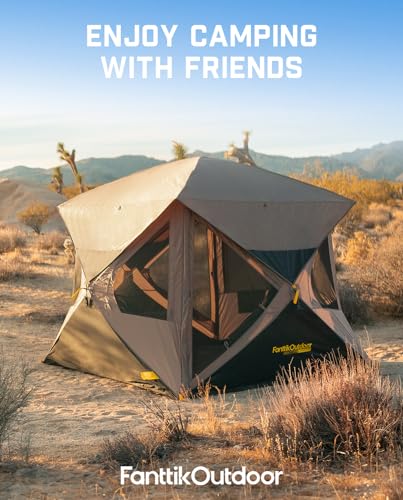
FanttikOutdoor Alpha C4 4-Person Tent

Strengths
- Full upright height
- Spacious vertical walls
- PFAS-free materials
Trade-offs
- Slightly longer pack size
- Rainfly must be secured properly
- Higher price point
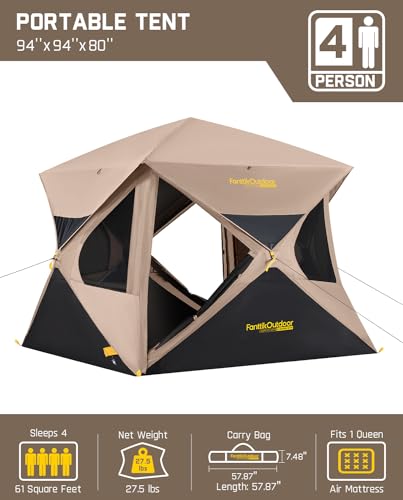
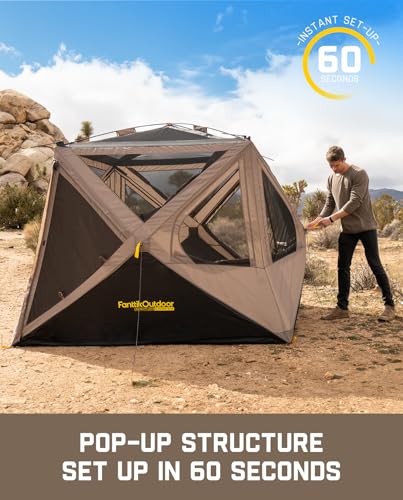
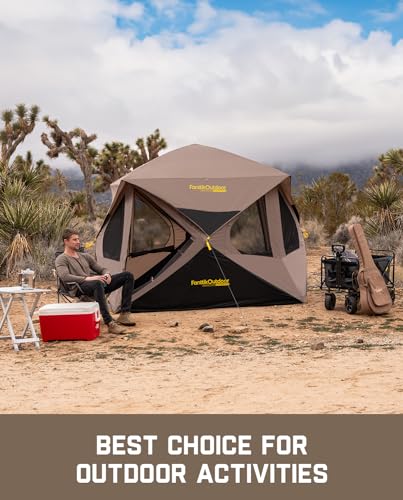
This is the best overall balance of speed, space, and storm readiness. The 60-second pop-up hub design with X-frame poles is stable and intuitive, and the 80-inch center height means adults can stand fully upright, rare in instant cabins. At 94” square, it fits four people or a queen airbed with room to spare, and the vertical walls maximize usable space unlike sloped dome tents.
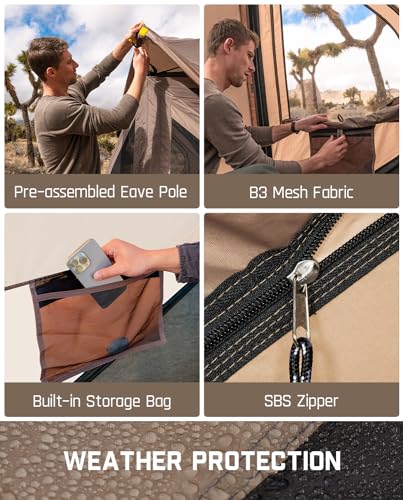
The sealed seams, B3 mesh, and removable rainfly combine to deliver real all-weather performance. Owners praise its wind resistance and ventilation, especially the rollable eaves and triple windows. Compared to the Coleman, it’s lighter and faster; compared to the 4-person instant, it’s roomier and better sealed. And the PFAS-free fabric adds peace of mind. This is the tent I’d recommend for most overlanders, car campers, or families who want reliability without hassle.
Product photos
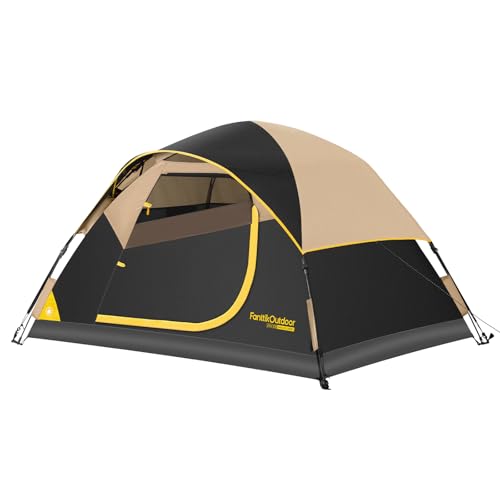
FanttikOutdoor Zeta C2 2-Person Tent
Strengths
- PFAS-free fabric
- Sealed seams
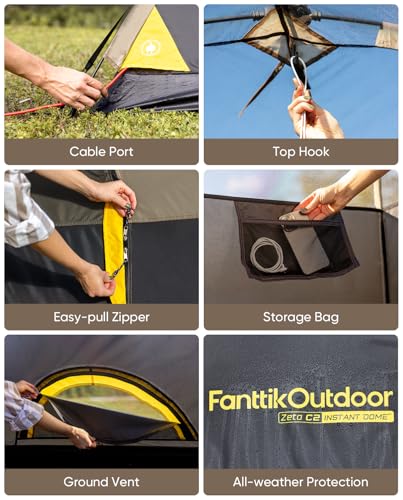
- Closable ground vent
Trade-offs
- Slightly heavier than rivals
- Fiberglass not for extreme winds
- Setup video needed
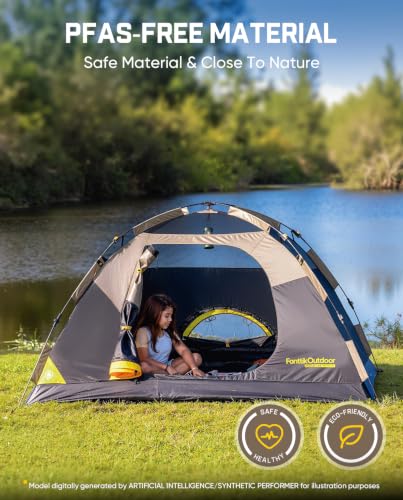
This 2-person dome punches above its weight. The 60-second setup with pre-attached fiberglass frame is smooth, and the PFAS-free fabric is a standout, increasingly rare in budget tents and a real win for health-conscious buyers. The sealed seams and waterproof strips reinforce the rainfly’s performance, and owners consistently say it stays dry in moderate storms.
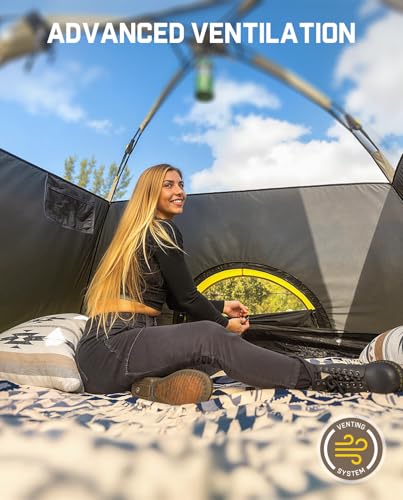
Ventilation is smartly designed: the mesh top and closable ground vent let you adjust airflow without inviting leaks. Compared to the Wakeman model, it’s more durable, safer, and better sealed, just heavier by a pound. For hikers who want reliability without overspending, this is the smarter pick.
Product photos
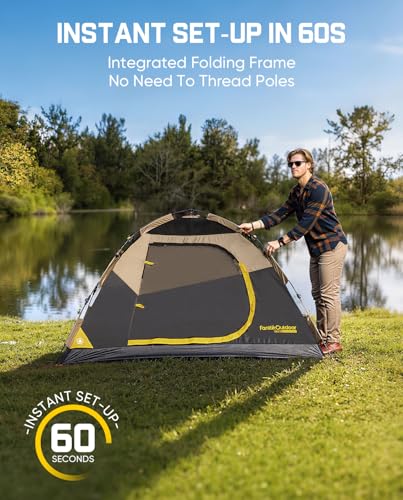
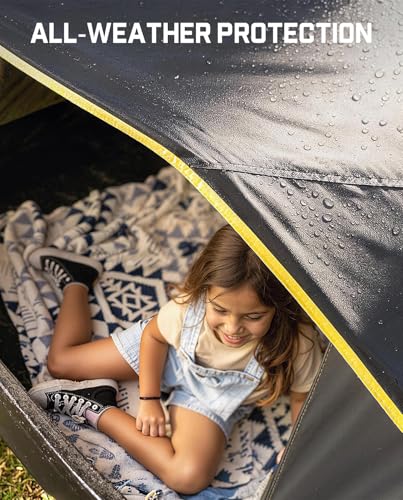
4-Person Instant Cabin Tent
Strengths
- Fast 50-second setup
- 2000mm waterproof
- Good headroom
Trade-offs
- Aluminum hybrid frame less rigid
- Some condensation
- Rainfly not full coverage
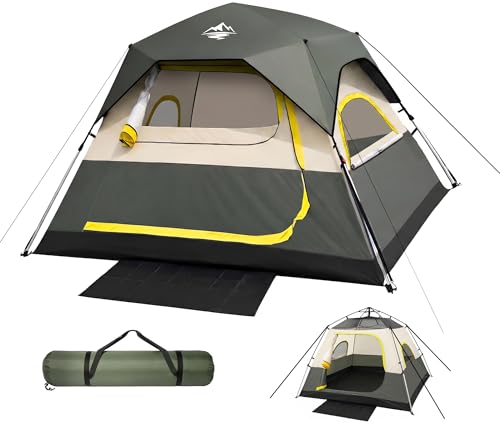
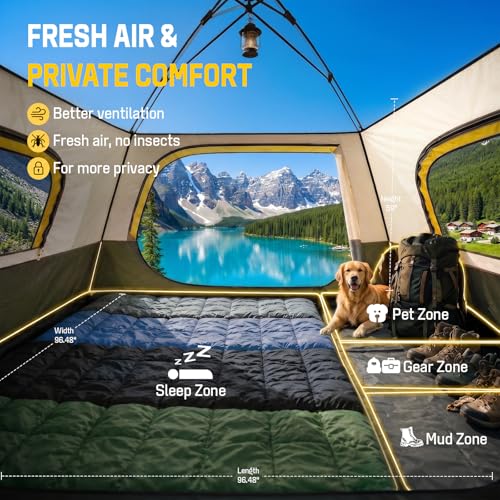
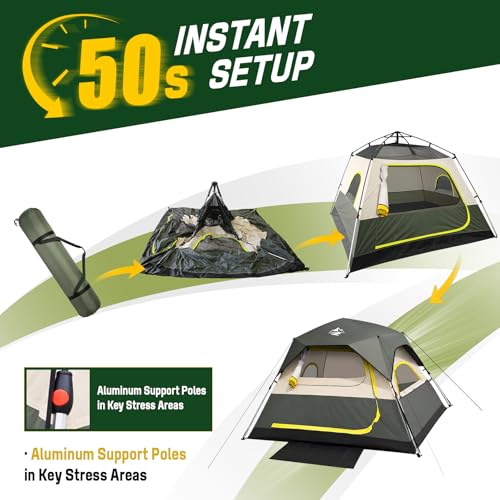
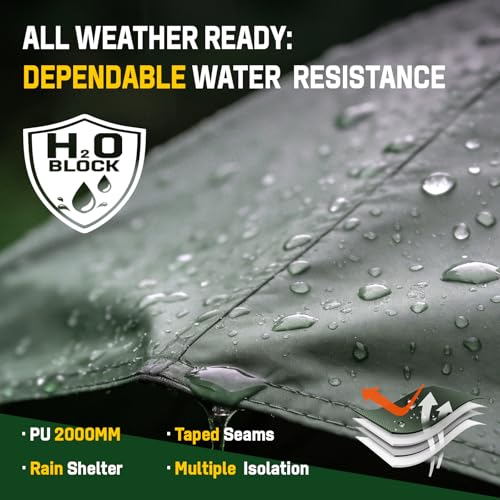
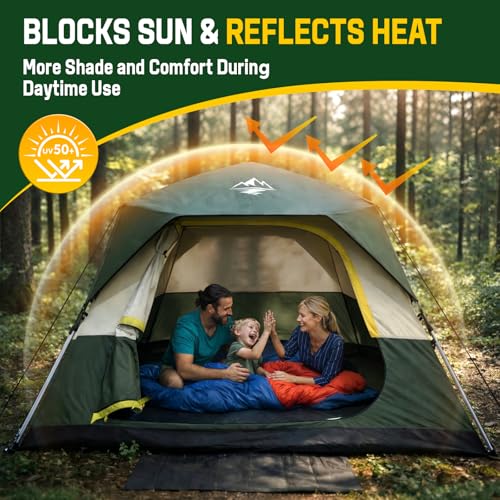
This is the kind of tent that wins over reluctant campers. The 50-second setup with pre-attached poles actually delivers, owners confirm it’s nearly foolproof, and the hybrid aluminum frame adds sturdiness you don’t usually get at this price. At 8×8 feet and 59” center height, it’s roomy for four, though tall adults will still duck. The 2000mm waterproof rating with taped seams and a removable rainfly means it’s legit for rainy weekends, not just fair-weather glamping.
Ventilation is solid thanks to mesh windows and ceiling, but condensation can build up if you skip the rainfly on damp nights. Compared to the Coleman Skydome, it’s lighter and faster to pitch, but lacks the same tested wind resistance. Still, for families or groups who prioritize speed and dryness, this hits the sweet spot between performance and ease.
Product photos

Coleman Skydome 4/6-Person Tent

Strengths
- Full rainfly vestibule
- WeatherTec sealing
- E-port for power
Trade-offs
- Heavier than instant tents
- Setup over 5 minutes
- Not for backpacking
Coleman still knows how to build a family tent that lasts. The full-fly vestibule is a game-winner, it adds a dry entry zone and storage space, which makes a huge difference when rain turns your campsite into mud. The WeatherTec system with inverted seams and welded corners is proven in owner feedback: few report leaks, even after years of use. And the 35 mph wind rating gives real confidence in stormy conditions.
It’s not lightweight at over 15 lbs, and the color-coded poles, while helpful, don’t make it as fast as true instant tents. But for families who camp in unpredictable weather, the queen airbed fit and e-port for power are practical touches the others lack. Compared to the 4-person instant tent, it’s bulkier but more robust.
Product photos


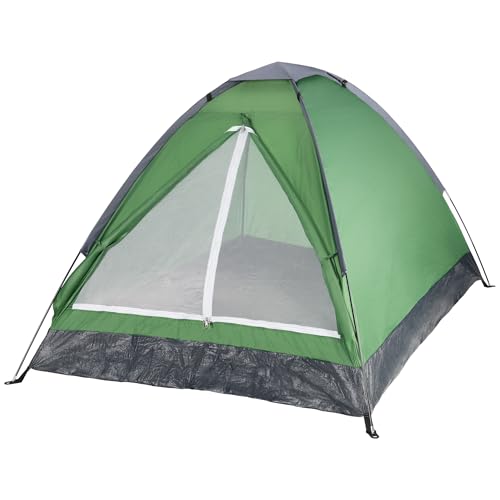
Wakeman 2-Person Lightweight Tent
Strengths
- Ultra lightweight
- Low cost
- Compact size
Trade-offs
- Fiberglass poles snap easily
- Marginal rain protection
- Poor long-term durability
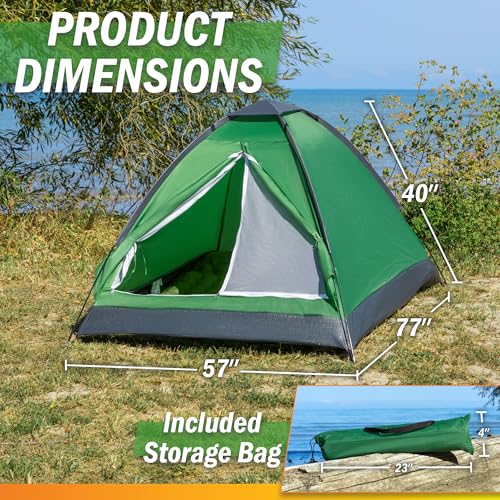
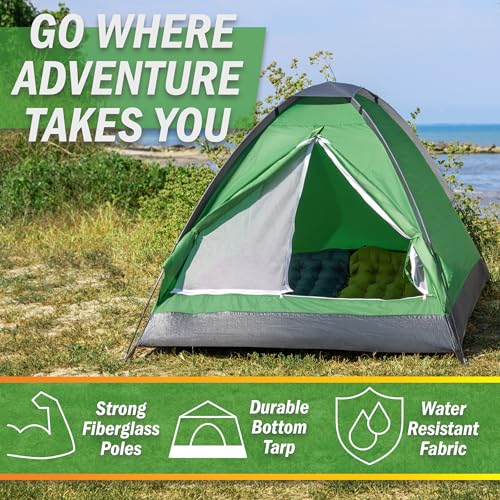
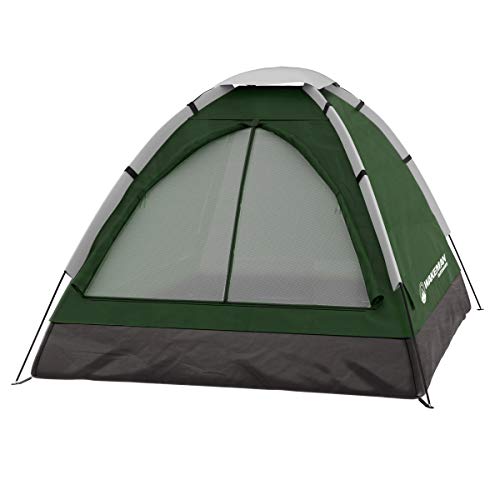
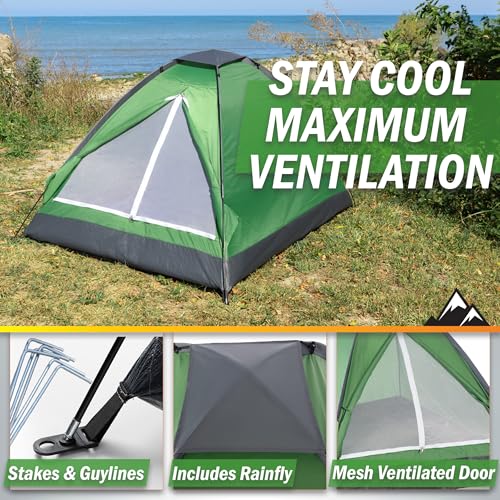
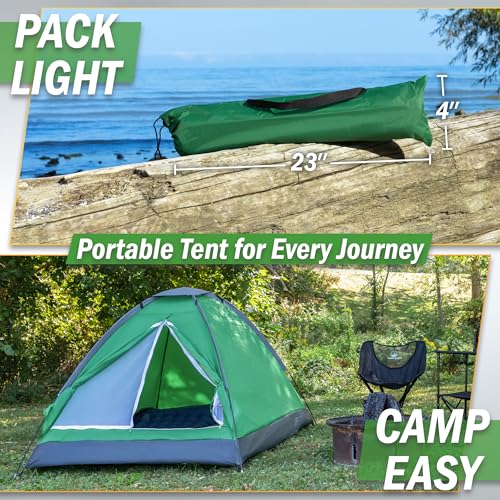
This is the definition of a bare-bones budget tent, light at 2.2 lbs and small enough to toss in a pack, but you pay for that savings in durability. The 190T polyester and fiberglass poles are entry-level, and while it includes a rain fly and stakes, owners report the seams start leaking after a few downpours. That said, for fair-weather hikes, beach trips, or backyard sleepouts, it does the job.
It’s nearly identical in specs to the FanttikOutdoor Zeta C2 but lacks upgraded features like PFAS-free fabric or better ventilation. Still, if you’re on a tight budget and need a temporary shelter, this gets you outside. Just don’t expect it to hold up in a sustained storm.
Product photos
Wolfwise Pop Up Changing Tent
Strengths
- Instant pop-up
- Silver UV coating
- Removable floor
Trade-offs
- Not waterproof
- No ventilation control
- Frame less rigid
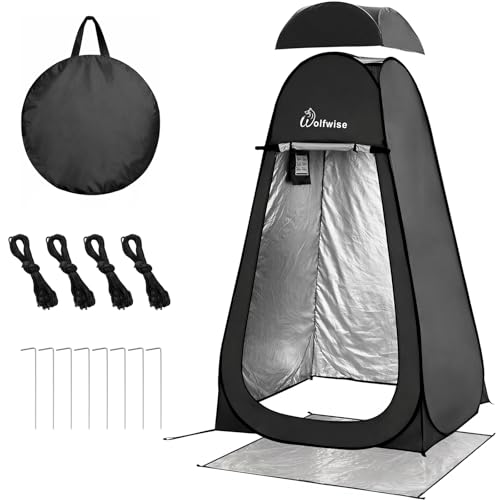
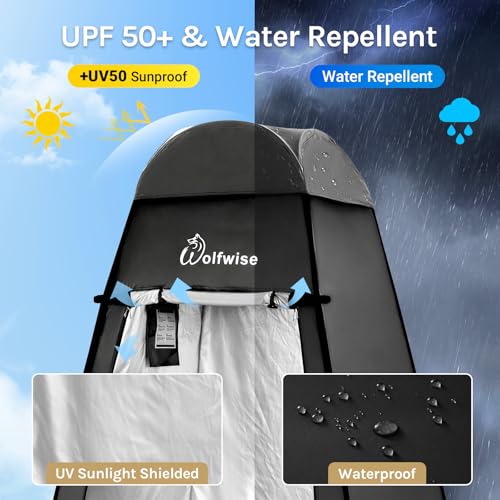
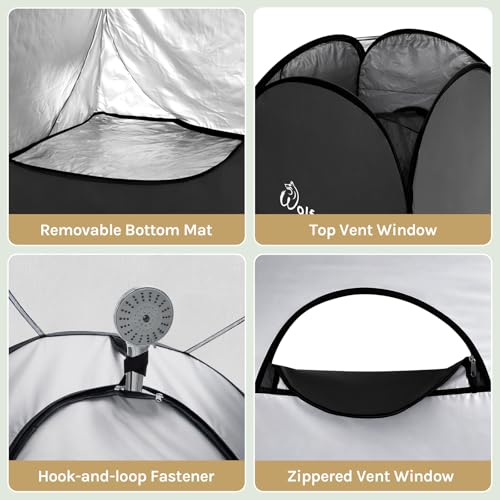
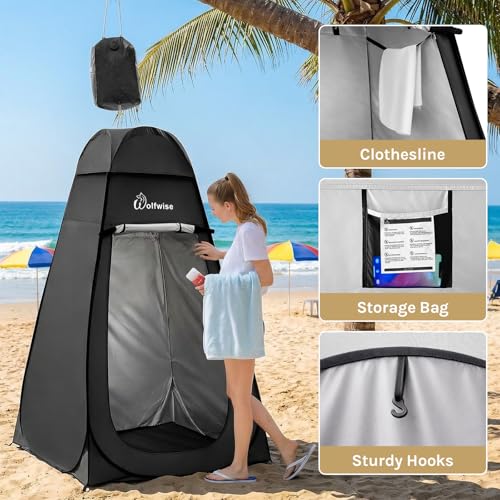
This isn’t a sleeping tent, it’s a privacy pod built for utility. The silver-coated polyester delivers solid UV protection, and the 78.7” height means most adults can stand comfortably while changing or showering. The T-door with 3-way zippers is smart design, making entry and exit easier with wet gear or towels.
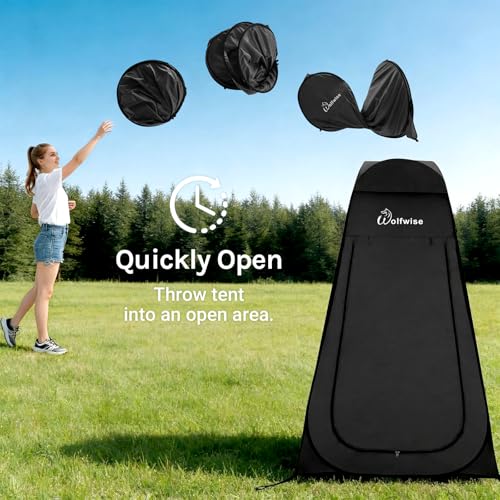
It pops up instantly and packs flat, and the removable floor mat keeps you off damp sand or mud. Owners love it for beach trips, festivals, and campsite showers. But don’t mistake it for a storm shelter, the materials resist rain briefly, but it’s not taped or sealed like real camping tents. Compared to the Flycoop pod, it’s roomier and more private, but less weather-capable.
Product photos

Flycoop Transparent Sports Pod
Strengths
- TPU clarity
- 1-second pop-up
- Wind and rain resistant
Trade-offs
- Not for sleeping
- No floor
- Snug for tall users
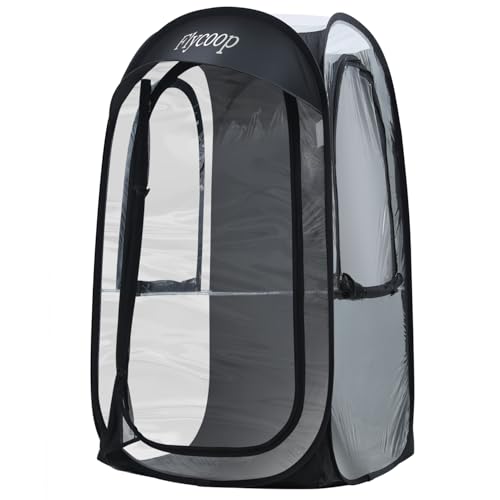
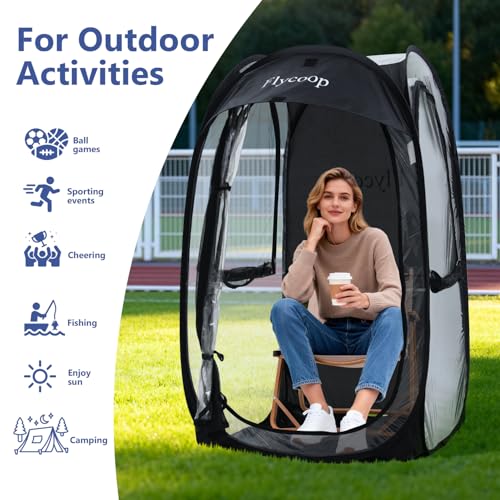
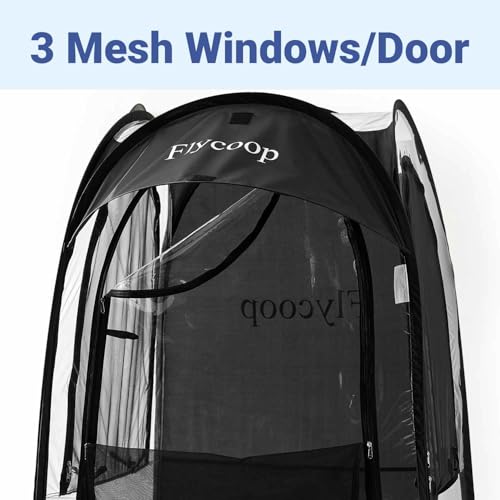
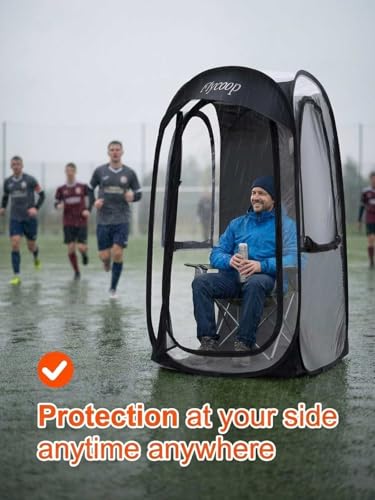
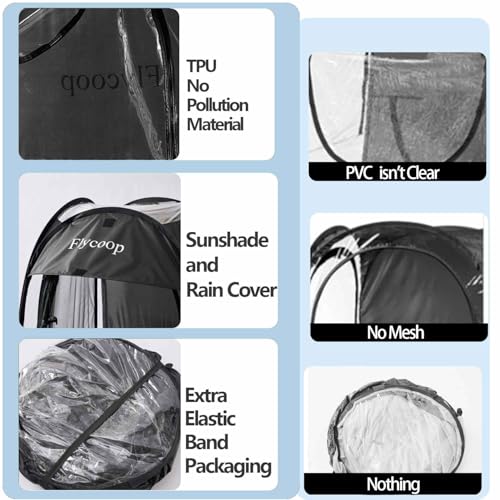
This pod is built for stubborn weather, not backpacking. The transparent TPU material stands out, it’s clearer and tougher than cheap PVC, and owners consistently report it holds up in sleet and wind without fogging out completely. At 37” square, it’s snug for one adult, but the pop-up design and 1-second deployment make it ideal for sideline use at games or quick shelter during sudden downpours.
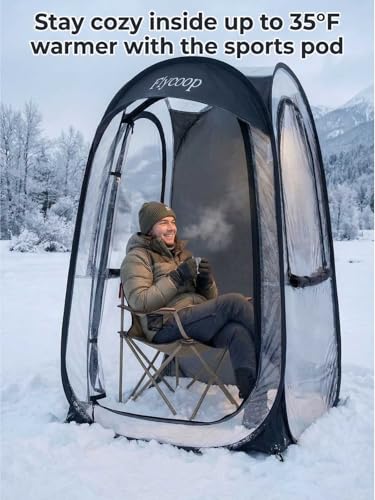
It’s not a traditional tent, and that’s the point. The 35°F heat retention claim sounds optimistic, but the sealed design and mesh ventilation do create a microclimate that feels warmer than outside. Still, it’s best viewed as a weatherproof bubble for seated use, not overnight camping. Compared to standard shelters, it’s oddly specific, but if you’re a coach, angler, or fair-weather hiker who hates getting soaked between trail segments, this has niche appeal.
Product photos
10-Pack Emergency Pop Up Tents
Strengths
- Bulk value
- Bug netting included
- Compact carry
Trade-offs
- Flimsy long-term
- Marginal waterproofing
- Basic materials
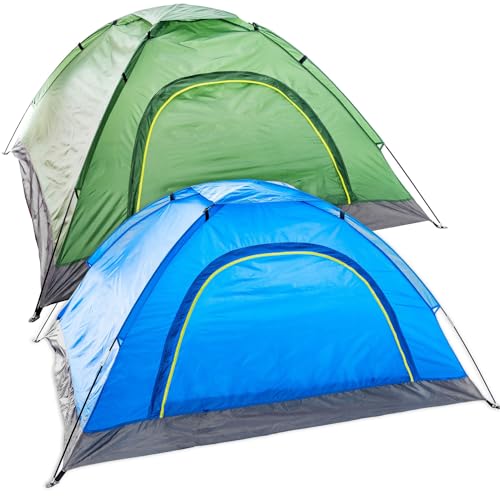
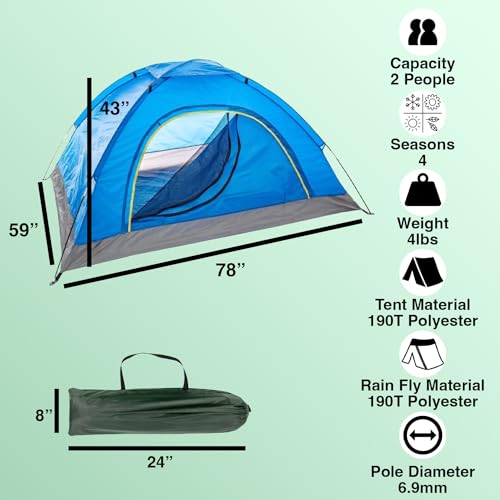
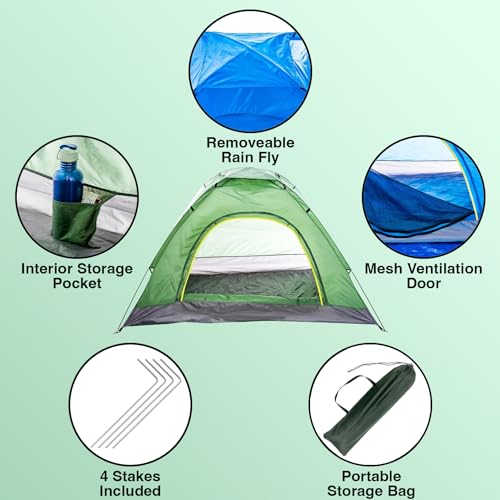
These are no-frills emergency shelters, not weekend camping tents. Priced for bulk use, the 10-pack format makes them a go-to for outreach programs, disaster prep, or temporary relief setups. At 78” long, they fit two people in a pinch, and the dual-layer doors with bug netting are a thoughtful touch for basic comfort. Owners say setup takes closer to 12–15 minutes despite the 10-minute claim, but the dome design with pre-cut poles is simple enough for volunteers to deploy quickly.
The water-resistant coating isn’t fully waterproof under heavy rain, and long-term durability is low, this isn’t a tent you’ll reuse for years. But for the intended use case, that’s expected. Compared to the Flycoop pod or Fanttik models, these lack refinement, but they serve a completely different mission: quantity and accessibility over performance.
Product photos


How We Picked These tents in rains
Rather than a hands-on lab test, this is a research-led comparison of specifications, owner feedback, and my experience with tent design principles. I focused on identifying key features across a range of models – from budget options to family-sized cabins – and ranking them based on their ability to perform in wet conditions. This involved carefully reviewing published specs, weighing owner reviews from multiple sources, and applying my understanding of what makes a tent truly weatherproof.
For tents intended for use in rainy weather, several factors stood out as most critical. A high waterproof rating, as explained in resources on waterproof tent ratings, is essential, but equally important is the overall tent design. Features like a full rainfly with taped seams, a bathtub floor to prevent ground water from seeping in, and a robust pole structure to withstand wind are all vital. Ventilation also plays a crucial role, as it minimizes condensation buildup inside the tent.
Specifications reliably tell you about a tent’s potential waterproofness (look for the hydrostatic head, or hydrostatic head explained), fabric denier, and packed weight. However, owner feedback provides invaluable insights into real-world performance. I paid close attention to reports of leaks, condensation issues, and durability concerns, as these often reveal shortcomings not apparent in the specs alone. Distinguishing between genuinely waterproof materials and simply water-resistant vs waterproof fabrics required careful consideration of both.
Choosing The Right tents in rains
Picking the right tent can be overwhelming, but focusing on a few key areas will get you closer to a dry and comfortable camping experience.
A good tent balances waterproofness, durability, and ease of use. Look for features like a fully sealed rainfly with taped seams, a robust pole system capable of withstanding wind, and a floor with a high waterproof rating (measured in millimeters). Consider the tent’s weight if you plan to backpack, and prioritize ventilation to minimize condensation build-up inside.
Waterproofing & Rain Protection
Don’t assume all tents are created equal when it comes to staying dry. The hydrostatic head rating (HH) is your friend here – it measures how much water pressure the fabric can withstand before leaking. For a three-season tent, aim for at least 1500mm for the rainfly and 3000mm for the floor. Pay attention to seam sealing; taped or welded seams are crucial. Many tents boast “waterproof” fabrics, but without proper seam treatment, water will find its way in. Beyond the numbers, look for designs that maximize runoff, like full-coverage rainflies that extend all the way to the ground. If you want to learn more about staying dry, check out resources on pitching a tent in rain.
Pole Structure & Durability
The poles are the skeleton of your tent, and their quality directly impacts its ability to withstand wind and maintain its shape. Aluminum poles are generally more durable and lighter than fiberglass, making them a good investment if you plan on frequent use or encountering harsh conditions. Look for tents with multiple crossing points in the pole structure for increased stability. The diameter and wall thickness of the poles also matter; thicker poles will be more resistant to bending or breaking.
Here’s a quick guide to pole materials: * Fiberglass: Budget-friendly, heavier. * Aluminum: Lighter, stronger, more expensive. * Carbon Fiber: Extremely lightweight, very expensive, can be brittle.
Space, Weight & Portability
A tent’s size and weight are intertwined. Larger tents offer more room for people and gear, but they’re also heavier and bulkier to carry. Consider how you’ll be transporting the tent. If you’re car camping, weight is less of a concern. If you’re backpacking, every ounce counts. Don’t automatically buy for the maximum advertised capacity; a “4-person” tent might be cramped for four adults with gear. Think about the usable floor space and peak height. For frequent use in challenging weather, I always recommend opting for tents rated for rainy conditions – they’re often built with more robust materials.
A tent’s packed size and weight should be proportional to its intended use. Don’t overspend on features you won’t need, but don’t sacrifice quality for the sake of saving a few ounces.
Tents in Rains Compared
Here’s a comparison of key specifications for the tents featured, to help you evaluate your options.
| Product Title | Capacity | Waterproofing (mm) | Setup Time | Weight (lbs) | Packed Size (in) | Special Features |
|---|---|---|---|---|---|---|
| FanttikOutdoor Alpha C4 | 4 | N/A | 60 sec | N/A | 57.8 x N/A x N/A | PFAS-free Fabric |
| FanttikOutdoor Zeta C2 | 2 | N/A | 60 sec | N/A | N/A x N/A x N/A | PFAS-free Fabric |
| 4-Person Instant Cabin Tent | 4 | 2000 | 50 sec | 13.4 | 39.4 x 7.1 x 7.1 | Hybrid Aluminum Poles |
| Coleman Skydome 4/6-Person Tent | 4/6 | N/A | < 5 min | N/A | N/A x N/A x N/A | WeatherTec System |
| Wakeman 2-Person Lightweight Tent | 2 | N/A | Quick | 2.2 | N/A x N/A x N/A | Dual-Layer Door |
| Wolfwise Pop Up Changing Tent | 1 | N/A | Seconds | N/A | 23.6 x 23.6 x N/A | UV Protection |
| Flycoop Transparent Sports Pod | 1 | N/A | 1 sec/30sec | 6.4 | 22.4 (dia) x N/A | Crystal-Clear TPU View |
| 10-Pack Emergency Pop Up Tents | 1-2 | N/A | 10 min | N/A | N/A x N/A x N/A | Bug Screen Netting |
Frequently Asked Questions
What hydrostatic head rating do I really need for a rain tent?
A rating of at least 1500mm for the fly and 3000mm for the floor is a solid baseline. While higher numbers offer more theoretical protection, anything above that provides diminishing returns, and proper setup and seam sealing are more impactful.
Are dome tents better in rain than cabin-style tents?
Generally, dome tents handle wind and rain better due to their aerodynamic shape and ability to shed water more effectively. Cabin tents, with their steeper walls, can be more prone to wind resistance issues and may require more guylines for stability in heavy weather.
How important are taped seams, really?
Taped seams are absolutely critical. Even a waterproof fabric will leak where the panels are sewn together if the seams aren’t sealed. Look for fully taped seams, meaning every stitch is covered, for the best protection.
What does “denier” mean, and does it matter for rain protection?
Denier refers to the fabric’s weight and thickness; a higher denier generally indicates a more durable and abrasion-resistant fabric. While not directly related to waterproofness, a higher denier can contribute to overall longevity and resistance to tearing in inclement weather.
Where can I find more detailed waterproof tent recommendations?
You can explore a range of options and find best tents for downpours on our website, where we discuss specific models and their performance in wet conditions.
The Bottom Line
Choosing a tent for rainy conditions often comes down to balancing how much you’re willing to spend with how confident you want to be in a downpour. While many options exist, the FanttikOutdoor Alpha C4 strikes a fantastic balance of features, space, and thoughtful design, it’s a solid pick for most campers who want reliable protection without breaking the bank.
For those on a tighter budget, the Wakeman 2-Person Lightweight Tent offers surprising value, and the 4-Person Instant Cabin Tent delivers a roomy experience with hybrid aluminum poles for added stability. If you prioritize versatility and a unique viewing experience, the Flycoop Transparent Sports Pod is an interesting option, though its weather protection is less robust than dedicated rain tents.
Ultimately, remember that no tent is truly waterproof if it’s not properly maintained. Regular seam sealing tents and understanding the limits of your gear are just as important as any hydrostatic head rating. A well-cared-for, thoughtfully chosen tent will provide years of shelter and enjoyment, rain or shine.
