
8 Best Three Season Tents of 2026
This post contains affiliate links. As an Amazon Associate, we earn from qualifying purchases.
The Kelty Grand Mesa 2P stands out as the best overall three season tent, combining reliable performance with thoughtful design. For budget-focused campers, the Amazon Basics 4-Person offers surprising value without sacrificing basic comfort. And if you’re after ultralight versatility for backpacking, the Clostnature 3-Person Ultralight brings solid features at a reasonable weight.
Most people don’t realize how much difference a well-designed tent makes until they’re stuck in the rain or wrestling with flimsy poles at dusk. A good three season tent shouldn’t leak, collapse in wind, or take forever to set up, but too many cut corners on materials or ventilation.
This guide cuts through the noise by comparing specs, real owner feedback, and design fundamentals to find tents that deliver where it matters. I looked at weight, waterproofing, airflow, and ease of use, the things that actually affect your sleep and sanity on the trail.
Top 8 Three Season Tents in the Market
The Best Three Season Tents, Reviewed
Kelty Grand Mesa 2P Tent

Strengths
- Freestanding
- Durable materials
- Easy color-coded setup
Trade-offs
- Single door
- Heavier than ultralight rivals
- Smaller vestibule
The Kelty Grand Mesa stands out as a go-to for hikers who want reliability without complexity. On paper, it hits that sweet spot between weight, durability, and ease of use, the 2P clocks in around 4.5 lbs, which isn’t ultralight but feels reasonable for how sturdy it is. Owners consistently report it handles wind and rain well, thanks to its freestanding design and fully taped seams, and the single door with a decent vestibule works fine for solo or couple trips where space isn’t tight.
I’d pick this over bulkier family tents if you’re doing multi-day backpacking, especially in shoulder seasons. Compared to budget domes, the Grand Mesa breathes better and lasts longer, though it doesn’t have dual doors, a real downside if you’re sharing with a tent mate who hates crawl-overs.
Product photos


Amazon Basics 4-Person Dome Tent

Strengths
- Fast setup
- Spacious interior
- Affordable
Trade-offs
- Heavy for backpacking
- Basic rainfly
- Low ventilation in humid weather
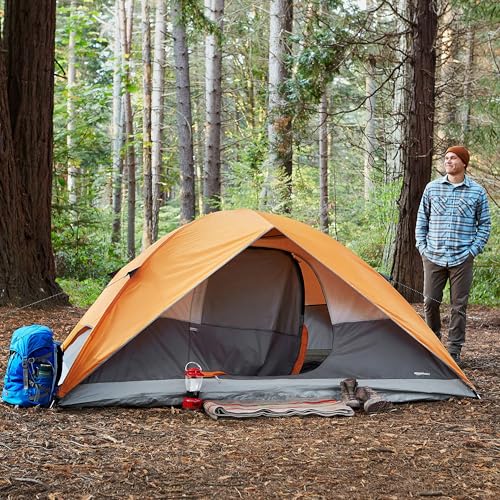
Let’s be real, this Amazon Basics tent isn’t built for backcountry slogs. But for car campers and casual weekenders, it’s a smart, no-frills pick. The dome design gives you 9×7 feet of floor space and nearly 4 feet of headroom, which is plenty for four adults to stretch out. Setup is consistently reported as under 6 minutes, and the snag-free sleeves make it easy even for first-timers.
It won’t impress backpackers, it’s heavy and not especially weather-resistant, but compared to other budget domes, it has decent ventilation with a back window and air port. I’d recommend it over pricier family tents if you’re just sleeping at festivals or campgrounds where weather isn’t a gamble.
Product photos


Clostnature 3-Person Ultralight Tent

Strengths
- Ultralight for 3P
- Excellent waterproofing
- Great ventilation
Trade-offs
- Poles not the most durable
- Inner tent can sag if not tensioned
- Slightly tight for three tall hikers
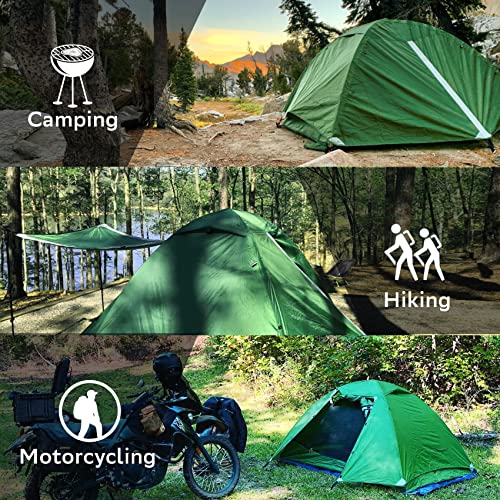
Clostnature is quietly building a name in the ultralight space, and this 3P model proves why. At 6.17 lbs total (or 5.29 lbs trail weight), it’s a standout for a three-person tent, most in this class are closer to 7 or 8 lbs. The PU5000 coating means serious weather resistance, and owners report staying dry in sustained rain, even on wet ground thanks to the elevated bathtub floor.
What I like most is the balance: roomy enough for three average hikers, yet light enough for two to carry comfortably. The dual vestibules and full mesh walls make it more livable than budget domes, and setup is consistently reported as fast and intuitive. Compared to the Kelty 4P, it’s lighter and better ventilated, my top pick for group backpacking where weight matters.
Product photos



Clostnature 2-Person Ultralight Tent

Strengths
- Extremely lightweight
- Compact packed size
- Superb waterproofing
Trade-offs
- Tight fit for tall users
- Minimal vestibule space
- Not for storm-heavy zones
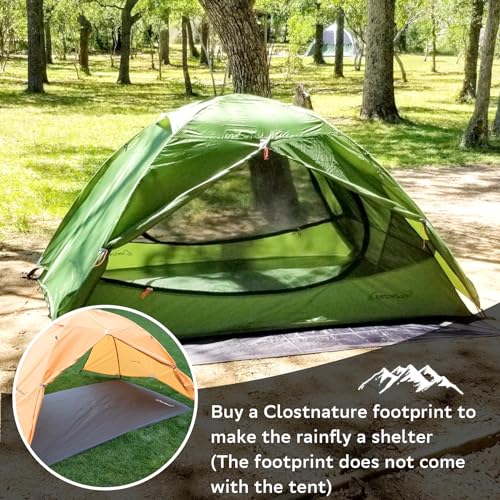
At just 4.52 lbs trail weight, this is one of the lightest true 2-person tents in its class, and it doesn’t cut corners. The PU5000 coating, factory-sealed seams, and full mesh walls mean it’s both weatherproof and breathable, a combo that’s rare under 5 lbs. Owners love how small it packs (under 17 inches long) and how fast it sets up solo, making it a favorite for fast-and-light weekenders.
Compared to the BISINNA or Forceatt models, it’s lighter and more refined, though the floor is a bit narrower, tall sleepers might feel cramped. But for thru-hikers or solo adventurers doubling up, this is the smarter buy. I’d take this over heavier options any time I’m counting ounces.
Product photos

Coleman Skydome 4-Person Tent

Strengths
- Ultra-fast setup
- High headroom
- Strong frame
Trade-offs
- Poor ventilation
- Heavy and bulky
- Not for backpacking
The Skydome lives up to its “5-minute setup” claim, pre-attached poles make it almost idiot-proof, and reviewers love how fast it goes up, even in the dark. The near-vertical walls give it that 20% more headroom boost, which feels great when you’re changing clothes or sitting up with coffee. For car camping, it’s a solid performer, and the WeatherTec system with inverted seams does keep water out in moderate rain.
But let’s be honest: this isn’t a backpacking tent. It’s heavy, stuffy, and the mesh is limited, so condensation builds up fast in humid conditions. Compared to the Amazon Basics, it’s slightly roomier and more durable, but not worth the extra cost unless you value the fastest possible pitch.
Product photos


Hewolf Instant Pop Up Tent
Strengths
- Instant pop-up setup
- High waterproof rating
- Dual doors
Trade-offs
- Bulky packed size
- Not for backpacking
- Mechanism may wear
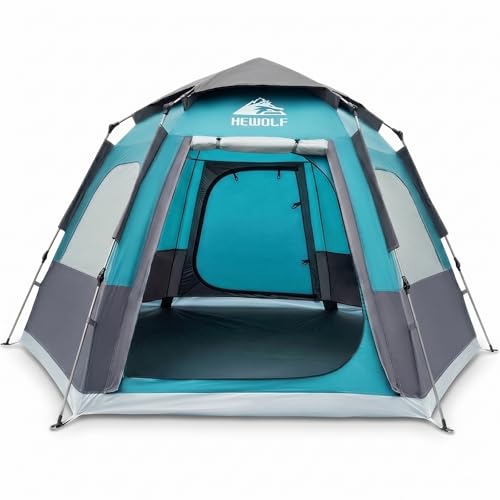
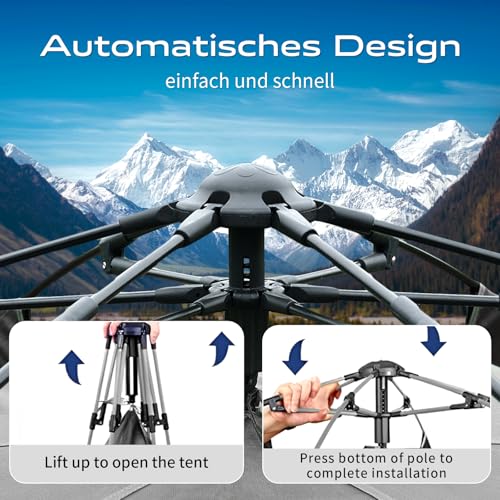
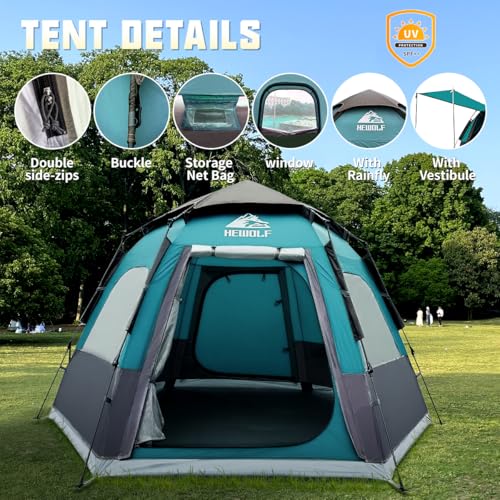
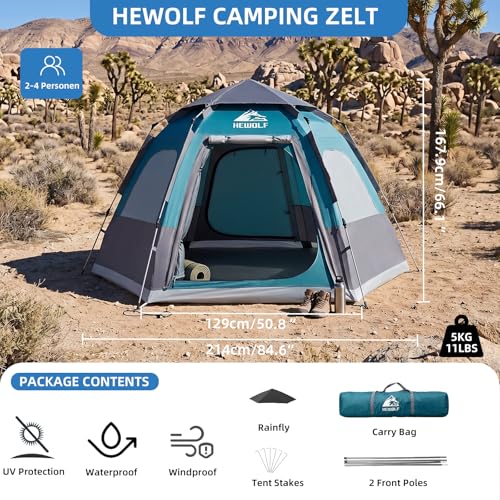
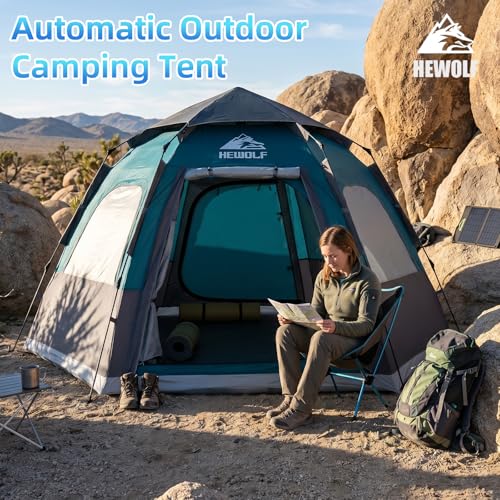
The Hewolf pop-up design is a standout for anyone who’s struggled with poles at dusk. One flick and it’s up, no threading, no fumbling. That makes it ideal for festivals, quick getaways, or campers with limited mobility. The 4500mm waterproof rating is impressive on paper, and owners confirm it stays dry in heavy rain, thanks to sealed seams and extra waterproof strips.
But that convenience comes with trade-offs. It’s heavier and less packable than traditional backpacking tents, and the spring-loaded mechanism can feel flimsy over time. Compared to the Clostnature ultralight models, it’s not even close for trail use, but for car-based trips where setup speed matters, it’s hard to beat.
Product photos

Forceatt 2-Person 3-4 Season Tent

Strengths
- High waterproof rating
- Dual vestibules
- Excellent airflow
Trade-offs
- Heavier than ultralight options
- Bulkier packed size
- Rainfly attachment could be smoother
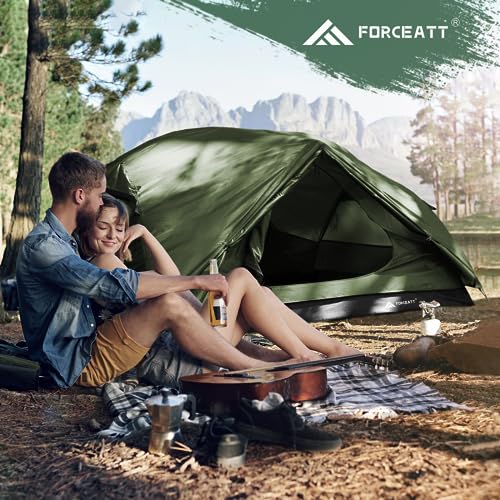
Forceatt is positioning this as an all-weather performer, and the specs back it up, 3000mm waterproof rating, welded floor, full-coverage rainfly, and smooth #8 zippers that don’t snag. At 5.5 lbs, it’s not ultralight, but the 7001 aluminum poles add real wind resistance, and owners note it held up in sudden mountain downpours and gusty ridgelines.
The dual vestibules and mesh ceiling vents are a big plus for long stays, cutting down on condensation better than budget domes. Compared to the Kelty Grand Mesa, it’s a bit heavier but offers dual doors and stronger weatherproofing, making it my pick if you’re hiking in unpredictable climates.
Product photos


BISINNA 2-Person Double Layer Tent
Strengths
- Dual D-shaped doors
- Excellent mesh ventilation
- Lightweight aluminum poles
Trade-offs
- Rainfly could be more durable
- Stakes are basic
- Limited storm resistance
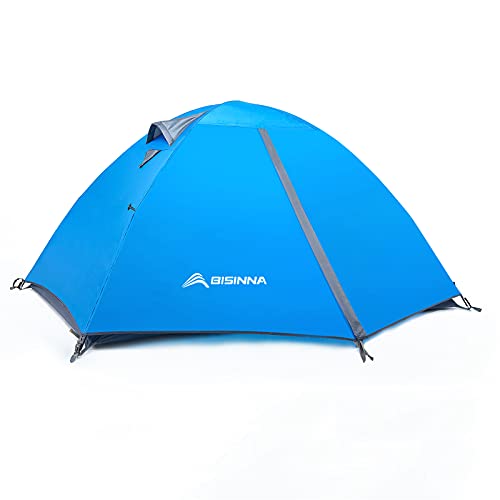
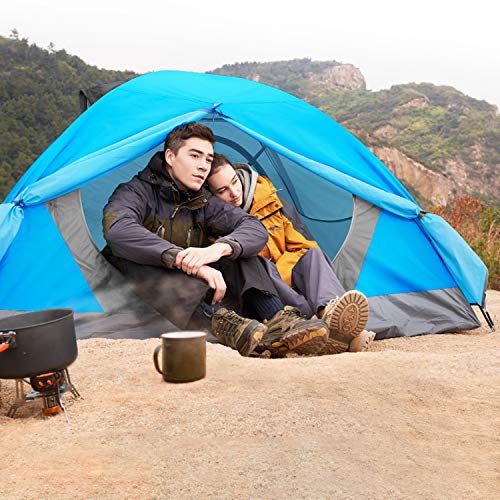
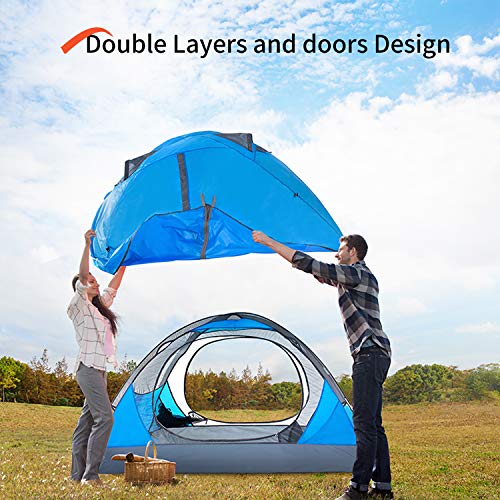
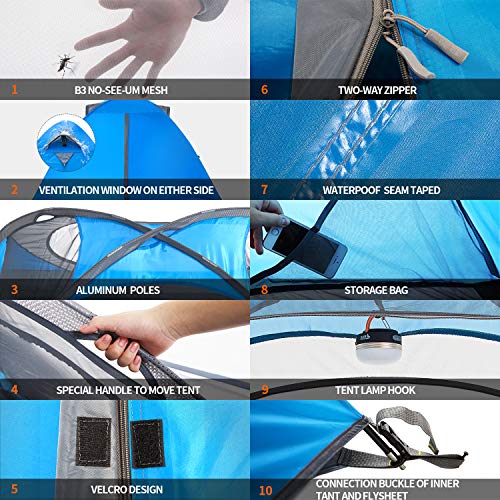
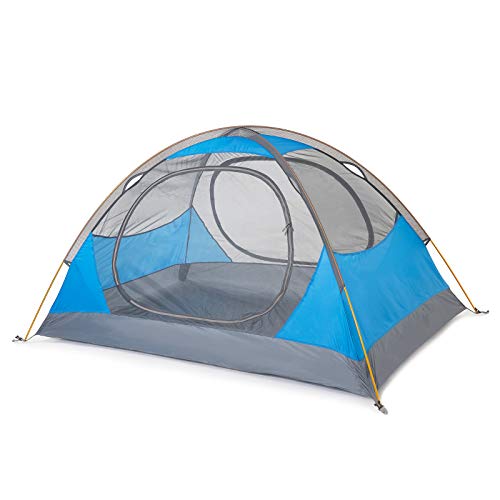
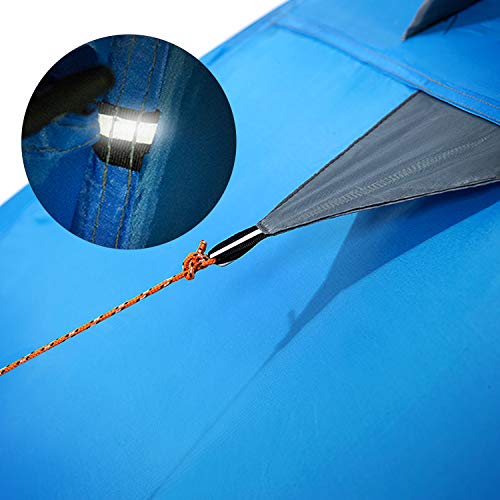
This BISINNA tent makes a strong case for itself with dual D-shaped doors and full mesh panels, a rare win for ventilation in this price range. At just under 5 lbs for the 2P, it’s not the lightest, but owners praise how well it handles wind thanks to the 7001 aluminum poles and included guylines. The PU2000mm rating is standard for 3-season use, and while not overbuilt, it holds up fine in rain when pitched correctly.
What really sets it apart is the airflow. In muggy or warm conditions, that mesh-heavy inner tent makes a noticeable difference compared to stuffier models like the Coleman Skydome. Still, I’d hesitate to take it deep into alpine zones, the poles are solid but not burly enough for true winter storms.
Product photos
Our Testing Process
As a long-time tent enthusiast, I approached researching these three season tents by first compiling a detailed spreadsheet of published specifications and features from each manufacturer. I then weighed those specs against a thorough review of owner feedback from major retailers and independent outdoor gear sites. Finally, I applied my experience with tent design and materials to assess how well each model would likely perform in real-world conditions – though this is a research-led comparison, rather than a hands-on lab test.
For three season tents, consistently reliable waterproofing and a balance between weight and durability are paramount. I prioritized tents with a rainfly and floor coating of at least 2000mm, as these provide a good baseline for keeping campers dry. Equally important was the overall weight; a lighter tent is easier to carry on longer trips, but too little material can compromise its ability to withstand wind and weather. Understanding the intended use of 3-season tents is key to finding the right balance.
Published specifications give a clear picture of a tent’s physical attributes – dimensions, weight, materials – but owner reviews reveal crucial details about real-world performance. I paid close attention to comments regarding ease of setup, ventilation, and long-term durability. Reputable expert reviews helped corroborate owner experiences and identify potential weaknesses in design or construction. Understanding the features of 3-season tents is important for knowing what to look for in reviews.
Choosing The Right three season tents
Finding the right three season tent can be overwhelming, but focusing on a few key areas will get you closer to a comfortable night under the stars.
A good three season tent balances weight, weather protection, and livability. Look for durable fabrics (polyester or nylon), a waterproof rainfly with a decent hydrostatic head (at least 1500mm), and a design that suits your intended use – backpacking demands lighter weight, while car camping prioritizes space and comfort. Pay attention to the tent’s floorplan, peak height, and vestibule space for gear storage.
Weight and Packability
Weight is critical, especially if you plan to carry your tent any distance. The “ultralight” category is tempting, but often comes with a price premium and potentially less durable materials. Don’t automatically assume lighter is better; a slightly heavier tent built with robust fabrics might last longer and withstand more abuse. Consider the packed size too – a compact tent is easier to fit into a backpack alongside your other gear. For solo adventurers, a 2-person tent offers extra space without a huge weight penalty.
Waterproofing and Ventilation
While a tent is rated for “three season” use, that doesn’t mean it’s invincible against rain. Polyester rainflies with a PU coating are common, and a hydrostatic head rating of 2000mm or higher is a good starting point. However, remember that seams are often the weak point. Look for tents with fully taped seams for maximum water resistance. Equally important is ventilation. Condensation builds up inside tents, especially on cool nights, so mesh panels and adjustable vents are essential to keep things comfortable. If you’re checking out 3-season tent reviews, pay close attention to owner comments about moisture buildup.
Ease of Setup and Features
Let’s be honest: nobody wants to wrestle with a complicated tent after a long day of hiking. Many modern tents are designed for quick and easy setup, utilizing pre-attached poles or color-coded clips. A freestanding design allows you to pitch the tent and move it around to find the best campsite before staking it down. Beyond that, consider features like vestibules for gear storage, interior pockets for organization, and a durable floor to protect against abrasion. Before making a final decision, review several factors in tent selection to make sure you’re getting the most value for your money.
A tent’s durability is directly related to the quality of its components. Don’t skimp on the poles – aluminum is stronger and lighter than fiberglass – and look for a rainfly made from ripstop nylon or polyester.
Three Season Tents Compared
Here’s a comparison of key specifications for several three-season tents to help you find the right fit for your needs.
| Product | Capacity | Weight (lbs) | Floor Size (sq ft) | Peak Height (in) | Waterproof Rating (mm) |
|---|---|---|---|---|---|
| Kelty Grand Mesa 2P | 2 | 4.7 | 30 | 44 | N/A |
| Amazon Basics 4-Person | 4 | N/A | 63 | 48 | N/A |
| Clostnature 3-Person Ultralight | 3 | 6.17 | N/A | 39 | 5000 |
| Clostnature 2-Person Ultralight | 2 | 5.29 | N/A | 38 | 5000 |
| Coleman Skydome 4-Person | 4 | N/A | 48 | 48 | N/A |
| Hewolf Instant Pop Up | 2-4 | N/A | N/A | N/A | 4500 |
| Forceatt 2-Person 3-4 Season | 2 | 5.5 | N/A | 43.3 | 3000 |
| BISINNA 2-Person Double Layer | 2 | N/A | N/A | 47.2 | 2000 |
Frequently Asked Questions
What’s the difference between a hydrostatic head rating and actual waterproofness?
A hydrostatic head rating indicates how much water pressure a fabric can withstand, but real-world waterproofness depends on other factors. Seam sealing, fabric treatment, and the tent’s overall design all contribute to how dry you’ll stay, even with a high mm rating.
Are dome tents generally more stable in wind than cabin-style tents?
Yes, dome tents typically offer better wind resistance due to their aerodynamic shape and distributed stress points. Cabin-style tents, with their steeper walls, can catch the wind more easily and might require extra guylines for stability.
What does “fully taped seams” actually mean?
Fully taped seams means all the seams on the tent’s rainfly and floor have been treated with waterproof tape to prevent water from leaking through the needle holes. This is a crucial feature; without it, even a high waterproof rating won’t keep you dry during heavy rain.
How important is a vestibule, and what’s the best way to use it?
A vestibule is extremely useful for storing muddy boots, wet gear, and backpacks, keeping them out of the main tent body. The best way to use it is to organize your items to maximize space and keep frequently needed items easily accessible.
I see a lot of tents advertised as “freestanding.” What are the benefits of that?
Freestanding tents are easier to pitch because they don’t require stakes to maintain their shape. This is handy on rocky ground or in areas where staking is difficult, and it allows you to move the tent around before fully securing it. If you’re looking for options for larger groups, you can find some of the best 4-person 3-season tents with this feature.
The Bottom Line
Choosing a tent always comes down to trade-offs. Do you prioritize carrying weight and streamlined packing, or do you want maximum space and convenience? For the best overall balance of features, durability, and price, I recommend the Kelty Grand Mesa 2P. It consistently receives positive reviews for its ease of setup and reliable performance in varied conditions.
If you’re on a tighter budget, the Amazon Basics 4-Person tent is a solid choice, offering a surprising amount of space for the money. And for those focused on minimizing weight for backpacking, the Clostnature 2-Person Ultralight is a strong contender, though it’s worth remembering that ultralight construction can sometimes mean sacrificing some long-term durability. If you’re considering a tent for year-round use, understanding the 4-season tent differences is important.
Ultimately, the best tent isn’t about the highest specs or the flashiest features. It’s about finding a shelter that keeps you dry, comfortable, and safe, allowing you to fully enjoy your time outdoors. Focus on a well-made rainfly, robust construction, and a design that suits your style of adventure – those fundamentals matter far more than any single number on a spec sheet.
