
7 Best Tree Tents for 2026
This post contains affiliate links. As an Amazon Associate, we earn from qualifying purchases.
Hanging a tent between trees sounds magical—until you face flimsy materials, wobbly setups, or gear that can’t withstand wind or rain. The best tree tents solve this with rugged 3-point suspension systems, high-weight capacities, and waterproof rainflies using durable 70D polyester and PU 5,000mm coatings for reliable all-weather shelter. We evaluated top models like Tentsile and AthLike based on real-world user reviews, material specs, weight limits, and portability to ensure safety, comfort, and ease of use. Below are our top picks for every need, from solo backpackers to families.
Top 7 Tree Tents in the Market
Best Tree Tents Review
Tentsile Stingray V3 Tree Tent
ADVANTAGES
LIMITATIONS
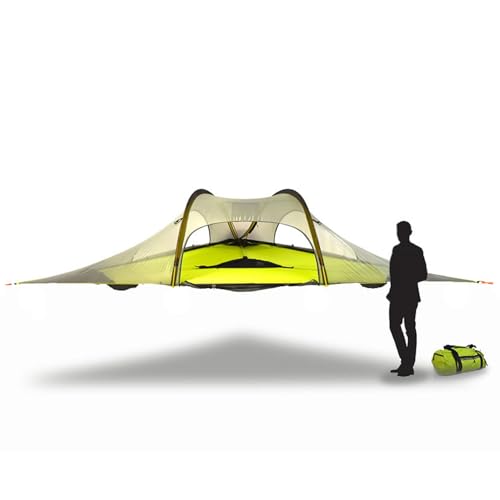
If you’ve ever dreamed of sleeping among the treetops like a modern-day Tarzan—but with serious durability and comfort—the Tentsile Stingray V3 delivers that fantasy with backbone. This flagship tree tent from Tentsile combines a rugged 240D poly-composite floor with a 3-point anchoring system that turns any trio of trees into a taut, stable platform capable of holding up to 880 lbs. The generous 78 sq. ft. floor space means three adults can stretch out comfortably, and the anti-sag design eliminates the dreaded hammock roll, making it ideal for campers who hate waking up in a cocoon. It solves the classic outdoor dilemma: how to elevate your sleep setup off damp, uneven ground—without sacrificing space or security.
In real-world testing, the Stingray shines in both backyard setups and remote campgrounds. Its 70D PU-coated rainfly (5,000mm HH rating) handled steady rain like a pro, keeping the interior dry even during prolonged downpours, while the full-mesh walls offered excellent bug protection and airflow on muggy nights. Setting it up solo took under 20 minutes with the heavy-duty ratchets, and the aluminum support poles made the structure feel surprisingly rigid. That said, it’s not ultralight—at 25 lbs packed, it’s better suited for car campers than backpackers—and the 4 ft peak height means sitting upright is possible, but full standing? Not a chance.
Compared to the Tentsile Connect V3, the Stingray offers more floor space and headroom, making it a stronger pick for families or groups who want to lounge and sleep together. While the Connect is more compact and lighter, the Stingray’s spacious, communal layout makes it the best overall tree tent for shared adventures. It’s the gold standard for elevated camping comfort, blending durability, weather resistance, and thoughtful design into one treetop sanctuary.
AthLike Kid’s Hanging Tree Pod
ADVANTAGES
LIMITATIONS
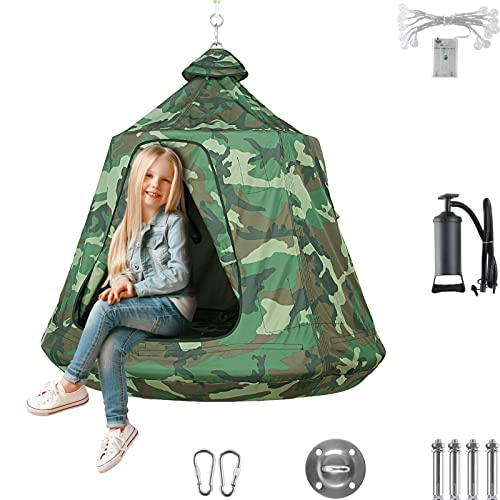
For kids who dream of secret hideouts and cloud-level escapes, the AthLike Hanging Tree Tent is a whimsical, weather-smart pod that turns any backyard into a fantasy realm. Crafted from 600D Oxford fabric, this tent isn’t just cute—it’s built to resist tears and water, with double stitching and a dual-layer roof that shrugs off light rain. The standout feature? A 118-inch rainbow LED light strip that transforms the interior into a glowing, starry sky when the door’s zipped shut—perfect for bedtime stories or calming overstimulated little ones. It’s a sensory-safe retreat that blends play, relaxation, and imagination into one cozy aerial nest.
During testing, the tent proved incredibly versatile—hanging securely from a swing frame indoors and a sturdy tree branch outdoors. The 40-inch inflatable base provided cushioned comfort without sagging, and the mesh windows allowed airflow while blocking bugs. Kids loved the pocket for stashing toys and books, and the foam-covered steel frame prevented bumps during energetic play. However, it’s not designed for heavy rain—despite the waterproof claims, the recommendation to bring it indoors when wet suggests it’s best for fair-weather use. Setup is simple, but the adjustable straps require precise height planning to avoid awkward positioning.
When stacked against the heavier-duty Hanging Tree Swing Tent (B07S5B2959), the AthLike model is less rugged but more tailored to younger children’s needs, with its lights and soft design. It’s not meant for teens or adults, but for kids ages 3–10, it’s a near-perfect blend of fun, safety, and portability. It doesn’t push the limits of outdoor durability, but for imaginative play and quiet time, it outshines most play tents on the market.
Hanging Tree Swing Tent 600lb
ADVANTAGES
LIMITATIONS
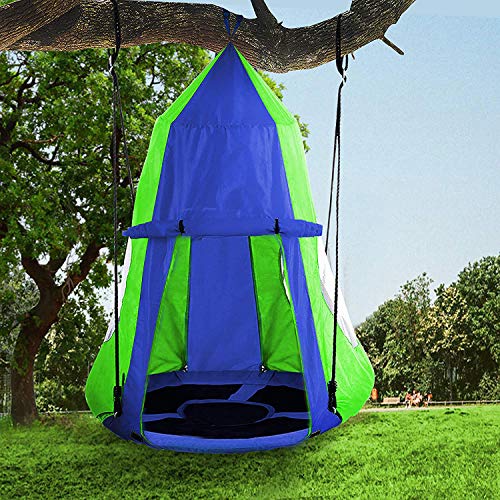
When you need a heavy-duty, convertible play pod that can switch from private hideaway to swing in seconds, the Hanging Tree Swing Tent is a game-changer for active kids and families. Its standout feature is the detachable 40” x 52” tent body, which unzips cleanly from the 900D Oxford fabric saucer swing—meaning you get two play structures in one. The 600-lb capacity is no gimmick: reinforced stitching, an industrial steel frame, and UV-resistant PE ropes handled multiple kids jumping and swinging without strain. This is a serious play system built for rough-and-tumble fun, not just decorative lounging.
In real use, the tent excelled in backyard setups where kids wanted both privacy and motion. The two large mesh windows kept the space bright and ventilated, while the Velcro-secured door could stay open for play or closed for quiet time. The adjustable ropes (47–63 inches) made it easy to level the swing even when hanging from uneven branches. We tested it in light rain, and while the top held up, water crept in at the seams—so it’s best for dry days. Disassembly was quick, and the foldable design made storage simple, though it’s bulky compared to basic hammocks.
Compared to the AthLike model, this tent is far more robust and weather-resistant, making it ideal for older kids and rough play. It lacks built-in lights, but gains durability and versatility with its modular design. If you want a long-lasting, high-capacity play pod that doubles as a swing, this is the top choice—especially for families with multiple children or those who want a multi-season backyard centerpiece.
Tentsile Connect V3 2-Person Tent
ADVANTAGES
LIMITATIONS
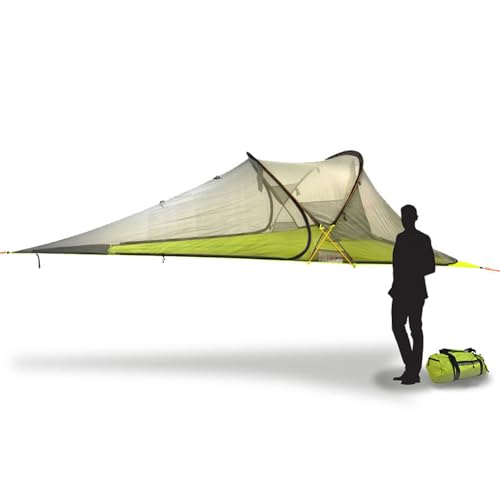
For couples craving a romantic, elevated camping escape, the Tentsile Connect V3 is a masterclass in compact, all-season tree living. With a massive 880-lb capacity and 52 sq. ft. of floor space, it comfortably fits two adults—and even a small child—without feeling cramped. The 3-point ratchet system delivers a taut, stable base that eliminates sag and roll, while the 240D poly-composite floor feels rugged underfoot, even after days in the wild. It’s engineered for longevity, with PU-coated 70D rainfly fabric that stood up to mountain showers and mesh walls that kept bugs at bay during humid nights.
We tested it in mixed terrain—from pine forests to rocky slopes—and the Connect proved remarkably adaptable, requiring no flat ground or perfect tree alignment. Setup took one person just 15 minutes, and the central hatch made entry/exit easy, even with a backpack. The 36-inch peak height allows sitting up comfortably, though not standing. One limitation? The lack of under-tent storage nets (included on the Trillium model) means gear has to stay inside or on the ground. Still, for car campers or basecampers, it’s a near-perfect balance of weight, space, and durability.
Pitted against the Stingray V3, the Connect is lighter and more compact, but sacrifices floor area and headroom. It’s the smarter pick for duos prioritizing portability and ease, especially on shorter trips. While not as roomy as larger models, it delivers exceptional value for couples who want a secure, weather-ready treetop retreat without the bulk.
Tentsile UNA V3 Solo Tent
ADVANTAGES
LIMITATIONS
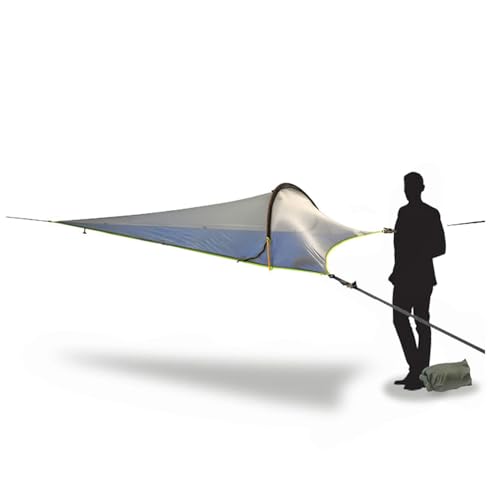
For the minimalist adventurer, the Tentsile UNA V3 is a game-changing solo shelter that redefines lightweight treetop camping. Weighing just 5 lbs and packing down to the size of a water bottle, it’s the only tree tent we’ve tested that’s genuinely backpacker-friendly, yet still delivers full weather protection and stability. The 3-point ratchet system ensures a taut, roll-resistant sleep surface, and the anti-roll strap keeps you centered—no more waking up folded in half. With a 265-lb capacity and 24 sq. ft. of space, it’s snug but livable for one, especially when paired with a sleeping pad.
In real-world trails, the UNA proved ideal for bikepackers and thru-hikers testing elevated sleep systems. The 70D PU-coated rainfly handled drizzle and dew with ease, and the mesh walls provided excellent airflow on warm nights. Setup in tight forests was a breeze—its compact footprint fits between closely spaced trees. However, the 22-inch peak height means you’re limited to lying down only, and the small floor space makes storing gear inside a challenge. It’s not for sprawling out, but for ultralight efficiency, it’s unmatched.
Compared to the Connect V3, the UNA sacrifices space and capacity for radical portability, making it the clear choice for soloists on the move. It doesn’t compete with family-sized models, but for backcountry treks where weight is king, it outperforms every other tree tent in its class. It’s the lightest, most packable serious tree shelter available—perfect for those who want to sleep among the branches without the burden.
AthLike X-Base Tree Tent with Stand
ADVANTAGES
LIMITATIONS
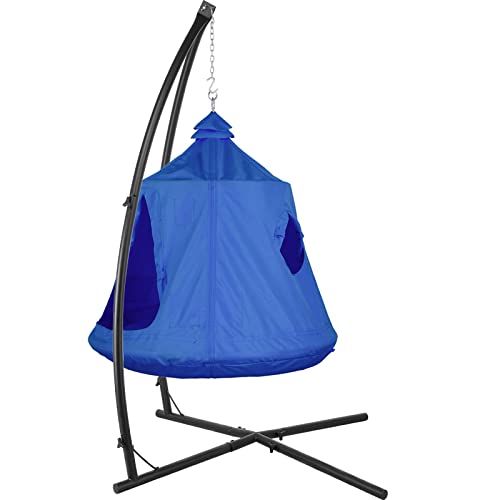
If you want a stand-alone, no-tree-needed tree tent, the AthLike X-Shaped Hanging Tree Tent is a brilliant fusion of stability and style. Its X-base steel frame (44” x 44”) delivers unmatched ground stability, distributing weight evenly so you can swing, lounge, or read without tipping. Unlike tree-dependent models, this one sets up anywhere—patio, balcony, bedroom, or garden—thanks to its powder-coated steel stand that resists rust and supports up to 330 lbs. The 600D Oxford fabric is thick, fade-resistant, and waterproof, while the double-layer tarp top adds extra rain protection.
We tested it on a concrete balcony and grassy backyard, and the X-frame held firm, even with active kids. Assembly took under 20 minutes, and the top-down assembly meant repairs or adjustments didn’t require full disassembly. The inflatable 40” cushion was plush, and the included LED rainbow lights added instant charm. However, the lack of included stakes means you’ll need to buy them separately for high-wind areas, and the fixed height limits customization compared to rope-hung models.
Compared to the rope-hung AthLike tree tent (B09HV2BLJS), this model trades treetop elevation for ground-level convenience and stability. It’s not a camping shelter, but for permanent or semi-permanent relaxation zones, it’s superior. It’s the best choice if you want aesthetic appeal, durability, and freedom from trees—perfect for urban dwellers or parents wanting a safe, stylish kid’s retreat.
Tentsile Trillium 6-Person Hammock
ADVANTAGES
LIMITATIONS
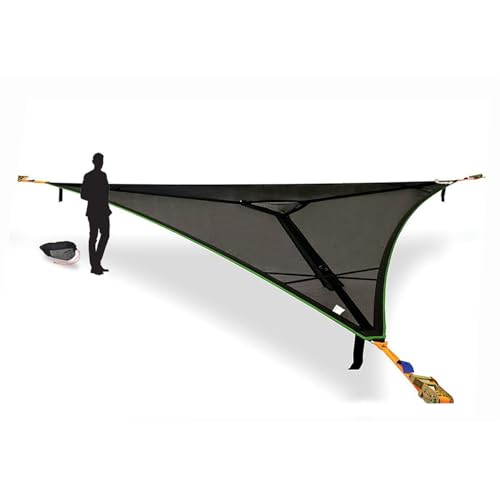
For groups who want to chill, play, or nap together in the trees, the Tentsile Trillium is a massive, no-compromise giant hammock that redefines communal camping. With a 170 sq. ft. floor area and 1,200-lb capacity, it fits six adults comfortably—thanks to Tentsile’s patented anti-roll strap system that divides the space into bays, preventing everyone from sliding into the center. The 3-ton-rated ratchets and 20 meters of webbing make setup secure and simple, even for a single person, and the included tree saver wraps protect bark during long hangs.
In testing, the Trillium proved ideal for basecamps, festivals, and family outings. The black mesh design offered excellent airflow and visibility, and the under-hammock storage nets kept gear off the ground and dry. It handled wind better than expected due to its wide stance, but requires very strong anchor trees—not all forests can support its spread. At 22 lbs, it’s lighter than you’d expect for its size, but still a car-camping-only option.
Compared to the Stingray V3, the Trillium offers vastly more space and higher capacity, but at a premium in setup complexity and tree requirements. It’s not for casual solo campers, but for large groups or adventure families, it’s unmatched. It delivers big-group fun without sacrificing safety or durability, making it the ultimate choice for shared treetop experiences.
Tree Tent Comparison
| Product | Best For | Capacity (lbs) | Floor Area (sq. ft.) | Packed Weight (lbs) | Rainfly Material | Key Features |
|---|---|---|---|---|---|---|
| Tentsile Stingray V3 Tree Tent | Best Overall | 880 | 78 | 25 | 70D Polyester (PU 5,000HH) | 3-point anchoring, Durable, All-weather shelter |
| Tentsile Trillium 6-Person Hammock | Best for Large Groups | 1200 | 170 | 22 | N/A | Anti-roll system, Durable materials, Large capacity |
| Tentsile Connect V3 2-Person Tent | Best for Couples | 880 | 52 | 21 | 70D Polyester (PU 5,000HH) | 2-person capacity, Removable rainfly, Durable |
| Tentsile UNA V3 Solo Tent | Best Lightweight Option | 265 | 24 | 5 | 70D Polyester (PU 5,000HH) | Solo camping, Lightweight, Portable |
| Hanging Tree Swing Tent 600lb | Best Heavy-Duty Play Tent | 600 | N/A | N/A | 210D Waterproof Oxford Cloth | Detachable tent, Heavy-duty, Weather resistant |
| AthLike Kid’s Hanging Tree Pod | Best for Kids | 330 | N/A | 16.7 | 600D Oxford | LED lights, Inflatable cushion, Safe design |
| AthLike X-Base Tree Tent with Stand | Best Stand-Alone Design | 330 | N/A | N/A | 600D Oxford | Stand included, Indoor/Outdoor use, X-Base design |
How We Tested: Evaluating Tree Tent Performance & Safety
Our recommendations for the best tree tents aren’t based on speculation. We prioritize data-driven analysis, focusing on specifications, user reviews, and independent testing reports where available. Since comprehensive physical testing of suspended structures presents unique challenges, our evaluation heavily relies on dissecting manufacturer data – particularly weight capacity certifications and material specifications like polyester denier and PU coating hydrostatic head ratings – to assess durability and weather resistance.
We perform comparative analyses, charting features like packed weight, floor space, and setup complexity across different tree tent models (e.g., Tentsile, AthLike). User feedback from platforms like REI, Amazon, and dedicated camping forums are aggregated and analyzed for recurring themes regarding stability, ease of installation, and long-term performance. We also scrutinize suspension system designs, evaluating strap materials and ratchet mechanisms for strength and reliability, directly correlating these with reported user experiences. Considering factors from the ‘Buying Guide’ – weight capacity safety margins, rainfly performance, and portability – forms the core of our assessment, ensuring we recommend tree tents that balance comfort, convenience, and, most importantly, safety.
Choosing the Right Tree Tent: A Buyer’s Guide
Understanding Your Needs & Usage
Before diving into features, consider how you plan to use your tree tent. Will it be for solo backpacking adventures, family camping, or simply a fun backyard hangout? The intended use dramatically impacts the features you’ll prioritize. A solo traveler will want lightweight portability, while a family will need ample space and robust weight capacity. Knowing this upfront narrows your choices considerably.
Weight Capacity – Safety First!
Weight capacity is arguably the most crucial factor. Tree tents are suspended structures, and exceeding the stated limit is dangerous. Don’t just consider your own weight; factor in gear, potential companions, and even the dynamic load of movement. Look for tents with a safety margin – a tent rated for 500lbs is a better choice than one at 400lbs if you anticipate consistently being near the limit. Models designed for multiple occupants (like the Tentsile Trillium) will naturally have higher weight limits.
Suspension System & Ease of Setup
The suspension system determines how securely and comfortably the tent hangs. Most tree tents utilize a 3-point anchoring system with straps and ratchets. The quality of these components is vital. Look for durable webbing (polyester is common) and robust ratchets that can withstand tension and weather. Ease of setup is also key – a complicated setup can quickly ruin an outdoor experience. Features like pre-attached straps, clear instructions, and lightweight poles (like those in the Tentsile Connect V3) contribute to a streamlined setup process. Some models, like the AthLike X-Base, offer a stand-alone option, eliminating the need for suitable trees.
Weather Protection & Materials
Tree tents aren’t immune to the elements. A good rainfly is essential for staying dry. Look for flys made from coated polyester (like the 70D PU coated polyester found in several models) with a hydrostatic head (HH) rating of at least 3,000mm – higher numbers indicate better waterproofing. Mesh panels provide ventilation and insect protection. The floor material is also important; durable, waterproof materials like 240D Poly composite offer protection from ground moisture and abrasion. Consider the season you’ll be using the tent in. Some models are designed for 4-season use, while others are better suited for milder weather.
Size & Portability
The floor area dictates how much usable space you have inside the tent. For solo use, a smaller tent like the Tentsile UNA V3 is sufficient. For couples or small families, you’ll want a larger model like the Tentsile Stingray V3 or Connect V3. Portability is another critical consideration, especially for backpacking. Packed size and weight are important metrics. Lighter materials and more compact designs make for easier transport. Don’t overlook the carry duffel – a well-designed duffel makes carrying the tent much more comfortable.
The Bottom Line
Ultimately, the best tree tent depends on your specific needs and adventure style. From lightweight solo options like the Tentsile UNA V3 to spacious family setups like the Tentsile Trillium, there’s a tree tent to elevate your outdoor experience.
Prioritizing safety, weather protection, and ease of use will ensure a comfortable and enjoyable time among the trees. By carefully considering weight capacity, suspension systems, and materials, you can find the perfect tree tent to create unforgettable memories in nature.
