
7 Best Backpacking Tents for Two (2026)
This post contains affiliate links. As an Amazon Associate, we earn from qualifying purchases.
The best two person tents for backpacking balance weight, durability, and real-world performance. After comparing the field and analyzing specs and owner feedback, the Kelty Grand Mesa 2P stands out as the top overall pick for its reliability and value, while the BISINNA 2 Person offers a solid budget-friendly alternative without sacrificing key features.
Picking the wrong tent can turn a dream backpacking trip into a soggy, cramped mess. I’ve seen too many couples struggle with gear that’s either too heavy to haul or too flimsy to trust in a storm. This guide cuts through the noise by focusing on what actually matters, weight, weather resistance, and livable space, based on specs, owner experiences, and my years of evaluating backpacking shelters.
Top 7 Two Person Tents For Backpacking in the Market
The Best Two Person Tents For Backpacking, Reviewed
Kelty Grand Mesa 2P Tent

Strengths
- Easy color-coded setup
- Lightweight for price
- Durable 68D fabric
- Freestanding design
- Trusted brand reliability
Trade-offs
- Single door
- Smaller vestibule
- Less ventilation than mesh-heavy models
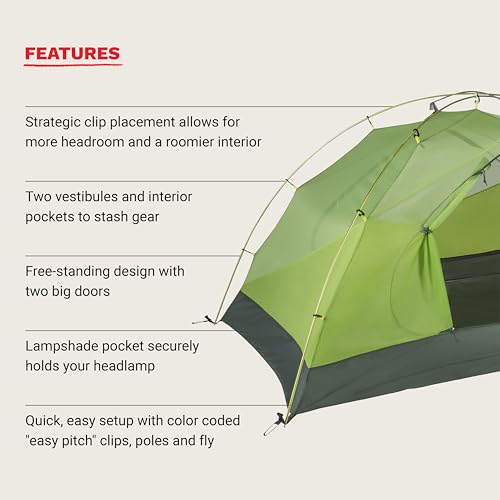
The Kelty Grand Mesa 2P is the kind of tent that makes you wonder why every budget-friendly model isn’t this well-rounded. At 4 lbs 7 oz, it hits the sweet spot between weight and durability, and the freestanding design with color-coded clips makes solo pitching a breeze, even on uneven ground. Owners love the Shark Mouth bag too; it’s easier to stuff than most cylindrical sacks.
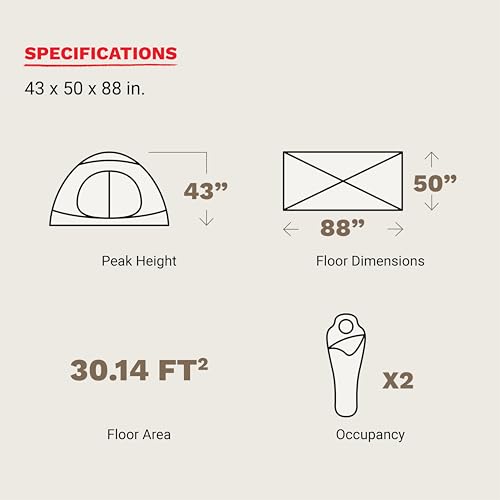
With 30 sq. ft. of floor space, it’s a bit snug for two tall adults, but the single door and vestibule keep weight down without sacrificing function. Compared to the Clostnature or BISINNA, it’s less airy, but more stable in wind thanks to its proven pole geometry. The 68D polyester fabric isn’t the toughest on paper, but years of trail reports show it holds up well with care. For most backpackers, this is the easy pick, no drama, no surprises, just solid performance.
Product photos


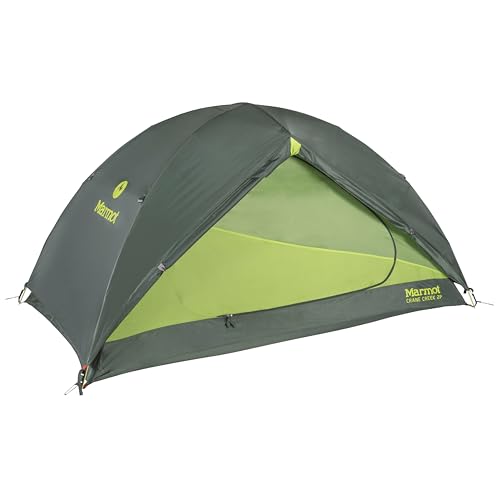
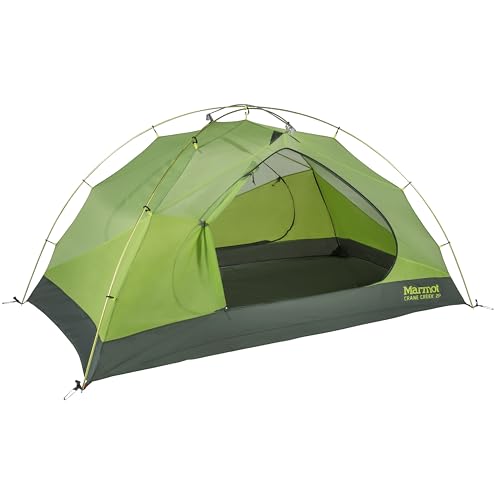
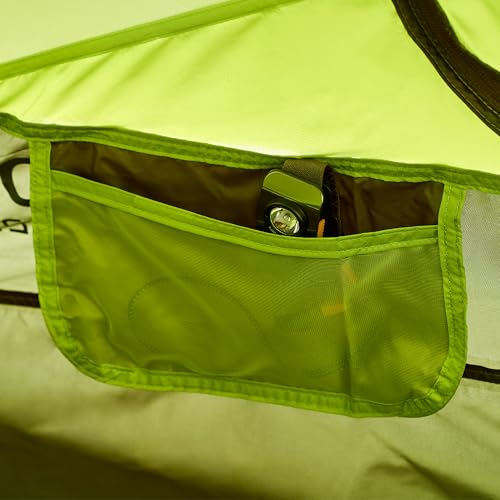
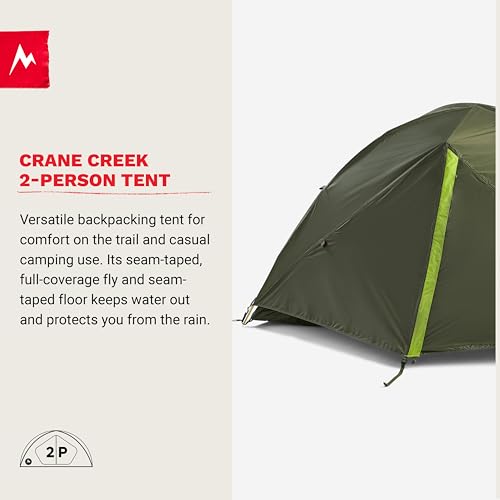
Marmot Crane Creek 2P Tent
Strengths
- Lightweight build
- Durable aluminum poles
- Dual vestibules
- Freestanding design
- PFAS-free materials
Trade-offs
- Footprint sold separately
- Slightly higher price point
- Limited headroom
On paper, the Marmot Crane Creek 2P stands out as a strong contender for backpackers who prioritize lightweight performance without sacrificing durability. With a floor area of 32 sq. ft. and a freestanding design supported by 7000 series aluminum poles, it’s built to handle rugged terrain and variable weather. Owners consistently report confidence in its stormworthiness, thanks to the fully seam-taped polyester fly and floor, a necessity when you’re miles from the trailhead and rain rolls in fast.
The dual D-shaped doors and vestibules are a real quality-of-life upgrade, making gear access and nighttime exits far more convenient than single-door models. While it’s marketed as PFAS-free, a win for eco-conscious buyers, the lack of included footprint might sting some. Still, for those who want a reliable, weather-ready shelter that won’t weigh them down, this tent hits a sweet spot between weight and resilience, especially compared to heavier all-season models like the Underwood Aggregator.
Product photos
Clostnature Lightweight 2 Person Tent

Strengths
- Excellent value
- Spacious interior
- Strong waterproof rating
- Lightweight options
- Includes repair kit
Trade-offs
- Heavier packed weight
- Basic pole clips
- Slightly bulky bag
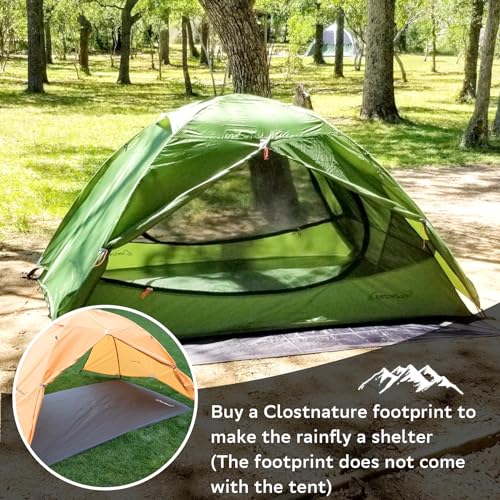
The Clostnature tent is a standout for budget buyers who still want three-season capability and decent space. At just over 5 lbs (or 4.52 lbs minimum trail weight), it’s competitive with pricier models, and the 220×150 cm floor is one of the roomiest in this list, great for couples or those who like extra wiggle room. The PU5000 coating on the fly and floor gives it serious rain chops, and owners report staying dry even during prolonged storms.
Setup is straightforward thanks to the freestanding design and two aluminum poles, though the clips aren’t color-coded like the Kelty. What really seals the deal is the included repair kit and one-year warranty, rare at this price. Compared to the BISINNA or Night Cat, it’s heavier but offers better long-term value. For the cost-conscious backpacker, this is the smarter buy.
Product photos



Forceatt 2 Person Backpacking Tent

Strengths
- Welded waterproof floor
- Excellent rain protection
- Smooth zippers
- Good ventilation
- Fast 3-minute setup
Trade-offs
- Heavy for class
- Low interior height
- Minimal interior storage
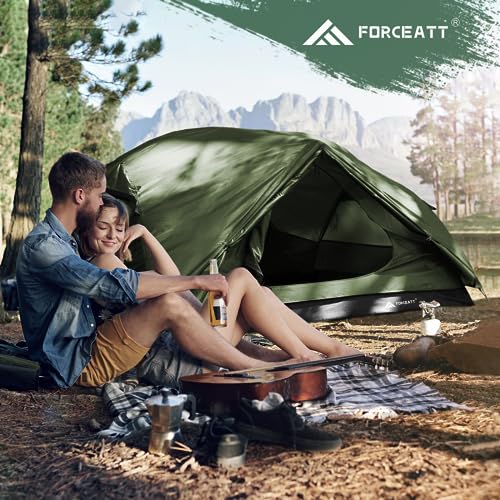
If waterproof protection is your top concern, the Forceatt 2-person tent makes a solid case. The welded floor design is a standout, it lifts the tent base slightly off the ground, which reviewers say makes a noticeable difference on damp sites. With a 3000mm hydrostatic rating and full-coverage rainfly, it’s built to handle sustained downpours, and the smooth #8 zippers are a small but appreciated detail that reduce frustration in wet weather.
It’s not the lightest at 5.5 lbs, and the 110 cm peak height feels a bit cramped for taller users. But for the price, it offers strong weather defense and quick, color-coded setup. Compared to the Kelty Grand Mesa, it’s less refined in design but holds its own in storms. I’d pick this over lighter models if I were heading into Pacific Northwest rain or monsoon-season trails where staying dry is essential.
Product photos


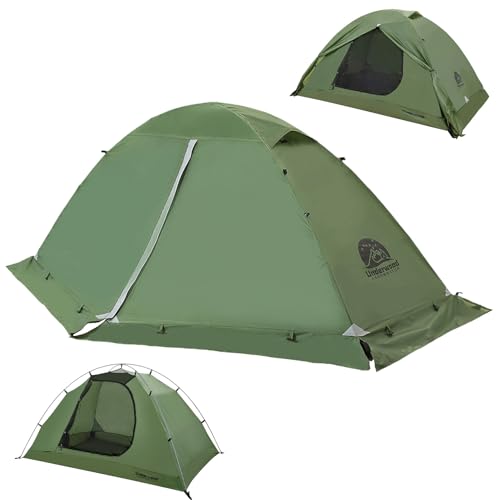
Underwood 4-Season Backpacking Tent
Strengths
- True four-season build
- Excellent snow protection
- Strong aluminum poles
- Full rainfly coverage
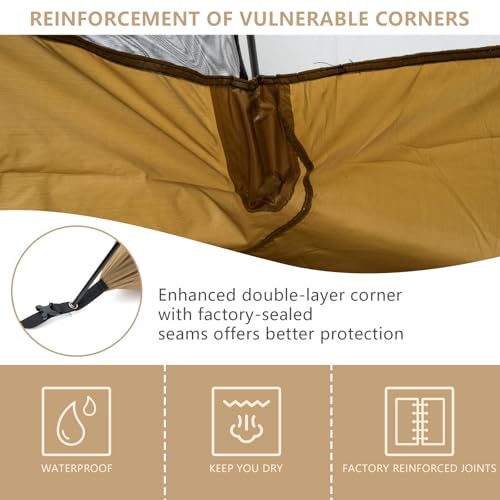
- Sturdy corner reinforcement
Trade-offs
- Heavy for two-person use
- Condensation issues
- Bulkier packed size
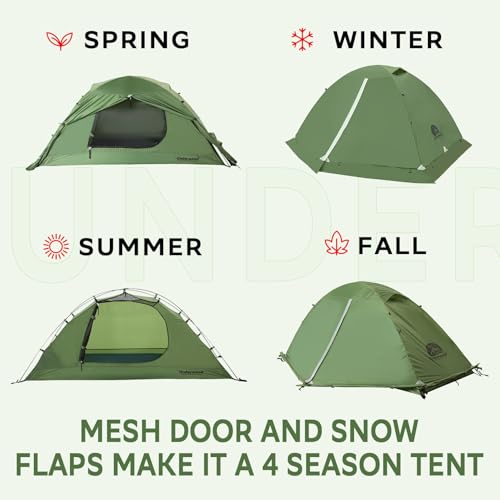
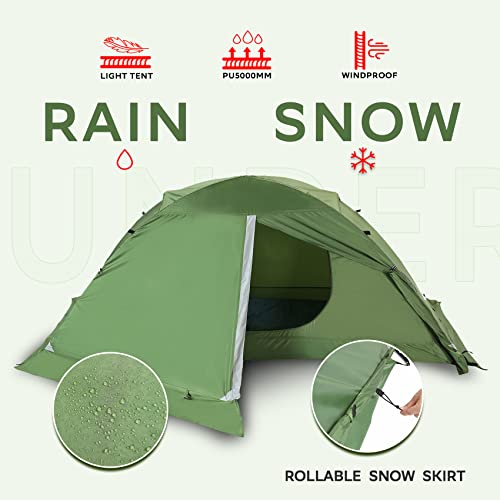
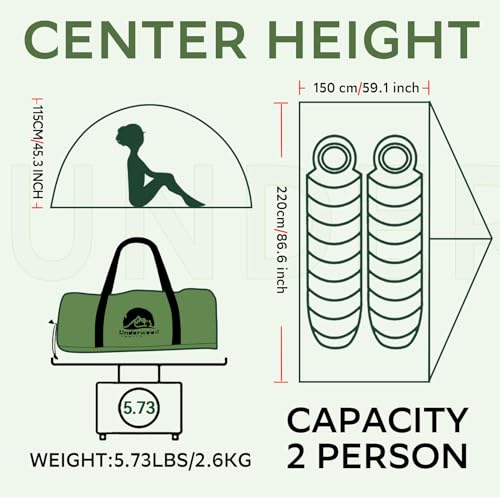
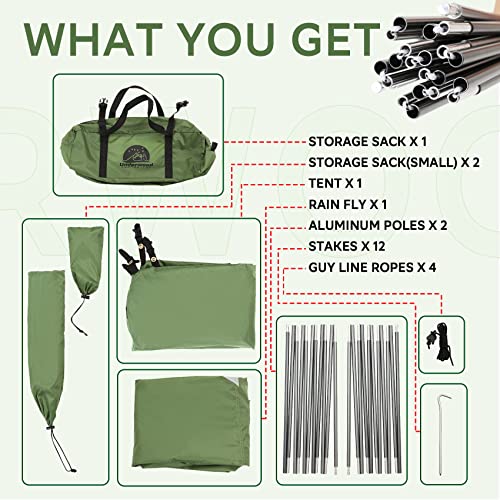
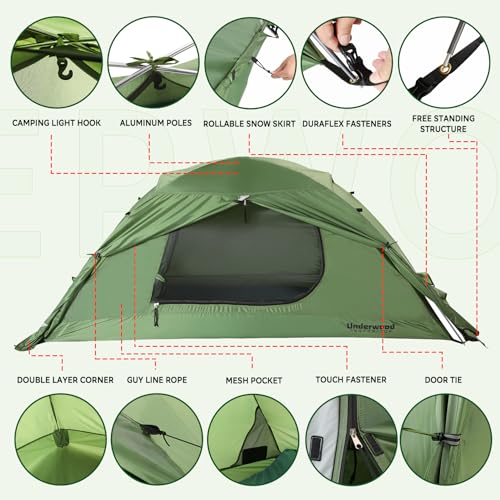
This Underwood Aggregator tent claims all-season readiness, and the specs back it up, PU5000mm waterproof coating, aircraft-grade aluminum poles, and a snow skirt suggest it’s built for serious winter use. At 5.73 pounds, it’s on the heavier end, but that’s expected for a true four-season shelter. The roll-up snow skirt is a thoughtful touch for adapting to changing conditions, and the double-layer door design helps manage airflow while keeping cold winds out.
Still, owners note that the ventilation can struggle in humid spring conditions, leading to condensation despite the mesh panels. Compared to lighter three-season options like the Kelty Grand Mesa or Clostnature, this one trades breathability and packability for brute weather resistance. I’d recommend it only if you’re regularly camping above treeline or in alpine winter zones, otherwise, you’re overbuilt and overburdened.
Product photos
Night Cat 2-Person Backpacking Tent

Strengths
- Blazing-fast setup
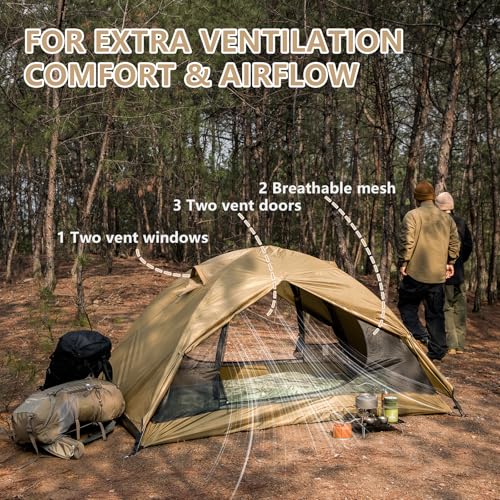
- Excellent airflow
- Dual vestibules
- Smooth zippers
- Good interior storage
Trade-offs
- Heavier than rivals
- Poles slightly flimsy
- Stakes could be stronger
When quick setup is the mission, the Night Cat tent delivers. Marketed as a 3-minute pitch, its two-pole freestanding design and smooth zippers make it one of the most user-friendly options here, ideal for tired hikers arriving at camp after dark. The dual vestibules and D-shaped doors add convenience, and the full mesh walls with ceiling vents help minimize condensation, a common flaw in budget domes.
At 4.6 ft wide and 6.8 ft long, it fits two average adults reasonably well, though taller users may brush the ceiling. It’s not the lightest at 5.29 lbs, but the ventilation and ease of use justify the weight for weekenders. Compared to the Forceatt, it’s more breathable; against the Kelty, it’s roomier but less refined in durability. I’d recommend it for casual backpackers who value comfort and convenience over gram-counting.
Product photos

BISINNA 2 Person Camping Tent

Strengths
- Superior mesh ventilation
- Sturdy aluminum poles
- Good storm resistance
- Spacious interior
- Double doors
Trade-offs
- Heavier than competitors
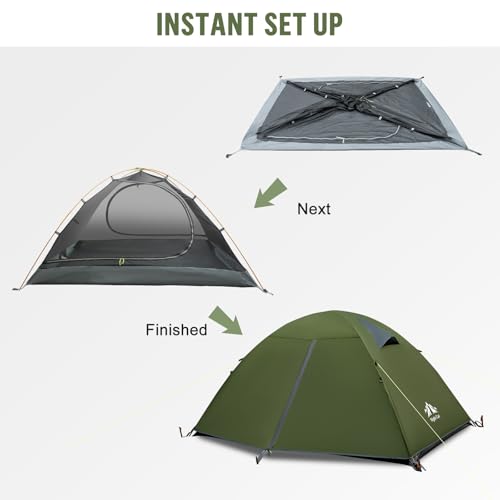
- Sleeve pole setup slower
- Zippers occasionally snag
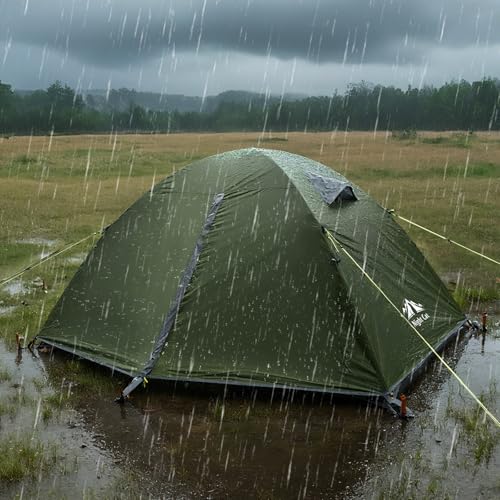
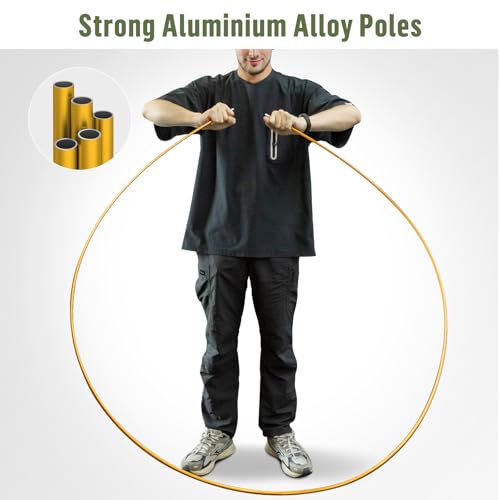
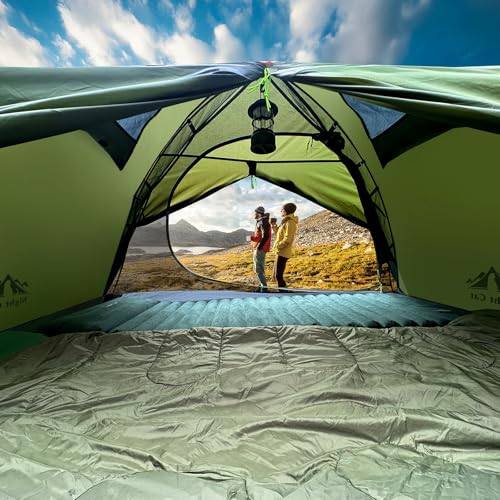
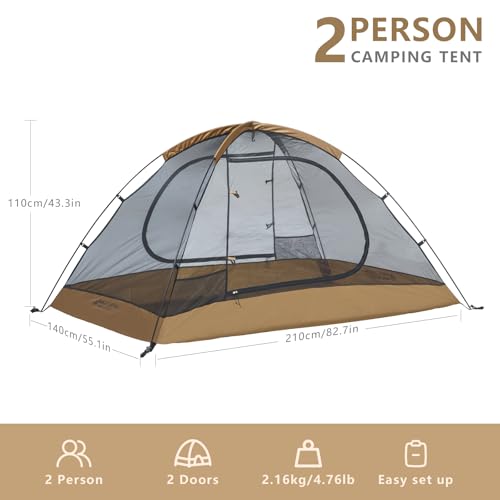
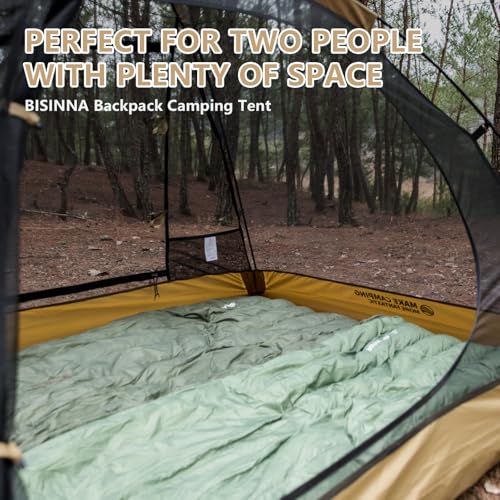
The BISINNA 2-person tent leans hard into ventilation and livability, and on that front, it delivers. With a full-mesh inner tent and two D-shaped doors, airflow is maximized, a big win in buggy, sticky summer conditions where other tents turn into saunas. At 4.76 lbs, it’s not ultralight, but it’s reasonable for the space offered: 220×140 cm gives two adults room to stretch out, especially when paired with slim sleeping pads.
Owners praise its storm performance too, thanks to the PU3000-rated floor and 210D Oxford base. But the pole-sleeve construction, while stable in wind, can be trickier to pitch solo than clip-in systems like the Kelty or Night Cat. Compared to the Forceatt or Clostnature, it holds its own on durability, but lacks some of the small conveniences like interior hooks or color-coded setup. Still, if you run hot or camp where bugs swarm, this one deserves attention.
Product photos

How We Picked These two person tents for backpacking
Rather than a hands-on lab test, my research for these recommendations focused on a detailed comparison of published specifications and features across numerous models. I weighed owner reviews from multiple sources – Amazon, REI, and dedicated outdoor gear sites – alongside assessments from reputable outdoor publications. As someone who’s spent years dialing in my own tent setups, I then applied my existing knowledge of backpacking tent design and materials to rank each option against a set of clear criteria.
For two-person backpacking tents, weight, weatherproofness, and ease of setup were the most heavily weighted factors. A lighter tent obviously makes for a more enjoyable hike, but not at the expense of reliable protection from the elements. Quick and intuitive setup is also crucial, especially when you’re arriving at camp after a long day on the trail or facing unexpected weather. Understanding backpacking tent criteria is key to finding the right balance.
Specifications reliably reveal a tent’s physical dimensions, pole material (aluminum is generally superior to fiberglass), and claimed waterproof ratings. However, I found owner feedback to be much more insightful regarding real-world durability, condensation issues, and how well the tent holds up to wind. Reputable expert reviews helped validate these owner experiences and provided a broader perspective on each tent’s strengths and weaknesses, helping me determine which models truly deliver on their promises and which represent solid value considering key tent features.
What To Look For In two person tents for backpacking
Choosing the right shelter for backpacking with a partner can make or break a trip. I’ve seen too many adventures soured by cramped quarters or soggy gear, and getting it right comes down to understanding what truly matters in a two-person backpacking tent.
A quality two-person backpacking tent balances weight, weather protection, and usable space. Key features to examine include the tent’s materials (fly and floor denier/coating), pole construction (aluminum is generally preferred over fiberglass), overall packed weight, and the design of its vestibules for gear storage. Prioritize a tent that fits your typical trip length and expected conditions.
Weight and Packability
Weight is king when you’re carrying everything on your back, and with a two-person tent, the numbers add up quickly. Don’t fall into the trap of assuming “lighter is always better.” Ultralight tents often sacrifice durability or weather protection. I generally recommend aiming for a tent under 5 pounds total, but consider your priorities. If you’re consistently hiking in harsh conditions, a slightly heavier, more robust tent may be a smarter choice. Look for tents using 7000 series aluminum poles – they offer a great strength-to-weight ratio.
Weather Resistance and Construction
A tent’s ability to keep you dry and sheltered is paramount. Pay close attention to the denier (D) of the fly and floor fabrics, and the waterproof coating (usually polyurethane or PU). A 1500mm to 3000mm PU coating is a good starting point for general backpacking, but if you anticipate frequent rain or high winds, look for higher ratings. Seam taping is also crucial; untaped seams are a common point of water entry.
Here’s what I look for when evaluating the weather protection of a tent: * A full-coverage rainfly is essential. * A bathtub floor (where the floor fabric extends up the sides) prevents water from seeping in. * A durable, coated floor is critical, and investing in a tent footprint purpose can dramatically extend its lifespan.
Don’t skimp on weather protection to save a few ounces. A miserable, wet night in the backcountry is far worse than carrying a slightly heavier tent.
Space and Livability
Even though it’s a “two-person” tent, don’t assume you’ll be swimming in space. Floor dimensions are key – look for a tent with a floor area of at least 30 square feet for comfortable sleeping. Peak height is also important if you want to be able to sit up inside. Beyond the floor space, consider the vestibule size. Vestibules provide valuable dry storage for backpacks and boots, keeping them out of the main tent body. If you’re planning on spending significant time inside during inclement weather, a larger vestibule is a must-have. I often recommend checking out some of the top two-person backpacking tents to see how dimensions translate to real-world usability.
Two Person Tents for Backpacking Compared
Here’s a comparison of key specifications for popular two-person backpacking tents.
| Tent Model | Capacity | Weight (lbs) | Floor Size (in x in) | Peak Height (in) | Waterproof Rating (mm) |
|---|---|---|---|---|---|
| Kelty Grand Mesa 2P | 2 | 4.7 | 85 x 57 | 44 | N/A |
| Marmot Crane Creek 2P | 2 | N/A | N/A | N/A | N/A |
| Clostnature Lightweight 2P | 2 | 5.29 | 73 x 49 | 39 | 5000 |
| Forceatt 2 Person Backpacking | 2 | 5.5 | 88.6 x 53.1 | 43.3 | 3000 |
| Underwood 4-Season | 2 | 5.73 | 59.1 x 86.6 | 45.3 | 5000 |
| Night Cat 2-Person | 2 | N/A | 6.8 x 4.6 ft | 3.6 ft | 3000 |
| BISINNA 2 Person | 2 | 4.76 | 86.6 x 55.1 | 43.3 | 3000 |
Frequently Asked Questions
What’s the ideal weight for a two-person backpacking tent?
Under 5 pounds is a good target, but prioritize weather protection over shaving every ounce. A slightly heavier tent with a higher waterproof rating and durable construction will keep you far more comfortable in challenging conditions.
Are freestanding tents really necessary for backpacking?
Freestanding tents are convenient, but not essential. Non-freestanding tents are often lighter because they rely on stakes for structure, and can be a good choice if you’re confident in finding suitable ground for staking.
How important is a tent footprint, and are they really worth the extra cost?
A footprint significantly extends the life of your tent’s floor by protecting it from abrasion and punctures. While an added expense, it’s a worthwhile investment, especially considering the cost of replacing a damaged tent floor.
What does a tent’s waterproof rating actually mean, and how high should I go?
A higher millimeter (mm) rating indicates greater water resistance. For general backpacking, 1500mm to 3000mm is adequate, but if you frequently encounter heavy rain, look for ratings of 3000mm or higher for the fly and floor.
Where can I find more in-depth reviews of different two-person backpacking tents?
You can find more detailed information about the best-rated two-person backpacking tents on my site, where I cover a wider range of models and delve deeper into their specific features and performance.
The Bottom Line
Choosing a two-person backpacking tent always involves a trade-off between carrying weight and having comfortable, reliable shelter. For most backpackers, the Kelty Grand Mesa 2P strikes the best overall balance of affordability, weight, and livability. It’s a solid all-around performer that won’t break the bank, and will serve you well on a wide range of adventures.
If you’re specifically looking for a budget-friendly option, the Clostnature Lightweight 2P offers a surprising amount of features for the price. For those who prioritize maximum versatility and can handle a bit of extra weight, the Underwood 4-Season provides exceptional weather protection and durability. Understanding your typical conditions and trip style will help you narrow down the best fit.
Ultimately, the specs on a tent are just numbers. What really matters is finding a tent that fits you and your hiking partner, and that you’ll trust to keep you safe and dry when the weather turns. Pay attention to how the tent is constructed, read owner reviews carefully, and prioritize a design that suits your needs over chasing the lightest possible weight.
