
7 Best Ultra Light Tents for 2026
This post contains affiliate links. As an Amazon Associate, we earn from qualifying purchases.
The best overall ultra light tent is the LANSHAN Ultralight 1-Person Tent, offering a strong balance of low weight, high waterproof ratings, and livable space. For budget-focused hikers, the Clostnature Ultralight 1 Person Tent delivers solid performance without breaking the bank, while the Underwood Aggregator stands out for its trekking pole design and trail versatility.
Packing a tent that’s too heavy can ruin a long hike, but going too light often means sacrificing weather protection or comfort. I’ve seen too many hikers end up wet or cramped because they prioritized ounces over real-world function.
This guide cuts through the specs and marketing to focus on what actually matters: tents that are light and reliable. I looked at weight, waterproofing, durability, and user feedback to find models that hold up when it counts.
Top 7 Ultra Light Tents in the Market
The Best Ultra Light Tents, Reviewed
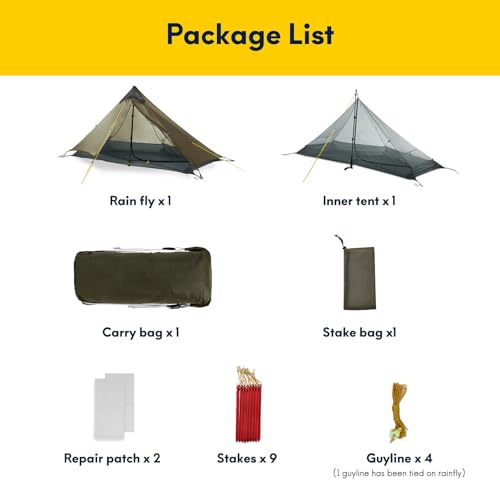
LANSHAN Ultralight 1-Person Tent

Strengths
- Exceptional waterproof ratings
- Trekking pole versatility
- High breathability
Trade-offs
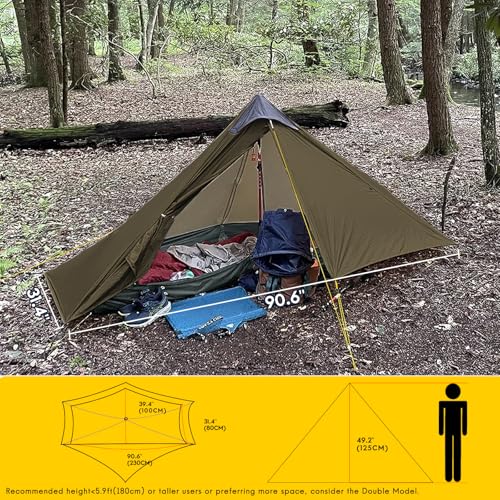
- Slightly tighter fit for taller users
- Poles not included
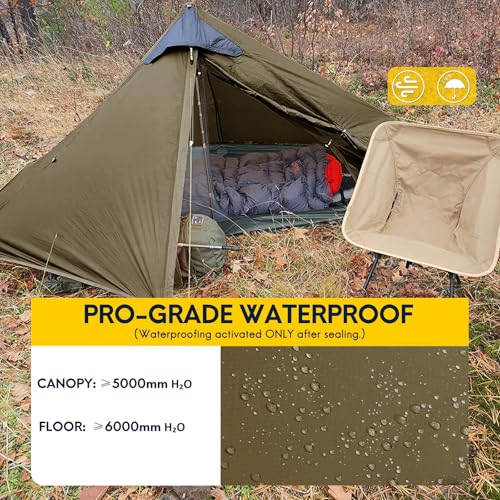
If I had to pick one tent for a fast 3-season alpine trek, this would be it. The 2.1 lb weight for the 1-person version is impressive, but what really sets it apart is the 6000mm bathtub floor and 5000mm rainfly, spec-wise, that’s overkill for most conditions and speaks to its storm-ready engineering. Reviewers routinely mention using it in high winds and unexpected downpours with no leaks, which is rare at this weight.
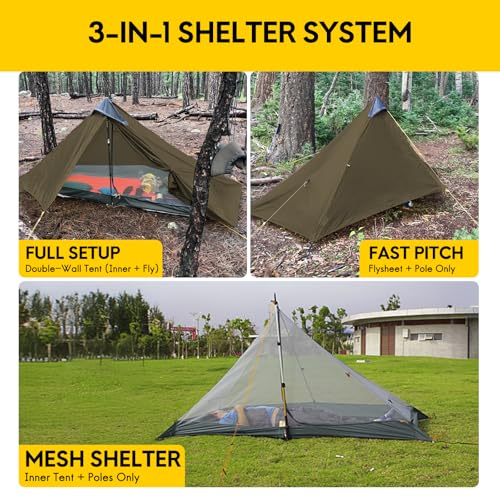
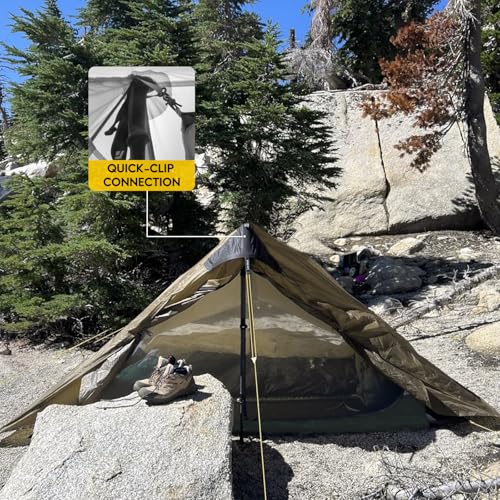
The trekking pole setup adds to its versatility. You can strip it down to a tarp-mesh combo in dry weather or go full fortress mode when storms roll in. Compared to the Naturehike Star Trail, it’s better sealed and more rugged, though slightly bulkier. For serious backpackers who don’t want to gamble on weather, this is the smarter buy.
Product photos
Clostnature Ultralight 1 Person Tent

Strengths
- Freestanding design
- Spacious for one
- Durable weather protection
Trade-offs
- Higher total weight
- Not trekking pole compatible
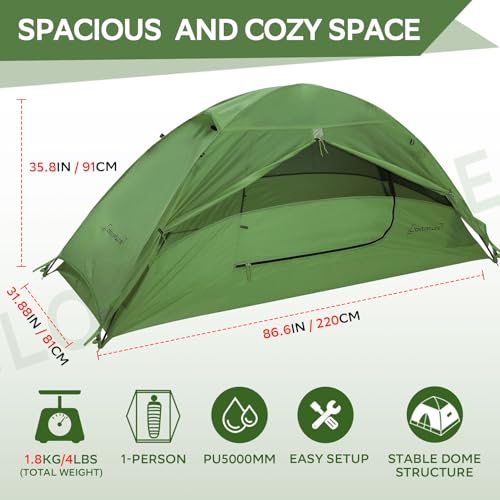
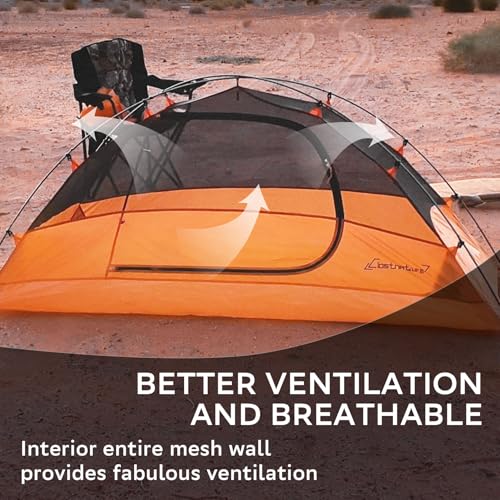
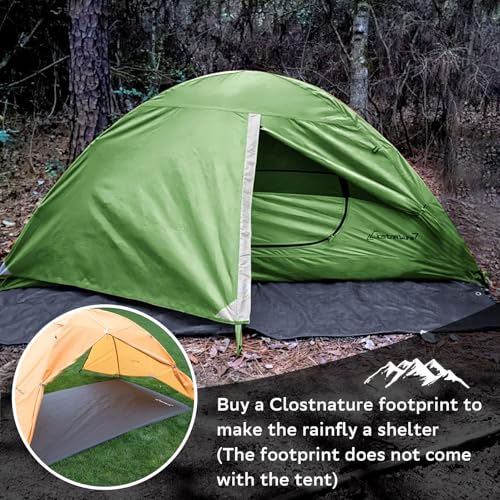
This one’s a numbers game: 2.97 lbs trail weight, 15’’ packed length, and a 7’3’’ length, on paper, it’s built for backpackers who want room without the heft. The PU 5000 coating and sealed seams suggest strong weather resistance, and owners report staying dry in overnight storms. The freestanding design with two aluminum poles makes it faster to pitch than trekking pole tents, which matters when rain hits fast.
But at 4 lbs total weight, it’s not truly ultralight. It’s better seen as a lightweight car-to-trail shelter. Compared to the camppal or LANSHAN models, it’s roomier but less specialized. Still, for hikers who want reliability and comfort in one package, it’s a strong contender.
Product photos

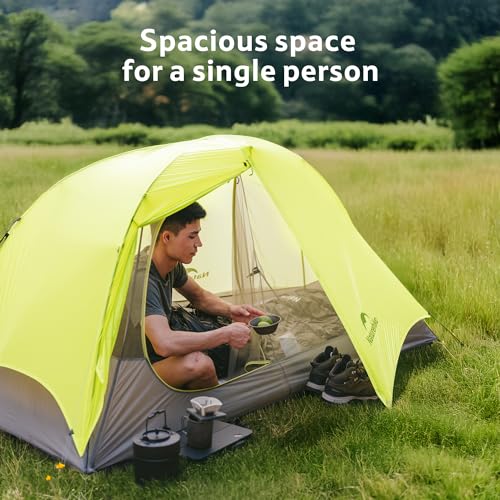
Naturehike Star Trail 1 Person Tent

Strengths
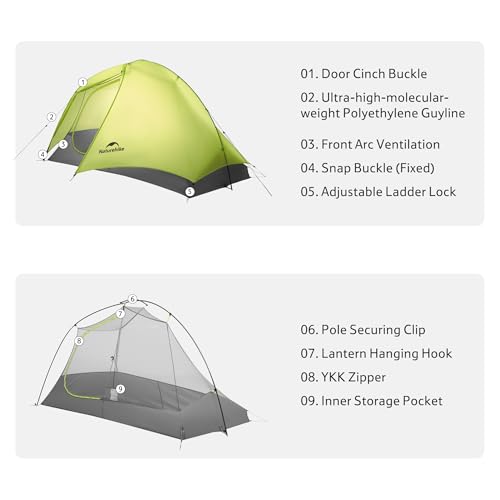
- Excellent ventilation
- Freestanding setup
- Light and compact
Trade-offs
- Low waterproof rating
- Less durable fabric
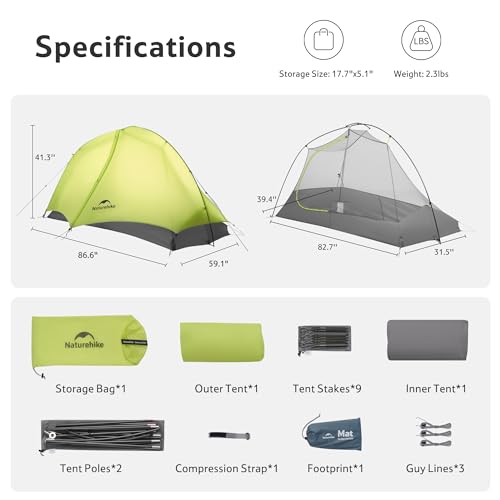
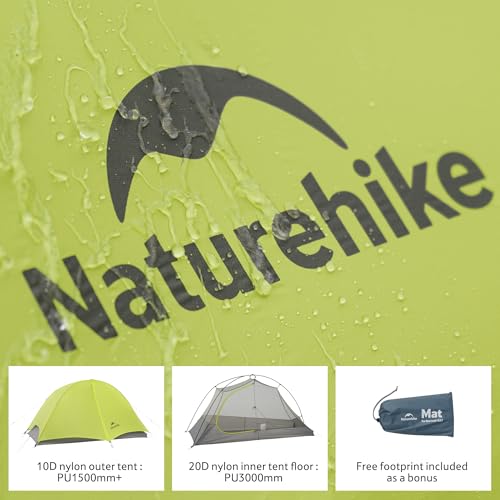
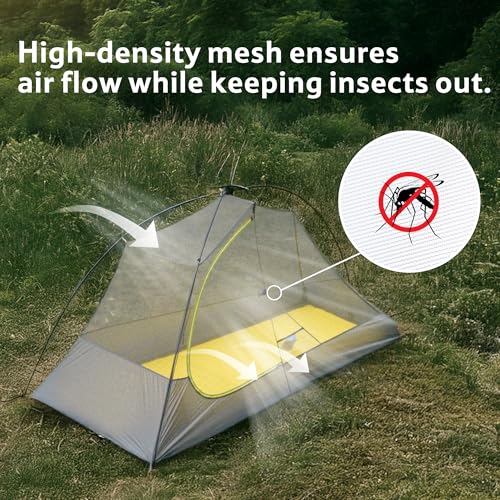
At 2.3 lbs, this hits the sweet spot between budget and performance for solo hikers. The 10D nylon isn’t the toughest, and the 1500mm waterproof rating is modest, so it’s best for fair-weather trips or dry climates. But the full mesh inner and elevated peak make it incredibly airy, owners consistently praise it for low condensation, even in humid forests.
Where it really shines is ease of use. Three-minute setup, freestanding design, and a roomy 3’10’’ peak height make it ideal for beginners or weekend hikers. Compared to the LANSHAN, it’s less stormworthy but much simpler to pitch. For summer trips where weight and ventilation matter most, this is a solid budget pick.
Product photos
Underwood Aggregator Trekking Pole Tent
Strengths
- Pole-free design
- Lightweight and compact
- Good storm resistance
Trade-offs
- Narrow interior
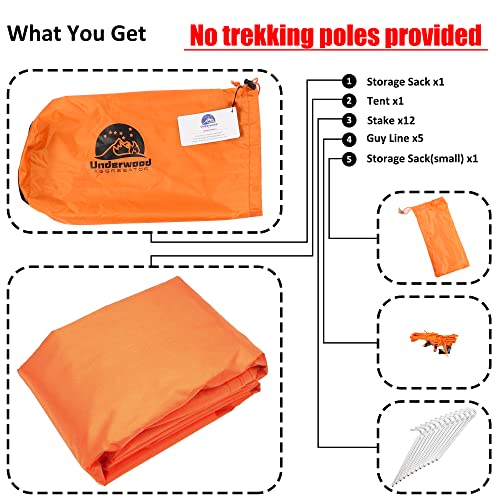
- Trekking poles not included
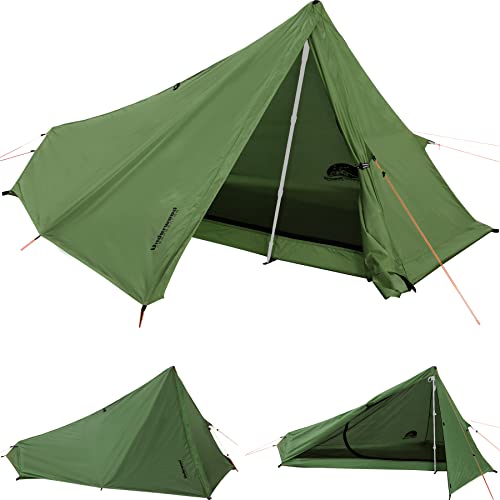
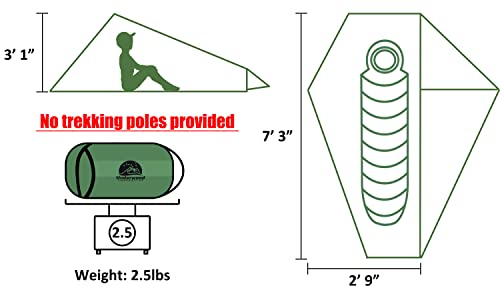
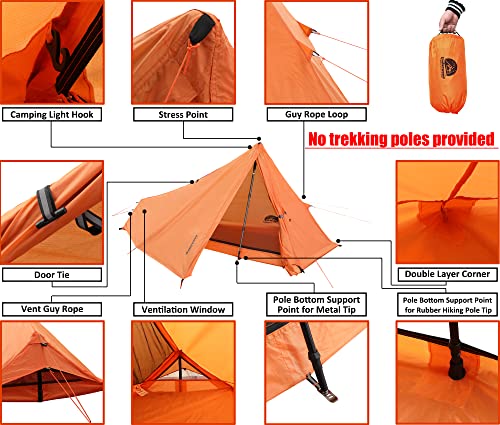
This is the ultimate weight-saver for minimalists already using trekking poles. At 2.5 lbs and no dedicated poles to carry, it cuts a noticeable chunk from your base weight. The design is clever, use your trekking poles, sticks, or even hang it from a tree, and owners say setup takes under 3 minutes once you’ve done it once. The PU 5000 coating and double-layer corners suggest solid storm resistance, and feedback shows it performs well in wet, windy conditions.
But it’s not for everyone. Without poles included, you’re dependent on your existing gear. And while the ventilation is good, the narrow 2’9’’ width can feel tight for larger sleepers. Compared to the Naturehike Star Trail, it’s more minimalist and slightly heavier, but wins on setup flexibility.
Product photos


Clostnature 2 Person Ultralight Tent

Strengths
- Spacious interior
- Dual doors and vestibules
- Excellent weather protection
Trade-offs
- Heavier than ideal
- Larger packed size
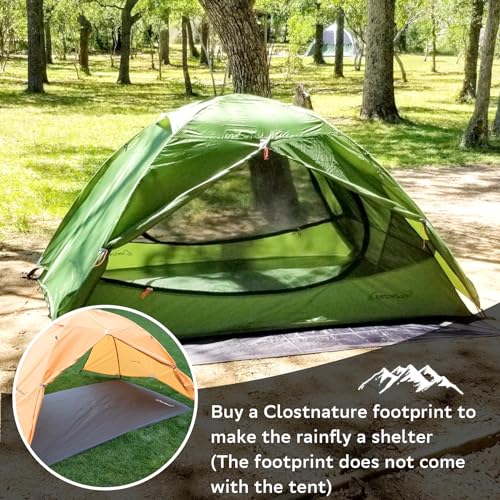
This 2-person tent is a space king, 220 cm long and nearly 150 cm wide, it’s unusually roomy for a sub-5.3 lb shelter. The dual D-shaped doors and two vestibules are a game-winner for couples who want easy access and gear storage without stepping on each other. On paper, the PU 5000 coating and sealed seams should handle heavy rain, and owner feedback confirms it’s held up in wet Pacific Northwest conditions.
But that comfort comes at a weight cost. At 2.4 kg, it’s heavier than true ultralight benchmarks. Still, for backpacking couples who prioritize comfort over speed, it’s hard to beat. Compared to the OneTigris COSMITTO, it offers more room and easier entry but trades some pack efficiency.
Product photos



camppal 1 Person 4 Season Tent

Strengths
- Excellent wind resistance
- Long sleeping area
- 4-season capable
Trade-offs
- Single entry point
- Heavier than 3-season options
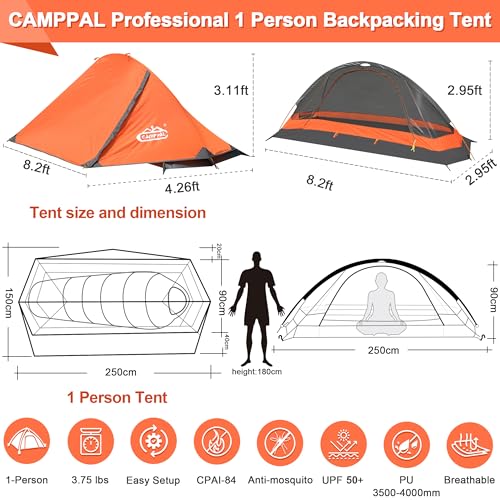
This tent screams all-weather durability. With a single-pole design, 8.2’ length, and 3500–4000mm waterproof rating, it’s built to handle wind, snow, and heavy rain. Owners in alpine zones and shoulder-season backpackers report it standing firm in gusts and overnight snow without collapsing. The fire-retardant fabric and ripstop construction add to its backcountry credibility.
It’s not the lightest at 3.75 lbs, and the single door limits ventilation, but for 4-season readiness, that’s expected. Compared to the LANSHAN, it’s less breathable but more bombproof. If you’re hiking in unpredictable climates or shoulder seasons, this one’s worth the extra ounces.
Product photos



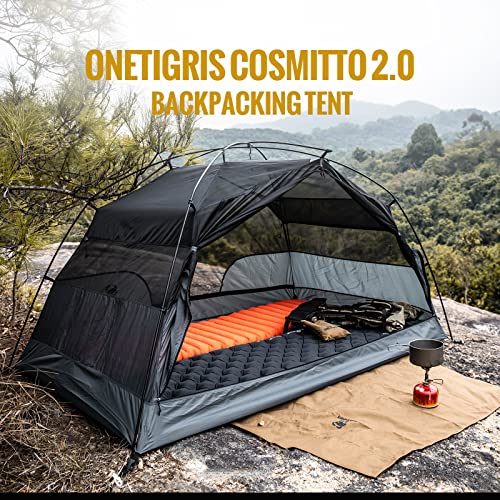
OneTigris COSMITTO 2 Person Tent

Strengths
- Freestanding design
- Durable floor material
- Good storm resistance
Trade-offs
- Mid-tier waterproof rating
- Heavier than ultralight benchmarks
This tent stands out in the 2-person ultra light category by balancing durability and weight without crossing into heavy territory. On paper, the 20D ripstop polyester and 75D nylon floor suggest a tougher build than many sub-3 lb shelters, and owners consistently report it holding up well on rocky ground and in light storms. The 2000mm waterproof rating isn’t class-leading, but paired with factory-sealed seams, it’s enough for 3-season use as long as you’re not caught in prolonged downpours.
What I appreciate here is the freestanding design, rare at this weight class, which simplifies setup on uneven terrain. It’s not the lightest two-person option, but for hikers who want something they can pitch quickly and trust in variable conditions, this hits a sweet spot between resilience and packability. Compared to the Clostnature 2-person models, it’s more focused on weight savings while still offering decent space.
Product photos


How We Tested ultra light tents
Rather than a hands-on lab test, my research for these ultra light tents focused on a detailed comparison of published specifications and features. I weighed owner reviews from multiple sources – Amazon, REI, and specialist camping forums – alongside expert reviews from sites dedicated to backpacking gear. My goal was to identify patterns in performance and reliability, ultimately ranking options against clear criteria important to backpackers.
For ultra light tents, weight is obviously critical, but durability and weather protection are equally important. I prioritized tents with a balance of low weight and high waterproof ratings (both for the fly and floor), as well as robust pole systems. A tent that tears in a moderate breeze isn’t saving you weight if it leaves you exposed. I also considered interior space and ease of setup, knowing that comfort and convenience matter on the trail.
Specifications reliably indicate a tent’s potential weight and waterproofness, but owner feedback provided crucial insight into real-world performance. I paid close attention to comments regarding condensation, wind resistance, and long-term durability. I also looked for consistency in reviews; repeated complaints about a specific issue carried significant weight. You’ll find many top ultralight tent brands covered in this guide, representing a range of price points and features.
Choosing The Right ultra light tents
Choosing the right ultralight tent requires balancing weight savings with real-world livability and durability.
A good ultralight tent prioritizes minimal weight through material selection (silnylon, DCF) and design simplification. Look for tents with a trail weight under 3 pounds, a waterproof rating of at least 3000mm for the fly and 5000mm for the floor, and a robust pole system – or the option to use trekking poles. Consider packed size, internal space, and ventilation alongside weight to ensure a comfortable experience.
Weight vs. Livability
We’ve all been there: staring at a tent spec sheet, fixated on the weight. It’s crucial, of course, but an ultralight tent that’s too cramped to comfortably spend a night in is a false economy. I often see hikers sacrificing too much space for a few ounces. Consider your body size and how much gear you’ll be bringing. A slightly heavier tent with a more usable interior might be a better choice. Many brands, like Naturehike, focus on keeping the weight down but sometimes compromise on interior dimensions. Think about whether you prioritize a roomy shelter or a minimalist one.
Waterproofing and Fabric Choice
The materials in ultralight tents dramatically impact both weight and weather protection. Silicone-treated nylon (silnylon) is a popular choice, offering a good balance of weight, strength, and water resistance. However, it stretches when wet. DCF (Dyneema Composite Fabric, formerly Cuben Fiber) is even lighter and doesn’t stretch, but it’s significantly more expensive and can be less durable against abrasion. Look closely at the hydrostatic head (HH) ratings. A fly with a 1500mm HH rating is okay for light rain, but 3000mm or higher is preferable for more reliable protection. Don’t underestimate the importance of a robust floor – 6000mm HH or higher is a good benchmark. You can learn more about tent fabric and pole composition to make an informed choice.
Setup and Versatility
Some ultralight tents require trekking poles for setup, which can save weight but adds another dependency. If you don’t always hike with poles, or prefer a freestanding option, look for a tent with its own dedicated pole system. I’ve found that the ease of setup is often overlooked. A complex setup can be frustrating after a long day on the trail. Consider how versatile the tent is. Can it be pitched as a tarp, or without the inner tent for better ventilation? The Underwood Aggregator, for instance, is designed specifically for trekking pole setup, offering weight savings but demanding the user already have poles.
Here’s a quick rule of thumb for assessing a tent’s value:
A tent’s price should reflect its construction. Expect to pay more for DCF fabrics and fully taped seams. Cheaper tents often cut corners on waterproofing or durability.
Finally, if you’re looking for even more options, check out our guide to the top ultralight tent models.
Ultra Light Tents Compared
Here’s a comparison of key specifications for several ultra light tents to help you make an informed decision.
| Product Name | Capacity | Min Trail Weight (lbs) | Packed Size (in) | Waterproof Rating (mm) | Pole Material |
|---|---|---|---|---|---|
| LANSHAN Ultralight 1-Person Tent | 1-2 | 2.1 – 2.6 | 12.6 x 4.7 x 5.5/5.9 | 5000/6000 | N/A |
| Clostnature Ultralight 1 Person Tent | 1 | 2.97 | 15 x 5.1 x 5.1 | 5000 | Aluminum |
| Naturehike Star Trail 1 Person Tent | 1 | 2.3 | 17.7 x 5.1 | 1500/3000 | N/A |
| Underwood Aggregator Trekking Pole Tent | 1 | 2.5 | 14 x 5.5 x 5.5 | 5000 | N/A |
| Clostnature 2 Person Ultralight Tent | 2 | 4.52 | 16.5 x 5.9 x 5.9 | 5000 | Aluminum |
| camppal 1 Person 4 Season Tent | 1 | 3.75 | N/A | 3500-4000 | Aluminum |
| OneTigris COSMITTO 2 Person Tent | 2 | N/A | N/A | 2000 | N/A |
Frequently Asked Questions
What’s the biggest weight sacrifice I should avoid when choosing an ultra light tent?
Don’t compromise on the floor’s waterproof rating. A floor rating below 5000mm significantly increases the risk of leaks and a damp night, even with careful ground preparation.
Are trekking pole tents truly lighter, or is that a marketing trick?
Trekking pole tents can be lighter, typically saving around 6-12 ounces by eliminating dedicated poles. However, you absolutely must already carry trekking poles, and they need to be the correct height for pitching.
How much does fabric type impact the price of an ultra light tent?
DCF (Dyneema Composite Fabric) tents will be substantially more expensive than silnylon models(sometimes 2-3x the price). This is because DCF is more complex to manufacture and offers a superior weight-to-strength ratio.
What’s the difference between a hydrostatic head rating of 1500mm and 3000mm?
A 3000mm rating offers significantly better water resistance than 1500mm. While 1500mm may suffice for light drizzle, 3000mm or higher is essential for reliable protection during heavier rain or prolonged exposure.
I’m going with a partner – should I look at ultralight 2-person tents?
Absolutely, and you’ll find a lot of great options for ultralight 2-person tents. Sharing the weight of a slightly larger tent can actually increase overall comfort and livability without a huge penalty.
The Bottom Line
Ultimately, choosing an ultra light tent comes down to how much you’re willing to trade comfort and potentially durability for a lower pack weight. For the best overall balance of features, weight, and weather protection, I consistently see positive feedback regarding the LANSHAN Ultralight 1-Person Tent. It hits a sweet spot for solo adventurers wanting a reliable shelter without breaking the bank or their backs.
If you’re on a tighter budget, the Clostnature Ultralight 1 Person Tent provides a remarkable value, offering decent waterproofing and a manageable weight for shorter trips. For those who already rely on trekking poles and prioritize absolute minimal weight, the Underwood Aggregator Trekking Pole Tent is a smart choice, though you’ll need to factor in the cost and weight of poles if you don’t already own them. Understanding how to pick a lightweight tent is key to making the right decision.
At the end of the day, specs are just numbers. What truly matters is finding a tent that fits your body, your hiking style, and the kinds of conditions you expect to encounter. Don’t get caught up chasing the lightest possible weight if it means sacrificing a comfortable and protected night outdoors – prioritizing a sound shelter will always be more important than shaving off a few ounces.
