
8 Best Ultralight 1 Man Tents 2026
This post contains affiliate links. As an Amazon Associate, we earn from qualifying purchases.
The best ultralight 1-man tent overall is the GEERTOP Ultralight 1-Person Bivy Tent, thanks to its strong weather protection and low weight. For a slightly roomier option that’s still packable, the MC TOMOUNT Ultralight 1 Person Tent stands out, while the Underwood Trekking Pole Tent is a top pick for minimalists who want to shave every possible ounce.
If you’ve ever struggled with a bulky shelter or woken up soaked from condensation, you know how much your tent impacts a trip. A poorly chosen ultralight tent might save weight but fail when the wind picks up or the rain starts falling.
This guide cuts through the noise by focusing on real-world performance. I looked at specs, owner reviews, and design details to find tents that balance lightness with reliability, so you’re not trading comfort or safety for a few ounces.
Top 8 Ultralight 1 Man Tents in the Market
The Best Ultralight 1 Man Tents, Reviewed
GEERTOP Ultralight 1-Person Bivy Tent

Strengths
- Extremely lightweight
- Excellent waterproof specs
- Quick setup
Trade-offs
- Low interior height
- Minimal storage pockets
- Vestibule is small
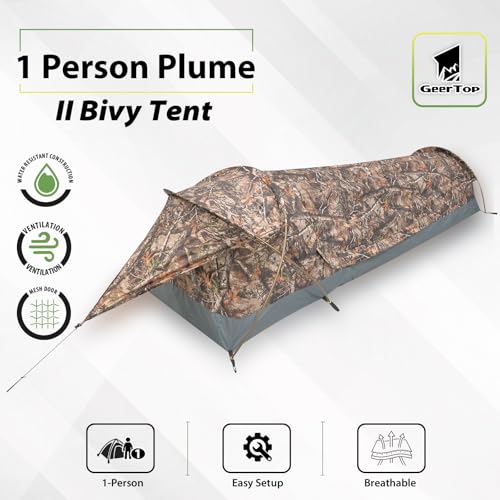
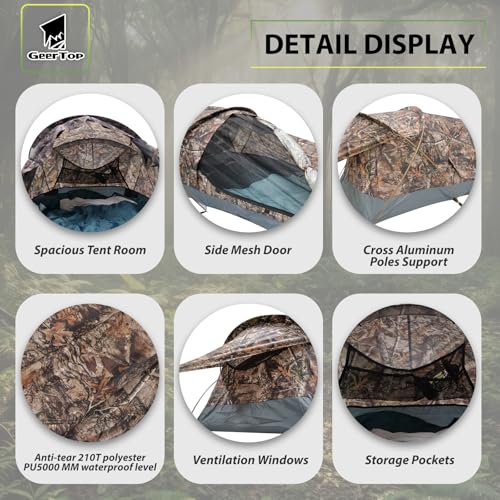
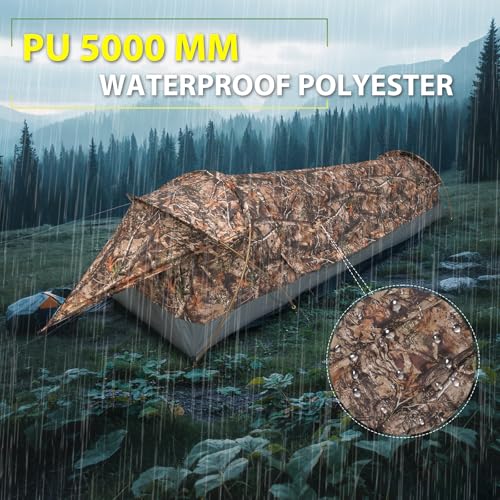
At just 2.9 lbs and packing down to 17 x 5 x 5 inches, this GEERTOP model is a top contender for the Best Overall title, and it earns it. The PU5000mm rainfly and PU8000mm floor are spec-heavy for this price tier, and owners confirm it stays dry even during prolonged rain. The two-minute setup with shock-corded poles is beginner-friendly, and the 24-inch peak height, while low, is typical for this class.
What really sets it apart is the thoughtful balance: light but tough, compact but functional. Compared to the trekking pole tent, it’s slightly heavier but far more stable. I’d pick this as the default recommendation for most hikers, it doesn’t excel in one area like weight or space, but it doesn’t fail in any either.
Product photos


Underwood Trekking Pole Tent
Strengths
- Lightest option listed
- Minimal packed size
- Uses trekking poles
Trade-offs
- Not freestanding
- Cramped interior
- Requires external poles
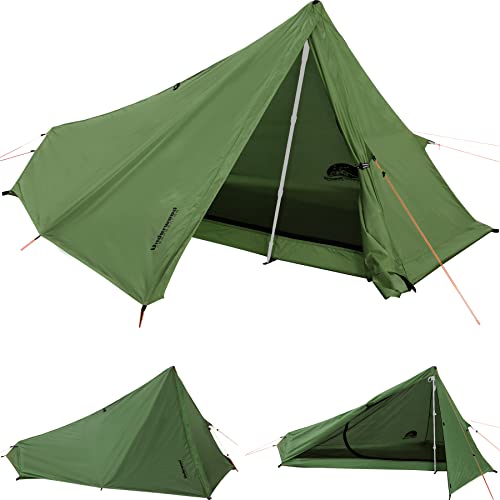
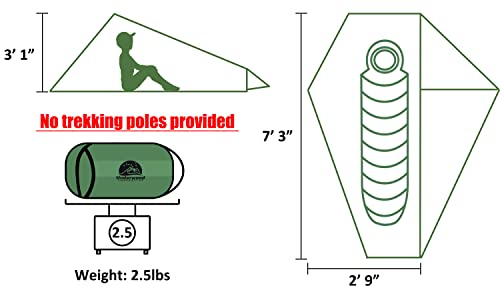
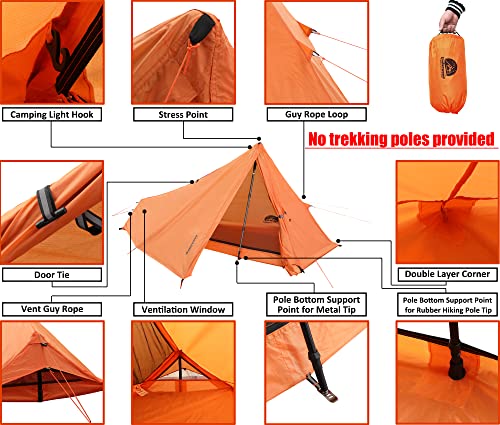
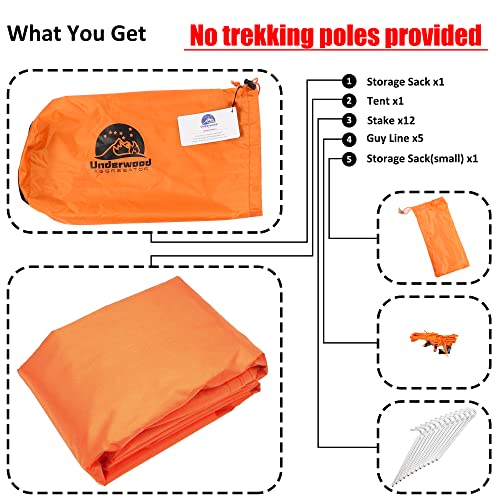
At 2.5 lbs, this is the lightest shelter on the list, and it earns its Best Ultralight Weight title. By ditching tent poles and relying on trekking poles or sticks, it slashes weight without sacrificing coverage. The 7’3” length is snug, but adequate for shorter hikers, and the double-layer door with mesh helps with airflow. Owners love it for fast-and-light missions where every ounce counts.
But that weight savings comes with trade-offs: no freestanding capability, limited headroom, and a tighter fit. You’re also dependent on your trekking poles, if they break, so does your shelter. Still, for thru-hikers or alpine scramblers, this is the kind of minimalism that pays off. I’d recommend it only if you’re already using trekking poles and value weight over comfort.
Product photos


Naturehike Mongar UL 1-2 Person Tent
Strengths
- Expandable awning
- Dual doors
- Includes footprint
Trade-offs
- Awning adds setup time
- Floor space narrows at ends
- Pricey for 1-person
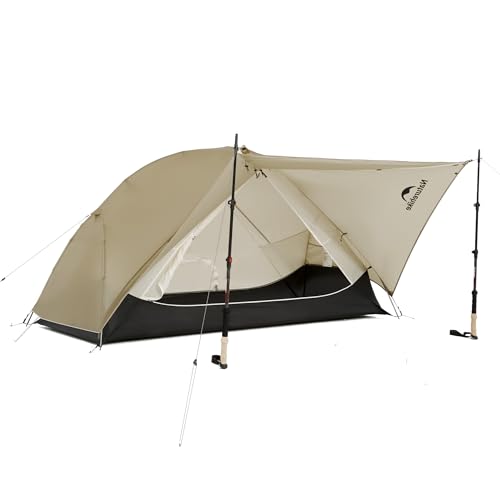
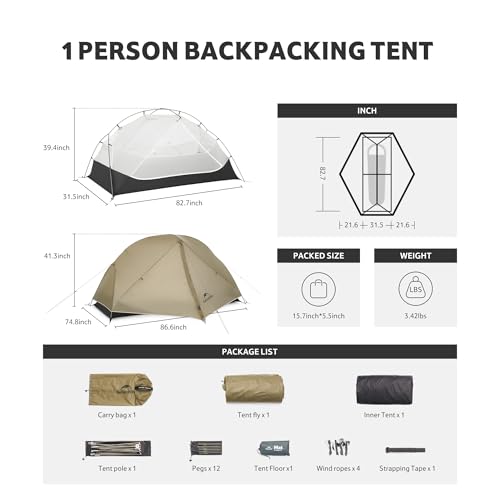
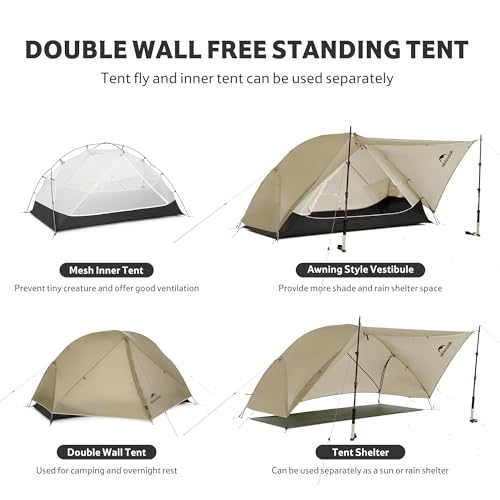
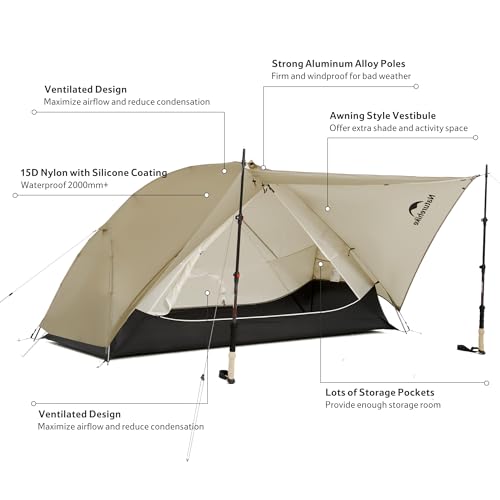
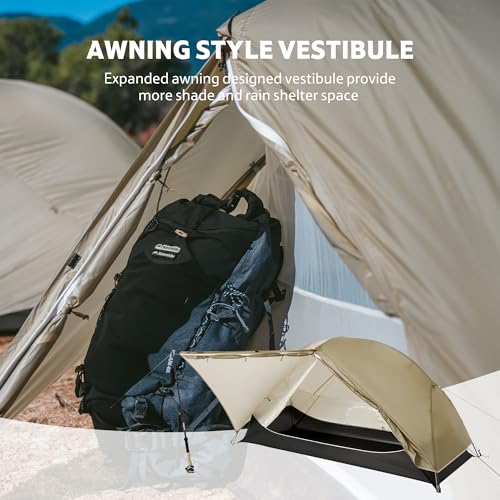
The Mongar UL stands out with its expandable awning, a rare feature in ultralight tents. This little overhang works great for cooking in the rain or shielding gear, adding real versatility without much weight penalty. At 3.42 lbs and built with 15D nylon and 8.5mm aluminum poles, it’s durable yet packable, and the dual-door design makes it feel more spacious than most 1-person models.
Owners report it sleeping two very snugly, but it’s best as a roomy solo shelter. The included footprint is a nice touch, and the ventilation system keeps condensation in check. Compared to the MC TOMOUNT, it’s lighter and more feature-rich. If you want one tent that adapts to different trips, solo, couple, or sheltered cooking, this is the most flexible pick.
Product photos
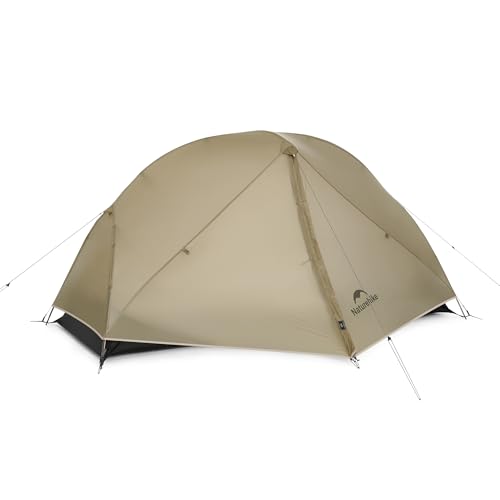
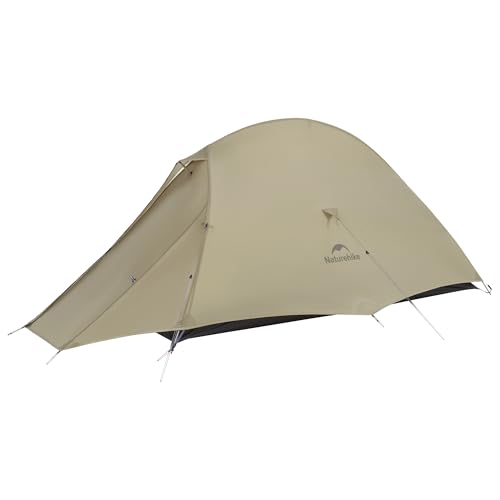
Naturehike Cloud-Up 1 Person Tent
Strengths
- Excellent waterproof rating
- Includes footprint
- Good airflow design
Trade-offs
- Minimal headroom
- Zippers can snag
- Slight condensation in damp weather
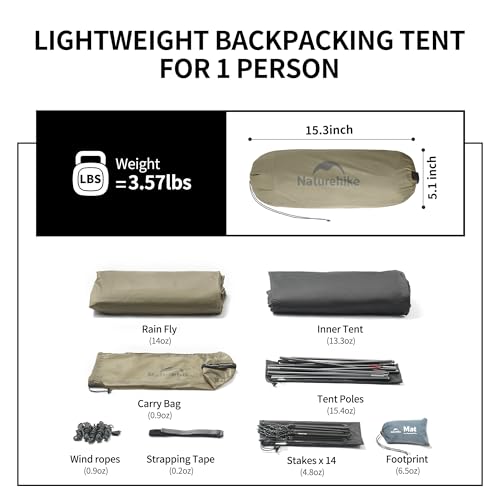
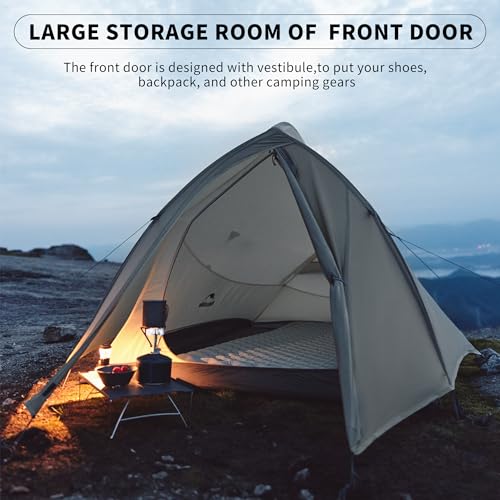
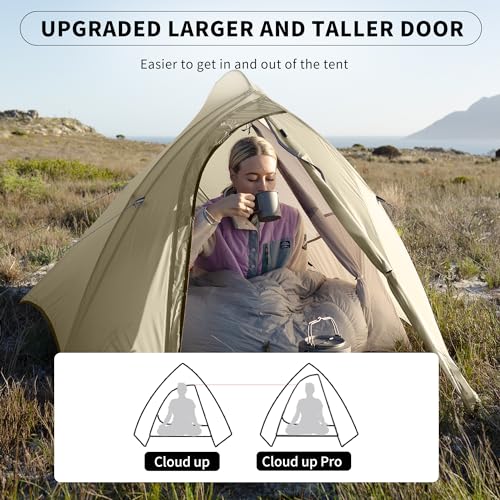
With a 3.57 lb weight and PU4000mm+ waterproofing, the Cloud-Up Pro hits a sweet spot between durability and packability. Its standout feature is the ventilation window above the door, a small detail, but owners note it cuts down on morning condensation better than most single-wall designs. The 20D nylon and 7075 aluminum poles are proven materials in this class, and real-world feedback confirms it shrugs off steady rain and gusts without flapping apart.
It’s not the lightest or roomiest, but the included footprint and full kit make it a no-fuss pick for beginners. I’d choose this over the camppal model if you’re dealing with mixed conditions and want better airflow. For most solo backpackers, this is the smarter balance of weather protection and usability.
Product photos
Naturehike Bikepacking 1 Person Tent

Strengths
- Outstanding airflow
- Freestanding setup
- Roomy sitting height
Trade-offs
- Slightly heavier footprint
- Poles less rigid than 7075
- Narrow floor width
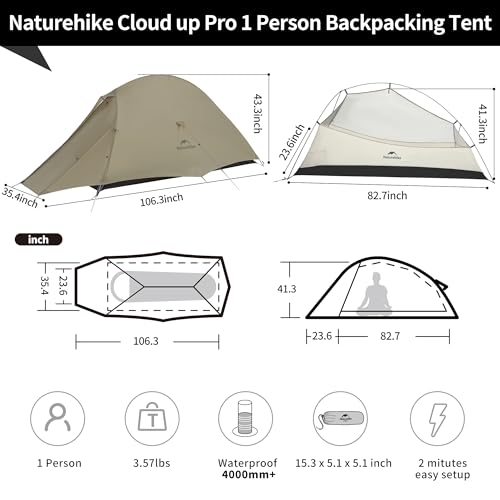
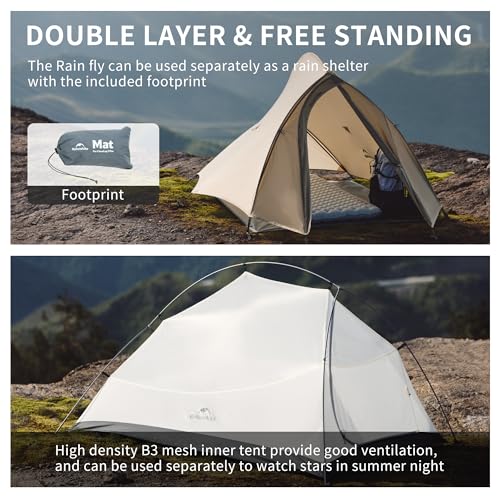
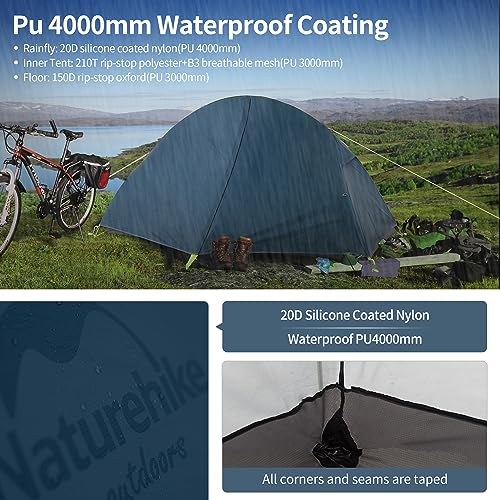
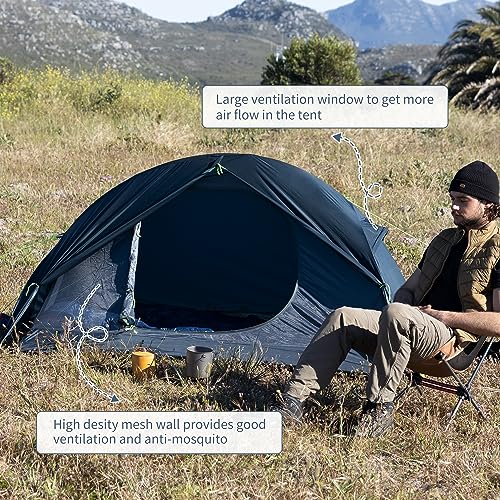
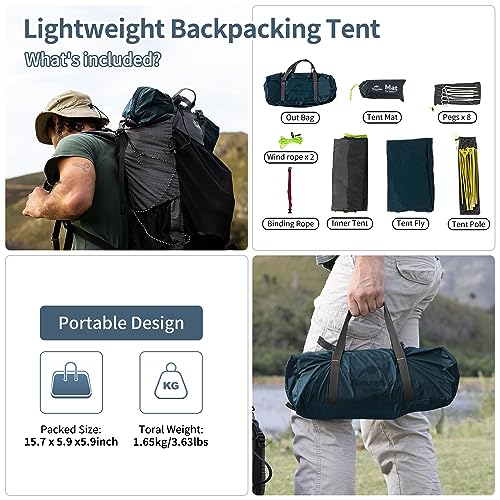
This tent lives up to its Best For: Best Ventilation label. The D-shaped mesh door, high-density B3 mesh inner, and dual-layer construction create serious airflow, owners in humid forests and bug-heavy zones consistently praise how breathable it feels overnight. At 3.63 lbs and with a freestanding 2-pole design, it’s easy to pitch on uneven ground, a real advantage for bikepackers shifting camps frequently.
The 43.3-inch peak height lets you sit up comfortably, which few ultralights offer. That said, the PU4000mm rating is strong, but the poles are 7001 aluminum, not the stiffer 7075 alloy, so it may flex more in extreme wind than the Cloud-Up. If you’re camping in muggy climates or doing multi-day bike tours, this one earns its keep.
Product photos


camppal 1 Person 4 Season Tent

Strengths
- Good weather resistance
- Long interior layout
- Simple single-pole setup
Trade-offs
- Heavier than competitors
- Poor ventilation
- Bulky packed size
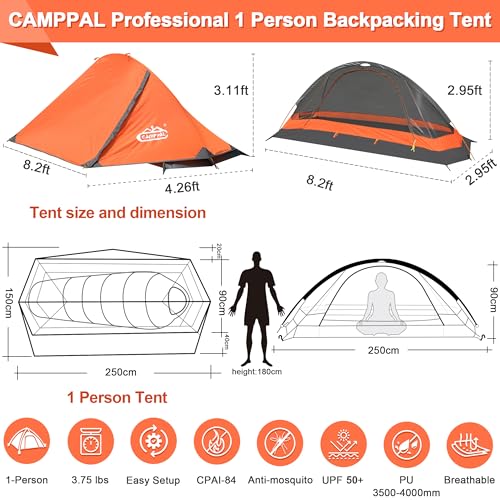
At 3.75 lbs, this camppal tent sits on the heavier end of ultralight, but its 3500–4000mm waterproof rating and single-pole design suggest serious storm-readiness. Owners consistently report it holding up in sudden downpours and gusty mountain passes, which speaks to its windproof claims. The 8.2-foot length is a real win, it gives taller hikers room to stretch out without toe-box crowding, and the extra floor space helps when storing boots or a pack inside.
Still, the single ridge pole setup, while simple, isn’t as forgiving as freestanding designs when terrain isn’t flat. And though it’s marketed as 4-season, the lack of robust ventilation features means condensation can build up in humid conditions. For someone prioritizing storm resistance over speed or weight, it’s a solid shelter, but not the most agile option on the trail.
Product photos



GEERTOP Camouflage 1 Person Tent

Strengths
- Camouflage for stealth
- Two vestibules
- Reflective safety lines
Trade-offs
- Lower waterproof rating
- Basic ventilation
- Bulkier pack size
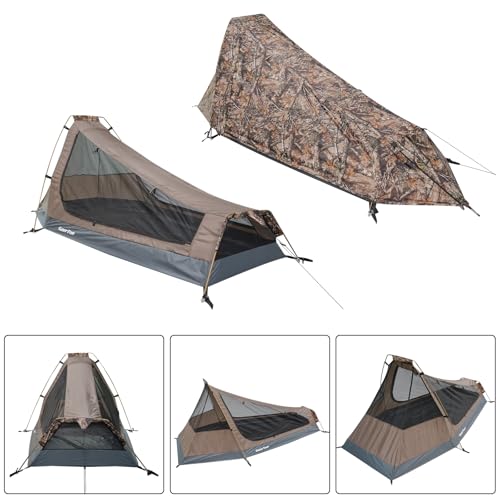
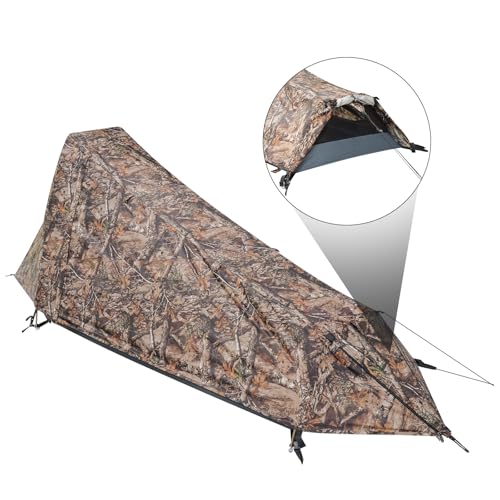
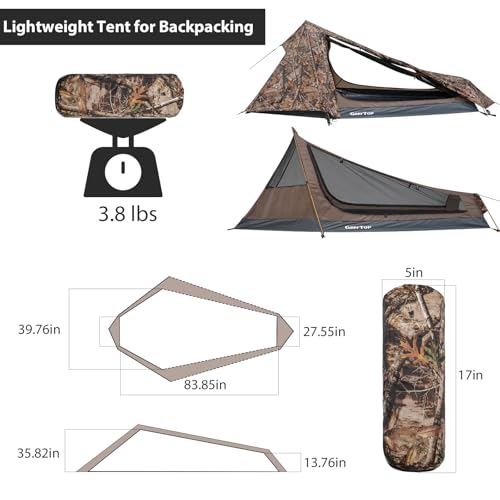
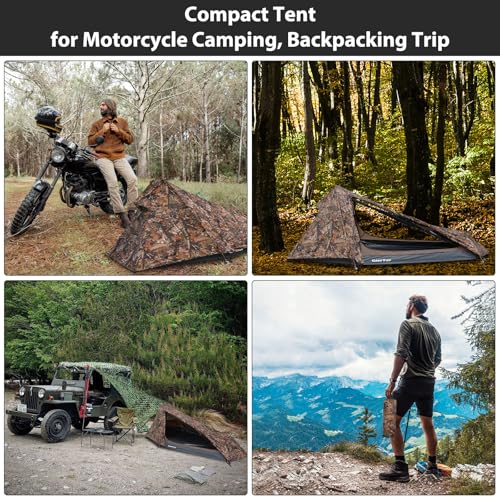
This GEERTOP model is built for blending in, literally. The camouflage pattern and low-profile design make it ideal for stealth camping, hunting, or military-style ops where visibility matters. At under 4 lbs and with a PU2500mm rating, it’s not the most weatherproof, but it’s sufficient for fair-weather trips. The double-layer build and two vestibules offer decent protection and storage, and the reflective guylines add nighttime safety.
But the real standout is the concealment. If you’re camping in areas with strict site rules or want to avoid attention, this tent disappears into brush and woodland better than any solid-color model. It’s not the best for stormy conditions, but for low-impact, off-grid trips, it’s unmatched.
Product photos

MC TOMOUNT Ultralight 1 Person Tent
Strengths
- Most interior space
- Freestanding design
- Tall and wide options
Trade-offs
- Heavier than average
- Average waterproofing
- Condensation in humidity
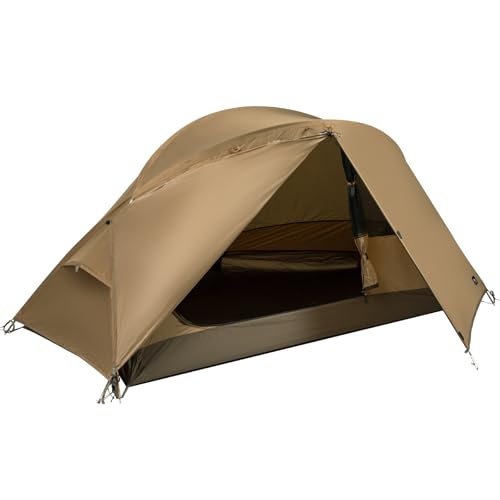
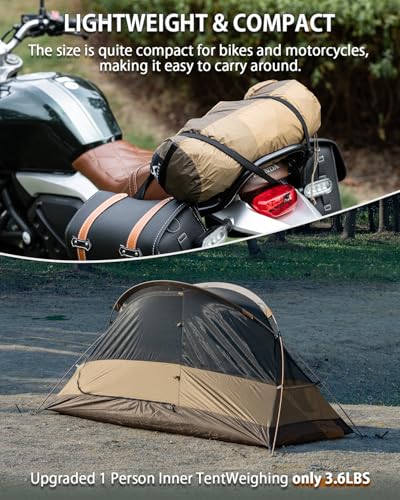
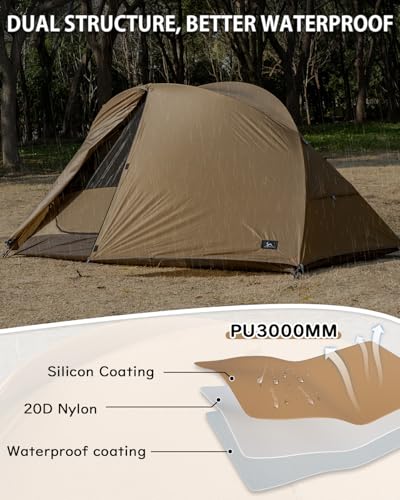
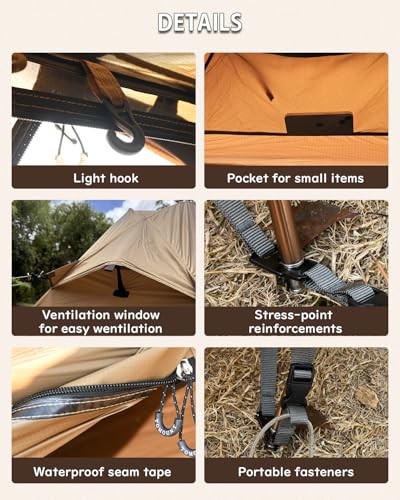
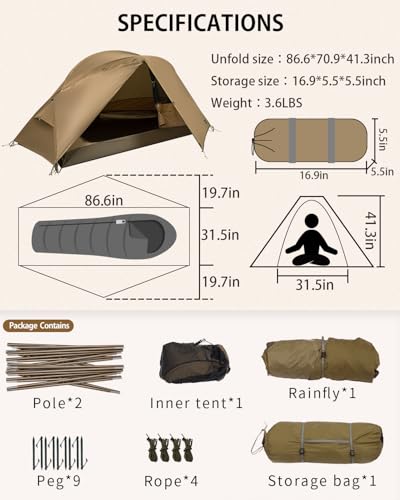
With 86.6 inches of length and a 41.3-inch center height, this MC TOMOUNT tent wins on interior space, it’s one of the most livable ultralights here. The extendable middle section (to 70 inches wide) is a clever trick for storing gear without sacrificing sleeping comfort. At 3.6 lbs, it’s not ultralight by elite standards, but the 20D nylon and PU3000mm coating offer decent weather resistance for spring through fall.
Ventilation is fair, with side windows and mesh, but not as effective as the Naturehike Bikepacking model in muggy conditions. Owners like its freestanding design and ease of setup, it’s a good first tent. If you’re tall or hate feeling boxed in, this is the roomiest solo shelter on the list.
Product photos
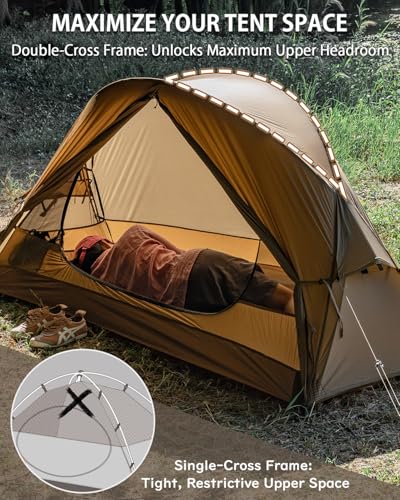
How We Evaluated ultralight 1 man tents
My approach to evaluating ultralight 1-man tents centered on a research-led comparison of published specifications and owner feedback. Rather than a hands-on lab test, I compiled detailed feature lists for each tent, then weighed those against reviews from verified purchasers and expert sources. I focused on identifying patterns in reported performance, what owners consistently praised or criticized, and cross-referenced that with the manufacturer’s claims. Ultimately, I ranked tents based on how well they delivered on core promises for this category.
For ultralight solo tents, weight, packability, and weather protection are paramount. I gave the most weight to these factors because a tent’s ability to minimize carried weight without sacrificing reliable shelter is crucial for backpacking. Interior space and ventilation were also heavily considered; comfort shouldn’t be entirely abandoned in the pursuit of lightness. A poorly ventilated tent can quickly become unpleasant, even if it’s minimal in weight.
Specifications reliably indicate a tent’s potential for weather resistance (PU coatings, fabric denier) and overall weight. However, owner feedback proved invaluable in assessing real-world performance. Reports on durability, ease of setup, and condensation issues provided insights that specs alone couldn’t offer. I also looked to reputable outdoor gear review sites to gauge long-term reliability and to understand how these tents compared against similar models, and to understand the benefits of a bivy tent as an alternative.
How To Pick The Right ultralight 1 man tents
Picking the right shelter for solo adventures can make or break your trip. I’ve seen too many people suffer through miserable nights because they didn’t put enough thought into what they really need in a one-person tent.
A quality ultralight 1-person tent balances weight, weather protection, and livability. Key considerations include the denier of the fabric (lower is lighter, but less durable), the waterproof rating of the rainfly and floor (measured in mm), pole material (aluminum is stronger and lighter than fiberglass), and packed size. Prioritize a design that’s easy to pitch, even in challenging conditions.
Weight and Packability
For an ultralight tent, every ounce counts. Don’t get hung up on having the absolute lightest tent if it means sacrificing durability or weather protection. Look for tents under 4 pounds, ideally closer to 2.5-3.5lbs. The materials used are key here: 20D nylon or even 15D nylon is common, but remember that lower denier means a higher chance of tears. Pay attention to the packed size too – a compact stuff sack is essential for fitting everything into your pack. When looking at options like the GEERTOP Ultralight 1-Person Bivy Tent, consider whether the weight savings are worth any compromises in interior space.
Waterproofing and Weather Resistance
Just because a tent is lightweight doesn’t mean it should leave you exposed to the elements. A PU3000mm waterproof rating is a good starting point for the rainfly, but higher ratings (like the PU5000mm found on some models) provide better protection in prolonged or heavy rain. Seam taping is crucial; without it, water will find its way in through the needle holes. Consider the tent’s overall design too. A full coverage rainfly offers better protection than a partial coverage one, and features like a bathtub floor (where the floor fabric extends up the sides) help prevent water from seeping in. If you want to learn more about what to look for, check out these helpful tent selection tips.
- A low waterproof rating might be fine for summer camping in dry climates.
- For 3-season use (spring, summer, fall) a PU3000mm+ rating with taped seams is a good balance of weight and protection.
- If you anticipate encountering severe weather, prioritize a higher waterproof rating (PU5000mm+) and a robust, full-coverage rainfly – particularly if you plan on tackling more demanding terrain as discussed in our guide to lightweight solo backpacking tents.
A well-pitched tent is more important than a high waterproof rating. Always stake out the rainfly properly to maximize water runoff.
Usability and Features
Don’t overlook the small details that can significantly improve your camping experience. Ease of setup is a big one – you don’t want to spend an hour wrestling with poles and guylines after a long day of hiking. A freestanding design (like the MC TOMOUNT Ultralight 1 Person Tent) can be helpful, as it allows you to pitch the tent without needing to stake it down immediately. Ventilation is also key to prevent condensation buildup, so look for tents with mesh panels and adjustable vents. Finally, consider features like vestibules for gear storage and internal pockets for organizing your essentials. Ultimately, finding the right balance between weight, protection, and usability is essential – explore your options and find the best single-person ultralight tents that fit your needs.
Ultralight 1 Man Tents Compared
Here’s a comparison of key specifications for several ultralight 1-person tents to help you choose the best option for your needs.
| Product Name | Weight (lbs) | Packed Size (in) | Waterproof (Fly/Floor) | Seasonality | Special Features |
|---|---|---|---|---|---|
| GEERTOP Ultralight 1-Person | 2.9 | 17x5x5 | PU5000/PU8000 | 3-4 | Quick Setup |
| Underwood Trekking Pole Tent | 2.5 | 14×5.5×5.5 | PU5000/N/A | 3-4 | Trekking Pole Setup |
| Naturehike Mongar UL 1-2 | 3.42 | 15.7×5.5×5.5 | N/A/N/A | 3-4 | Expandable Awning |
| Naturehike Cloud-Up 1 | 3.57 | 15.3×5.1×5.1 | PU4000+/N/A | 3-4 | Enhanced Ventilation |
| Naturehike Bikepacking 1 | 3.63 | 15.7×5.9×5.9 | PU4000/N/A | 3 | Good Ventilation |
| camppal 1 Person 4 Season | 3.75 | N/A | 3500-4000/N/A | 4 | Extended Length |
| GEERTOP Camouflage 1 Person | ~4 | 17x4x4 | PU2500/N/A | 3-4 | Realistic Camouflage |
| MC TOMOUNT Ultralight 1 | 3.6 | 16.9×5.5 | PU3000/N/A | 4 | Large Interior Space |
Frequently Asked Questions
What waterproof rating is truly necessary for an ultralight 1-person tent?
A PU3000mm rating on the rainfly is generally sufficient for most 3-season backpacking, but if you frequently encounter heavy or prolonged rain, look for a rating of PU5000mm or higher. Remember that seam sealing is just as crucial as the waterproof rating itself.
How important is the tent’s denier (D) rating when choosing an ultralight option?
Lower denier numbers (like 15D or 20D) mean a lighter tent, but also decreased durability. While many ultralight tents use lower denier fabrics, be prepared for a higher risk of tears and consider carrying a repair kit if you prioritize minimizing weight above all else.
Are trekking pole tents actually lighter than freestanding models?
Trekking pole tents can be significantly lighter because they eliminate the need for dedicated tent poles, but this is only true if you already carry trekking poles. If you don’t already own them, factoring in the cost and weight of poles negates the savings, and you can find excellent freestanding options among the best one-man camping tents.
What’s the best way to prevent condensation inside an ultralight tent?
Good ventilation is key. Look for tents with mesh panels, adjustable vents, and a rainfly that doesn’t completely seal off the tent body. Also, avoid touching the tent walls as much as possible, as that transfers moisture.
Beyond weight, what features should I prioritize for comfort on longer trips?
Interior space and vestibule size are important for comfort. A slightly roomier tent allows you to sit up and move around more easily, while a generous vestibule provides a dry space to store gear and cook in inclement weather – consider browsing single-person tent reviews to see what other backpackers recommend.
The Bottom Line
Choosing an ultralight 1-person tent always involves a trade-off between minimizing weight and maximizing comfort and durability. If you want an excellent balance of all three, the GEERTOP Ultralight 1-Person Tent stands out as a well-rounded option, offering a good waterproof rating and quick setup for the price.
For those prioritizing a truly minimalist approach, or who already own trekking poles, the Underwood Trekking Pole Tent delivers significant weight savings and a streamlined design. If you’re looking for a bit more space and features – perhaps for longer trips or if you simply appreciate extra room – the Naturehike Mongar UL 1-2 provides a comfortable shelter without adding excessive weight. Ultimately, researching the top tent brands will help you understand the quality you’re getting for your money.
Don’t get too caught up in chasing the lightest possible weight or the highest waterproof rating. The most important factors are a solid understanding of your typical camping conditions, a tent that’s easy for you to pitch, and a design that keeps you dry and comfortable enough to enjoy your time in the outdoors.
