
8 Best Winter Tents with Stove for 2026
This post contains affiliate links. As an Amazon Associate, we earn from qualifying purchases.
The WildFinder 16.5ft Canvas Bell Tent stands out as the best overall winter tent with a stove, thanks to its rugged TC cotton build and spacious design that handles cold, snowy conditions with ease. For a lighter, more portable option, the OneTigris TEGIMEN Hammock Hot Tent is a strong pick, especially for backpackers who still want reliable stove integration.
Most people don’t realize how critical ventilation and fabric durability are until they’re stuck in a damp, stuffy tent with a wood stove running. A poorly built winter tent can turn a cozy backcountry trip into a dangerous situation fast.
This guide cuts through the marketing and focuses on what actually matters: real-world performance, safe stove jack setups, and materials that hold up under snow and wind. I compared specs, owner feedback, and brand reputation to find the most dependable options for serious cold-weather camping.
Top 8 Winter Tents With Stove in the Market
The Best Winter Tents With Stove, Reviewed
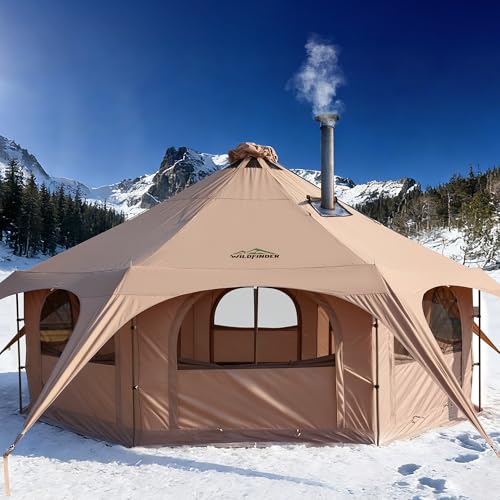
WildFinder 16.5ft Canvas Bell Tent
Strengths
- Breathable TC cotton roof
- High vertical sidewalls
- Removable floor
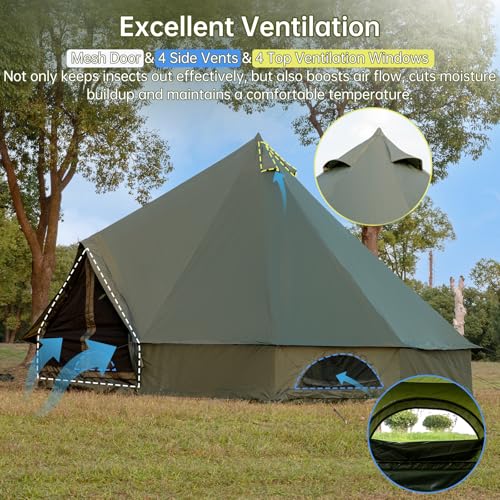
- Excellent ventilation
- Includes setup aid tool
Trade-offs
- Heavy and bulky
- Not packable for long hikes
- Pole not included
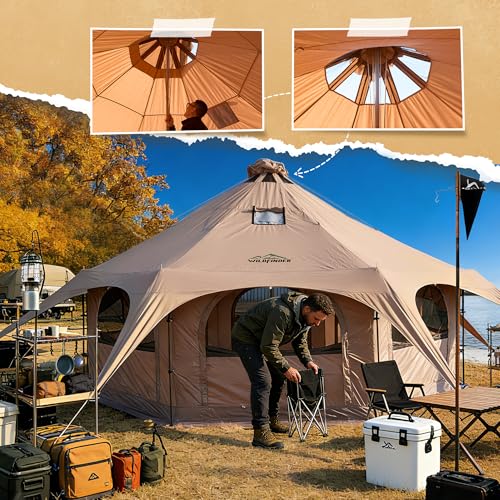
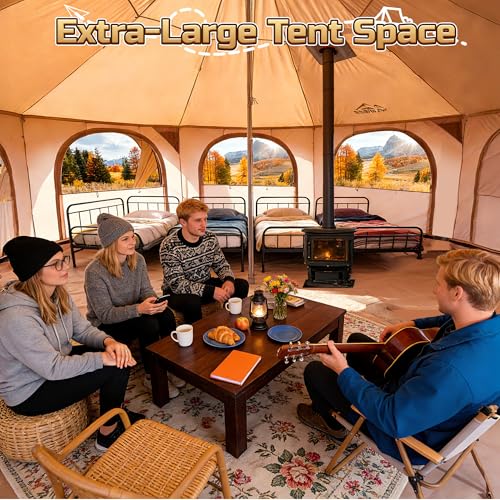
This is the tent I’d recommend if you’re building a semi-permanent winter camp and want real comfort. The blend of breathable TC cotton on the roof and heavy-duty Oxford on the walls strikes a near-perfect balance, it reduces condensation better than synthetic fabrics and holds heat more evenly when paired with a stove. The 55-inch vertical walls are a standout, letting you place furniture and stoves flush against the sides without losing usable space.
Reviewers praise the included positioning tool for faster, more accurate stake placement, a small but meaningful upgrade over most bell tents. The removable floor is a bonus for versatility, letting you convert it into a dry-ground event shelter. While it’s heavy and not for backpacking, this is the kind of tent that feels like a basecamp lodge when staked and stoved properly.
Product photos
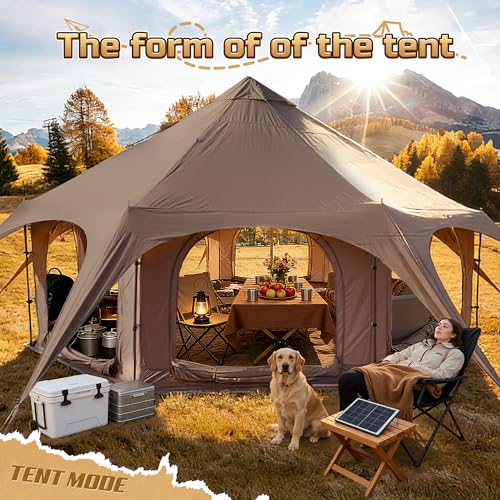
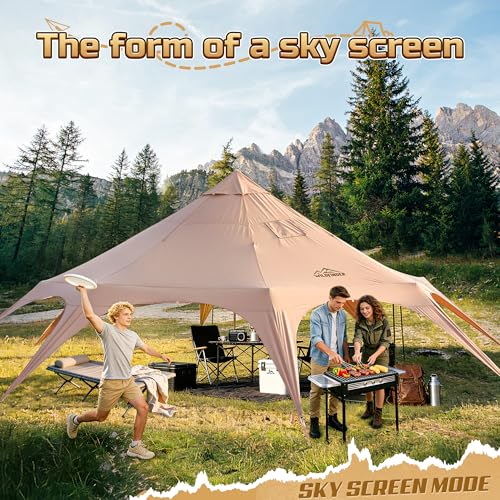
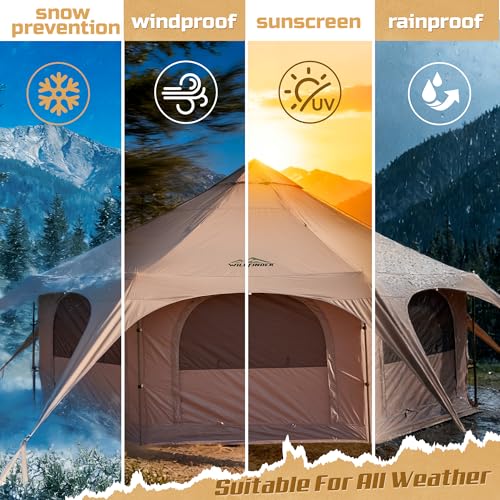
Bell Tent with Stove Jack 16.4ft
Strengths
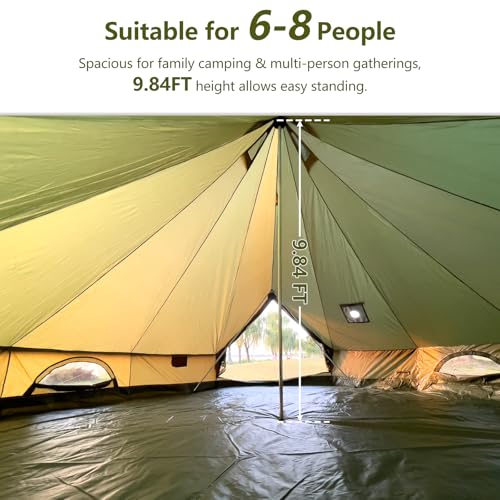
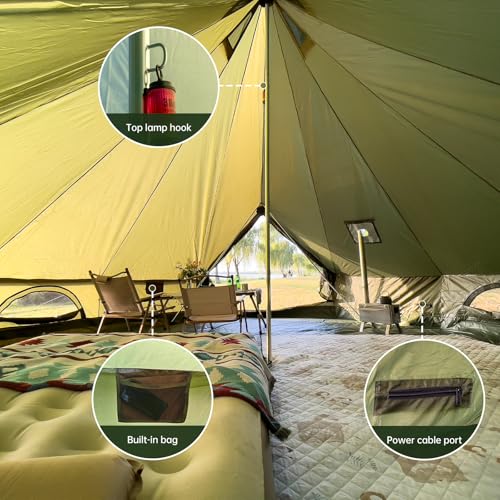
- Spacious 6–8 person layout
- Full standing height
- Built-in stove jack
- Water-resistant Oxford fabric
- Good ventilation design
Trade-offs
- No rainfly included
- Oxford less breathable than canvas
- Heavy for backcountry use
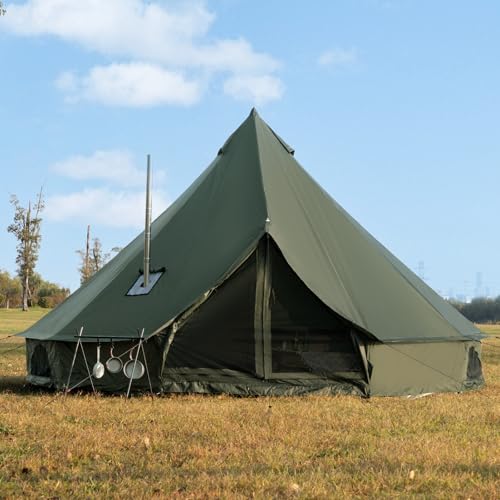
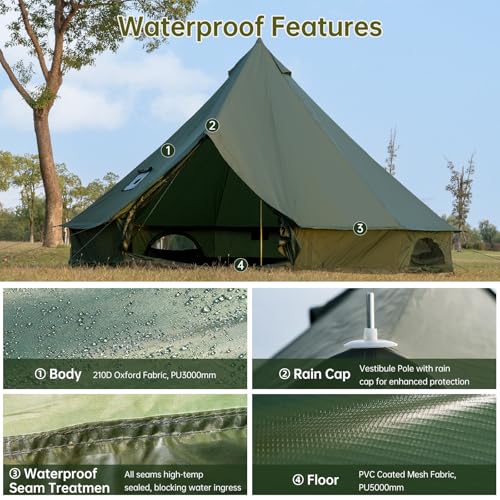
At 16.4 feet wide, this bell tent delivers on space like few others in the winter-ready category. The full standing height and wide floor plan mean you can run a stove, fit multiple sleeping setups, and still have room to move, a major win for group or family winter camping. Owners consistently report it holds up well in wind when properly guyed out, and the Oxford fabric appears to shed rain reliably, though not quite as well as canvas in prolonged storms.
The built-in stove jack is a solid addition, but I’d still want to see a rainfly included for true 4-season confidence. On paper, it’s marketed as 4-season, but without a fly, snow load and driving rain become real concerns. For fair-weather winter trips or glamping bases where you’re prioritizing comfort over extreme conditions, this is a strong contender, especially if you’re pairing it with a stove for extended stays.
Product photos

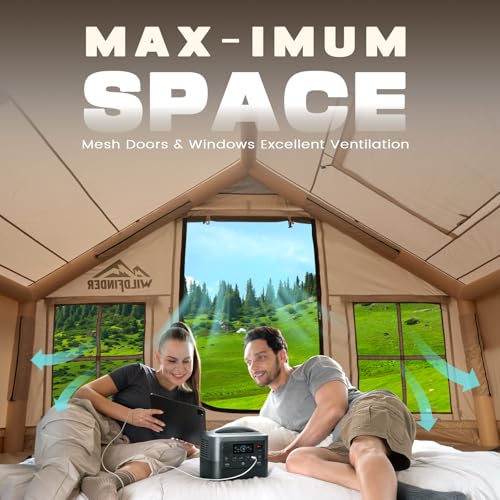
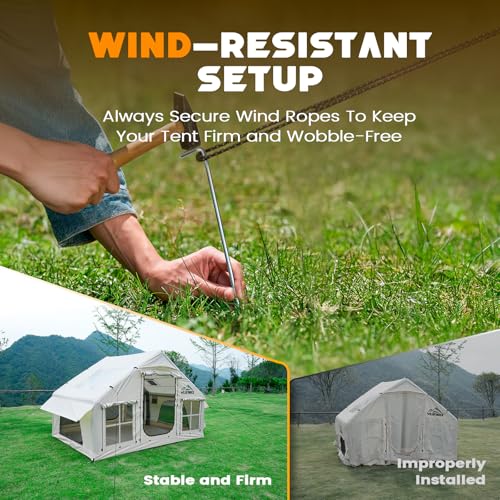
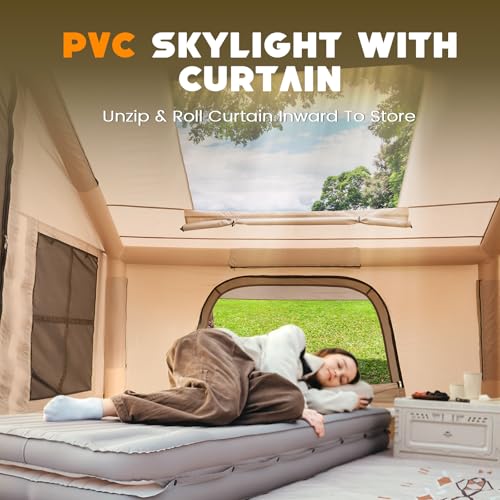
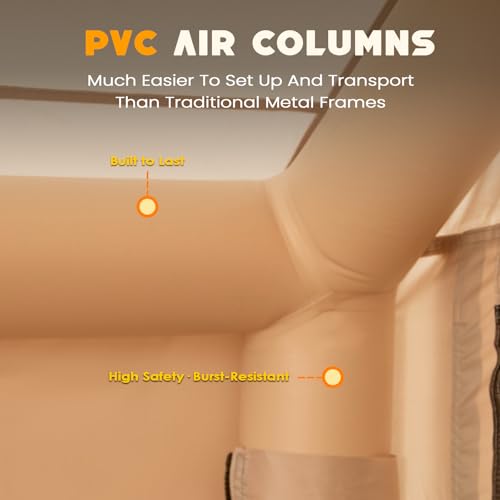
Inflatable Tent with Skylight
Strengths
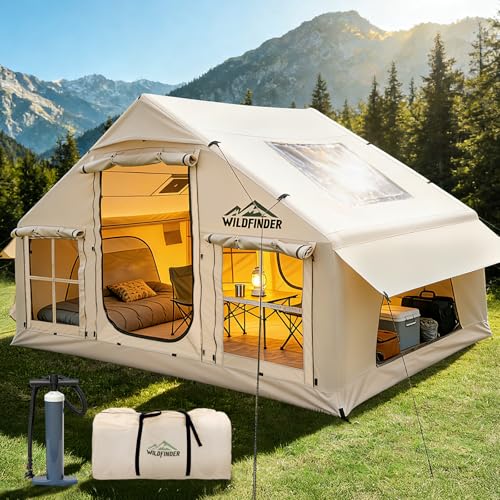
- Blazing fast setup
- Skylight for natural light
- Sturdy 420D Oxford fabric
- Good interior space
- No poles required
Trade-offs
- Air beams vulnerable to heat
- Condensation issues reported
- Less insulated than canvas
The standout here is the 5-minute setup, if you hate wrestling with poles, this inflatable offers a legitimately fast alternative. The TPU air beams are wrapped in Oxford fabric, which helps protect against punctures, and the skylight adds a unique ambiance for stargazing. It’s surprisingly roomy for a 4–6 person tent, and the stove jack means it can function in cold weather, at least in theory.
But I have real concerns about long-term durability under stove use. Inflatable beams near a heat source are a risk, and while the jack is reinforced, owners report mixed results with ventilation and condensation. The material is tough, but not as insulating or breathable as canvas. This feels better suited to fair-weather glamping with occasional stove use than true winter survival camping.
Product photos
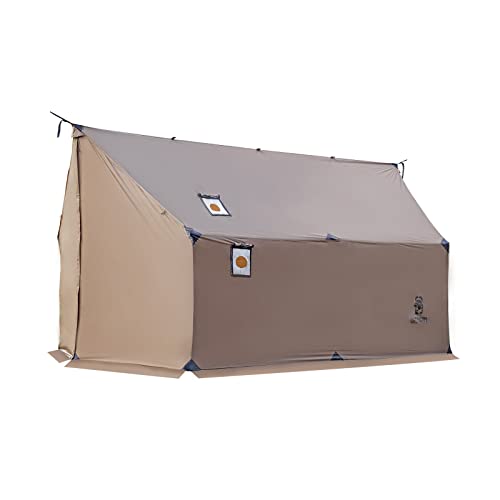
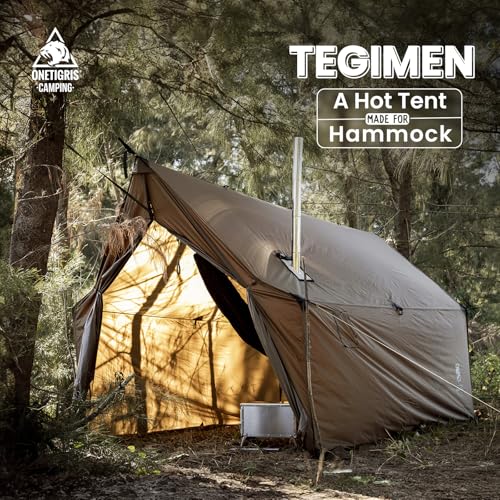
OneTigris TEGIMEN Hammock Hot Tent
Strengths
- Dual stove jacks
- Hammock and frame compatible
- Snow skirt included
- Lightweight and compact
- YKK zippers
Trade-offs
- Limited floor space
- Not ideal for standing or cooking
- Requires careful heat management
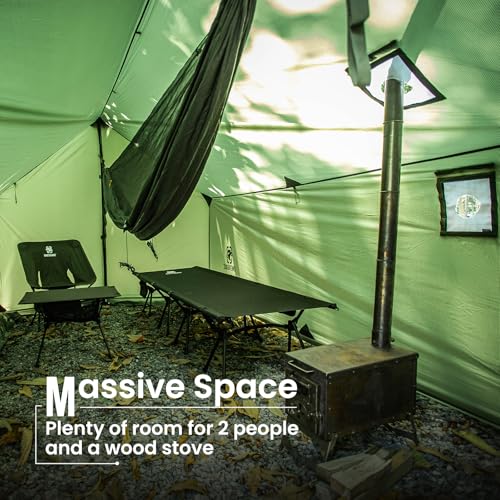
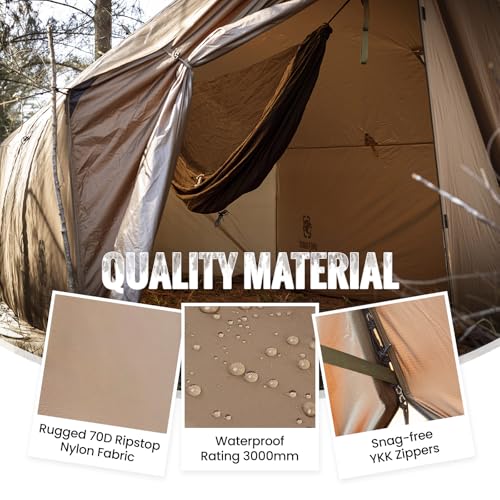
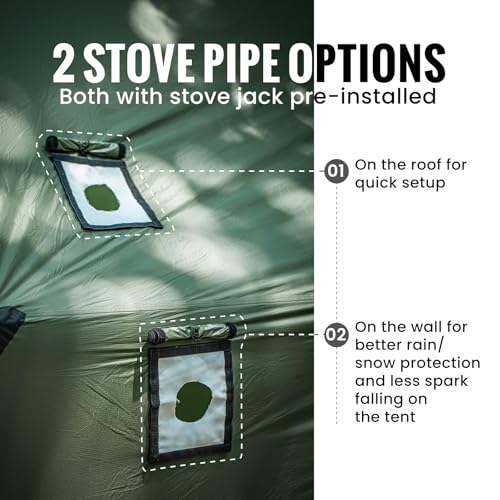
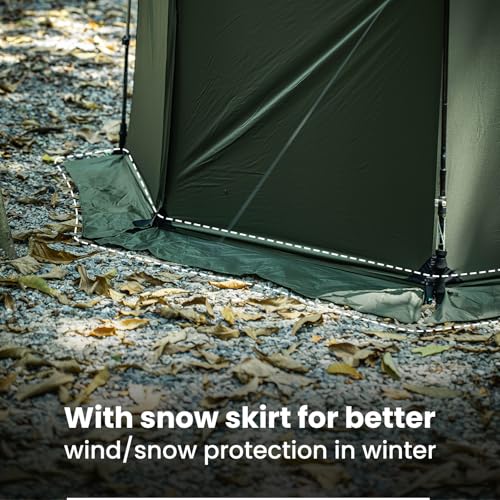
This tent is built for one thing: keeping hammock campers warm in winter. The dual stove jacks, one on top, one on the side, offer real flexibility for routing flue pipes depending on your setup. At 6.8 lbs, it’s light and packs down small, yet still includes a snow skirt and full 3000mm waterproofing. The 70D ripstop nylon feels durable enough for seasonal use, and YKK zippers add reliability.
Owners using it with underquilts and stoves report staying warm even below freezing. It can also work as a frame tent, which adds versatility. But like most hammock-compatible designs, floor space is limited, don’t expect to cook or move around much inside. If you’re committed to hammock camping year-round, this is one of the few options that truly delivers on warmth and function.
Product photos
OneTigris Smokey HUT Tipi Tent
Strengths
- Extremely lightweight
- Simple tipi setup
- Detachable floor
- Snow skirt included
- Packs small
Trade-offs
- Low waterproof rating
- Nylon prone to condensation
- Minimal floor protection
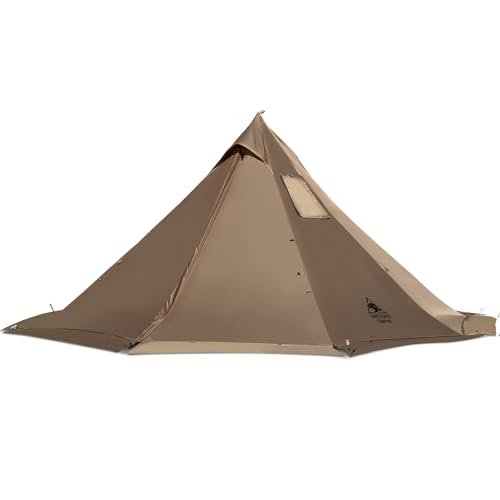
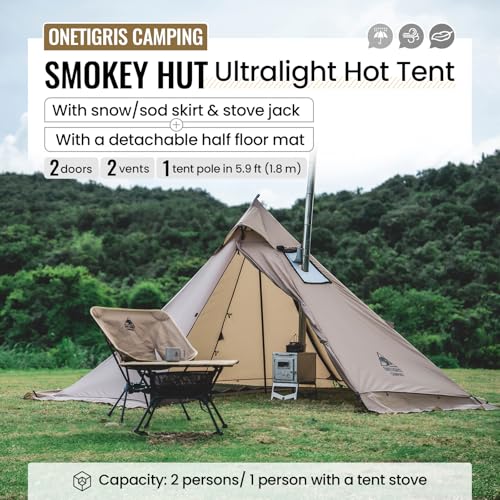
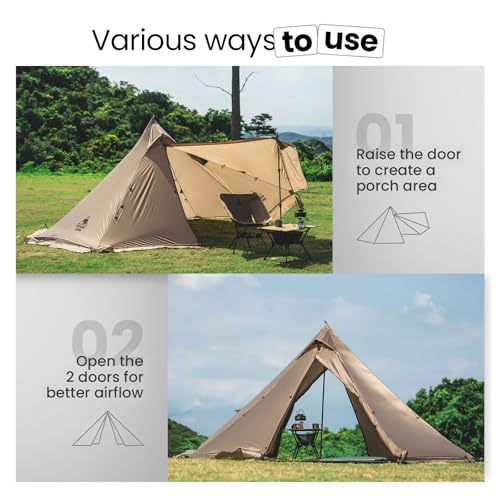
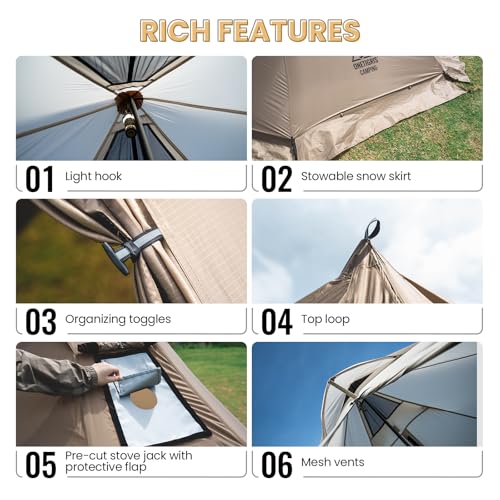
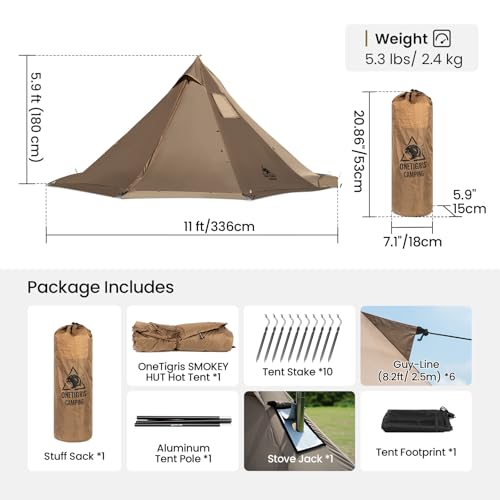
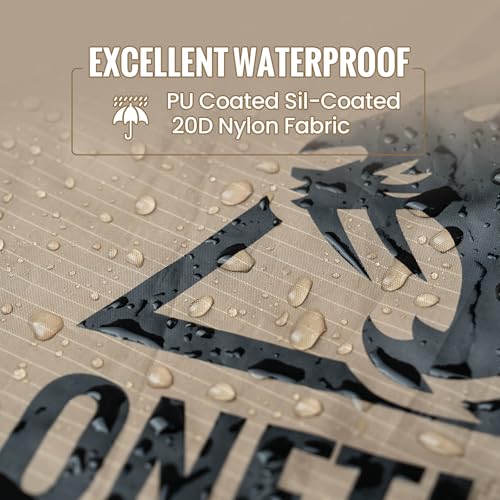
At just 5.3 lbs, this is one of the lightest true stove-compatible tents on the market, a huge advantage for backpackers and bushcrafters who want heat without hauling a heavy shelter. The tipi design heats efficiently, and the single central pole setup makes it fast to pitch in snow or uneven terrain. The detachable floor adds flexibility, letting you ground it on snow or use it over a tarp.
The 20D nylon isn’t as durable as canvas, but it’s treated and taped for weather resistance, and owners report it performs well in dry cold. However, condensation can build up without constant ventilation, and the 2000mm waterproof rating is modest for prolonged rain. Still, for the weight, the stove jack and snow skirt make this a rare find, I’d pick it over heavier options for any winter trek where pack space is tight.
Product photos
Naturehike Massif Hot Tent

Strengths
- Snow skirt included
- Good ventilation options
- Lightweight for 4-season use
- Stable in high winds
- Functional vestibule
Trade-offs
- Narrow interior layout
- Nylon less breathable than cotton
- Floor not as heavy-duty as some
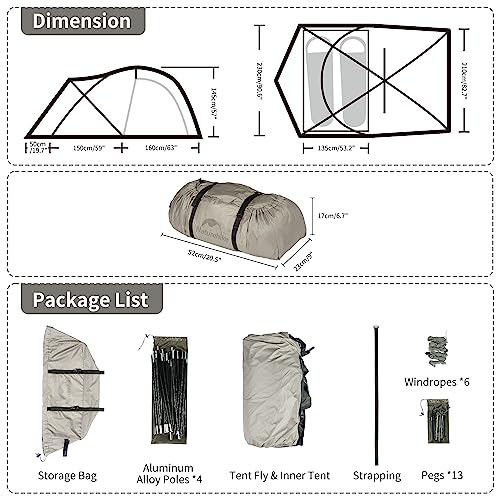
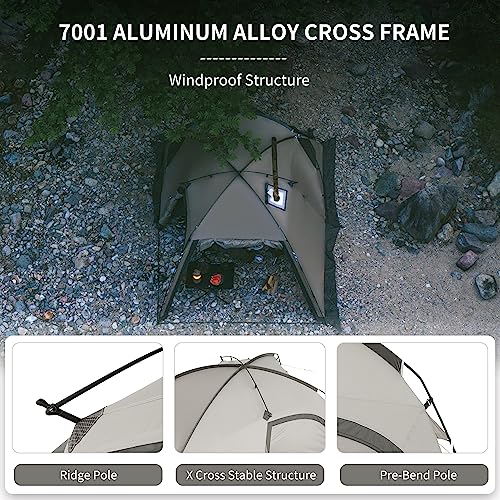
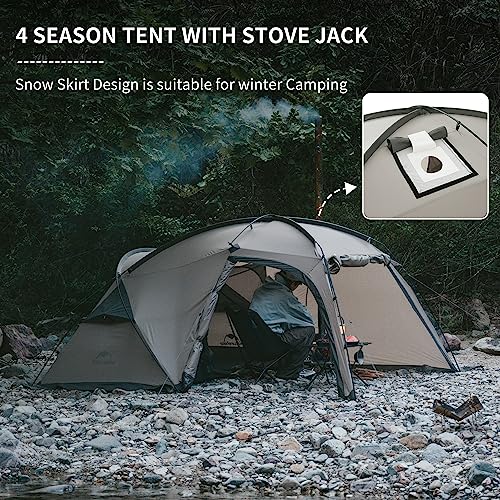
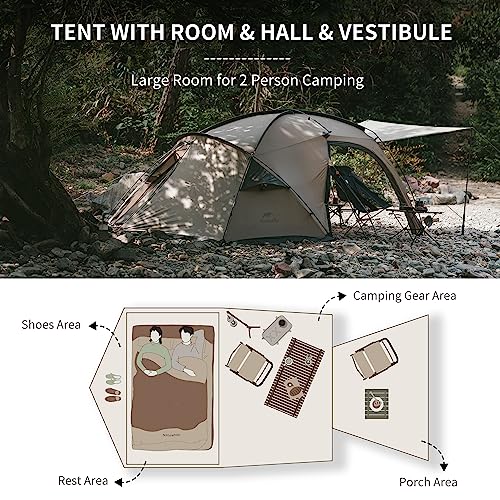
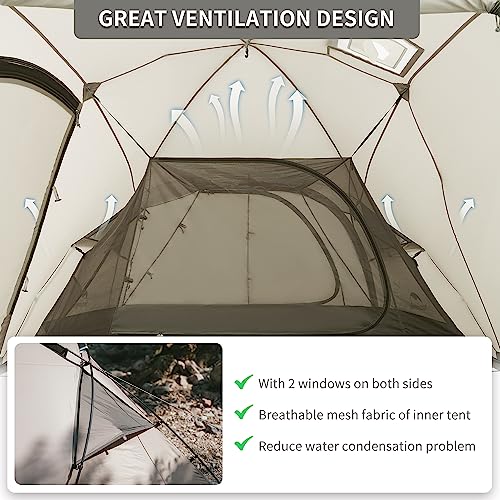
For solo or duo winter campers, this is a compact, no-nonsense shelter that checks most boxes. The 70D nylon shell with 3000mm waterproofing holds up well in snow, and the aluminum frame offers solid wind resistance, crucial when temperatures drop. The snow skirt is effective, and the double-door layout with mesh inner tent improves airflow, which is essential when running a stove.
At just over 10 lbs, it’s not ultralight, but it’s manageable for car or bike camping. Reviewers note it warms quickly with a small stove and stays dry inside when ventilated properly. The vestibule adds useful storage space, keeping gear out of the sleeping area. Compared to larger bell tents, this is far more practical for backcountry winter trips where weight and wind resilience matter.
Product photos
REDCAMP Large Hammock Hot Tent

Strengths
- Lightweight for a stove-compatible tent
- Snow skirt included
- Dual stove vents
- Hammock-compatible design
- Easy to pack and carry
Trade-offs
- No floor included
- Material less durable than canvas
- Ventilation may be insufficient with stove running
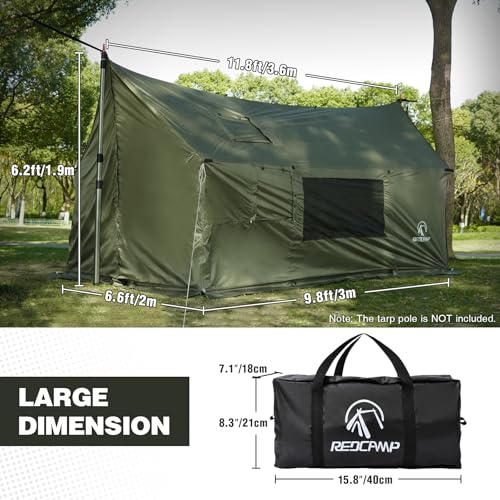
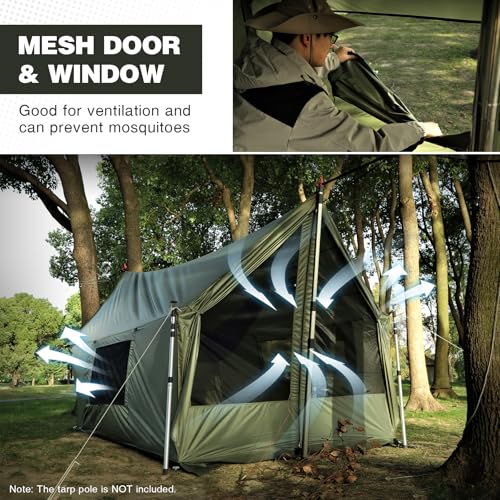
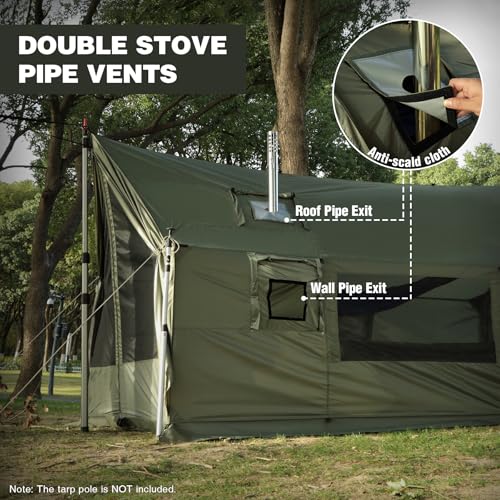
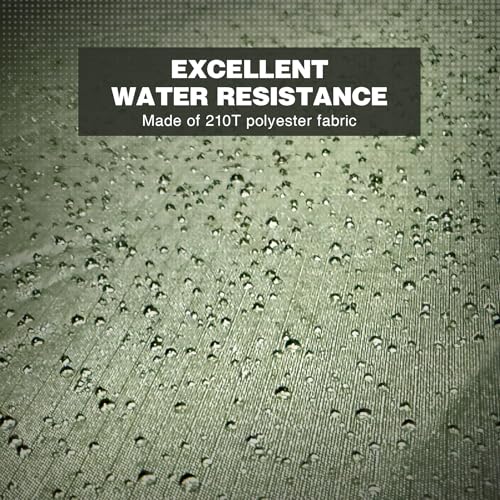
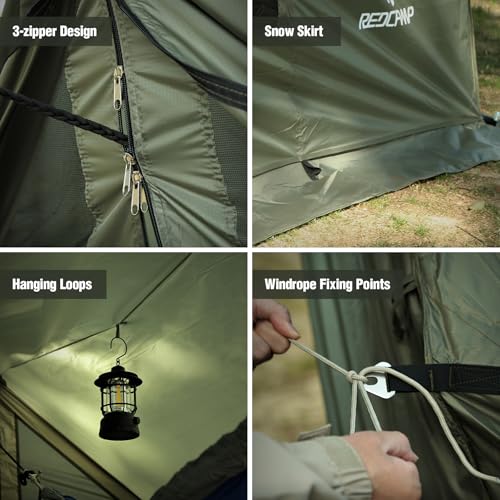
This is one of the few true hybrid designs meant to work both as a hammock shelter and a stove-heated tent, which makes it intriguing for minimalist winter campers. At 7.9 lbs, it’s light enough for car or bike touring, and the grid polyester fabric offers decent waterproofing. The snow skirt adds real value in cold conditions, and the dual stove pipe vents suggest thoughtful design for different stove placements.
Still, I’m skeptical about how well it handles a live stove long-term, the material isn’t inherently fire-resistant, and owners note the need for extra caution with radiant heat. It also lacks a true floor, so ground moisture could be an issue unless paired with a proper underlay. Compared to canvas or heavier nylon builds, this feels more like a 3.5-season option unless you’re extremely diligent with setup and ventilation.
Product photos
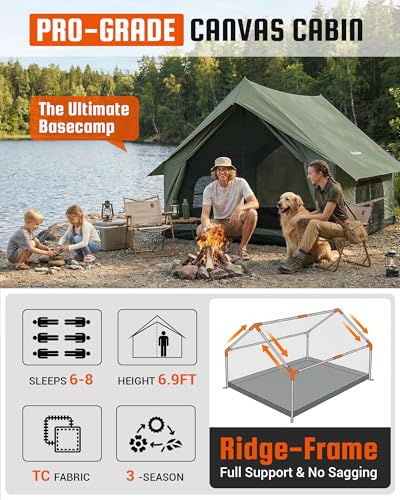
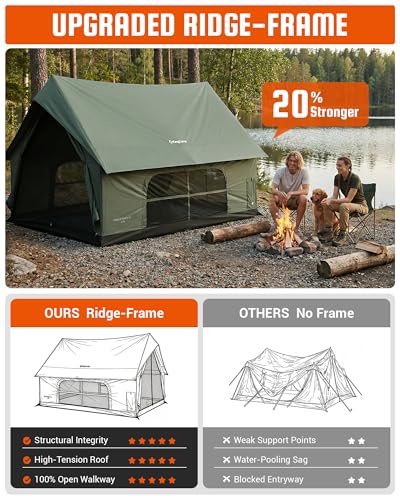
KingCamp 6-8 Person Cabin Tent
Strengths
- Cabin-style vertical walls
- Interior storage and loops
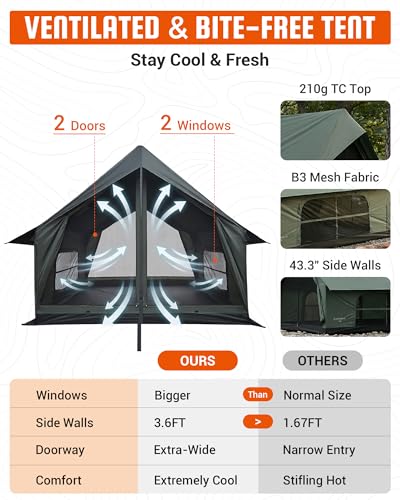
- Good airflow with dual doors
- Stove jack with fireproof mat
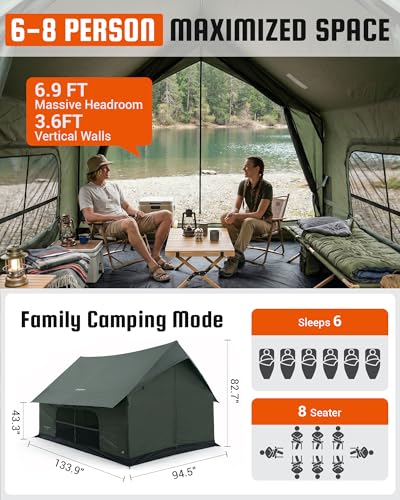
- Spacious 6–8 person layout
Trade-offs
- Sidewalls less durable than canvas
- Limited snow load capacity
- Wind stability requires careful setup
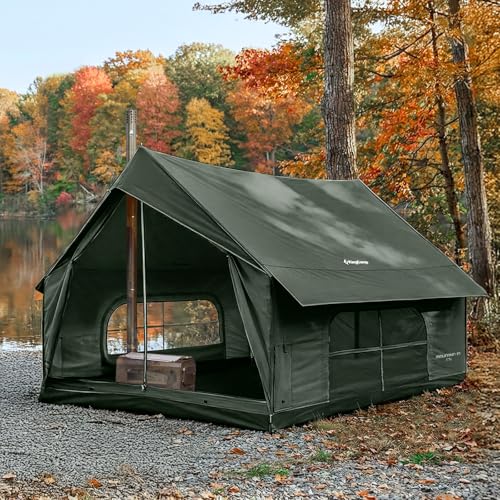
This cabin-style tent stands out for its practical layout and smart interior touches. The vertical walls maximize floor space in a way bell tents often don’t, and the 6.9-foot center height lets adults move freely, a big plus when you’re cooking or lounging with a stove inside. The TC poly-cotton roof helps with heat retention and reduces condensation, while the ripstop polyester sidewalls keep the weight down compared to all-canvas builds.
Owners appreciate the interior organization features like storage pockets and gear loops, small details that make a difference on longer trips. However, the stove jack area lacks the extra fireproofing seen on pricier models, so I’d want to add a secondary heat shield. It’s also not as wind-stable as dome or geodesic designs in exposed terrain, so site selection matters.
Product photos

How We Chose These winter tents with stove
Rather than a hands-on lab test, my research focused on a detailed comparison of published specifications and features across numerous models. I weighed owner reviews from multiple sources – including major retailers and camping-specific forums – alongside expert opinions from established outdoor gear reviewers. This allowed me to build a ranking based on real-world feedback and informed category understanding.
For winter tents with stoves, the most heavily weighted factors were material quality (specifically waterproof ratings and fabric durability) and ventilation design. A reliable stove jack is essential, of course, but a tent that doesn’t manage condensation or withstand harsh weather isn’t useful. Spaciousness also ranked highly, as these tents are often used for extended stays or group camping.
Specifications reliably indicate waterproofness and basic dimensions. However, I placed greater emphasis on owner feedback regarding the tent’s performance in actual cold-weather conditions and how well the stove jack functions in practice. Reputation – how consistently a brand receives positive reviews for quality and durability – also played a significant role, and I often referenced resources detailing a hot tent setup to understand the broader ecosystem.
Choosing The Right winter tents with stove
Choosing a winter tent with a stove is a bit different than picking one for summer; you’re prioritizing warmth, weather protection, and safe stove integration above all else.
A quality winter tent with a stove jack balances robust weather resistance (expect heavy snow and wind loads), effective ventilation to manage condensation from both breathing and a wood stove, and a design that safely contains the heat and exhaust from a stove. Look for durable fabrics, reinforced seams, and a well-engineered stove jack system. Prioritize a tent that allows for comfortable living even when temperatures plummet.
Fabric & Construction Matter Most
Don’t skimp on materials. A tent’s fabric dictates how well it handles snow loads, wind, and moisture. Canvas is a classic choice for cold-weather camping, offering excellent durability and a degree of natural water repellency. However, modern synthetic fabrics like polyester and nylon, often coated with polyurethane (PU) or silicone, can be lighter and offer comparable waterproofness. Pay attention to the denier (D) of the fabric; higher numbers generally mean greater durability. For sidewalls, a heavier Oxford fabric is preferable to resist abrasion and punctures. A quality tent will also have taped seams to prevent water leakage.
Ventilation & Stove Jack Design
A stove is fantastic for heating a winter tent, but it also introduces moisture and the risk of carbon monoxide buildup. Effective ventilation is absolutely critical. Look for tents with multiple adjustable vents – roof vents, sidewall vents, and mesh windows are all beneficial. The stove jack itself is a key consideration. It should be made of fire-resistant material (silicone-coated fabric is common) and have a secure, properly sized opening for your stove pipe. A badly designed stove jack can be a serious fire hazard. If you’re new to using a stove in a tent, research tent insulation techniques to maximize heat retention and minimize condensation.
Size, Space, & Usability
While a cozy tent can be appealing, a winter tent needs to accommodate not only sleepers but also gear, a stove, and potentially wet clothing. Consider the number of occupants and the length of your trips. A spacious tent will allow you to move around comfortably and avoid bumping into things in the dark.
- A smaller, 2-person tent might be ideal for solo adventurers or couples prioritizing weight.
- A 4-6 person tent offers a good balance of space and portability for families or groups.
- Larger, bell-style tents (like the WildFinder or Bell Tent options) provide standing room and ample space for longer stays, but they are significantly heavier and more challenging to set up.
Remember, a well-designed tent should make winter camping enjoyable, not a struggle. If you’re planning extended trips in harsh conditions, exploring options for winter tents with stoves is a smart move.
Don’t assume a tent labeled “4-season” is automatically suitable for truly cold, stove-dependent camping. Look specifically for models designed with a stove jack and robust construction for winter use.
Winter Tents with Stove Compared
Here’s a comparison of key specifications for winter tents designed to accommodate a stove for heating.
| Product Title | Capacity | Waterproof (Roof) | Material (Roof) | Stove Jack | Weight (lbs) |
|---|---|---|---|---|---|
| WildFinder 16.5ft Canvas Bell Tent | 6-8 | N/A | TC Cotton | Yes | N/A |
| Bell Tent with Stove Jack 16.4ft | 6-8 | N/A | Oxford | Yes | N/A |
| Inflatable Tent with Skylight | 4-6 | 3000mm | 420D Oxford | Yes | N/A |
| OneTigris TEGIMEN Hammock Hot Tent | 2-3 | 3000mm | 70D Ripstop Nylon | Yes (x2) | 6.8 |
| OneTigris Smokey HUT Tipi Tent | 1-2 | 2000mm | 20D Nylon | Yes | 5.3 |
| Naturehike Massif Hot Tent | 2 | ≥3000mm | 70D Nylon | Yes | 10.47 |
| REDCAMP Large Hammock Hot Tent | 6-8 | N/A | 210T Polyester | Yes (x2) | 7.9 |
| KingCamp 6-8 Person Cabin Tent | 6-8 | 3000mm | TC Poly-Cotton | Yes | N/A |
Frequently Asked Questions
What waterproof rating is sufficient for a winter tent with a stove?
A rating of 3000mm is generally considered the minimum acceptable waterproofness for a winter tent, though higher is better. Remember that waterproof ratings only apply to the fabric itself and don’t account for the quality of seam sealing, which is equally important for staying dry.
Are canvas tents really better for winter than synthetic options?
Canvas offers inherent durability and a cozy feel, but modern synthetic tents with high denier ratings and quality coatings can perform just as well, and often weigh significantly less. The best material depends on your priorities – weight versus long-term ruggedness.
How many vents are enough in a hot tent?
At least two adjustable vents are essential(roof and sidewall) to manage condensation and ensure proper airflow when using a stove. More vents give you greater control over the internal climate, and are particularly helpful in shoulder-season conditions.
What size stove jack should I look for?
The stove jack diameter must match your stove pipe’s diameter for a safe and efficient connection. Most wood stoves designed for tents have a 2.5-inch or 3-inch diameter pipe, so verify compatibility before purchasing a tent or stove.
Where can I find more information on different types of winter tents?
You can explore a wider range of options and detailed reviews of best winter hot tents to find a model that suits your specific needs and budget.
The Bottom Line
Choosing a winter tent with a stove often comes down to balancing the desire for a spacious, comfortable shelter with the realities of weight and portability. For most, the WildFinder 16.5ft Canvas Bell Tent strikes that balance best – it offers ample room for groups, a robust stove jack, and the reliable durability of canvas, even if it is on the heavier side. Ultimately, the “best” tent isn’t about a single standout feature, but about matching your needs to a well-made shelter.
If you’re on a tighter budget or prioritize a lightweight setup, the OneTigris TEGIMEN Hammock Hot Tent is a fantastic option. For those needing maximum versatility – a tent that can adapt to different conditions and setups – the Inflatable Tent with Skylight offers a good blend of features and convenience. Don’t overlook the REDCAMP Large Hammock Hot Tent if you’re looking for a large, budget-friendly option with dual stove jacks.
More than waterproof ratings or fabric denier, remember that a successful winter camping experience hinges on preparedness and understanding. Research safe tent heating methods before you go, practice setting up your stove and ventilation system, and always prioritize safety. A well-chosen tent is crucial, but it’s your knowledge and careful planning that will truly keep you warm and comfortable out there.
