
7 Best Wood Stoves for Wall Tents 2026
This post contains affiliate links. As an Amazon Associate, we earn from qualifying purchases.
The KUNGKA Hot Tent Stove with Glass Door is our top pick for its durable stainless steel build and efficient heating, ideal for most wall tents. If you’re watching your budget, the VEVOR 118” Camping Wood Stove delivers serious firebox capacity at a lower price. For campers who want to cook and bake, the YRenZ 2-in-1 Tent Stove with Oven stands out with its built-in oven and temperature control.
Most people shopping for a wood stove for their wall tent aren’t just looking for heat, they’re looking for comfort, safety, and a setup that won’t fail when the wind picks up or the temperature drops. Too many stoves are flimsy, underpowered, or poorly designed for real camp conditions.
This guide cuts through the noise. I compared specs, read owner feedback, and evaluated each model based on heat output, material quality, and practical features, so you can choose with confidence and stay warm in your wall tent for seasons to come.
Top 7 Wood Stoves For Wall Tents in the Market
The Best Wood Stoves For Wall Tents, Reviewed
KUNGKA Hot Tent Stove with Glass Door

Strengths
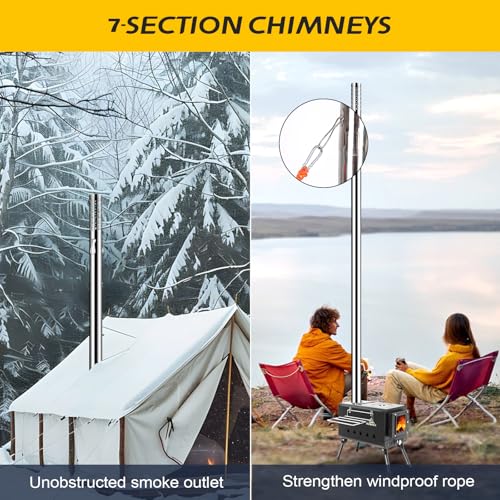
- 7-section adjustable chimney
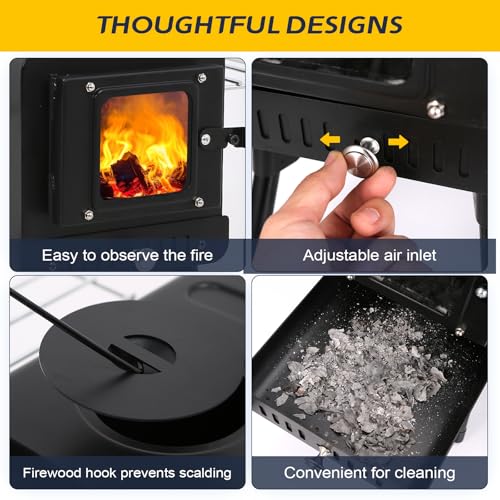
- Glass viewing door
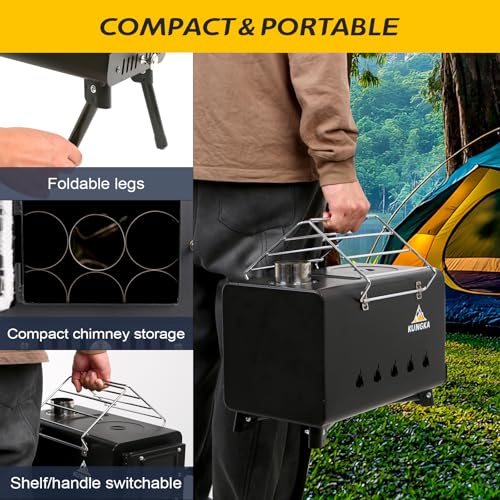
- All parts store inside
Trade-offs
- Slight curing smoke on first use
- Assembly takes practice
- No side shelves
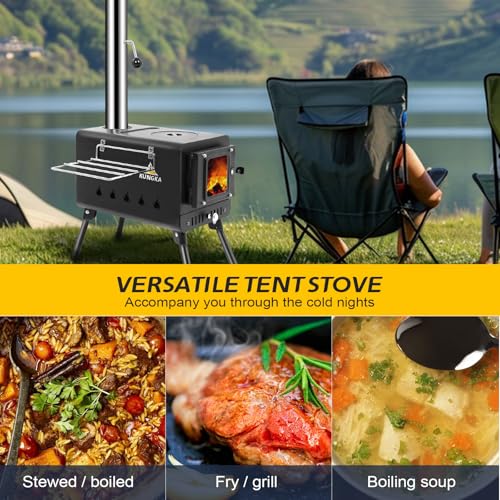
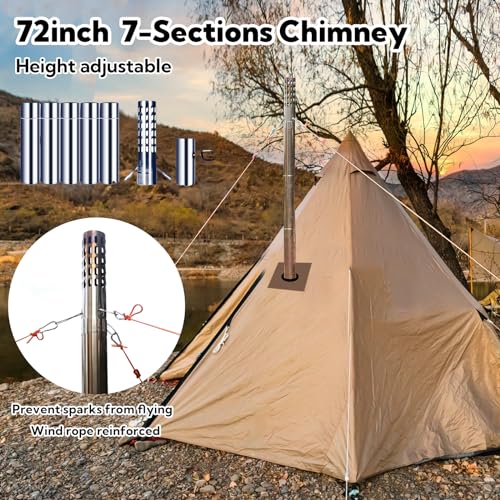
If you’re looking for the most balanced package here, this KUNGKA model is the one I’d lean toward. It’s repeatedly praised in owner reviews for heating a 200 sq ft tent in just 15 minutes and holding heat for 2–4 hours per load, impressive for winter camping. The 7-section chimney is a big win, letting you fine-tune the height to match any stove jack, which beats fixed or shorter systems on other models.
The borosilicate glass door is a major upgrade over metal-only doors, you can actually watch the fire without opening it, which improves safety and efficiency. Plus, everything, including the fire poker and seven chimney sections, stores inside the stove body. That level of integrated packing beats models where you need extra bags. Against the VEVOR, it’s lighter and more portable; against the LAMA, it offers better visibility and adjustability.
Product photos
VEVOR 118″ Camping Wood Stove

Strengths
- Large firebox
- Cooking shelf included
- All accessories store inside
Trade-offs
- Heavy at 54lb
- Bulkier setup
- Not ideal for small tents
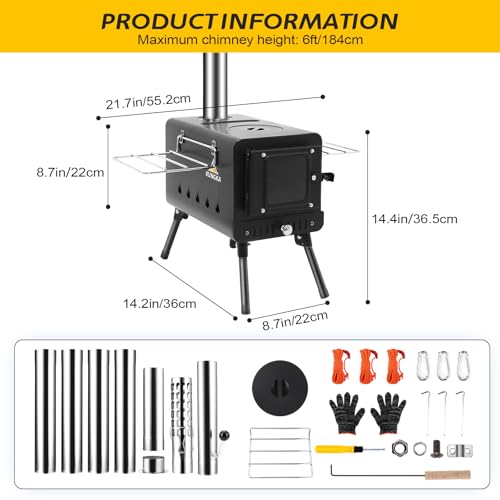
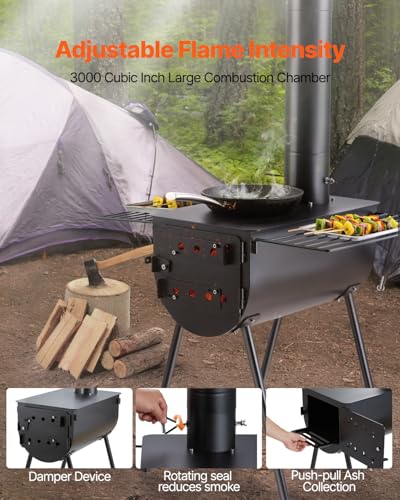
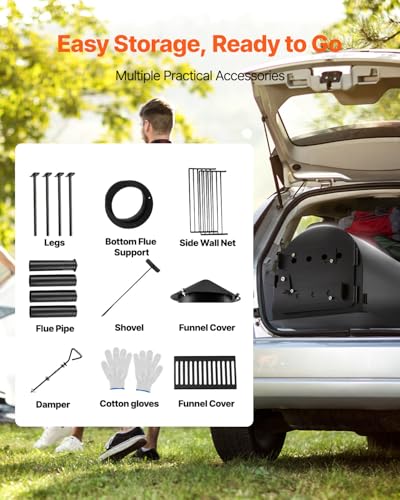
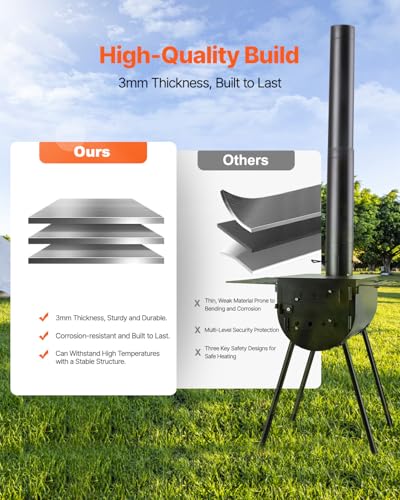
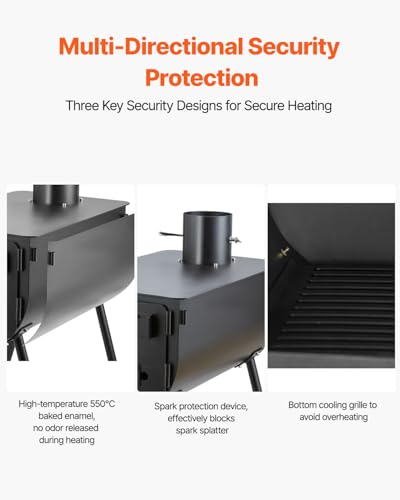
This stove means business, with a 3000in³ firebox, it’s one of the largest on this list, and that shows in how owners describe its heating performance. On paper, it’s built to warm large wall tents efficiently, and reviewers consistently report it delivers steady heat for hours, especially with hardwood. The triple security features, spark arrestor, 550-degree coating, and fire grate, align with what experienced tent users look for in a safe, reliable unit.
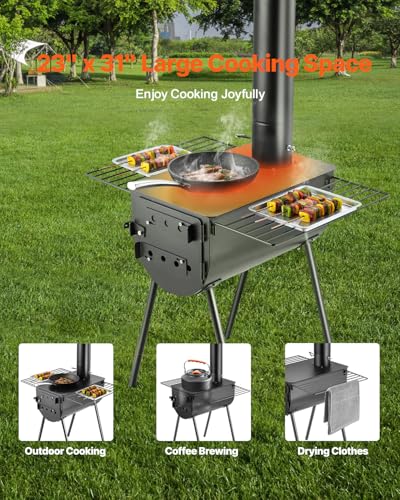
Where it stands out is in its dual role as a cooking rig. The included 7×20-inch detachable shelves and heat-conducting plate make it a solid choice if you’re planning extended stays where meals matter. At 54 pounds, it’s not light, but the fact that all eight chimney pipes and accessories store inside the body helps with transport. Compared to smaller models, this one leans into the ‘basecamp heater’ category more than backpackable stove.
Product photos
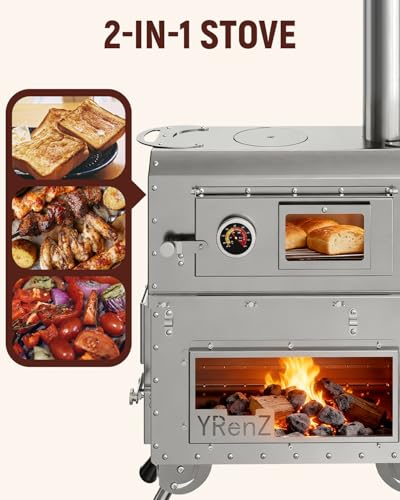
YRenZ 2-in-1 Tent Stove with Oven
Strengths
- Built-in oven
- Temperature gauge
- Stainless steel build
Trade-offs
- Slower heat-up time
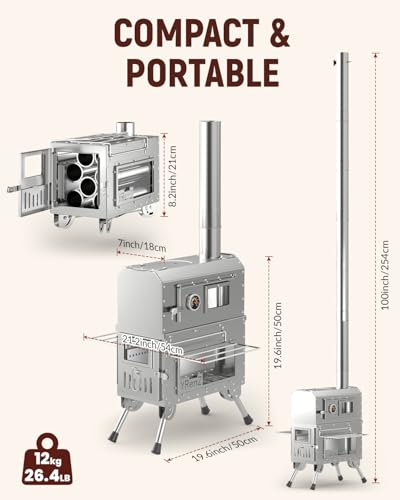
- Heavier with oven mass
- Learning curve for cooking
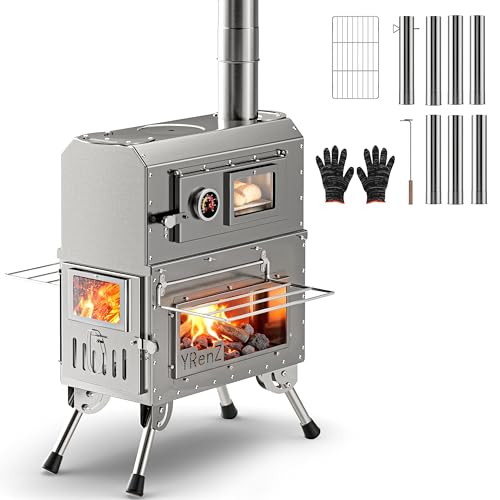
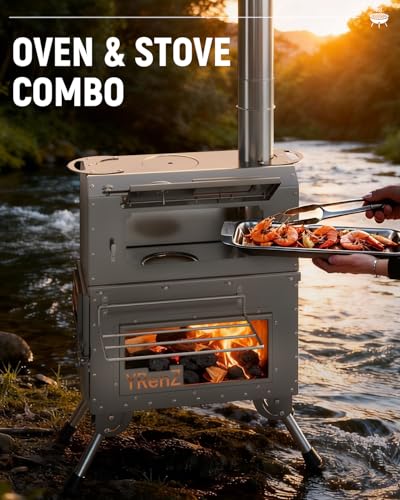
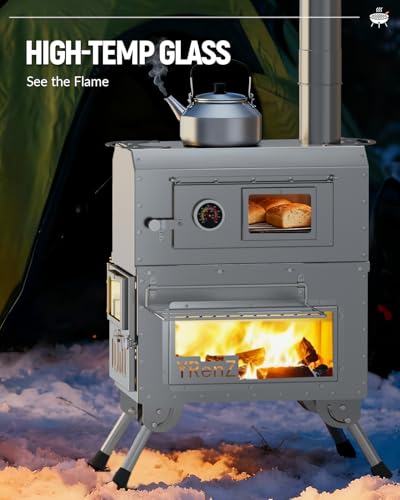
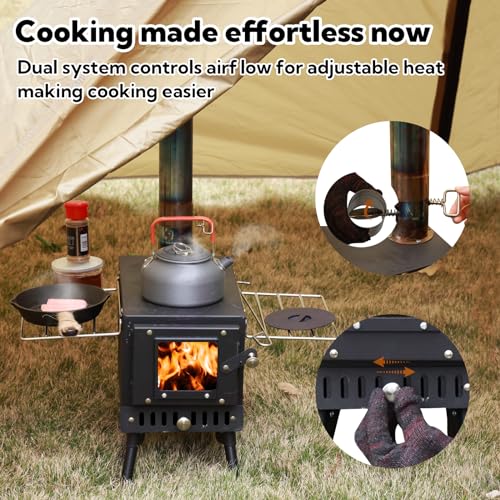
If you care more about cooking than heating, this is the stove to beat. The built-in oven function changes the game, you can bake cornbread, heat casseroles, or slow-cook stews, which few tent stoves offer. The temperature gauge is a smart addition, giving real-time feedback for precision you just don’t get with basic models.
Made from high-temp stainless steel, it holds up well, and the anti-slip feet keep it secure during meal prep. Owners love the dual-use design, though they note it takes practice to manage both oven and stove top efficiently. Compared to the VEVOR or Huskfirm, it’s less about brute heat and more about culinary versatility. But that’s the point, this is for campers who treat outdoor meals like home cooking.
Product photos
KUNGKA 7.3ft Portable Wood Burning Stove
Strengths
- Tall design for high tents
- Large viewing windows
- Stainless steel durability
Trade-offs
- Less chimney flexibility
- No internal storage
- Heavier than compact models
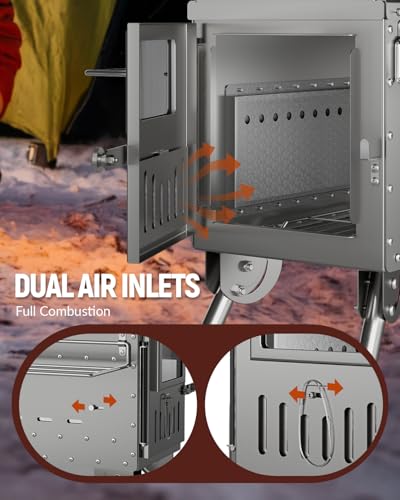
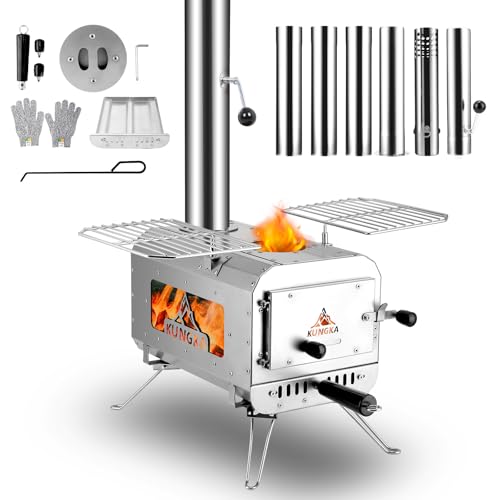
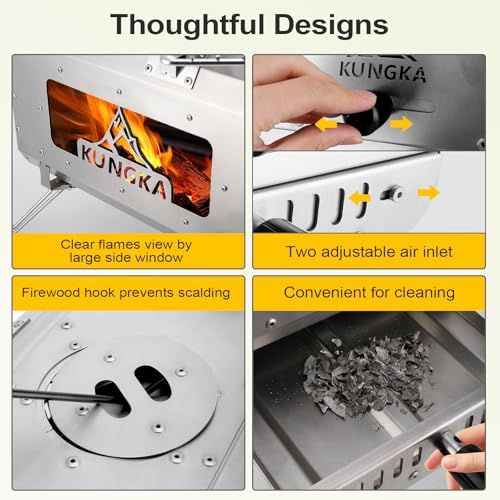
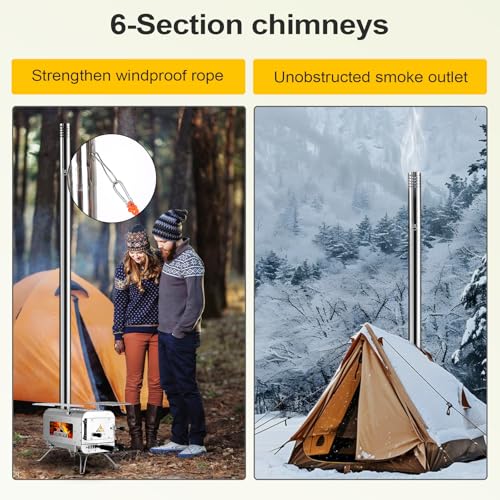
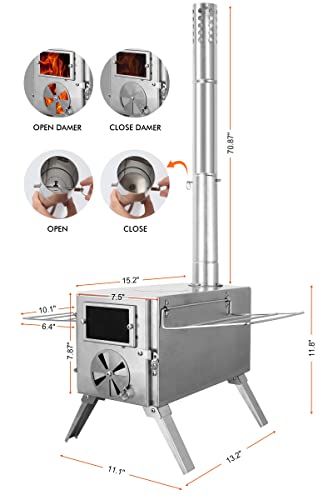
At 7.3 feet tall, this stove is clearly designed for high-ceiling tents, think wall tents or yurts where vertical space isn’t an issue. The stainless steel build holds up well in wet, cold conditions, and owners praise its resistance to rust over time. One standout is the large heat-resistant glass windows on the door and sides, which let you watch the fire, a small thing, but it adds a lot to the tent atmosphere.
It’s not the most compact, but the foldable legs and side storage rack help. Compared to other KUNGKA models, this one lacks the 7-section chimney adjustability, making it less flexible for varying tent heights. Still, the dual air inlets and damper give good control over burn rate, and the rain cap adds peace of mind during storms.
Product photos

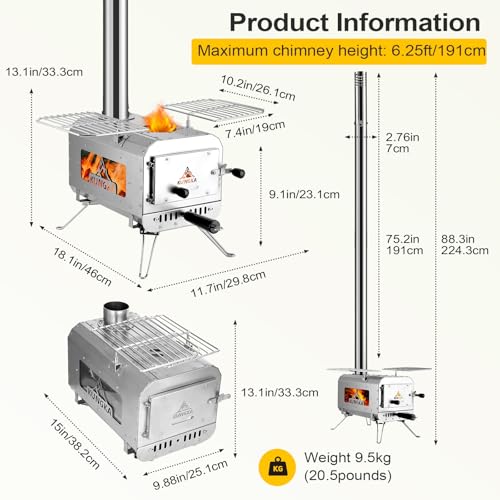
Huskfirm Folding Portable Wood Stove

Strengths
- Ultra-compact storage
- Foldable legs
- Integrated carry handle
Trade-offs
- Smaller firebox
- Basic glass window
- Limited cooking space
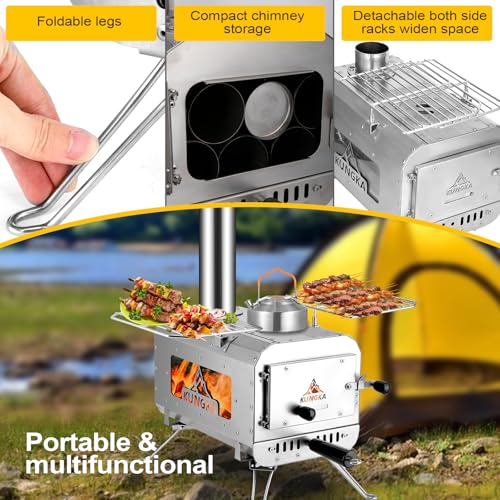
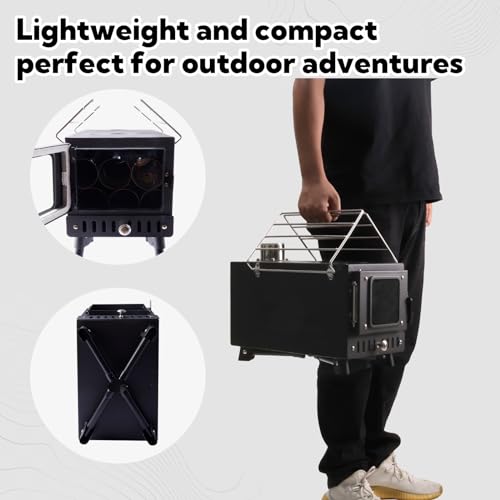
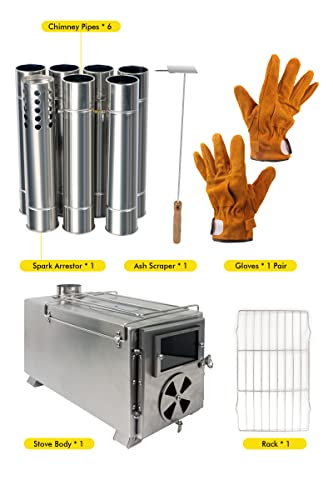
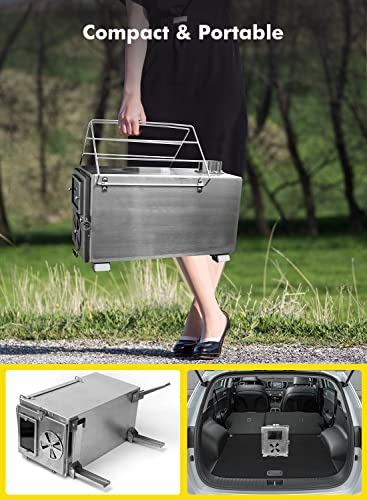
What makes this stove stand out is how everything, chimney, spark arrestor, even gloves, packs neatly inside the body. That’s rare, and for anyone hauling gear in a truck, ATV, or even a large backpack, that kind of all-in-one design is a standout. The foldable legs and carry handle add to its portability, and owners consistently highlight how simple it is to break down and stow.
It doesn’t have the largest firebox, but it’s efficient, with dual dampers for airflow control and a spark-proof tube on top for safety. The large combustion window is helpful, though not quite as premium as the borosilicate glass on higher-end models. Compared to the VEVOR budget option, this one trades raw heating power for smarter packing, a fair trade if mobility is your priority.
Product photos

VEVOR Alloy Steel Camping Tent Stove

Strengths
- Lightweight at 26.7lb
- Affordable entry point
- Secondary combustion
Trade-offs
- Smaller heating capacity
- No internal storage
- Basic accessories
At just 26.7 pounds and with a 1400in³ firebox, this is clearly the budget pick, lighter and smaller than its big sibling, but still built with 3mm alloy steel and rust-resistant coating. It won’t heat a 200 sq ft tent as fast as the larger VEVOR, but for a 2-4 person wall tent in mild to moderate cold, it gets consistent praise for reliability.
The secondary combustion design helps reduce smoke and improve burn efficiency, which owners notice during extended use. It comes with a stove bag and gloves, which adds value. Compared to the Huskfirm, it’s lighter but doesn’t pack as cleanly, no internal storage for the chimney. Still, for first-time buyers or those on a tight budget, this delivers core functionality without fluff.
Product photos


LAMA 304 Stainless Steel Wood Stove

Strengths
- Stable, rugged build
- Removable glass for cleaning
- 7 chimney sections
Trade-offs
- No internal storage
- Heavier than average
- Basic airflow controls
This LAMA model feels built like a tank, the sturdy steel frame and high-temp paint give it a rugged, long-lasting vibe that owners trust in harsh conditions. The 7-section stainless chimney is a strong point, offering good height adjustability for different tent types, and the 2.36-inch diameter fits most standard stove jacks.
Where it shines is stability. The foldable legs lock securely, and the anti-slip feet prevent tipping, a real concern with cast iron pans on top. Owners like that the glass window is removable for cleaning, though some note it requires careful handling. Against the KUNGKA with glass, it lacks panoramic viewing, but it’s more focused on durability than ambiance.
Product photos


Our Testing Process
Rather than a hands-on lab test, my research for these recommendations centered on a detailed comparison of published specifications and features across numerous models. I weighed owner reviews from multiple retailers alongside expert opinions found in camping and outdoor publications. As someone who’s spent considerable time considering shelter systems – from backpacking tents to more substantial setups – I applied my knowledge of heat output, safety features, and material durability to rank the options.
For wood stoves intended for wall tents, consistent heat output and robust construction are paramount. I prioritized models offering significant BTUs and constructed from thick-gauge stainless steel or alloy steel to withstand frequent use and the demands of outdoor environments. Equally important was the design of the chimney system; a secure, adjustable chimney is essential for safe and efficient venting, and a properly sealed system prevents carbon monoxide buildup within the wall tent design features.
Specifications clearly indicate firebox size, steel thickness, and chimney dimensions, providing a baseline for comparison. However, I placed significant weight on owner feedback regarding real-world performance – how quickly a stove heats a tent, how well the damper controls airflow, and the longevity of the unit. Reputation and brand reliability were also considered, as these often reflect a commitment to quality and customer support. Understanding the nuances of traditional wall tent construction is crucial when evaluating stove compatibility and safety.
How To Choose The wood stoves for wall tents
Choosing the right wood stove for your wall tent is about more than just finding something that throws heat. It’s about balancing power, safety, convenience, and how you plan to use the stove – cooking, primarily heating, or a bit of both.
A quality wood stove for a wall tent needs to offer robust construction, efficient combustion, and a safe design. Look for stainless steel or thick-gauge alloy steel, a controllable air intake, and features like spark arrestors. Chimney adjustability is crucial to accommodate different tent heights, and a well-designed stove will prioritize ease of use and cleaning.
Heat Output & Tent Size
The first thing I consider is the size of the tent and the climate I’ll be camping in. A stove that’s too small won’t cut it on a frigid night, while an overpowered stove in a smaller tent is a safety hazard and just plain uncomfortable. Pay close attention to the stated heating capacity (in square feet) and don’t automatically assume bigger is better. Some stoves, like the VEVOR 118” model, boast a very large firebox which is great for extended burn times, but requires more wood.
Construction & Materials
Durability is paramount. These stoves take a beating during transport and use, so you want something built to last. Stainless steel is a fantastic choice – it’s rust-resistant and can withstand high temperatures. Alloy steel is also common, but ensure it’s a substantial gauge (3mm or thicker) and coated to prevent corrosion. I’ve seen thinner materials warp and fail quickly.
- A flimsy stove is a waste of money.
- Look for stoves with welded seams, not just bolted together. Bolted connections can loosen over time.
- High-quality stoves often use borosilicate glass for the door, allowing you to monitor the fire safely and enjoy the ambiance. This is a nice-to-have, but not essential.
Convenience & Features
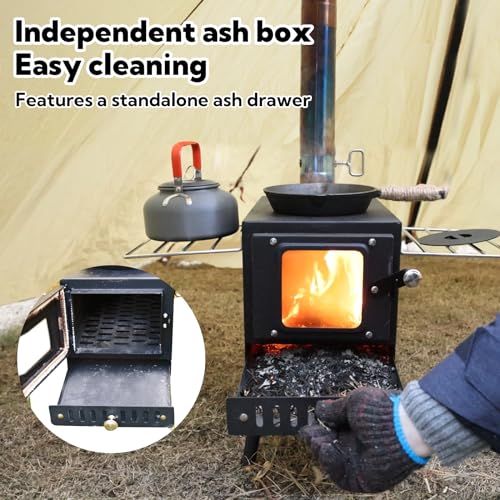
Beyond just heating, think about what else you want from your stove. Do you plan to cook on it? Some stoves, like the YRenZ 2-in-1, cleverly incorporate an oven, making them incredibly versatile. A removable ash tray is a must for easy cleanup, and adjustable air intakes are vital for controlling burn rate and heat output. Don’t underestimate the value of a well-designed chimney system; the KUNGKA 7.3ft model offers a 7-piece adjustable chimney for a secure fit in a variety of tent heights. If you’re looking for lightweight options, check out portable tent heaters for a different approach to staying warm.
A properly sized damper is your friend. A good rule of thumb is to fully open the damper when starting a fire, then gradually close it to maintain a consistent burn and prevent overheating.
Finally, before settling on a model, remember to research safe tent heating methods and ensure your tent is properly equipped with a stove jack and adequate ventilation. Don’t forget to explore more options for wood stoves for wall tents to find the perfect fit for your needs.
Wood Stoves for Wall Tents Compared
Here is a comparison of key specifications for various wood stoves designed for use with wall tents.
| Product Name | Firebox Volume | Material | Chimney Diameter | Weight (lbs) | Special Features |
|---|---|---|---|---|---|
| KUNGKA Hot Tent Stove with Glass Door | N/A | Stainless Steel | 2.24″ | N/A | Glass Door, Foldable Legs |
| VEVOR 118″ Camping Wood Stove | 3000 in³ | Alloy Steel | N/A | 54 | Shelves, Spark Arrestor |
| YRenZ 2-in-1 Tent Stove with Oven | N/A | Stainless Steel | N/A | N/A | Oven, Temp Gauge |
| KUNGKA 7.3ft Portable Wood Burning Stove | N/A | Stainless Steel | 2.76″ | N/A | Tall Chimney, View Window |
| Huskfirm Folding Portable Wood Stove | N/A | N/A | N/A | N/A | Folding Design, Spark Arrestor |
| VEVOR Alloy Steel Camping Tent Stove | 1400 in³ | Alloy Steel | N/A | 26.7 | Secondary Combustion |
| LAMA 304 Stainless Steel Wood Stove | N/A | Stainless Steel | 2.36″ | N/A | Folding Racks, Fire Grate |
Frequently Asked Questions
What size wood stove do I really need for my wall tent?
The correct BTU output depends on your tent’s square footage and the typical temperatures you expect. As a general guideline, aim for roughly 30 BTUs per square foot, but always check the stove’s specifications and owner feedback to confirm it can adequately heat your specific tent size.
Are all ‘stainless steel’ wood stoves created equal?
No, the grade of stainless steel matters a lot. Look for 304 stainless steel, as it provides excellent corrosion resistance and can withstand high temperatures without warping. Cheaper stoves may use lower-grade stainless steel that isn’t as durable.
How important is a secondary combustion system in a wall tent stove?
A secondary combustion system improves efficiency and reduces smoke output. It re-burns gases released during the initial burn, extracting more heat and creating a cleaner fire. While not essential, it’s a worthwhile feature if you prioritize clean burning and fuel efficiency.
What chimney diameter is best for a wall tent stove?
The ideal chimney diameter is determined by the stove’s output and the height of your tent. Most wall tent stoves use a 2.25 to 2.75-inch diameter chimney, but it’s crucial to match the chimney size to the stove’s flue outlet to ensure proper draft and prevent carbon monoxide buildup. Consider portable wood-burning stoves for various chimney options.
What safety features should I prioritize when choosing a wood stove?
A spark arrestor is a must to prevent embers from escaping and potentially starting a fire. A secure, adjustable chimney system is also essential, along with a stable base and a door with a reliable latch. Always research tent heating wood stoves and install the stove according to the manufacturer’s instructions.
The Bottom Line
Choosing a wood stove for a wall tent often comes down to how much you value convenience versus raw heating power. If you want a stove that’s ready to go with minimal fuss and offers a good balance of features, the KUNGKA Hot Tent Stove with Glass Door stands out as a solid all-around performer. It offers a good view of the fire and is built from durable stainless steel.
For those prioritizing affordability or needing a versatile option, the YRenZ 2-in-1 Tent Stove with Oven is a fantastic choice, giving you cooking capabilities alongside heat. If you’re looking for a robust, large-capacity stove for extended stays in cold weather, the VEVOR 118” Camping Wood Stove delivers serious BTU output and ample space for wood. Remember to check out our guide to a heated tent for camping if you’re still exploring your options.
Ultimately, the best wood stove is the one that meets your specific needs and camping style. Don’t get caught up in chasing the highest BTU rating or the most features. Focus on quality construction, a secure chimney system, and a stove that’s appropriately sized for your tent and climate – these are the fundamentals that will keep you warm and safe under the stars.
