
Do I Need A Tarp Under My Tent? A Ground Protection Guide
This post contains affiliate links. As an Amazon Associate, we earn from qualifying purchases.
You need a tarp under your tent if the ground is rocky, rooty, or damp, or if your tent floor’s Hydrostatic Head rating is below 1000mm. You can skip it on soft surfaces like pine needles or dry sand, and you should always place it inside the tent if camping on pure sand to prevent floor abrasion.
Most people get this wrong because they treat a ground tarp like a universal rule. They either always use one or never do, missing the specific conditions where each choice matters. The wrong choice costs you a ripped floor or a soaked sleeping bag.
This guide walks through the three surfaces that demand a tarp, the two where you can leave it behind, and the one weird trick for sand camping that saved a tent of mine from getting shredded.
Key Takeaways
- A tarp’s main job is abrasion protection, not just waterproofing. Sharp gravel wears through a tent floor in one season.
- Size the tarp at least 6 inches smaller than your tent floor on all sides. A larger tarp catches rainwater and channels it underneath you.
- Check your tent’s Hydrostatic Head rating. Floors rated below 1000mm need a tarp in damp conditions; above 1500mm, the tarp is optional for dryness.
- On pure sand, place the tarp inside the tent. Sand drains water instantly but grinds down the floor fabric from the inside like sandpaper.
- For ultralight backpacking, a dedicated tent footprint is lighter and packs smaller than a generic tarp, but a polycryo sheet is lighter than both.
When You Absolutely Should Use a Tarp
Look at the ground before you pitch. If you see more rock than soil, or if the morning dew soaks through your shoes in five minutes, that’s your sign.
A tarp here isn’t optional. It’s a shield. The primary threat isn’t water seeping up, it’s physical wear. Tiny, sharp gravel and pinecone fragments work like a thousand little blades against the tent floor with every shift of your weight. One season of camping on rocky ground without protection, and you’ll find the nylon thinning at the high-pressure points under your hips and shoulders.
Before you start: A tarp that extends past the tent’s edges acts as a rain catch. Water runs down the tent walls, hits the exposed tarp, and gets funneled right under your floor. You wake up in a puddle even on a dry night.
The second reason is moisture management. Tent floors have a waterproof rating called Hydrostatic Head. It measures how much water pressure the fabric can resist before leaking, in millimeters. A common budget tent floor might be rated 800mm. That’s fine for a light drizzle on grass, but press that same fabric against sodden ground for eight hours and the persistent hydrostatic pressure will push moisture through.
A tent floor with a Hydrostatic Head rating below 1000mm needs a groundsheet in consistently damp conditions. The water doesn’t need to pool; constant contact with wet earth is enough to create a cold, damp sleeping surface by morning.
If you’re investing in serious tents for heavy rain, you’ll see HH ratings of 3000mm or more. Those can often handle wet ground alone. For everyone else, the tarp is your insurance policy.
TL;DR: Use a tarp on rocky, rooty, or persistently damp ground. It stops abrasion from shredding your floor and backs up a low HH rating against ground moisture.
When You Can Skip the Tarp
You don’t need extra gear for every trip. I’ve pitched on a thick bed of pine needles in a dry forest and left the tarp in the car. The surface was soft, dry, and free of sharp debris.
The same goes for a well-maintained grassy lawn or a sandy beach. These surfaces present little abrasion risk and often drain water quickly. If the forecast is clear and the ground is soft, the tarp becomes dead weight. This is the core philosophy behind ultralight backpacking, every ounce must justify its place in your pack. A folded tarp can weigh over a pound. That’s a lot of extra energy burned over ten miles.
Some modern tents come with an integrated ground cover or a “bathtub floor” that wraps up the sides. These are designed as a complete system. Adding a tarp underneath can sometimes trap moisture between the layers, creating a mildew problem. Check your tent’s manual. If it says the floor is a standalone component, trust it.
A final scenario is car camping on a prepared, gravel-free pad at an established campground. The surface is often manicured specifically to be tent-friendly. Your main concerns shift to other tent camping accessories like better lighting or comfort gear.
| Surface Type | Tarp Needed? | Primary Risk Without One |
|---|---|---|
| Sharp Gravel / Rocky Ground | Yes | Punctures and abrasion wear |
| Wet Grass / Mud | Yes | Ground moisture seepage |
| Dry, Soft Pine Needles | No | Minimal — mostly comfort |
| Pure Sand | Special Case | Interior abrasion (see below) |
| Established Campground Pad | No | Very low |
TL;DR: Skip the tarp on soft, dry, debris-free surfaces like pine needles, dry grass, or prepared campground pads. It saves weight and setup time.
The Sand-Abrasion Edge Case Nobody Talks About
Camping on a beach sounds perfect until you pack up and find the tent floor feels thinner. Sand is deceptive. It looks soft, but each grain is a tiny, hard mineral.
Common mistake: Putting the tarp under a tent on sand, the sand gets on top of the tarp, you drag the tent onto it, and the grit grinds the floor from the inside out with every movement. You won’t see the damage until you hold the floor up to the light and see the cloudy, abraded patches.
Sand drains water almost instantly, so the moisture-protection argument for a tarp vanishes. The real threat is mechanical. When you set up on sand, grit gets everywhere, between the tent floor and your groundsheet, inside the tent itself. That grit acts like sandpaper. Every time you slide in your sleeping pad or shuffle your feet, you’re grinding the fabric.
The counterintuitive fix, noted by a few seasoned beach campers and in a BikeHike tent moisture FAQ, is to place the tarp inside the tent. You lay the tent directly on the sand, then lay the tarp on the tent floor. Your gear and body go on top of the tarp. This way, the abrasive action happens between the tarp and the sand, not between the sand and your tent’s expensive waterproof coating.
You sacrifice a bit of comfort for longevity. The tarp might bunch up a little under you. It’s a trade-off. But it’s a trade-off that saves a $300 tent from an early retirement.
How to Choose and Size Your Ground Protection
Not all tarps are equal. The blue poly tarps from the hardware store work, but they’re heavy, bulky, and notoriously noisy. Specialty tent footprints are cut to match your specific tent model, which is convenient but expensive.
Your choice boils down to three materials:
- Polyethylene (Hardware Store Tarp): Cheap, durable, and waterproof. It’s also heavy, stiff, and sounds like crumpling cellophane every time you move.
- Silnylon/Silpoly Footprint: Lightweight, packable, and quiet. Used by most backpacking tent brands. More expensive, but it’s a perfect fit for your model.
- Polycryo Window Film: The ultralight secret. It’s a thin, crinkly plastic sheet used as a window insulator. It weighs almost nothing, costs a few dollars, and is disposable after a few trips.
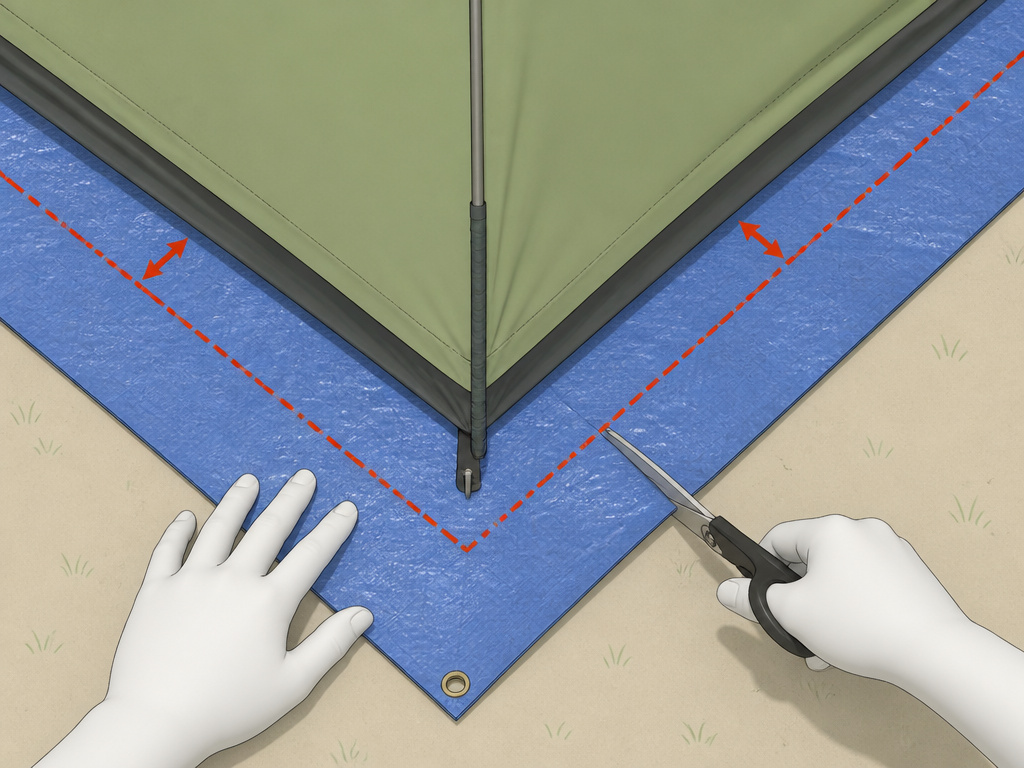
Sizing is non-negotiable. The tarp must be smaller than your tent’s floor.
Cut or fold your tarp so it stays at least 6 inches inside the perimeter of your tent floor on all sides. If it peeks out, it will catch rainwater running down the tent walls and direct it under your floor, guaranteeing a wet sleep.
If you’re using a generic tarp, measure your tent floor, subtract a foot from both length and width, and cut it to that size. For a family camping trip with a large car-camping tent, a robust tarp like the Battlbox Survival 12’ x 9.5’ Waterproof Tarp can be trimmed to fit. For a weekend with a lightweight tarp shelter, a piece of polycryo is all you need.
Tarp Alternatives and Upgrades
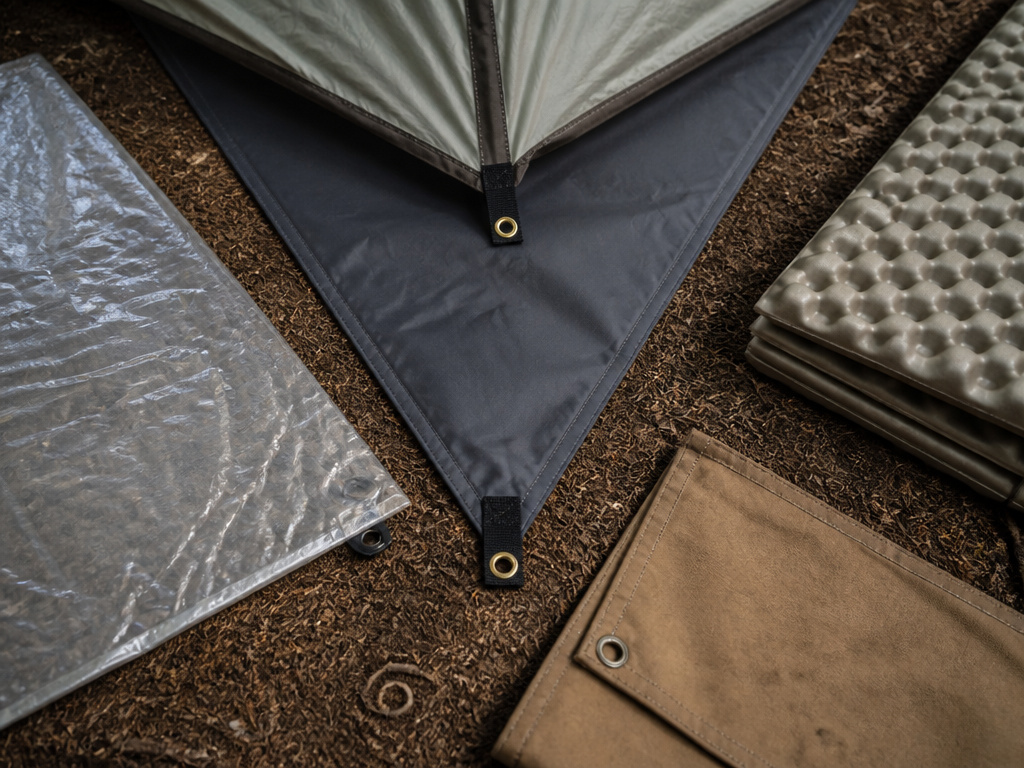
A dedicated tent footprint is the obvious upgrade. It’s a tarp designed for one job. The fit is exact, the weight is optimized, and it often includes grommets that match your tent’s stake-out points. For frequent campers, it’s worth the investment.
For the gram-counting backpacker, a sheet of polycryo window film is the king of value and weight savings. It provides a moisture barrier and minor puncture protection for mere ounces. It’s not durable, but it’s so cheap you can replace it every trip.
Some campers use a foam sleeping pad as a combined groundsheet and sleeping surface. This works for minimalist bivy setups but offers less coverage for a full tent.
If you’re camping in a location with sharp vegetation or very rocky soil, consider a heavier-duty ground cloth. Some canvas tents come with a rugged, integrated groundsheet that makes an extra tarp redundant. The rule stays the same: if the integrated sheet is part of the design, trust it. If you add another layer underneath, you risk trapping moisture.
TL;DR: A custom footprint fits best, polycryo is lightest, and a sleeping pad can pull double duty. Match the tool to the trip length and the weight on your back.
Frequently Asked Questions
Does a tarp keep the tent dry?
tarp primarily protects the tent floor from abrasion and punctures. It provides a secondary moisture barrier against ground dampness, but its main job is physical protection, not waterproofing. For true dryness, rely on your tent floor’s Hydrostatic Head rating and a rainfly.
Can I use a blanket under my tent?
You can, but it’s a bad idea. Blankets absorb water and hold it against the tent floor, creating a wet, muddy mess. They also provide zero protection against sharp objects. Use a waterproof, non-absorbent material like a tarp, footprint, or polycryo sheet.
What is the difference between a tarp and a footprint?
tarp is a generic, often rectangular sheet of waterproof material. A footprint is a tarp custom-cut to the exact shape and size of a specific tent model. Footprints are lighter, pack smaller, and usually attach directly to the tent for a cleaner setup.
Do I need a tarp for a pop-up tent?
Yes, if the ground conditions warrant it. Pop-up tents often have thinner floors to save weight and facilitate the pop-up mechanism, making them more susceptible to punctures. The decision depends on the surface, not the tent style.
How do I stop a tarp from blowing away?
Stake it down. Before you lay out your tent, use rocks or a few tent stakes to secure the corners of the tarp to the ground. A flapping tarp is noisy and can shift, negating its protective benefits.
The Bottom Line
Stop asking if you always need a tarp. Start asking what the ground under your tent is made of. On rock and root, it’s mandatory armor. On soft forest duff, it’s dead weight. On sand, it belongs inside.
Your tent floor is the most stressed part of your shelter. It bears your weight and fights the elements from below. Protect it with a purpose. That means choosing the right shield for the terrain and sizing it so it doesn’t backfire. Your dry, undamaged tent, and your future self on the next rainy trip, will thank you.
