
How Do You Stop Condensation In A Tent: The Ultimate Guide
This post contains affiliate links. As an Amazon Associate, we earn from qualifying purchases.
To stop condensation in a tent, you must reduce the humidity inside and minimize the temperature difference between the inside air and the cold tent fabric. This is achieved through maximum ventilation, strategic campsite selection, and strict management of internal moisture sources like wet gear and your own breath.
Most people think condensation is a leak. They see water beading on the inside wall and assume their rainfly failed. The real issue is physics happening right under your nose, literally. Your body and your habits are the main humidifiers.
This guide breaks down the condensation equation into actionable controls. We’ll cover the non-negotiable rules for campsite selection, the critical difference between tent types, and the small habits that create a dry shelter.
Key Takeaways
- Condensation forms when warm, moist air inside the tent touches the colder tent fabric. The fix always involves moving that moist air out.
- Double-wall tents are the single best defense; their air gap keeps condensation on the rainfly, away from you and your gear.
- Always pitch under tree cover at mid-elevation, never in a valley bottom or right next to water. Tree cover moderates temperature.
- Never bring wet gear, cooking equipment, or boiling water inside the tent. Isolate all moisture sources in a dry bag outside.
- If you wake up to condensation, wipe the walls down with a towel before packing. Letting it soak in guarantees a mildewy smell by your next trip.
The Physics Behind the Drip
Condensation isn’t a tent flaw. It’s a law of nature. Warm air holds more moisture than cold air. When that warm, humid air contacts a cold surface like your tent wall or rainfly, it cools down. It can’t hold all that water vapor anymore, so the excess changes from gas to liquid on the fabric.
The process is identical to a cold drink sweating on a hot day. The bottle’s cold surface chills the surrounding air, forcing the water vapor in the air to condense on the glass. Your tent is the glass, and you are the source of the heat and humidity.
Your body is a powerful moisture factory. A person can produce over one liter of perspiration in a single night. Add to that the water vapor from your breath, and you’re pumping a significant amount of humidity into a small, sealed space. Every exhale adds to the problem.
TL;DR: Condensation is warm, wet air hitting a cold wall. You control the warmth and the wetness.
Your Three Biggest Levers: Tent, Site, and Habits
You have three primary controls over condensation: the tent you choose, where you put it, and what you do inside it. Miss one, and you’ll be mopping walls.
1. Tent Choice and Setup: The Hardware Fix
Your tent’s design is the first and most impactful variable. This isn’t about brand loyalty. It’s about wall construction.
| Tent Type | How It Manages Condensation | Best For | Risk If Ignored |
|---|---|---|---|
| Double-Wall | Creates a thermal break. Condensation forms on the inside of the rainfly, while the breathable inner mesh stays dry. | All-season camping, humid climates, multi-day trips. | Choosing a single-wall for high-humidity trips guarantees a wet sleeping bag by morning. |
| Single-Wall | No air gap. Condensation forms directly on the interior fabric you touch. Requires perfect ventilation discipline. | Ultralight backpacking, dry climates, alpine missions. | Failing to maximize every vent leads to direct water drip on your face and gear. |
| Polycotton Canvas | Breathable fabric absorbs moisture, reducing direct drip. Dries slowly. | Car camping, basecamps, long-term stays. | Pressing against the walls will force absorbed water to seep through onto you. |
The double-wall’s air gap is your best friend. Even if the rainfly is soaked inside, you and your down bag on the inner mesh are high and dry. Single-wall tents, like many ultralight backpacking shelters, trade this protection for weight savings. You must be diligent.
Ventilation is not optional. Open every peak vent, like those on MSR rainflies. Ensure your vestibule doors are cracked if rain isn’t horizontal. A common mistake is pitching the tent so slack that the vestibule door fabric blocks the vent above it. Pitch it taut.
Common mistake: Closing all vents on a cold night to “stay warm” – this traps all moisture inside, and you’ll wake up to a tent that’s both cold and wet, which is far worse.
Edge Cases That Break the Rule:
- AirBeam tents: Condensation often pools at the foot of the inflatable beams. Keep a small towel there to soak it up.
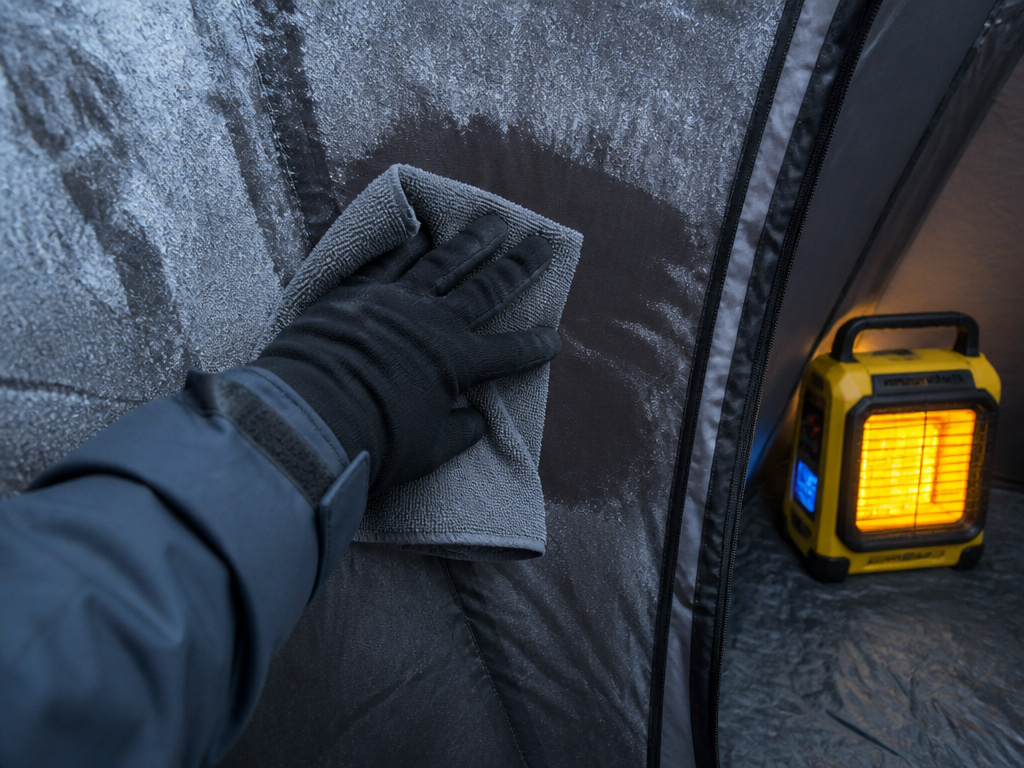
- Freezing conditions: Condensation forms as hoarfrost. Still ventilate. When you warm the tent in the morning, that frost will melt and drip if it hasn’t sublimated.
- Heavy rain: Condensation bouncing off the flysheet can sound exactly like a leak. Don’t panic and seam-seal a perfectly good tent.
2. Campsite Selection: Your Free Advantage
Location dictates your baseline humidity and temperature differential. Good site selection does half the work for you.
Follow this hierarchy when looking for a spot:
1. Tree Cover First: Pitch under a canopy. Trees create a microclimate that’s warmer and less humid than an open field, reducing the temperature swing. Avoid dead branches overhead.
2. Mind the Elevation: Avoid valley bottoms (cold, humid air sinks there) and exposed ridgetops (too windy and cold). Aim for a mid-slope bench.
3. Distance from Water: Stay at least 200 meters from lakes, rivers, and marshes. The air is saturated near water.
I learned this the hard way on a trip to the Scottish Highlands. Tired from a long day, I pitched my sleek single-wall tent in a gorgeous, grassy spot right next to a loch. The sunset was perfect. By 3 AM, I was wearing my rain jacket inside my sleeping bag because the condensation was dripping like a light rain. The air was just too saturated. Now, I’ll walk an extra 15 minutes to get away from water and under some pines.
3. Internal Moisture Management: What You Control
This is the discipline part. You must become a moisture tyrant inside your tent.
- Wet Gear Stays Out: Hang wet socks or rainflies outside if possible. If not, seal them in a dry bag or trash bag inside the vestibule. Never let them dry inside the tent.
- No Cooking, Ever: Boiling water releases liters of water vapor. Cooking adds food smells that attract animals. Do it in the vestibule with the door open, or outside.
- Change Clothes: Get out of your sweaty hiking layers before entering the tent. Dry off with a towel if you’re damp.
- Ground Sheet: A footprint doesn’t just protect your tent floor. It creates a vapor barrier against moisture wicking up from the damp ground.
The Step-by-Step Pre-Sleep Routine
Follow this sequence every night to stack the odds in your favor.
- Pitch Properly: Before dinner, ensure your tent is taut and all vents are physically open and unobstructed.
- Isolate Moisture: After dinner, place all damp clothing and your next-day’s water supply (to prevent accidental spills) into a dry bag. Place this bag outside the inner tent, in the vestibule.
- Maximize Ventilation: Open the vestibule door(s) as wide as the weather permits. If it’s dry, leave them fully open. If rain is possible, leave them cracked at the bottom.
- Get Dry: Change into dry sleep clothes. Use a small towel to wipe any sweat off your body.
- Sleep Position: If your tent has only one vent or vestibule, orient your head towards it. Your breath is a direct moisture jet.
I prefer sleeping with my head towards the door crack, even on cold nights. The slight breeze is worth it to keep my bag’s footbox dry. A damp down bag is a useless down bag.
What happens if you skip the routine? You’ll contain all the day’s moisture in the tent with you. Humidity spikes, the temperature difference does its work, and you’ll have condensation long before morning. It’s a predictable outcome.
Special Considerations for Different Conditions
Condensation doesn’t care about the forecast. Your tactics must adapt.
Cold Weather & Winter Camping: The temperature difference is extreme. Ventilation feels counterintuitive but is even more critical. Use four-season tents with robust vent systems. Condensation may freeze as frost, which you can brush off before it melts. Consider a hot tent with a wood-burning stove, which dramatically reduces humidity by heating the air and creating a strong chimney draft.
High Humidity & Rainy Trips: You’re fighting saturated air. A double-wall tent is non-negotiable. Even with vents open, some condensation is inevitable. Carry a dedicated microfiber towel or camping shammy to wipe down walls in the morning before packing.
Using a Tent Air Conditioner or Heater: Active climate control changes the game. A portable AC unit cools and dehumidifies. A tent heater warms the interior air, reducing the temperature difference with the walls. Both are effective but require power.
If You Wake Up Wet: Damage Control
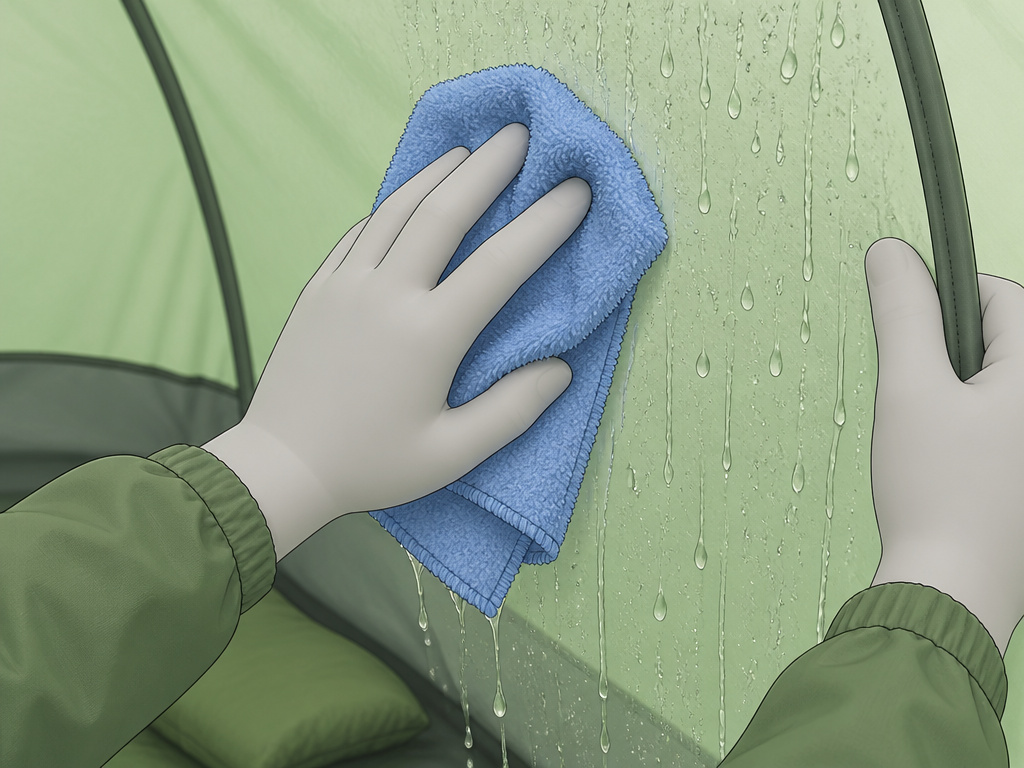
Sometimes, despite your best efforts, you lose. Here’s how to manage a damp tent.
- Don’t Pack It Wet: If conditions allow, leave the tent pitched with doors open to air out. Even 20 minutes of sun and breeze makes a difference.
- Wipe It Down: Use your towel to absorb beads of water from the inner walls and ceiling. Wring it out and repeat.
- Dry It Thoroughly Later: The moment you get home, pitch the tent in a dry, shaded place (direct sun degrades fabrics) or hang it in a garage until every seam is bone-dry. Mildew grows in 24-48 hours on damp fabric.
Frequently Asked Questions
Does a bigger tent reduce condensation?
Yes, to a point. A larger volume of air dilutes the humidity you produce. But a huge, poorly-ventilated tent will still condense. The shape matters more than sheer size; steep walls prevent your sleeping bag from touching wet fabric.
Are some tent materials better than others?
Yes. Polycotton canvas is naturally breathable and absorbs moisture, reducing drip but drying slowly. Modern synthetic double-walls (nylon/polyester) are the best balance of weight, weather resistance, and condensation management via design.
Does breathing through your nose really help?
One study suggests mouth breathing releases roughly 40% more water vapor than nose breathing. If you’re a chronic mouth-breather and have persistent condensation, trying to shift to nasal breathing at night could be a marginal gain. It’s not a primary fix, but every bit helps.
Is condensation the same as a leak?
No. Condensation is even beads of moisture on the inside. A leak is a drip or trickle from a specific point, often along a seam or at a fabric puncture. To test, wipe the area dry. If water reappears in the same spot without general condensation elsewhere, it’s likely a leak.
Before You Go
Stopping condensation is a proactive game. You can’t react your way out of it once the walls are wet. The formula is constant: move the moist air out before it can touch the cold wall.
Invest in a well-designed double-wall tent. Be ruthless about your campsite choice. Treat your tent like a dry sanctuary, not a gear dump. And always carry that shammy towel.
The difference isn’t just comfort. It’s the safety of dry insulation and the longevity of your gear. A dry tent is a happy tent, and a dry camper is one who sleeps.
