
How To Fold The Tent: Step-By-Step Guide To Protect Poles
This post contains affiliate links. As an Amazon Associate, we earn from qualifying purchases.
To fold a tent correctly, you must match its type to the right method: roll dome and tunnel tents after a thirds-fold, collapse pop-up tents into a taco-shell shape, and deflate inflatable tents completely before a quarter-fold and roll. The universal rule across all types is to push tent poles apart, never pull them.
Most people fight their tent because they treat all tents the same. A dome tent isn’t a pop-up, and an inflatable isn’t a tarp. Using the wrong fold for the wrong design is why poles snap, fabric tears, and that expensive shelter never fits back in its bag.
This guide walks through the exact steps for dome, tunnel, pop-up, and inflatable tents, pulling methods straight from official manuals. We’ll cover the one pole-handling mistake that voids warranties, why a damp tent ruins itself in storage, and how to get a tight, compact roll every time.
Key Takeaways
- Push tent pole sections apart; never pull. Yanking them strains the internal shock cord until it snaps, leaving you with a bag of loose segments.
- A tent stored damp for just 24 hours in warm weather can start growing mildew, which stains fabric and breaks down waterproof coatings permanently.
- Match the fold to the tent type. Rolling a dome tent works. Folding a pop-up tent works. Trying to roll a pop-up or stuff a dome is where the struggle begins.
- Fold the tent width to be slightly less than your stuff sack’s length. That’s the sweet spot for a clean roll that slides in without a fight.
- Store your tent loosely in a large cotton sack, never compressed in its stuff sack between trips. The constant pressure weakens waterproof seam tape and laminate.
What Happens When You Fold a Tent Wrong?
You hear the pop first. It’s a sharp, plastic crack from a pole section. Then the fabric near a sewn-in sleeve starts to pucker and tear because you forced a fold across a seam, not along it. Finally, you’re kneeling on a half-packed bundle, swearing while the stuff sack seam stretches and finally rips.
Common mistake: Stuffing a tent instead of rolling it — creases form at the same spots every time, and the waterproof polyurethane coating on the inner tent wall delaminates after a dozen trips.
Folding exists to minimize permanent creases. Stuffing is for emergency pack-ups in a storm, not for daily use. A clean, consistent roll keeps the fabric’s memory neutral. The manual for the Exped Orion Extreme specifies folding in thirds lengthwise before rolling. MSR’s manual for tents like the Hubba Hubba NX says never to pack it wet. These aren’t suggestions. They’re the difference between a tent that lasts ten years and one that fails in three.
TL;DR: Wrong folding damages poles and fabric; right folding follows the tent’s design to avoid stress points.
The Golden Rule: Push, Don’t Pull
This is the single most ignored instruction in every tent manual. You finish collapsing the poles, grab an end, and yank. The sections separate with a jerk. It feels efficient.
It isn’t. You’re stretching the internal shock cord to its limit. Do it fifty times, and the elastic gives out. Now your pole is a loose collection of segments that won’t stay together for setup. The MSR Tent Owner’s Manual states it plainly: “Push, don’t pull, poles through sleeves to avoid damage.” The Exped manual for the Orion Extreme says the same thing: “When disassembling poles, push them out of sleeves (never pull).”
The mechanism is simple. Pulling applies all the separation force to the tiny knot inside the shock cord where it’s tied to the end plug. Pushing spreads that force across the entire pole section as your hands move together. It’s the difference between snapping a twig over your knee and bending it evenly between two hands.
Here’s how to handle poles for any tent type:
| Tent Type | Pole Action | Why It Matters |
|---|---|---|
| Dome / Tunnel | Push sections apart after unclipping tent. | Preserves shock cord tension; prevents end-plug failure. |
| Pop-Up | Collapse frame by bringing corners together. | Prevents permanent deformation of flexible fiberglass rods. |
| Inflatable (e.g., Karsten) | Unscrew valve caps fully before folding. | Lets air escape smoothly; prevents pressure tears at seams. |
After any saltwater exposure, rinse poles with fresh water. A light silicone spray on the ferrules once a year keeps them sliding smoothly. Dry them before storage. Damp aluminum corrodes; damp fiberglass delaminates.
TL;DR: Always push pole sections apart. Pulling destroys the shock cord inside, leaving you with a useless pole set.
How To Fold a Dome or Tunnel Tent (The Roll Method)
Dome tents like the MSR Hubba Hubba NX and tunnel tents like the Exped Orion Extreme share a folding logic. You’re preparing a flat, layered package to roll.
- Lay it flat. Find a clean, dry spot of grass or a groundsheet. Lay the tent out with the inner body down and the rainfly on top if it’s attached. Smooth out all wrinkles.
- Fold in thirds. Bring one long side over toward the center. Then bring the other long side over on top of it. The Exped manual is specific: “fold in thirds lengthwise.” Your goal is a long, narrow rectangle.
- Fold in half or quarters. Now fold this rectangle in half or quarters, depending on the length of your stuff sack. The final width should be about two inches narrower than your sack.
- Roll from one end. Start at the end without the door or any bulk. Roll tightly toward the other end, pressing down to force out air as you go. Some people use the tent poles as a rolling pin on top of the bundle.
- Slide, don’t stuff. Guide the rolled tent into the stuff sack. Don’t force it. If it doesn’t fit, unroll and start again with a slightly narrower final fold.
I fought an Exped Vela I Extreme back into its sack for twenty minutes on a windy beach in Wales. The third time, I remembered the manual: “fold in thirds lengthwise.” The difference was instant. The roll became tight and cylindrical, and it slid in like a sword into a scabbard.
Leaving the rainfly attached during folding is fine for fair-weather pack-ups. If the fly is wet, detach it, dry it separately, and pack it in its own sack or loose at the top of your main sack. Packing a wet fly against the inner tent guarantees moisture transfer.
TL;DR: Lay flat, fold in thirds lengthwise, then roll tightly from one end. The roll should be narrower than your stuff sack.
Folding a Pop-Up Tent in Seconds
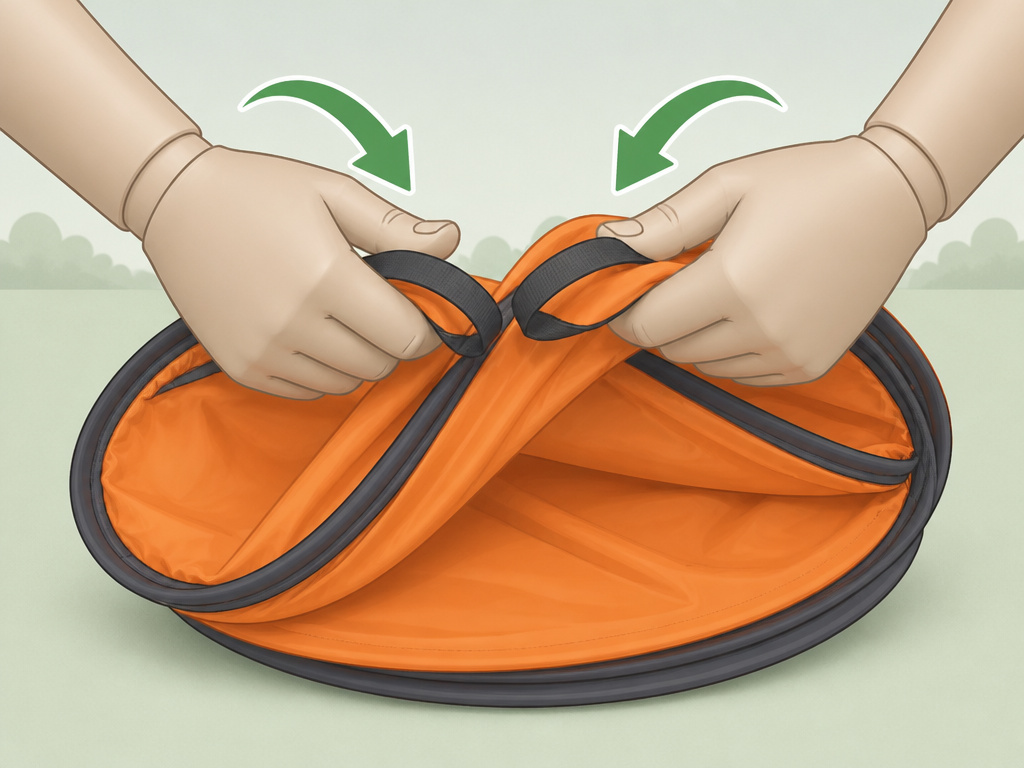
The struggle with a pop-up tent is legendary. You fight the sprung frame, wrestling it into a misshapen bundle that never fits the carry bag. The trick isn’t force. It’s geometry.
A viral method from a Core Equipment designer uses the “taco shell” approach. Collapse the tent by bringing the two bottom corners together, walking your hands around the ring until it forms a circle. Then, fold that circle in half, creating a taco shape. Place the side with the attached storage strap (the “base”) on the ground. Fold the top half inward, then bring the two carrying loops together and twist them around each other. The tent compacts instantly.
Another method is simpler for larger pop-up beach tents. Grab one bottom corner, then bring the next corner to it, continuing around the ring until you have a folded disk. The key is keeping the frame flat against the ground with your foot to stop it springing open. Then you can secure the loops.
Common mistake: Trying to roll a pop-up tent — the rigid frame cannot roll, and forcing it bends the fiberglass rods permanently. After three bent rods, the tent won’t pop open fully.
These tents are designed for speed, not longevity. The constant folding and unfolding stresses the joints. An Ozark Trail Instant Cabin Tent might survive fifty setups; a no-name Amazon special might last ten. Know which you have.
TL;DR: Collapse a pop-up tent into a circle, fold it into a taco, and secure the loops. Never try to roll it.
How To Fold an Inflatable Air Tent
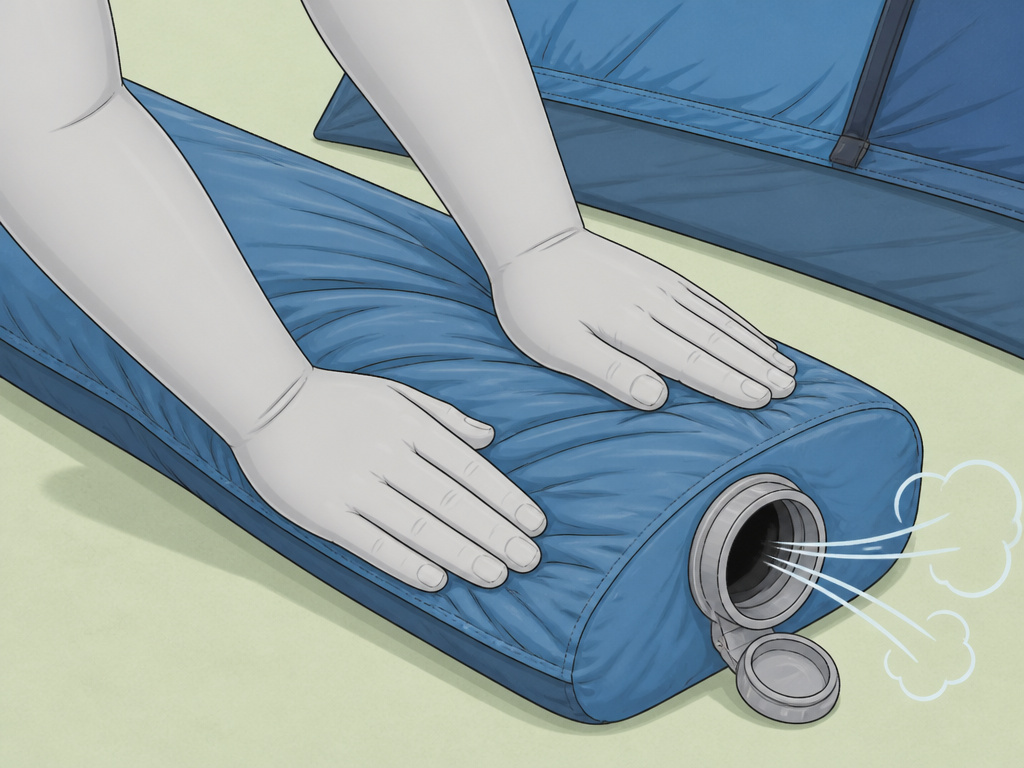
Inflatable tents, like those from Karsten, replace poles with air beams. The folding process is about managing empty, flexible tubes, not rigid poles.
The Karsten Tent manual has precise steps for its different models. For smaller Type 200 and 220 tents: “fold the left-hand side of the tent in one third, then turn the right-hand side over this part so it’s folded in three. Roll the tent from the rear end towards the valves.” For larger models (240 to 380): fold to the door zip, then fold again, creating a package folded in four before rolling.
The critical step happens before any folding: complete deflation. Unscrew the valve caps fully. Open all doors and windows. Then press down along the length of each air beam to push the last air out toward the valves. You should hear a faint hiss. If a beam stays firm, you missed a valve.
| Step | Action | Consequence If Skipped |
|---|---|---|
| Open all valves | Unscrew caps fully, open doors. | Trapped air prevents a tight fold and can strain seams. |
| Press out residual air | Kneel along each beam, pushing toward valve. | A half-inflated beam can kink, creating a weak spot. |
| Fold in thirds or quarters | Follow the manual for your tent’s size. | An uneven fold makes the roll lopsided and hard to pack. |
| Roll toward the valves | Start at the end opposite the valves. | Rolling over the valves can damage the internal one-way mechanism. |
Pack the pump and repair kit in an outside pocket. You don’t want them bouncing around inside the sack, rubbing against the tent fabric.
TL;DR: Deflate completely, fold according to your model’s size, and roll toward the air valves to protect them.
To Fold or To Stuff? The Storage Debate
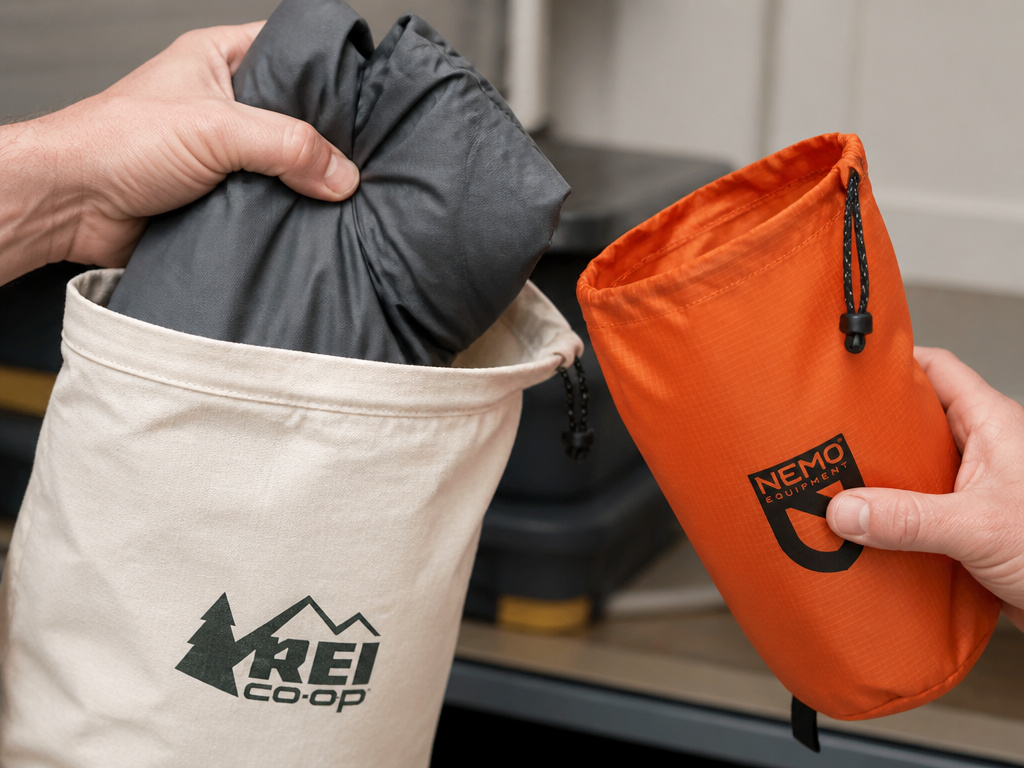
The roll-and-fold method is for the trail, getting the tent back into its provided stuff sack. Long-term storage is a different game.
Never pack or store a tent if it is wet/damp or dirty. Prolonged exposure to moisture causes hydrolysis, breaking down the waterproof layer. Storing a wet tent for as little as 24 hours in warm weather can start mildew.
That’s from the MSR Tent Owner’s Manual. Hydrolysis is the chemical breakdown of the waterproof polyurethane (PU) coating on your tent’s inner wall when it’s stored damp. The coating turns sticky, then flakes off. Once it starts, you can’t stop it. Mildew stains are permanent and smell like a basement.
After a trip, even a dry one, unpack your tent. Hang it in a garage or spare room for a day. Shake out any dirt. Then store it loosely in a large, breathable cotton sack or an old pillowcase. The stuff sack is for transport only. Constant compression in the stuff sack stresses seam tape and laminate.
For a two-person backpacking tent that sees monthly use, this extends its life from maybe three seasons to over a decade. The fabric stays supple, the seams sealed.
TL;DR: Fold and roll for the trail. For home storage, clean the tent, dry it thoroughly, and keep it loose in a breathable bag.
Frequently Asked Questions
My tent never fits back in the bag. What am I doing wrong?
You’re likely folding it too wide. The final folded width must be less than the length of your stuff sack. Try folding in thirds lengthwise first, then fold that strip in half or quarters. Roll from the end without the door fabric, which is often thicker. If it’s still tight, your sack might be designed for a ultra-compressed pack. Consider using a slightly larger sack for convenience.
Is it okay to stuff a tent instead of folding it?
For a quick pack-down in rain or wind, stuffing is fine. As a habit, it’s terrible. Stuffing creates random, sharp creases that wear out the waterproof coating and stress stitches. Folding creates predictable, gentle bends. If you must stuff, do it loosely. Never cram.
How do you fold a tent with the rainfly attached?
It’s perfectly fine if both are dry. Lay the tent out inner-side down, place the fly on top, and fold them together as one unit. This is how many lightweight backpacking shelters are designed to be packed. If the fly is wet, you must separate them. Pack the wet fly in its own bag or at the very top of your pack to avoid soaking everything else.
Can I wash my tent in a washing machine?
Absolutely not. The agitator will tear seams, shred mosquito netting, and destroy waterproof coatings. Hand-wash a dirty tent in a bathtub with a technical gear cleaner like Nikwax Tech Wash. Rinse thoroughly and hang to dry completely—this can take two days indoors.
Why do my tent poles keep coming apart?
You’re pulling them, not pushing. Yanking the sections strains the shock cord until it loses elasticity. Always push pole sections apart by holding both segments and moving your hands together. If a pole is already broken, many manufacturers like MSR sell replacement sections. For older tents, a tent pole repair sleeve is a temporary field fix.
Before You Go
Folding a tent correctly isn’t about neatness. It’s about not breaking a $300 piece of gear because you were in a hurry. The method changes with the tent: roll domes, collapse pop-ups, deflate and roll inflatables. But three rules are universal.
Push poles, never pull. Store the tent dry and loose. Match the fold to the design printed in the manual. That last one is the real secret. The Exped Orion Extreme manual says fold in thirds. The Karsten inflatable tent manual says fold in quarters. Your tent’s manual has the answer. Dig it out of the pocket you stuffed it in and read it. The next time you pack up, you’ll hear a satisfying zip, not a sickening crack.
