
What Are Good Tent Brands? A Guide to Top Camping Shelters
This post contains affiliate links. As an Amazon Associate, we earn from qualifying purchases.
Good tent brands solve specific problems for specific trips. The right brand for a family car-camping weekend is wrong for a solo ultralight thru-hike. Your job is to match the brand’s specialty to your worst-case weather, group size, and how far you’ll carry it.
Most people shop for a “good tent” and get lost in specs and prices. They buy a heavy, complex shelter for a simple overnight or a flimsy fair-weather dome for a mountain pass. The mistake is universal: buying for a logo instead of a purpose.
I’ve pitched tents in downpours, gales, and perfect stillness. I’ve watched cheap tents survive for decades and expensive ones fail on their first outing. Let’s move past brand hype. We’ll break down what actually matters, name the brands that excel in each niche, and give you a clear path to your perfect shelter.
Key Takeaways
- Price doesn’t buy durability; it buys performance. That $25 Ozark Trail dome uses similar 68D polyester as a $300 tent. The extra hundreds buy you a full-coverage rainfly, lighter materials, and a design that handles wind and cold, not a longer lifespan.
- Your rainfly is your lifeline in a storm. A full-length fly that reaches near the ground, paired with fully taped (not just coated) seams, is non-negotiable for any trip expecting rain. Brands that skip this fail real-world tests.
- Shaving weight costs exponentially. The rule of thumb is brutal: expect to pay about $150 for every pound you shave off your pack weight. A 5.6-pound Walmart tent costs $25; a three-pound backpacking tent costs $400.
- Freestanding tents are mobile hotel rooms; trekking pole tents are minimalist shelters. Your choice dictates your entire trip style, one offers comfort and space, the other prioritizes mileage and a lighter pack.
- Ventilation is a climate-specific feature. A sealed winter tent from SpringBar will suffocate you in Georgia in July, trust me, I’ve woken up in a puddle of my own condensation in one. Brands like Coleman prioritize mesh for a reason: it’s the difference between sleeping and stewing.
A full-length rainfly extends almost to the ground, creating a double-walled air gap that sheds wind-driven rain. Partial rainflies leave the tent body exposed, and water will wick through the inner fabric under sustained downpours. This is the single most critical design feature for staying dry.
What Actually Makes a Tent Brand “Good”?
Forget vague promises. A trustworthy tent brand consistently delivers on three core pillars for its intended niche: weatherproof integrity, intelligent space-to-weight ratios, and intuitive, reliable setup. A brand that nails one but fails another isn’t good, it’s a flawed specialist.
The first pillar is proven weather resistance, not marketing claims. Independent testing is revealing. Which? magazine, for instance, pitches tents for a full week at a campsite in Surrey, subjecting them to strong winds, heavy rain, hail, and snow. The tents that fail blow over or develop puddles inside. The consistent winners share two physical traits you can verify: a full-length rainfly and fully taped seams.
The second pillar is smart engineering of space. For a car-camping tent, this means headroom and storage. The North Face Wawona 6, for example, is praised for its “lots of livable space, a tall interior most adults can stand up in, and a massive vestibule.” For backpacking, it’s about square footage per ounce. A brand that gets this wrong makes tents that are either oppressively cramped or impossibly heavy.
The third pillar is setup logic. Can one person set it up in fading light with cold hands? Brands that use color-coded clips and straightforward pole sleeves pass. Brands that require a manual, three hands, and perfect calm fail the real-world test. Good design feels obvious on the second try, not frustrating on the tenth.
TL;DR: A good brand builds tents that stay dry in verified tests, offer smart space for their weight, and can be pitched reliably when you’re tired and the weather is turning.
The Real Difference Between a $25 Tent and a $400 Tent
The biggest myth is that cheap tents disintegrate and expensive tents last forever. The reality is more about targeted performance. One YouTube tester put it plainly after using a $30 Ozark Trail dome for 17 years: “I have abused this thing… I’ve never really had a problem with any of my tents.” The basic polyester fabric is often the same.
So, what does your money actually buy at $400? You’re buying engineering for specific, harsher physics. That investment gets you a full-coverage rainfly for thermal insulation, stronger aluminum pole joints for wind loading, and ultralight silicone-treated nylon. You’re paying for a tool that survives a mountain squall, not one that will necessarily last more seasons in your garage.
The cost-to-weight curve is steep. As noted in community testing, shaving one pound off a tent’s pack weight costs about $150. This explains why a 5.6-pound Walmart tent is $25, a three-pound backpacking tent is around $400, and a one-pound shelter pushes $800. You’re buying advanced materials like carbon fiber and 10D fabric.
| Investment Breakdown | Budget Tier ($25–$75) | Performance Tier ($300–$600) |
|---|---|---|
| Ideal Use Case | Fair-weather car camping, festivals, backyard | 3-season backpacking, exposed sites, variable weather |
| Rain Protection | Partial rainfly, basic seam sealing | Full-length rainfly, fully taped seams |
| Pole System | Standard fiberglass | Engineered aluminum (e.g., DAC) or carbon fiber |
| Typical Packed Weight | 5.5 – 7.5 lbs | 2.5 – 4.5 lbs |
| What Breaks First | Zippers, carry bag, pole elastic | Fabric degradation from prolonged UV exposure |
Common mistake: Buying a $400 mountaineering tent for summer festival camping. The lack of ventilation turns it into a condensation sauna, and the thin, lightweight floor is more susceptible to punctures on rough festival grounds.
The lesson is direct. If your camping involves driving to a state park site for three weekends a summer, a $25 tent isn’t just adequate, it’s the rational choice. If you’re planning a thru-hike, the $400 tent is rational. The error is spending $400 for car camping or $25 for a serious backpacking trip.
Freestanding or Trekking Pole: Which Tent Architecture Is for You?
This is the fundamental fork in your camping path. Your choice here changes your pack weight, campsite flexibility, and how you experience a storm. It’s a decision that defines your trip style.
Freestanding tents use an internal pole structure to hold their shape, think classic domes or tunnels. Brands like Coleman and The North Focus here. The benefits are real: more headroom, easier pitching on hard or rocky ground, and that crucial double-wall design which dramatically reduces condensation by separating you from the moisture-collecting rainfly.
I was a die-hard freestanding fan for years, until a trip in the Sierras with my old Big Agnes Copper Spur HV UL2. A gust caught it during setup, and I fumbled, bending a shock-corded aluminum pole segment at the joint. The result was a sagging, unstable pitch that night, and I spent the next three days jury-rigging it with duct tape, constantly anxious it would collapse in the wind. That specific failure pushed me to try trekking pole shelters for long hikes.
Trekking pole tents use your hiking poles for support, a hallmark of ultralight brands and many tarp tent designs. The advantages are compelling: they save up to two pounds by ditching dedicated tent poles, pack smaller, and allow you to pitch the rainfly first, keeping the inner bone-dry during a rainy setup. The trade-offs are real: less headroom, mandatory staking (a problem on solid rock or sand), and single-wall designs that require active condensation management.
| Decision Matrix | Freestanding Tent | Trekking Pole Tent |
|---|---|---|
| Primary User | Car campers, families, comfort-focused backpackers | Ultralight backpackers, long-distance hikers |
| Ease of Setup | Simple on any surface; stakes only needed for vestibules in wind | Requires stakes & trekking poles; challenging on hard ground |
| Condensation Management | Generally better (double-wall design) | Requires more vigilance (single-wall design) |
| Living Space | More volume, varied designs for sitting up | Less volume, limited by straight pole structure |
| Cost Driver | Pole system complexity, extra fabric | High-tech lightweight fabrics (e.g., Dyneema) |
Your activity is the ultimate decider. Driving to a site with coolers? A spacious freestanding canvas tent is your cabin. Counting every ounce over 15 miles? A trekking pole tent is your essential shelter. There’s no universal best.
The Best Tent Brands, Sorted by Your Camping Style
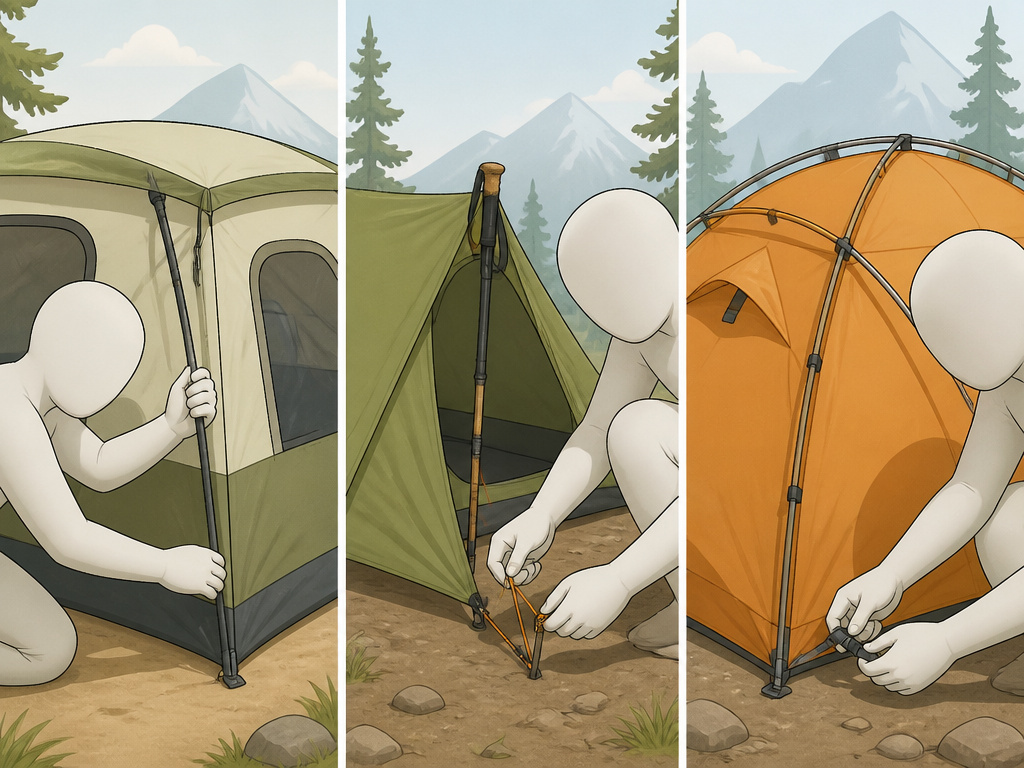
Brands earn their stripes by dominating a niche. Here’s how the landscape breaks down based on what you actually plan to do.
For Car Camping & Family Trips: Coleman, Core Equipment, Ozark Trail
These brands optimize for space, value, and easy living. They know you’re not carrying their products on your back.
- Coleman is the historic leader, starting production in 1900. They’ve mastered the affordable, feature-rich family tent. Look for their “Dark Room” technology for sleeping in and massive mesh panels for hot, humid nights, a climate where breathability is key.
- Core Equipment and Ozark Trail (Walmart’s brand) are the value champions. They offer massive capacities, with lines ranging from 6-person to 12-person sizes, and even tents for up to 15 people. The legendary $25 three-person dome proves you don’t need to spend much for a reliable, fair-weather shelter.
- What to look for: A thick, tarp-like floor (so you skip a separate groundsheet), multiple doors, and large windows. Steer clear of models with very short rainflies if rain is even a possibility.
For Backpacking & Hiking: MSR, Big Agnes, Naturehike
Here, engineering pivots to weight savings and weather resilience. You’re paying for advanced materials and thoughtful design.
- MSR and Big Agnes set the standard for three-season backpacking. They innovate with pole geometries and durable water repellent (DWR) treatments. Their two-person tents, like the MSR Hubba Hubba, are benchmarks for couples splitting weight.
- Naturehike offers a compelling value proposition in this space. They provide affordable Naturehike tents that use lighter materials than car-camping brands, making them a solid gateway for hikers looking to reduce pack weight without a massive investment. For those comparing options, our Marmot tent reviews also highlight another reliable player in this mid-tier performance category.
- What to look for: A balance of weight and livable space. A solid two-person backpacking tent should weigh under 4 pounds and have two vestibules. Check the floor denier (D), 20D is standard, but for rough ground like in Joshua Tree, seek out 30D or higher, like on the Big Agnes Tiger Wall UL3.
For Ultralight & Solo Adventures: Tarp Tent, Gossamer Gear, Six Moon Designs
When every gram is scrutinized, these specialists take over. The philosophy is radical minimalism.
- Brands like Tarp Tent (yes, that’s the brand name) perfect the trekking pole tent form. They use ultra-thin silnylon or Dyneema to achieve shelter weights under two pounds. These are for experienced hikers skilled in campsite selection and weather reading.
- For the solo adventurer, the market offers brilliant, specialized shelters. You can choose fully enclosed one-person backpacking tents or minimalist ultralight tarp shelters. The best ultralight two-person tents from these brands often feel like spacious solo palaces.
- What to look for: An honest self-assessment of your skills. These shelters are less forgiving of poor pitch or site choice. You must manage condensation and accept less storm protection for the reward of a vastly lighter pack.
For Four-Season & Severe Conditions: MSR, SpringBar, Hilleberg
This is expedition-grade gear for when a tent failure is a genuine safety risk. These brands build for snow load, sustained high winds, and deep cold.
- MSR‘s Access series and SpringBar‘s classic, heavy-duty canvas tents are engineered as true four-season shelters. They use stronger poles, more robust fabrics, and stable profiles.
- Hilleberg is the legendary Swedish brand synonymous with “bombproof” reliability in the most extreme environments, from Arctic winters to alpine ridges.
- What to look for: Serious intent. These tents are heavy, expensive, and over-engineered, often uncomfortably so, for summer camping. Only venture here if your trip plan explicitly includes winter camping, mountaineering, or exposed alpine environments.
The Non-Negotiable Features That Determine Success
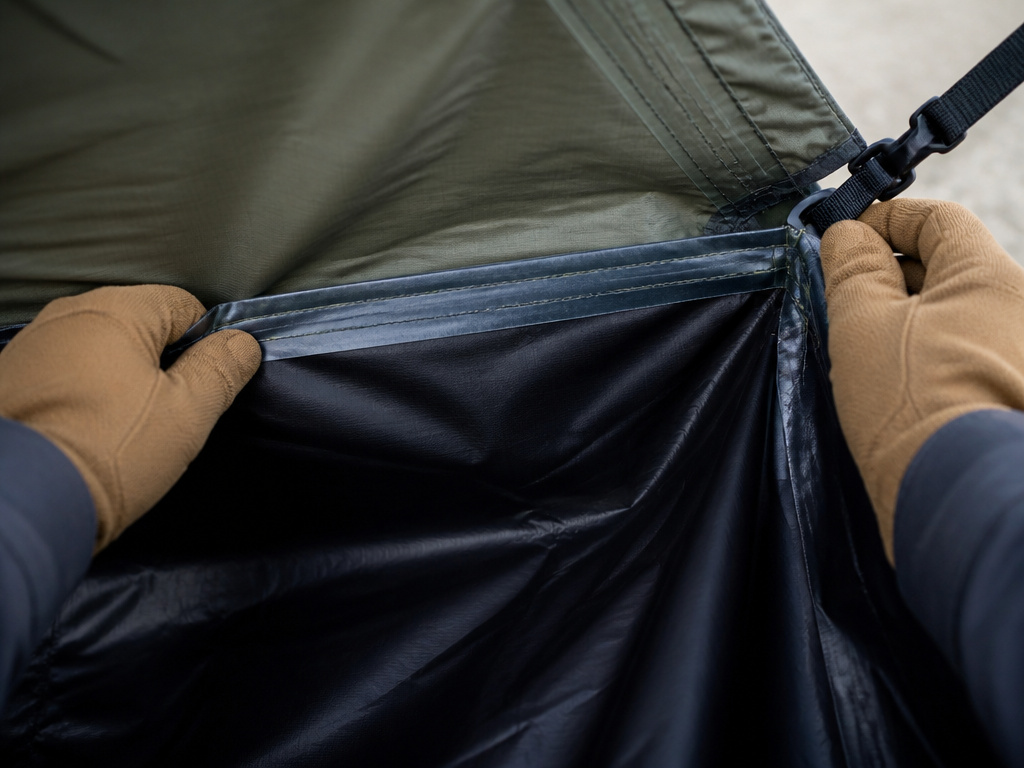
Beyond the brand label, these specific details are where good tents separate from great ones that keep you dry and comfortable.
Rainfly & Seam Construction: This is your main defense. Prioritize a full-coverage rainfly and insist on fully taped seams. Stitched seams with a coating will eventually leak. The Teton Sports Mountain Ultra survived a 12-hour simulated downpour in testing precisely because of its full-length fly and thorough corner taping.
Floor Durability & Design: The floor should be a higher denier than the walls. A “bathtub” design, where the waterproof material extends several inches up the walls, is essential to block ground splash. Many budget tents have merely water-resistant floors.
Active Ventilation: Look for multiple vents you can operate from inside. Effective high-low venting creates a chimney effect to pull moist air out. The Quechua 2 Seconds tent has clever vestibule vents manageable without letting rain in. A tent relying solely on the door for airflow will become a condensation trap.
Pole Quality & Design: Aluminum poles (like those from DAC) are stronger and lighter than fiberglass. Pre-bent poles increase interior volume and stability. Color-coding isn’t a gimmick; it’s a time-saver at dusk.
Thoughtful Details: Large, glove-friendly zipper pulls, multiple interior pockets to organize small gear, and reinforced guyline points all signal a brand that understands real-world use.
Before you start: Pitching on uneven ground or near sharp debris. A punctured floor is an instant trip-ender, and a poorly anchored tent can collapse. Always clear your site, use a footprint if your tent has one, and fully stake and guy out your tent if wind is forecast.
Your 5-Step Process to Choosing the Right Brand
Ditch the paralysis of endless reviews. Follow this diagnostic sequence to narrow your search decisively.
- Define your worst-case scenario. Is it a sudden desert thunderstorm, persistent coastal wind, or a still, humid Appalachian Trail night? Skip this, and you might buy a tent great for wind that turns into a condensation sauna on a calm, humid night. This answer dictates your needed rainfly, fabric, and venting.
- Lock in your weight-to-comfort trade-off. For a three-night backpacking trip, is an extra pound for more elbow room worth it? That answer alone moves you from featherweight tents to more livable backpacking tents for two.
- Anchor your budget to usage. Calculate a cost-per-use. A $600 tent used over 60 nights is $10/night, a fantastic investment. A $150 tent used twice is $75/night, a poor one.
- Watch a real user’s setup video. Find a lengthy YouTube video of someone pitching the tent, not the brand’s 30-second ad. If it looks fiddly in a sunny backyard, it will be infuriating at dusk in the rain.
- Buy from a retailer with a generous trial policy. Reputable outfitters allow you to pitch the tent at home. Crawl inside, simulate a rainy night, and see how the space feels. If it’s wrong, return it before you ever hit the trail.
Frequently Asked Questions
What is the single most reliable tent brand?
There isn’t one. Reliability is use-case specific. MSR is reliably excellent for three-season backpacking. Coleman is reliably great for family car camping. Hilleberg is reliably bombproof for expeditions. The key is their consistent performance within their dedicated niche.
Are expensive backpacking tents worth the money?
Only if you need the performance they sell. The cost buys you specialized weather protection and significant weight savings. If you’re car camping or taking short, fair-weather hikes, a $300 tent offers little advantage over a $100 one. The value is in the applied engineering.
What should I prioritize for camping in heavy rain?
Three non-negotiable features: a full-length rainfly, fully taped seams (inspect the corners), and a bathtub floor. A model like the Teton Sports Mountain Ultra aces these. Also, ensure there are vestibules to store soaking wet gear and boots outside your sleeping area.
Can a truly cheap tent be any good?
Absolutely, for its purpose. A cheap tent is good for beginners, low-frequency fair-weather camping, and scenarios where weight doesn’t matter. The Ozark Trail 3-person dome is the classic example, its limitation is weather resilience, not immediate durability.
How important is a tent’s weight for backpacking?
It’s the primary constraint after safety. A common goal is a shelter weighing around 2 pounds per person. Reducing weight below that point gets exponentially more expensive, as you’re paying for premium materials like Dyneema composite fabric.
Do I need a 4-season tent for winter camping?
If you’re camping in snow, sustained high winds, or well below freezing, yes. A 4-season tent is a specialized tool with stronger poles, less mesh, and a robust profile. For 95% of campers, a quality 3-season tent is the correct and more versatile choice.
What Actually Matters
A good tent brand is honest. It builds shelters that are transparent about their purpose. The $25 Ozark Trail is a good brand for the backyard and the local campground. The $600 Hilleberg is a good brand for an alpine ridge. The failure happens in the mismatch.
Your mission is to define the assignment first. Write down the worst weather, the total mileage, and the number of people. Then find the brand that has optimized its entire design philosophy for those exact variables. That tent, whether it costs $30 or $800, is the good one. Everything else is just fabric and poles waiting for the wrong test.
