
What Did The Holy Tent Look Like
This post contains affiliate links. As an Amazon Associate, we earn from qualifying purchases.
The Holy Tent, or Tabernacle, was a grand structure made of acacia wood frames standing about 15 feet tall and measuring roughly 45 feet long. It was divided into two sections: the Holy Place and the Holy of Holies, featuring fine linens, rich leathers, and sacred items like the Ark of the Covenant and the Golden Lampstand. This tent not only served as a place of worship but also symbolized God’s presence among the Israelites. Further details about its design and significance will be explored below.
Essential Facts in 30 Seconds
- The Holy Tent, or Tabernacle, was made with acacia wood frames about 15 feet tall.
- It had two main sections: the Holy Place and the Holy of Holies.
- The tent was approximately 45 feet long; the Holy Place measured 30 by 10 feet.
- An 8½ feet tall white linen fence surrounded the tent, with a colorful entrance on the east side.
- Key furnishings inside included the Ark of the Covenant, Golden Lampstand, and Table of Showbread.
Structure and Materials of the Holy Tent
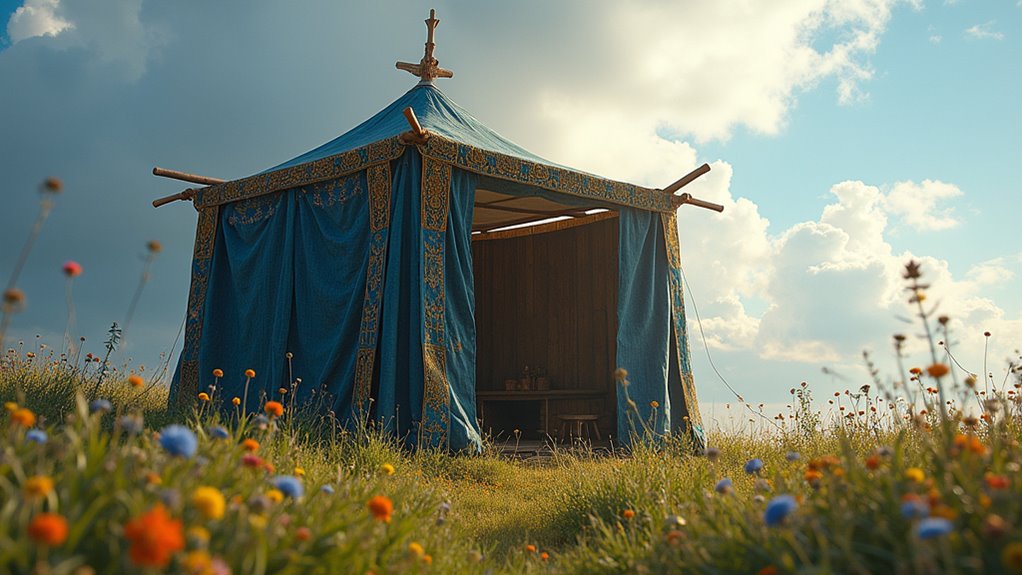
The Holy Tent, called the Tabernacle, was a special moving place for the Israelites. It had strong frames made from acacia wood. Each frame was about 15 feet tall and 1.5 feet wide. The long sides had 20 frames each. The back had 6 frames, plus 2 corner frames. The whole tent was about 45 feet long.
Inside, fine linen made it look beautiful. Outside, red leather kept it safe from weather. Eleven large curtains made from goat hair covered the outside. Bronze clasps held the curtains tight. Bronze pillars stood around the courtyard to support it.
The fabrics were carefully embroidered and pure. Every part showed strength and holiness. This design kept the tent safe and showed its sacred role. It was a great work of skill long ago.
Layout and Division of the Tent
The Holy Tent had a clear and purposeful design. Its size was about 45 feet long and 15 feet wide. The tent divided into two main parts: the Holy Place and the Holy of Holies.
The Holy Place was about 30 feet long and 10 feet wide. It held important items like the Altar of Incense and the Golden Lampstand.
The Holy of Holies was a cube, 10 feet on each side. It held the Ark of the Covenant.
A thick veil stood between these two areas. This veil showed the separation between God and people. The design showed increasing holiness toward the center.
Only priests could enter the Holy Place. The High Priest entered the Holy of Holies once a year on the Day of Atonement.
Every part of the tent helped people worship and think deeply. The layout gave a clear path to approach God with respect.
External Yard and Surroundings

The External Yard of the Holy Tent holds a special place for worship and rituals. It measures about 100 cubits long and 50 cubits wide. A fence 8½ feet tall surrounds it. This fence uses white linen curtains and bronze pillars. It keeps out wild animals and people who shouldn’t enter. The fence protects the sacred area.
The yard has one entrance on the east side. The gate is about 20 cubits wide. It’s made of blue, purple, and scarlet linen. This gate shows the only way to God’s presence. It guides worshippers to enter with purpose.
The open space inside hosts many ritual activities. People offer sacrifices here. The yard marks a clear line between the everyday world and the holy place. It prepares visitors as they move closer to the Tabernacle.
The External Yard is a key part of the sacred space.
Key Furnishings Inside the Tent
Step inside the Holy Tent. You’ll see important items used in worship and rituals. These items have both practical use and deep spiritual meaning.
- Ark of the Covenant: This is inside the Holy of Holies. It holds the stone tablets with the Ten Commandments. The mercy seat on top is where the high priest sprinkled blood for forgiveness. This shows God’s presence.
- Golden Lampstand (Menorah): Found in the Holy Place. It has seven lamps that burn all the time. People clean and refill it daily. It stands for God’s light shining always.
- Table of Showbread: Holds twelve loaves of bread. These represent the twelve tribes of Israel. The bread changes every week. It shows God’s care and promise to His people.
These items make the Holy Tent a sacred place for worship. They remind people of God’s presence and love.
Symbolism and Religious Function
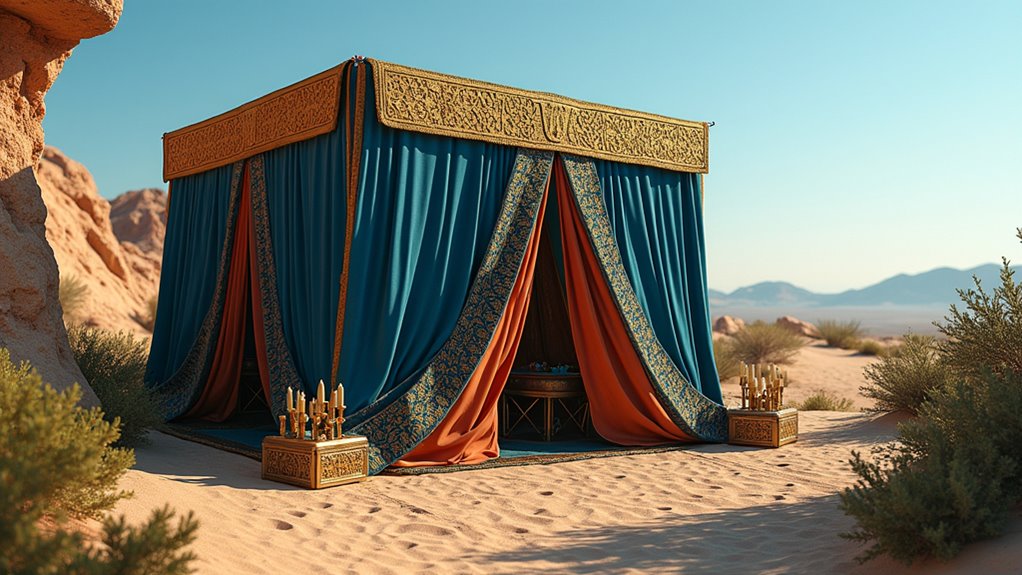
The Holy Tent, called the Tabernacle, stood as a powerful symbol for the Israelites. It showed how God lived among them. The Tabernacle marked a clear path to holiness. It asked each person to build a sacred space inside their heart for God.
| Aspect | Symbolism | Purpose |
|---|---|---|
| Divine Presence | God’s home on earth | Main place for worship |
| Holiness | Steps from outside to Holy of Holies | Place for rituals and sacrifices |
| Portability | Early sign of future synagogues | Place where people meet |
The Tabernacle helped with daily acts of worship like lighting the menorah. People gave sacrifices there too. Big Jewish festivals took place around it. It brought the community closer to God’s guidance. Seen as a map of the universe, the Tabernacle showed God’s closeness. It called people to take part in their own spiritual growth.
Frequently Asked Questions
How Long Did It Take to Construct the Holy Tent?
Building the holy tent took about six to nine months. The Israelites used gold, curtains, and wood. Skilled workers shaped each piece with care. This timeline shows their hard work and faith. The materials had special meaning too. Gold symbolized purity, while curtains provided protection. Wood gave the tent strong support. Every part fit together like a puzzle. The process was both a craft and a spiritual act. The holy tent stood as a sign of God’s presence. It took time, but the result was worth it.
Who Were the Craftsmen Responsible for Building the Holy Tent?
Bezalel shaped gold into beautiful, detailed patterns. Oholiab led workers weaving colorful curtains. These skilled craftsmen turned simple materials into a holy space. Their work showed deep care and a strong community spirit. Each piece held meaning and served a special purpose. Their art made the tent a place for prayer and worship.
What Colors Were Used in the Curtains of the Holy Tent?
The curtains of the holy tent used three main colors: blue, purple, and scarlet. Blue shows God’s presence and heaven. Purple stands for royalty and kingship. Scarlet represents sacrifice and holiness. These colors make the Tabernacle special. They show it is God’s home on earth. The mix of colors sets a sacred place for worship. Each color has deep meaning in the Bible. Together, they create a holy and respectful space.
How Was the Holy Tent Transported During the Israelites’ Journey?
The Levites moved the Holy Tent carefully during the journey. Six carts pulled by twelve oxen carried heavy parts. They carried sacred items by hand with great care. This method helped keep everything safe on the long trip through the desert. It showed respect and followed the rules given to them. The process was organized and steady. Each step had a purpose to protect the holy objects. The Israelites trusted the Levites to manage this important task well.
What Happened to the Holy Tent After the Israelites Entered Canaan?
After the Israelites entered Canaan, they moved the holy tent to Shiloh. This place became the main site for worship. People kept the sacred items there. The tent helped unite the tribes. It showed their strong religious identity in the new land. Shiloh stayed important for many years. The tent symbolized God’s presence with the Israelites. It was a center for prayers and offerings. This move marked a new chapter in their history.
Conclusion
The Holy Tent showed God’s presence and worship clearly. Builders used strong acacia wood and fine linen to make it. The tent had separate parts and special furniture for rituals. Each part had an important role and meaning. The tent’s design helps us think about our own spiritual paths. It invites us to find deeper meaning and connect with faith. Like the tent’s layers, our faith has many levels to explore.
