
What Is A Yurt Tent
This post contains affiliate links. As an Amazon Associate, we earn from qualifying purchases.
A yurt tent is a portable, round shelter traditionally used by nomadic tribes, designed for durability and comfort. It features wooden walls called khaanas and roof poles connected to a central ring known as the toono, all covered with thick fabric that provides insulation. This unique structure offers more space and warmth than typical tents and can easily be relocated. Further details about its components and uses will be explored later in the article for those interested in learning more.
Essential Facts in 30 Seconds
- A yurt is a portable, round tent used by nomadic Turkic and Mongol peoples.
- It has wooden walls (khaanas) and roof poles connected to a central ring (toono).
- Yurts are insulated with sheep’s wool felt and weather-resistant fabric for all-season use.
- They provide spacious interiors, often with plumbing and customizable features.
- Modern yurts are popular in eco-tourism, combining traditional design with unique accommodations.
Definition and Structure of Yurts
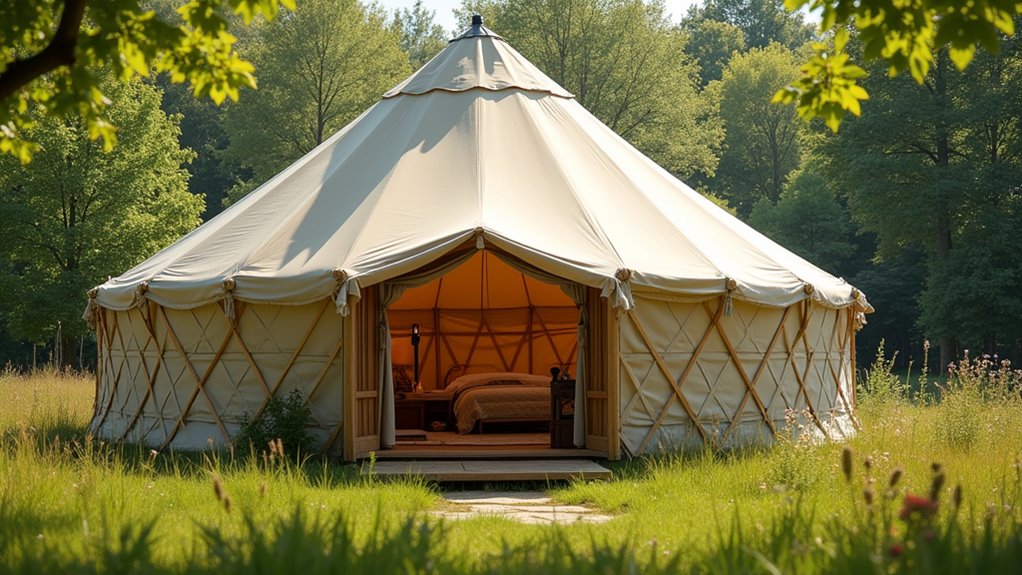
Yurts are round tents used by nomadic people for centuries. They save space and stay strong in wind. The walls, called khaanas, are wooden lattice made from larch wood. This wood is both strong and flexible.
Roof poles made from Douglas fir or Siberian pine spread from a center ring. This ring, called the toono, holds the roof tight and means unity.
A thick fabric covers the yurt. It keeps out rain, wind, and cold.
To build a yurt, open the wooden walls into a circle. Then connect roof poles to the toono above. This design lets people set up or take down the yurt fast.
Yurts offer a cozy, sturdy home that moves easily with its owners.
Historical and Cultural Significance
Yurts are not just simple homes. They hold deep history and culture for Central Asia’s nomads. Built over 3,000 years ago, yurts, also called gers, fit the nomadic way of life perfectly. They show respect for nature and bring people together.
| Aspect | Description | Cultural Significance |
|---|---|---|
| Origin | Made by Turkic and Mongol tribes | Shows smart living in wide steppes |
| Design | Round shape | Means balance and unity |
| Usage | Easy to move homes for nomads | Helps with moving by seasons |
| Modern Adaptation | Used in eco-tourism and glamping | Keeps old traditions alive |
Yurts still hold strong meaning today. Families gather inside for daily life and special events. They keep the nomads close to their land and their roots. Yurts are a living symbol of a connected and simple life.
Key Components and Materials Used
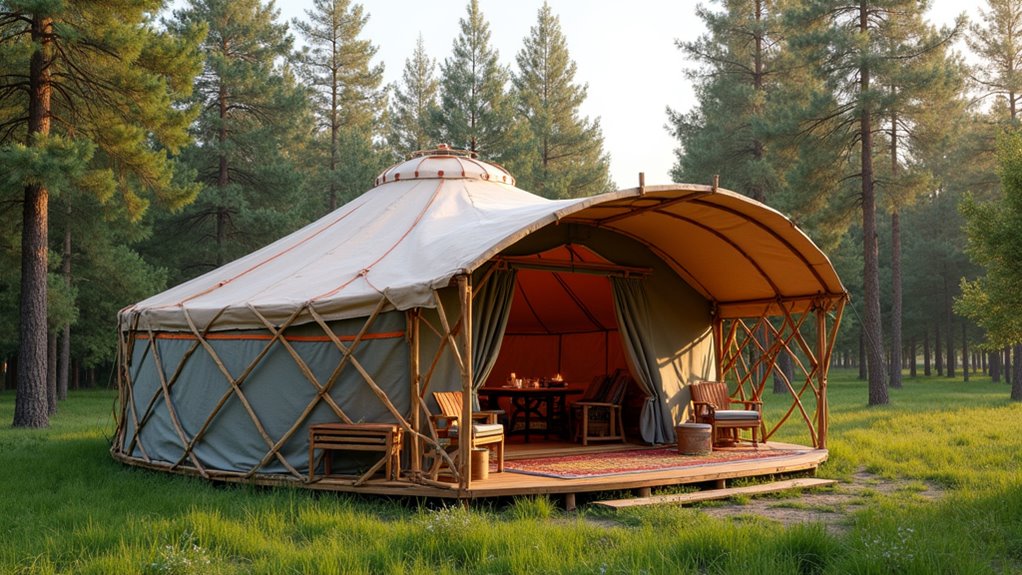
Yurt construction combines old skills with new ideas. The walls use a wooden lattice called khana. This lattice forms a circle and bends easily. Roof poles stretch from the lattice to a central ring. Craftsmen often use strong wood like Siberian pine for this ring. The door frame also uses wood for strength.
Sheep’s wool felt insulates the yurt well. It keeps heat inside during cold weather. In very cold places, builders add up to eight felt layers.
Canvas covers the yurt and stops water from coming in. Some modern yurts use synthetic fabrics too. These fabrics last long and let air move through.
All parts work together to make a yurt strong and comfy in all weather.
Yurts vs. Traditional Tents
Yurts and traditional tents both give shelter but serve different needs. Yurts have many benefits. They offer more space and comfort. Traditional tents are lighter and easier to carry but less strong. Here is a simple comparison:
| Yurts | Traditional Tents |
|---|---|
| Large living area | Small space for sleeping |
| Made for all seasons | Best for short trips |
| Strong frame and warm | Thin fabric, less warm |
| Sometimes plumbing | No indoor facilities |
Yurts are round and use space well. You can put furniture and even a stove inside. This makes living there cozy. Traditional tents pack small and weigh less. They suit quick camping trips but don’t last long in bad weather. For a lasting shelter, yurts work great. For quick trips, tents do the job.
Benefits and Modern Uses of Yurts
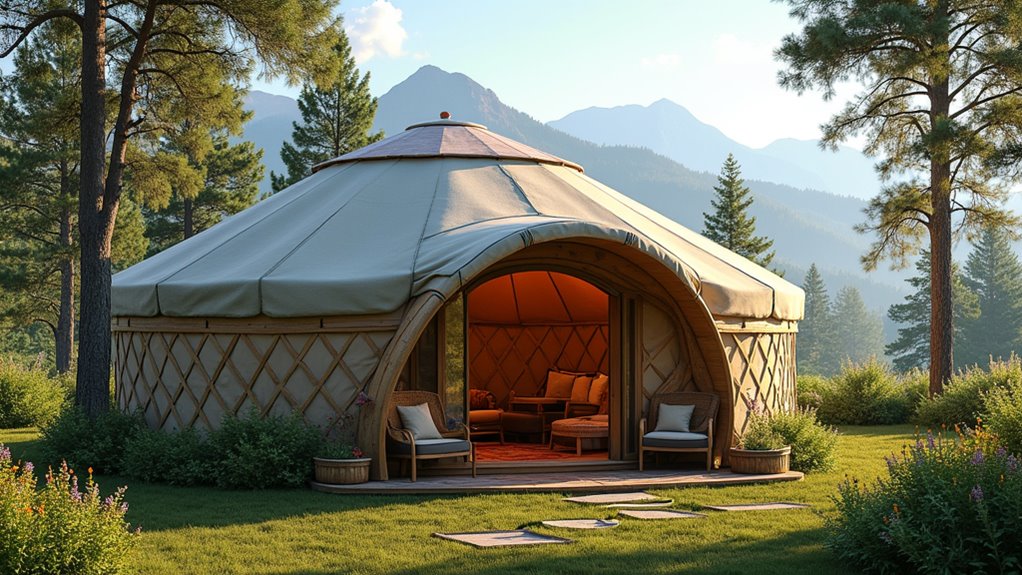
Yurts have become popular for good reasons. They cost less than regular houses. People save money on building and fixing them. You can move yurts to many places. This helps people live closer to nature and stay flexible.
Yurts stand strong in bad weather. Their round shape keeps heat inside and lowers energy use. This means less electricity and better for the planet.
Many use yurts for guest rooms or unique rentals on sites like Airbnb. Inside, you can design a yurt to fit your needs. Some use them for groups, others for quiet time alone. Living in a yurt means comfort and a natural lifestyle together.
Frequently Asked Questions
How Long Does It Take to Set up a Yurt?
Setting up a yurt usually takes one to five days. The time depends on the yurt size and the experience of the crew. A small yurt with an experienced team may take just one day. Bigger yurts or less skilled crews might need up to five days. Using the right tools and good planning speeds up the process. Clear instructions also help. Proper preparation means you can enjoy your yurt faster.
Can Yurts Be Customized for Personal Preferences?
Yurts offer many ways to match your style. Pick the layout you like best. Choose the fabric color and pattern that fit your taste. Add features like windows, doors, and insulation. Include amenities such as electricity and heating. This makes your yurt cozy and practical. Many people enjoy yurts because they feel personal and unique. Yurts can fit any budget and space. You get a home that suits your needs perfectly.
What Is the Lifespan of a Typical Yurt?
A yurt usually lasts between 15 and 30 years. The exact time depends on its build quality and care. Strong materials like wood and thick fabric help it stay longer. Regular checks and repairs keep the yurt safe and dry. Many people find yurts a good home choice because they last well. Taking care of your yurt makes it a smart investment.
Are Yurts Suitable for Winter Living?
Yurts work well for winter living with the right setup. Good insulation keeps the cold outside. A strong heater or wood stove is essential inside. Expect to use about 25-33% more wood than in a regular home. That extra fuel keeps you warm and cozy. With good planning, yurts make great winter homes.
How Do You Maintain a Yurt?
Keep your yurt clean and check it often. Sweep floors and wipe all surfaces regularly. Look for any damage or wear on the fabric and wood. Treat wooden parts with oil or sealant to stop rotting. Make sure air moves well inside to avoid moisture. Fix small problems fast to avoid big repairs. A well-kept yurt lasts many years. Simple care keeps it strong and cozy.
Conclusion
Yurts blend tradition with modern use. Their round shape and strong materials suit many needs. People use yurts as cozy getaways or green homes. Step inside and feel comfort and nature together. Many choose yurts for simple, eco-friendly living. This style changes how people live and think about homes. Yurts open doors to new ways of life. Adventure and comfort wait just outside your door.
