
How To Use Tent Stakes
This post contains affiliate links. As an Amazon Associate, we earn from qualifying purchases.
To use tent stakes effectively, select the appropriate type for your ground—such as V-shaped stakes for hard soil or screw stakes for softer terrain—and drive them into the ground at a 45-degree angle away from the tent. Hammer or mallet the stakes about six inches deep and secure your guy lines using bowline knots for added stability. This approach ensures your tent stays firmly anchored against the elements. Further explanation and detailed tips on securing your tent will follow to help enhance your camping setup.
Essential Facts in 30 Seconds
- Select tent stakes suited to soil type, such as V-shaped for hard soil or screw stakes for loose dirt.
- Insert stakes at a 45-degree angle away from the tent for better grip.
- Drive stakes at least six inches deep using a hammer or mallet.
- Tie guy lines with bowline knots and taut line hitches to maintain tension.
- Clean stakes after use and oil steel stakes to prevent rust.
Choosing the Right Tent Stakes for Your Ground Type
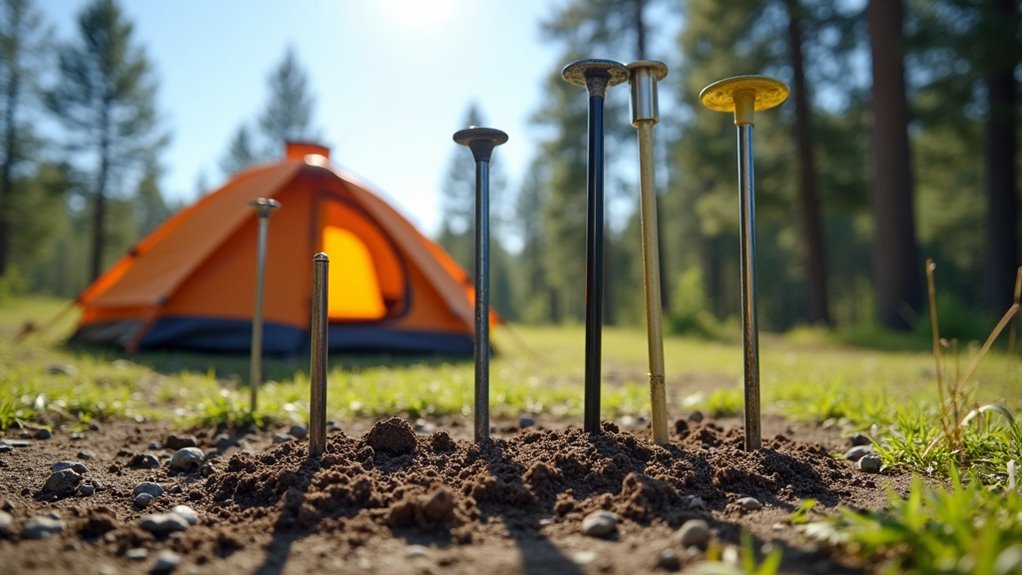
Picking the right tent stakes helps keep your tent steady and safe.
Hard soil or loose dirt works well with V-shaped stakes. These stakes are light and grip the ground through small holes.
Windy weather calls for Y-shaped stakes. They hold better because they cover more ground but can be hard to push into rocky soil.
Soft or loose dirt needs screw stakes. They dig deep for strong hold.
Medium soil suits carbon core stakes. They balance weight and strength nicely.
Stake material matters too. Aluminum stakes are light and strong. Steel stakes resist damage in rocky places.
Match stakes to your ground type for a firm tent setup every time.
Proper Techniques for Driving Tent Stakes
Keep your tent strong and steady by driving stakes the right way. Push stakes into the ground at a 45-degree angle, pointing away from the tent. This angle helps stakes hold tight and stop pulling out. Proper usage of tent pegs enhances overall camping experience.
Use a hammer or mallet to hit the stake straight down. For hard or frozen ground, a powered stake driver saves time and effort. Make sure the top of the stake stays above ground. This makes it easy to pull out later.
Drive stakes at least six inches deep for good grip. In loose soil, press dirt firmly around the stake after placing it. Big rocks or deadman anchors add extra strength if needed. Additionally, remember that the right peg choice significantly impacts tent performance when securing your shelter.
These simple steps keep your tent safe, even in strong wind or rain.
Securing Tent Guy Lines Effectively

Securing tent guy lines keeps your tent strong and safe. Use bowline knots to tie lines to tent loops. Bowline knots hold tight and save rope length. Properly securing guy ropes is essential for tent stability during adverse weather conditions.
Use taut line hitches to adjust line tension easily. Place stakes far enough to stretch the lines fully. Angle stakes inward at 45 degrees for better hold. Make a 2:1 pulley system with your guy lines for stronger tension. Check lines often and tighten if they loosen. Keep lines straight and pull them straight out from the tent.
This spreads force evenly and makes your tent stable. Guy ropes are vital for tent stability and stop your tent from falling in wind or rain.
Maintenance Tips for Longevity of Tent Stakes
Keeping your tent stakes in good shape helps them last for many camping trips. After camping, clean stakes with a soft brush or cloth and mild soap. This removes dirt and stops damage. Check stakes for bends or rust. Replace any that look weak to avoid breakage. Fire safety practices are also important to consider when using stakes for securing your tent.
Put a thin layer of oil on steel stakes before and after trips. This stops rust, especially if you camp in wet places. Proper maintenance of tent stakes is essential for ensuring their effectiveness during your outdoor adventures.
Store stakes in a dry, open space. Avoid places with moisture or damp air. Use waterproof bags or cases to keep stakes safe from bending or scratches. Check your storage spot often for problems. These simple steps keep stakes strong and ready for your next adventure.
Recommendations Based on Camping Needs

Picking the right tent stakes keeps your tent safe and steady.
Blizzard stakes work best in loose soil and sand. Their long shape and wide surface hold strong. For hard or rocky ground, try V-shaped steel stakes. REI’s 8.25-inch stakes offer great grip. Using tent stake knots helps secure your tent against wind and weather.
Shepherd’s hook stakes go in easier but can bend. Backpackers like aluminum or titanium stakes. These are light but may not hold in strong wind. Special stakes fit snow or sand in tough weather. Check the material and weight of your stakes before camping. This helps keep your tent steady on any ground. Additionally, using sturdy stakes is crucial for maintaining tent stability in adverse weather conditions.
Choose good stakes. Sleep safe and enjoy your trip!
Frequently Asked Questions
Can I Use Regular Household Items as Tent Stakes?
Regular household items can work as tent stakes in a pinch. Heavy-duty skewers, nails, or sturdy sticks often hold your tent in place. Check the ground type first. Soft soil needs longer, stronger stakes for better grip. Hard or rocky soil may break weak stakes. Real tent stakes provide better stability, but these alternatives can help in emergencies. Always test your makeshift stakes before relying on them. Safety first!
How Many Tent Stakes Do I Need for My Tent?
Your tent needs the right number of stakes to stay firm. Most tents work well with 4 to 12 stakes. Small tents usually need about 4 stakes. Bigger tents or windy places might need up to 12. Hard or loose ground might require extra stakes for better hold. Using enough stakes keeps your tent safe and steady. Always check your tent’s instructions for the exact number. Stakes help stop your tent from moving or falling. Good stakes match the ground type, like metal for rocky soil or plastic for soft dirt. Secure stakes make camping safer and more comfortable.
What Should I Do if a Stake Gets Stuck in the Ground?
Stakes sometimes get stuck deep in the ground. Try turning the stake left and right to loosen the soil. Tap the sides gently with a hammer to break up hard dirt. A stake puller tool makes pulling easier and safer. This tool lessens the effort and stops injuries. Use gloves to protect your hands while pulling. Taking these steps saves time and keeps you safe.
Are There Eco-Friendly Options for Tent Stakes?
Eco-friendly tent stakes help protect nature. Wooden stakes break down naturally over time. Aluminum stakes last long and recycle easily. Carbon fiber stakes stay strong for many trips. These options reduce waste and save the environment. Camping with eco-friendly gear keeps wild places clean. Simple choices make a big difference outside.
Can I Reuse Tent Stakes From Previous Camping Trips?
Tent stakes from past camping trips work well again. Keep them clean and check for bends or rust. Strong, straight stakes hold your tent firmly in the ground. Good care helps them last many trips. Replace stakes if they are bent or broken. This keeps your tent safe and steady every time. Reusing stakes saves money and reduces waste. Simple maintenance makes your camping easier and safer.
Conclusion
Using the right tent stakes is key for a good camping trip. Over 70% of tent problems happen because stakes are not secured well. Pick stakes that match the ground type. Drive them in at the correct angle to hold tight. Tie the guy lines firmly to keep your tent steady. Check your stakes often to make sure they stay strong. Taking these steps helps your tent stay safe and comfortable outdoors.
