
8 Best Mushroom Grow Tents for 2026
This post contains affiliate links. As an Amazon Associate, we earn from qualifying purchases.
After comparing the field and weighing specs against owner feedback, the North Spore BoomRoom II stands out as the overall best mushroom grow tent for serious growers, thanks to its integrated Myco-Mister II and FAE fan. For those on a tighter budget, the ZOYOYES Mushroom Growing Tent offers solid basics with usable vent ports and optimized LED lighting, while the Active Grow 3-Tier PEVA brings unmatched versatility for multi-level setups.
Most people don’t realize how quickly a poorly designed grow tent can turn into a contamination nightmare. Humidity swings, stale air, and flimsy materials aren’t just inconveniences – they’re yield killers.
As someone who’s spent years evaluating shelters for everything from alpine ridges to backyard mycology labs, I focused this guide on real-world performance. These picks are based on durability, environmental control, and what actual users report – not just what the product page promises.
Top 8 Mushroom Grow Tents in the Market
The Best Mushroom Grow Tents, Reviewed
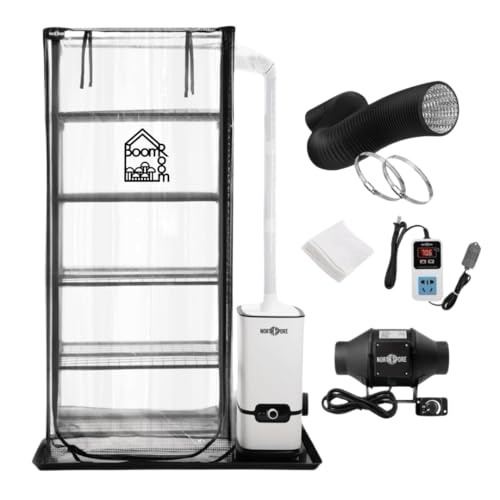
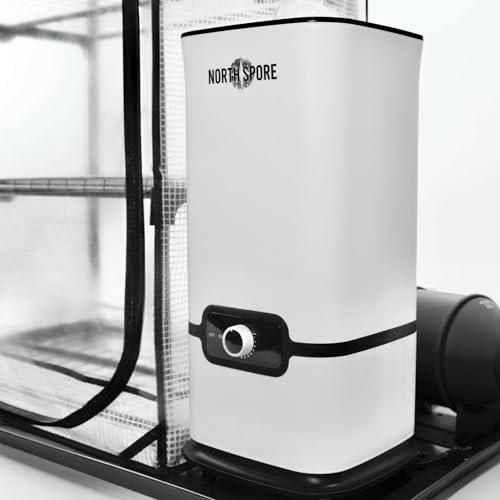
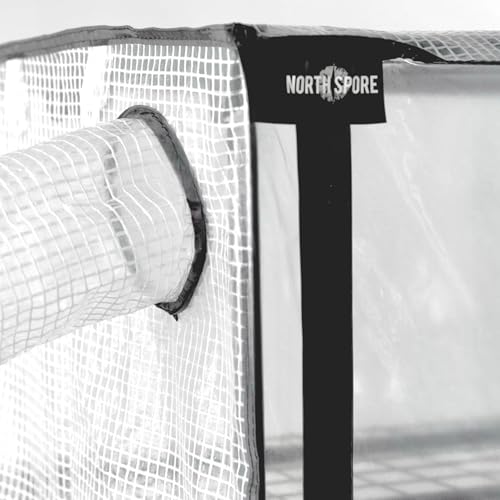
North Spore BoomRoom II Automated Tent
Strengths
- Fully automated
- High yield capacity
- Spore containment
Trade-offs
- Premium price
- Larger footprint
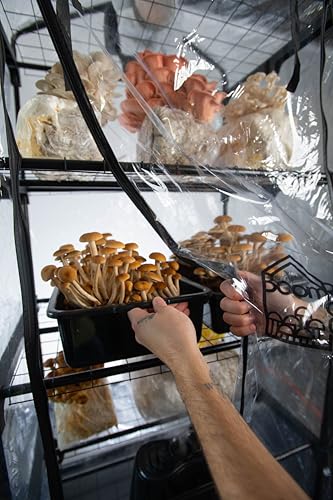
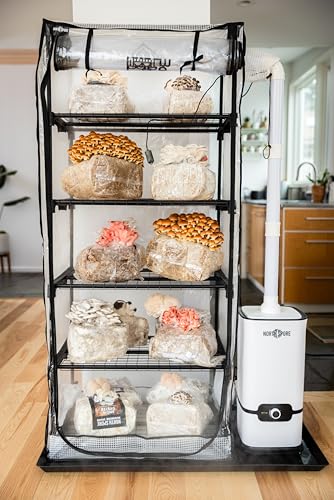
This is what happens when a tent is built from the ground up for mushrooms, not adapted from plant growing. The automation is the star, the Myco-Mister II and FAE fan work together to maintain 90%+ humidity and low CO2, which owners say leads to fewer aborts and bigger flushes. The negative pressure design keeps spores contained, a huge win for home growers worried about mess or contamination.
With 5 reinforced racks and 18 cubic feet of space, it’s a monotub killer in terms of yield per square foot. The ultra-clear vinyl lets you watch pin sets develop like a lab exhibit. It’s not cheap, but for the level of control and output, it’s the most complete system here. If you want the closest thing to a pro setup at home, this is it.
Product photos
Active Grow 3-Tier PEVA Tent Kit

Strengths
- Heavy-duty steel frame
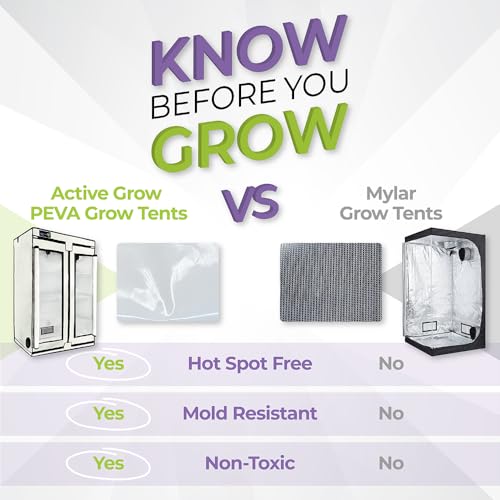
- Premium PEVA fabric
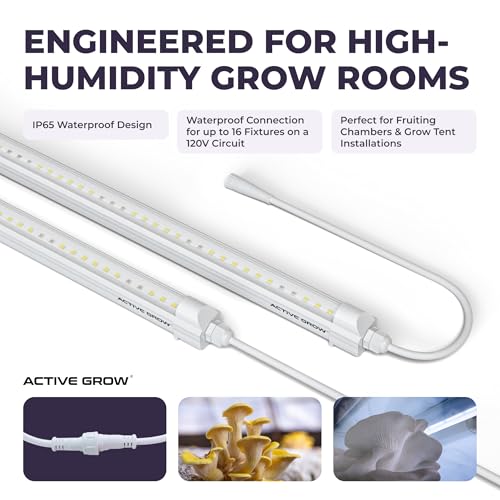
- Mushroom-specific LEDs
Trade-offs
- Higher price point
- Takes more space
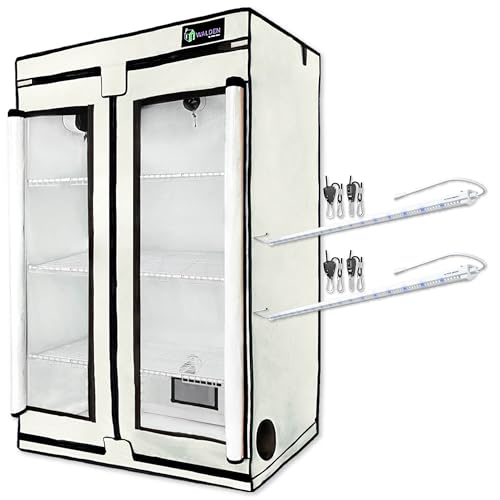
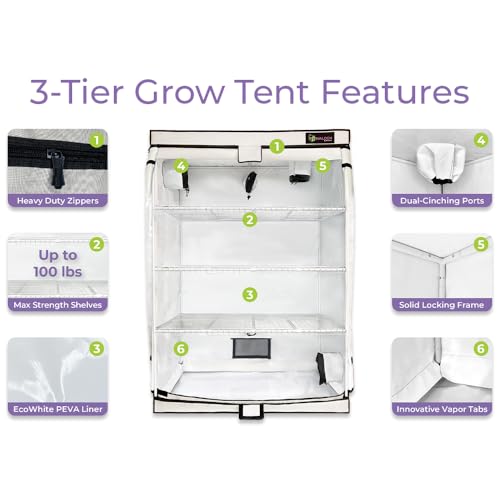
This feels like the grown-up version of most mushroom tents. The steel shelving is rock-solid, rated for 100 lbs per tier, so you won’t worry about sagging under wet substrates. The PEVA material is a big upgrade, triple-layered, BPA-free, and more reflective than standard mylar, which helps light distribution.
The included Blue Sun LED strips are daisy-chainable and tuned specifically for mushrooms, not just repurposed plant lights. Owners note the build quality stands out, and the 2-year warranty adds peace of mind. It’s one of the few that truly works for both incubation and fruiting. While it’s pricier, the materials and lighting justify it. For serious growers, this is the smarter long-term buy over flimsier PVC models.
Product photos
Mushroom Grow Tent with LED Light
Strengths
- Fits 8 monotubs
- Built-in LED and timer
- Waterproof base tray
Trade-offs
- Basic material quality
- Zippers feel flimsy
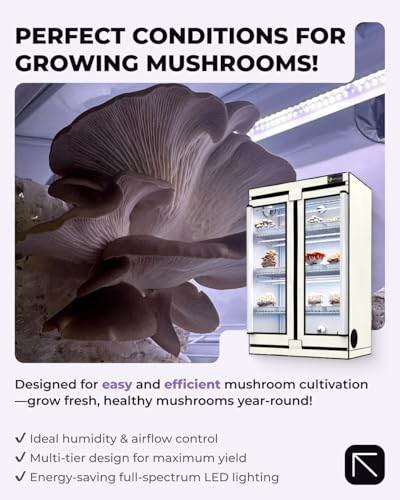
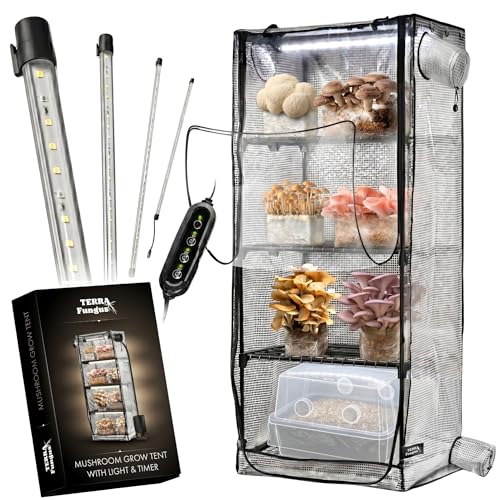
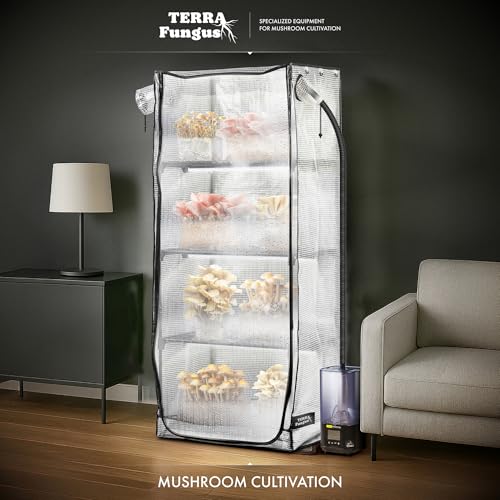
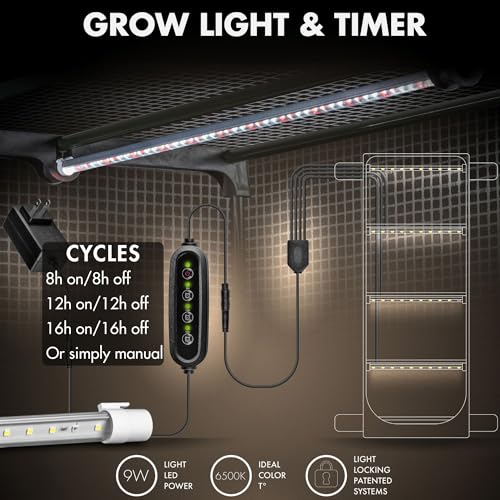
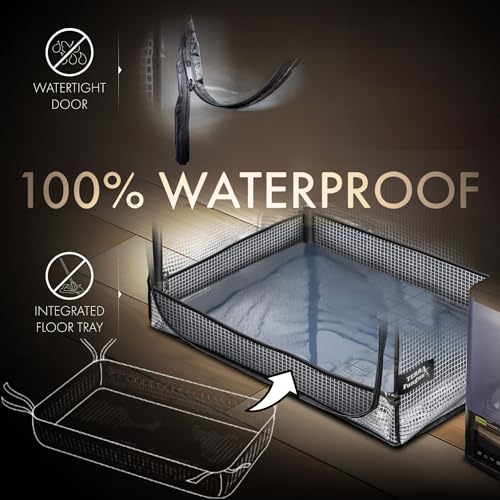
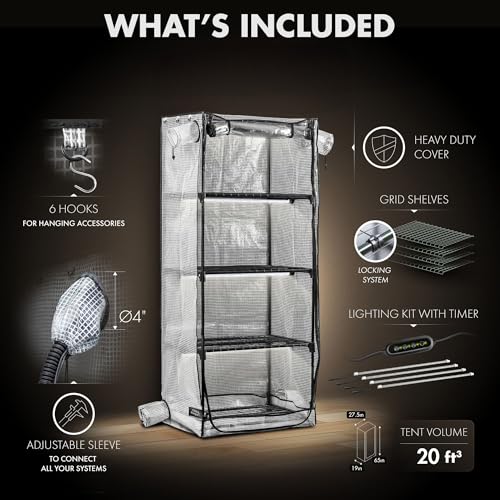
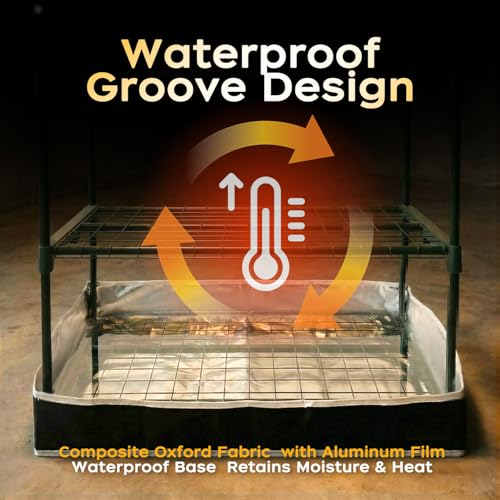
For the price, this tent packs a lot, especially if you’re scaling up monotub grows. It fits up to 8 standard monotubs across 4 tiers, which is rare at this size, and the built-in 6500K LED with timer means you’re not hunting for extra lighting. The waterproof tray is a standout, letting you run a humidifier 24/7 without worrying about leaks.
Owners consistently praise how plug-and-play it is. The four mesh vents support FAE and humidifier hoses, so you can build out a semi-automated setup. It’s not premium in materials, more basic PVC than PEVA, but for the functionality and included gear, it punches above its weight. I’d pick this over pricier models if you’re on a tight budget but still want serious capacity.
Product photos

LIGNAKAUVI Martha Mushroom Grow Tent
Strengths
- Sleek modern design
- Easy full-access door
- Fits 8 monotubs
Trade-offs
- No built-in fans
- Limited ventilation options
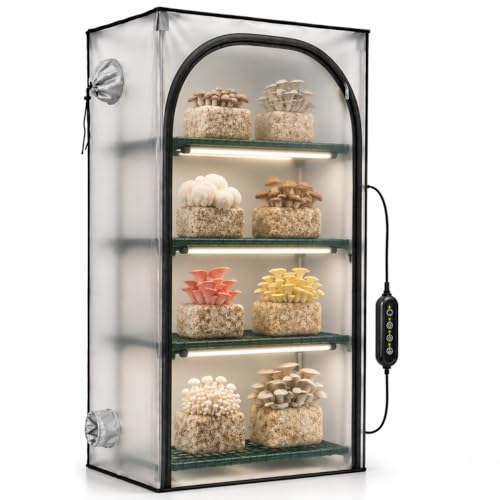
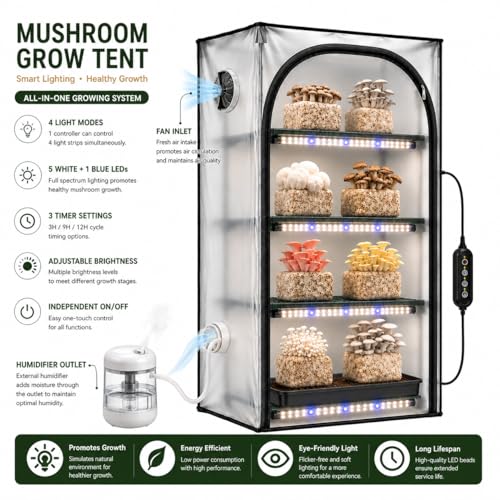
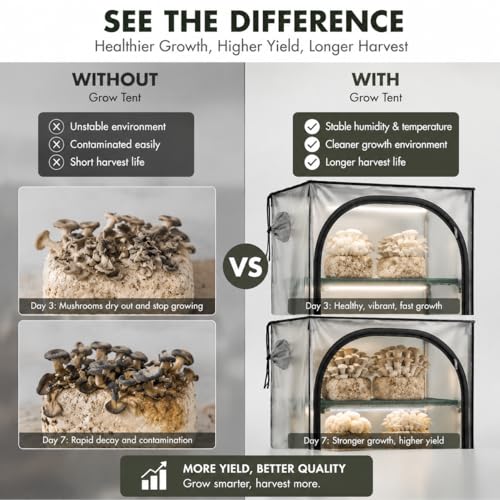
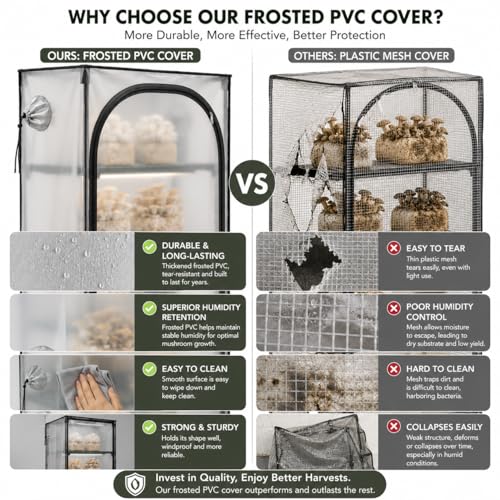
If you care about how your grow space looks while still delivering solid performance, this one stands out. The frosted semi-transparent PVC gives it a modern, almost minimalist vibe that fits better in a living space than the usual industrial black tents. Owners consistently report that the arched door makes access easy without snagging substrate bags, which is a small but meaningful detail when you’re in the middle of a harvest.
The 4-tier shelf system fits up to 8 monotubs, which is impressive for its footprint, and the waterproof tray is a must-have for humidity control. On paper, it lacks active ventilation or built-in automation, so you’ll need to add those separately. But for those who want a clean, hygienic, and visually appealing fruiting chamber without the lab aesthetic, this hits a sweet spot.
Product photos
ZOYOYES Mushroom Growing Tent with Lights
Strengths
- Beginner-friendly
- Compact size
- Easy monitoring
Trade-offs
- No shelves included
- Basic ventilation
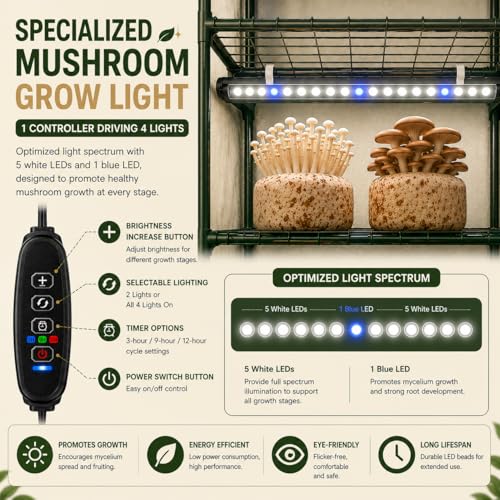
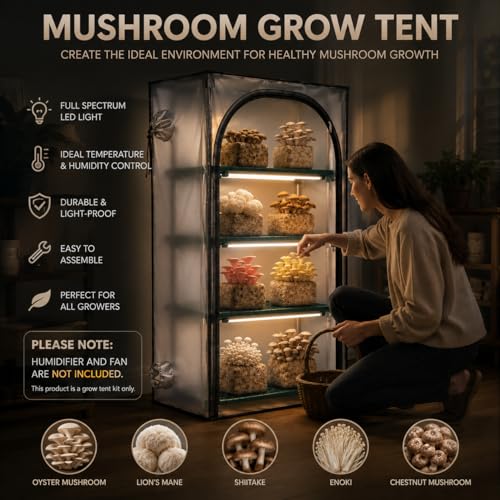
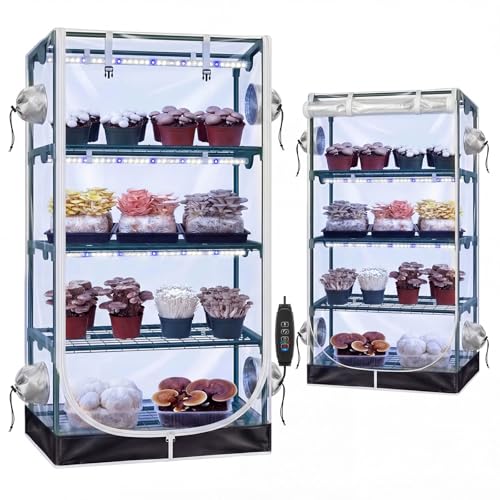
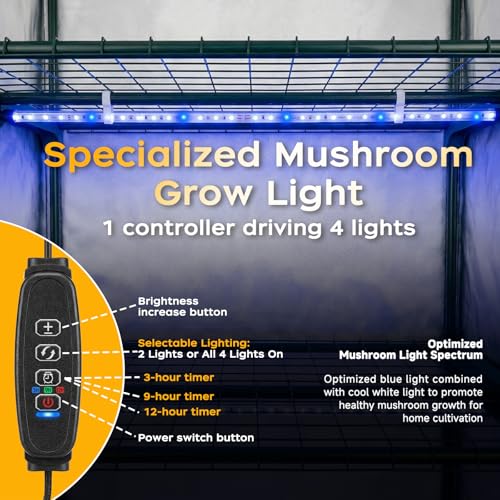
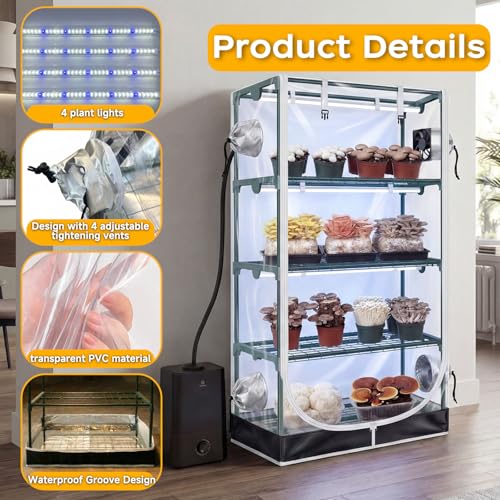
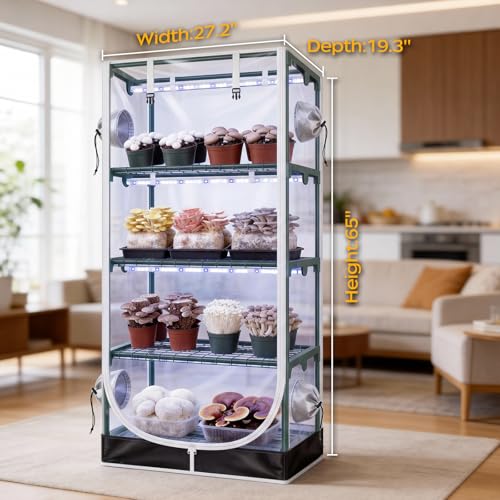
This is the definition of a starter kit done right. The built-in timer and mushroom-optimized lights take the guesswork out of lighting cycles, which is exactly what beginners need. The transparent cover makes it easy to monitor progress without opening the tent and risking contamination.
At 65″ x 27.5″ x 20″, it fits in tight spaces, and the 4″ vent ports let you upgrade later with fans or filters. It doesn’t have shelves or a tray, so you’ll need to manage that yourself, but for someone taking their first steps beyond a monotub in a closet, this lowers the barrier to entry. I’d recommend this over more complex systems for anyone just learning the ropes.
Product photos
Salcod Large Still Air Box
Strengths
- Excellent clarity
- Large dual zips
- Ready to use
Trade-offs
- Not for fruiting
- No lighting included
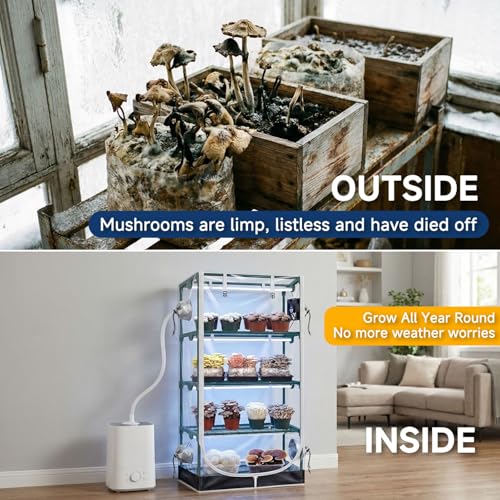
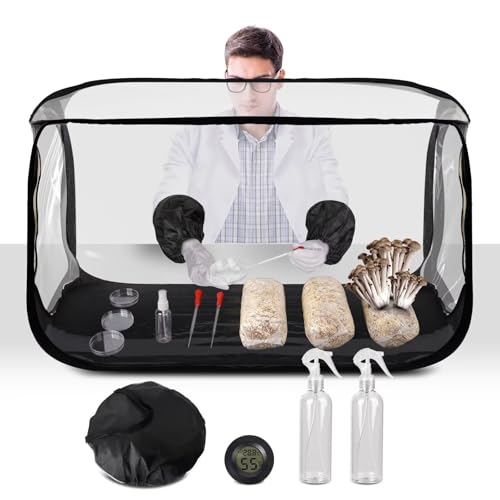
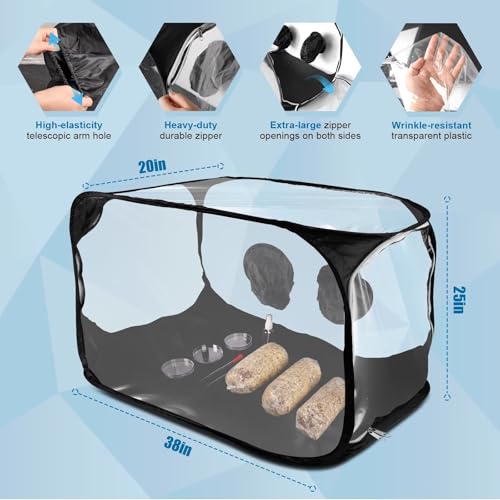
This isn’t a grow tent in the traditional sense, it’s a still air box designed for sterile work, and it does that job well. The transparent, scratch-resistant plastic gives you full visibility during inoculations, and the high-elasticity armholes are a standout feature for reducing contamination risk. Reviewers note it’s especially useful for agar work or LC transfers, where airflow control is critical.
It’s spacious for a SAB, measuring 38x20x25 inches, and the dual-zipper openings make it easy to slide in equipment. The included thermometer and spray bottles add value, but don’t expect it to function as a fruiting chamber, this is a prep station, not a grow environment. If you’re doing any kind of mycology work that demands sterility, this is a smarter pick than a full tent.
Product photos

Mushroom Mycology Large Still Air Box
Strengths
- Smart vent placement
- Includes full kit
- Dual-user access
Trade-offs
- Assembly takes 5–10 mins
- Not fully sealed
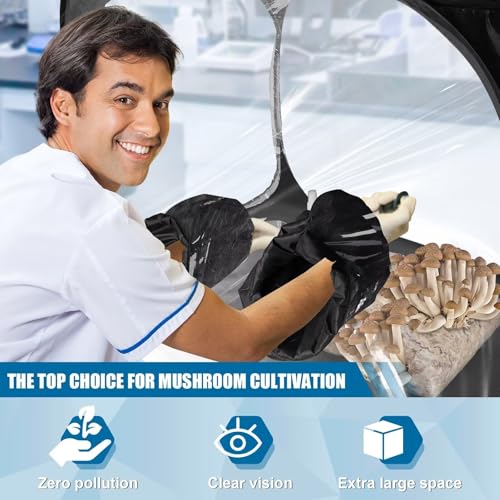
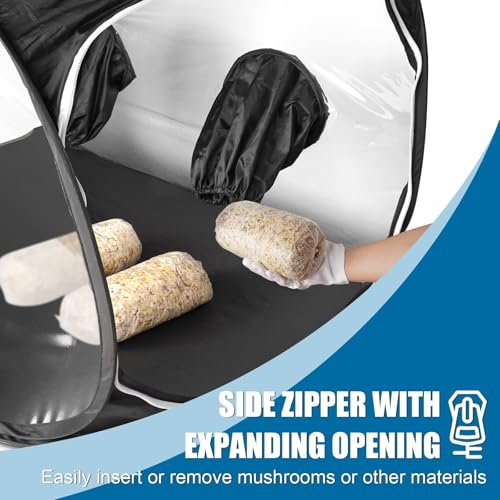
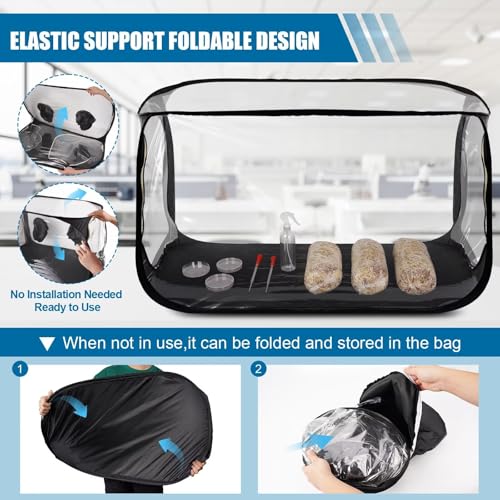
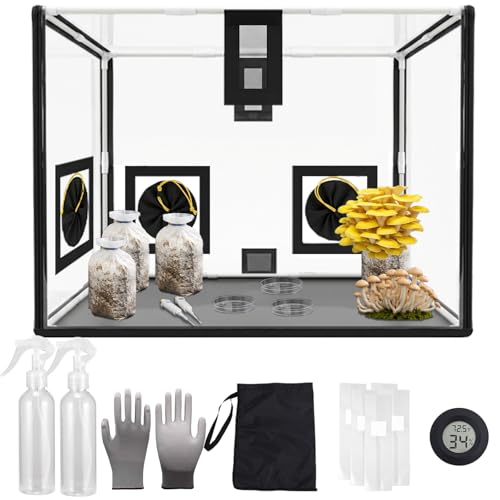
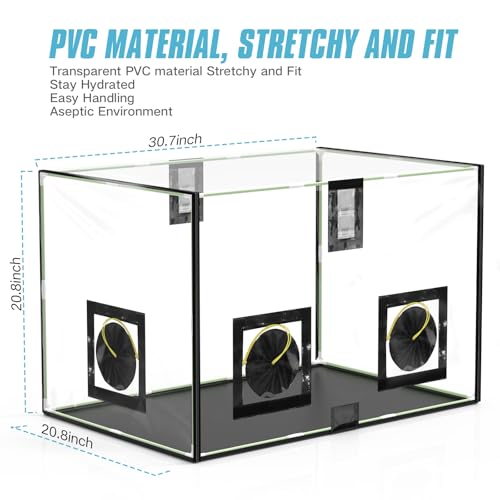
The ventilation design here is genuinely thoughtful. With front and rear convection vents, it actively reduces CO2 buildup, a common issue in enclosed grows, while still maintaining a clean environment. The side retractable opening is a clever touch, doubling as a power channel or dual-user access point, which reviewers say makes inoculation easier.
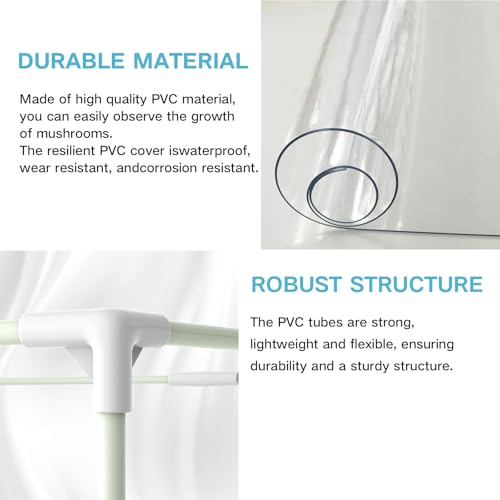
It comes with a full kit: gloves, sprayers, a humidity meter, and even grow bags. The PVC material is tear-resistant and easy to wipe down, which matters for sterility. While it’s marketed as a still air box, its size and airflow features make it a hybrid between a SAB and a mini fruiting chamber. For growers who want better air exchange without sacrificing cleanliness, this is a strong contender.
Product photos


Juexica Large Still Air Box
Strengths
- Excellent visibility
- Dual side zips
- Folds compactly
Trade-offs
- No built-in lighting
- Arm holes not elasticized
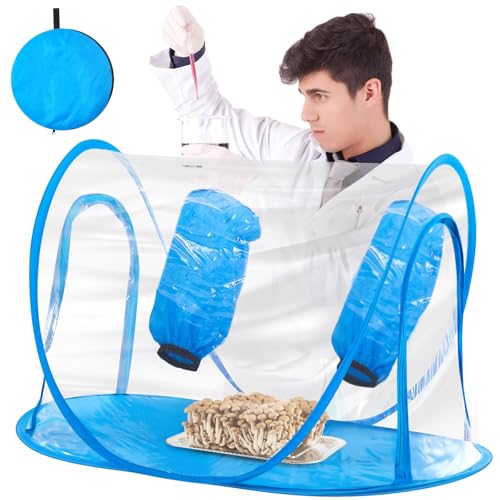
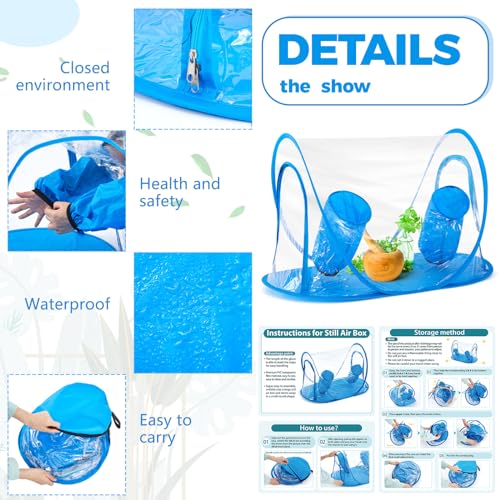
If you want to see every pin and colonized corner without opening the tent, this one delivers. The clear PVC walls paired with blue Oxford fabric edges offer high visibility and a clean look, making monitoring growth effortless. The dual side zippers and arm ports are well-placed, and owners report they minimize contamination during transfers.
It’s spacious at 36x24x24 inches, and the collapsible frame means it’s easy to store when not in use. But like most SABs, it’s not meant for fruiting, no lighting, no humidity control. Where it shines is observation and sterility. Compared to opaque or semi-transparent models, this is the one I’d recommend if visual tracking is a priority.
Product photos




How We Evaluated mushroom grow tents
As a long-time tent enthusiast – and now, a fascinated follower of the mycology world – I approached researching mushroom grow tents with the same attention to detail I give any shelter for outdoor adventures. Rather than a hands-on lab test, this was a research-led comparison of published specifications and owner feedback across a wide range of models. I compared features, sizes, materials, and automation capabilities, then weighed them against the experiences shared in owner and expert reviews.
For mushroom grow tents, consistent humidity and airflow are paramount, so these factors heavily influenced my rankings. A design that supports stable environmental control directly impacts yield and reduces the risk of contamination. Beyond that, build quality and the inclusion of useful features – like integrated lights or ventilation – were key differentiators. Understanding the components of grow tent structure helped me assess long-term durability too.
Specifications reliably tell you about size, materials used (like PVC thickness or light wattage), and basic construction. However, owner feedback proved crucial for understanding real-world performance. I focused on comments about ease of assembly, the effectiveness of ventilation systems, and whether the tent truly maintained consistent humidity levels. I also paid close attention to reviews that discussed the quality of included accessories and the overall longevity of the unit, as these are often not clearly stated in product descriptions.
Choosing The Right mushroom grow tents
Choosing the right mushroom grow tent can feel overwhelming, but focusing on a few key features makes all the difference between a bountiful harvest and a frustrating failure.
A quality mushroom grow tent prioritizes maintaining stable humidity (90%+) and temperature, while also offering spore control through negative pressure. Look for durable, easy-to-clean materials, adequate ventilation options, and a design that suits the scale of your intended grows – from small-batch experiments to full-scale production. Prioritize features that minimize contamination risk and maximize yield per square foot.
Size and Capacity
Don’t underestimate the importance of space. While a compact tent might seem appealing initially, you’ll quickly find yourself cramped if you plan to scale up your operation. Consider not just the current size of your grows, but your future ambitions. A tent that comfortably fits your current monotubs or trays, with room to expand, is a smart investment. I’ve seen too many growers start small and immediately regret not opting for a larger capacity right from the start.
Material and Construction
The material of your grow tent directly impacts its durability, ease of cleaning, and ability to maintain a stable environment. Look beyond simple plastic; PEVA, often found in higher-end models, is a BPA-free, phthalate-free material that’s easier to wipe down and more resistant to tearing than standard materials. Steel framing is also preferable to flimsy plastic supports, especially if you plan on utilizing multiple tiers. Regularly cleaning your tent is critical, and a smooth, non-porous surface makes that process significantly easier. To learn more about maintaining a clean environment, consider reading about how to reduce condensation in grow tents.
Lighting and Ventilation
Consistent, appropriate lighting is crucial for healthy mushroom development, and dedicated mushroom-focused LED setups are vastly superior to repurposed grow lights. Look for lights tuned to a spectrum that supports both mycelial growth and fruiting, often around 450nm + 6500K. Equally important is ventilation. You’ll need a way to introduce fresh air exchange (FAE) and manage humidity. Many tents incorporate vent ports, but consider how easily you can integrate a small fan and humidifier. If you’re new to the process, starting with a complete mushroom growing tents can simplify setup.
- Budget-friendly options often lack robust ventilation systems, requiring more manual monitoring and adjustments.
- Mid-range tents typically include basic vent ports, sufficient for smaller grows if paired with a small fan.
- Premium models feature integrated ventilation systems and automated controls, offering more consistent environmental conditions and reducing the need for constant intervention.
A good rule of thumb: invest in a tent that allows you to automate as much of the process as possible. Automation minimizes human error and creates a more stable growing environment.
Mushroom Grow Tents Compared
Here’s a comparison of key specifications for various mushroom grow tents to help you choose the best option for your needs.
| Product Name | Capacity | Dimensions (approx.) | Material | Lighting | Ventilation |
|---|---|---|---|---|---|
| North Spore BoomRoom II | 18 cu ft | N/A | Ultra-clear vinyl | N/A | Integrated Myco-Mister II & FAE Fan |
| Active Grow 3-Tier PEVA | N/A | 49.21″x26.77″x75.98″ | PEVA, Steel | 2x 4FT Blue Sun LED | N/A |
| Mushroom Grow Tent with LED Light | Up to 8 monotubs | 65″ x 27.5″ x 20″ | N/A | Integrated 6500K LED | 4 Adjustable Vents |
| LIGNAKAUVI Martha | N/A | N/A | Frosted PVC | N/A | N/A |
| ZOYOYES Mushroom Growing Tent | N/A | 65″ x 27.5″ x 20″ | Transparent PVC | Optimized LED | 4″ Vent Ports |
| Salcod Large Still Air Box | N/A | 38x20x25 inches | Transparent Plastic | N/A | N/A |
| Mushroom Mycology Large Still Air Box | N/A | 31.5×20.5×20.5 inches | PVC, Fiber Tube | N/A | Front & Rear Convection |
| Juexica Large Still Air Box | N/A | 35.5 x 23.5 x 23.5 inches | PVC, Oxford Fabric | N/A | N/A |
Frequently Asked Questions
What size grow tent is best for a beginner?
A 2×4 foot tent is ideal for beginners. It’s small enough to be manageable and affordable, yet large enough to accommodate a few monotubs or trays to learn the process without feeling overly cramped.
Are grow tents really necessary for mushroom cultivation?
While not strictly required, a grow tent significantly increases your success rate. They provide a controlled environment to maintain consistent temperature, humidity, and airflow, all crucial for preventing contamination and maximizing yields, something a spare bedroom simply can’t offer.
What’s the difference between PEVA and PVC in grow tent materials?
PEVA is generally a better choice than standard PVC. It’s a BPA-free and phthalate-free material that’s more durable, easier to clean, and less prone to tearing, contributing to a more hygienic grow space over time.
How important is ventilation within a mushroom grow tent?
Ventilation is extremely important; it provides fresh air exchange (FAE) which mushrooms need to thrive. Without proper airflow, CO2 builds up, and contamination risks increase dramatically, potentially ruining your entire grow.
Where can I find more information about other types of grow tents?
If you’re interested in expanding beyond mushroom cultivation, you can explore a range of options in our guide to the best indoor grow tents. This resource covers tents for all types of plants and growing needs.
The Bottom Line
Growing mushrooms successfully is a balance between control and effort. You can spend a lot of time manually adjusting humidity and airflow, or you can invest in a tent that automates those processes for you. For the best overall experience, offering a solid blend of features and value, I recommend the North Spore BoomRoom II. It’s designed to maintain the stable environment mushrooms crave, right out of the box.
If you’re just starting out and watching your budget, the ZOYOYES Mushroom Growing Tent delivers a surprising amount of functionality for the price. For those who want to maximize space and versatility, the Active Grow 3-Tier PEVA tent allows for significant expansion. And if you’re looking for a simple, affordable still air box, the Salcod Large Still Air Box is a good starting point.
Ultimately, the most important factors aren’t the fancy lights or the precise dimensions. Consistent humidity, proper airflow, and – critically – maintaining a scrupulously clean environment are what will determine your success. Paying attention to the waterproof rating for grow tents can also help you maintain that cleanliness. Focus on those fundamentals, and you’ll be well on your way to a bountiful harvest.
