
Learn How To Close A Pop Up Tent With the Quick Taco Fold
This post contains affiliate links. As an Amazon Associate, we earn from qualifying purchases.
To close a pop-up tent, use the taco fold method: clear the interior, form the tent into a wide taco shape, ground the base, fold the top inward, and secure the loops. The key is expelling trapped air by folding along the frame’s natural pivot points, not fighting the spring steel.
Most people fight the tent. They push down on the dome, wrestling against the frame’s memory and a pocket of trapped air. The tent wins, springing back open and leaving you sweating on the campground floor. The struggle isn’t about strength, it’s about redirecting that energy.
This guide covers the universal taco fold, manufacturer-specific warnings you must know, and the physical reasons a tent resists closing. You’ll learn how to close everything from a beach pop-up to a rooftop model without the campground drama.
Key Takeaways
- The taco fold method works on 90% of dome-style pop-ups by using the frame’s pivot points, not opposing them.
- Ground the base of the taco with your feet before folding; skipping this lets the frame slip and snap back.
- Never store a wet tent, mildew spores colonize nylon within 48 hours in a sealed bag, ruining the fabric.
- Large canopies like the Lowe’s 8×10 model require two people; forcing it solo can torque and permanently bend the frame.
- Close all zippers before collapsing. An open door or window lets fabric get pinched in the mechanism, which tears a seam on the next setup.
Before You Start: Safety and Setup
Before you start: A pop-up tent frame under tension can snap back with enough force to bruise wrists or knock you off balance. Never attempt to close a tent on a steep incline, the unstable footing increases the risk of a fall and a runaway tent. Always ensure the area is clear of sharp rocks, campfire embers, or overhanging branches that could puncture or melt the fabric during the fold.
Clear the tent completely. This means all sleeping bags, pads, pillows, and that forgotten headlamp. An object left inside becomes a pivot point that can crack a plastic hub or bend a pole when the frame collapses.
Check the zippers. Every door and window must be fully closed. An open panel gets caught between folding segments. The result is a torn mesh panel or a seized zipper, often discovered in a downpour on the next trip.
Why Pop-Up Tents Fight Back (The Physics)
Pop-up tents use pre-bent, spring-steel or fiberglass poles connected by elastic cord. This design stores potential energy. When you try to flatten the dome by pushing straight down, you work against the entire system’s stored energy and a cushion of trapped air.
The correct method releases that energy gradually by folding the structure along its built-in hinge points. The taco fold converts the dome into a long, narrow shape. This shape lets air escape out the ends as you compress it, preventing an air spring from fighting you.
A Lowe’s 8×10 Pop-Up Canopy manual explicitly states the canopy “will not easily close if only one person attempts to close the frame.” The leverage required to overcome the frame’s resistance is too great for a single person without risking damage.
This isn’t a suggestion, it’s a recognition of physics. A two-person fold distributes the load evenly across the frame. One person on each long side can synchronize the push, preventing a twist that permanently warps the poles.
TL;DR: Don’t fight the energy in the frame. Redirect it by folding the tent along its length, not mashing it from the top.
The Universal Taco Fold Method (Step-by-Step)
This method is visible in multiple YouTube tutorials and works for most standard pop-up tents. It turns a volumetric struggle into a linear, manageable process.
What you need: Your pop-up tent and its carry bag. A flat, clean patch of ground.
Step 1: Position and Initiate the Fold
Stand at one end of the tent. Identify the two corners on that end. Grab the bottom corner first, then walk your hand to bring the adjacent corner to meet it. You are not lifting yet, just gathering.
Step 2: Create the Taco Shell
Walk along the side of the tent, bringing each subsequent corner to the center. Work your way to the opposite end. The tent will naturally curve into a wide, taco-shell shape. If it resists, you might be grabbing the top of the frame instead of the bottom corner, reposition your hands.
Common mistake: Folding the tent in half like a clamshell instead of a taco, this traps air in the center and the frame will explosively reopen the second you let go. The long, curved taco shape is the only one that works.
Step 3: Identify and Ground the Base
Look at your taco. One side will have the sewn-in groundsheet or a thin guide string running along it. This is the base. Place this side firmly on the ground. Straddle the tent and use your feet to pin the bottom frame to the earth. This step is non-negotiable. The grounded base provides the counter-pressure needed to fold the top.
Step 4: Fold the Top Inward
Now, push the top, arched side of the taco down and inward toward the center. Use the palms of your hands and apply steady pressure. Don’t jab or lean on one spot, walk your hands along the length of the tent, compressing it section by section. You’ll hear the air hiss out.
Step 5: Secure the Loops
As the frame fully collapses, two fabric loops will come together. Cross one loop over the other. This simple twist locks the entire bundle in its folded state. Without this, the tent can spring partially open inside your bag, making it impossible to zip.
Step 6: Pack It Away
Align the folded bundle with the opening of your carry bag. Slide it in smoothly. If it catches, don’t force it. Pull it out, re-cross the loops more tightly, and try again. Forcing it stresses the seams at the bag’s corners.
TL;DR: Corner-to-corner to form the taco, ground the base with your feet, fold the top down, cross the loops, and slide it into the bag.
Manufacturer-Specific Warnings and Edge Cases
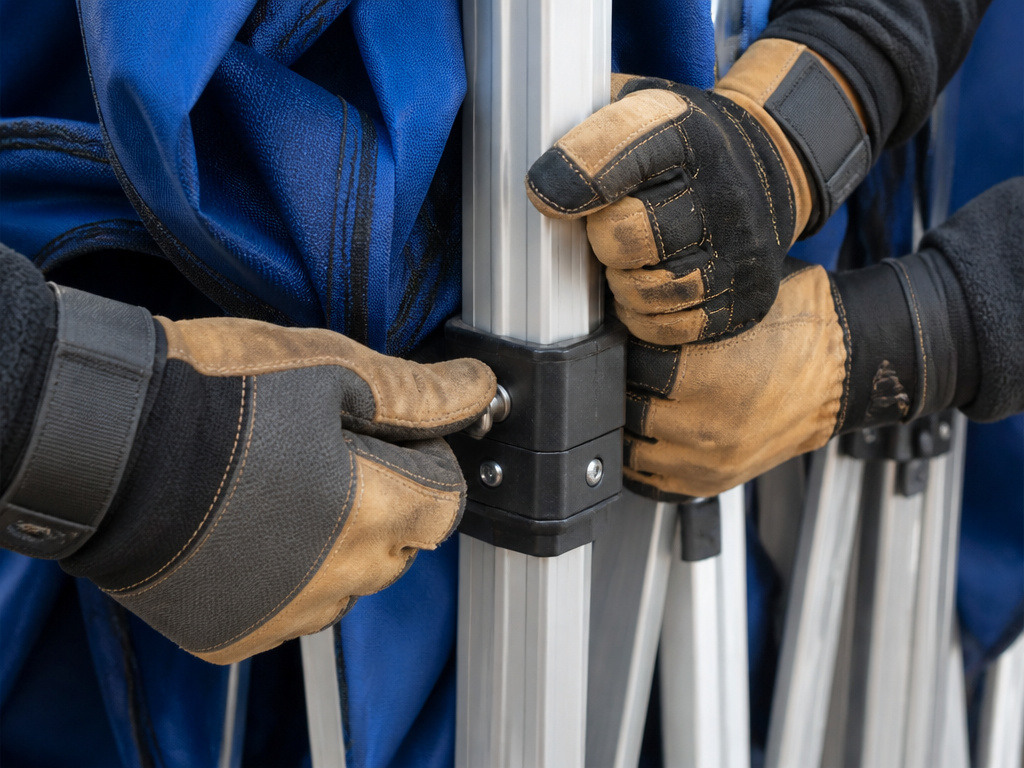
Not all pop-ups are created equal. Ignoring the manual can void warranties or break your tent on the first try.
Large Canopies and Party Tents
The Lowe’s 8 FT x 10 FT POP-UP TENT manual is clear: “Canopy will not easily close if only one person attempts to close the frame.” The frame geometry and surface area create too much resistance. The manual also warns against closing it if the push-pin release mechanism isn’t depressed. You’ll strain the latch and likely bend the pin.
| Tent Type | Critical Warning | Consequence If Ignored |
|---|---|---|
| Large Canopy (e.g., Lowe’s 8×10) | Requires two people; check push-pin release. | Bent frame or broken latch. Unrepairable in the field. |
| Rooftop Tent (e.g., TEDPOP 4P) | Expel all air, tuck fabric. Do not sit on extension panel. | Damaged fabric or bent aluminum honeycomb floor. |
| Any Pop-Up | Never fold/store when wet or damp. | Mildew stains and permanent fabric degradation within days. |
| Any Pop-Up | Never use in high wind/rain/lightning. | Frame collapse, fabric tearing, electrical hazard. |
Rooftop Tents (RTTs)
Closing a rooftop tent like the TEDPOP 4P is a different beast. The process focuses on expelling air and carefully tucking heavy fabric to avoid pinching.
The GEO 2.5-3.0 RTT manual cautions: “Ensure all air is expelled from the tent body before closing the hard shell. Carefully tuck all fabric inward to avoid catching.”
The mattress and bulky canvas need to be neatly contained. The aluminum honeycomb floor is strong but can be dented if you force the hard shell closed over a misplaced strap or lump of fabric. The ABS hard shell is UV-resistant but can crack under misaligned pressure.
TL;DR: Read your manual. A 10-second review of the specific warnings for your model prevents hundreds of dollars in damage.
What To Do When Your Tent Won’t Close
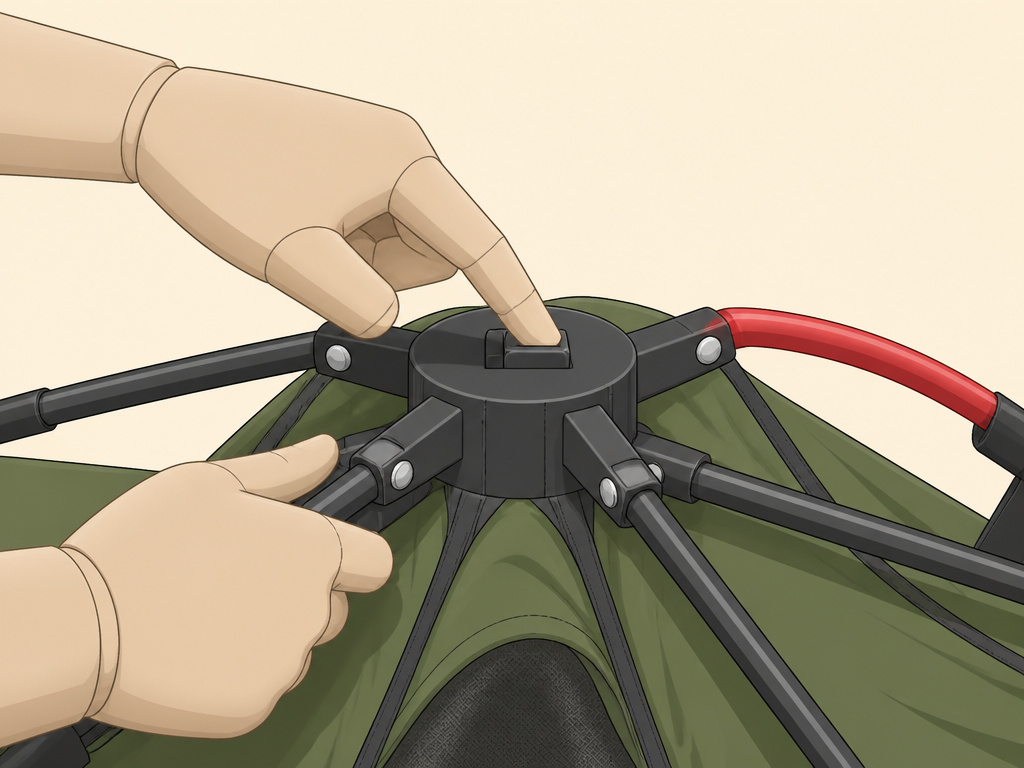
Sometimes, even with the right technique, a tent resists. Here’s a diagnostic table.
| Symptom | Likely Cause | Immediate Fix |
|---|---|---|
| Tent springs open as you fold. | Folding like a clamshell (trapping air). | Restart, form a long taco shell to let air escape out the ends. |
| One corner won’t collapse. | Object inside tent or twisted pole segment. | Open tent, find and remove the obstruction, untwist the pole. |
| Frame feels “locked” and won’t budge. | Push-pin or safety latch not released. | Circle the tent, find and depress every manual release latch. |
| Fabric is caught during fold. | Zipper left open on a door/window. | Open the tent, close the zipper fully, restart the fold. |
| Tent folds but bag won’t zip. | Loops not crossed securely; bundle too loose. | Unpack, re-fold with tighter compression, cross loops firmly. |
If a pole feels permanently bent or a plastic hub is cracked, stop. Forcing it will worsen the break. These are the trade-offs for a quick setup, the frames are more fragile than traditional pole sets. Carrying a tent repair kit with spare pole segments and a splint is wise, especially for frequent campers who rely on easy setup pop-up tents.
Post-Closing Care and Storage
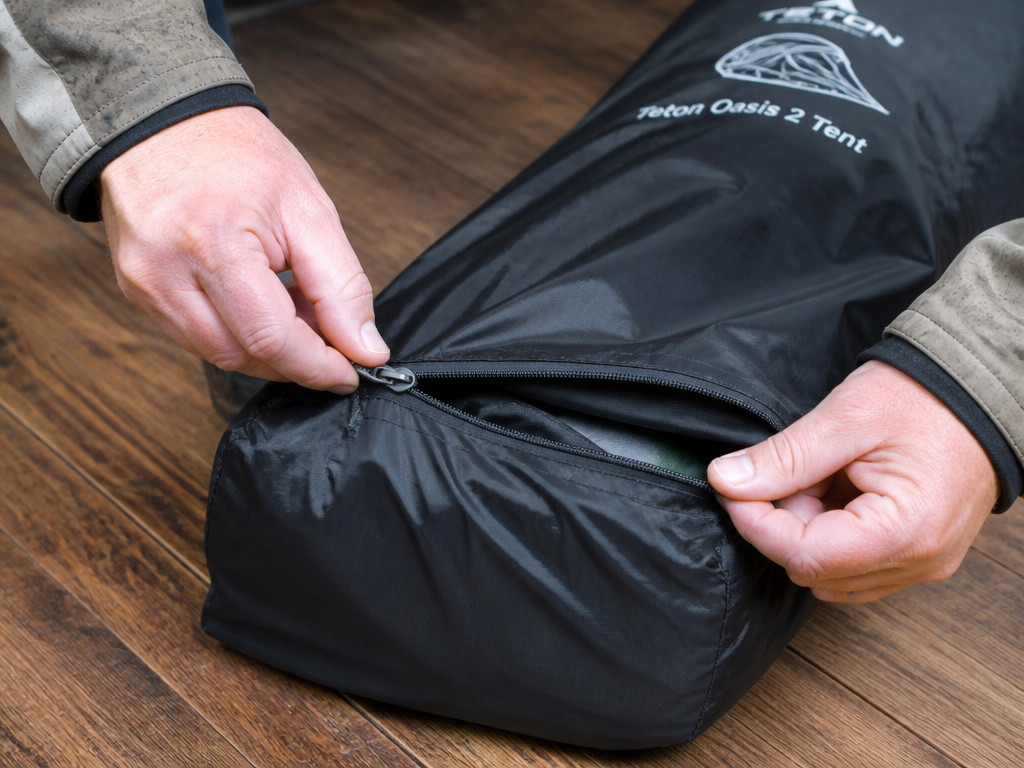
Your job isn’t done when the zipper closes on the bag.
Never, ever store a wet tent. The Lowe’s manual states this plainly. Mildew doesn’t just smell; it digests the fabric’s waterproof coatings and weakens the threads. If you must pack up a damp tent, your first task at home is to unpack it and hang it to dry completely in a shaded, airy space. Direct sun can degrade fabrics over time, but shade with a breeze is perfect.
I packed away a slightly damp tent after a morning dew once. Life got busy. Three days later, I unzipped the bag to a smell like a damp basement and faint grey speckles across the rainfly. The tent was salvageable after a vinegar soak, but the water repellency on those spots was forever gone.
Store the tent in a cool, dry place. Avoid extreme heat like a hot attic or a car trunk in summer, which can degrade the elastic cord inside the poles over time. Loosen the bag’s zipper slightly if you’re storing it long-term; this allows any residual moisture to escape and prevents compression damage to the foam in spacious car camp tents.
Consider this part of your camping gear checklist, proper storage doubles the lifespan of your shelter.
Frequently Asked Questions
Why does my pop-up tent keep popping open when I try to fold it?
You are likely pushing down on the center of the dome, compressing the air inside like a spring. Switch to the taco method: fold it along its length from one end to the other, which channels the air out and uses the frame’s hinges.
Can you close a pop-up tent by yourself?
Most standard 2-4 person dome pop-ups can be closed solo using the taco fold. However, larger canopies and party tents (like the 8×10 Lowe’s model) explicitly require two people according to their manuals. Trying alone risks frame damage.
How do you close a pop-up tent that is stuck?
First, reopen it fully. Check for and remove any gear inside. Ensure all zippers are closed. Walk around the tent and press any manual release buttons or levers (common on larger models). Then, restart the taco fold from the beginning, making sure to ground the base firmly with your feet.
What is the fastest way to close a pop-up tent?
The taco fold method, performed correctly, is the fastest. With practice, you can go from standing tent to packed bag in under 60 seconds. Speed comes from the smooth, corner-to-corner motion and securely crossing the locking loops.
Is it bad to leave a pop-up tent set up for a long time?
Yes, prolonged exposure to UV rays weakens fabric and fades colors. Wind can cause constant abrasion. If leaving for more than a day or two, consider taking it down or using a protective rainfly. For long-term base camping, a more robust durable canvas tent is a better choice.
The Bottom Line
Closing a pop-up tent isn’t a test of strength. It’s a test of technique. Master the taco fold, ground the base, let the air escape, lock the loops. That single routine ends the campground struggle.
Respect the specific rules for your model. Two people for a big canopy. Never trap moisture. Check those latches. This attention turns a flimsy-seeming gadget into reliable shelter trip after trip.
Now zip that bag. The campsite is clear, and you’re not the last one still wrestling with a sprung-open tent. That’s a win.