
How to Fold a Spray Tan Tent Without the Fight
This post contains affiliate links. As an Amazon Associate, we earn from qualifying purchases.
Folding a pop-up spray tan tent is a skill of redirection, not force. You collapse the spring-steel frame inward by pulling corners diagonally across the floor, press out all trapped air to form a flat disc, then twist that disc into a tight cylinder that fits the carry bag. The specific hand and foot placements guide the frame’s energy into a closed loop.
I’ve been there, kneeling on a client’s bathroom floor, face flushed, wrestling a tent that seems possessed. It was my third mobile appointment with my first professional tent, a Sienna X model I was so proud of. In my rush, I forced the twist. The sickening crunch of the 8mm steel frame kinking inside its sleeve is a sound I won’t forget. That tent never folded flat again. I learned the hard way that technique trumps muscle every time.
This isn’t about generic advice. It’s about the specific, sometimes gritty, details that transform a struggle into a smooth, 90-second routine. Let’s get your tent tucked away so you can focus on your next tan, not your gear.
Key Takeaways
- Work with the frame’s memory, not against it. Pulling corners diagonally crosses the steel hoops, convincing them to coil inward instead of fighting their spring-open desire.
- Your foot is your best tool. Use it to press stubborn walls inward when your hands are full, turning a two-handed fight into a controlled maneuver.
- Trapped air is your nemesis. A single pocket creates bulk that prevents a tight twist, guaranteeing the bundle will writhe and expand in the bag overnight, often bursting the zipper.
- If the bag won’t zip, the twist isn’t tight enough. Unbag it and re-twist more aggressively. Forcing a zipper strips the teeth. I’ve murdered three.
- Practice on a clean, hard floor at home first. Your likely first mistake? Pulling corners straight down instead of across, which tangles the frame into a lopsided taco.
Collapsing a pop-up spray tan tent requires overcoming the stored kinetic energy in its spring-steel frame. Guiding the pre-bent hoops past their neutral point allows them to coil inward, reversing the snap-open action. Success depends on diagonal corner pulls and complete air evacuation prior to the final twist.
Why Is Folding This Tent So Difficult?
The core of the struggle is physics. Your tent isn’t broken; it’s doing exactly what it was designed to do. The continuous hoop of spring steel is pre-bent to snap into a rigid dome. Your job is to reverse that engineered tension.
When you try to simply push walls in or bend the tent against its natural curve, you’re fighting every ounce of that stored energy. The correct technique uses diagonal pulls to cross the hoops over each other, mechanically guiding them into a new, stable coiled state. It’s the difference between bending a slinky in half and coaxing it to collapse in on itself.
Before you start: Never fold a damp tent. Trapped moisture breeds mildew within 48 hours, creating a foul, wet-sock odor that’s nearly impossible to eradicate from the nylon. Also, avoid forcing a twisted frame, a sharp crunch means a kinked hoop, a permanent injury that ruins the fold.
What Is the Foolproof Folding Technique?
Forget brute strength. This is a four-phase dance of leverage and precision. Find a clean, hard surface, tile, hardwood, or short carpet. Deep pile will snag the nylon.
- The Diagonal Collapse: Stand inside the tent. Grab the top seam of the fabric panel to your right. Pull it diagonally across the interior space toward the bottom left corner of the floor. You’re not just moving fabric; you’re crossing the top steel hoop over the bottom one. If it resists, plant your foot on the left wall and push inward. This foot-anchor is a game-saver.
- The Second Fold & Air Press: Now grab the top left corner and pull it diagonally to the bottom right. The tent is now a collapsed heap. Kneel on it. Drive your body weight into the center, sliding your hands outward to force every bubble of air out through the seams. That hissing sound? That’s victory.
- Forming the Perfect Disc: Smooth the now-flat nylon disc from the center outward. Eliminate every wrinkle and lump. A fold caught under itself here will jam later.
- The Final Twist: Pinch the center of the edge that was the floor. Lift it up to meet the opposite edge (the old ceiling), creating a loose figure-eight. Now, twist the entire bundle. Let the steel hoops spiral. Twist until the cylinder is compact and tight, forearms burning is a good sign.
TL;DR: Collapse corners diagonally, press out all air, smooth the disc, then twist into a tight cylinder. The twist tightness determines if it fits the bag.
Why Won’t My Tent Fit Back in the Bag?
This is the universal finale of frustration. The carry bag is sized for a perfectly compressed tent. Any residual bulk from air or a loose twist means the zipper teeth won’t meet.
First, align your tight cylinder with the bag’s opening. Feed one end to the bottom. Now, compress the middle of the bundle and work your hands toward the outside end, actively reducing its diameter as you feed it in. If it resists, the truth is simple: your twist wasn’t tight enough.
The solution isn’t a stronger zipper. It’s a tighter bundle. Unbag the tent, lay it flat, and re-twist. This time, use your knees to anchor one end while you wrench the other like you’re wringing out a towel. Many pros, myself included, eventually upgrade the storage solution entirely.
I retired my original Sienna X bag after the third zipper failure. Now I use a HDX 27-Gallon Tough Tote from Home Depot. It fits my tightly twisted Sjolie tent, my 24-inch LED light panel, and a microfiber towel. The original bag sits in a drawer as a trophy from the learning curve.
| Problem | Likely Cause | Immediate Fix | Long-Term Solution |
|---|---|---|---|
| Bag won’t zip | Bundle is too bulky from trapped air or loose twist. | Unbag, re-press air, re-twist more tightly. | Use a 1-inch Nite Ize Gear Tie to cinch the bundle before bagging. |
| Tent expands in bag overnight | Frame hoops not twisted past neutral point; memory wants to spring open. | Remove and re-twist immediately, focusing on tighter rotation. | Consider a replacement tote bag with more volume, like a sturdy reusable grocery bag. |
| Zipper strips or seam tears | Forcing the closure over an oversized bundle. | Stop. Do not force the zipper. | Abandon the original bag for a strap or tote. A torn bag is a total loss. |
Which Tents Are Easier or Harder to Fold?
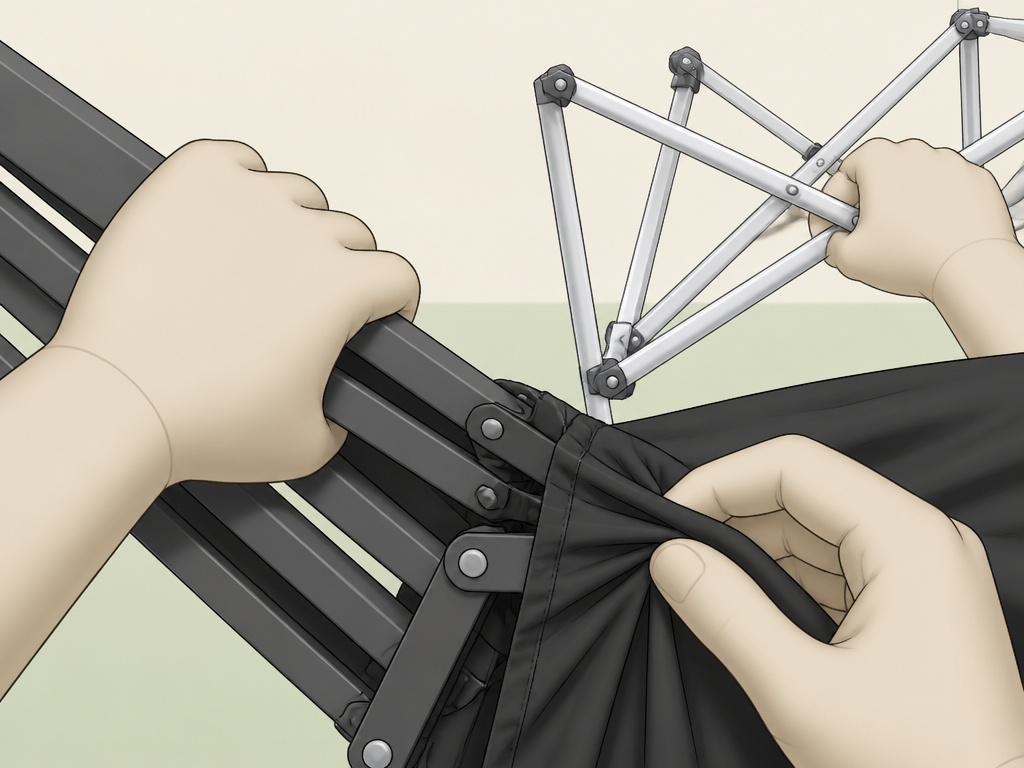
Your experience is largely decided at purchase. The trade-off is often between durability and folding ease.
Professional models from brands like Sienna X or Sjolie use thicker-gauge steel frames (6.5mm to 8mm). They withstand hundreds of cycles but require deliberate, steady pressure to collapse. Jerky, rushed force on these can cause a kink. Their nylon sleeves are often tighter, so you must manually feed the fabric like pleating a curtain as you fold.
In contrast, many budget-friendly tents under $100 from Amazon use thinner, more flexible frames. They collapse easily but risk over-rotation and pinching during the twist. They’re great for practicing the muscle memory without the fight.
For actual mobile work, you need the headroom of a proper stand-up tent model. While harder to fold, their professional utility is non-negotiable. It’s better to learn on the tool you’ll actually use.
| Tent Type | Frame Typical | Folding Feel | Best For |
|---|---|---|---|
| Professional Spray Booth (e.g., Sienna X Pro) | Thick spring-steel (8mm) | Stiff, requires steady pressure. | High-volume mobile technicians needing durability. |
| Mid-Range Pop-Up (e.g., generic Amazon) | Medium spring-steel | Moderate resistance, more forgiving. | Beginners or occasional users. |
| Compact Pop-Up Canopy | Thin, flexible steel | Easy, almost too pliable. | Practice runs or beach pop-up tents for shade. |
| Modular Pole Tent | Separate fiberglass poles | Easy (disassemble, don’t fold) but slow setup. | Home users who prioritize storage over speed. |
What Gear Actually Helps?
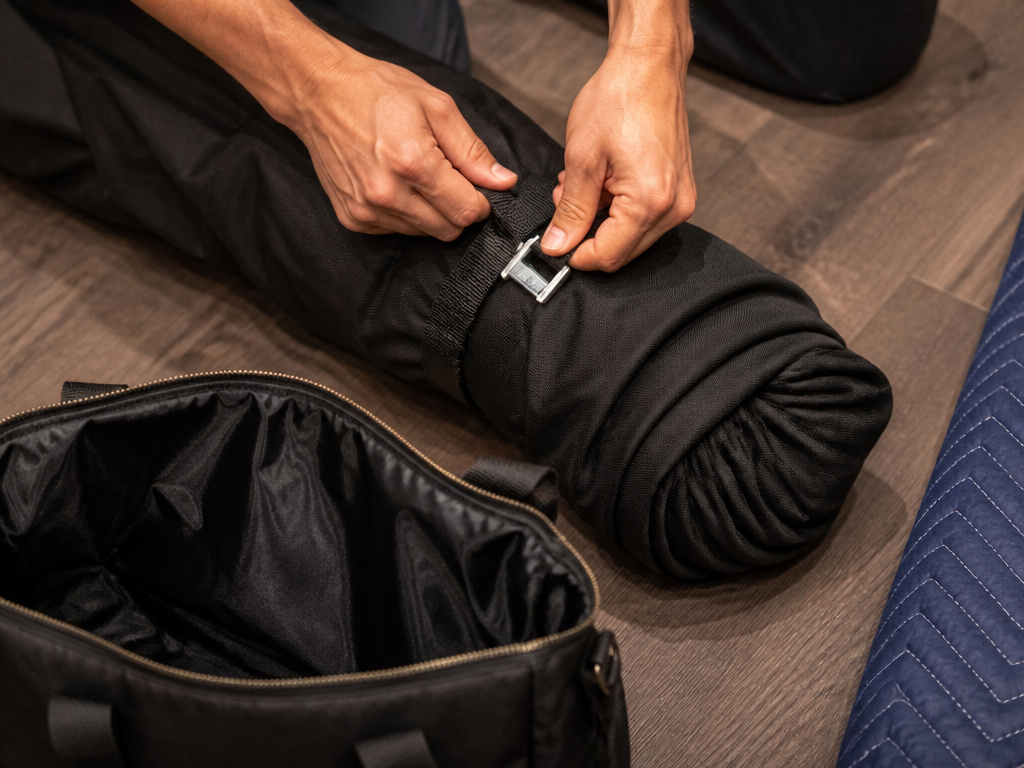
You don’t need special tools, but a few smart items turn a battle into a breeze.
- The Right Surface: A hard, flat floor. If you only have carpet, lay down a moving blanket or a lightweight tarp shelter as a smooth base.
- Compression Strap: A simple 1-inch elastic cargo strap (like those found with tent camping equipment) can cinch your twisted cylinder tighter than your hands ever could, often solving the bagging issue.
- Backup Tote: As mentioned, a sturdy, wide-mouth tote is a pragmatic upgrade from a failed original bag.
- Maintenance Must: If you ever fold it slightly damp (try not to!), a product like Defunkify Activated Charcoal Odor Eliminator spray is essential, not optional.
Common mistake: Folding the tent on an uneven surface like grass. The frame hooks on imperfections, binding the twist and creating a lopsided bundle that’s impossible to bag symmetrically.
A well-organized kit includes these tent camping accessories, making your mobile business efficient. Pair them with reliable tent lighting solutions for a fully professional setup.
TL;DR: Use a hard floor, a compression strap for a tighter bundle, and have a backup tote ready. Always store your tent completely dry.
Frequently Asked Questions
How long should it take to fold the tent?
Once you have the technique down, the entire process from standing to bagged should take about 90 seconds. The first several attempts may take 5 minutes. Speed comes from precision, not rushing.
Can one person fold a large spray tan tent?
Absolutely. The technique is designed for solo operation, using body weight and foot leverage. Two uncoordinated people often get in each other’s way more than they help.
My tent smells musty. What can I do?
You likely folded it while damp. Unfold it completely and air it out in direct sunlight if possible. Spray the interior with a dedicated odor eliminator like Defunkify before a final air-dry. The smell can be stubborn.
The steel frame popped out of the sleeve. Can I fix it?
Usually, yes. Gently work the hoop back into the channel. It’s tedious but possible. If the frame is kinked from forcing it, the tent’s folding ability is permanently compromised.
Are pop-up tents better than pole tents for mobile work?
For speed and convenience, yes. A portable pop-up shelter sets up in seconds, while a pole tent takes minutes. The folding learning curve is worth it for the daily time savings.
Should I buy a cheaper tent to practice folding?
It’s not a bad idea. Practicing on a less resistant, inexpensive tent model lets you learn the diagonal pull and twist mechanics without the fight, building confidence before you graduate to your pro kit.
The Bottom Line
Folding a spray tan tent is a physical skill, like learning a knot. It feels awkward until the moment it clicks. That click happens on your living room floor, not at a client’s house. Practice the diagonal collapse and the aggressive twist until your forearms complain, that’s the tightness the bag demands.
Respect the frame’s memory. Redirect it, don’t fight it. And if the original bag becomes a source of daily frustration, give yourself permission to upgrade to a simple, sturdy tote. Your future self, packing the car after a long day of appointments, will thank you for that small act of mercy. For more insights on choosing durable gear, explore our look at heavy-duty tent materials and how they perform over time. Now go forth and fold with confidence.
