
8 Best Stand Up Tents of 2026
This post contains affiliate links. As an Amazon Associate, we earn from qualifying purchases.
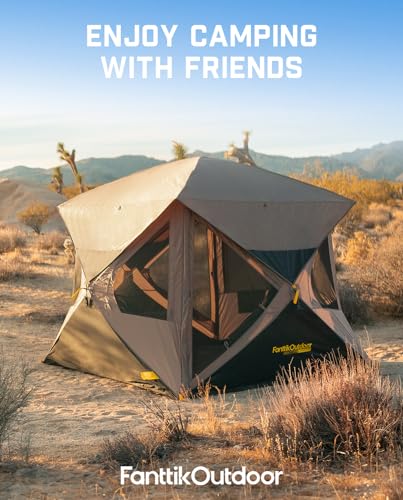
The FanttikOutdoor Alpha C4 Ultra stands out as the best overall stand up tent for its tall interior and quick 60-second setup, while the EVER ADVANCED 6 Person Blackout Tent is a solid budget-friendly option that still offers strong weather protection. For families needing space and airflow, the FanttikOutdoor Zeta C4 Pro 4-Person Tent brings excellent ventilation and a well-thought-out design.
If you’re tired of crouching in cramped tents or wrestling with poles after a long drive, a stand up tent can make a real difference. But not all models deliver on comfort, durability, or actual ease of use, some sacrifice ventilation for speed, others skimp on waterproofing.
Based on specs, owner feedback, and years of evaluating camping gear, I focused on models that balance headroom, weather resistance, and real-world usability. This guide cuts through the marketing and highlights stand up tents that deliver where it matters most.
Top 8 Stand Up Tents in the Market
The Best Stand Up Tents, Reviewed
FanttikOutdoor Alpha C4 Ultra 4-Person Tent

Strengths
- PFAS-free materials
- Excellent airflow
- Compact packed size
Trade-offs
- Higher price point
- Rainfly requires careful tensioning
- Slight learning curve on setup
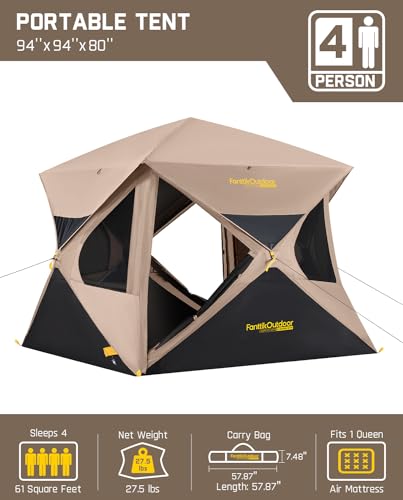
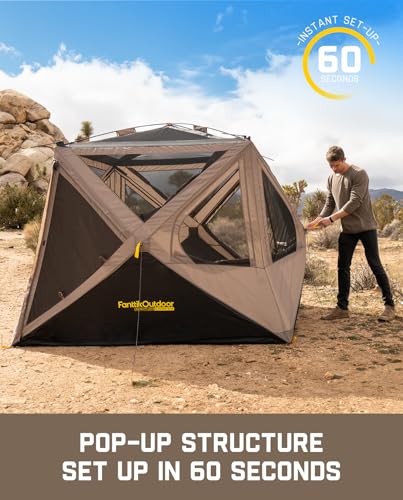
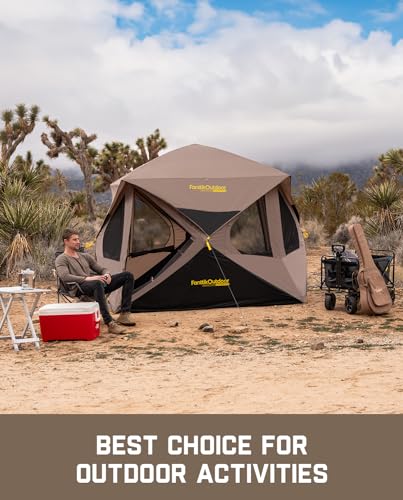
This is the tent I’d recommend to most campers if they want a balance of speed, comfort, and clean materials. The Alpha C4 sets up in 60 seconds flat, thanks to its hub design, and the 80-inch center height means you can stand and stretch without ducking. The boxy shape with vertical walls maximizes usable space, owners say it easily fits a queen mattress and gear.
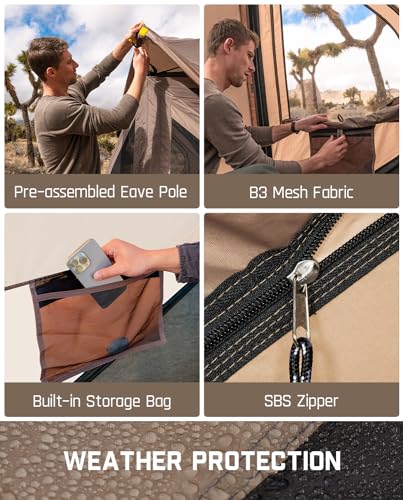
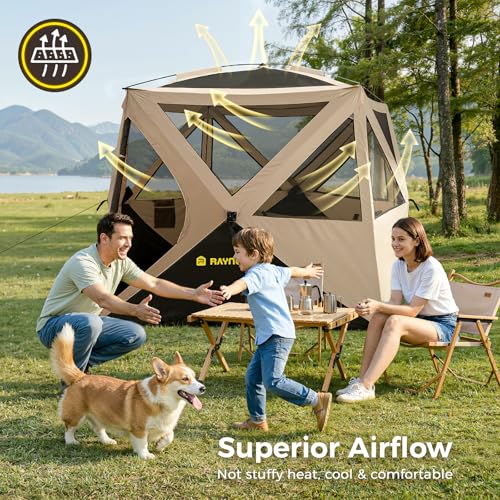
What sets it apart is the PFAS-free fabric, a detail eco-conscious buyers will appreciate. The breathable B3 mesh and rollable eaves create excellent airflow, and the shorter packed length makes it easier to stash in a trunk than most instant tents. It’s pricier than budget models, but compared to the Coleman or UNP, it’s more durable, better ventilated, and safer for kids. For overall performance, this is the one to beat.
Product photos
4 Person Pop Up Instant Cabin Tent
Strengths
- Fastest setup
- Tall interior
- Strong waterproof rating
Trade-offs
- Bulky carry size
- Awkward shape for tight sites
- No blackout option
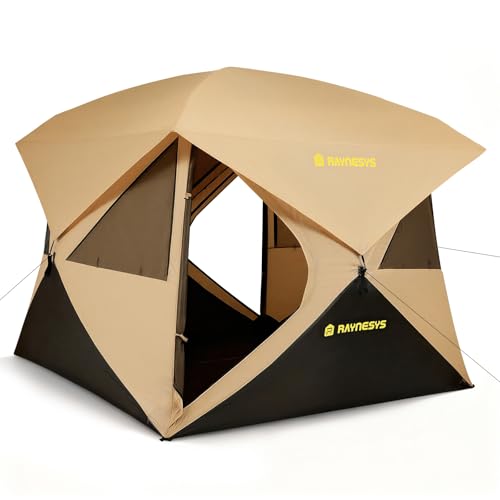
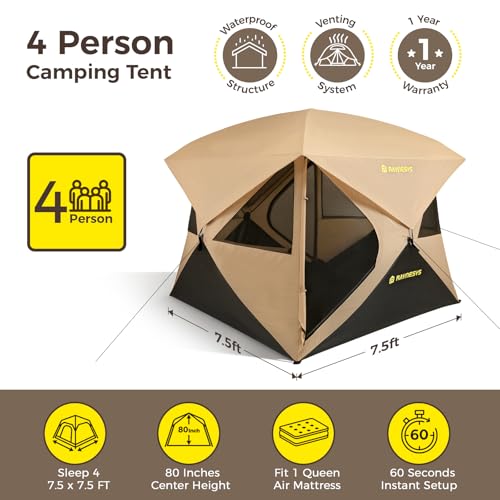
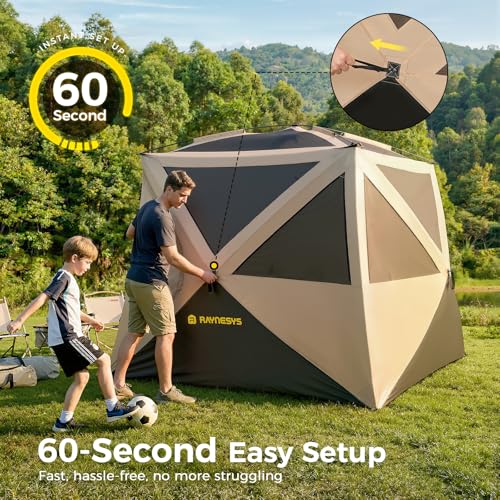
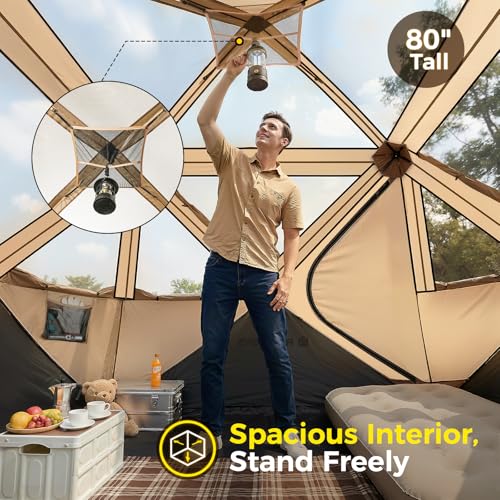
This pop-up hub tent is built for speed and simplicity, and it shows. The 60-second setup is legit, thanks to the pre-attached X-pole design, and owners love how fast it deploys, especially when surprise rain hits. With an 82-inch center height, it’s one of the tallest 4-person tents here, letting most users walk around fully upright, which is a standout for comfort.
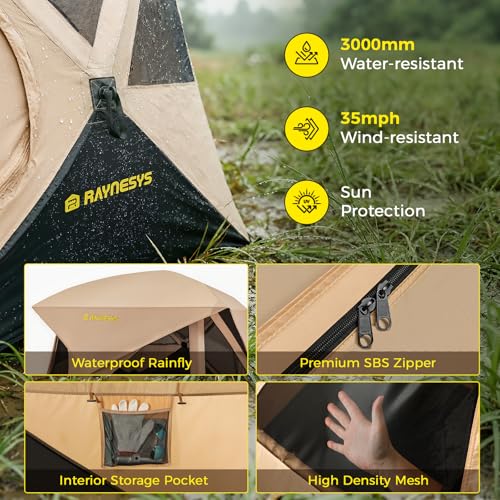
The 3000mm HH waterproof rating and 300D floor are standout specs, and real-world feedback confirms it performs well in heavy rain. The split structure and SBS zippers add to its durability cred. Still, the packed length, over 4.5 feet, is awkward for small trunks. Compared to the FanttikOutdoor models, it’s less refined in materials but offers better headroom and storm readiness. For wet climates, this is a smarter buy than the Coleman.
Product photos
UNP 6-Person Family Camping Tent

Strengths
- Spacious interior
- Easy setup
- Good headroom
Trade-offs
- Heavy for backpacking
- Basic ventilation
- Steel poles prone to rust
This UNP 6-person tent hits the sweet spot for families who want space without wrestling with a complicated setup. On paper, the 78-inch center height stands out, just enough for most adults to move around without crouching, and the nearly 90 sq ft floor plan does fit two air mattresses with room to spare, according to owners. The double-layer construction and steel poles suggest solid weather resistance, and reviewers consistently report it holding up well in light wind and rain, especially for car campers.
Where it shines is simplicity: the 5-minute claim for two people feels accurate based on owner feedback, and the included carry bag makes transport manageable despite the 18 lb weight. It’s not ultralight by any means, but for weekenders who value ease and space over packability, this checks the boxes. Compared to the Coleman Skydome, it offers more vertical height but lacks the welded seams and refined ventilation design.
Product photos


Portal 6 Person Tent with Screen Porch

Strengths
- Large screen porch
- Spacious layout
- Good storage options
Trade-offs
- Moderate ventilation
- Fiberglass poles less durable
- No blackout option
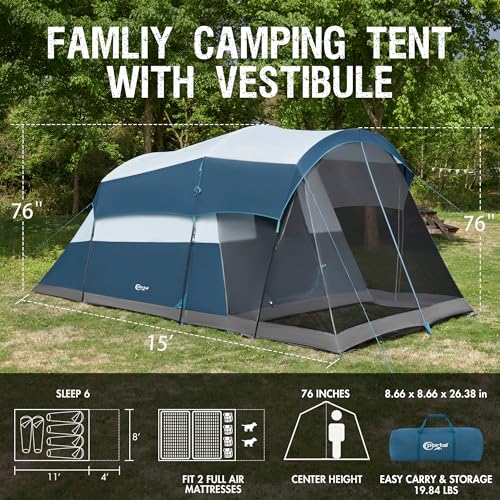
The standout here is the 4-foot-deep screen porch, owners love it as a mud-free zone for boots, a bug-free hangout spot, or a sheltered area for cooking in light rain. At 76 inches tall, it’s easy to move around inside, and the tunnel design with color-coded poles makes setup smooth for first-timers. The 15×8 footprint is massive for six people, easily swallowing two full air beds.
The fiberglass poles are sturdier than they sound, and the 66D fabric holds up well in light storms. But it lacks the welded seams of the Coleman, and some users report condensation buildup due to limited overhead vents. Still, for family trips where lounging matters, the porch adds real value. Compared to the UNP 6-person, it’s roomier and better organized, though not as quick to pitch.
Product photos


FanttikOutdoor Zeta C4 Pro 4-Person Tent

Strengths
- Unmatched ventilation
- Insect protection
- Smart drainage design
Trade-offs
- Low center height
- Not fully stand-up
- Mesh roof requires outer fly
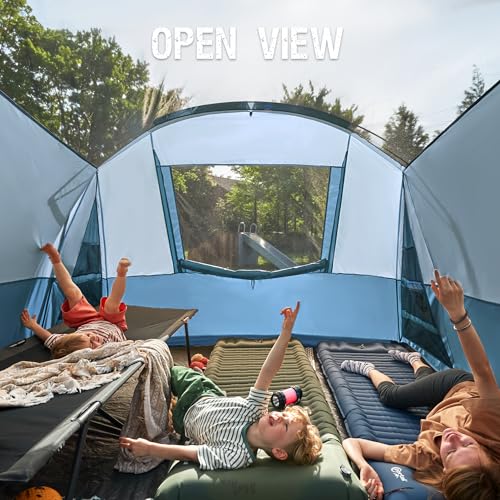
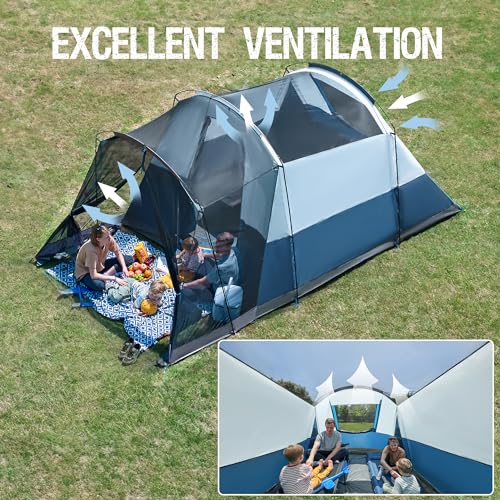
When ventilation is the priority, the Zeta C4 Pro stands out. With mesh windows on all four sides, floor vents, and a full mesh ceiling, it moves air like few others, owners in humid areas rave about how much cooler it feels than polyester-walled tents. The 59-inch center height is the lowest here, so standing fully upright is a stretch for taller users, but the airflow trade-off is worth it for summer camping.
It’s also impressively wind-rated, up to 35 mph, and the drainage features at the door and floor help keep things dry. But the inner mesh roof isn’t waterproof on its own, so the rainfly must be used in storms. Compared to the Alpha C4, it’s less spacious and slightly shorter, but better for hot, buggy nights. If you hate stuffy tents, this is your best bet.
Product photos


EVER ADVANCED 6 Person Blackout Tent

Strengths
- Superior light blocking
- Fast setup
- Good storage options
Trade-offs
- Poor heat dissipation at night
- Lower center height
- Mesh roof lacks storm cover
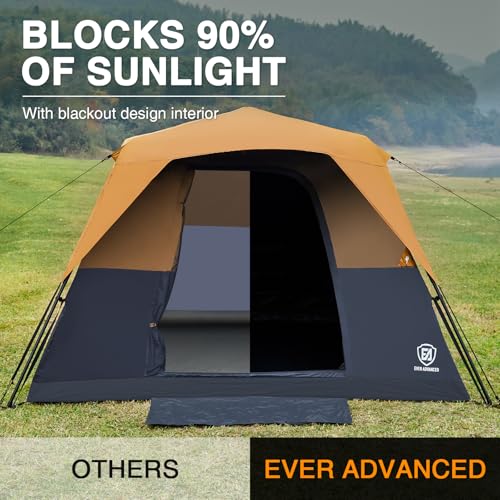
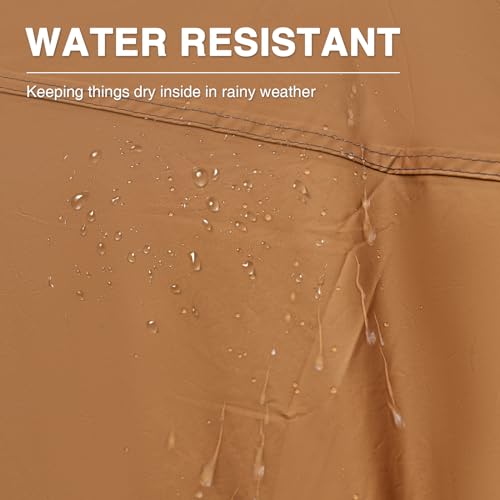
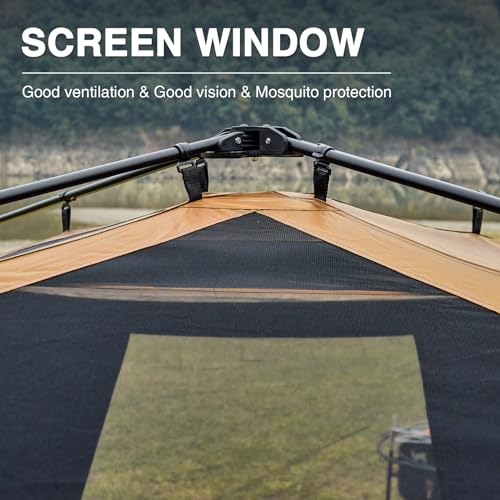
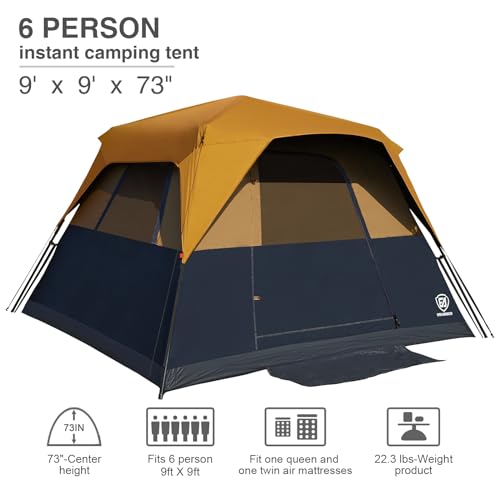
The blackout design of this EVER ADVANCED tent is its headline feature, and it works. Owners consistently report significantly cooler interiors during daytime and much darker conditions for sleeping in, which is rare in standard tents. That makes it ideal for families with kids or shift workers trying to nap midday. The 73-inch height is decent, though not class-leading, and the 9×9 footprint fits two queens, per user reports.
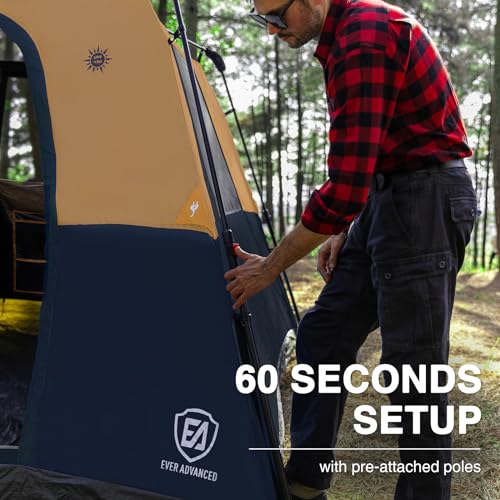
Setup is quick, 60 seconds as advertised, and the pop-up cabin frame makes it accessible for solo campers. But the ventilation is merely adequate, the mesh roof helps, but it’s not as airy as the FanttikOutdoor Zeta C4 Pro. And while the blackout fabric blocks light and some heat, it can trap warmth at night. If light control is your priority, this is the one. For airflow, look elsewhere.
Product photos
UNP 4-Person Cabin Tent

Strengths
- Affordable price
- Lightweight
- Simple setup
Trade-offs
- Limited weather protection
- Basic rainfly
- Mesh top not storm-rated
If you’re on a budget but still want a stand-up cabin-style tent, this UNP 4-person model makes a compelling case. At 72 inches tall and just 13 pounds, it’s lightweight enough for casual car campers to handle solo, and the straight walls give it a roomy feel. Owners say it sets up in under 5 minutes, and the steel pole frame holds steady in light gusts, though it’s not built for serious storms.
It’s clearly designed for fair-weather camping: the top rainfly helps, but without full seam sealing, heavy rain can lead to seepage, as some reviewers noted. It’s a solid value pick, but the FanttikOutdoor Alpha C4 offers better materials and ventilation for only a few pounds more. For beginners or occasional users, this delivers what it promises, just don’t expect it to survive a thunderstorm.
Product photos


Coleman Skydome 8-Person Tent

Strengths
- Excellent weather sealing
- Quick setup
- Strong wind rating
Trade-offs
- Center height not maxed
- Mesh doors lack storm flaps
- Bulkier packed size
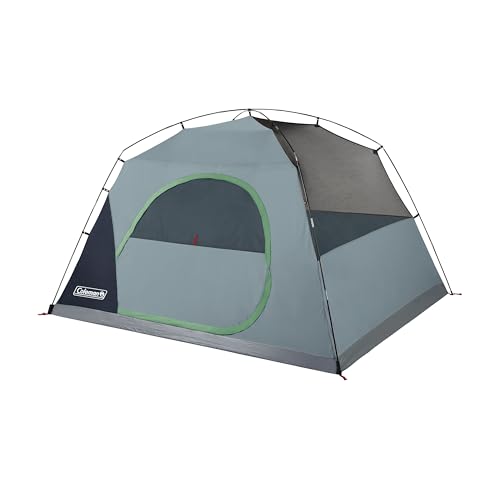
The Coleman Skydome is a staple for a reason, it’s the kind of tent that just works, especially when you’re arriving late, tired, and facing a drizzle. The pre-attached poles deliver on the 5-minute promise, and the WeatherTec system, with its inverted seams and welded corners, is a real differentiator when rain rolls in. Owners repeatedly credit it with staying dry in downpours that soaked other budget tents.
With 20% more headroom than older dome models and nearly vertical walls, it feels less claustrophobic than many in its class. The 6-foot center height is generous, and the wider door is a small but meaningful upgrade for hauling in air beds. It’s not as tall as the UNP or Portal models, but its balance of weather protection, durability, and airflow makes it a strong pick. I’d take this over the UNP 6-person model if wind and rain are likely.
Product photos

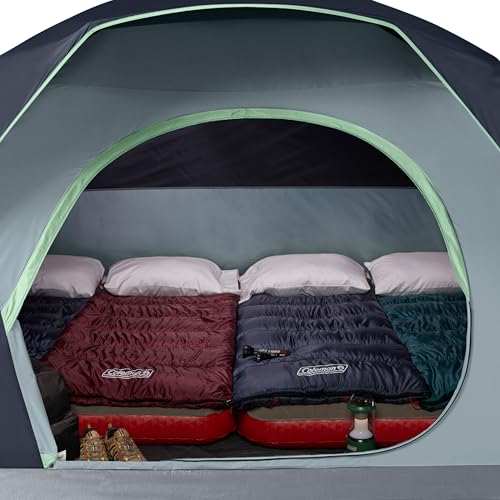
How We Evaluated stand up tents
As a long-time tent enthusiast, I approached researching stand up tents by focusing on a detailed comparison of published specifications and features. I weighed those against owner reviews from major retailers and insights from other reputable outdoor gear reviewers. My goal was to rank these tents based on what truly matters for a comfortable and reliable camping experience – and, crucially, to understand where specs tell the full story and where owner feedback is essential. Rather than a hands-on lab test, this is a research-led comparison.
For stand up tents, I prioritized spaciousness and weather protection above all else. A tent that doesn’t provide enough headroom or struggles in wind and rain simply won’t cut it. Ventilation was also key, as a stuffy tent can quickly become uncomfortable, even in moderate temperatures. These three factors – space, weather resistance, and airflow – heavily influenced my rankings, as they directly impact the overall camping experience.
Specifications reliably indicate tent dimensions and materials used in construction (like the denier of the fabric and waterproof ratings). However, I found owner feedback to be crucial for understanding real-world performance, especially regarding ease of setup, durability over time, and how well the ventilation system actually works. Details like zipper quality and the tent’s behavior in windy conditions are best assessed through the collective experience of many campers, and I paid close attention to recurring themes in those reviews. Understanding pop-up tent benefits also informed my assessments of setup speed claims.
How To Pick The Right stand up tents
I’ve spent countless nights under canvas – and under nylon, polyester, and poly-cotton blends – and one thing is clear: a quick setup doesn’t mean sacrificing quality. Pop-up tents have come a long way, and now offer genuine convenience without feeling flimsy.
A good pop-up tent balances instant setup with durable construction, adequate weather protection, and surprisingly good ventilation. Look for models with pre-attached poles, quality waterproofing (a 2000mm HH rating is a good starting point), and robust zippers like SBS. Don’t overlook features like a full rainfly and integrated mesh windows for managing condensation and airflow.
Focus on Waterproofing and Seam Sealing
Don’t assume “water-resistant” means waterproof. Many pop-up tents advertise water resistance, but the degree varies wildly. Pay attention to the hydrostatic head (HH) rating of both the tent fabric and the rainfly. A higher HH rating indicates better waterproofing. Beyond the fabric itself, verify the seams are factory-sealed, or be prepared to seal them yourself with a seam sealer. Many owners find that even with a rainfly, water can seep through poorly sealed seams during heavier downpours.
Prioritize Ventilation to Minimize Condensation
Pop-up tents, by their nature, can sometimes feel stuffy. The quick-setup design often means fewer ventilation options compared to traditionally-poled tents. Look for models with multiple mesh windows, vents near the ground, and a mesh roof panel. The FanttikOutdoor Zeta C4 Pro 4-Person Tent, for example, boasts mesh windows on all sides and vents at the floor, which is a significant advantage. Here’s what I see owners prioritizing in ventilation: * Large windows are nice, but not enough. * Floor-level vents help with cross-breeze. * A full mesh ceiling is a huge benefit, letting moisture escape and offering a view of the night sky, though you’ll need the rainfly for actual rain.
Consider Packed Size and Portability
One of the biggest drawbacks of some pop-up tents is their bulky packed size. While the convenience of instant setup is appealing, lugging a massive tent across a campsite isn’t. Check the packed dimensions and weight before buying. The FanttikOutdoor Alpha C4 Ultra 4-Person Tent, with its shorter packed length, is a good example of a tent designed with portability in mind. Remember, if you’re planning to backpack, even a relatively compact pop-up tent is probably not the best choice; instead, explore spacious walk-in tents designed for backpacking.
A tent’s packed size is less about the overall volume and more about its shape. A long, narrow package is easier to lash to a backpack or fit in a car trunk than a bulky, round one.
Stand Up Tents Compared
Here’s a comparison of key specifications for various stand up tents to help you make an informed decision.
| Product Title | Capacity | Floor Size (ft x ft) | Center Height (in) | Set-Up Time | Waterproof Rating (mm) | Weight (lbs) |
|---|---|---|---|---|---|---|
| FanttikOutdoor Alpha C4 Ultra | 4 | 7.8 x 7.8 | 80 | 60 sec | N/A | N/A |
| 4 Person Pop Up Instant Cabin Tent | 4 | 7.7 x 7.7 | 82 | 60 sec | 3000 | N/A |
| UNP 6-Person Family Camping Tent | 6 | 8.3 x 7.5 | 78 | 5-10 min | N/A | 18 |
| Portal 6 Person Tent with Screen Porch | 6 | 11 x 8 | 76 | 5 min | N/A | N/A |
| FanttikOutdoor Zeta C4 Pro | 4 | 6.5 x 6.5 | 59 | 60 sec | N/A | 14.5 |
| EVER ADVANCED 6 Person Blackout Tent | 6 | 9 x 9 | 73 | 60 sec | N/A | 22.3 |
| UNP 4-Person Cabin Tent | 4 | 8 x 7 | 72 | 5 min | N/A | 13 |
| Coleman Skydome 8-Person Tent | 8 | 10 x 8.5 | 72 | <5 min | N/A | N/A |
Frequently Asked Questions
What’s the typical lifespan of a pop-up tent?
Generally, a pop-up tent will last 3 to 7 camping seasons with moderate use. Durability depends heavily on the quality of materials and how well you care for it, like proper storage and cleaning after each trip.
Are stand up tents truly wind resistant?
While many are advertised as such, true wind resistance depends on staking and guylines. Look for tents with robust stake loops and included guylines, and always fully stake the tent, even if conditions seem calm, to prevent collapse in gusts.
How do the waterproofing claims on these tents stack up?
Waterproof ratings (like 3000mm) are a good starting point, but seam sealing is equally important. Many owners report needing to apply seam sealer to even highly-rated tents to prevent leaks during prolonged rain; a rainfly is also essential.
What’s the biggest drawback of a pop-up tent compared to a traditional tent?
The biggest trade-off is often packed size and weight. Pop-up tents tend to be bulkier and heavier than similarly sized traditional tents, making them less ideal for backpacking, though there are some surprisingly compact options like those found among 4-person standing height tents.
Besides waterproofing, what’s the most common complaint owners have about stand up tents?
Condensation buildup is a frequent issue. Look for models with ample ventilation – multiple mesh windows and vents – to help minimize moisture inside the tent.
The Bottom Line
Choosing a stand up tent often comes down to balancing convenience with a few compromises. While instant setup is fantastic, you’ll likely pay a bit more for a tent that also delivers on durability and weather protection. For the best overall combination of features and reported reliability, I recommend the FanttikOutdoor Alpha C4 Ultra. It consistently receives positive feedback regarding its ease of use and relatively compact packed size – a real win for car campers.
If you’re on a tighter budget, the 4 Person Pop Up Instant Cabin Tent offers a surprising amount of space for the price. For those prioritizing maximum versatility and a screened porch for bug-free lounging, the Portal 6 Person Tent with Screen Porch is a solid choice. And if you’re considering something a little different, you might want to explore whether inflatable air beam tents could be a good fit for your needs.
Ultimately, don’t get too caught up in chasing the highest waterproof rating or the lightest weight. A tent’s performance is determined more by its construction quality, how well it’s pitched, and whether it’s appropriate for the conditions you expect to encounter. Prioritize a well-made tent, practice setting it up before your trip, and always check the forecast.