
Are Inflatable Tents Any Good? The Wind & Weight Trade-Off
This post contains affiliate links. As an Amazon Associate, we earn from qualifying purchases.
Inflatable tents are good for car camping and family trips where fast setup and spacious living areas are the priority, but they are heavier, bulkier, and less stable in high winds or alpine conditions than traditional pole tents. The core trade-off is speed for stability and packability.
Most people get this wrong because they focus only on the promised five-minute pitch time. They don’t think about the 15-pound weight penalty, the constant hiss of a slow leak on night three, or what happens when a 40-mph gust hits a cheaper model’s undersized air chambers.
This guide breaks down where inflatable tents win, where they fail catastrophically, and the specific models and conditions that make the trade-off worthwhile.
Key Takeaways
- Inflatable tents pitch in 5–10 minutes with a pump but require a daily pressure check on trips longer than two nights due to temperature-induced sag.
- They are 20–40% heavier and bulkier than equivalent pole tents, ruling them out for backpacking or any hike-in site.
- Stability in wind depends entirely on chamber size and guy-line tension; a poorly tensioned line can distort a beam and collapse the tent.
- Cold weather is their nemesis. Air pressure drops about 1 PSI for every 10°F temperature decrease, requiring a top-up every chilly morning.
- A puncture doesn’t mean total failure. Quality tents like the Dwights Enterprise Range use separate air tubes so one leak only affects a single section.
The Speed vs. Stability Equation
The sales pitch is always about speed. And it’s true, an inflatable tent goes up fast. You lay it out, attach a pump, and watch the structure rise in minutes. No threading poles through sleeves, no wrestling with elastic cord. For a family wrangling kids at a crowded campground, that’s a legitimate win.
But that speed comes from replacing rigid poles with pressurized air. Air bends.
A tent’s wind resistance is directly tied to the internal pressure of its beams and the correct angle of its guy-lines. Pull a line too tight in the wrong direction and you distort the beam, creating a weak spot that can buckle.
That’s the part the marketing videos skip. The Berghaus Air 400 gets cited for good design because its beams are large-diameter and its attachment points are reinforced. A cheaper tent with skinny tubes will start to wobble in a breeze that a pole tent wouldn’t notice.
TL;DR: The setup speed is real, but the trade-off is a structure inherently less rigid than aluminum or fiberglass poles, making correct guying non-negotiable.
The Achilles’ Heels: Wind, Cold, and Punctures
Three things will ruin your trip with an air tent: wind, a drop in temperature, or a sharp object. Sometimes all three hit at once.
Wind is the most dramatic failure mode. Inflatable tents present a large, solid surface to the wind. If the beams aren’t at full pressure, or if the guy-lines are slack, the whole structure can act like a sail. I’ve seen one lift clean off the ground with the sleeping bags still inside. The livefortheoutdoors.com report of an air tube exploding during a storm on the Isle of Wight isn’t an outlier, it’s a worst-case example of wind loading meeting a pressure limit.
Cold is a slower, sneakier problem. The air inside the beams contracts as the temperature drops. You might go to bed with a taut, drum-like shelter and wake up to sagging walls that flap in a light breeze. This isn’t a minor annoyance.
Common mistake: Not re-inflating on a cold morning, the tent loses significant wind resistance, and a sudden gust can collapse a wall onto a stove or lantern.
For a weekend trip, you can top it off once. For a week-long expedition, you’re adding a morning chore to your routine. This regular maintenance requirement is a deal-breaker for expedition-style camping where every minute and ounce counts, but it’s manageable for a relaxed car camping tents trip.
Punctures are the boogeyman, but modern designs have mitigation. Cheap PVC beams can be a nightmare to patch. Higher-end models like the Dwights Enterprise Range use heavy-duty TPU (thermoplastic polyurethane) tubes, which are more puncture-resistant and easier to repair with a proper patch kit. Their key design trick is using separate air tubes for each structural element. A puncture in one roof beam doesn’t deflate the entire tent, just that one arch.
| Failure Mode | Likely Cause | Timeline & Consequence |
|---|---|---|
| Sudden collapse in wind | Undertensioned guy-lines or under-inflated beams | Immediate; can damage tent fabric and endanger occupants |
| Gradual wall sag | Overnight temperature drop (1 PSI per 10°F) | Overnight; reduces living space and wind performance |
| Slow leak | Micro-puncture or valve failure | Over 6–12 hours; requires patch and re-inflation |
| Catastrophic beam explosion | Extreme wind load on a fully pressurized, poorly guyed beam | Instantaneous; renders tent unusable |
Who Should (and Shouldn’t) Buy an Inflatable Tent?
This isn’t a one-size-fits-all answer. The right tent depends entirely on how you camp.
Buy an inflatable tent if:
- Your camping is 100% car-based. You drive to the site and unload.
- You have young children or less-able helpers. The simple setup reduces campsite chaos.
- You prioritize a fast pitch over a light pack. Weight and bulk are secondary concerns.
- You camp mostly in mild, forecastable conditions, state park campgrounds, not mountain passes.
Avoid an inflatable tent if:
- You backpack or hike any distance to your site. The weight and packed size are prohibitive.
- You camp in alpine, coastal, or consistently windy regions.
- You’re on a tight budget. Cheap inflatable tents are the most likely to fail.
- You dislike maintenance. The need to check pressure adds a task traditional tents don’t have.
For large groups where space is the premium, a nine-person tent with poles might still be a better bet for sheer stability. But for a family that values quick shelter after a long drive, the trade-off can be worth it. The key is buying a well-made model from a brand that understands the stresses. Don’t buy a no-name Amazon special and expect it to handle a thunderstorm.
Decoding Specifications and Build Quality
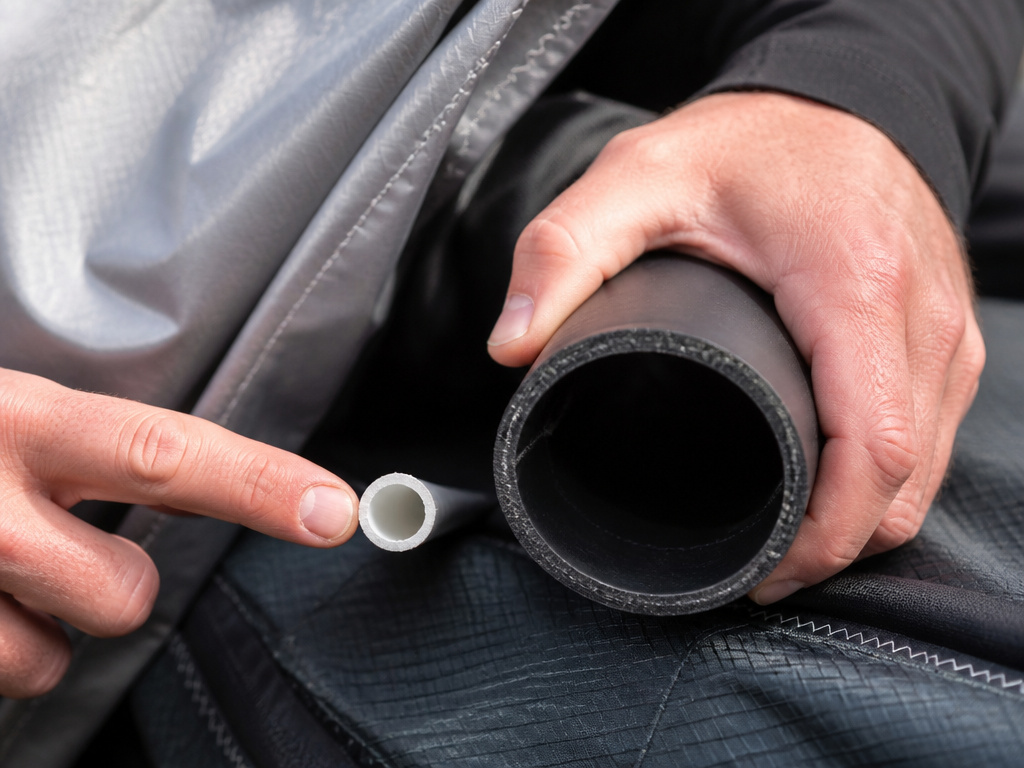
Not all air is created equal. When you’re comparing models, four specs tell you almost everything.
First, look at the fabric. A high hydrostatic head (HH) rating is critical for waterproofing. Aim for 3000mm or more. Polyester with a polyurethane coating is standard, but poly oxford fabric, like on the Dwights range, is tougher and more abrasion-resistant.
Second, examine the beam material. TPU is superior to PVC. It’s more flexible in cold weather, more UV-resistant, and easier to patch permanently. PVC can become brittle and crack.
Third, check the beam diameter. Fatter beams hold more air volume, which translates to higher pressure and better rigidity. Skinny beams are a red flag for stability.
Fourth, understand the warranty. A three-year warranty suggests the brand expects problems. A five-year or longer warranty indicates confidence in the materials and seams. This is a solid proxy for durability you can’t gauge from photos online.
I won’t recommend an inflatable tent for winter camping. The material stiffens, the pumps struggle, and the constant pressure loss from cold makes them more hassle than they’re worth. Found that out the hard way on a November trip where I spent more time pumping than sleeping.
These specs matter more than the advertised “sleeping capacity.” A well-built four-person inflatable tent that can handle 30mph winds is a better investment than a cheap eight-person model that flaps like a flag in a 15mph breeze.
The Setup and Maintenance Reality Check
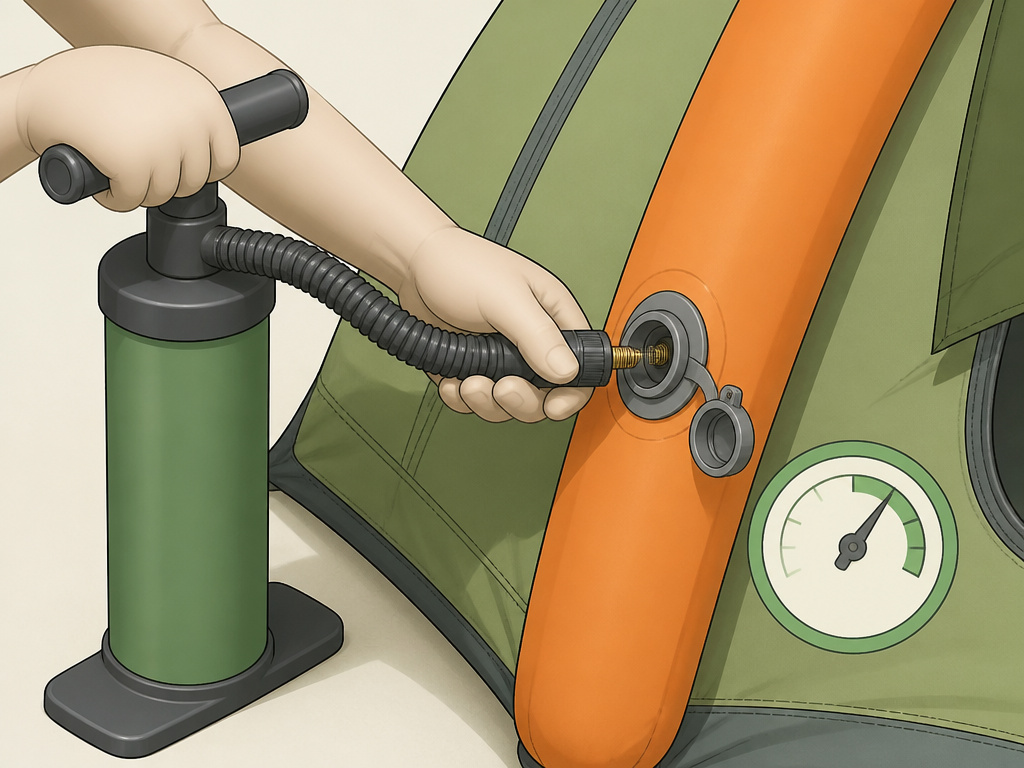
Pitching an inflatable tent is simple, but doing it right requires a few steps most people skip.
- Clear the ground thoroughly. A single sharp stick or stone is all it takes. Run your hand over the footprint before unrolling the tent. This is non-negotiable.
- Use the right pump. A manual foot pump is slow but reliable. Battery-powered pumps are faster but can over-pressurize a beam if you’re not careful. Hand pumps are miserable for larger tents. Match the pump to the valve type, some use Boston valves, some use Schrader (like a bike tire).
- Inflate to firm, not rock-hard. The beams should have very little give when you press them. If they feel like a fully inflated bike tire, you’ve gone too far and risk stressing the seams.
- Guy-line geometry is critical. Attach every guy-line. Angle them out at 45 degrees from the tent, not straight out or straight down. Incorrectly pulling guy-lines distorts the air beams. This isn’t a suggestion, it’s the difference between a stable shelter and a dangerous one.
- Do a morning pressure check. On any trip longer than two nights, feel the beams when you wake up. If they’re soft, top them up before the wind picks up. This small habit prevents most stability issues.
For longer trips, your tent camping gear list must include a repair kit. The kit that comes with the tent is usually minimal. Upgrade to a higher-quality TPU or PVC patch material and a wider roll of seam tape.
| Tent Type | Best For | Worst For | Key Trade-Off |
|---|---|---|---|
| Inflatable Tent | Family car camping, festivals, short-term base camps | Backpacking, alpine/winter conditions, high-wind areas | Speed & space for weight & ultimate stability |
| Traditional Pole Tent | Backpacking, four-season camping, windy locations | Fast setup, very large group sizes (over 8 people) | Lightweight packability for slower, more complex pitch |
| Pop-up tents | Beach days, festivals, emergency shelter | Anywhere with wind or rain, long-term durability | Instant deployment for fragility and poor weather performance |
The Verdict on Value and Durability
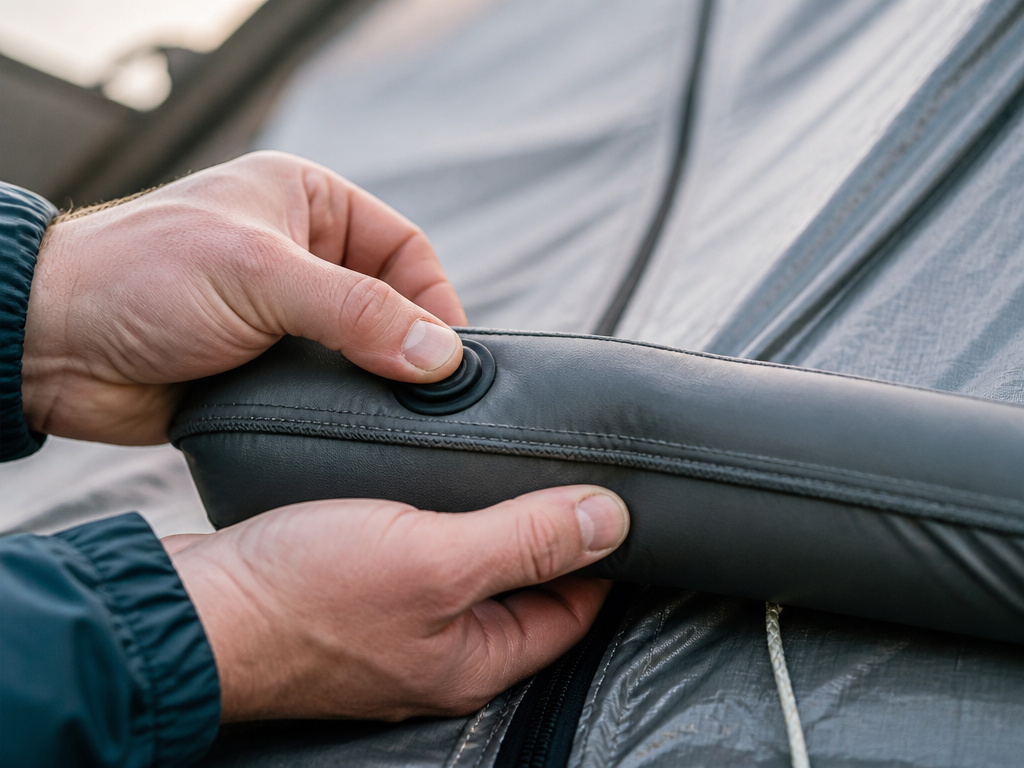
So, are they worth it? For a specific user, absolutely. For everyone else, probably not.
The value proposition hinges on how much you prize setup time and interior space. If you camp ten times a summer at drive-in sites with kids and gear, saving 20 minutes of frustration each time you arrive is a tangible benefit. That benefit outweighs the heavier pack and the need for a morning check.
Durability is the other half of the equation. A cheap inflatable tent is a disposable item. A well-made one from a reputable brand can last for years. The Dwights Explore 2 V2, for example, is built for New Zealand’s notorious wind and weighs around 2kg, light for its category. That kind of thoughtful engineering costs more upfront but pays off in seasons of reliable use.
Your budget matters. If you’re looking at tents under $200, you’ll find better durability and performance in a traditional pole tent. The engineering required to make a good inflatable tent pushes it into a higher price bracket. Don’t compare a $150 inflatable tent to a $150 pole tent. Compare a $300 inflatable to a $300 pole tent. At that price point, the differences become about features and preference, not just quality.
TL;DR: The inflatable tent’s promise is real, but it’s a specialist tool, not a universal upgrade. It trades the robust, set-and-forget reliability of poles for speed and simplicity, a trade that makes perfect sense for car-camping families and no sense for backpackers or storm chasers.
Frequently Asked Questions
Are inflatable tents OK in the rain?
Yes, if they have a high enough hydrostatic head rating, 3000mm or more. The real issue isn’t the rain, but the wind that often accompanies it. A rainstorm with high winds is a severe test for an inflatable structure.
Can you repair a punctured air beam?
Almost always, yes. The repair process is similar to fixing a bike tube: find the leak, clean the area, apply adhesive, and patch. Quality tents come with a repair kit. The key is using the correct patch material (TPU for TPU beams, PVC for PVC).
How much heavier are inflatable tents?
Typically 20% to 40% heavier than a comparable pole tent. A 4-person pole tent might weigh 8-10 lbs. A similar 4-person inflatable tent will weigh 12-15 lbs. The packed size is also larger due to the bulk of the air beams.
Do inflatable tents pop?
Catastrophic explosions are rare and usually the result of extreme force, like a falling branch or severe wind loading on an already over-pressurized beam. More common is a slow leak from a puncture or a failing valve. Separate air tube construction, like in the Dwights Enterprise Range, localizes any failure.
Are inflatable tents good for winter camping?
No. They are not suited for alpine expeditions or winter conditions. The cold causes significant pressure loss, materials become brittle, and pumps fail. The constant need for re-inflation in freezing temperatures makes them impractical and unsafe.
Before You Go
Inflatable tents solve one problem brilliantly: they get a shelter over your head fast. For car-camping families, festival-goers, or anyone who dreads the pole-threading dance after a long drive, that’s a legitimate reason to choose one.
But you buy that speed by accepting a heavier pack, a bulkier bag, and a structure that demands more attention once it’s up. You trade the absolute, bony rigidity of aluminum for the flexible strength of pressurized air. In mild conditions, you’ll never notice the difference. In a stiff wind or a cold snap, you’ll feel it.
Choose an inflatable tent because you value time over weight, space over pack size, and simplicity over absolute storm-worthiness. Choose a traditional pole tent, or even a sturdy canvas tent, for everything else. And whatever you choose, read the inflatable tent benefits guide from specialists to understand the engineering behind the beams, it’ll show you exactly what you’re paying for.
