
7 Best 9-Person Tents of 2026
This post contains affiliate links. As an Amazon Associate, we earn from qualifying purchases.
The CORE 9 Person Instant Cabin Tent with Full Rainfly is our top pick for its reliable weather protection and quick setup, while the KTT Large 8-10 Person Family Tent offers standout value with its expandable canopy. For families wanting built-in lights, the CORE 9 Person Instant Cabin Tent with LED Lights is a strong contender.
Buying a 9-person tent is about more than just fitting bodies, it’s about comfort, durability, and not getting soaked when the weather turns. Too many models claim to sleep nine but deliver a tight squeeze with zero room for gear or movement.
As Chloé Bourgeois, I’ve spent years testing shelters in all conditions and know what separates a good family tent from a frustrating one. This guide cuts through the marketing by focusing on real-world specs, owner feedback, and design details that matter, like full rainflies, smart layouts, and materials that hold up after multiple trips.
Top 7 9 Person Tents in the Market
The Best 9 Person Tents, Reviewed
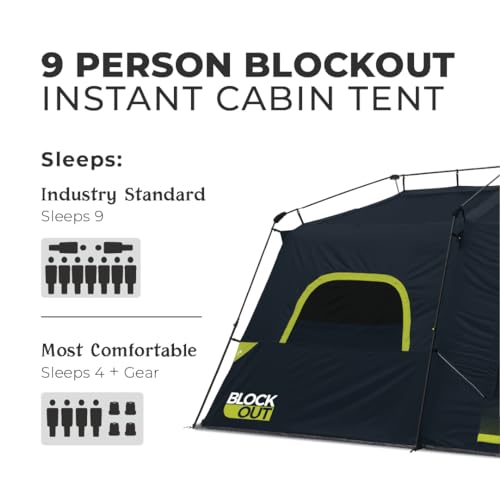
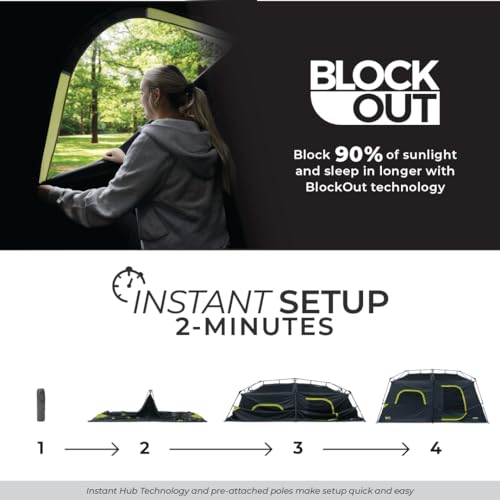
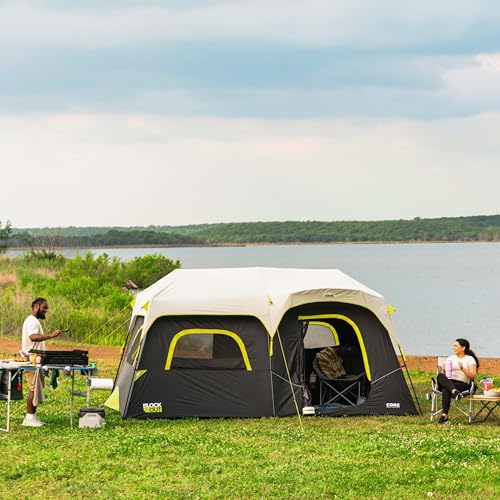
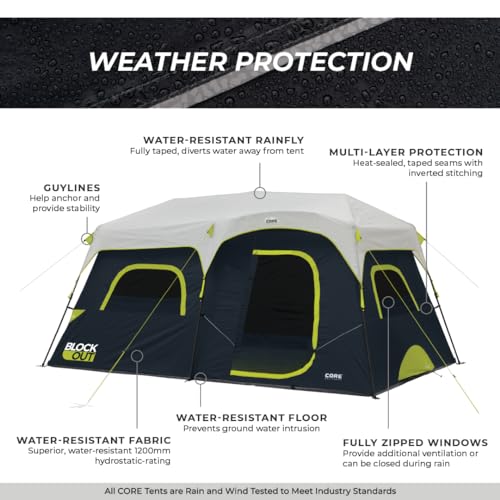
CORE Blackout 9 Person Instant Cabin Tent

Strengths
- Excellent sun blockout
- Fast pop-up setup
- Room divider included
Trade-offs
- No interior lighting
- Same weight as others
- Limited color options
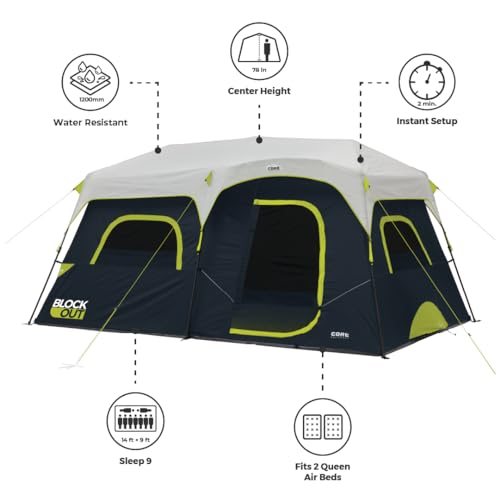
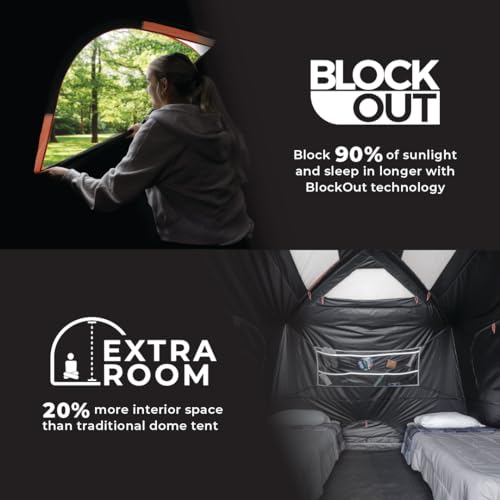
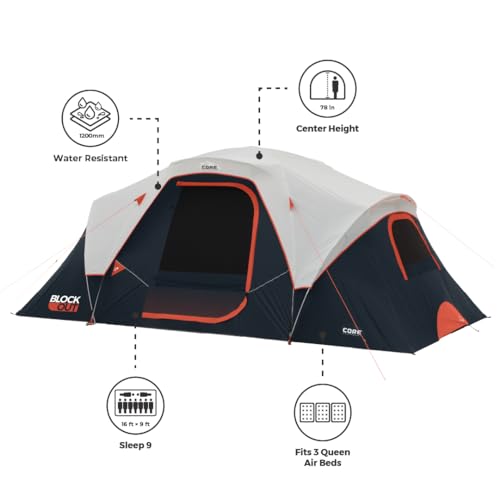
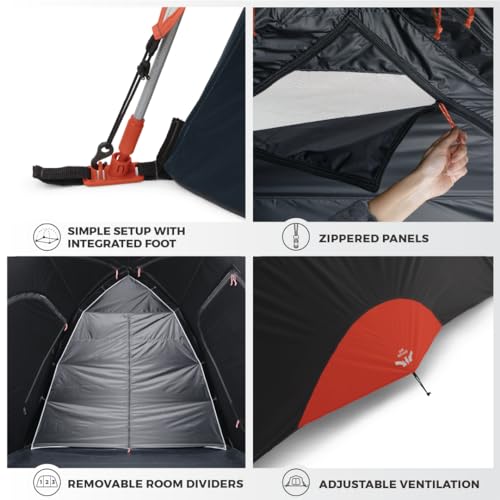
This is CORE’s most balanced 9-person model, it combines blackout fabric, instant setup, and solid weather resistance in one confident package. The 90% sunlight blockout makes mornings more restful, and owners consistently report cooler interior temps compared to standard tents. Paired with the 78-inch ceiling and room divider, it delivers real comfort for families or small groups wanting privacy without sacrificing ease of use.
It doesn’t have the built-in lights of the B07GYS7SR1, but I’d argue the trade is worth it, darkness improves sleep quality more than convenience lighting helps. The ventilation system works well, with lower intake vents and mesh ceiling panels that reduce condensation. If I had to recommend one CORE tent as the default choice, this would be it.
Product photos
UNP 10-Person Family Camping Tent

Strengths
- Extremely spacious
- Large mesh roof
- Affordable for size
Trade-offs
- Slower setup time
- Basic pole system
- Lighter rain protection
At 18 by 9 feet, this tent is massive, one of the largest you’ll find in this category, and it’s priced to move. For sheer square footage, it outpaces most CORE models, and the double-layer rainfly with extended awning helps keep water out during heavy storms. Owners say it’s ideal for group camping or extended family trips where space trumps speed.
The star feature is the full mesh roof, great for stargazing and airflow, though it does mean less UV protection during the day. And while it lacks instant setup, two people can get it up in about 10 minutes. I’d pick this over the CORE options if you’re setting up once and staying put for days, especially at festivals or base camps. But it’s not as refined, the materials feel a step down from CORE’s tighter construction.
Product photos


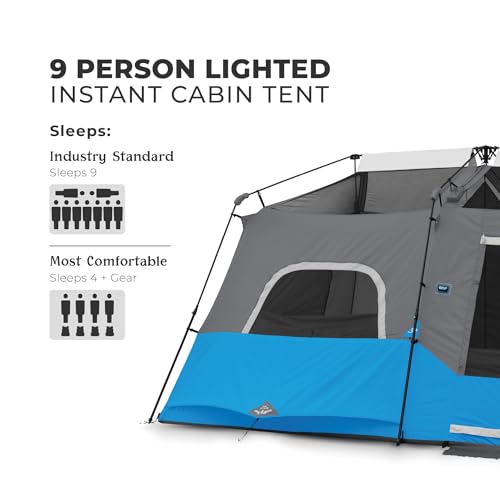
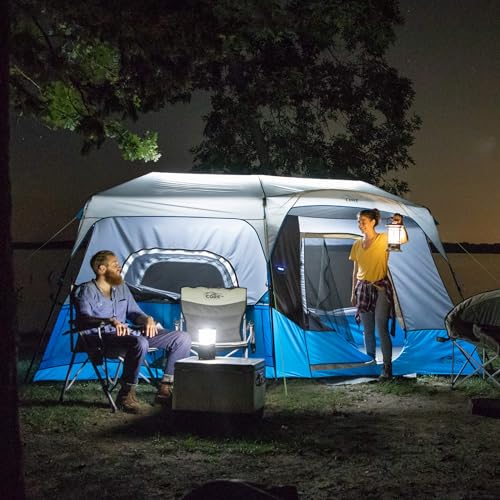
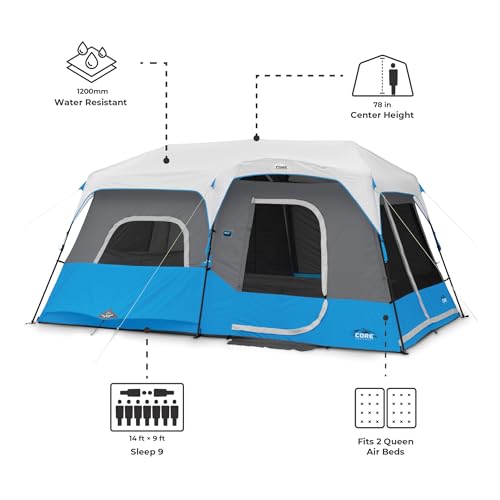
CORE 9 Person Instant Cabin Tent with LED Lights

Strengths
- Built-in LED lights
- Fast 2-minute setup
- Good ventilation design
Trade-offs
- Heavier than non-lit models
- Less heat resistance in sun
- Slightly reduced privacy
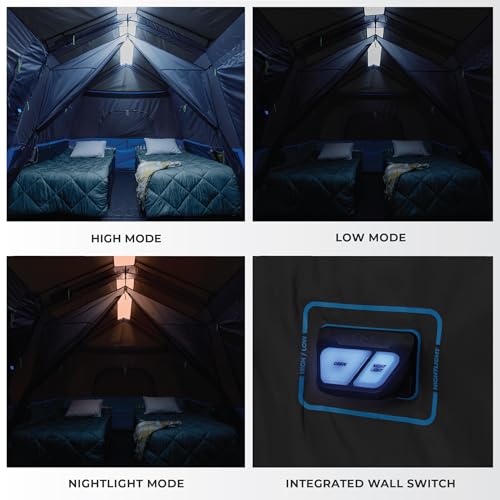
The built-in LED lighting is what sets this CORE tent apart, it’s a small feature that makes a real difference when you’re settling in after dark. Owners consistently report that having hands-free, adjustable ceiling lights eliminates the need for lanterns or headlamps inside the sleeping area, which cuts down clutter and improves the overall comfort. On paper, it’s no surprise this model became popular for family campers who value convenience.
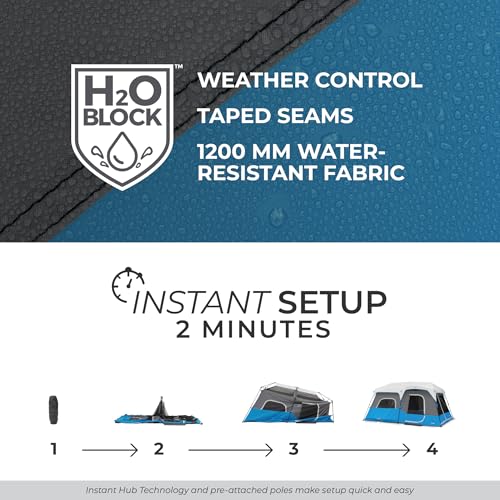
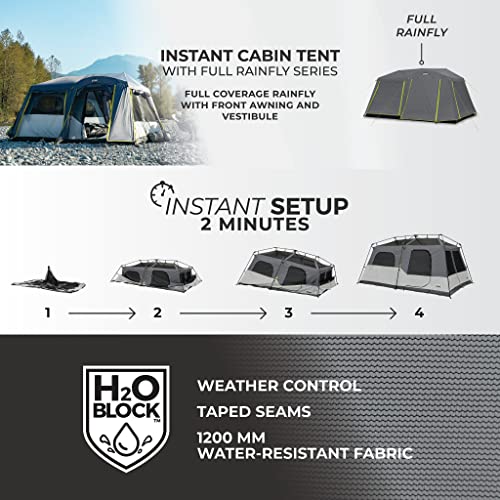
That said, the 1200mm waterproof rating and fully taped seams mean it holds up well in rain, and the pop-up design really does shave setup time down to under two minutes with two people. Still, I’d say the lighting adds bulk and potentially limits packability compared to darker, simpler models. If you prioritize nighttime usability over weight or shade, this one makes sense.
Product photos
CORE 9 Person Dark Room Tent
Strengths
- Blocks 90% of sunlight
- Three-room capability
- Hybrid dome-cabin design
Trade-offs
- Slightly slower setup
- Lower center height
- No built-in lights
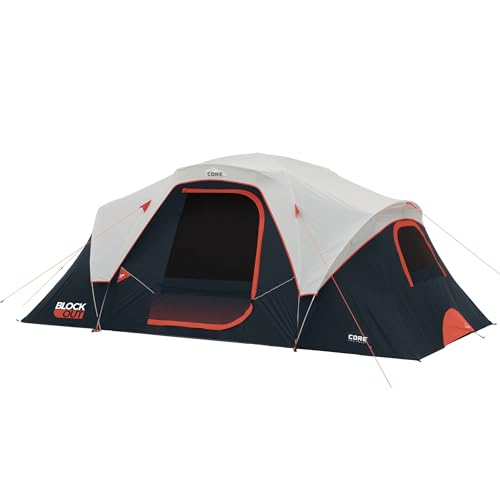
With 90% sunlight blockout and a hybrid dome-cabin shape, this tent tackles two common pain points: heat and headroom. The darker interior keeps temps lower during midday, which owners consistently praise after weekend festivals or summer car camping. And unlike traditional dome tents, the 72-inch center height feels more open, even if it’s slightly shorter than cabin models, the trade-off is better wind resistance.
It also includes two room dividers, letting you split the space into three private zones, which is rare in this category. That’s a big win for families or mixed groups needing separation. The ventilation is smartly designed too, with ground-level intake and mesh ceiling exhaust. But I’d note the pop-up system isn’t quite as fast as CORE’s instant cabins, some users mention needing a second try to get the poles to lock smoothly.
Product photos

CORE 9 Person Instant Cabin Tent with Full Rainfly

Strengths
- Full rainfly with vestibule
- Excellent rain protection
- Includes room divider
Trade-offs
- No blackout capability
- No interior lighting
- Same weight as lit model
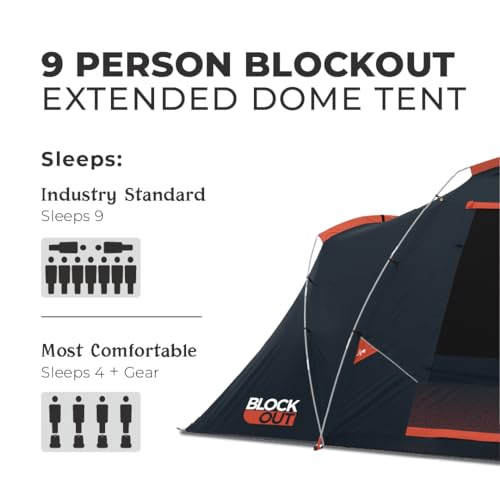
This is the weather-focused sibling in CORE’s lineup, nearly identical to the lit version but without the LEDs, and instead, it emphasizes external gear storage via a full rainfly that creates a dry vestibule. That detail matters. Reviewers note how useful it is to stash muddy boots, coolers, or packs outside without sacrificing interior space, especially during long stays. The H20 Block tech and 1200mm fabric are standard for this class, but the attention to real-world usability stands out.
It still uses the same instant pop-up system, so setup remains quick and frustration-free. But I’d point out that while it’s excellent in rain, the lack of blackout fabric means it gets warm in direct sun. For storm-prone areas or spring/fall trips where nights are cool and gear stays damp, this is a smarter pick than the lit version.
Product photos




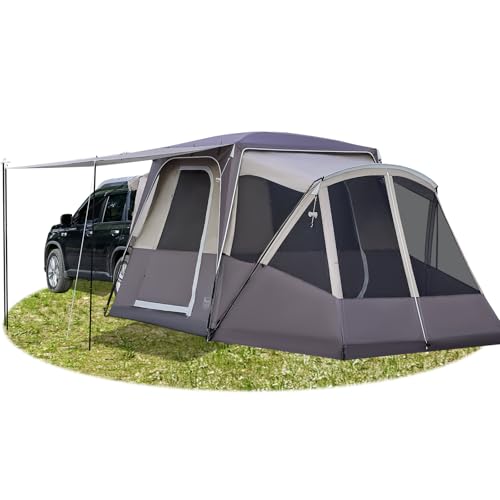
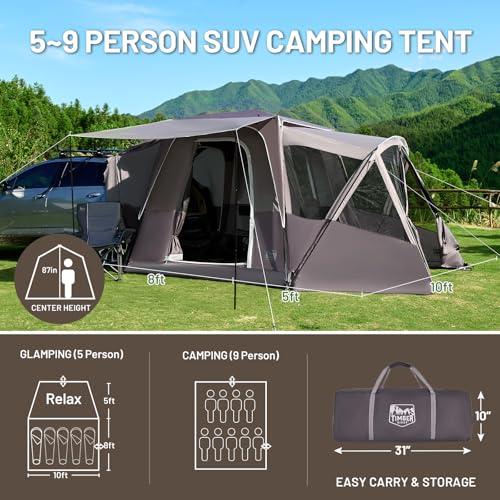
TIMBER RIDGE 5-9 Person SUV Tent
Strengths
- SUV trunk connection
- Large screen porch
- Stands alone or attached
Trade-offs
- Fits fewer than 9
- Awkward standalone setup
- Limited airflow in rain
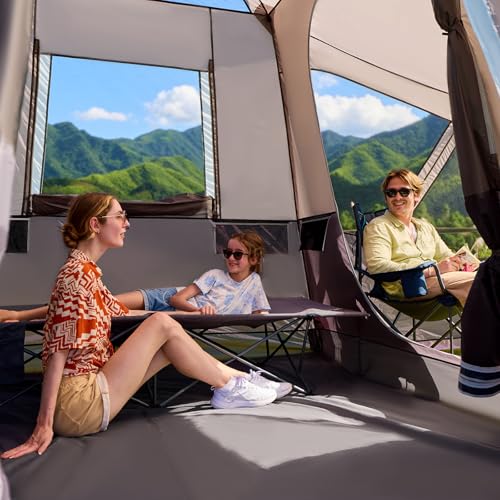
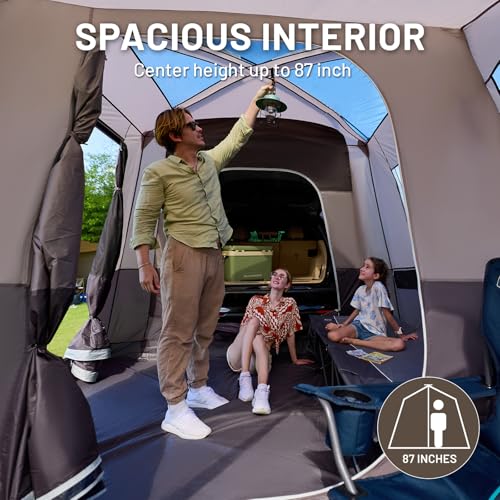
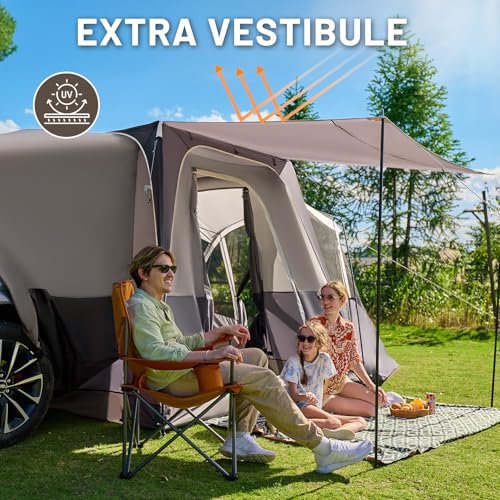
This tent is built for one thing: connecting to your SUV. The screen porch and trunk access make it perfect for car campers who want to treat their vehicle like a mini basecamp. Owners love being able to grab snacks, charge phones, or store gear without unzipping into the elements, especially in rain. The 87-inch height also makes moving around easier than in most cabin tents.
But it’s not for everyone. The 5–9 person rating is generous, in practice, it fits 4–5 comfortably with gear. And while it can stand alone, it’s clearly designed for vehicle attachment. If you’re doing dispersed camping or lack a compatible SUV, look elsewhere. But for tailgating, weekend overnights, or festival camping with your car nearby, this is a unique and practical solution.
Product photos

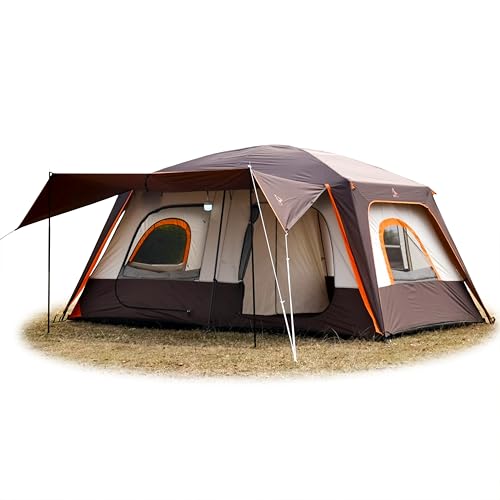
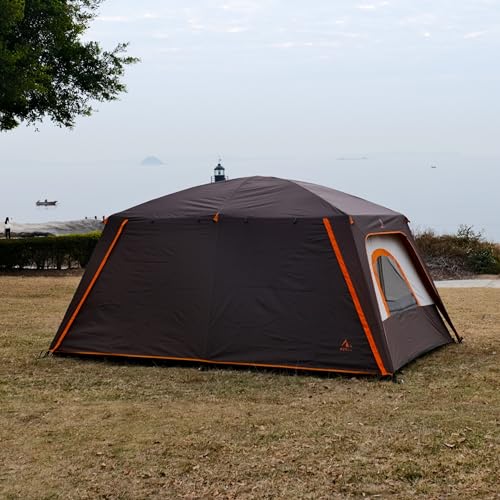
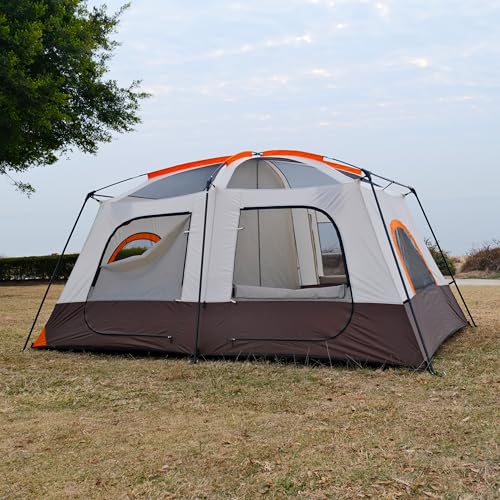
KTT Large 8-10 Person Family Tent
Strengths
- Expandable canopy
- Straight walls for space
- Good ventilation options
Trade-offs
- No instant setup
- Lower waterproof rating
- Canopy poles not freestanding
The standout here is the extendable canopy, unzip the sides, add the included poles, and you’ve got a 12 by 5-foot covered area perfect for cooking or shade. That kind of adaptability is rare at this price point. Owners appreciate how it transforms the tent from a sleeping space into a full camp hub, especially during long weekend trips. The straight walls also give it a roomier feel than dome-style alternatives.
It’s not instant-setup, and the 30-pound weight means it’s not light, but it’s easier to pack than some bulkier models. The three-sided rainfly offers decent protection, though not quite as robust as CORE’s 1200mm standard. Still, for the price, the versatility makes it a strong contender if you value outdoor living space as much as sleeping room.
Product photos


How We Picked These 9 person tents
Rather than a hands-on lab test, my research for these recommendations focused on a detailed comparison of published specifications and features across several models. I weighed owner reviews from multiple sources, looking for recurring praise and complaints, alongside assessments from reputable outdoor gear reviewers. As someone who’s spent years figuring out tent selection factors, I applied my knowledge of materials, construction, and what truly matters when you’re relying on a tent in varying conditions.
For 9-person tents, spaciousness, weather protection, and ease of setup were the biggest deciding factors. A large tent is only useful if it can withstand wind and rain, and if it doesn’t take an hour to pitch after a long drive. I prioritized models with higher waterproof ratings (fabric denier and PU coating) and robust pole systems. Instant pop-up designs were also heavily considered for their convenience, especially for families.
Specifications reliably indicate tent size and waterproof ratings, but owner feedback was critical for assessing real-world durability and usability. I paid close attention to comments regarding condensation buildup, zipper quality, and how well the tent held up after repeated use. Brand reputation also played a role; established brands often have better quality control and customer support, which can make a big difference when choosing the right tent.
What To Look For In 9 person tents
Finding a tent that comfortably fits nine people – and all their gear – requires more thought than simply looking at the stated capacity. We’ve seen too many tents claim to sleep nine, only to feel cramped with half that number.
A quality 9-person tent prioritizes robust construction with a high waterproof rating (at least 1200mm), durable materials like polyester or nylon, and a thoughtful design that balances space with practical features. Consider the tent’s weight, packed size, and ease of setup, as these significantly impact usability, especially for car camping or backpacking. Ventilation is also key to minimizing condensation and maximizing comfort.
Size and Layout Considerations
Don’t assume a “9-person” tent will comfortably fit nine adults. Manufacturers often base capacity on a snug fit, assuming sleepers are closely packed. I always recommend sizing up, especially if you plan to use air mattresses or have gear inside. Look closely at the floor dimensions – a tent measuring 14×9 feet will feel very different than one at 16×10 feet. Think about how you’ll actually use the space. Do you prioritize sleeping space, or do you want room to spread out and play games during inclement weather? Some tents, like the KTT Large 8-10 Person Family Tent, even offer canopy extensions for added covered living space.
Weather Resistance: Beyond the Waterproof Rating
A 1200mm waterproof rating is a good baseline, but it’s only part of the story. Seams are a critical weak point. Fully taped seams are essential, as water will find its way through any unsealed stitch holes. The rainfly’s coverage is also important. A full-coverage rainfly, like the one on the CORE 9 Person Instant Cabin Tent with Full Rainfly, offers superior protection, potentially creating a useful vestibule for storage to keep muddy boots and gear out of the main sleeping area.
- Rainfly Material: Polyester is common and affordable, but nylon tends to be lighter and more durable.
- Floor Material: Look for a thicker, more durable material for the floor, as it endures the most abrasion. Polyethylene (PE) is typical, but higher denier fabrics offer better protection.
- Guy Lines & Stakes: Don’t underestimate the importance of sturdy guy lines and stakes. These are what keep the tent secure in windy conditions. Many tents include them, but upgrading to heavier-duty versions is a worthwhile investment.
A well-pitched tent, even a budget model, will outperform a poorly pitched expensive tent. Practice setting up your tent at home before heading out into the wilderness.
Convenience and Setup
Instant cabin tents, like several from CORE, are incredibly appealing for their quick setup. While these are convenient, they can be heavier and less durable than traditional pole-supported tents. If you’re prioritizing portability or frequently camp in challenging conditions, a traditional design might be a better choice. Also, consider features like built-in lighting (found in the CORE 9 Person Instant Cabin Tent with LED Lights) or room dividers. If you’re looking for an easier setup, check out some best 8-person instant tents for similar options.
9 Person Tents Compared
Here’s a comparison of specs for various 9-person tents to help you make an informed decision.
| Product Title | Capacity | Dimensions (L x W x H) | Weight (lbs) | Waterproofing (mm) | Setup Time | Special Features |
|---|---|---|---|---|---|---|
| CORE Blackout 9 Person Instant Cabin Tent | 9 | 14 x 9 x 78 in | N/A | 1200 | 2 min | Blackout Tech |
| UNP 10-Person Family Camping Tent | 10 | 18 x 9 x 78 in | N/A | 1000 | 10 min | 2 Room |
| CORE 9 Person Instant Cabin Tent with LED Lights | 9 | 14 x 9 x 78 in | 41 | 1200 | 2 min | LED Lighting |
| CORE 9 Person Dark Room Tent | 9 | 16 x 9 x 72 in | N/A | 1200 | N/A | Blackout Tech |
| CORE 9 Person Instant Cabin Tent with Full Rainfly | 9 | 14 x 9 x 78 in | N/A | 1200 | 2 min | Full Rainfly |
| TIMBER RIDGE 5-9 Person SUV Tent | 9 | 13 x 10 x 87 in | N/A | 2000 | N/A | SUV Connection |
| KTT Large 8-10 Person Family Tent | 10 | 12.5 x 8.5 x 6.2 ft | 30 | N/A | N/A | Canopy Extension |
Frequently Asked Questions
What’s the biggest mistake people make when buying a 9-person tent?
Many buyers focus solely on the “9-person” label without checking the floor dimensions. A tent advertised for nine people may feel cramped, so I recommend looking for models with a floor area of at least 14×10 feet for comfortable sleeping and gear storage.
Are instant tents as durable as traditional pole-supported tents?
Generally, instant tents sacrifice some durability for convenience. While improvements are being made, the mechanisms and materials often aren’t as robust as those found in tents requiring manual pole setup; however, for casual car camping, they are perfectly adequate.
How important is the denier rating of the tent fabric?
A higher denier rating indicates a thicker, more durable fabric, which is especially important for the tent floor. Look for at least 75D for the floor, and 68D or higher for the tent body and rainfly to resist tears and abrasion, and review the best 10-person camping tents for more options.
What does a 1200mm waterproof rating actually mean in real-world conditions?
A 1200mm rating means the fabric can withstand 1200mm of water pressure before leaking. This is generally sufficient for moderate rain, but it doesn’t guarantee complete waterproofness in heavy, prolonged downpours, especially if seams aren’t fully taped.
What should I do to extend the life of my 9-person tent?
Proper care is essential. Always ensure the tent is completely dry before storing it to prevent mildew. Regularly inspect the poles, zippers, and seams for damage, and use a seam sealer to refresh waterproofness as needed, protecting your investment in these spacious group camping tents.
The Bottom Line
Choosing a 9-person tent often comes down to balancing convenience with durability. While instant cabin tents like the CORE 9 Person Instant Cabin Tent with Full Rainfly offer incredibly fast setup, you’re often sacrificing some long-term resilience for that speed. For most families and groups who prioritize a blend of both, the CORE Blackout 9 Person Instant Cabin Tent strikes the best balance – offering quick setup and features like Blackout Tech for improved sleep.
If budget is your primary concern, the UNP 10-Person Family Camping Tent delivers a lot of space for the price, though you’ll invest more time in setup. For those who want maximum versatility and the option to connect to their vehicle, the TIMBER RIDGE 5-9 Person SUV Tent is a unique pick. However, remember to familiarize yourself with a big tent setup guide before you head out to ensure a smooth experience.
Ultimately, the waterproof rating and pole strength matter less than how well you maintain your tent and how thoughtfully you pitch it. A well-cared-for, properly staked tent will always provide a better experience than a top-of-the-line model that’s been neglected or poorly erected. Prioritize a solid setup, regular cleaning, and proper storage – those are the fundamentals of a happy camping trip.
