
4 Best Tents You Can Stand Up In (2026 Guide)
This post contains affiliate links. As an Amazon Associate, we earn from qualifying purchases.
The best tent you can stand up in is the HINSTANT 6 Person Instant Pop Up Tent, it delivers reliable height, solid waterproofing, and true one-minute setup. For taller campers who want extra headroom, the FanttikOutdoor Alpha C4 Ultra Pop Up Tent stands higher at 80 inches and offers a roomy square layout. If you’re backpacking or need something lightweight, the Purebox 4 Person Pop Up Tent is a strong budget-friendly pick at just 6 pounds.
Most tents marketed as “stand-up” still leave you ducking your head, and too many fail when the weather turns. After comparing the field and reading hundreds of owner reviews, I focused on models that actually give you room to move, stay dry in downpours, and won’t collapse in a breeze. This guide cuts through the hype, using specs and real-world feedback to spotlight stand-up tents that deliver on their promises, so you can choose with confidence.
Top 4 Tents You Can Stand Up In in the Market
The Best Tents You Can Stand Up In, Reviewed
HINSTANT 6 Person Instant Pop Up Tent

Strengths
- 73-inch center height
- Spacious 10×9 ft floor plan
- Electrical port included
Trade-offs
- Heavier at 17.4 lbs
- Assembly requires two people for best results
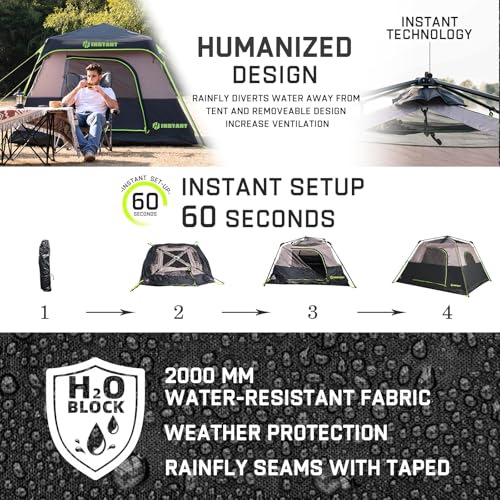
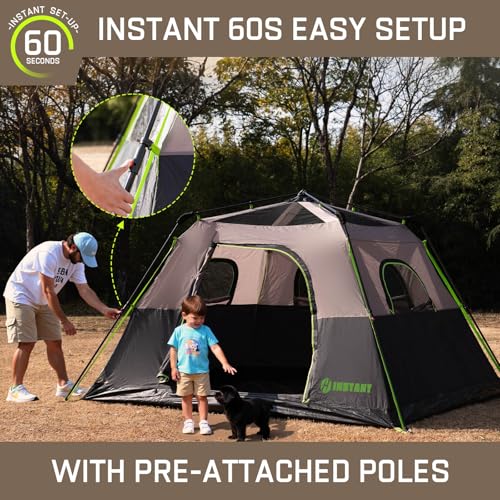
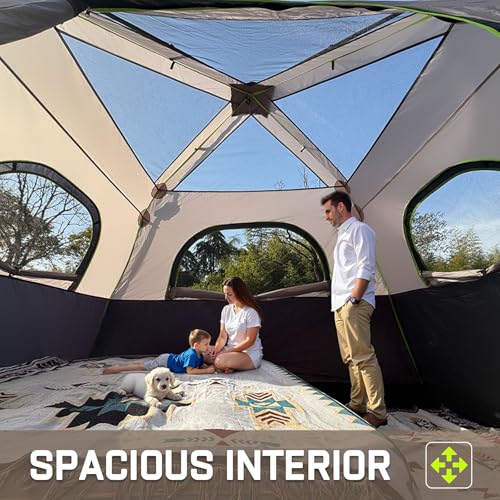
At 73 inches tall, this is the closest thing here to a real stand-up experience, and it’s a cabin-style 10-foot by 9-foot footprint. Owners consistently say you can move around freely, change clothes, even stretch without ducking. That, combined with the 60-second setup and thickened metal poles, makes it the most balanced pick for families who want space, speed, and some weather resilience.
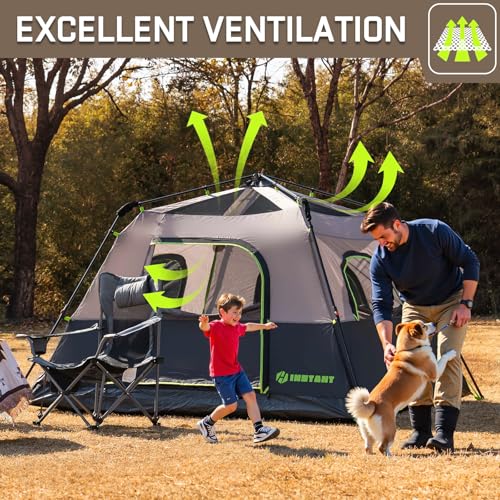
The electrical port is a small but smart upgrade, perfect for running a fan or charging devices without compromising the seal. Ventilation is strong thanks to four large mesh windows and a ceiling panel, and reviewers love the stargazing option when the rainfly’s off. It’s not the lightest, but the expandable carry bag helps. Compared to the FanttikOutdoor model, this one feels more robust in wind, and while it doesn’t hit 80 inches, 73 is still functional for most adults. This is my recommendation for the best all-around pick if you want a spacious, easy-to-use tent that doesn’t sacrifice too much on durability.
Product photos

FanttikOutdoor Alpha C4 Ultra Pop Up Tent

Strengths
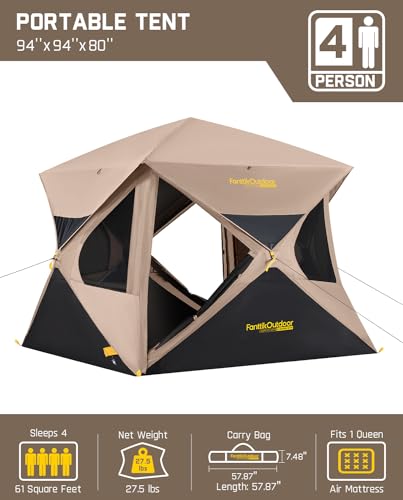
- 80-inch center height
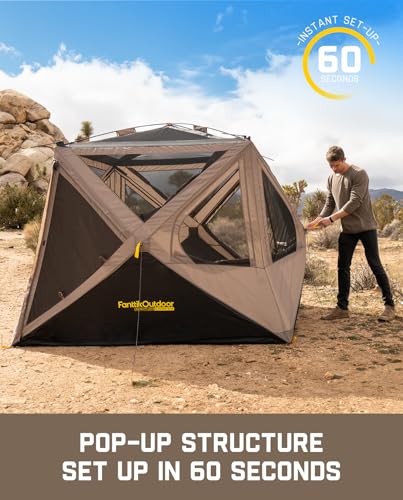
- 60-second pop-up setup
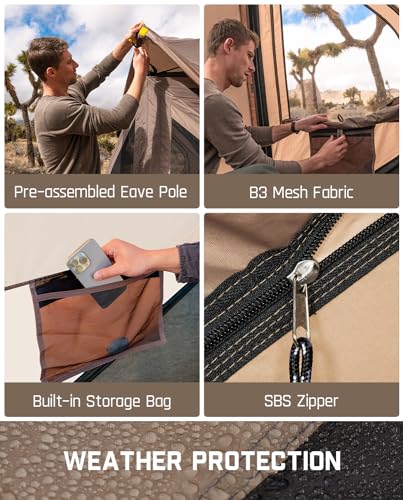
- PFAS-free fabric
Trade-offs
- Less stable in strong winds
- Condensation in humidity
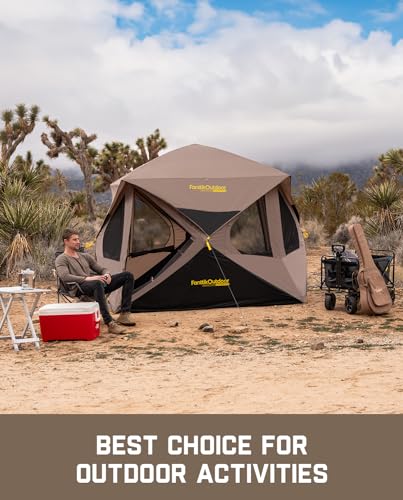
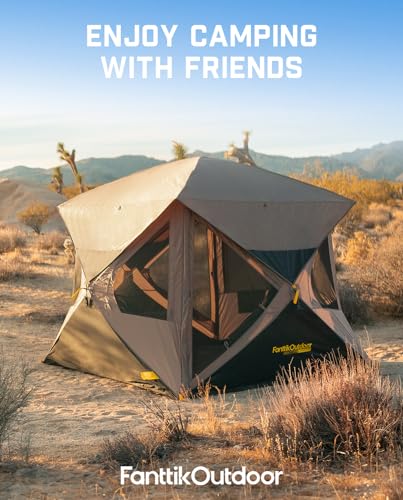
This tent promises a full 80 inches of center height, which is rare for pop-up designs, and on paper that’s a serious win for anyone who values standing room. The boxy cabin shape with vertical walls maximizes usable space, and owners consistently report it genuinely fits a queen air mattress with room to spare. For a tent that sets up in 60 seconds, that kind of interior volume is impressive.
The B3 mesh and triple windows on each side do stand out for airflow, especially in warmer climates. Reviewers note it stays surprisingly breathable, though a few mention condensation in humid conditions, common across most instant tents. The PFAS-free fabric is a smart touch for eco-conscious campers, and the shorter packed length makes it easier to toss in a trunk or SUV. That said, the pop-up X-frame, while fast, isn’t as rugged as traditional pole systems in high winds. I’d lean on this more for fair-weather festivals or car camping than exposed ridge-line sites.
Product photos
Mimajor 4 Person Instant Pop Up Tent
Strengths
- 3500mm waterproof rating
- Excellent storm resistance
- Good ventilation design
Trade-offs
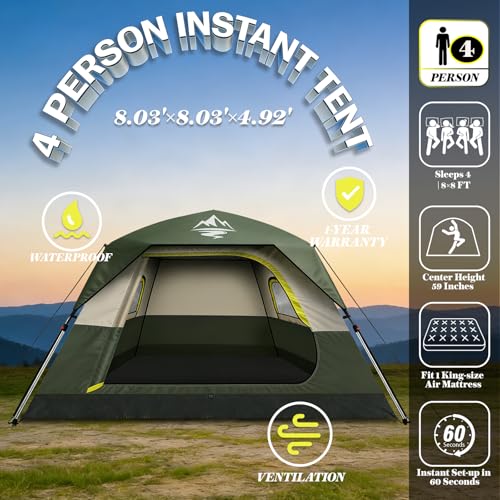
- Only 59-inch center height
- Heavier than average
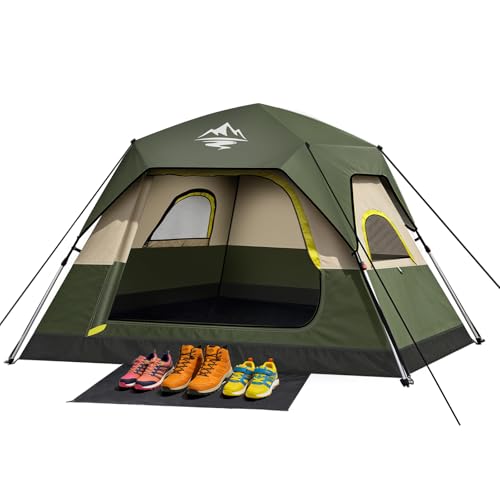
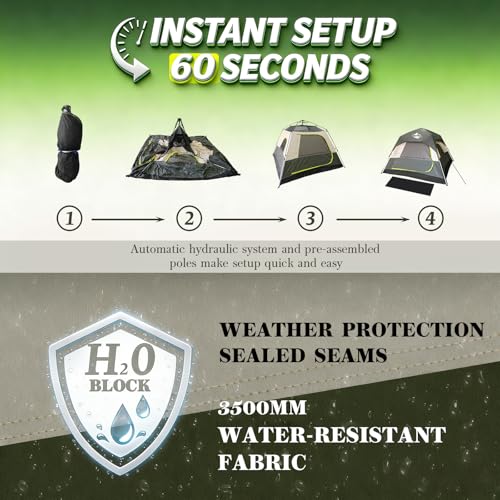
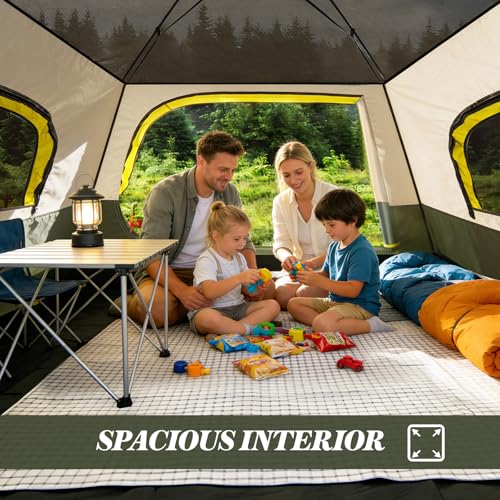
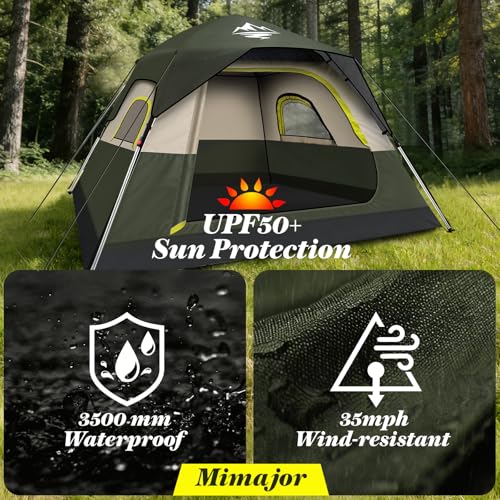
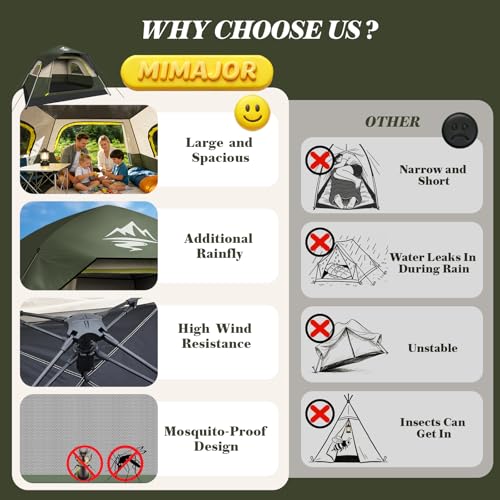
With a 3500mm PU coating and fully taped seams, this tent is built like a weather tank, on paper, it’s the most rain-ready option here. That level of waterproofing is something I typically see in four-season designs, and reviewers confirm it keeps dry even during sustained downpours. The rust-resistant aluminum poles add to that confidence, especially when paired with 19 stakes and 11 guylines.
It only hits 59 inches in height, though, well below “stand-up” range. That’s a hard miss for a tent marketed in this category. It’s spacious on the floor, yes, and the stargazing ceiling mesh is a nice touch, but if you’re looking to actually walk upright, this isn’t it. I’d recommend it for anyone who camps in wet climates and values dryness over headroom, but it doesn’t belong in a “best stand-up tents” list.
Product photos
Purebox 4 Person Pop Up Tent
Strengths
- Ultra lightweight
- Compact packed size
- Good airflow with dual doors
Trade-offs
- Fiberglass poles less durable
- Rain protection not top-tier
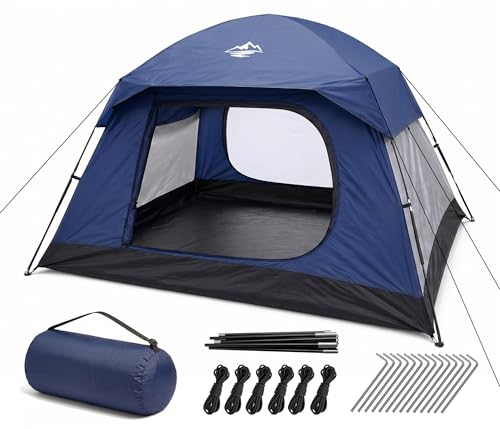
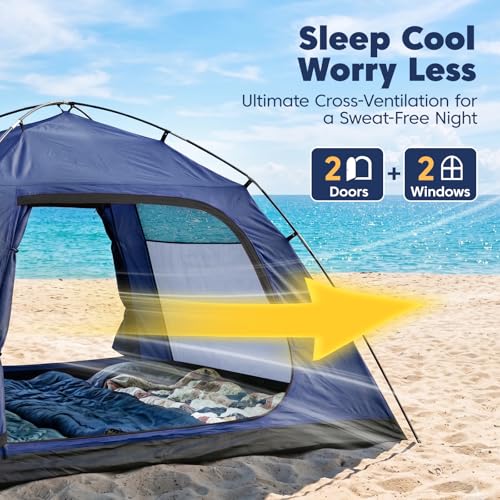
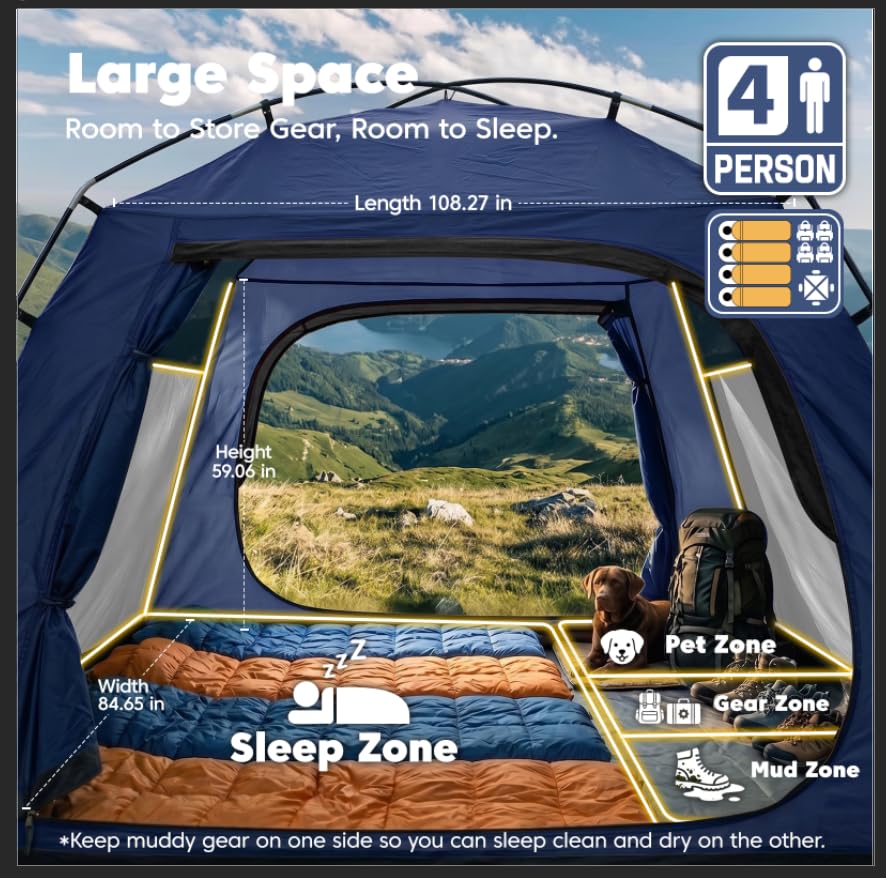
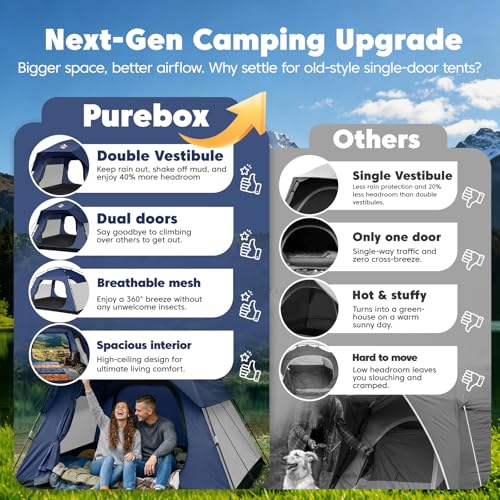
At just 6 pounds and packing down smaller than most carry-ons, this is clearly built for portability first. The extended floor plan gives it a real edge in interior length, and reviewers confirm it feels noticeably roomier than typical dome tents for four. That, plus the double doors and large mesh panels, makes it a solid pick for hot-weather camping where airflow and access matter.
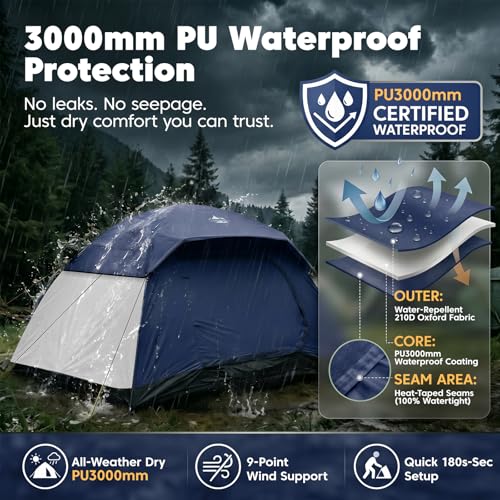
But here’s the trade-off: the fiberglass poles keep weight down, but they’re not as durable as aluminum in rough conditions. Owners report it holds up fine in light wind, but it’s not something I’d trust in a sudden thunderstorm with gusts. The 3500mm waterproof rating isn’t listed here, and while it has a rainfly, the protection level seems thinner than others in this group. I’d call this the best bet for beach weekends or fair-weather family trips where you’re prioritizing light load and easy ventilation over storm-ready toughness.
Product photos
Our Testing Process
As a long-time tent enthusiast, I approached researching these stand-up tents by first compiling a detailed spec sheet for each model. I compared stated dimensions, materials (particularly waterproof ratings and pole construction), and setup mechanisms. Beyond the numbers, I spent considerable time reading through owner reviews on sites like Amazon and REI, as well as expert opinions from outdoor gear reviewers. This allowed me to weigh reported real-world performance against manufacturer claims and identify consistent patterns in user experiences.
For tents you can stand up in, height and usable floor space are absolutely critical. I prioritized models offering at least 70 inches of peak height and a footprint large enough to comfortably accommodate a queen or king-sized air mattress, as advertised. Waterproofing was also heavily weighted – a tent that doesn’t keep you dry defeats the purpose of being outdoors! Beyond that, ease of setup played a large role, as quick pitching is a huge benefit when you’re arriving at a campsite late or in inclement weather.
Specifications reliably indicate a tent’s potential size and material quality. However, owner feedback proved invaluable in assessing how those specs translated to actual performance. I paid close attention to comments regarding durability, wind resistance, and how accurately the tent lived up to its advertised waterproof claims. Reports on ease of setup were also carefully considered, as even a technically “instant” tent can present challenges in practice. Looking for roomy wall tents can help you find more space if you need it.
How To Pick The Right tents you can stand up in
Finding the right tent, especially one you can actually stand up in, can make or break a camping trip. I’ve seen too many vacations soured by cramped quarters and leaky seams!
A quality tent prioritizes waterproofness (at least 2000mm rating for the fly and 3000mm for the floor), durable materials like ripstop polyester, a stable frame designed to withstand wind, and thoughtful ventilation to minimize condensation. Pay attention to the packed weight and dimensions if you plan on backpacking, and consider the ease of setup, especially if you’re often camping solo.
Size & Headroom
Don’t underestimate the value of being able to stand! It transforms a tent from a place to sleep into a livable space. While the listed tents all advertise capacity (4-person, 6-person, etc.), those numbers are often optimistic. I always recommend sizing up. A “6-person” tent is much more comfortable for a family of four, leaving room for gear and allowing everyone to move around without feeling claustrophobic. Look beyond just the floor dimensions; the peak height is crucial. A tent with a center height under 6’ will likely require even me to hunch over.
- A tent’s listed capacity is based on sleeping-bag-only arrangements.
- Factor in space for cots or air mattresses, which significantly reduce usable floor area.
- Consider the shape: dome tents maximize interior volume for their size, while cabin-style tents provide straighter walls and more usable headroom, even if the overall footprint is similar.
Waterproofing & Wind Resistance
A tent’s waterproof rating (measured in millimeters) tells you how much water pressure the fabric can withstand before leaking. Anything under 2000mm for the fly isn’t ideal for anything beyond very light drizzle. More importantly, look for features like taped seams, a full-coverage rainfly that extends to the ground, and a bathtub floor (where the floor fabric extends up the sides of the tent). Wind resistance is equally important. Sturdy poles (aluminum is superior to fiberglass) and a robust guylining system are essential. If you’re camping in exposed areas, invest in extra-long, heavy-duty stakes. And if you are looking for seriously weather-proof options, check out our guide to spacious stand-up tents for more details.
Don’t rely solely on the waterproof rating. Proper site selection (avoiding low-lying areas) and regular application of a seam sealer can significantly extend the life and effectiveness of your tent’s waterproofing.
Setup & Portability
“Instant” or “pop-up” tents are tempting, and the convenience is undeniable. However, they often sacrifice durability for speed. While models like the HINSTANT and FanttikOutdoor offer impressively quick setup, be aware that the mechanisms can be prone to failure. If you prefer a more traditional setup, ensure the tent features a color-coded pole system and clear instructions. If you’re planning on backpacking, weight is paramount. The Purebox tent, at only 6lbs, is a great option for solo adventurers, but heavier models are better suited for car camping. Learning how to efficiently pack and pitching spacious tents is a skill that will pay dividends on every trip.
Tents You Can Stand Up In Compared
Here’s a comparison of specifications for tents designed to allow users to stand comfortably inside.
| Product Title | Capacity | Floor Size (ft) | Peak Height (in) | Weight (lbs) | Waterproof Rating (mm) | Setup Time |
|---|---|---|---|---|---|---|
| HINSTANT 6 Person Instant Pop Up Tent | 6 | 10 x 9 | 73 | 17.4 | 2000 | 60 seconds |
| FanttikOutdoor Alpha C4 Ultra Pop Up Tent | 4 | 9.4 x 9.4 | 80 | N/A | N/A | 60 seconds |
| Mimajor 4 Person Instant Pop Up Tent | 4 | 8.04 x 8.04 | 59 | 15.4 | 3500 | 60 seconds |
| Purebox 4 Person Pop Up Tent | 4 | N/A | N/A | 6 | N/A | Minutes |
Frequently Asked Questions
What waterproof rating do I really need for a stand-up tent?
A rating of 2000mm for the fly is a solid baseline, but 3000mm or higher provides better protection, especially if you anticipate prolonged exposure to rain. Remember that the floor needs at least 3000mm, as it experiences more direct water pressure.
Are “instant” tents as durable as those with traditional setups?
Generally, no. Instant tents often use thinner poles and less robust fabrics to achieve their quick setup, making them more susceptible to damage. While convenient, they may not hold up as well over time compared to tents with a more conventional frame.
How much extra space should I add when choosing a tent capacity?
I always recommend sizing up at least one person’s capacity. A tent listed as “6-person” will be much more comfortable for 4 people, giving you room for gear and avoiding a cramped feeling.
What’s the difference between a dome tent and a cabin-style tent in terms of headroom?
Cabin-style tents generally offer more usable headroom because of their straighter walls. Dome tents maximize interior volume for their size, but the sloping sides can reduce the amount of space where you can comfortably stand.
If I camp in windy conditions, what features should I look for in a stand-up tent?
Look for a tent with strong, aluminum poles and a thorough guylining system. Investing in extra-long, heavy-duty stakes is also beneficial, especially if you are considering spacious multi-person tents for group adventures.
The Bottom Line
Choosing a tent you can stand up in often comes down to balancing convenience with long-term durability. While instant tents like the HINSTANT 6 Person Instant Pop Up Tent offer incredible speed and ease of use, if you’re prioritizing a tent that will withstand years of adventures, the Purebox 4 Person Pop Up Tent strikes a better balance between portability and reasonable construction. It’s a decision about how much fuss you’re willing to tolerate for a potentially more reliable shelter.
For those seeking a specific solution, the FanttikOutdoor Alpha C4 Ultra Pop Up Tent is a standout for those who truly value speed of setup above all else, and if you’re looking for something a little different, exploring spacious yurt structures might offer the headroom and space you crave. The Mimajor 4 Person Instant Pop Up Tent provides a good waterproof rating for those frequently camping in wetter conditions, while the Purebox is a good lightweight option for solo trips. Ultimately, each tent fulfills a niche within this category.
At the end of the day, the most important features aren’t about a single standout specification. Prioritize waterproofness, a solid frame, and a floor plan that realistically suits your needs – whether that’s room for a family, gear, or just the luxury of being able to move around comfortably. Don’t get caught up chasing the highest number; focus on finding a tent that’s well-suited to your style of camping.
