
What Is A Yurt Tent? Comparing Modern Camping Tents & Gers
This post contains affiliate links. As an Amazon Associate, we earn from qualifying purchases.
A yurt tent is a modern, semi-permanent canvas shelter built on a single center pole and a circular floor. It blends the spacious, sturdy shape of a traditional nomadic ger with the lighter materials and quicker setup of a camping tent.
Most people get this wrong because they call any round tent a yurt. The real difference is in the bones. A traditional ger has a lattice wall and a crown wheel holding up felt blankets. A modern yurt tent is usually just canvas hung from one pole. That structural gap decides whether you can pack it on a camel or need a pickup truck.
This guide breaks down the parts, the history, and the practical trade-offs. You’ll learn what the term actually covers, how to spot a true nomadic design versus a glamping hybrid, and whether a yurt tent is the right upgrade from your standard dome.
Key Takeaways
- The term “yurt tent” covers two distinct things: traditional nomadic gers (lattice walls, felt covers) and modern canvas camping shelters (single center pole, synthetic fabric).
- Traditional gers are UNESCO-protected cultural artifacts built for mobility; modern yurt tents are semi-permanent shelters designed for car camping or glamping sites.
- Setup time ranges from 30 minutes for a simple canvas yurt to 2 hours for a complete traditional ger assembly.
- The biggest advantage is headroom and weather resistance, but the biggest drawback is weight and true portability – most modern versions are not meant to be moved weekly.
- Choosing between a yurt tent and a standard tent comes down to three questions: how long you’ll stay, how much gear you can haul, and whether you need a wood stove.
The Parts That Make It a Yurt
Look at the crown. If it’s a wooden wheel with radiating rafters, you’re looking at a traditional ger. If it’s a metal ring at the top of a single pole holding up canvas, you’re looking at a modern yurt tent. That distinction is everything.
A traditional Mongolian or Turkic ger uses a collapsible lattice wall (the khana) and a central crown wheel (the toono) to support straight roof poles. The felt covers are wool from the herders’ own flocks, and the whole structure is designed to be dismantled and carried on pack animals. The Wikipedia yurt article details the variations across Central Asia.
Common mistake: Calling a modern bell tent a “yurt” – it lacks the lattice wall and crown wheel, which are the defining architectural features of the nomadic dwelling. You lose the cultural specificity and, more practically, the structural rigidity that lets a true ger withstand decades of steppe winds.
Modern yurt tents, sold for camping, typically use a heavy-duty canvas hung from a single center pole. They often have a zippered floor integrated with the walls, A-frame door poles, and synthetic waterproof coatings. Brands like Tentsile or White Duck Outdoors sell these. They’re spacious, stand-up tall, and feel more permanent than a dome tent.
| Component | Traditional Ger | Modern Yurt Tent |
|---|---|---|
| Wall Structure | Expandable lattice (khana) | Canvas wall hung from center pole |
| Roof Support | Crown wheel (toono) + straight poles | Central pole only |
| Cover Material | Wool felt from herd flocks | Synthetic canvas (cotton/poly blend) |
| Portability | Designed for camel/yak transport | Requires vehicle; often semi-permanent |
| Setup Time | 2 hours (full assembly) | 15–30 minutes (single pole) |
The felt on a traditional ger isn’t just insulation. It’s a breathable membrane that regulates humidity inside – sweat and cooking steam pass through, but rain is blocked by the wool’s natural lanolin. Modern canvas doesn’t breathe as well. You’ll get condensation on the inside after a cold night unless you add a vent.
TL;DR: A true yurt has a lattice wall and a crown wheel. A yurt tent is a canvas shelter on a single pole. Know which one you’re buying.
Why the Confusion? From Steppe to Glamping
The camping industry borrowed the shape and the name because “yurt” sounds more substantial than “tent.” It sells the idea of a home, not just a shelter. But that borrowing strips away the engineering.
Traditional knowledge for making Kyrgyz, Kazakh, and Karakalpak yurts is listed as a UNESCO Intangible Cultural Heritage. The skills include selecting timber from trade networks in valleys (the steppes themselves are treeless), treating the wood, weaving the lattice, and sewing the felt covers. A family ger is a multi-generational project.
Modern canvas tents are factory-made. The timber trade is replaced by aluminum poles and nylon ropes. The result is a hybrid – a permanent tent. The YouTube transcript from a family setting up a Citizen Canvas bell tent on their land shows this perfectly. They zipped the canvas to a wooden deck, screwed the floor down, and used short guy poles because their platform was raised. The tent stayed there for seasons.
That’s the key use case. If you have a piece of land and want a shelter you can use for months without building a cabin, a modern yurt tent works. It’s not a nomadic dwelling. It’s a cottage substitute.
I pitched a similar canvas shelter on a platform for two summers. The first winter, I didn’t check the snow load. A wet, heavy snowfall slumped the roof on one side and stretched the guy lines permanently. The repair involved replacing two panels and re-sewing the tension loops – a job that took a weekend and a sewing machine. Now I either take it down before snow or reinforce the pole with an internal frame.
The Setup Trade-Off: 30 Minutes vs. 2 Hours
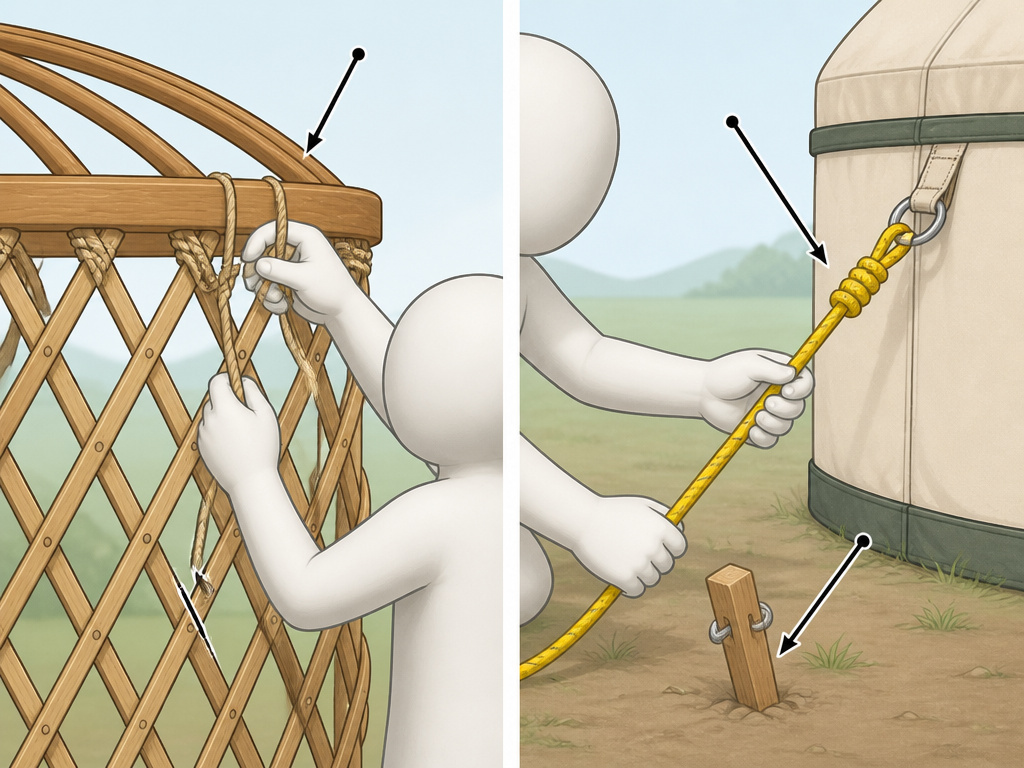
The Britannica entry on yurts notes a traditional ger can be assembled by a skilled family in about two hours. That includes lashing the khana, setting the toono, arranging the roof poles, and draping the felt layers. For a nomadic family, that’s a morning’s work before moving camp.
Modern yurt tents boast 15-minute setups. The reality with a large model is closer to 30 minutes, especially if you’re securing it to a platform. The YouTube family noted it took longer with helpers – a common irony. The steps are simpler: zip the floor, raise the center pole, add door poles, tension the guy ropes.
Here’s what the 15-minute claim misses.
Wind. A single-pole design relies entirely on those guy ropes. If your ground is soft or your platform is raised, the ropes need anchors farther out than the kit provides. That family used pressure-treated 2x2s as short guy poles to bring the anchor points closer. Without that, the tent stays loose and flaps in a breeze.
Weight. A 6-meter canvas yurt tent weighs over 100 pounds. You need a vehicle. This isn’t backpacking gear. It’s car camping or overlanding shelters territory.
Permanence. Once you screw the floor to a deck, you’re not moving it every weekend. This turns the shelter into a semi-fixed structure, which changes how you think about site selection and weatherproofing.
Are Yurt Tents Worth It? The Car Camp vs. Nomad Matrix
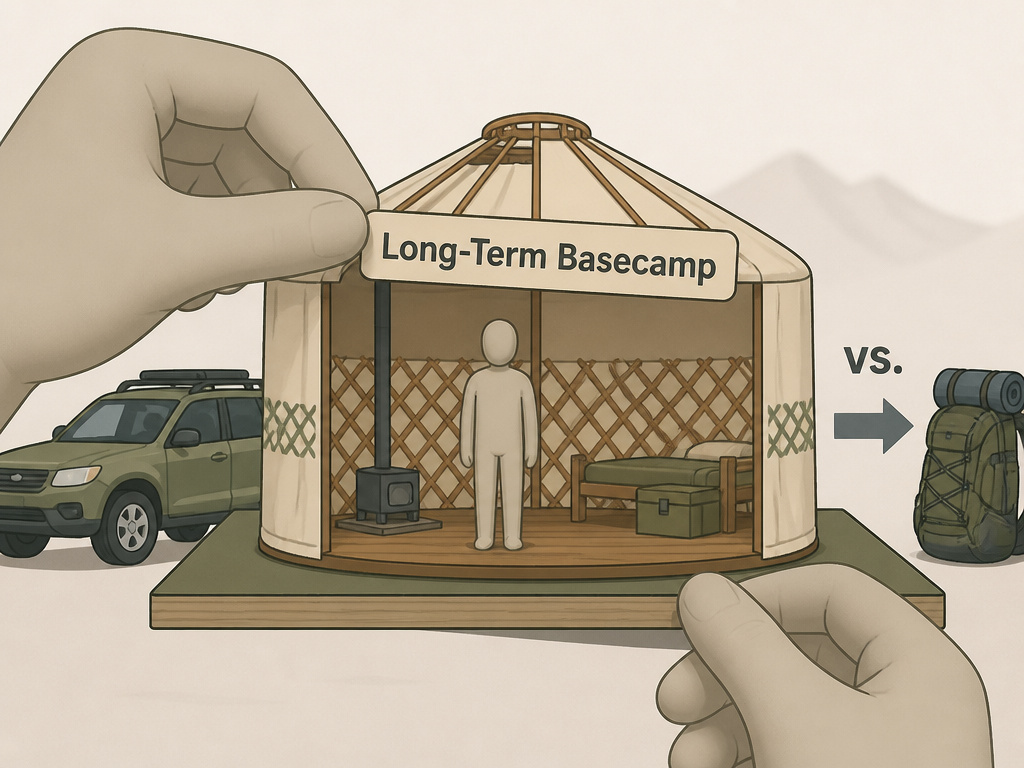
This isn’t a simple yes or no. It’s a match between your camping style and the shelter’s design.
For car camping families who stay at a site for a week or more, a yurt tent adds living space. The headroom means you can stand up to change clothes or play cards. The double-door designs, like the one in the YouTube video, create cross-ventilation and separate “rooms.” It feels more like a family camping tent than a temporary shelter.
For glamping operators setting up a seasonal site, the semi-permanent nature is a benefit. You can furnish it with proper beds, tables, and even a wood stove for winter use. The thick canvas blocks wind better than nylon.
For nomadic lifestyles or ultra-portable camping, a true ger is the only answer. But you won’t find one at a camping store. You’d need to source the materials and learn the craft – or travel to Central Asia.
| Use Case | Best Shelter Type | Why It Wins | What You Sacrifice |
|---|---|---|---|
| Weekend Car Camping | Standard dome or cabin tent | Lightweight, fast setup, packs small | Headroom, spacious feel |
| Long-Term Basecamp | Modern canvas yurt tent | Stand-up height, durable, feels permanent | Portability, quick relocation |
| Four-Season Glamping | Winter-ready canvas tents with stove jack | Insulation, stove heat, storm resistance | Summer ventilation, cost |
| True Nomadic Mobility | Traditional ger (lattice + felt) | Cultural design, pack-animal transport, climate regulation | Modern amenities, acquisition difficulty |
The cost jump is real. A quality canvas tent starts around $800. A true ger, if you could buy one, runs into thousands. Compare that to a reliable budget-friendly shelter under $200.
TL;DR: Worth it if you need standing room and plan to stay put. Not worth it if you move sites every weekend or need to backpack.
What Breaks and How to Fix It
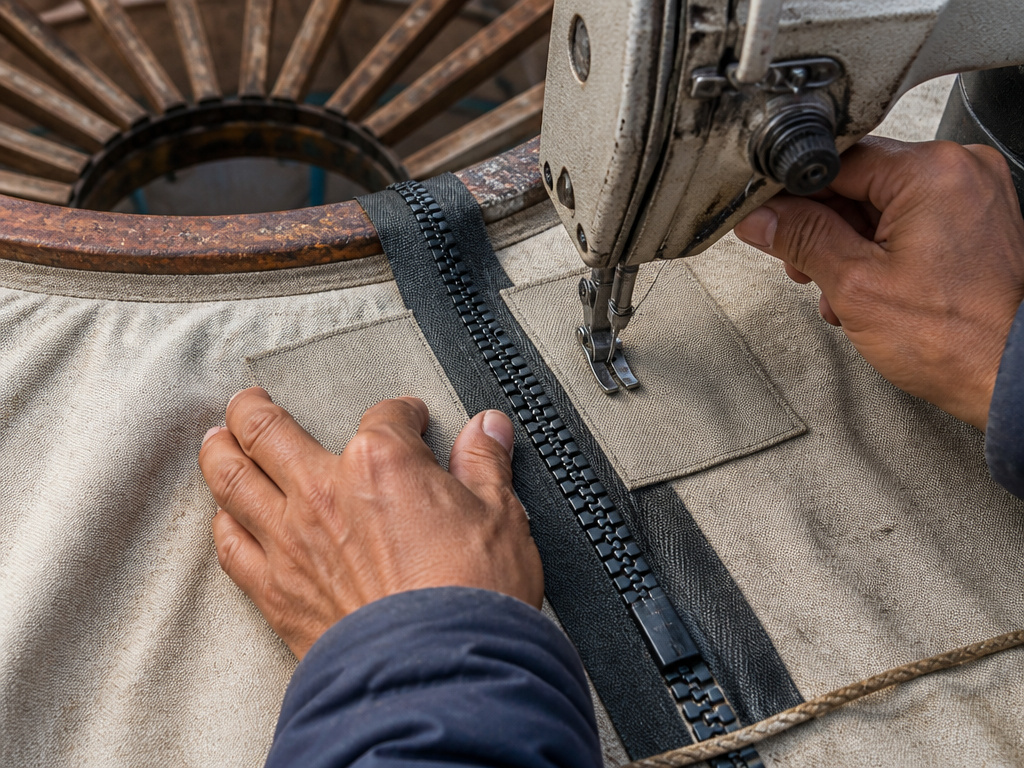
The weak points are different for each type.
For modern yurt tents, the center pole connection is the stress focal point. In high wind, the pole can torque against the canvas roof, straining the seams around the crown. Reinforce those seams with a patch of extra canvas and a heavier-duty zipper if you’re in a windy area.
The zippered floor is another failure zone. If you set up on uneven ground, the floor fabric pulls against the zipper teeth. After a season, the teeth start to skip. Keep the ground level or use a platform.
For traditional gers, the lattice wall joints wear from repeated folding and unfolding. The lashing ropes need replacing every few years. The felt covers can rot if stored wet – they must be dried completely before packing.
Common mistake: Storing a canvas yurt tent folded while still damp – mildew sets in along the seams within two weeks, and the smell never fully leaves even after washing. Always dry it fully, even if that means leaving it up for an extra day.
The guy ropes on any yurt tent are the first thing to degrade. UV exposure and ground friction fray them in a single season. Replace them with heavier-duty polyester ropes before the second year.
The 5-Step Checklist Before You Buy
- Measure your vehicle capacity. A 6-meter yurt tent kit weighs over 100 pounds and fills a pickup bed. If you drive a small SUV, you need a smaller model or a trailer. Ignoring this means you can’t transport it.
- Check the crown design. A single metal ring is fine for summer camping. If you plan winter use with a stove, look for a reinforced crown with a stove jack port. The heat rises and weakens cheap metal rings.
- Count the doors. Two doors are better than one for ventilation and creating separate spaces. The YouTube family’s double-door model made the tent feel larger.
- Ask about the floor. Is it integrated (zipped to the walls) or separate? Integrated floors seal better against bugs but are harder to clean. Separate floors are easier to replace if damaged.
- Read the snow load rating. If you’ll use it in winter, the canvas must handle snow without sagging. Most recreational yurt tents are rated for light snow only. Winter camping tents designed for four-season use have higher ratings.
Missing any of these steps buys you a shelter that fails at its first real test.
Frequently Asked Questions
What’s the difference between a yurt and a bell tent?
bell tent is a simpler cone shape hung from a single pole, usually with no internal frame. A yurt tent often has a more complex roof design and sometimes includes a partial frame for stability. The terms overlap in marketing, but a true yurt implies a traditional lattice structure.
Can you heat a yurt tent with a wood stove?
Yes, if it has a stove jack – a reinforced opening in the canvas with a metal flange. Many modern canvas tents with stoves include this. Traditional gers are designed for a central hearth.
How long does a canvas yurt tent last?
With proper care – drying before storage, repairing seams promptly, replacing guy ropes – a heavy-duty canvas yurt tent lasts 5–10 years. Traditional gers, maintained by skilled families, can last generations.
Are yurt tents good for backpacking?
No. They are too heavy and bulky. Even the lightest modern versions require car transport. For backpacking, use a standard lightweight dome or tents you can stand in designed for hiking.
Do yurt tents keep rain out better than regular tents?
The thick canvas and tight seams do resist rain better than thin nylon. But they are not inherently waterproof – they rely on the fabric’s tension and treatments. A traditional ger’s felt is naturally water-resistant due to lanolin in the wool.
The Bottom Line
A yurt tent is not a tent you pack on a camel. It’s a canvas shelter you drive to a site and often leave there for months. It gives you standing room, weather resistance, and a sense of permanence without building a cabin.
Choose one if you’re car camping for long stretches, setting up a glamping site, or want a spacious group shelter that feels like a room. Skip it if you move every weekend, need true portability, or are looking at affordable camping tents for casual trips.
The shape is ancient. The materials are modern. The mistake is confusing the two.
