
Are All Tents Waterproof? The 3 Numbers That Decide
This post contains affiliate links. As an Amazon Associate, we earn from qualifying purchases.
No, not all tents are waterproof. A truly waterproof tent must meet a specific hydrostatic head (HH) rating, at least 1500mm for the rainfly and 2000mm for the floor per DIN standards, and have its seams factory-taped or sealed. Many budget and instant tents are only water-resistant, relying on a temporary DWR coating that fails after a season of UV exposure, leaving you damp after a few hours of steady rain.
Most people assume a new tent will keep them dry. They see the price tag, maybe the word “weatherproof” on the box, and trust it. Then the first real storm hits. The fabric darkens in patches, a cold drip lands on your forehead, and by morning the sleeping bag corner is soaked. That trust is what fails.
This guide breaks down the three numbers that separate a shelter from a sieve. We’ll show you where tents actually leak, how to read the label like a pro, and the one backyard test that proves your tent before you’re 10 miles from the car.
Key Takeaways
- A tent’s waterproofness is defined by its hydrostatic head (HH) rating, measured in millimeters. The industry standard for a waterproof rainfly is 1500mm HH, and for a waterproof floor it’s 2000mm HH.
- Seam sealing is non-negotiable. Factory-taped seams are best. If your tent has stitched seams without tape, you must apply liquid seam sealer yourself, the needle holes are direct leak paths.
- The term “4-season” is a marketing term for wind and snow load capacity, not a guarantee of waterproof performance. A 4-season mountaineering tent can still leak in a summer downpour if its HH rating is low.
- Durable Water Repellent (DWR) coatings wear off. This is the outer layer that makes water bead up. Once it’s gone, the fabric will “wet out,” soaking through even if the underlying waterproof membrane is intact. Reapply a DWR spray annually.
- Perform a hose test before your first trip. Set up the tent, get inside with a flashlight, and spray it with a garden hose for 15 minutes. This reveals leaks at seams, zippers, and windows that a spec sheet won’t show.
The Waterproof Standard: Hydrostatic Head Explained
Forget marketing terms like “weatherproof” or “water-resistant.” The only objective measure is the hydrostatic head rating. This test places a 1-inch diameter tube over a piece of tent fabric and fills it with water until three drops penetrate. The height of the water column in millimeters is the HH rating.
The DIN standard sets the baseline. A fabric must withstand a 1500mm column to be considered waterproof for an outer tent or rainfly. For a tent floor, which bears the weight of sleepers and gear, the bar is higher at 2000mm.
A 1500mm coating can withstand a 1500mm (5′) column of water for over one minute before a single drop appears. This is the definition used by manufacturers like MSR.
Higher numbers mean more pressure resistance. A 3000mm HH rainfly can handle torrential rain and wind-driven spray. A 5000mm floor won’t seep when you kneel on a damp spot. Budget tents often skip this rating entirely or list a vague “water-resistant” claim. The Core 10 Person Instant Pyramid Tent manual states its fabric is “factory-treated to be highly water-repellent but NOT WATERPROOF.” That’s a red flag. If you don’t see a number, assume it’s not a shelter for rain.
TL;DR: Look for a hydrostatic head (HH) rating on the spec sheet: 1500mm+ for the rainfly, 2000mm+ for the floor. No number means no guarantee.
PU vs. Silicone: The Coating That Actually Stops Water
The HH rating comes from a waterproof coating applied to the fabric’s inner side. Two types dominate: polyurethane (PU) and silicone.
PU coatings are common, affordable, and provide a high HH rating from the start. A Tatonka tent floor uses a “durable, abrasion-resistant PU coating” rated at 10,000mm HH. The downside? PU can degrade with UV exposure and become sticky or peel over 3-5 years.
Silicone coatings are lighter, more durable against UV rays, and have a higher tear strength. However, they often have a lower initial HH rating. Tatonka notes that silicone-coated outer tents may have a lower water column rating, but this is compensated by a “higher and more lasting beading effect” from the durable water repellent (DWR) treatment on the outside.
| Coating Type | Best For | Durability | Water Column Trade-Off |
|---|---|---|---|
| Polyurethane (PU) | Budget to mid-range tents, high-HH floors | Degrades with UV exposure, 3-5 year lifespan | High initial rating (e.g., 10,000mm) |
| Silicone | Lightweight backpacking tents, premium shelters | Excellent UV resistance, longer lifespan | Lower initial HH, but superior long-term beading |
The DWR treatment on the outside is separate. It’s a spray that makes water bead up and roll off. When it wears out, and it will, the fabric “wets out.” It darkens and feels damp, but you won’t leak because the PU or silicone coating underneath is still intact. That dampness, though, adds weight and can transfer cold.
The 5 Real-World Leak Points (and How to Seal Them)
The fabric could be rated for a monsoon, but water finds the weakest point. Here’s where it gets in, in order of likelihood.
- Stitched Seams: Every needle hole is a potential leak. Factory tape-sealing covers these holes from the inside with a waterproof tape. If your seams aren’t taped, you must seal them yourself with a liquid sealant. Tatonka’s manual admits that “not all seams and seam areas can be 100% sealed due to production and material.”
- Zippers: Standard coil zippers are not waterproof. A storm flap behind the zipper is critical. Even then, wind-driven rain can force water through the teeth. Look for tents with waterproof zippers (like YKK AquaGuard) or oversized storm flaps.
- Vents and Windows: Mesh panels are for airflow, not rain. The fabric around a sewn-in mesh window is a complex seam. If the seal fails here, water drips directly onto your sleeping bag.
- Tent Floor Corners: Where the floor meets the walls is a high-stress area. Cheaper tents have a sewn seam here. Better designs, like some Tatonka models, fold and layer the floor fabric at the corners to eliminate the seam entirely.
- Guy Line Attachment Points: The little reinforced patches where you tie guy lines are stitched through the rainfly. If not sealed from the inside, each stitch is a drip line right onto the inner tent.
Common mistake: Assuming a factory-taped seam is flawless, the tape can delaminate at the edges after a few years of flexing. Run a bead of sealant along the tape’s outer edge before a big trip.
The fix is straightforward but tedious. Get a bottle of seam sealer (silicone-based for silicone-coated tents, PU-based for PU tents). Set up the tent indoors. Apply sealant to every stitched seam on the rainfly and floor, focusing on stress points. Let it cure for 24 hours. It smells. It’s messy. It’s also the difference between a dry night and a miserable one.
How to Test Your Tent’s Waterproofing Before You Go
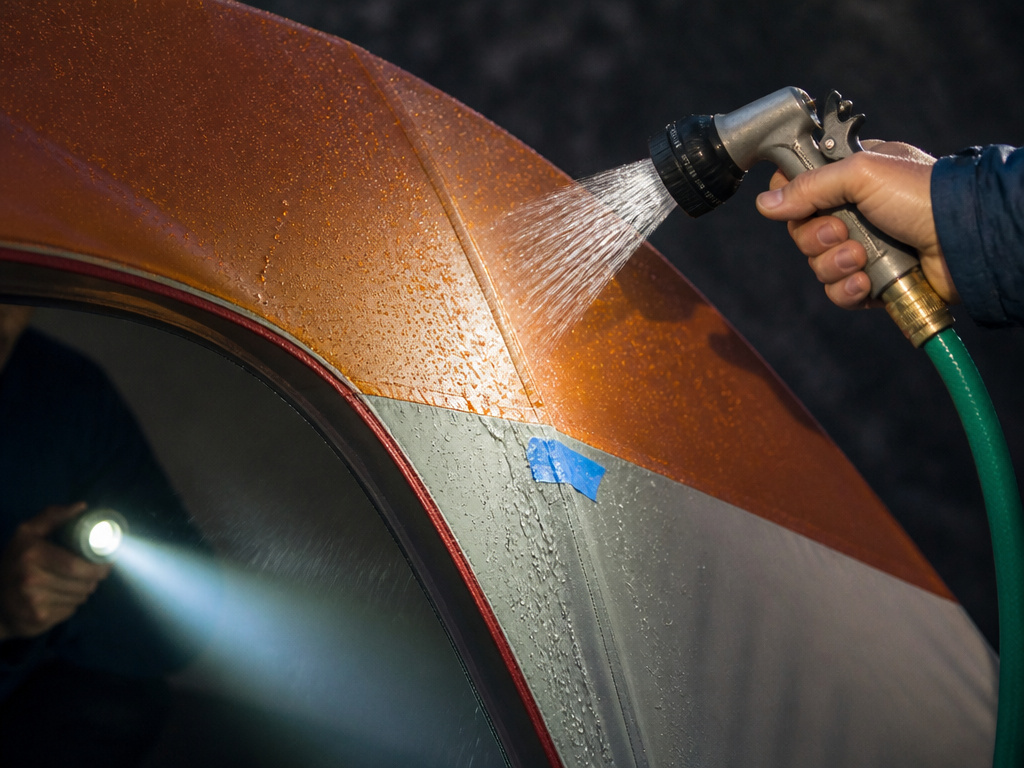
Don’t wait for a storm to be your test. A simple backyard check takes 20 minutes and saves a weekend.
What you need: A garden hose with a spray nozzle, a helper, and a flashlight.
Set up the tent completely on a dry day. Get inside with the flashlight and zip up. Have your helper spray the tent with a gentle, rain-like shower setting. Start at the bottom and work up. Your job is to watch the ceiling and walls.
Look for three things:
* Dark spots: Fabric that darkens quickly is “wetting out.” The DWR is gone.
* Drips: A steady drip means a compromised seam or pinhole.
* Seepage: A slow spread of moisture along a stitch line is a seam leak.
Mark any leaks with painter’s tape. Let the tent dry completely before applying any sealant or DWR re-treatment.
For a quick fabric check, use a spray bottle on a small section of the rainfly. Water should bead up and roll off. If it soaks in within a minute, plan to re-treat the DWR. Nikwax TX.Direct Spray-On is a reliable choice for most fabrics.
“4-Season” and Other Marketing Myths
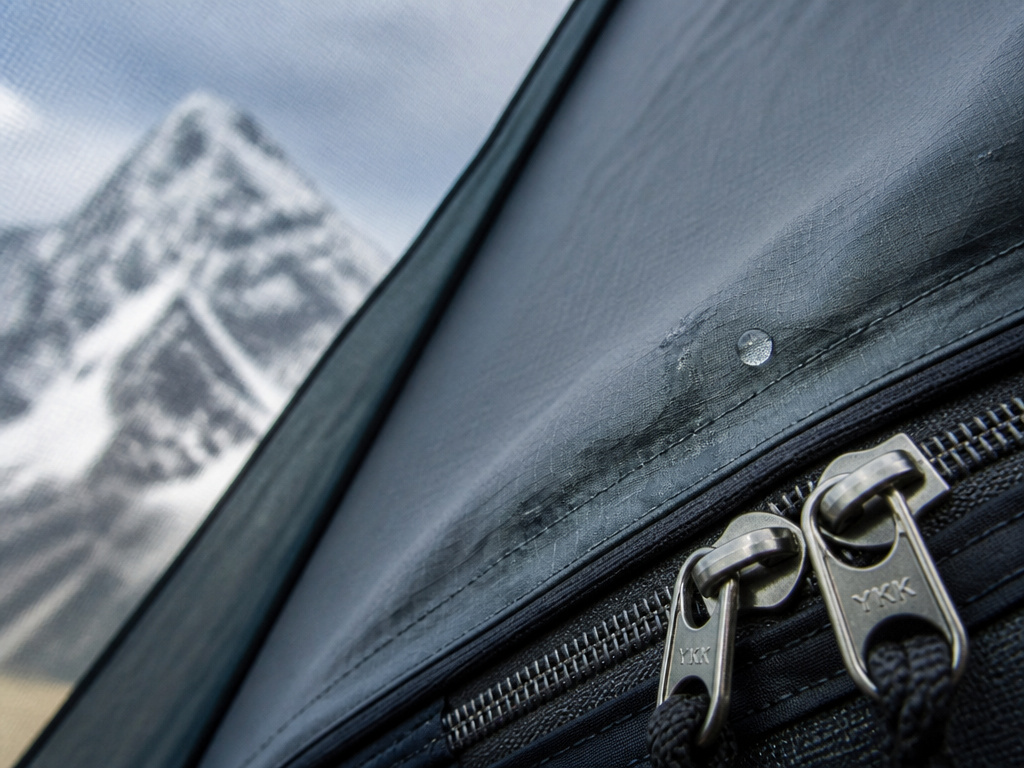
This label causes more confusion than any other. In the tent world, “4-season” or “expedition” almost always refers to structural strength for snow load and high winds. It is not a synonym for “waterproof.”
I’ve pitched a 4-season mountaineering tent in a wet Scottish summer. It held up to 50mph gusts but seeped moisture at the flysheet seams after eight hours of drizzle because its HH rating was just 1200mm. It was built for dry cold, not damp.
A robust storm-proof tent option might have bomber poles and minimal mesh, but its waterproof rating could be lower than a dedicated 3-season tent for heavy rain. Always check the HH rating first, then consider the season rating for ventilation and strength.
Similarly, “water-resistant” has no legal definition. It can mean anything from a light DWR spray to a 500mm HH coating. Assume it means “will keep you dry in a brief shower, but not a downpour.”
Matching Your Tent to the Forecast
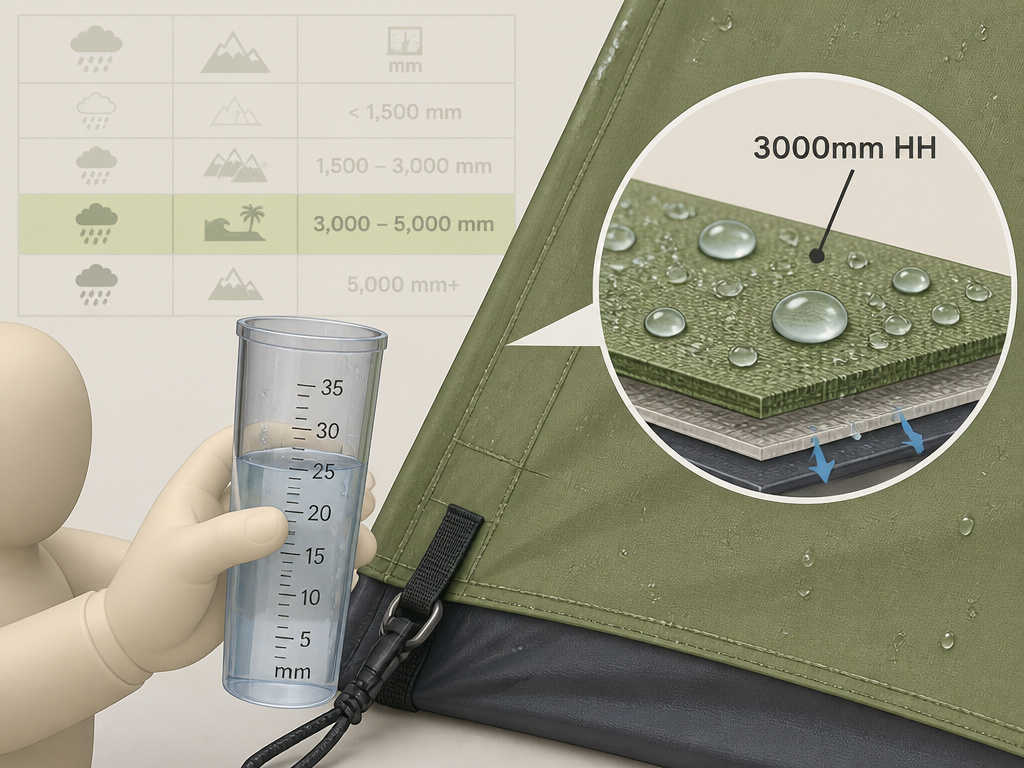
Your needs dictate the specs. Use this table to cut through the noise.
| Use Case | Minimum Rainfly HH | Minimum Floor HH | Critical Feature | Good Options |
|---|---|---|---|---|
| Summer Festival / Car Camping | 1000mm | 1500mm | Taped seams, good ventilation | Many affordable tent options |
| Backpacking in Variable Weather | 1500mm | 2000mm | Silicone coating, full coverage fly | Lightweight two-person camping tents |
| Heavy Rain / Coastal Trips | 3000mm | 5000mm | Fully taped seams, waterproof zippers | Dedicated heavy-duty waterproof tents |
| Winter / Snow Camping | 1500mm+ (see note) | 2000mm+ | Double-wall construction, snow skirts | Four-season canvas tents or mountaineering tents |
Note: For winter, breathability to manage condensation is often more critical than an extreme HH rating. A non-breathable tent with a 5000mm rating will soak you from the inside with condensation.
For family car camping where weight doesn’t matter, a PU-coated budget-friendly tent model with a 2000mm floor is a solid choice. For the weight-conscious backpacker, a silicone-coated ultralight tent model hitting the 1500mm/2000mm benchmarks is the target. The worst choice is a cheap instant tent with no HH rating for a week-long trip in a rainy climate.
Maintaining the Waterproofing You Paid For
Waterproofing is not permanent. Sun is the enemy. Here’s how to keep your shelter dry season after season.
- Never store your tent wet. Mold and mildew eat away at coatings and fabrics. Dry it completely, every fold, every corner, before stuffing it into its sack.
- Reapply DWR annually. After a season of UV exposure, the beading effect fails. Wash the tent with a tech cleaner (like Nikwax Tech Wash), let it dry, and spray on a fresh DWR treatment.
- Use a footprint. A groundsheet protects the tent floor from abrasion and moisture. It’s cheaper to replace than a tent.
- Clean gently. Don’t use detergent or scrub hard. It can strip coatings. Rinse with clean water and a soft sponge.
- Re-seal seams every few years. Inspect factory tape for peeling edges. Re-apply liquid sealant to any worn areas, especially on older durable canvas shelters or heavily used backpacking tents.
Common mistake: Washing a tent in a top-loading agitator washing machine, the brutal twisting shreds seam tape and delaminates coatings. The repair bill exceeds the tent’s value.
A well-maintained PU-coated tent lasts 5 years. A silicone-coated one can go 10. Neglect cuts that lifespan in half.
Frequently Asked Questions
What does a 3000mm water column mean?
It means the fabric can support a 3-meter (nearly 10-foot) column of water before leaking. In practice, this rating withstands heavy, wind-driven rain for extended periods. It’s a benchmark for serious storm-resistant tent models.
Can you make a non-waterproof tent waterproof?
You can improve it, but you cannot make it truly waterproof. You can apply a DWR spray to renew water beading and use seam sealer on stitched seams. However, if the base fabric lacks a PU or silicone coating, water will eventually soak through under sustained pressure. Start with a tent that has a proper HH rating.
How long does tent waterproofing last?
The durable water repellent (DWR) coating on the outer fabric wears off after 20-30 days of sun exposure and needs re-treatment yearly. The underlying waterproof PU or silicone coating lasts 3-10 years depending on care and storage. Seam tape fails at the edges after 2-4 years of flexing.
Is a higher hydrostatic head rating always better?
Not necessarily. A higher HH rating often means heavier, less breathable fabric. For most 3-season camping, a 1500-3000mm rainfly is ideal. Extremely high ratings (10,000mm+) are for expedition floors or extreme conditions and add unnecessary weight and cost for casual use.
Do all seams need to be sealed?
Yes. Any stitched seam that is not factory-taped is a leak path. This includes rainfly seams, floor seams, and the attachment points for guy lines and poles. If you see exposed needle holes, seal them.
What’s the difference between water-resistant and waterproof?
“Water-resistant” means the fabric will shed light rain for a short time. “Waterproof” means the fabric has a tested hydrostatic head rating (1500mm+) and will prevent water penetration under sustained pressure. Always look for the number.
The Bottom Line
Buying a waterproof tent starts with ignoring the marketing and finding the hydrostatic head rating. Look for 1500mm on the fly, 2000mm on the floor, and factory-taped seams. Assume any tent without these specs is water-resistant at best, fine for a dry forecast, a liability in a storm.
Your first line of defense is the spec sheet. Your second is a garden hose and 15 minutes in the backyard. Find the leaks where you can fix them, not where you have to sleep in them. A tent is a simple mechanical object. It either holds water out or it doesn’t. The numbers tell you which one you bought.
