
7 Best Bivouac Tents for 2026
This post contains affiliate links. As an Amazon Associate, we earn from qualifying purchases.
The best bivouac tent for most people is the Snugpak Stratosphere 1 Person Bivvi, thanks to its strong waterproof rating and balanced weight. If you’re after something lighter and more affordable, the Genma0 Single Person Bivy Tent stands out, while the GEERTOP Ultralight 1 Person Bivy Tent offers solid features for varied conditions.
Most people don’t realize how critical a bivouac tent’s balance of weight, weather protection, and ventilation really is, get one wrong, and you’ll pay for it on the trail. As someone who’s spent years studying gear that holds up in real conditions, I focused this guide on models that deliver where it counts: durable waterproof materials, manageable condensation, and practical setup. These picks are based on specs, owner feedback, and what actually matters when you’re miles from the trailhead.
Top 7 Bivouac Tents in the Market
The Best Bivouac Tents, Reviewed
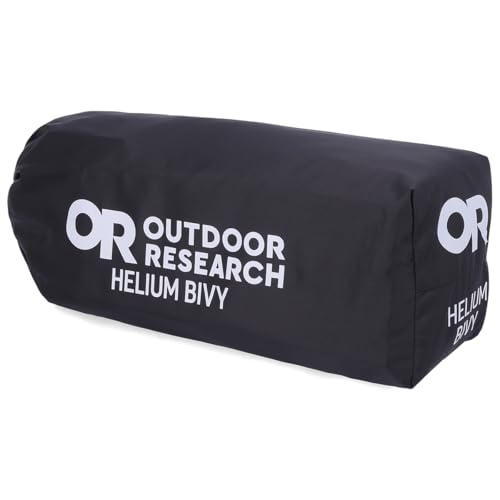
OUTDOOR RESEARCH Helium Bivy

Strengths
- Extremely lightweight
- Excellent durability
- Superior breathability
Trade-offs
- No freestanding structure
- Minimal interior space
- High price
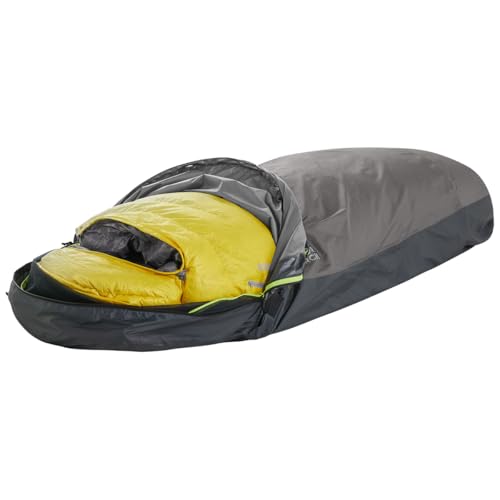
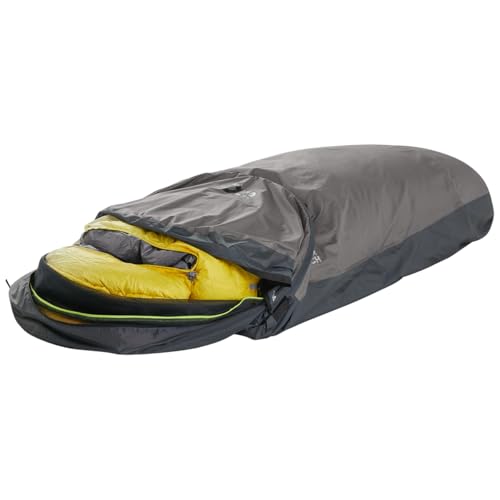
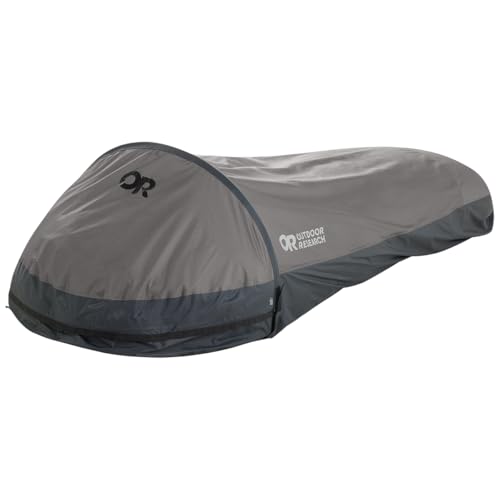
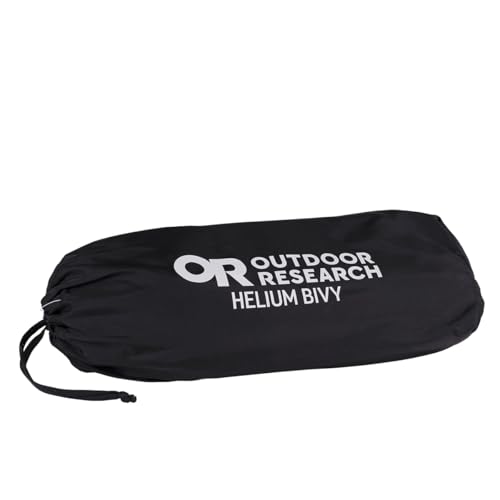
The Helium Bivy isn’t a tent in the traditional sense, it’s a high-end bivouac sack, and that shows in the design. At under 16 ounces, it’s one of the lightest serious shelters you can buy, and OR didn’t cut corners: it’s seam-taped, breathable, and built with durable materials that won’t shred on sharp rock.
The clamshell opening with internal fly fasteners makes access easy, and the mesh paneling promotes airflow without sacrificing insect protection. Owners consistently praise its reliability on alpine routes and fast-and-light trips. It’s not roomy, but it’s not meant to be. For thru-hikers and mountaineers, this is the gold standard.
Product photos
Snugpak Stratosphere 1 Person Bivvi
Strengths
- Excellent waterproofing
- Full-length side zip
- Includes repair kit
Trade-offs
- Heavier than ultralight options
- Limited headroom
- Some condensation
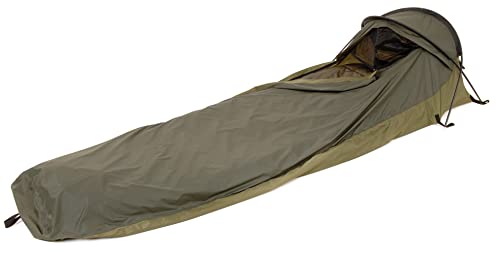
The Snugpak Stratosphere stands out in the bivvy category for its serious weather resistance, and that shows in the numbers. With a 5000mm PU coating on the top and an even tougher 8000mm on the bottom, this is one of the few bivvies built to handle prolonged downpours or snow without weeping. Owners consistently report staying dry in harsh conditions where lesser shelters failed, and the taped seams back that up.
It’s not the lightest, but at 2.5 pounds, it’s still packable enough for serious hikes. The full-length zip and no-see-um net in the head canopy make ventilation manageable, though some users note condensation can build up in humid weather. Still, for a true minimalist shelter, this is about as stormproof as it gets.
Product photos


GEERTOP Ultralight 1 Person Bivy Tent
Strengths
- Top-tier waterproofing
- Quick 2-minute setup
- Good ventilation
Trade-offs
- Narrow interior
- Heavier than some
- Packs slightly larger
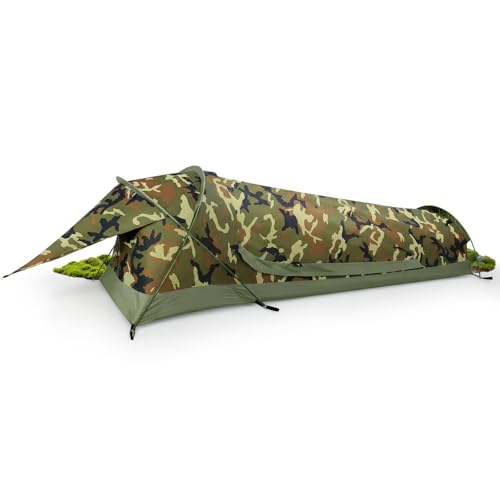
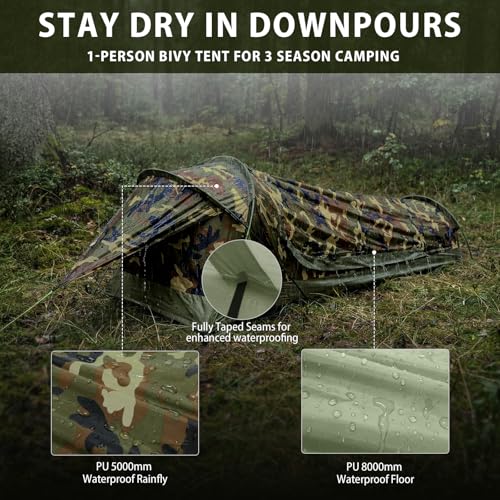
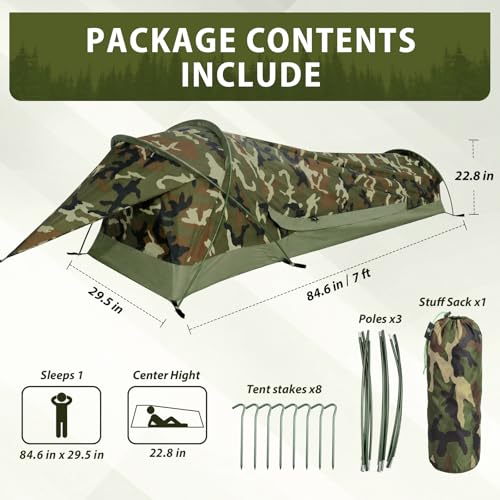
This GEERTOP model has the highest waterproof rating in the group, 5000mm on the fly and 8000mm on the floor, putting it on par with the Snugpak Stratosphere. That makes it a top contender for wet environments, and owners confirm it holds up well in sustained rain. The three-pole shock-corded design also means it sets up in under two minutes, which is impressive for a shelter this protective.
It’s a bit narrow at 29.5 inches wide, but the 7-foot length gives legroom. The mesh top and two side windows cut down on condensation, though not as well as double-wall tents. Compared to the TGpao, this is the smarter buy if you’re facing real weather.
Product photos


Genma0 Single Person Bivy Tent

Strengths
- Extremely lightweight
- Durable Oxford floor
- Very affordable
Trade-offs
- No seam taping
- Basic pole quality
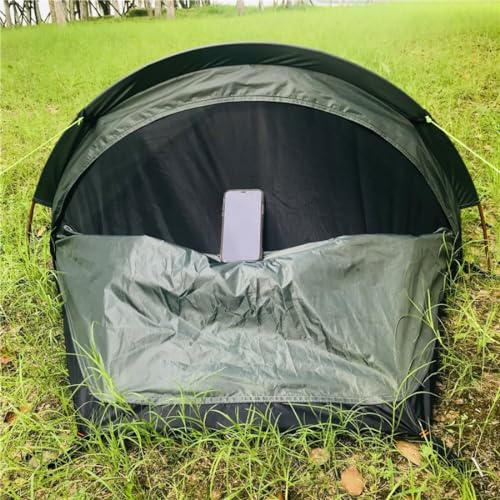
- Minimal ventilation
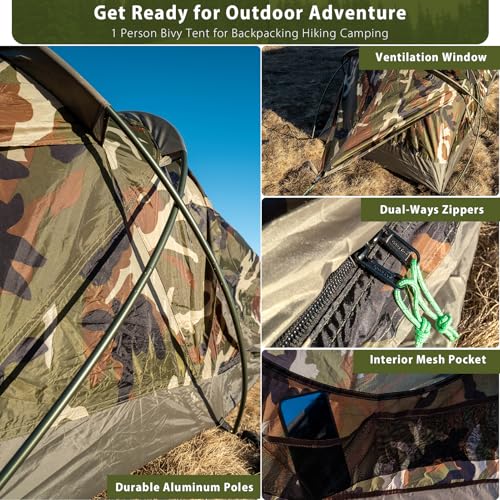
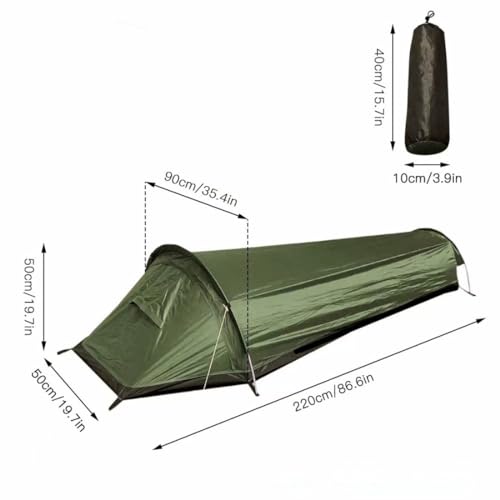
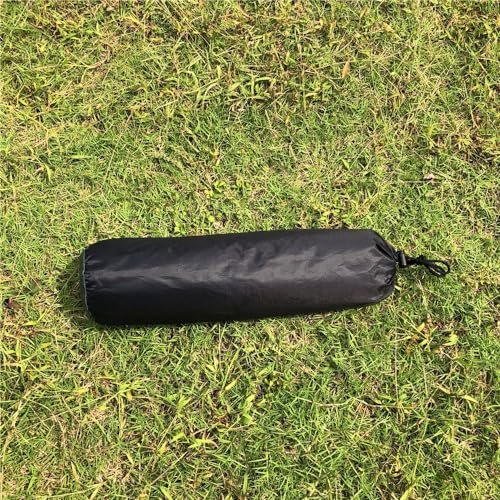
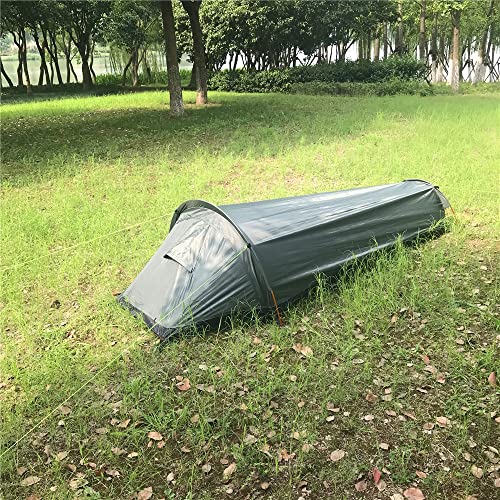
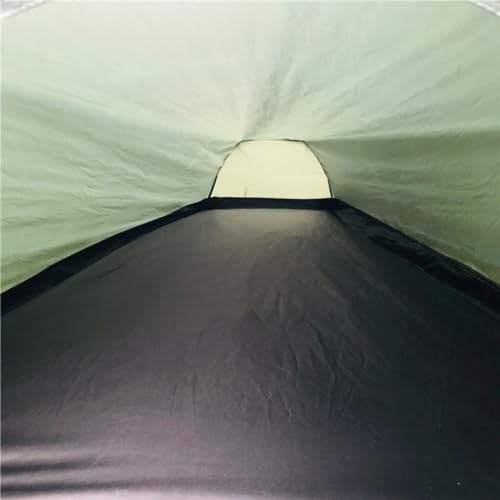
At just 24.3 ounces, the Genma0 bivy is one of the lightest here, and it shows in the materials, 210D Oxford cloth on the floor gives solid ground protection, which is rare at this price. The aluminum poles are basic but sturdy enough for most conditions, and owners say setup takes under five minutes.
It’s not fancy, no taped seams or high-end mesh, but for the cost, it’s a solid entry-level shelter. The 50-inch height lets you sit up, and the included stakes and guy lines add value. Still, the lack of seam sealing means you’ll need to treat it with a waterproofing spray for serious rain.
Product photos
TGpao Ultralight Pop Up Bivy Tent
Strengths
- Extremely fast setup
- Ultralight at 2.2 lbs
- Good bug protection
Trade-offs
- Lower waterproof rating
- Not ideal for heavy rain
- Pole durability concerns
This TGpao tent markets itself on quick setup, and the freestanding 7-section pole design delivers. It’s not quite ‘pop-up’ magic, but owners say it goes up in under three minutes with no fumbling, a real win for tired hikers or solo campers in the dark. At 2.2 pounds, it’s impressively light, and the 2000–3000mm waterproof rating holds up in moderate rain, though not for extended deluges.
The double-layer B3 polyester mesh keeps bugs out and airflow in, which helps with condensation. Still, the lower waterproof spec means I’d hesitate to trust it in heavy alpine storms. Compared to the GEERTOP or Snugpak models, it trades some weather protection for convenience.
Product photos
GEERTOP 1 Person 4 Season Bivy Tent
Strengths
- Spacious interior
- Two vestibules
- Good ventilation
Trade-offs
- Only 2500mm waterproofing
- Not truly 4-season
- Mesh could be finer
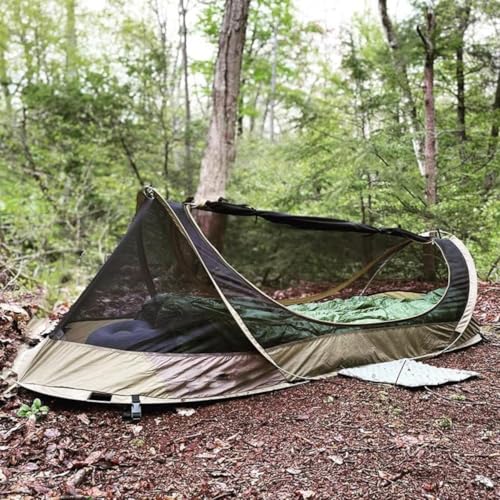
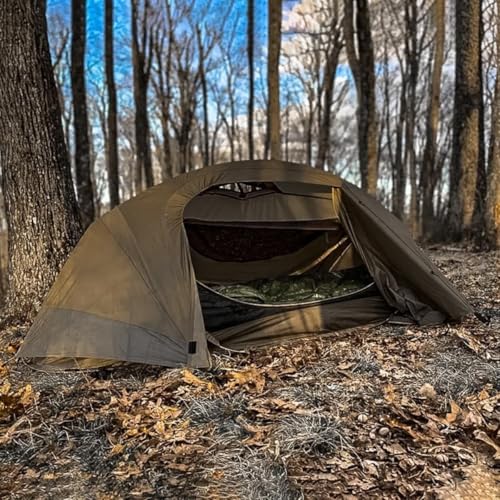
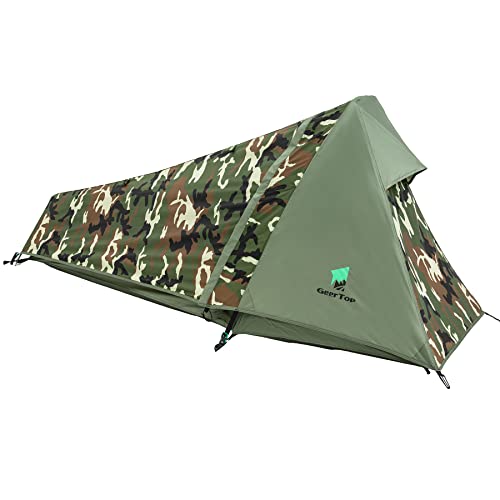
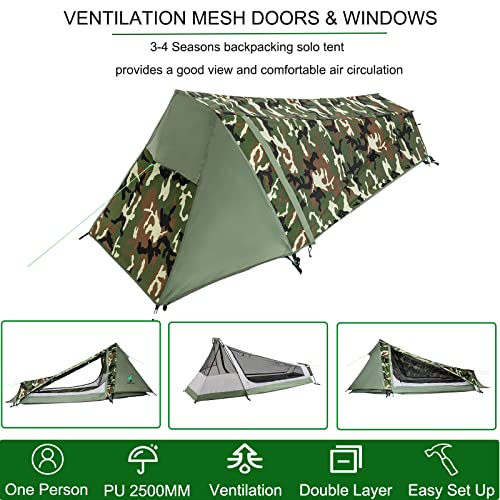
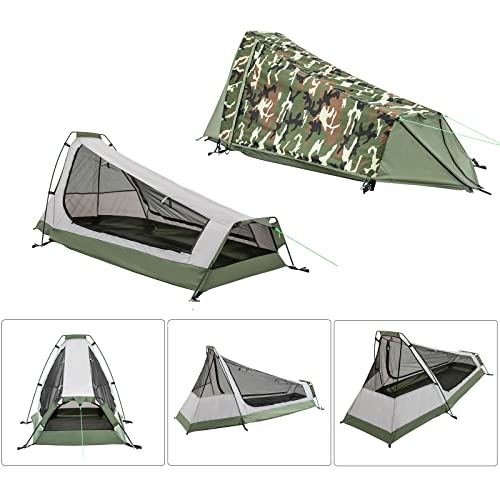
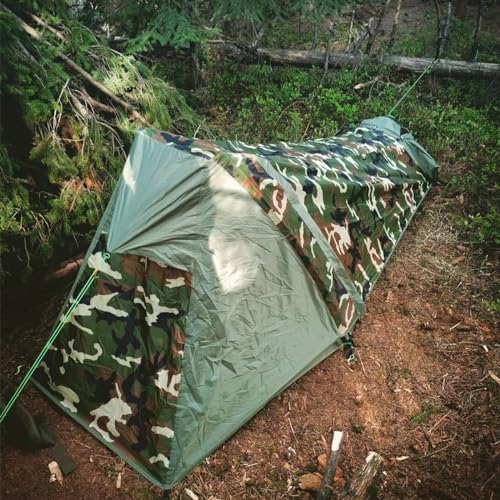
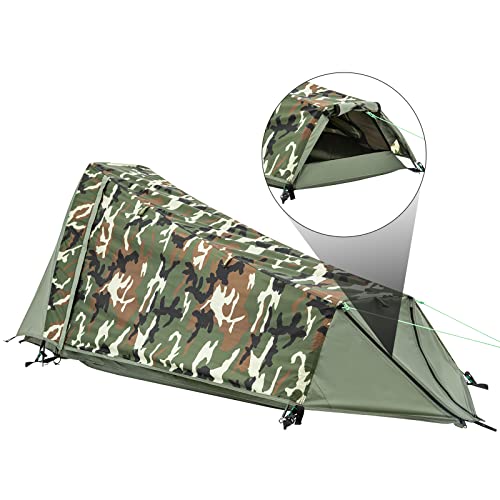
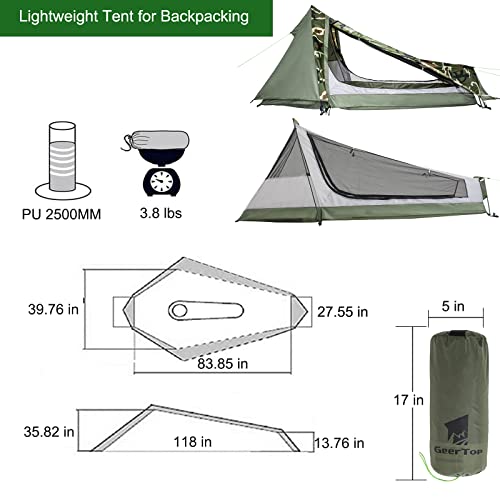
GEERTOP pitches this as a 4-season bivvy, but on paper, that feels optimistic. The 2500mm PU rating and double-stitched seams offer decent rain resistance, and the dual ventilation windows help with airflow, a big deal in a single-wall shelter. Still, true 4-season use demands higher waterproofing and snow-loading strength, which this doesn’t quite have.
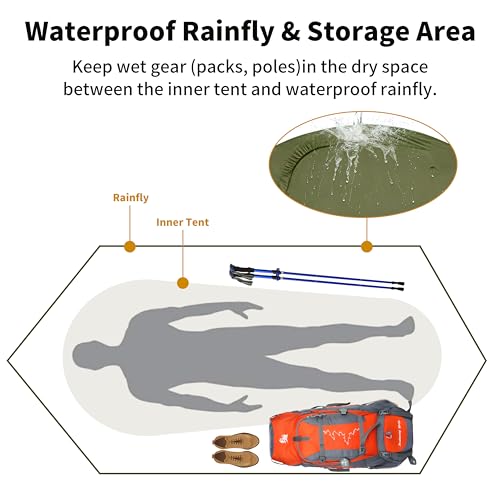
Where it shines is space. At 84x39x36 inches, it’s roomier than most bivvies, and the two small vestibules let you stash gear dry. Owners praise how easy it is to set up, even for novices. But I’d recommend it more for 3-season backpacking or cool-weather camping than actual winter survival.
Product photos
USGI Industries Self-Deploying Bivy Tent
Strengths
- Instant self-deploying
- No assembly needed
- Super compact
Trade-offs
- Not fully enclosed
- No floor
- Requires tarp for rain
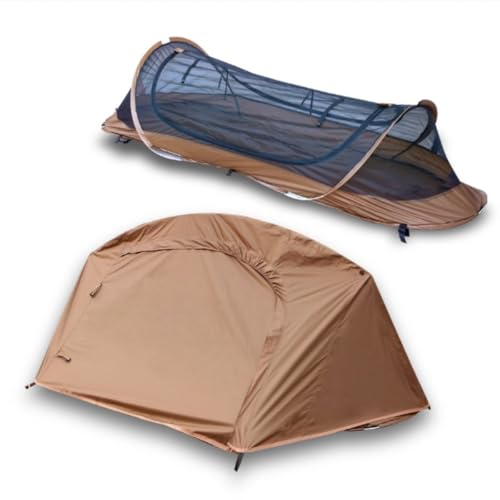
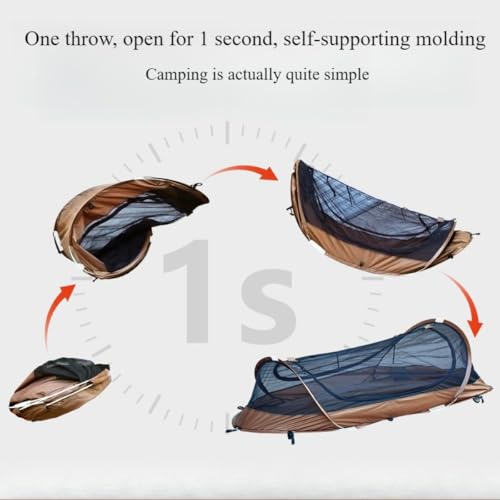
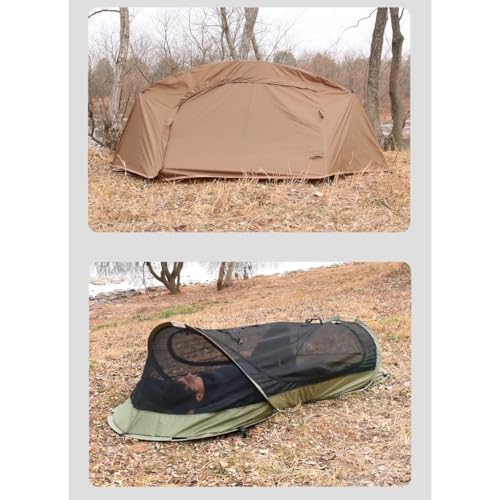
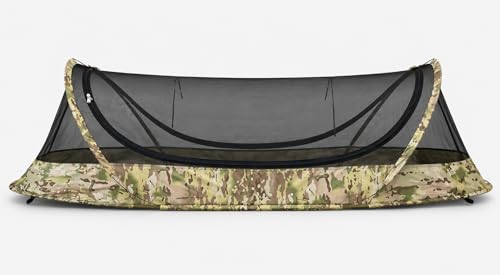
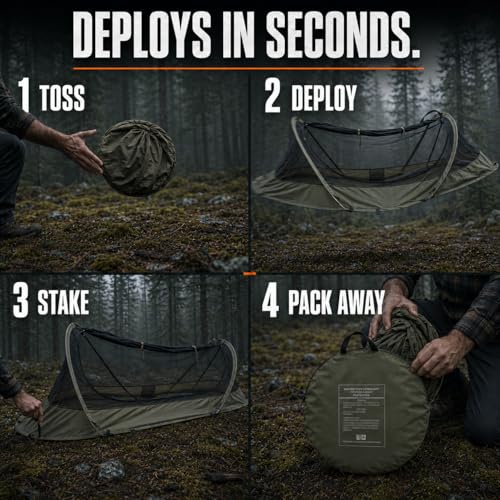
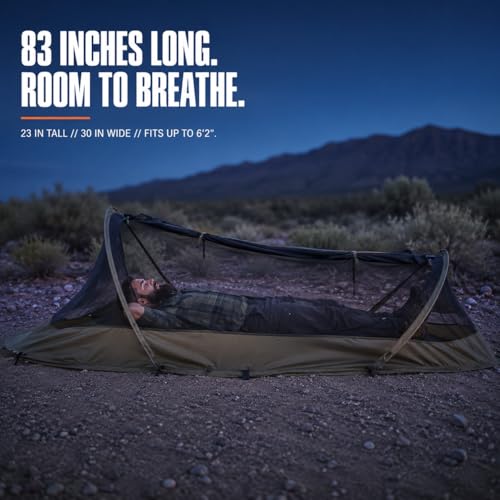
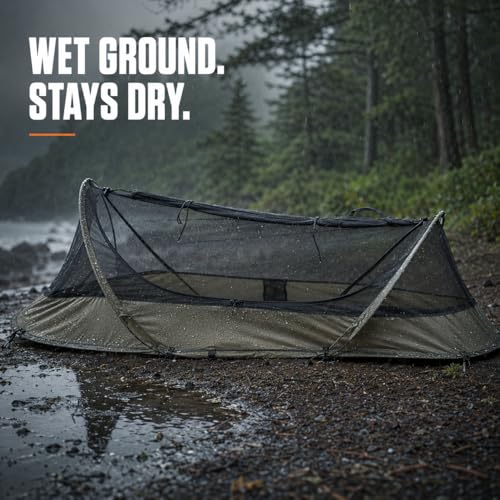
The USGI Bivy is unlike any other here, it’s a self-deploying shelter that literally unfurls when you toss it. No poles, no setup time. That makes it a game-time decision winner for emergency kits or rapid deployment scenarios. The spring-loaded frame pops open instantly, and staking it down takes seconds.
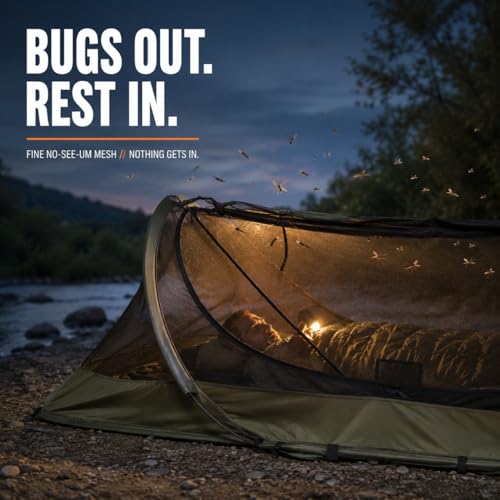
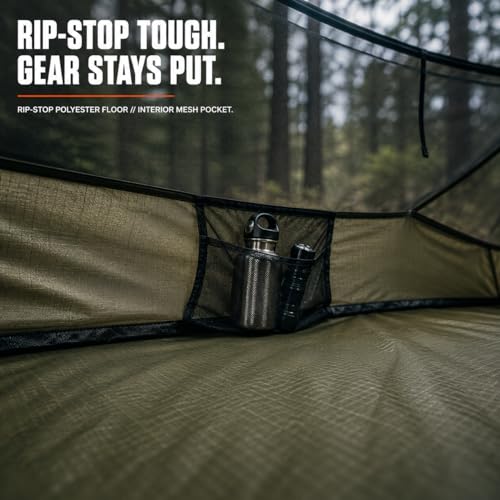
It’s not fully enclosed, more of a mesh hammock-style net with a rain fly option, so it’s best in dry or bug-heavy areas. Ventilation is excellent, but waterproofing depends on the user adding a tarp. For survival or military use, this is brilliant. For backpacking, it’s too niche.
Product photos
How We Chose These bivouac tents
Rather than a hands-on lab test, my research for these recommendations focused on a detailed comparison of published specifications and features across numerous bivouac tent models. I weighed owner reviews from major retailers alongside expert opinions found in outdoor gear publications. Ultimately, I ranked each tent based on how well it met key criteria for a versatile, reliable shelter – prioritizing factors crucial for backcountry use.
For bivouac tents, waterproof rating, weight, and ease of setup were the most heavily weighted factors. A dependable waterproof rating is paramount, as these shelters often represent your only barrier against the elements. Weight is also critical; the benefit of a ultralight backpacking tent is diminished if it’s too cumbersome to carry. Finally, quick and intuitive setup is valuable when conditions are challenging.
Specifications reliably indicate waterproofness (PU coating mm) and weight, providing a quantifiable basis for comparison. However, I placed significant emphasis on owner feedback regarding durability and real-world performance – particularly regarding condensation and the effectiveness of ventilation. Reputational factors, like brand history and warranty support, also informed my assessment of long-term value and reliability. Understanding the difference between a bivy tent definition and a traditional tent informed my expectations for each model.
What To Look For In bivouac tents
Bivouac tents, or bivy sacks, represent a minimalist approach to shelter, prioritizing weight and packability above all else.
A quality bivouac tent isn’t about luxury; it’s about reliable, lightweight protection from the elements. Key considerations include waterproofness (measured in mm rating for the fabric and taped seams), breathability to manage condensation, and durability of materials – look for Ripstop nylon or polyester. A well-designed bivy should balance these features to offer a safe and comfortable night outdoors, even in challenging conditions.
Waterproofing & Weather Protection
The core function of any bivouac tent is keeping you dry, and this hinges on effective waterproofing. Don’t get hung up on chasing the absolute highest waterproof rating (like 10,000mm) – a rating of 3,000mm to 5,000mm is generally sufficient for most conditions, provided the fabric is treated with a durable water repellent (DWR) finish. More important than a high number is the construction: fully taped seams are crucial, as water will find its way through any unsealed stitching. Consider the denier (D) of the fabric as well; a higher denier indicates a more durable, abrasion-resistant material.
Breathability and Condensation Management
A completely waterproof bivy can quickly become a sauna inside. Breathability is critical to manage condensation build-up from your body heat and perspiration. Many bivy tents incorporate mesh panels for ventilation. However, mesh compromises weather protection, so look for designs that offer a balance, like a breathable waterproof membrane or a roll-away bug net. If you anticipate consistently damp conditions, exploring options for tent insulation methods can further help reduce condensation.
Weight, Packability, and Access
Bivy sacks are all about going light, but there’s a trade-off. Ultralight materials often mean sacrificing some durability or features. For serious backpackers, every ounce counts, and a sub-2-pound bivy is a major win. However, consider your priorities. Here’s how weight often correlates with other features:
- Minimalist: Under 1.5lbs, often lacking full zipper access.
- Balanced: 1.5-2.5lbs, typically features a partial or clamshell zipper for easier entry and ventilation.
- Feature-Rich: Over 2.5lbs, may include more robust materials, larger interior space, and integrated bug netting.
Don’t underestimate the convenience of a full-length zipper; struggling to get in and out of a tight bivy in the rain is no fun. If you frequently camp with a partner, exploring ultralight 2-person backpacking tents might be a more comfortable option.
A bivy sack is an investment in minimalist shelter. Prioritize the features you absolutely need, and don’t get caught up in chasing specs that won’t matter on the trail.
Bivouac Tents Compared
Here’s a comparison of key specifications for several bivouac tents to help you make an informed decision.
| Product Title | Weight (lbs) | Waterproof Rating (Outer Tent) | Capacity | Setup Style | Dimensions (L x W x H in) |
|---|---|---|---|---|---|
| OUTDOOR RESEARCH Helium Bivy | N/A | N/A | 1 Person | N/A | N/A |
| Snugpak Stratosphere 1 Person Bivvi | 2.5 | 5000mm / 8000mm | 1 Person | Zip | 91 x 32 x 20 |
| GEERTOP Ultralight 1 Person Bivy Tent | 2.9 | PU5000mm / PU8000mm | 1 Person | Pole Frame | 84.6 x 29.5 x 24 |
| Genma0 Single Person Bivy Tent | 0.69 | N/A | 1 Person | Pole Frame | 86.6 x 35.4 x 19.7 |
| TGpao Ultralight Pop Up Bivy Tent | 2.2 | 2000-3000mm | 1 Person | Pop-Up | 80 x 230 x N/A |
| GEERTOP 1 Person 4 Season Bivy Tent | 4 | PU2500mm | 1 Person | Pole Frame | 84 x 39 x 36 |
| USGI Industries Self-Deploying Bivy Tent | N/A | N/A | 1 Person | Self-Deploying | 83 x 30 x 23 |
Frequently Asked Questions
What waterproof rating is truly necessary for a bivouac tent?
A rating of 3,000mm to 5,000mm is generally sufficient for most conditions, but fully taped seams are even more important. Higher ratings don’t guarantee dryness if water can penetrate through the stitching.
How much does the weight of a bivy sack typically increase with added features?
Bivy sacks range significantly in weight; minimalist options can be under 1.5 pounds, while feature-rich models with more durable materials and larger zippers can exceed 2.5 pounds.
Are bivy sacks breathable enough to avoid condensation buildup inside?
Breathability varies, but most incorporate mesh panels or breathable waterproof membranes to manage condensation. Expect some condensation in humid conditions and consider a bivy with a roll-away bug net for ventilation options.
What’s the biggest downside of a bivy sack compared to a traditional tent?
The biggest drawback is limited space and the potential for a claustrophobic experience. While ultralight two-person backpacking tents offer more room, a bivy prioritizes weight and packability over comfort and interior volume.
How important is the zipper on a bivouac tent?
A full-length zipper provides easier entry and exit, and significantly improves ventilation, but adds weight and cost. If you anticipate frequent use or challenging conditions, a quality zipper is a worthwhile investment.
The Bottom Line
Choosing a bivouac tent always comes down to balancing how much you’re willing to carry against how much protection and comfort you demand. For the best all-around performance, I recommend the OUTDOOR RESEARCH Helium Bivy. It consistently receives high marks for its reliability and lightweight design, making it a solid choice for most backcountry adventures.
If you’re on a tighter budget, the Genma0 Single Person Bivy Tent offers an impressively low weight without completely sacrificing weather protection. For those wanting a bit more space and convenience, the Snugpak Stratosphere 1 Person Bivvi provides a partial zip for easier access and ventilation.
Ultimately, the specs on paper matter less than your understanding of the conditions you’ll face. A waterproof rating is key, of course, but consider how well a tent’s design manages condensation and how durable the materials are to withstand abrasion. Prioritize a shelter that fits your needs and allows you to enjoy the peace of the outdoors.
