
What Is A Croup Tent | The 1955 Croupette Model D Specs
This post contains affiliate links. As an Amazon Associate, we earn from qualifying purchases.
A croup tent is a transparent plastic canopy placed over a hospital crib or bed, connected to a machine that pumps cool, humidified air or oxygen inside to help a child with croup breathe more easily. It works by soothing swollen airways and loosening mucus, but its use has declined sharply since the 1990s due to safety concerns and more effective medications.
Most parents today will never see one. That’s a good thing. The image of a child isolated under a plastic dome, the hum of a machine in a hospital room, belongs to a specific era of pediatric care. It’s a piece of medical history that explains a lot about how we treat kids now.
This guide unpacks what a croup tent actually was, right down to the model number and maintenance manual of a 1955 unit. We’ll look at why doctors used them, the very real risks that led to their decline, and what replaced them. You’ll walk away knowing the specs of a museum piece and the modern protocols that keep kids out of them.
Key Takeaways
- Croup tents were common in mid-20th-century hospitals but are now considered outdated due to risks like CO2 buildup, overheating, and electric shock.
- The 2003 Pediatric Mist Tent Therapy Guidelines mandated strict timelines: nebulizers changed every 24 hours, canopies every 48 hours, and orders re-evaluated every 72–96 hours.
- Modern pediatric consensus, as stated in current medical guidance, holds that cool mist from a humidifier or even a steamy bathroom provides equal relief without the risks of an enclosed tent.
- Treatment now focuses on a single dose of oral dexamethasone (a steroid) or inhaled epinephrine in severe cases, which directly reduce airway swelling.
- Understanding this history highlights the importance of evidence-based medicine and why some “traditional” treatments are wisely retired.
What Is A Croup Tent? A Technical Definition
Forget the outdoor shelters. In a medical context, a croup tent, often called a mist tent or oxygen tent, was a clinical device. Its sole purpose was to create a localized environment of high humidity and, optionally, increased oxygen concentration around a pediatric patient.
The core components were a rigid frame, a clear vinyl or plastic canopy, and a base unit containing a nebulizer, a fan, and sometimes a cooling mechanism. The 1955 Croupette Model D from Air-Shields Inc. measured 68.5 cm long by 61.0 cm wide by 12.0 cm high for its base unit. You connected an oxygen or air hose to a nipple, adjusted the flow to a gauge, and for cooling, you filled a chamber with ice and water. The damper valve ran open for the first minute or two, then closed to maintain “supersaturation with minimum wetting,” per its manual.
A croup tent is a therapeutic enclosure designed to deliver a supersaturated mist of cooled, humidified air or oxygen to a pediatric patient experiencing respiratory distress from conditions like laryngotracheobronchitis (croup). It consists of a rigid circulation unit, a transparent canopy, and a nebulizing mechanism, creating a controlled microclimate to reduce airway inflammation and facilitate mucus clearance.
This wasn’t gentle vapor from a bedside humidifier. It was a full environmental intervention. The canopy was tucked tightly around the mattress, sealing the child in a foggy bubble. Nurses monitored it closely because the environment inside was fragile. Opening the canopy frequently, as noted in the 2003 guidelines, broke the seal and made consistent oxygen levels impossible.
TL;DR: A croup tent was a hospital-grade device that enveloped a child in a humidified atmosphere, built from a specific base unit and a plastic canopy, now largely obsolete.
The Rise and Fall of the Mist Tent
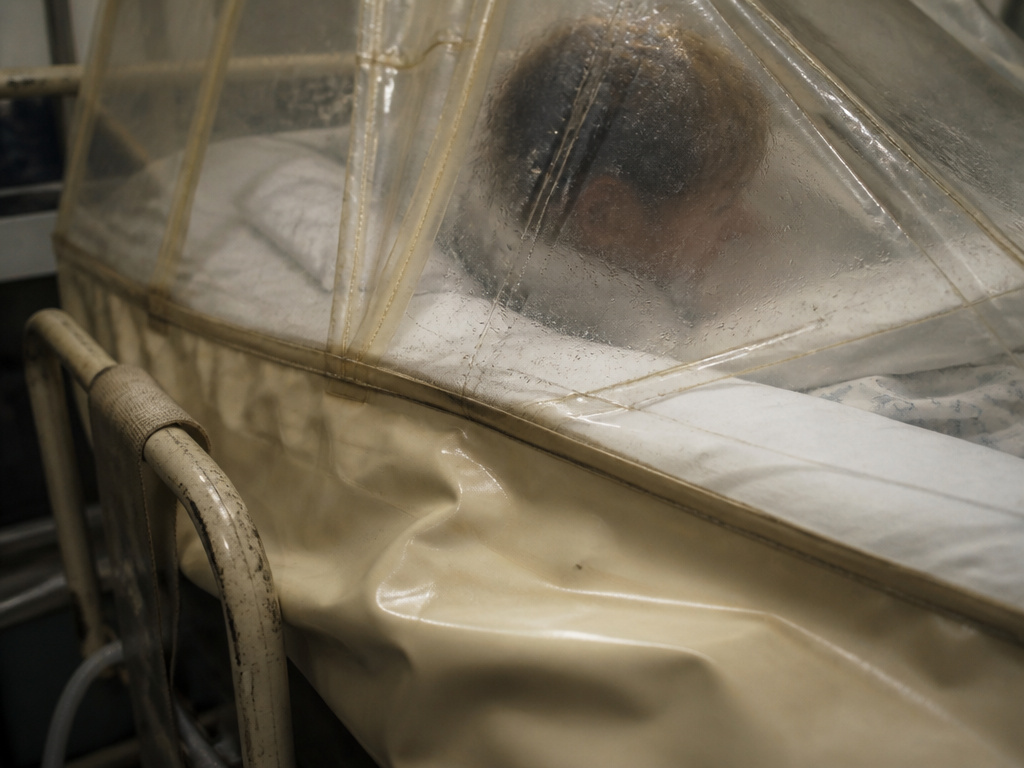
Doctors reached for these tents for a straightforward physiological reason. Croup swells the subglottis, the narrowest part of a young child’s airway. Humidified air can soothe irritated tissues and help loosen the sticky mucus that makes breathing sound like a seal’s bark. Before the 1990s, the options were limited. The logic was sound: if moist air helps, then more moist air in a concentrated space should help more.
The 1931 article “A Pinless Croup Tent” in the American Journal of Nursing focused on practical improvements like a pinless design and rubberized blankets to prevent dripping condensation. It was an era of iteration on the basic concept, aiming for patient comfort and nurse efficiency. For decades, it was a standard piece of ward equipment.
The decline wasn’t sudden, but it was decisive. Two forces drove it: the arrival of better drugs and a mounting list of documented hazards.
First, the medications. A single dose of oral dexamethasone, a steroid, proved incredibly effective at reducing airway inflammation within hours. For severe cases, nebulized epinephrine worked even faster to open constricted airways. These treatments targeted the root cause, swelling, not just the symptom of dry air. Their efficacy made the tent’s benefit look marginal at best.
Second, the risks became impossible to ignore. The 2003 Pediatric Mist Tent Therapy Guidelines catalog them plainly. Malfunctions in the circulation unit could cause “excessive heat and CO2 build-up inside the tent canopy.” A sleeping child couldn’t escape that. The same document warns of “electric shock or fire from the electrical fan or static electricity from the plastic.” When you weigh those stakes against a treatment many experts began to see as a placebo, the equation changes.
Modern pediatric advice is blunt. As one double-board-certified pediatrician stated in a recent video, “things like humidifiers or mist therapy don’t really work in diseases like croup… if you are using a cool mist humidifier and it is working, it’s probably more of a placebo effect or it may not be croup at all.” The standard of care shifted under the weight of evidence.
The Croupette Model D: A Museum Artifact
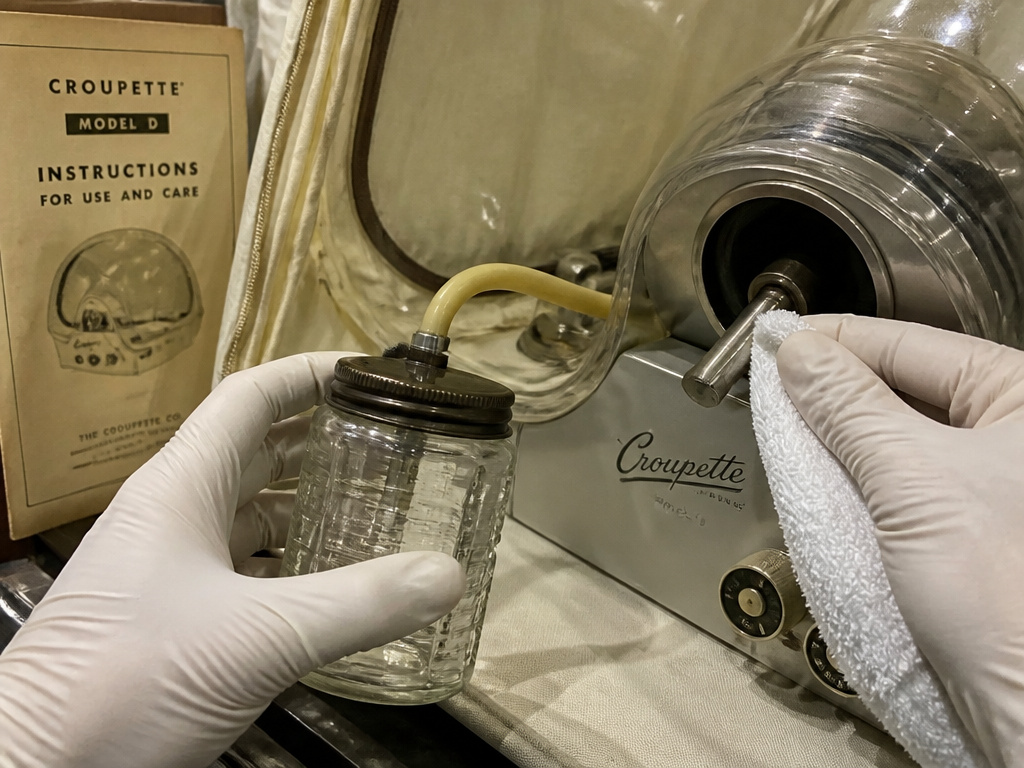
To understand the engineering, look at a specific artifact. The Croupette Model D, Serial No. 11540, sits in a museum collection now. Its instruction manual reads like a time capsule.
Maintenance was meticulous. You used distilled water in the jar, emptied and cleaned it daily. The atomizer and filter screen needed cleaning after each use. “Do not use wire or sharp objects to clear atomizer orifices,” the manual warns. The vinyl canopy and Plexiglas cleaned with mild soap and water, avoiding ether or alcohol. They even listed the spare atomizer part number: 1112BZ.
The machine was a feat of mid-century medical engineering, protected by multiple U.S., British, and Canadian patents. It was also fragile, demanding, and, as we now know, potentially dangerous. Its journey from hospital workhorse to museum piece perfectly tracks the evolution of pediatric respiratory care.
TL;DR: The Croupette Model D exemplifies the complex, high-maintenance devices used for mist tent therapy, highlighting why simpler, safer treatments were urgently needed.
Why Croup Tents Are Rarely Used Today
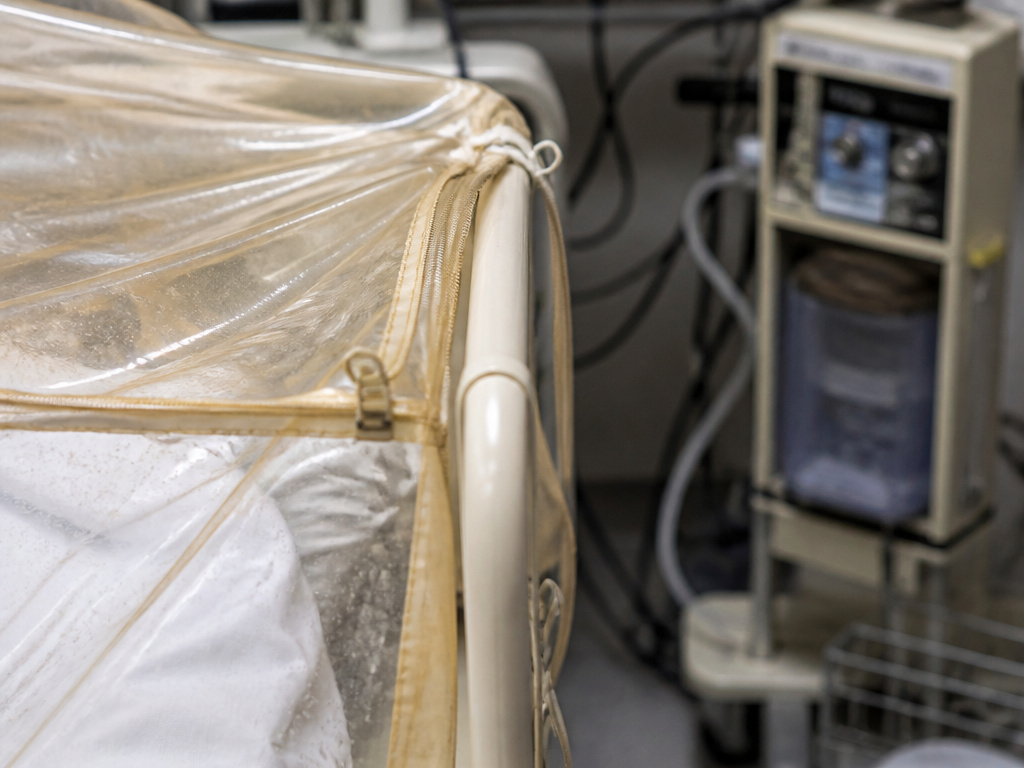
The shift away from croup tents wasn’t just about having better drugs. It was a fundamental re-evaluation of risk versus benefit in a vulnerable population. The guidelines themselves forced a constant reassessment, mandating that orders for mist tent therapy be “re-evaluated and updated every seventy-two to ninety-six hours.” That frequency hints at the clinical unease surrounding the treatment.
Let’s break down the specific hazards that tipped the scales:
- CO2 Buildup and Overheating: A malfunctioning fan or a poorly sealed system could turn the tent into a trap. The child re-breathes exhaled carbon dioxide. Their body temperature rises. This isn’t a theoretical risk; it’s a documented cause of clinical deterioration.
- Infection Control: The 2003 guidelines specify changing nebulizer units every 24 hours and canopies every 48 hours. The water reservoir needed sterile water every 8 hours. This strict schedule exists because the warm, wet interior of the tent is a perfect breeding ground for bacteria and mold. Miss a change by a shift, and you risk adding a respiratory infection to the original illness.
- Immobility and Distress: The child is isolated under plastic, often in a noisy hospital room. They can’t see their parents easily. This separation increases anxiety, which itself can worsen stridor and breathing difficulty. Calming a child is now recognized as a first-line intervention.
- Electrical and Fire Hazards: The warning is right in the primary source document. Combining water, electricity, and oxygen in a high-stress clinical environment near bedding is an inherent risk.
Contrast this with modern home management for mild croup: calming the child, using a cool-mist humidifier in the bedroom, or sitting with them in a steamy bathroom. These methods provide hydration without enclosure, without machinery, and without the attendant risks. For moderate to severe cases, the treatment pathway is clear and drug-based.
| Aspect | Traditional Croup Tent | Modern Approach |
|---|---|---|
| Primary Mechanism | Environmental humidity/oxygen | Pharmacological (steroids, epinephrine) |
| Key Risk | CO2 buildup, overheating, infection | Minimal (drug side-effects are rare) |
| Patient Mobility | Confined to bed/crib | Mobile, can be held and comforted |
| Care Setting | Almost exclusively inpatient | Often managed at home or via short ER visit |
| Evidence Base | Largely anecdotal, replaced by RCTs | Supported by randomized controlled trials |
The table shows a complete paradigm shift. The tent addressed a symptom; modern medicine treats the disease.
Modern Croup Management: What Actually Works
So what should you do if your child has that barking cough? The protocol is now remarkably straightforward, emphasizing observation and specific medical interventions.
First, assess the severity. Mild croup means the stridor (that whistling sound on inhalation) only happens when the child is crying or agitated. Their breathing is otherwise normal. For this, the guidance is clear: stay calm, comfort your child, and consider cool mist from a humidifier. Hydration is key, watch for at least one wet diaper every 6 to 8 hours.
Common mistake: Rushing to the emergency department for mild, intermittent stridor without other symptoms. This often increases the child’s distress. First, try calm comfort and steam in a bathroom for 10-15 minutes.
Second, know the red flags. If the stridor happens while your child is resting quietly, that’s moderate croup. If it’s accompanied by fast breathing, difficulty breathing, or if their skin or lips take on a blue, pale, or gray tint, that’s severe. These signs mean the swelling is progressing. This is when you seek medical help immediately.
In the clinic or ER, the treatment is specific. A single dose of oral dexamethasone is the cornerstone. It’s safe, effective, and reduces the need for hospitalization. For more severe distress, nebulized epinephrine works within minutes to shrink swollen tissues. These are the tools that made the croup tent obsolete. They work with the body’s physiology, not around it.
This efficient, evidence-based approach allows families to choose lightweight 2-person shelters for adventures without worrying about archaic medical gear. The peace of mind that comes from modern pediatrics is tangible.
Frequently Asked Questions
Can I buy or use a croup tent at home?
No, and you should not try. These are medical devices that were used under strict hospital supervision due to significant risks. They are not commercially available for home use, and managing croup at home should involve a cool-mist humidifier, steam, comfort, and close monitoring for warning signs, not an enclosed tent.
What’s the difference between a croup tent and a cool-mist humidifier?
croup tent is an enclosed canopy that creates a saturated environment directly around the child’s head and torso. A cool-mist humidifier adds moisture to the air in an entire room. The humidifier provides the beneficial humidity without any of the risks of enclosure, isolation, or machine malfunction. Modern pediatric guidelines consider the room humidifier a safe, supportive measure.
Are croup tents still used anywhere?
Their use is extremely rare and considered outdated in most of the world. In some limited resource settings or for specific, unusual respiratory conditions, a version might occasionally be used. However, for standard viral croup, they are not part of contemporary clinical guidelines in the United States, Canada, the UK, or Australia.
Why would a doctor ever have prescribed this?
Before the widespread use of corticosteroids like dexamethasone in the 1990s, doctors had fewer tools to fight the inflammation directly. The tent was a well-intentioned effort to use environmental control to ease symptoms. It was the standard of care for its time, based on the best understanding available, before the risks were fully quantified and better treatments emerged.
My parents say I was in one as a child. What does that mean?
If you were born before the 1990s and hospitalized with croup, it’s very possible you were placed in a mist tent. It was a common therapy. Your experience is a snapshot of the medical history we’ve outlined. It doesn’t mean you received poor care; it means you received the standard care of that era, which has since evolved dramatically for the better.
The Bottom Line
A croup tent is a historical medical device, a specific answer to a difficult problem that has since found better solutions. Its story, from the detailed specs of the Croupette Model D to the cautious timelines in the 2003 guidelines, is a lesson in how medicine progresses. We move from mechanical interventions to pharmacological ones, from managing environments to treating root causes, always weighing safety against benefit.
Today, the sound of croup in the night leads to a steamy bathroom, a dose of medicine, and watchful comfort, not a plastic canopy and the hum of a machine. That shift represents a real victory in pediatric care. Understanding what a croup tent was, and why it faded away, gives you a clearer picture of the effective, safer options now available for every child with that barking cough.
