
What Is a Bell Tent? Your Real-World Guide
This post contains affiliate links. As an Amazon Associate, we earn from qualifying purchases.
A bell tent is a circular, conical shelter supported by a single central pole, known for its spacious interior and classic aesthetic. Traditionally made from breathable cotton canvas, its simple design dates back centuries but has found modern popularity in family camping and glamping. While often romanticized, its real-world performance hinges on understanding its weight, maintenance needs, and the gap between advertised and actual capacity.
I pitched my first bell tent during a soggy music festival, drawn in by the promise of a standing-room palace. What I got was a lesson in moisture management and cramped quarters. Since then, I’ve tested everything from budget polyester models to heritage-grade canvas shelters through all sorts of weather. This guide is for anyone who wants the charm without the surprise, covering not just what a bell tent is, but how to live with one.
Key Takeaways
- A 5m bell tent offers about 19.6 square metres of floor space, but its realistic sleeping capacity drops by one or two people once you add camp beds, a stove, or a dog crate.
- Quality canvas for a recreational bell tent weighs 285–360 GSM; 285 GSM is standard for most, while 360 GSM is for frequent or commercial use.
- Canvas must be bone-dry before storage, mould can develop within days, a lesson I learned the hard way with a permanently stained tent.
- The conical shape is inherently stable, but its pegging system fails on frozen ground or decking without specialist anchors like a tripod base.
- First-time setup with two people takes 30–45 minutes, not the 10–15 minutes some brands claim. Solo pitching is a full-body workout.
What Makes a Bell Tent Unique?
Forget the idyllic glamping photos for a moment. The magic of a bell tent is in its brutally simple, time-tested engineering. A single central pole, typically 2.5–3 metres tall, carries the entire load. The canvas, be it traditional cotton or modern polyester, drapes over it, and a ring of guy ropes pulls the walls taut into a stable, wind-shedding cone. This isn’t a new idea; it’s a refinement of a design that has sheltered everyone from Roman soldiers to Comanche tribes.
The conical geometry of a bell tent distributes wind load evenly around its circumference and down into the ground via the central pole and guy ropes. This shape, refined since the 1850s Sibley military design, provides inherent stability that many complex pole structures lack.
That central pole is your most critical component. I’ve seen cheap models with thin aluminium that visibly bows under the weight of wet 5m canvas. A sturdy, thick-walled pole is non-negotiable. The guy ropes aren’t decorative either, proper tension creates the vertical wall space you actually use and stops rain from pooling on the roof. It’s this elegant simplicity that makes them a favourite for glamping setups, but also dictates their limitations.
TL;DR: The single-pole, conical design means quick pitching and natural stability, but the quality of that pole and your diligence with the guy ropes separate a shelter that sags from one that stands tall for a decade.
Canvas or Polyester? The Fabric Choice Defines Your Experience
This is the most consequential decision you’ll make. My personal, hard-won rule? I avoid polyester for any trip longer than two nights or in humid conditions. Last August in the New Forest, a friend’s poly-cotton tent was dripping with condensation by morning, while my canvas bell was bone-dry inside. Polyester’s hydrostatic head rating keeps rain out but also traps body moisture in. That clammy feeling is a deal-breaker for me.
| Fabric Type | My Recommendation For | The Real-World Catch |
|---|---|---|
| Cotton Canvas (285-360 GSM) | Temperate climates, multi-season use, anyone who hates condensation. | Heavy (15–20 kg for a 5m), requires meticulous drying, degrades faster in prolonged sun. |
| Polyester/Poly-Cotton Blend | Festival weekends, coastal trips with sea mist, or if you lack drying space at home. | Less breathable, can feel stuffy, lacks the authentic canvas aesthetic and drape. |
| Synthetic ‘Canvas-Look’ | Buyers who want the visual style for occasional, fair-weather use. | Often lacks the substance and long-term durability of real canvas tent materials. |
True cotton canvas breathes. Moisture vapour passes through, drastically reducing internal condensation. It also provides a slight insulative buffer, cooler in sun, warmer in chill. The trade-off is a ritualistic care routine. You can’t just pack it away wet.
Common mistake: Storing a canvas tent even slightly damp, mould spores colonise the fibres within 48 hours, leaving permanent stains and a musty smell no reproofing spray fixes.
If you can’t guarantee you’ll always have a sunny day or a large garage to dry it thoroughly post-trip, a synthetic option saves hassle. You sacrifice climate control for peace of mind. For a deep dive into the best of both worlds, explore our guide to the top canvas tents.
A Military History That Explains Its Design
That central pole isn’t just for aesthetics; it was born from battlefield necessity. While the conical shape dates to at least 600 AD, its modern incarnation was perfected by American military officer Henry Hopkins Sibley in 1856. He patented the Sibley tent after observing Comanche lodges while stationed at Fort Belknap, designing a shelter that could house twelve soldiers around a central stove.
The U.S. Army produced nearly 44,000 Sibley tents during the Civil War era. This military heritage explains everything: the single-point assembly for speed under pressure, the robust shape for prairie winds, and the spacious interior meant for communal living. When you’re pitching in mud, simplicity is king. This history of durable, simple shelter is well-documented in the Wikipedia entry on bell tents. The move from olive drab to crisp white canvas for civilian use created the blank canvas perfect for the modern glamping movement, allowing for rugs, wood stoves, and proper furniture in a way a tunnel tent never could.
Choosing Your Size: Marketing Fantasy vs. Reality
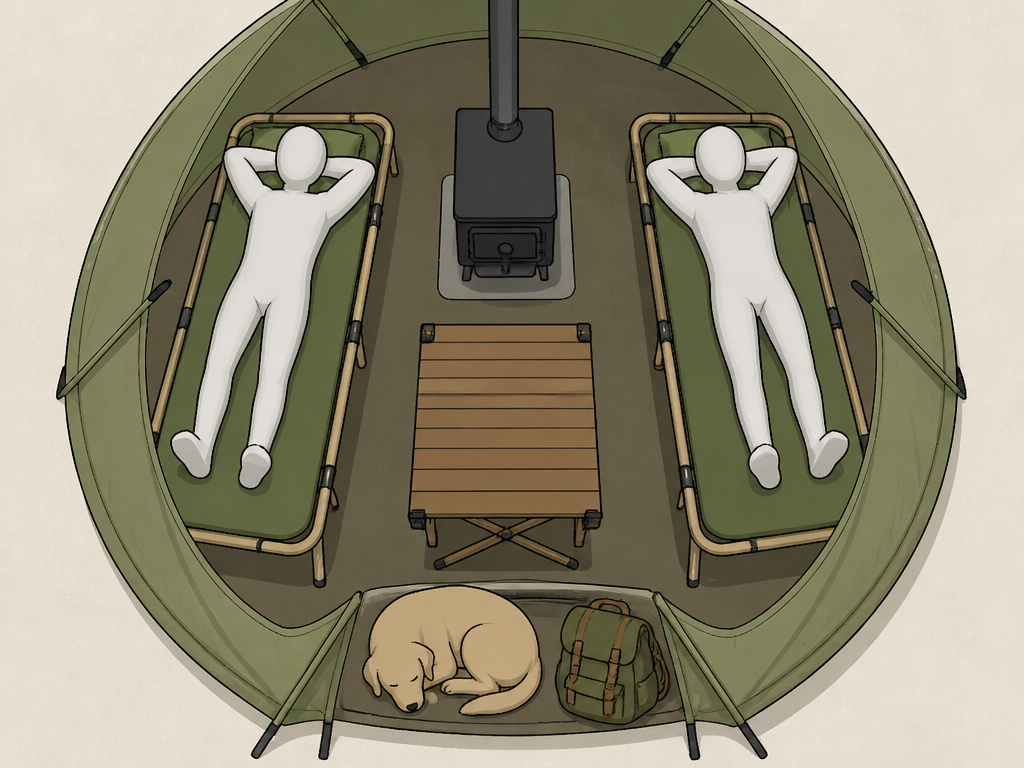
Manufacturer capacity numbers are a fantasy. They assume everyone sleeps shoulder-to-shoulder on the floor. Once you add the comforts that make bell tent living glorious, a king-sized camp bed, a folding table, a central wood burning stove, you lose floor space fast. I bought a 5m tent for my family of four, imagining spacious weekends. With two camp beds and gear, it was perfect. Adding one friend’s child and a dog instantly made it cramped.
Here’s an honest sizing guide, adjusted for real-world use with actual furniture:
| Tent Diameter | Floor Area | Stated Sleeps | Realistic Sleeps (With Beds) | My Ideal Use Case |
|---|---|---|---|---|
| 3m | ~7 sq m | 1–2 adults | 1 adult | Solo glamping, photo booth, pop-up bar. |
| 4m | ~12.5 sq m | 2–3 adults | 2 adults | Couples’ weekend, minimal-gear camping. |
| 5m | ~19.6 sq m | 4–6 adults | 3–4 adults | Family camping or a small glamping business. |
| 6m | ~28 sq m | 6–8 adults | 5–6 adults | Large family tents or commercial hire. |
| 7m | ~38.5 sq m | 8–10 adults | 6–8 adults | Permanent glamping sites, group events. |
The 5m bell tent is the sweet spot for most families, offering true standing room around the central pole. The jump to 6m often requires a heavier-duty pole and is a two-person pitching job. Your choice should start with the number of bodies, add space for gear, and then subtract one if you want room to actually move. For more on sizing for groups, see our reviews of the best six-person family tents.
The Modern Bell Tent Market: Three Tribes
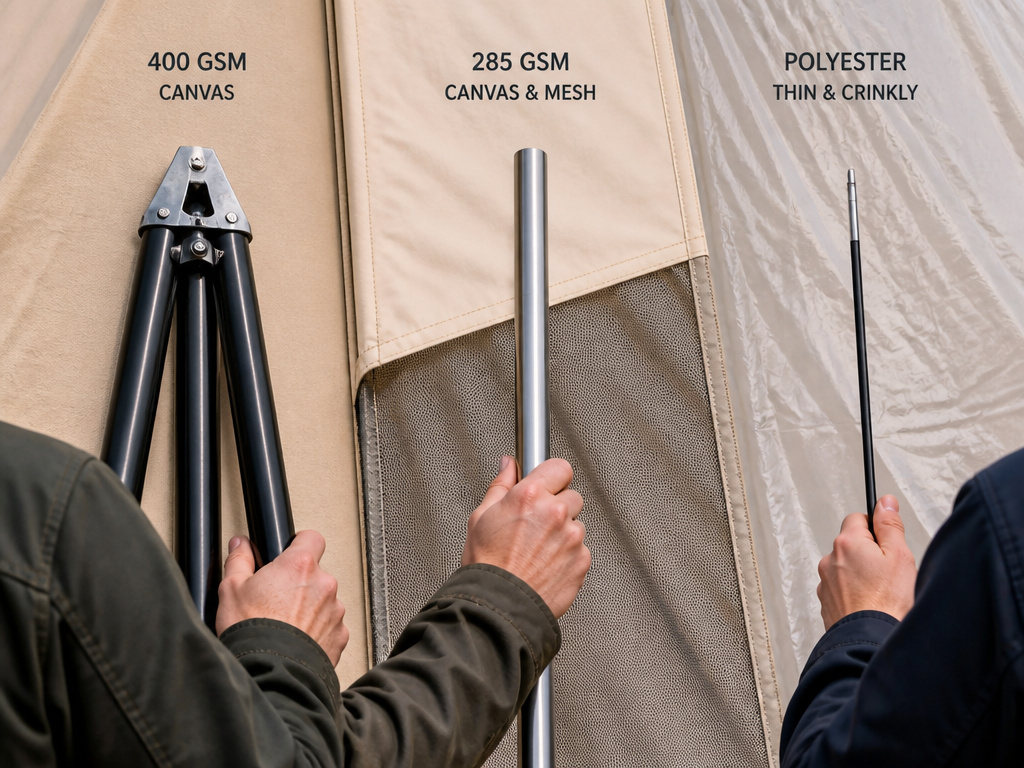
Given the trade-offs between weight, maintenance, and price, it’s no surprise the market has fractured into three distinct tribes. I’ve bought from all of them, and here’s what keeps each group loyal.
- Premium Heritage Brands: If budget allows, brands like Canvas Camp (with its Sibley 500 model featuring a tripod base for hard standings) or White Duck (with pre-attached 400 GSM canvas) are built for decades. You pay for military-grade durability and historical accuracy.
- Mainstream Glamping Brands: This is where most family buyers land. Brands like Robens or Nordisk offer a great balance of 285 GSM canvas and modern features (like integrated storm flaps or full mesh inners) at a more accessible price. I chose a Robens for my family because its 5m model includes a mesh inner as standard, a must for Scottish midges.
- Budget/Disposable Festival Tents: Often lightweight polyester, these are bell-tent-shaped but lack substance. They’re fine for a dry weekend but won’t last seasons. They belong in the category of budget tents under $100, not as a long-term shelter.
A key feature to debate is the zip-in groundsheet (ZIG). It seals out bugs beautifully but creates a major drying headache after rain, you can’t separate the wet groundsheet from the tent wall, often forcing you to re-pitch the whole thing at home.
The Non-Negotiable Care Ritual
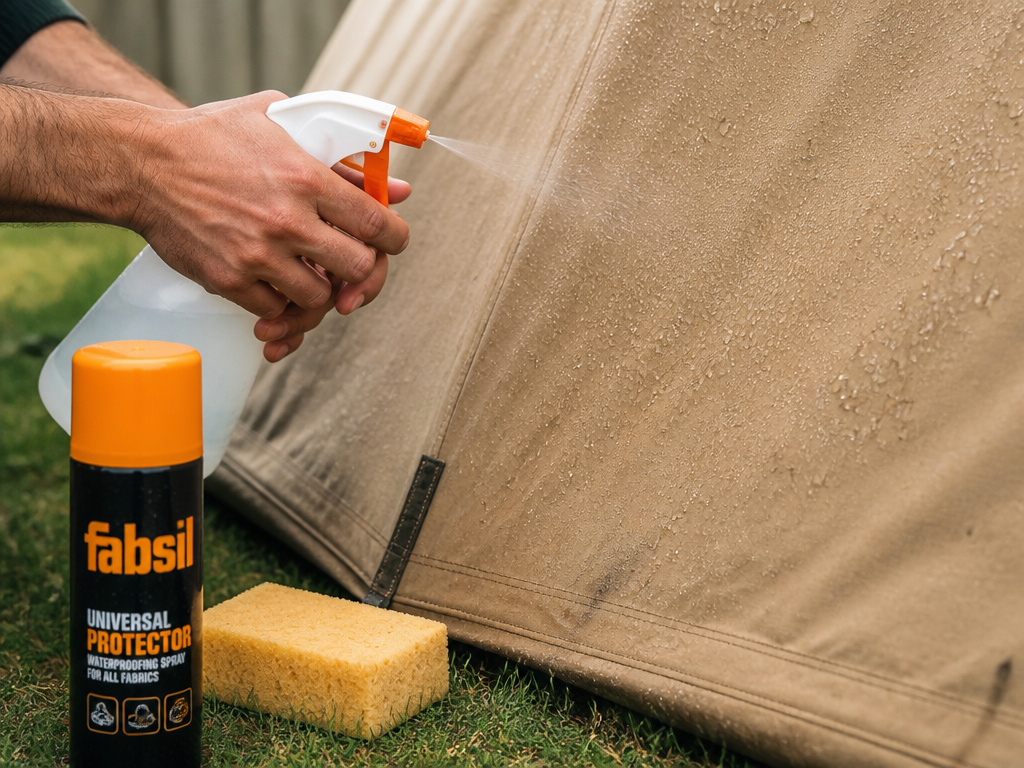
Owning a canvas bell tent is a relationship. Neglect it, and it will punish you. This isn’t a nylon dome you can stuff wet into a bag.
- Dry It Absolutely Thoroughly. After every trip, even in seemingly dry weather, pitch it in the sun or a dry, ventilated space until every seam and fold is bone-dry. This can take a full day.
- Clean Gently. Use a soft brush and lukewarm water. Never use detergent or a pressure washer, they strip the waterproof coating.
- Reproof Annually. UV rays break down cotton fibres. A yearly treatment with a wax-based reproofing spray (like Fabsil) restores beading and is critical for long-term weather resistance, especially for tents for heavy rain.
- Store Properly. Fold it loosely in a breathable cotton bag, never a plastic bin. Keep it in a cool, dry place.
I learned the drying lesson after a drizzly weekend in the Brecon Beacons. I wiped the tent down, stored it, and two weeks later found grey mould speckles near the seams. That tent was never the same.
Your kit of essential camping gear isn’t complete without reproofer, a large sponge, and a plan for where you’ll dry your tent.
Advantages and Drawbacks: An Unfiltered Look
Bell tents are brilliant, but only for the right use case. Their strengths are specific, and their weaknesses are deal-breakers if ignored.
The Pros:
- Spacious, Open Plan: No internal poles. The circular layout feels larger than a rectangular tent of the same area, perfect for creating a comfortable living space.
- Simple, Logical Pitch: One pole, a ring of pegs. With practice, two people can manage a 5m tent in under 20 minutes.
- Inherent Stability: The low centre of gravity and conical shape shed wind effectively, often outperforming complex high-wind tents.
- Superior Climate Control (Canvas): Breathable fabric drastically reduces condensation, a major advantage over synthetic tents for family trips.
- Unmatched Aesthetic: It simply looks beautiful, transforming a campsite.
The Cons:
- Significant Weight: Canvas is heavy. A 5m model is a two-person lift from the car boot.
- Completely Peg-Dependent: You need soft ground. Frozen ground, rock, or decking (without a tripod base) makes standard pitching impossible.
- High-Maintenance: The drying and reproofing ritual is mandatory, not optional.
- Usually a Single Door: This can create a bottleneck in larger sizes.
- Higher Cost: A quality canvas bell tent costs more than a same-capacity synthetic dome.
Frequently Asked Questions
Are bell tents good for winter camping?
With a stove jack for a wood burner, a heavyweight canvas bell tent can be a cozy winter shelter. The canvas holds heat better than thin nylon. Without a stove, they are cold, all that air volume is hard to heat with body warmth alone. For true four-season use, look specifically for canvas tents with stove jacks.
Can one person put up a bell tent?
Yes, but it’s a serious workout, especially with a 5m model. The technique involves partially assembling the central pole, feeding it through the crown, and then carefully walking it upright while managing the canvas. I only solo-pitch my 4m tent, and even then, not in any wind.
How long does a canvas bell tent last?
With meticulous care, annual reproofing, perfect drying, gentle cleaning, a quality 285 GSM canvas tent should last 10–15 years of regular seasonal use. The main killer is UV exposure; a tent left pitched in full sun for months will degrade in a couple of seasons.
Are bell tents waterproof?
Cotton canvas is not inherently waterproof; it is water-repellent. The fibres swell when wet, closing gaps to create a seal. A well-proofed canvas will withstand heavy rain, but prolonged torrential downpours may eventually lead to seepage. Modern synthetic bell tents often have a hydrostatic head rating like standard weatherproof tent designs.
What’s the difference between a bell tent and a tipi?
bell tent uses a single, vertical central pole with straight, tensioned walls. A tipi (or teepee) uses multiple poles leaning into a central point, creating a taller, more conical shape with sloping walls. They are structurally distinct designs with different cultural origins.
Before You Go
A bell tent is a commitment to a slower, more deliberate style of camping. It rewards those who value space, comfort, and aesthetic over ultralight speed. It punishes those who neglect its simple needs.
Choose heavyweight canvas if you camp in temperate climates and despise condensation. Choose synthetic if your trips are short, wet, or you simply can’t guarantee drying space. Always size up once from the manufacturer’s claim to account for real life. And remember, the most important piece of tent camping equipment you can own isn’t a fancy stove, it’s the discipline to never, ever store it damp. Get that right, and you’ll have a beautiful shelter for countless adventures.
