
How to Use Tent Guy Ropes for a Storm-Proof Shelter
This post contains affiliate links. As an Amazon Associate, we earn from qualifying purchases.
To use tent guy ropes correctly, attach them to the tent’s guy-out points, stake them at a 45-degree angle about 12-24 inches out, and tension them until firm but not guitar-string tight. Use a taut-line hitch knot for adjustability and secure the rope to the stake within three inches of the ground to prevent levering out.
Most campers treat guy ropes as an afterthought, those annoying strings you fumble with as the sun sets. I’ve watched seasoned hikers hammer stakes straight down, yank the lines until they hum, and call it good. Twenty minutes later, a stiff breeze turns their shelter into a flapping, buckling mess.
It doesn’t have to be that way. Guy ropes are a structural system, not decoration. They channel wind force away from fragile poles and seams, down into the earth. Getting them right is the cheapest insurance policy you can buy for a peaceful night. Let’s break down the method that actually works, from knot to stake, so your tent stays put.
Key Takeaways
- The 45-degree stake angle is non-negotiable. This industry standard balances uplift and lateral forces; a vertical stake will pivot and fail in wind.
- Keep the attachment point low. Secure the guy rope to the stake no higher than two or three inches above the ground to minimize the lever arm.
- Upgrade from the factory overhand knot. Use a taut-line hitch for adjustable tension or two half hitches for a secure, permanent tie-off.
- Tension is a feel, not a sound. Lines should be firm with slight give; banjo-string tightness stresses seams and can cause pole failure in cold weather.
- Check and re-tension regularly. For a tent left standing, the Industrial Fabrics Association International advises checking tension every three to seven days.
Why Does the 45-Degree Angle Rule Matter?
Forget what the pretty pictures in your tent manual show. A stake driven straight down is a pivot waiting to happen. Wind doesn’t pull straight up; it hits the tent wall at an angle, creating a combined force that tugs the stake upward and sideways.
A guy rope angle of 45 degrees or slightly steeper is recommended to balance vertical and lateral stake forces and prevent side poles from jumping. The guy rope should be secured to the stake no higher than two or three inches above the ground to minimize the overturning moment on the stake.
That’s not my opinion, it’s from the industry’s procedural handbook. The 45-degree angle aligns the stake’s length with the diagonal pull, engaging more soil for resistance. Attaching the rope low on the stake shortens the lever, making it much harder for the wind to pry it out. Ignoring this turns your stake into a toggle, not an anchor.
TL;DR: Skipping the 45-degree angle is the single biggest reason tents collapse in crosswinds. It’s basic physics, not a suggestion.
What’s the Best Knot for Adjustable Guy Lines?
The pathetic overhand knot pre-tied on most factory ropes is a trap. It binds under tension after rain and offers zero adjustability. You need a knot that grips but can be loosened with cold, tired fingers.
My go-to is the taut-line hitch. It’s a sliding friction knot that tightens under load but loosens easily when you need to slacken the line. For a permanent, bombproof connection, like on a canvas tent meant for long-term basecamp. I use two half hitches. It’s simple, secure, and won’t jam.
Common mistake: Looping the rope around the guy-out point instead of passing it through. This creates the wrong friction point, letting the knot cinch down on and wear through the tent fabric itself over time.
Here’s the fail-proof sequence for a taut-line hitch:
1. Pass the working end through the tent’s guy-out loop. Don’t just wrap it around.
2. Wrap the working end around the standing part twice. This double wrap creates the essential friction. Skip it, and the knot will slip in sustained wind.
3. Bring the working end back toward the tent and pass it through the loop you’ve just formed next to the guy-out point.
4. Pull the working end to tighten the knot against the loop. To adjust tension, simply slide the knot up or down the standing line.
How Do You Set the Perfect Guy Rope Tension?
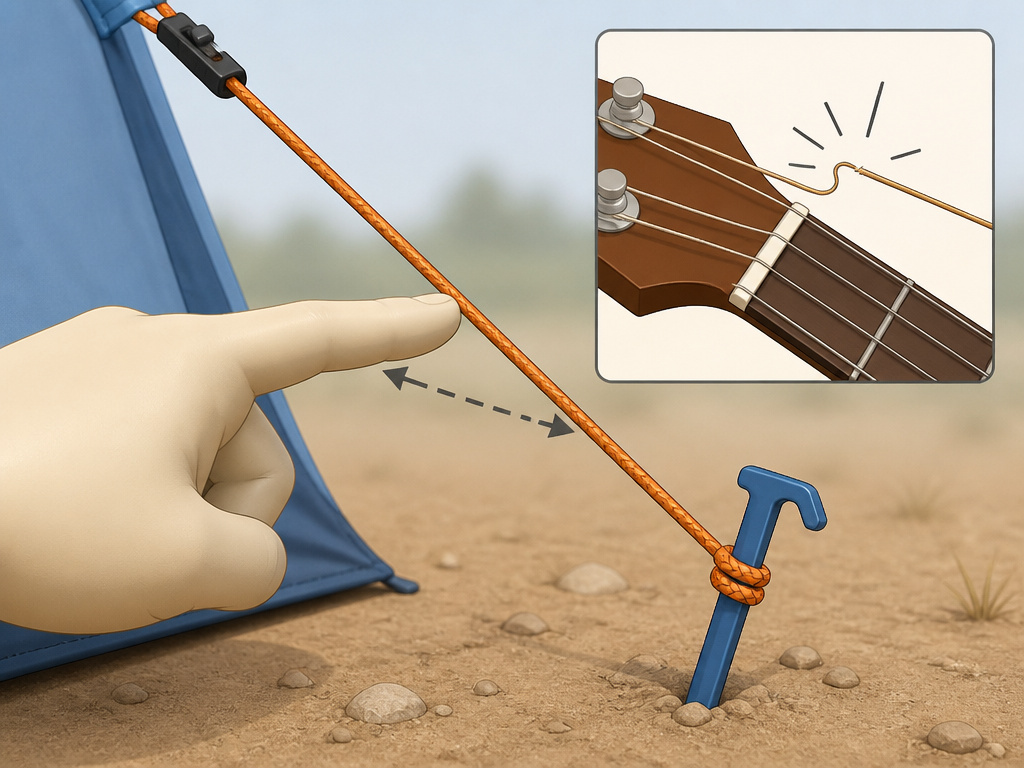
An over-tight guy rope is a drawn bowstring, it stores energy, waiting for a cold snap or a stiff breeze to release it. That energy rips stitches or snaps poles. I learned this after a chilly night in the Lake District with my Big Agnes Copper Spur HV UL2; the pre-dawn contraction of the nylon fly turned my “snug” lines into destructive forces that stressed the pole hubs.
You want the line firm, with no visible sag. A good test: you should be able to deflect the rope about an inch with moderate finger pressure. If it pings like a guitar string, it’s too tight.
The sequence matters, especially for larger shelters like family car camping tents. For a big tent, the handbook mentions “pre-staking”: stake the four corners of the tent body first to square the footprint, then raise the poles, then attach and tension the guys. Raising poles first on a large tent can twist the frame irreparably.
| Tent Type | Primary Guy Rope Function | Critical Tension Tip |
|---|---|---|
| Backpacking Dome | Stabilize rainfly, prevent condensation contact | Pre-attach lines with taut-line hitches at setup, even in calm weather. |
| Tunnel Tent | Keep arched poles from collapsing sideways | Tension opposing lines equally to avoid twisting the structure. |
| Stand-Up Cabin | Reinforce high walls against lateral wind | Use all points, especially mid-wall ones, and check tension hourly in wind. |
| Large Canvas | Resist wind lift across broad roof surface | Follow a diagonal tensioning sequence (opposite corners) to square the structure. |
Which Guy Rope Hardware Actually Works?
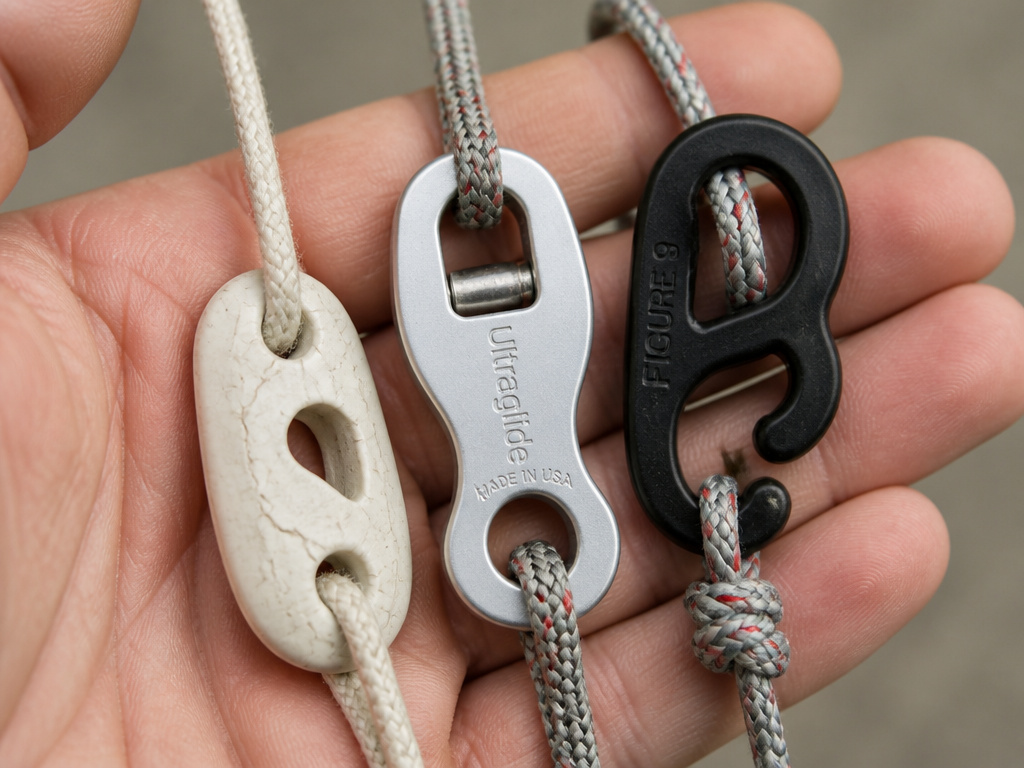
Most factory-issued plastic tensioners are brittle junk. They crack in freezing temps and slip under load. After testing a dozen, I have strong preferences.
For an upgrade, the Lawson Equipment Ultraglide Tensioner is machined aluminum and utterly reliable. For a budget-friendly option, the Nite Ize Figure 9 Carabiner Tensioner (model TLL-11-R3) is okay, but its plastic cam wears out after a season of heavy use. The integrated carabiner clips directly to the guy point, which is a nice time-saver.
If you’re using a knot alone, you’re retying it constantly as fabric relaxes. A good tensioner provides fine, incremental control. As shown in a popular YouTube tutorial, the trick with the common three-hole plastic type is to feed the loose end through the middle hole, back through the hole nearest the stake, and pull down. The knot on the tent side catches and cinches the line.
How Do You Anchor Guy Ropes in Problem Ground?
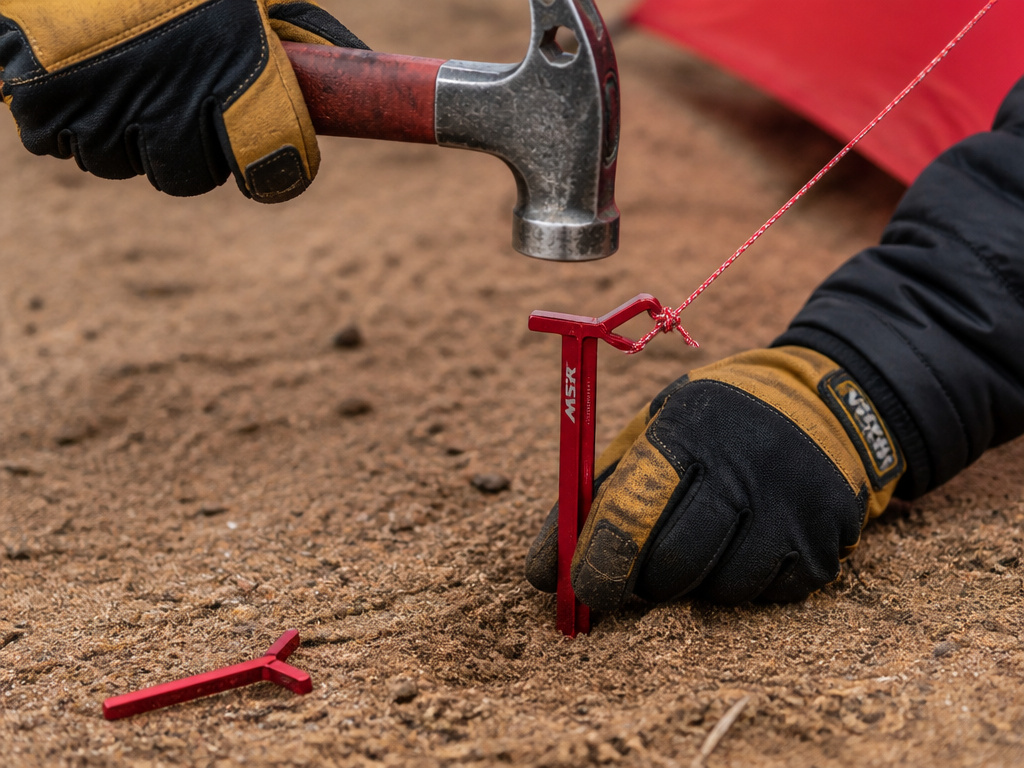
“Use longer stakes” is generic advice. For guy ropes in sand, a standard 6-inch V-stake is useless. You need a 10-inch sand stake like the MSR Blizzard Stake; its T-shape provides the surface area to resist the unique diagonal pull of a guy line. A short stake will pull out, causing the tent wall to billow and potentially snap a pole junction.
On rock or wooden platforms, you need alternative anchors. A deadman anchor is effective: use a 1-foot section of seasoned hardwood (like oak) or a dedicated aluminum anchor like the Snow Peak Tent Peg Type IV, bury it horizontally, and tie off to it. The principles in the official tentage safe installation manual still apply, the direction of pull should follow that 45-degree vector toward your anchor.
Before you start: Guy rope failure can cause sudden, violent collapse of the tent structure, posing a risk of pole breakage, fabric tears, and potential injury from falling components. Always wear eye protection when hammering stakes, and never over-tension lines to the point of putting extreme stress on the tent’s frame, especially in variable temperatures.
What Are the Most Common Guy Rope Failures?
Let’s diagnose the usual suspects. Each has a specific fix rooted in the mechanics we’ve covered.
The stake pulls out. This is almost always an angle problem, not a stake problem. On a trip to the Cairngorms with my MSR Hubba Hubba NX, I used the stock V-stakes at a shallow angle in peat. A 30mph gust popped three sequentially, the last one whipped back and put a 2-inch tear in the rainfly. Now, I carry MSR Groundhog stakes for anything beyond backyard use; their 7075-T9 aluminum and larger surface area simply don’t bend.
The rope slips through the tensioner. The knot is too small or the tensioner is worn. Replace with two half hitches or add a stopper knot behind the tensioner.
Condensation runs down the rope into the tent. This wicks moisture right into your living space. Always attach guys to the rainfly, not the inner tent. If it’s still happening, tie a small overhand knot in the rope about an inch from the tent, the drip will fall at the knot.
The line is too short. Factory lines are usually generous. If yours are short, you’ve likely staked too far away. Re-stake closer to achieve the proper 45-degree angle from the guy point to the ground.
Frequently Asked Questions
How often should I check my guy ropes?
For a weekend trip, check tension after the first hour once the tent has settled, and again if weather changes. For a tent left standing long-term, like a basecamp canvas tent, the industry guideline is to check tension every three to seven days due to fabric stretch and ground settlement.
Can I use paracord instead of the supplied guy lines?
You can, but it’s often overkill and stretches more than static line. Dedicated reflective guy line (like Lawson Glowire) is lighter, has minimal stretch, and is visible at night, a key piece of essential camping gear for safety.
Do I need guy ropes if there’s no wind forecast?
Yes. Erecting your tent without them is like building a house without diagonal bracing. The structure is inherently less stable. It also preps you for unexpected weather and ensures your rainfly is properly spaced to minimize condensation.
What’s the difference between guying a backpacking tent and a large family tent?
The physics are identical, but the consequences scale. A poorly guyed tarp tent might sag. A poorly guyed large car camping tent can suffer a catastrophic frame collapse. Larger tents also benefit from a specific tensioning sequence (like pre-staking) to avoid twisting.
The Bottom Line
Guy ropes transform your tent from a floppy fabric shell into a resilient, wind-shedding structure. That 45-degree angle isn’t a nice-to-have, it’s the core principle that makes the entire system work. Pair it with a proper knot, mindful tension, and stakes suited to your terrain.
Whether you’re securing a minimalist tarp tent or a spacious stand-up tent, the goal is the same: transfer force safely into the ground. Don’t just throw the lines out and hope for the best. Take the five minutes to do it right. Your dry, stable shelter, and your peace of mind, will thank you when the weather turns. For more on choosing a shelter built for harsh conditions, explore our guides on the best tents for heavy rain and the most reliable high wind tents.
