
How to Fold a Pop Up Tent Without the Fight
This post contains affiliate links. As an Amazon Associate, we earn from qualifying purchases.
To fold a pop-up tent, collapse it into a flat loop, pin the heavier base seam with your foot, fold the top inward, and twist into a figure-eight. The tent must be completely dry, and for models over 8 feet, you need a second person, the Treasures 8×10 manual explicitly states solo attempts cause failure.
Forget the “pop”, folding is where these tents break. Most guides miss the critical pre-check: a simple two-second flex test that can reveal a kinked inner steel wire (common in Gigatent’s ST002) before it snaps during your twist. This guide starts there, because a $45 pole repair is cheaper than a new tent.
I’ve folded hundreds, from slick beach shelters to bulky family canopies. The struggle isn’t a design flaw; it’s usually a missed step. Let’s fix that.
Key Takeaways
- Dry it first, always. The manual for the Treasures 8 FT x 10 FT Model #159 warns that storing it wet guarantees mildew, which voids its 30-day warranty. This is the most common killer of pop-up tents.
- Respect the inner steel wire. The Gigatent Pop Up Pod Model ST002 contains a steel wire that can spring open suddenly. Apply steady pressure when opening and folding, never yank or force it.
- Two people for large canopies. The troubleshooting guide for the Treasures model lists “One person attempting to close the frame” as the root cause of failure. Its fix is simply “Use two people.”
- Warranties are short and specific. Gigatent’s coverage lasts 14 days; Treasures’ lasts 30. Both exclude damage from wind, misuse, and UV degradation. A pole broken during a forceful fold is “misuse,” not a defect.
- Pin the base with your foot. This is the non-negotiable trick that prevents the tent from sliding and twisting out of alignment during the final fold.
What’s Really Going On Inside Your Pop-Up Tent?
Pop-up tents utilize a continuous, flexible pole system housed in a sleeve. Applying even pressure at designated points allows the frame to collapse into a predictable loop. Forcing it creates stress points that exceed the material’s yield strength, leading to permanent deformation.
Before you touch a pole, understand what you’re working with. That springy frame isn’t magic, it’s a carefully balanced system of fiberglass or steel rods sewn into a fabric channel. Your job is to guide its natural collapse, not fight it.
The moment you fight it, you lose. I learned this the hard way last season testing a BAGGU Popup Tent for a coastal review. In a hurry during a squall on the Oregon coast, I lost the safety loop and used a ratchet strap to cinch the bundle. I cranked it down. The result? Two fiberglass poles developed permanent flat spots. The tent wouldn’t square up, and I had to buy a replacement pole kit (Part #POL-FF2) out of pocket, a $45 lesson in gentle pressure.
The Pre-Fold Checklist: Don’t Skip This
A successful fold starts before you collapse the tent. Rushing leads to mold, damage, and pure frustration.
- Verify Complete Dryness. Feel the fabric, especially the seams and floor. If there’s any dampness, let it air-dry fully. Packing moisture is the fastest way to ruin your tent.
- Clear and Clean. Remove all gear, then shake out debris. A single pebble in a joint will grind the fabric into a pinhole over time.
- Open Every Exit. Unzip all doors and windows. This releases trapped air, preventing the tent from acting like a springy air pillow.
- Perform the Two-Second Flex Test. Grasp two opposite poles and gently push them together. The frame should flex smoothly. A grinding click or stiff spot indicates a bent pole or kinked wire, stop and inspect before proceeding.
Before you start: The flexible poles under tension can snap back. Wear gloves to protect your hands from pinches. Ensure the area is clear of people and hard objects. Never force a pole that feels jammed, as the sudden release of a kinked steel wire (like in the Gigatent ST002) can cause injury.
How to Fold a Pop Up Tent: The Secure Method
This is the core sequence that works for most dome-style pop-ups. If your tent has specific instructions (like the infographic inside a BAGGU tent), follow those first.
Step 1: Collapse into a Loop. Stand at one corner, grab the frame, and walk the opposite corner toward you. The tent will flatten into a large circle or oval, the “taco” stage. Guide it; don’t muscle it.
Step 2: Identify and Pin the Base. One side of the loop will have thicker seams, D-rings, or tie-down points. This is the weighted base. Place this side flat on the ground and put your foot on it firmly. This anchor point is everything.
Step 3: Fold the Top Inward. With the base secured, push the top of the loop down and inward toward the center. The frame will flex into a smaller, stacked circle. Let it bend naturally.
Step 4: Twist into a Figure-Eight. Grab the small circle with both hands and twist one half over the other. This forms the compact figure-eight bundle.
Step 5: Secure Properly. Use the tent’s built-in strap, like the BAGGU safety loop. If you lack one, use a snug but not tight strap. I now swear by the Nite Ize Gear Tie 11”, it’s rubber-coated and won’t slip or crush the frame like a ratchet strap did to mine.
TL;DR: Dry it, open it, walk it into a taco, pin the base with your foot, fold the top over, twist, and secure with a gentle strap.
Why Is My Pop Up Tent So Hard to Fold?
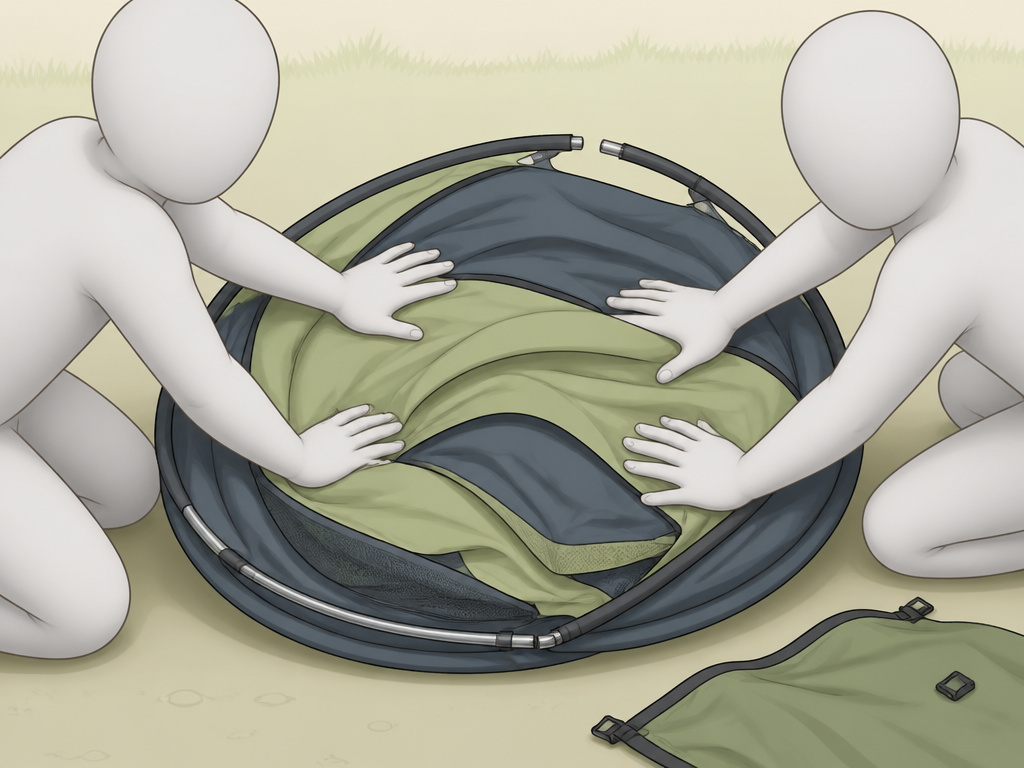
You followed the steps, but the tent is bulging, lopsided, or fighting back. At the 2023 Trailhead Festival, I saw three people in this exact struggle, all wrestling with what looked like giant, angry jellyfish. The issue is usually one of these snags.
First, check for a twisted spine. A main hub joint rotated 90 degrees will lock up. Lay the tent flat and run your hand along the poles to ensure they’re all aligned.
Second, look for a snagged door or rainfly. A zipper caught in mesh or an attached fly creates bulk. Detach the fly fully and shake the tent loose.
Third, accept that you might need a second person. For larger family canopies and spacious camping tents over 8 feet, this isn’t a suggestion. The manual states it.
Common mistake: Folding the tent with the rainfly still attached, the extra fabric and straps create a bulky, misshapen bundle that won’t fit in the bag without damaging the frame or seams.
If the problem persists, consult this diagnostic table.
| Symptom | Likely Cause | Immediate Fix | Long-Term Prevention |
|---|---|---|---|
| Tent springs back open mid-fold | Trapped air inside | Unzip all openings before Step 1 | Make unzipping a non-negotiable habit |
| Circle is lopsided, won’t lie flat | Fabric caught under a pole or twisted hub | Lay flat, realign all poles, shake fabric free | Always clear the ground area before folding |
| Canopy resists closing, feels stuck | Solo attempt on a large tent (8×10 ft+) | Enlist a helper to pin the base while you fold | Know your tent’s limits; most large models need two people |
| Bundle is bulky, won’t fit in bag | Rainfly attached or tent still damp | Remove fly, ensure tent is bone-dry | Implement a strict “dry-first” policy before packing |
| Visible bend or creak in a pole | Previous forced fold damaged the frame | Gently bend back to shape per Gigatent manual tip | Never use excessive force; let the frame flex naturally |
Securing Your Bundle: Loops, Straps, and Storage
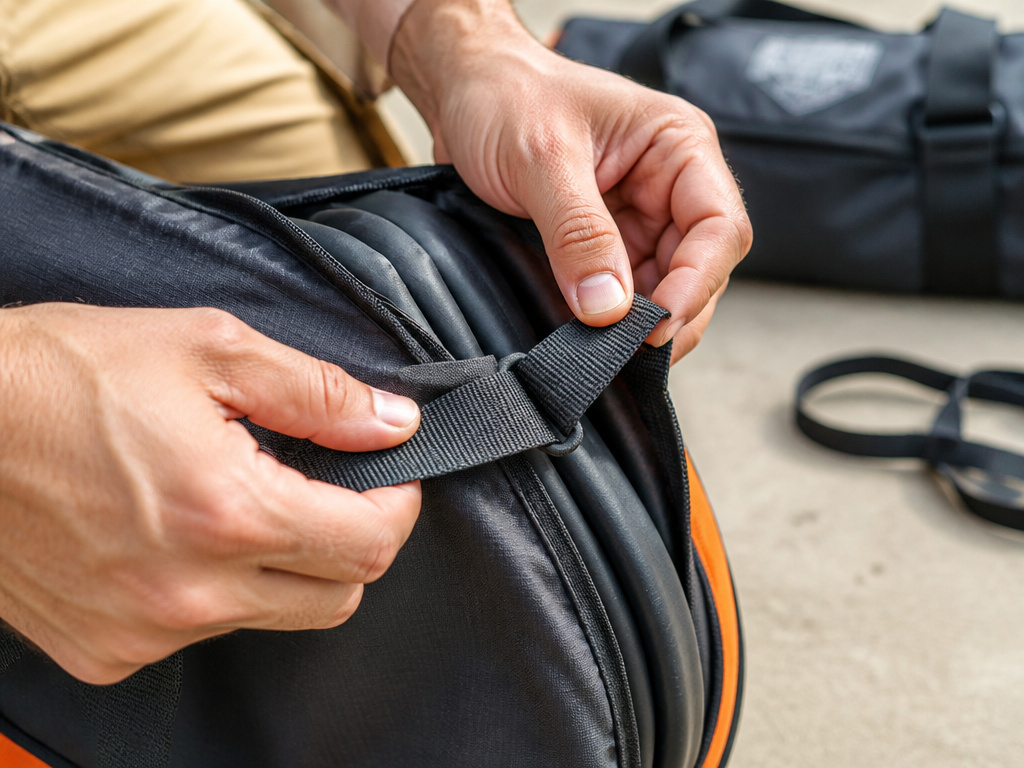
Not all securing methods are equal. The right restraint protects your investment; the wrong one destroys it.
The BAGGU Popup Tent includes a dedicated safety loop sewn into its bag, it’s perfectly sized. Generic straps are risky. Their temptation is to overtighten, which crimps the frame at the stress points you just carefully avoided.
For storage, the included bag is fine for short trips. For long-term storage or heavy travel, consider a slightly larger duffel or tote. This relieves constant pressure on the joints. Never stack heavy gear on top of your packed tent. Store it in a cool, dry place, laid flat if possible.
Integrating your tent into a broader camping trip checklist ensures it’s always ready. A quick wipe-down with a product like MiracleWipe Outdoor Cloths after each trip removes grit and sap from pole joints, maintaining that smooth flex.
Understanding Your (Very Short) Warranty
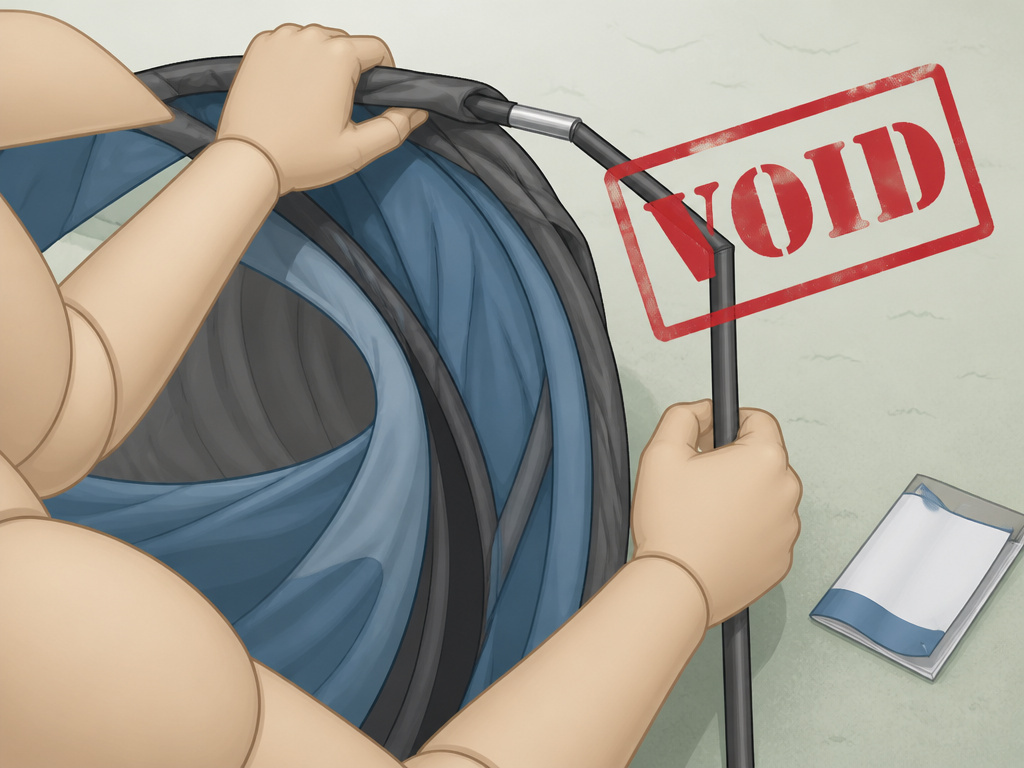
You can do everything right and still face a broken pole. Knowing what the manufacturer will actually cover saves time and argument.
These warranties are notoriously limited. The Gigatent Pop Up Pod Model ST002 warranty lasts 14 days from purchase and excludes “natural breakdown of materials,” UV damage, and defects from “accident, abuse, alteration… or improper care.” The Treasures 8 FT x 10 FT Model 159 offers 30 days of coverage for defective parts only, excluding damage from “wind, rain, fire… improper assembly, disassembly, or adjustment.”
Common mistake: Assuming a broken pole is a manufacturer defect, if the break is near a joint and you admit to “struggling” to fold it, that’s misuse. The warranty inspector will classify it as owner error, not a material flaw.
What does this mean? If a pole snaps the first time you unfold it on a calm day, that’s likely a defect. If it snaps after you forced a fold, that’s on you. This short coverage is why investing in higher-quality durable tents under $200 can be wiser for frequent campers, they often feature more robust poles and longer warranties.
Frequently Asked Questions
Do all pop-up tents use the same folding method?
Most dome-style pop-ups use the basic collapse-and-twist technique. However, smaller pop-up tents for the beach may use a simple fold-and-roll, while larger stand-up tents with complex frames might require collapsing each side in sequence. Always check your specific manual, like the BAGGU online guide or the Gigatent PDF.
Why does my tent keep popping open while I try to fold it?
You have trapped air. This is the #1 sign you skipped unzipping all doors and windows. The tent is essentially a sealed air bladder. Go back, open every vent, and try again. Also, ensure no fabric is caught in the folding mechanism.
Can I fold a large pop-up tent by myself?
It depends on the size. A small two-person tent is designed for solo folding. A large 10×8 ft canopy like the Treasures model is not. Its manual explicitly cites one-person attempts as a cause of failure and prescribes two people. If the tent is bigger than a standard dome, get a helper.
What’s the one thing that most often ruins a pop-up tent?
Packing it away damp. Mildew doesn’t just smell; it eats away at the fabric’s waterproof coating and weakens seams. Once set in, it’s nearly impossible to remove and is never covered under warranty. Always, always dry your tent completely.
How should I store my pop-up tent over the winter?
Ensure it’s impeccably dry. Store it in its bag, in a cool, dry place like a closet, not a damp garage or hot attic. For very long-term storage, some campers place the loosely secured bundle in a larger plastic tote to prevent constant compression on the frame.
The Bottom Line
Dry it. Unzip it. Pin it. Twist it. That’s the sequence. Skip a step, and you’re buying a new tent next season.
The goal isn’t to win a wrestling match. It’s to guide the tent’s natural flex into a compact bundle without breaking it. Use the two-second flex test to catch problems early. Respect the need for a helper on larger models. And never, ever crank down a strap like I did, snug is sufficient.
Master this gentle method, and your shelter will pop open reliably for years, whether it’s a simple pop-up beach tent or a more substantial shelter for your essential camping equipment. Now go enjoy the wild, and pack up without the fight.
