
Does Tenting a House Kill Rats? What Actually Works
This post contains affiliate links. As an Amazon Associate, we earn from qualifying purchases.
Yes, tenting a house for termites with sulfuryl fluoride gas (like Vikane) will kill any rats inside. The fumigant is a lethal central nervous system depressant that penetrates every cavity, causing near-instantaneous death. However, this is not a registered rodent control method. It leaves no residual protection, and without sealing entry points, new rats will move right back in.
Let’s be clear about that tent. You see it, you smell that sharp peppermint warning agent, and you think your pest problems are solved forever. I get it. But as someone who’s spent a lifetime sealing tents against everything from wind to sand fleas, I know a flawed barrier when I see one. That fumigation tent kills what’s inside, but it does exactly zero to the colony living in your shed’s foundation or the rats traveling the utility lines to your attic.
This isn’t pest control; it’s a temporary reset on a house that’s still a five-star rodent hotel. Here’s the real work, the metal, the caulk, and the strategy that actually keeps them out for good.
Key Takeaways
- Sulfuryl fluoride fumigation is lethally effective on rats inside the sealed structure but offers zero preventative protection.
- Finding dead rats post-tenting signals a failed pre-treatment inspection and exclusion plan, not success.
- Effective, lasting exclusion requires rigid materials: 1/4-inch hardware cloth for mice, 1/2-inch for rats. Caulk and foam alone are a chew-toy.
- Bait placement is a science: stations must be within 6 feet of each other in active zones and, in California, within 50 feet of a structure.
- Repellents like ultrasonic devices and mothballs are scientifically unsubstantiated for control; rodents habituate quickly.
Does Tenting a House Kill Rats Instantly?
The short answer is yes, and brutally efficiently. The fumigant of choice for termite tenting is almost always sulfuryl fluoride, commonly sold under the brand name Vikane. It’s not an insecticide that works over days; it’s a central nervous system depressant toxic to all aerobic life.
Sulfuryl fluoride gas results in the near-instantaneous death of rats in a building. It is a central nervous system depressant highly toxic to humans, animals, and plants, but it dissipates rapidly once the tent is removed and leaves no residue.
The gas is pumped under the sealed tent until it reaches a concentration lethal to termites, a concentration that is also fatal to any mammal breathing the air inside. Death comes from hypoxia. It’s not a slow poison; the gas displaces oxygen and shuts down neural function. Because it permeates insulation, wall cavities, and sub-floor areas, any rat within the sealed envelope dies.
TL;DR: The fumigant used in termite tenting is instantly and thoroughly lethal to rats inside, but it’s a one-time event with no lasting barrier.
Why Is Fumigation a Useless Strategy for Rodent Control?
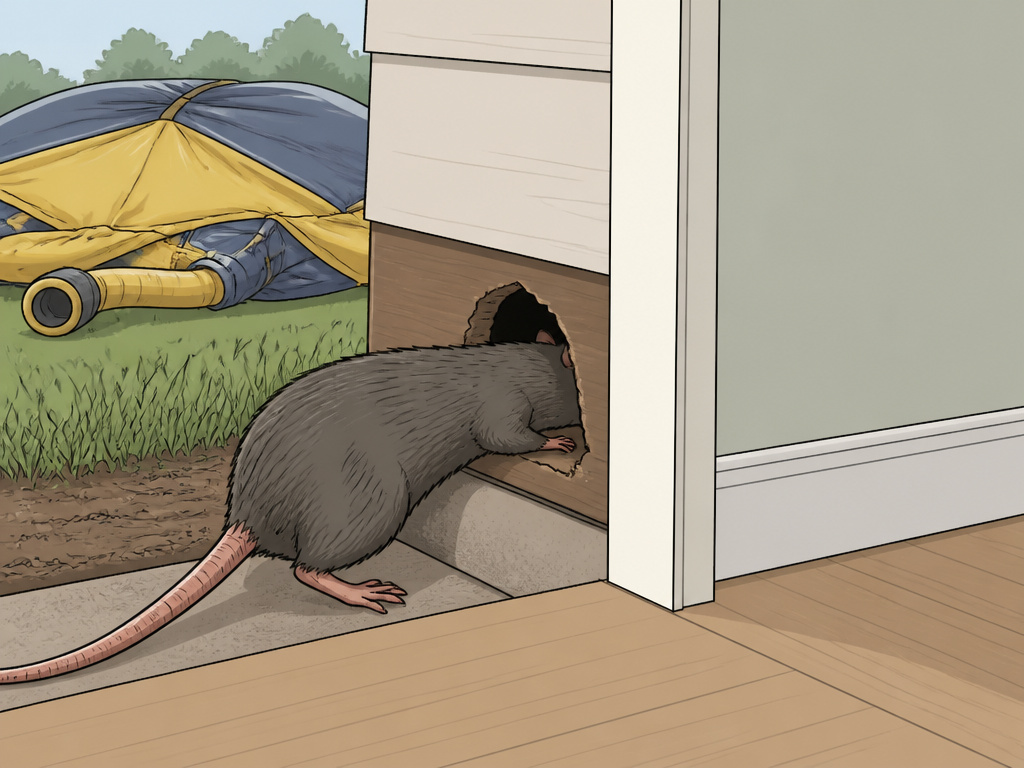
Killing the current occupants does not solve a rodent problem. It merely resets the clock in a house that remains perfectly hospitable. Think of it like using a firehose to clean a wound but leaving the door wide open for infection.
The gas has no residual effect. Once the tent is removed and the house aired out, a process governed by strict safety protocols, the property is immediately vulnerable. A neighboring rat colony, or even survivors from burrows just outside the foundation, will find the same entry points within days. Official sources like the University of California rodent control guide explicitly state fumigants are generally not an option for rodent control in homes because burrows are too difficult to locate and treat effectively.
Discovering dead rats after fumigation is not a sign of successful pest control. It’s glaring evidence of a failure to address an active infestation before the tent went up. A proper rodent management plan would have eliminated the population and sealed entry points first, leaving nothing to kill.
Common mistake: Assuming fumigation solves a rodent problem, the carcasses decompose inside your walls, and new rats move in within weeks because the entry points are still open.
What Do Pest Professionals Actually Do for Rats?
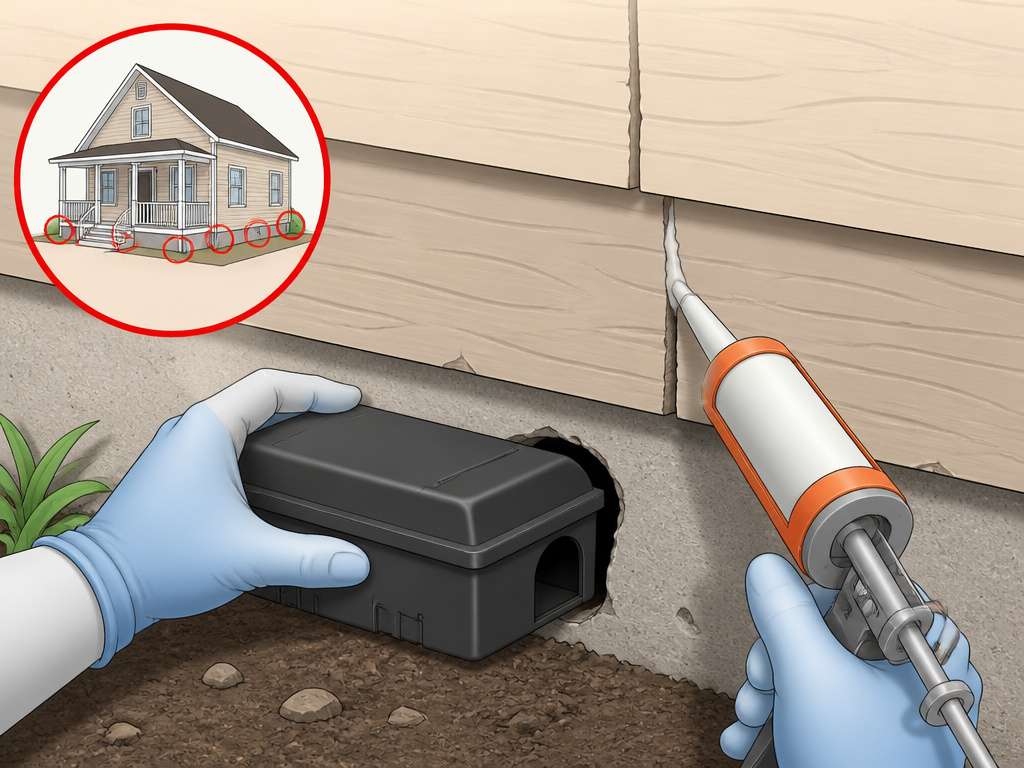
Pros don’t rely on fumigation. They use a targeted, multi-phase approach that starts with inspection and ends with exclusion. The chemical part is just one tool in a much larger kit.
First, they identify the species. A roof rat climbing vines into your attic requires different tactics than a Norway rat burrowing under your shed. The University of Arkansas rodent control publication notes that roof rat proofing takes more time due to their superior climbing ability. Then they audit for resources: leaky faucets, pet bowls, unsecured trash, fallen fruit.
Baiting is strategic, not scattershot. Professionals use tamper-resistant stations and often employ pre-baiting with non-toxic food to confirm activity and acceptance before deploying costly toxic bait. Since rodents may reject one formulation if better food is available, they might test several types.
| Bait Type | Active Ingredient | How It Works | Professional Context |
|---|---|---|---|
| Anticoagulant Baits | Bromadiolone, Difethialone | Inhibits vitamin K recycling, preventing blood clotting. Death occurs days later, usually off-site. | The most common professional tool post-2011 regulations. Requires multiple feedings. |
| Acute Toxicants | Zinc Phosphide | Causes a toxic reaction within hours of ingestion. | Requires careful pre-baiting to overcome bait shyness; generally unavailable to the public. |
| Birth Control | 4-vinylcyclohexene diepoxide & triptolide | Reduces fertility in rodent populations over time. | Restricted to professional use only; part of a broader Integrated Pest Management plan. |
The goal is population reduction, but the cornerstone of the plan is always exclusion, sealing the fortress so survivors and newcomers can’t get back in.
The 4 Tools You Need for Professional-Grade Exclusion
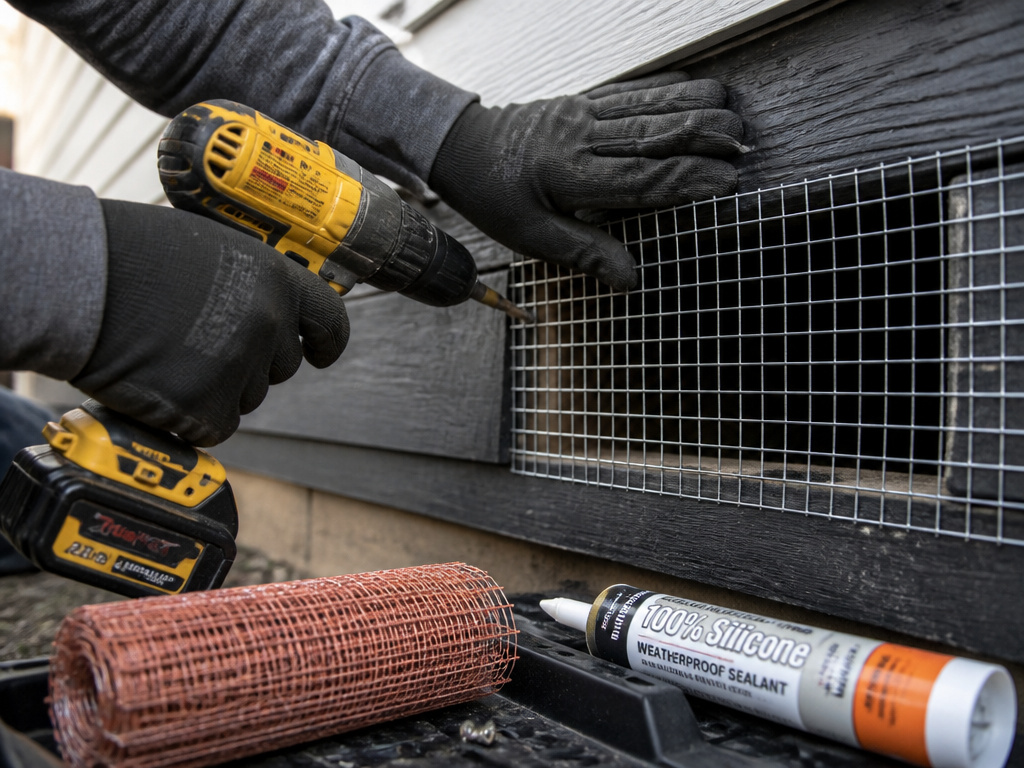
You can execute a pro-level exclusion plan yourself. It requires more patience than skill, but using the wrong materials is a guaranteed fail. Here’s the kit that replaces a $200 service visit.
- Heavy-gauge hardware cloth (1/4-inch mesh for mice, 1/2-inch for rats). This is your first-line barrier for vents, crawl space openings, and gaps under eaves. Cut it with tin snips, secure it with screws or heavy-duty staples. That flimsy “chicken wire” from the hardware store? Rats shred it like paper.
- Copper mesh or stainless steel wool. Stuff this into smaller gaps around pipes, cables, and where siding meets the foundation. Rodents can’t chew through metal fibers. My hard-won lesson: skip the cheap, fluffy stuff. After one rainy season, it rusted into a useless clump in my gear shed. Now I only use a product like Corr-It 100% Copper Mesh, which doesn’t degrade. Seal over it with a high-quality, outdoor-rated silicone caulk.
- A pro-grade sealant gun and caulk. I’ve had the best results with a Newborn 330 gun and GE Advanced 100% Silicone Sealant. Use it to seal cracks in the foundation, around window frames, and over the metal-stuffed gaps. Skip this, or use cheap acrylic, and temperature swings will crack the seal within a season.
- Tamper-resistant bait stations and EPA-registered rodenticide. This is for cleanup, not prevention. Place stations like the Protecta EVO every 6 feet along walls where you see activity. In California, bait must be in stations within 50 feet of a structure. Check them weekly.
Skipping the metal and going straight to caulk or spray foam is the most common DIY error. A rat can enlarge a 1/2-inch hole to a 2-inch entry in one night. Caulk alone just gives them a rubbery toy to peel away.
What Methods Are Scientifically Proven Not to Work?
The pest control aisle is a graveyard of products that promise easy fixes. Save your money and your Saturday.
Ultrasonic repellent devices emit high-frequency sounds meant to irritate rodents. The University of Arkansas rodent control publication states their effectiveness is “unsubstantiated by scientific research.” My own gear-shed experiment was conclusive: a $40 “RodentBlaster Pro” ran for a week while I was on trail. I returned to find a Norway rat had chewed through the cord of my favorite Big Agnes sleeping pad, the one with the 20D ripstop nylon, to nest in the loft. The device was still blinking.
Mothballs and ammonia-soaked rags are temporary irritants at best. They might move rodents from one wall void to another, but they don’t remove them. Some people are allergic to naphthalene, the active ingredient in mothballs. You’re trading a pest problem for a potential health hazard.
Natural predators like cats and owls cannot control an established population. Rats reproduce too quickly. An outdoor cat might catch the occasional bold rat, but the colony in the woodpile will keep growing. Feeding outdoor cats can even backfire by providing a steady food source that attracts more rodents.
Common mistake: Relying on predators or repellents for control, they address the symptom, not the cause, which is always entry points and interior resources.
How Do You Rodent-Proof a House for Good?
Whether you’re tenting for termites or just had a rat scare, exclusion is the only permanent fix. It’s a physical job, not a chemical one. The principles are as fundamental as choosing the right tent camping gear for a storm: robust materials and no weak points.
Start with a daylight inspection. Look for greasy rub marks along walls, droppings in cabinets or the attic, and holes around pipes. Outside, check where the foundation meets the siding, around dryer vents, and under doors. Remember the size rule from the University of Nebraska rodent-proofing handbook: a mouse can fit through a 1/4-inch hole, a rat through a 1/2-inch hole.
Seal the exterior first. This is non-negotiable. Cover large openings with 1/2-inch mesh galvanized hardware cloth, stuff copper mesh into smaller gaps, and seal with silicone. For roof rats, expert climbers, pay extra attention to soffits and where overhead utility wires meet the house. You may need to contact the utility company to install guards.
Inside, eliminate the welcome mat. Store dry food and pet food in sealed glass or metal containers, not bags. Fix leaky faucets. Keep trash cans tightly lidded. Trim tree branches back at least three feet from the roof. Without food, water, and shelter, even the most determined rat will look elsewhere. It’s about making your home less appealing than the neighbor’s, much like how a well-sealed, durable canvas tent in a storm is less appealing to the elements than a flimsy pop-up.
Frequently Asked Questions
Do dead rats smell after fumigation?
Yes, if they die inside enclosed wall cavities or the attic. The fumigation process doesn’t remove carcasses. Decomposition produces a strong, foul odor that can last weeks. The only solution is to locate and remove the dead animal, which often involves cutting open drywall.
Can fumigation gas kill rats in their burrows outside?
No. Sulfuryl fluoride dissipates into the atmosphere once the tent is removed. It does not penetrate soil effectively to reach burrows under slabs or in yards. This is a key reason fumigation is not a rodent control method, it doesn’t touch the external population.
What’s the difference between termite tenting and rodent fumigation?
Termite tenting uses sulfuryl fluoride (Vikane) in a single, whole-structure treatment. Professional rodent fumigation with gases like carbon monoxide is a targeted, burrow-by-burrow treatment for outdoor Norway rat colonies, governed by strict regulations (e.g., not within 65 feet of a structure). It’s rarely used for house mice.
How long after fumigation can rats come back?
Immediately. The gas leaves no residue. If entry points are not sealed and attractants like food or water remain, rats can re-enter the same day the tent is taken down and the house is cleared for re-entry.
Are ultrasonic devices or mothballs ever worth trying?
No. Peer-reviewed research and extension guides from institutions like the University of Arkansas classify them as ineffective. Rodents habituate to the stimuli within days. Your money and effort are far better spent on materials for physical exclusion.
Before You Go
Fumigation kills rats inside your house during the treatment. That’s a fact. Using it as a rodent control strategy, however, is like using a bomb to fix a leaky faucet, it addresses a symptom with overwhelming force but does nothing to stop the next leak.
The real, lasting work happens with a caulk gun, metal mesh, and strategic baiting long before the tent goes up. A quality set of essential camping gear keeps you dry; the same principle of robust physical barriers keeps rats out. If you’re dealing with an infestation, skip the ultrasonic gimmicks. Seal every gap larger than a pencil, secure your food, and call a pro if the droppings keep appearing. Your house shouldn’t be a temporary shelter for rodents; with the right work, you can make it a fortress.
