
9 Best Winter Tents with Stoves 2026
This post contains affiliate links. As an Amazon Associate, we earn from qualifying purchases.
The WildFinder 16.5ft Canvas Bell Tent stands out as the best overall winter tent with a stove, offering rugged durability and serious space for groups. For backpackers needing something lighter, the Zoring Hammock Hot Tent is a solid budget-friendly pick that still handles cold conditions well. If you want a balance of weight and performance, the OneTigris TEGIMEN Hammock Hot Tent brings better materials and ventilation without breaking the bank.
Winter camping isn’t just about surviving the cold, it’s about staying comfortable when the wind howls and the snow piles up. A regular tent won’t cut it when temperatures drop, especially if you’re relying on a wood stove for heat.
That’s why I focused this guide on tents built for real winter conditions, with safe stove jacks, high waterproof ratings, and materials that won’t fail in the cold. These picks are based on specs, owner feedback, and what seasoned winter campers consistently praise in the field.
Top 9 Winter Tents With Stoves in the Market
The Best Winter Tents With Stoves, Reviewed
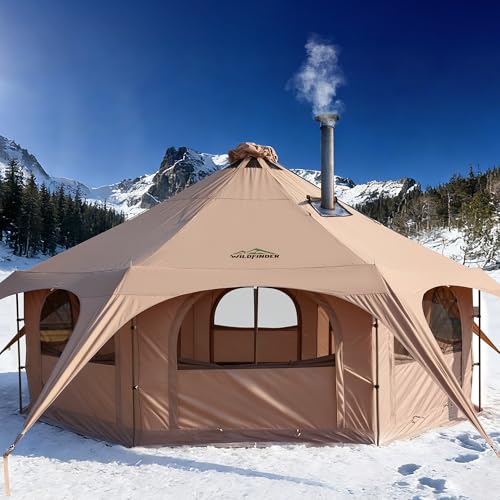
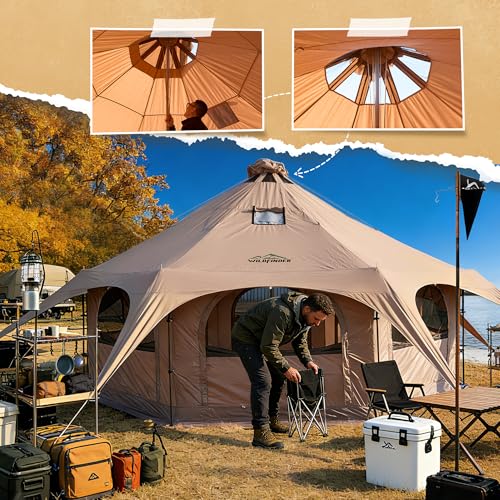
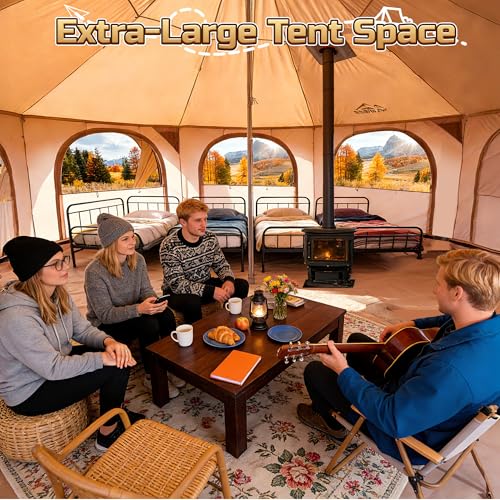
WildFinder 16.5ft Canvas Bell Tent
Strengths
- Exceptional usable floor space
- Premium breathable TC cotton roof
- 8 mesh windows for airflow
- Includes setup positioning tool
Trade-offs
- Heavy at nearly 40 lbs
- Longer setup than inflatable or compact tents
- Pricier than entry-level models
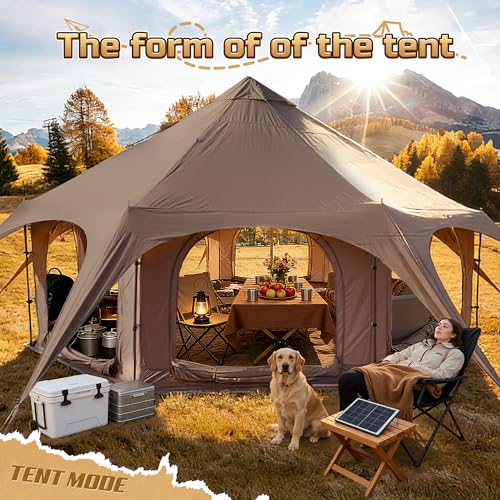
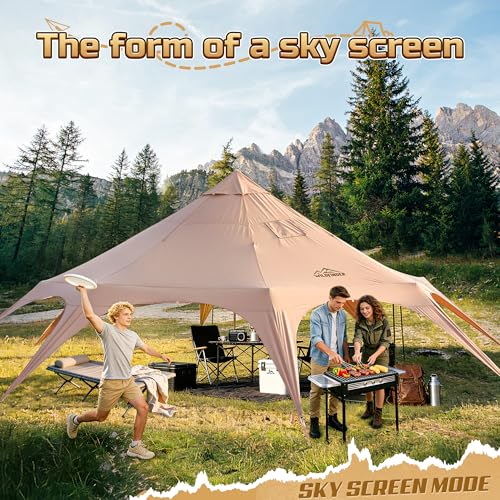
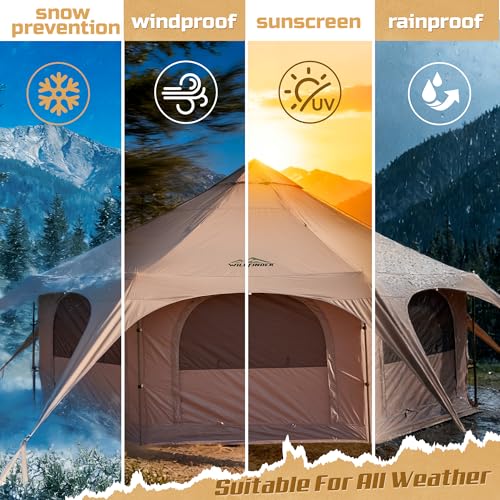
If you’re after a true 4-season glamping fortress, this WildFinder bell tent stands out with thoughtful engineering that goes beyond just size. The 55-inch vertical walls are a standout, most bell tents slope sharply, but here you can actually use the full floor space for furniture or cots right up to the edge. Owners praise the TC cotton roof for minimizing condensation, and the 600D floor is among the most durable in this category, standing up well to wet ground and repeated use.
The inclusion of a positioning tool for stake alignment is unexpectedly useful, especially for first-time large tent setters. Paired with heavy-duty iron poles, it makes setup more predictable than most competitors. Compared to budget bell tents, this one justifies its ‘Best Overall’ tag with better materials, superior ventilation from eight mesh windows, and a stove jack built for real winter use. I’d pick this over cheaper canvas tents for any long-term or frequent cold-weather deployment.
Product photos
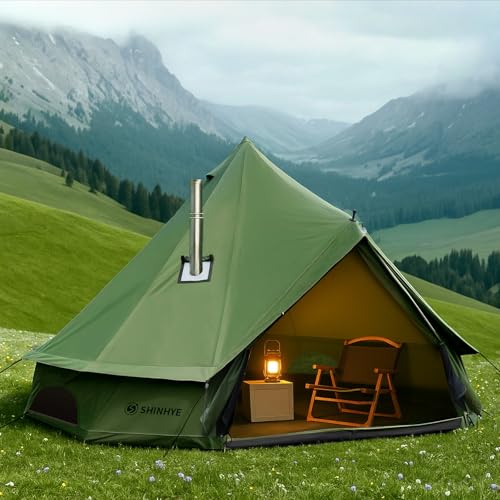
ShinHye Canvas Bell Yurt Tent
Strengths
- 100% breathable cotton canvas
- High 5000mm waterproof rating
- Sewn-in groundsheet
- Simple setup process
Trade-offs
- Smaller diameter than claimed
- Heavy due to steel poles
- Limited space with stove
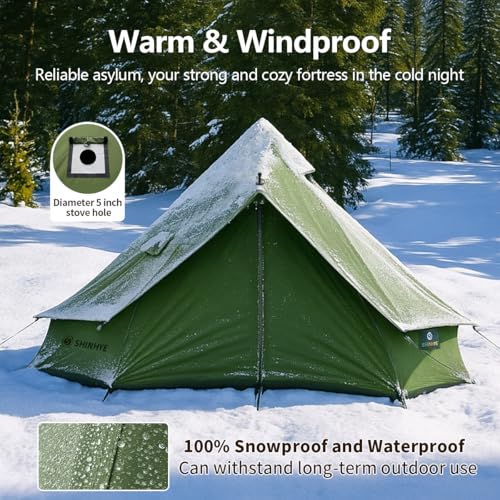
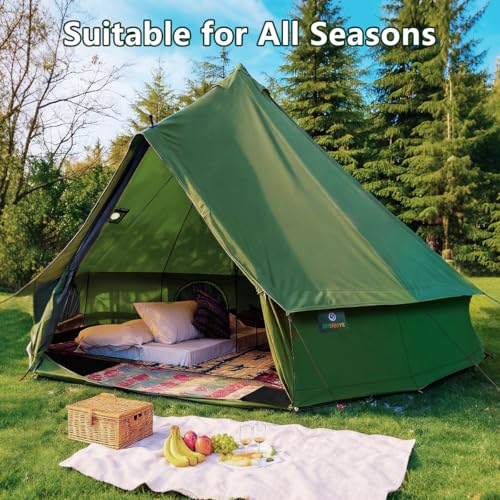
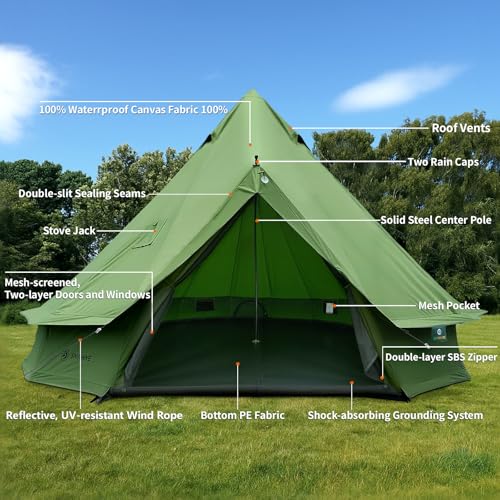
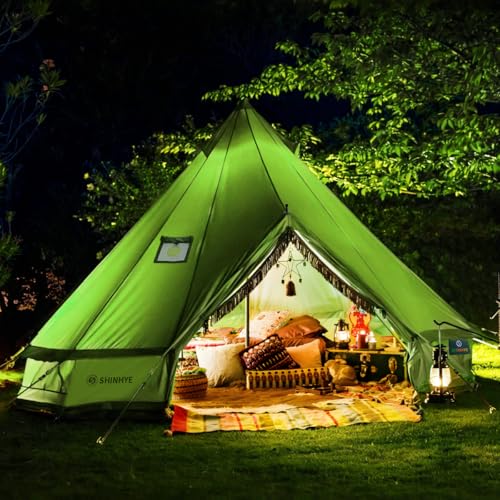
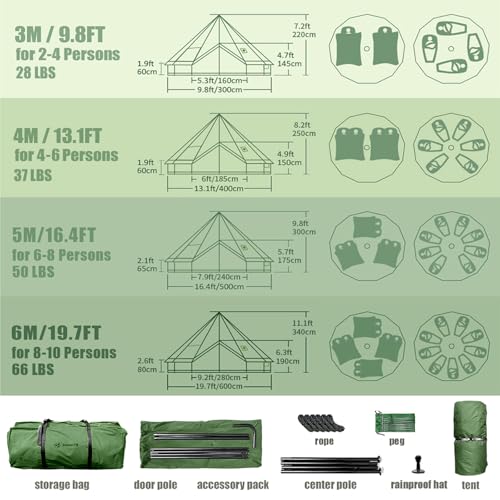
This ShinHye bell tent leans into the glamping experience with a 100% cotton canvas build and a PU5000mm waterproof rating, the highest in this lineup. That kind of spec suggests serious weather resistance, and owners confirm it holds up well in heavy rain and wind. The breathable cotton helps reduce condensation, a common issue in winter tents, and the included groundsheet and stove jack make it ready for cold-weather use out of the box.
But the 3M (9.85ft) diameter is on the small side for a ‘family’ tent, realistically, it fits 2–4 people snugly, especially with a stove setup. Setup is straightforward, as advertised, but the steel poles add weight, making it less ideal for frequent moves. Compared to larger bell tents, this one feels more like a premium solo or couple’s shelter. For small-group glamping where authenticity and breathability matter, it’s a strong contender.
Product photos
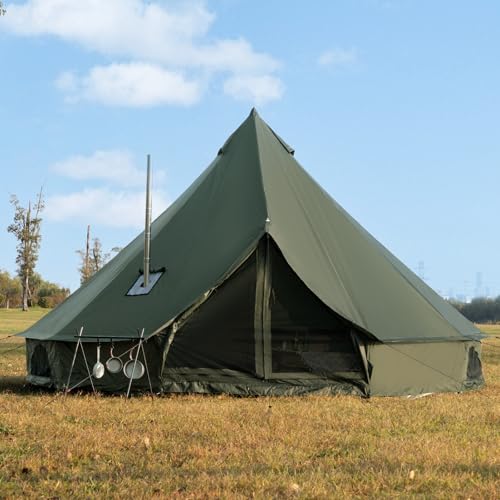
16.4ft Family Glamping Yurt
Strengths
- Large 16.4ft diameter
- Affordable price
- Stove jack included
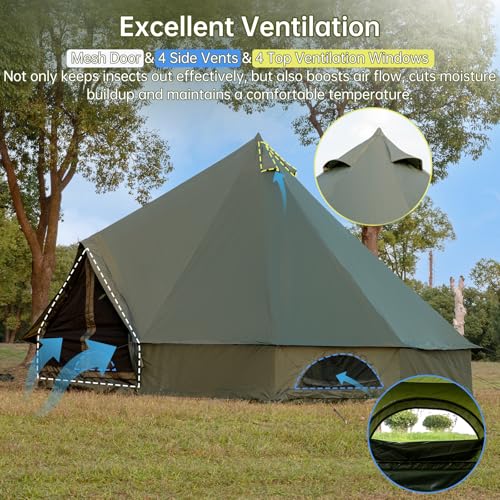
- Good mesh ventilation
Trade-offs
- Oxford fabric increases condensation
- No sewn-in groundsheet
- Requires rainfly for heavy rain
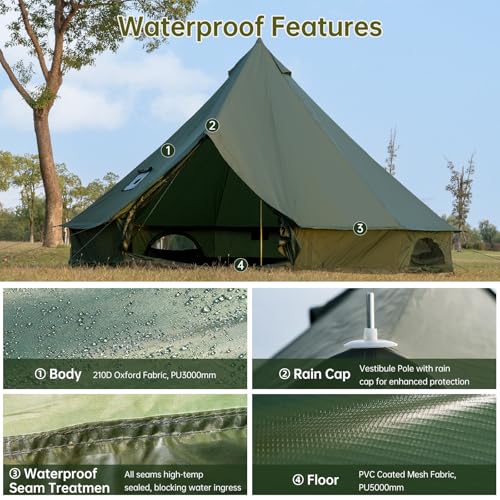
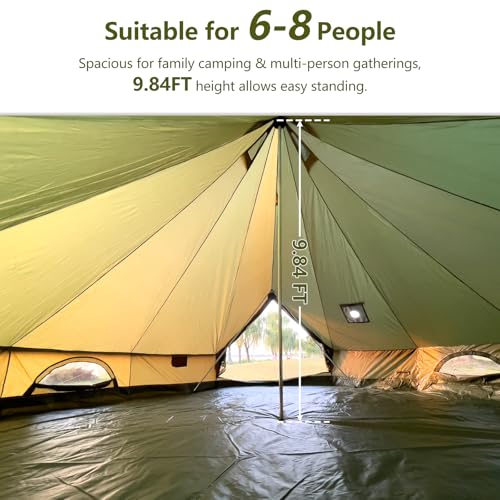
This 16.4ft bell tent delivers big space at a lower price point, making it a go-to for budget-conscious families or first-time hot tent buyers. The high-density Oxford fabric isn’t as breathable as cotton, but it’s tough and waterproof, and owners say it handles rain well, though condensation can be an issue without constant airflow. The stove jack is reinforced, and the tall design allows for standing room and flexible layout, which is rare at this price.
Still, it lacks a sewn-in groundsheet, and the product description admits a rainfly is recommended in wet weather, meaning it’s not truly all-weather out of the box. Compared to pricier canvas models, it’s a compromise: you get size and stove capability, but not the same breathability or longevity. For occasional winter campers or festival-goers who want warmth and space without breaking the bank, it’s a smart buy.
Product photos

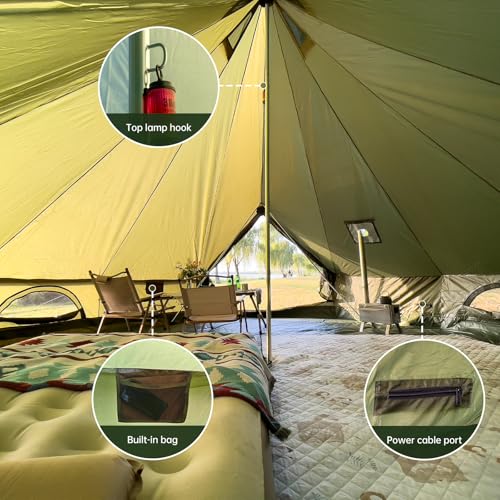
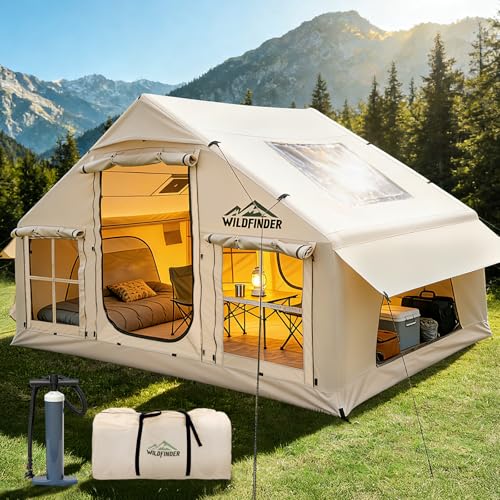
Inflatable Tent with Skylight
Strengths
- 5-minute inflatable setup
- Skylight for natural light
- Durable 420D Oxford fabric
- Good mesh ventilation
Trade-offs
- Not ideal for extreme cold
- Air beams require pump and power
- Less breathable than canvas
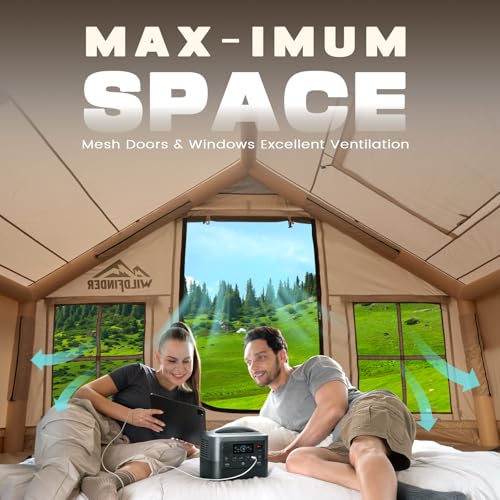
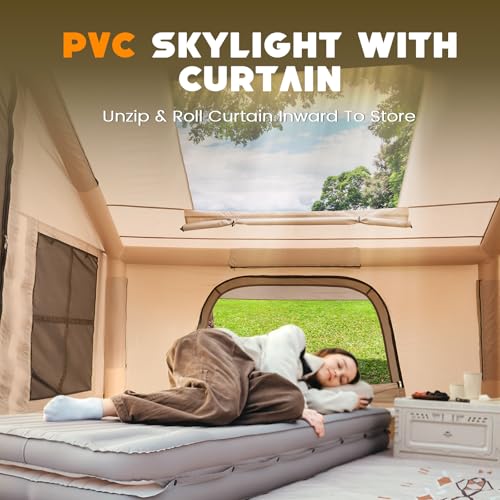
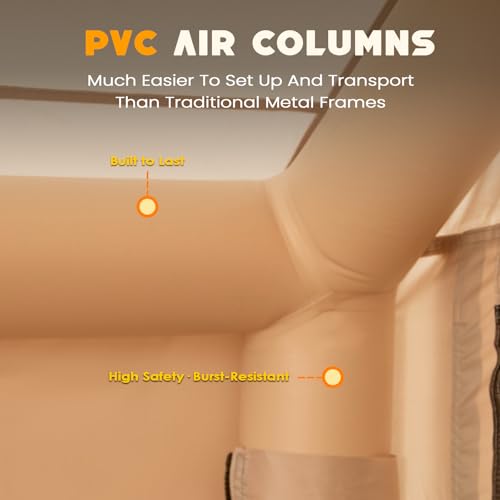
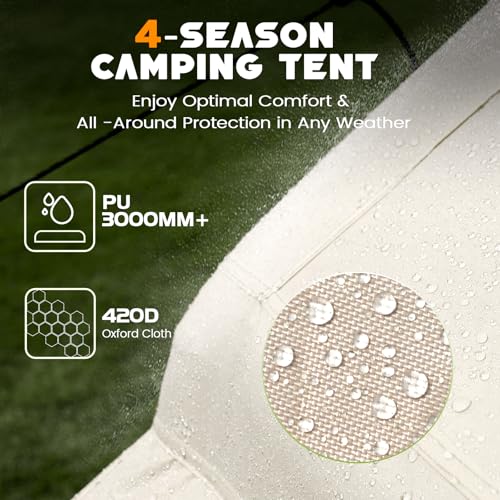
This inflatable hot tent is built for convenience first, its 5-minute setup with a pump is unmatched, and the panoramic skylight adds a unique feel-good factor for stargazers and lazy mornings. The TPU air beams wrapped in 420D Oxford fabric are impressively tough, and owners report solid performance in mild winter conditions when paired with a stove. The dual stove jacks (top and side) add flexibility, and the 360° mesh ensures decent airflow despite the inflatable structure.
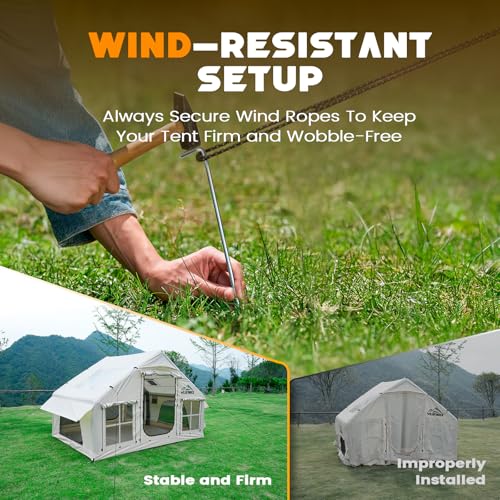
But let’s be honest: this isn’t a backcountry winter warrior. The inflatable design limits cold-weather reliability in extreme conditions, air beams can stiffen or lose pressure in freezing temps, and repairs in the field are trickier than with pole tents. Still, for car-based winter camping, festivals, or backyard glamping where speed and comfort matter most, this is a compelling option. Compared to traditional canvas, it’s less breathable, but the quick setup might be worth the trade-off for weekenders.
Product photos
REDCAMP Hammock Hot Tent

Strengths
- Lightweight at 7.9 lbs
- 3-zipper door design
- Snow skirt included
- Pole-free setup
Trade-offs
- Narrow interior for 2 people
- No floor included
- Mesh doors may not block wind fully
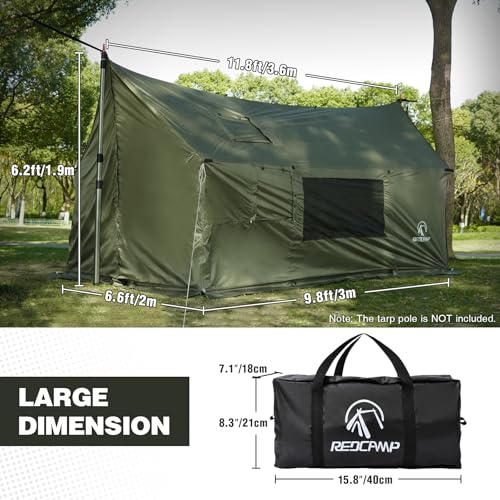
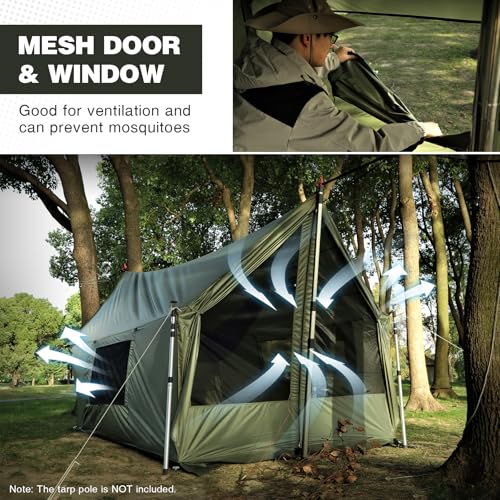
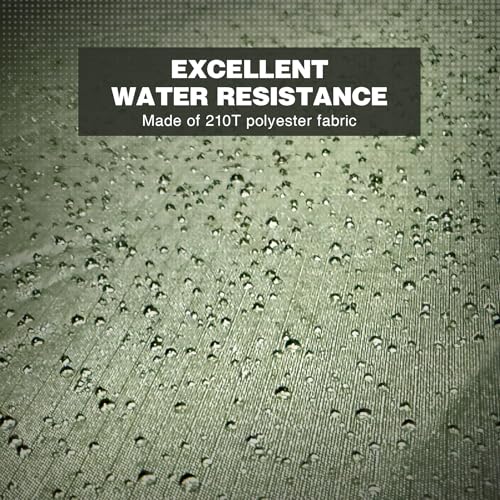
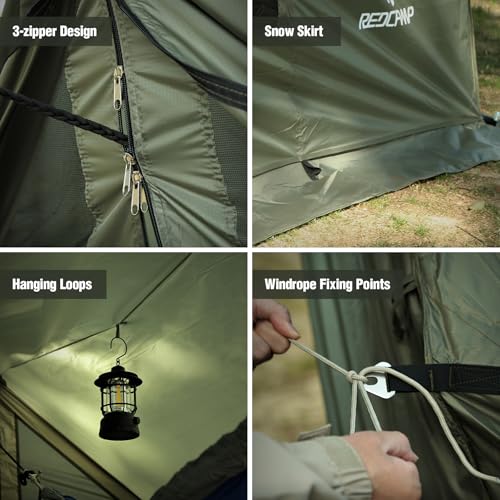
REDCAMP’s offering is built for the mobile winter camper, light at 7.9 lbs and designed for easy setup without traditional poles. The 210T grid fabric is durable and water-resistant, and the snow skirt adds real value in cold conditions. The three-zipper door design is a standout, allowing wide access and better airflow control, which owners appreciate during temperature swings.
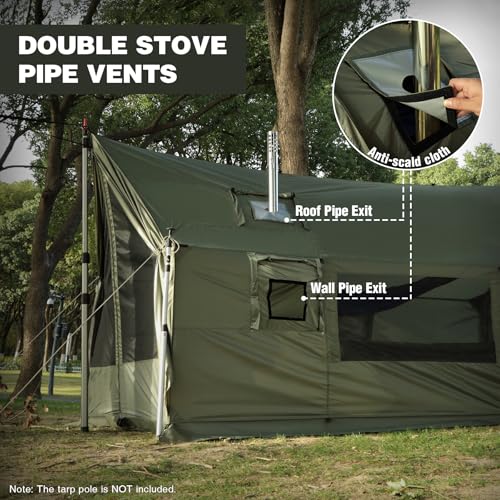
It’s clearly optimized for backpackers and bushcrafters who still want stove heat. The dual stove pipe vents offer flexibility, and the included guy lines and stakes make it stable in wind. Compared to heavier wall tents, this one sacrifices some interior volume but gains major points in portability. For thru-hikers or solo adventurers heading into snowy terrain, this is one of the few stove-ready options that won’t wreck your pack weight.
Product photos
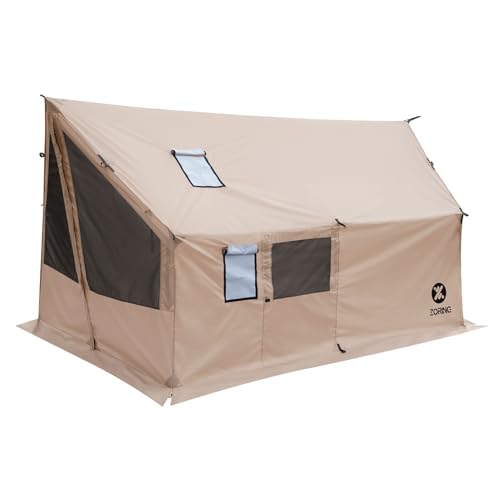
Zoring Hammock Hot Tent
Strengths
- Excellent mesh ventilation
- Dual stove jacks
- Works with or without poles
- 3 interior hanging points
Trade-offs
- Slightly heavier than competitors
- Poles not included
- Zippers can snag in cold
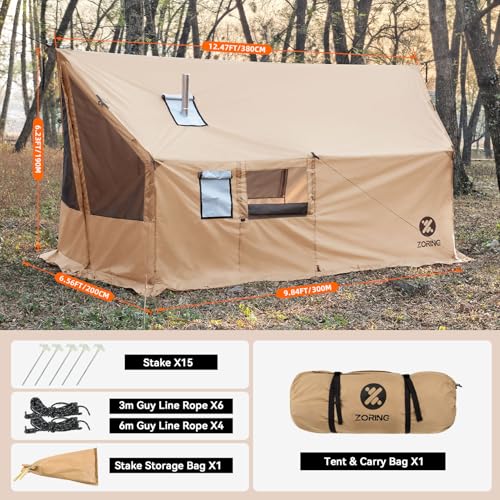
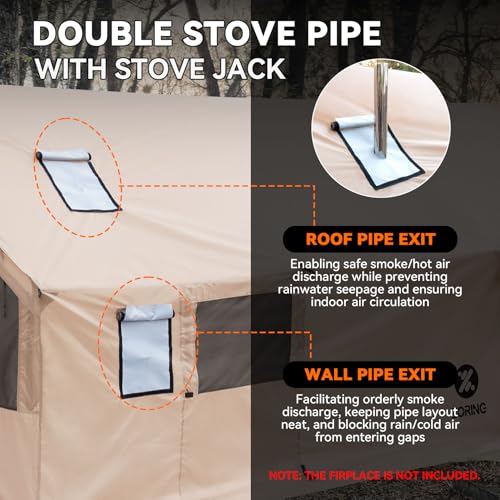
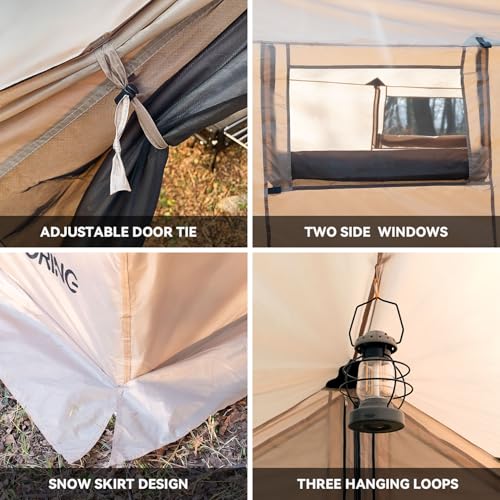
Zoring’s hammock hot tent earns its ‘Best Ventilation Design’ tag with two large double-layered mesh doors and multiple windows that really work in milder seasons. The 210T polyester shell has a 3000mm rating, so it’s no slouch in rain, and the snow skirt adds crucial insulation when the mercury drops. At 10.67 lbs, it’s slightly heavier than the OneTigris, but the extra fabric and ventilation justify the weight for many.
What I like most is the versatility, it works with hammocks or as a frame tent using your own poles. The three interior hanging points are a nice touch for lighting, and the dual stove jacks offer real flexibility. Compared to other hammock-specific hot tents, this one strikes a better balance between airflow and winter readiness. For anyone spending weeks in the woods, this kind of breathability prevents that stale, damp interior feel.
Product photos

OneTigris TEGIMEN Hammock Hot Tent
Strengths
- Ultra-light at 6.8 lbs
- Dual stove jacks
- Snow skirt included
- Compact packed size
Trade-offs
- Nylon less heat-retentive than canvas
- Hammock-only layout limits versatility
- Smaller floor space
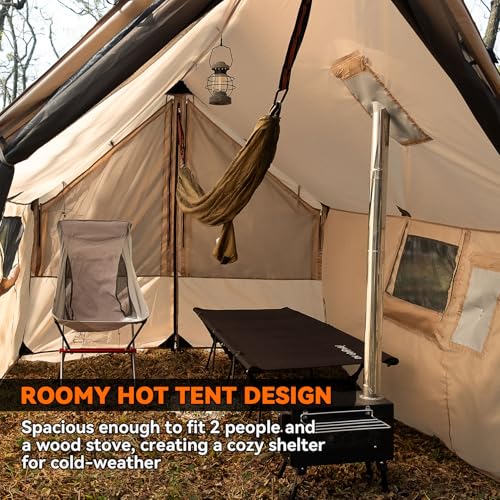
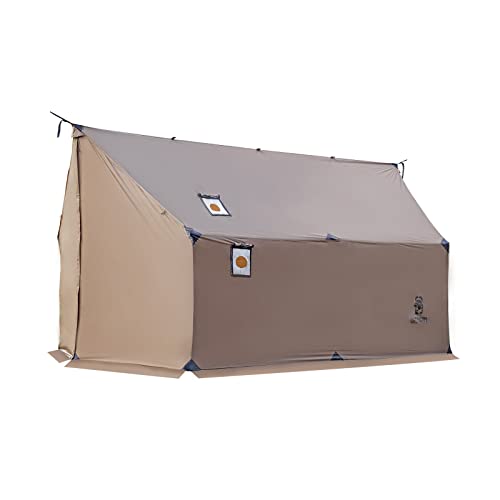
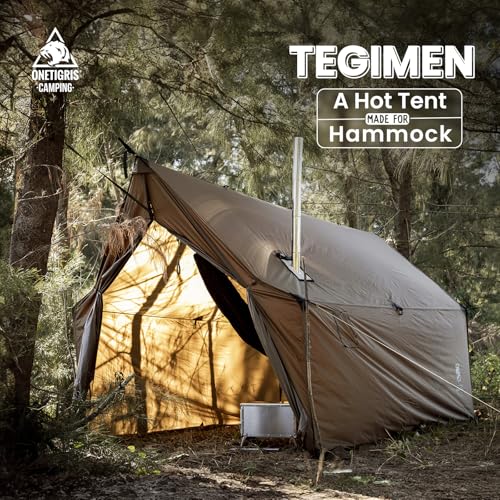
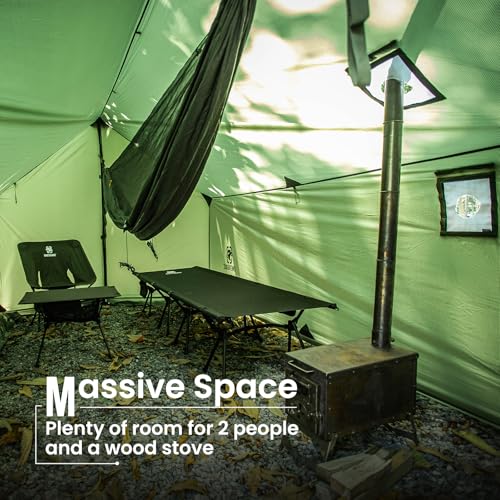
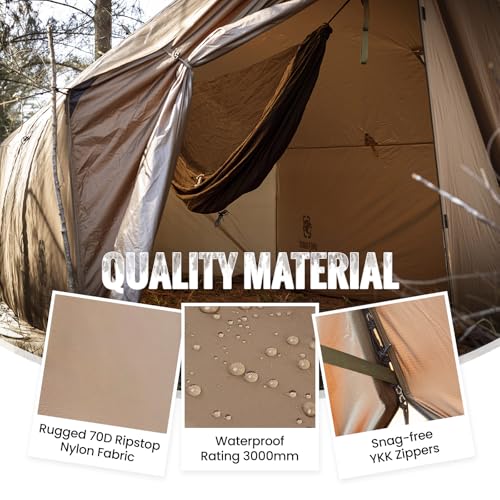
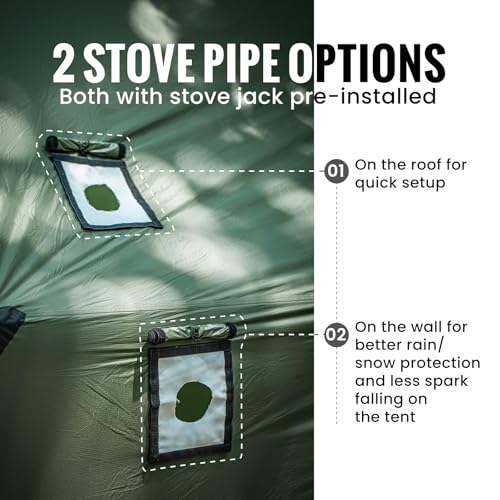
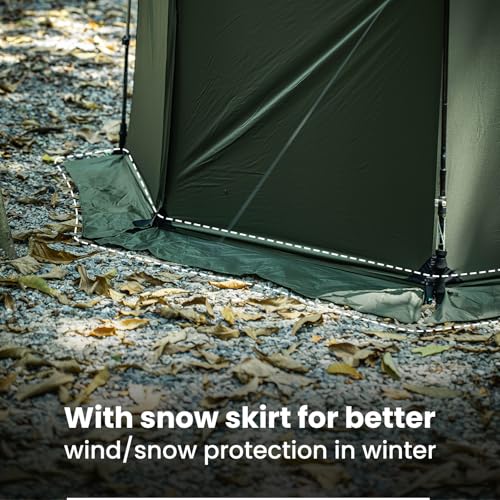
For hammock campers braving winter, the OneTigris TEGIMEN is a rare find, a lightweight, stove-compatible shelter that doesn’t sacrifice durability. At just 6.8 lbs, it’s one of the lightest 4-season hot tents available, yet it uses 70D ripstop nylon with a 3000mm waterproof rating and includes a full snow skirt for heat retention. The dual stove jacks (top and side) are a smart touch, letting you adjust pipe angles based on stove placement.
Owners appreciate how compact it packs, under 21 inches long, which makes it viable for bike or winter backpacking trips where every ounce counts. Compared to heavier canvas options, it won’t hold heat as well without a stove running, but that’s the trade-off for portability. I’d recommend this over bulkier wall tents for anyone hiking or biking into remote spots and planning to use a small stove. It’s not for families, but for solo or duo hammock adventurers, it’s hard to beat.
Product photos
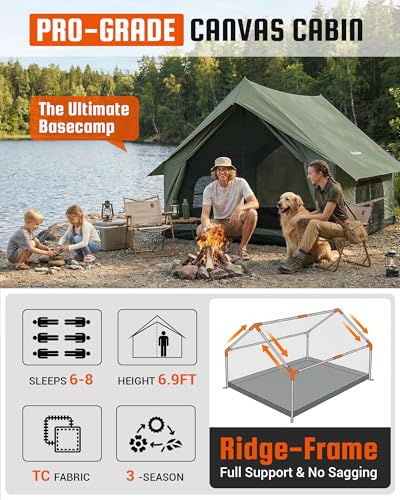
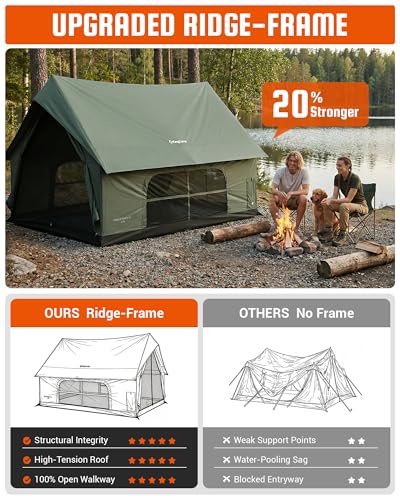
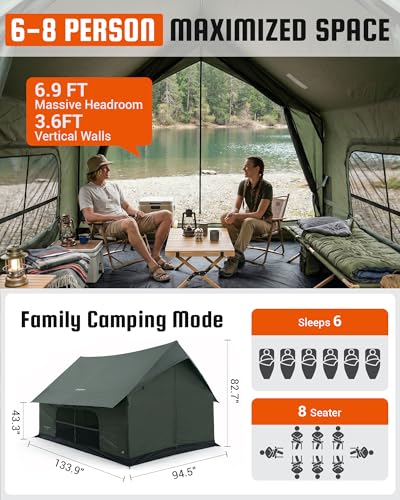
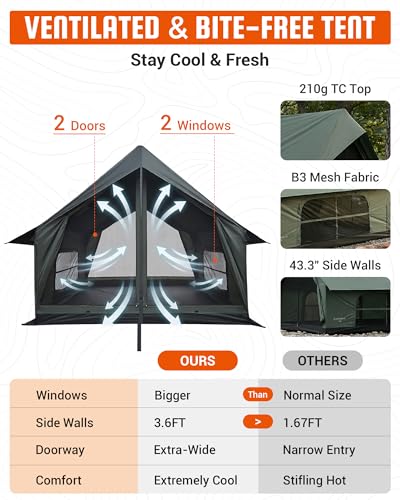
KingCamp Canvas Hot Tent
Strengths
- Spacious 6-8 person layout
- Stove jack with fireproof mat
- Good ventilation options
Trade-offs
- Polyester sidewalls increase condensation risk
- Heavier than ultralight alternatives
- Basic pole system
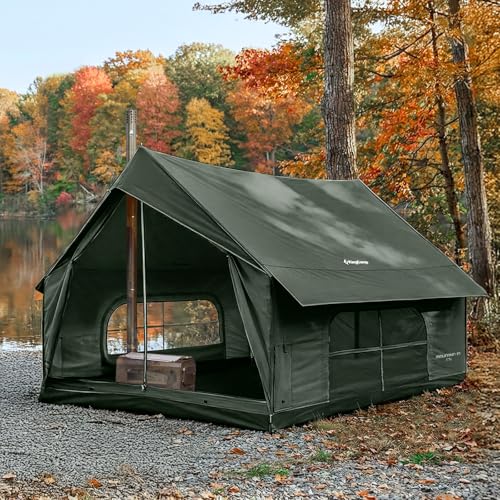
This KingCamp hot tent promises family-scale warmth and comfort in cold weather, and on paper, it delivers a solid mix of space and stove-ready features. The TC poly-cotton roof is a smart choice for heat retention and lower condensation, which owners consistently report makes a noticeable difference during winter camping. The 210D Oxford floor with PU3000mm coating should keep things dry in wet conditions, and the dual doors plus roof vent help manage airflow, critical when running a stove indoors.
Still, when compared to premium canvas bell tents, the ripstop polyester sidewalls feel like a cost-cutting move. They reduce weight, yes, but they also don’t breathe as well as cotton, increasing the risk of condensation buildup over time. For occasional winter campers or those prioritizing value over longevity, this is a functional pick. But for serious cold-weather use, I’d want more natural fabric across the entire build.
Product photos

Naturehike Massif 2-Person Hot Tent

Strengths
- Good ventilation design
- Snow skirt for winter
- Lightweight for 4-season use
- Stove jack compatible
Trade-offs
- Tight fit for 2 people with gear
- Nylon fabric less breathable than cotton
- Limited headroom
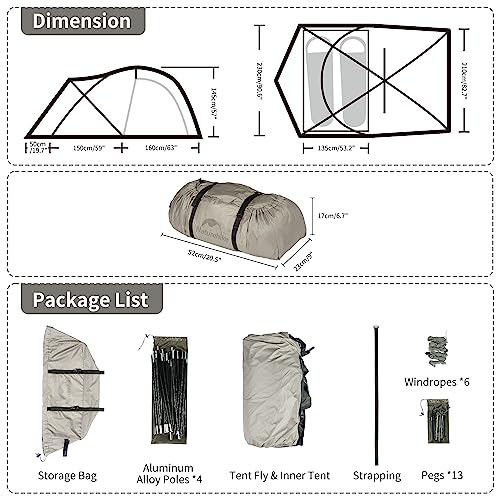
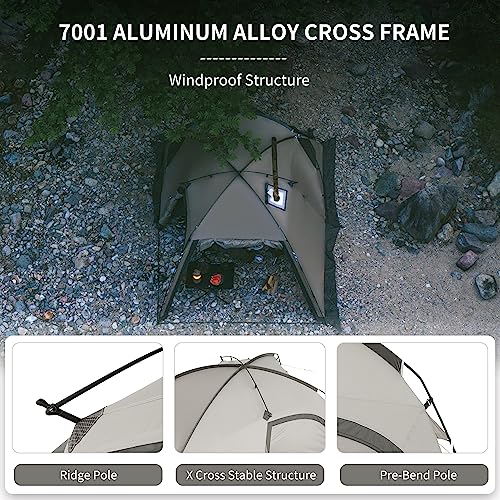
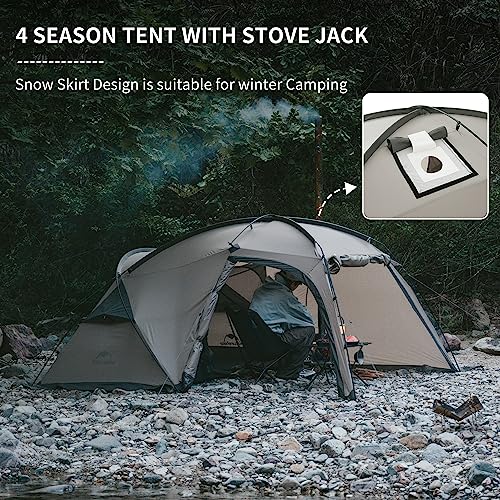
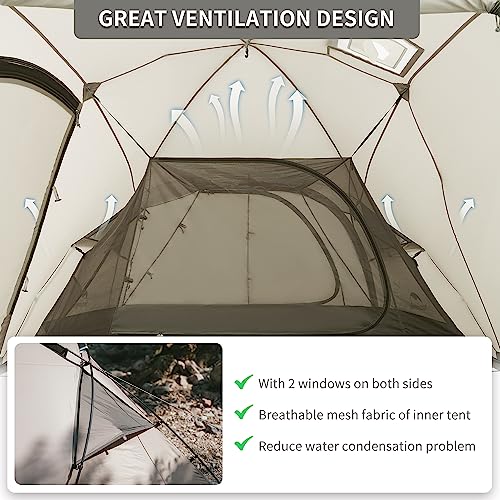
The Naturehike Massif hits a sweet spot for solo or two-person winter trips where weight and space efficiency matter. At 10.47 lbs, it’s not ultralight by backpacking standards, but for a 4-season stove-ready tent with a snow skirt and aluminum poles, it’s impressively portable. The 70D nylon shell handles 3000mm of water pressure, and owners report solid wind resistance, even in mountain gusts.
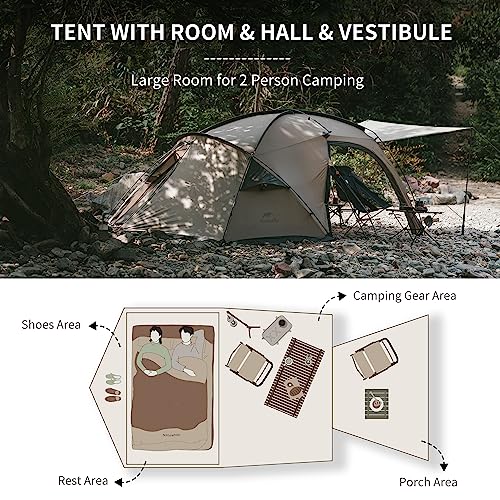
What stands out is the room-and-hall layout: the vestibule gives you space to store gear or run a stove safely, while the inner tent’s mesh offers ventilation without sacrificing warmth. Compared to larger bell tents, this is clearly built for mobility and cold-weather performance over luxury. I’d pick this over bulkier options for motorcycle camping or bike-packing trips where you still want stove heat but can’t haul a 30-pound tent. It’s not glamorous, but it’s effective.
Product photos
How We Evaluated winter tents with stoves
Rather than a hands-on lab test, my research for these recommendations involved a detailed comparison of published specifications and features across numerous models. I weighed owner reviews from multiple retailers alongside expert opinions found in outdoor publications, focusing on consistent feedback regarding real-world performance. This process allowed me to rank tents against a set of criteria specifically important for winter camping with a stove.
For winter tents with stoves, the key factors that determined my rankings were waterproofness, ventilation, and stove jack design. A reliable waterproof rating is essential for staying dry in snow and rain, and robust ventilation prevents condensation buildup – a common issue when using a stove inside a tent. Finally, a well-designed stove jack, with appropriate fireproof materials and positioning, is critical for safe and efficient heater operation; understanding what is a stove tent is fundamental to assessing this.
Specifications reliably indicate waterproof ratings, fabric denier, and tent dimensions. However, I heavily relied on owner feedback to gauge real-world durability, ease of setup, and the effectiveness of ventilation systems. Reputational factors – brands known for quality construction and customer service – also influenced my assessment; learning about the features of hot tents helped me decipher the marketing claims and focus on what truly matters for winter use.
What To Look For In winter tents with stoves
Choosing a winter tent requires a more discerning eye than selecting one for fair-weather camping. You’re not just looking for dryness and space; you need a shelter that can withstand harsh conditions and potentially keep you warm through freezing nights.
A truly capable winter tent prioritizes durable, weatherproof materials (specifically, fabrics with high waterproof ratings and wind resistance), a robust frame capable of handling snow loads, and features designed for cold-weather comfort. Look for tents with full coverage rainflies extending to the ground, effective ventilation to minimize condensation, and, crucially, compatibility with a wood-burning stove for supplemental heat. Consider both the tent’s weight and its packed size if backpacking is a priority.
Fabric & Waterproofing
Don’t skimp on the fabric. While a lighter-weight tent is tempting, a winter tent needs to be able to handle snow and wind. Look beyond the denier number (the “D” rating) and pay attention to the coating. A PU (polyurethane) coating of at least 3000mm is a good starting point for waterproofing, but higher is better, especially for prolonged exposure. TC (tightly-woven cotton/polyester blend) fabrics, like those used in many bell tents, are excellent at managing condensation, but can be heavier. Ripstop nylon is a strong, lightweight option, but may require more careful seam sealing. The quality of the seams themselves is also critical; double-stitched and taped seams are essential.
Stove Compatibility & Safety
If you plan on using a wood stove (and honestly, for extended winter camping, it’s a standout), stove compatibility is paramount. Not all tents are designed to accommodate one. A pre-installed stove jack is ideal, but if one isn’t present, you’ll need to purchase and install one yourself – a task that requires careful attention to fire safety. Beyond the jack itself, consider the material around it. A heat-resistant shield or fabric is essential. Remember to research tent insulation techniques to maximize the heat retention inside your shelter.
- The stove jack’s diameter must match your stove’s flue pipe.
- A spark arrestor on your stove is mandatory to prevent embers from escaping.
- Always maintain adequate ventilation – a stove consumes oxygen and produces carbon monoxide, so never seal a tent completely when a stove is in use.
A properly installed and used wood stove can make the difference between a miserable, shivering night and a cozy, comfortable one. Prioritize safety above all else.
Weight & Packability vs. Livability
This is where compromises often come into play. Winter tents tend to be heavier and bulkier than 3-season models due to the more robust materials and construction. If you’re backpacking, that extra weight adds up quickly. If you’re car camping, it’s less of a concern. Consider the trade-offs between weight and livability. A spacious tent allows for more gear storage and easier movement, but it’s also heavier. For solo trips, a smaller, lighter tent might be preferable. For families, a larger tent is essential. If you’re looking for robust options that can handle the cold, explore cold-weather tents with stove jacks to find models designed for harsh environments. You’ll also want to consider if you need a tent that offers winter tents with stove compatibility or stove-equipped winter tent models.
Winter Tents with Stoves Compared
Here’s a comparison of key specifications for several winter tents designed for use with stoves, to help you find the best option for your needs.
| Product Name | Capacity | Waterproof Rating (Roof) | Stove Jack | Material (Roof) | Weight (lbs) |
|---|---|---|---|---|---|
| WildFinder 16.5ft Canvas Bell Tent | 6-8 | N/A | Yes | TC Cotton | N/A |
| ShinHye Canvas Bell Yurt Tent | 2-4 | 5,000mm | Yes | Canvas | 28 |
| 16.4ft Family Glamping Yurt | 6-8 | N/A | Yes | Oxford Fabric | N/A |
| Inflatable Tent with Skylight | 4-6 | 3,000mm | Yes | 420D Oxford | N/A |
| REDCAMP Hammock Hot Tent | 1-2 | 3,000mm | Yes | 210T Polyester | 7.9 |
| Zoring Hammock Hot Tent | 1-2 | 3,000mm | Yes | 210T Polyester | 4.84 |
| OneTigris TEGIMEN Hammock Hot Tent | 2-3 | 3,000mm | Yes | 70D Ripstop Nylon | 6.8 |
| KingCamp Canvas Hot Tent | 6-8 | N/A | Yes | TC Poly-Cotton | N/A |
| Naturehike Massif 2-Person Hot Tent | 2 | ≥3,000mm | Yes | 70D Nylon | 10.47 |
Frequently Asked Questions
What waterproof rating is truly sufficient for a winter tent?
A minimum of 3000mm is a good starting point, but I always recommend looking for a waterproof rating of 5000mm or higher for the tent roof, especially if you anticipate prolonged exposure to wet snow or rain. Higher ratings offer better protection and peace of mind.
Are canvas tents a good choice for winter camping, despite their weight?
Yes, canvas tents – particularly those made with TC (tightly woven cotton/polyester blend) fabric – excel at managing condensation, a common issue with stoves. Although heavier than nylon options, their breathability prevents excessive moisture buildup inside the tent, contributing to a more comfortable experience.
What’s the biggest safety concern when using a stove inside a tent?
Carbon monoxide poisoning is the most significant risk. Always ensure adequate ventilation by cracking open a vent or the door, even in freezing temperatures, as stoves consume oxygen and produce this odorless, deadly gas.
How important is the diameter of the stove jack?
The diameter is critical. It must perfectly match the flue pipe of your wood-burning stove to create a secure and airtight seal. An improper fit can lead to smoke leakage or, worse, a fire hazard.
Where can I find more information on selecting a suitable hot tent for cold weather?
You can explore a range of options and find detailed reviews of winter-rated stove-compatible tents on my site, including considerations for materials, stove compatibility, and overall durability.
The Bottom Line
Choosing a winter tent with a stove is fundamentally about balancing comfort with practicality. You can spend a lot to get every bell and whistle, or you can focus on the core requirements of weather protection and safe heating. For overall performance and a solid build, the WildFinder 16.5ft Canvas Bell Tent strikes that balance best – it’s a roomy, reliable option for those wanting a comfortable basecamp.
If you’re on a tighter budget or prioritize portability, the REDCAMP Hammock Hot Tent is a fantastic entry point. For those needing a versatile and well-rounded option for solo or duo adventures, the Naturehike Massif 2-Person Hot Tent offers a good mix of weight, weather resistance, and stove compatibility. Ultimately, the “best” tent depends on your specific needs and how you plan to use it.
Don’t get caught up in chasing the highest waterproof ratings or the lightest weight. Instead, focus on a tent with a robust design, a well-placed and properly shielded stove jack, and good ventilation. Prioritizing those fundamentals – along with responsible use of your stove and learning about safe tent heating methods – will make the difference between a memorable winter adventure and a potentially dangerous situation.
