
7 Best Tents for Cold Weather Camping 2026
This post contains affiliate links. As an Amazon Associate, we earn from qualifying purchases.
The Underwood 4-Season Backpacking Tent is the best overall for cold weather, with a full snow skirt, high waterproof rating, and proven wind resistance. For budget-conscious campers, the Forceatt 3-4 Season Backpacking Tent offers solid protection without the high price. And if you want serious warmth with the ability to run a stove, the REDCAMP Hammock Hot Tent stands alone in its class.
Cold weather camping demands more than just a warm sleeping bag – your tent is the first line of defense against wind, snow, and freezing temps. Too many shelters claim to be “four-season” but fall apart when the weather turns bad.
This guide cuts through the marketing hype. Based on specs, owner feedback, and years of evaluating what actually works in harsh conditions, I’ve picked the tents that deliver real protection, smart ventilation, and durability where it counts.
Top 7 Tents Cold Weather Camping in the Market
The Best Tents Cold Weather Camping, Reviewed
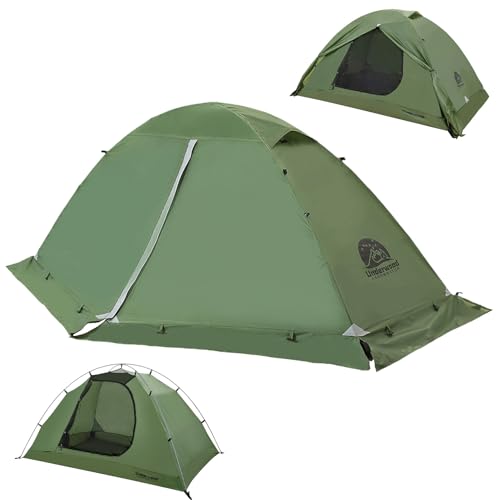
Underwood 4-Season Backpacking Tent
Strengths
- Strong 4-season build
- Durable materials
- Good ventilation
Trade-offs
- Slightly heavier than ultralight picks
- Zippers could be sturdier
- Minimal color options
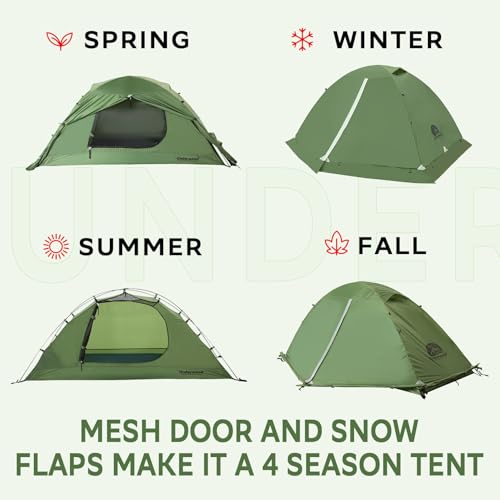
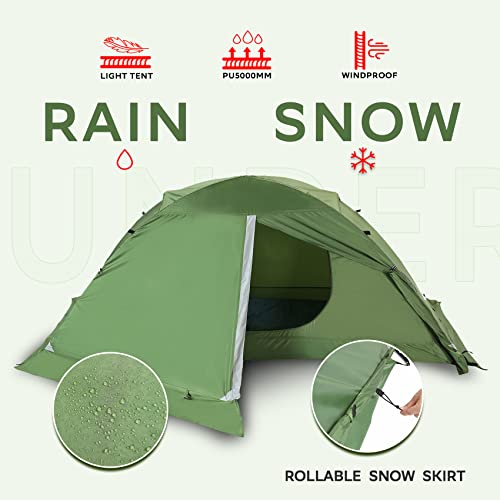
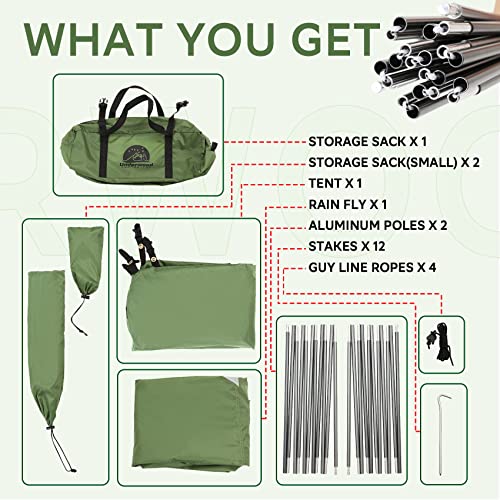
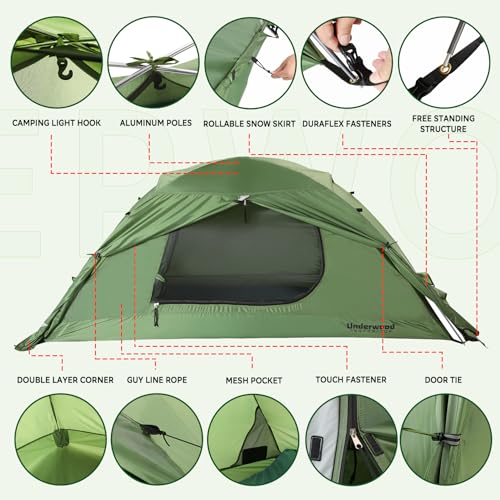
This is the tent I’d recommend to most buyers who want a balanced, no-compromise shelter for year-round use. It hits the sweet spot between weight, durability, and weather protection. The PU 5000mm coating, aircraft-grade aluminum poles, and full-coverage rainfly mean it can handle snow loads and high winds without flinching. Owners consistently report it outperforms cheaper models in storms, and the freestanding design makes setup a breeze, even in deep snow.
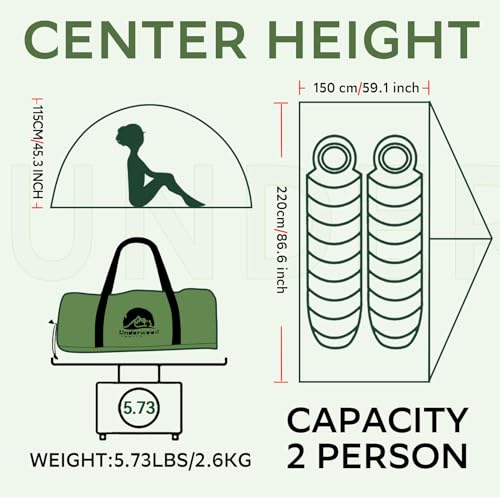
The dual vestibules are a major win for storing boots and packs, and the interior light hook is a small touch that adds real comfort. At 5.73 lbs, it’s not the lightest, but it’s reasonable for what you get. Compared to others in this list, it’s more durable than the Purebox, lighter than the inflatable, and better built than the BISINNA. That’s why I call it the best overall.
Product photos
Clostnature 4-Season Ultralight Tent
Strengths
- Ultralight for 4-season
- Excellent weather protection
- Compact packed size
Trade-offs
- Short warranty
- Pole durability concerns
- Tight fit for two
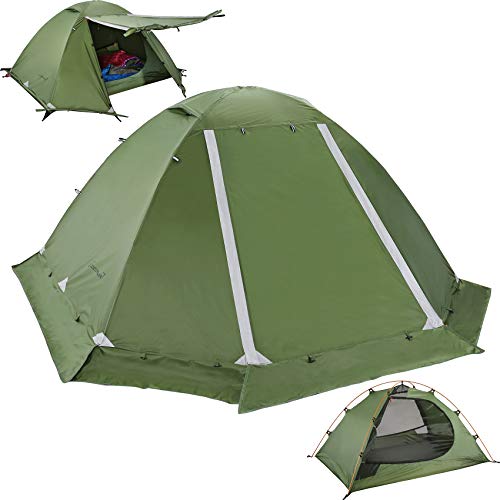
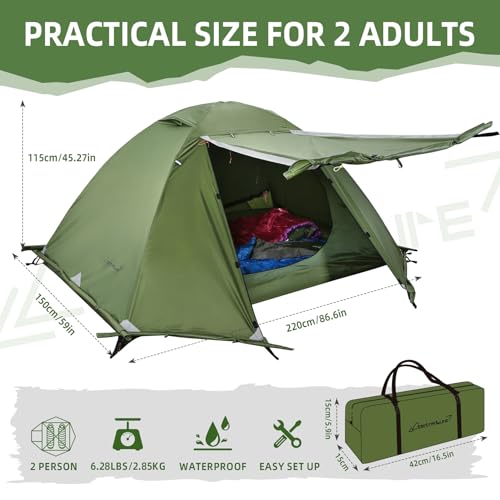
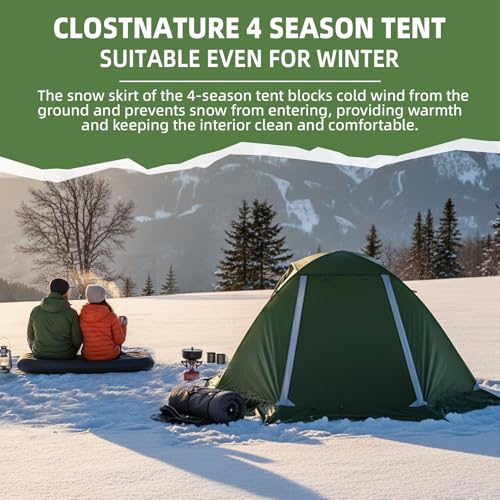
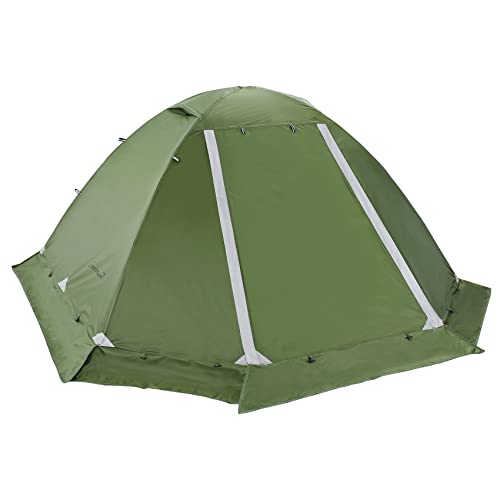
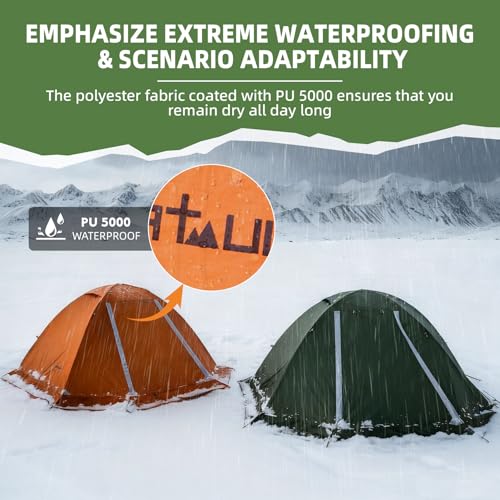
This is one of the few true ultralight 4-season tents that doesn’t sacrifice weather resistance. At just 5.33 lbs trail weight and a tiny packed size, it’s clearly built for hikers who need to go far in winter conditions. The PU 5000mm coating and sealed seams outperform most budget 4-season models, and the snow flaps help keep spindrift out during alpine storms.
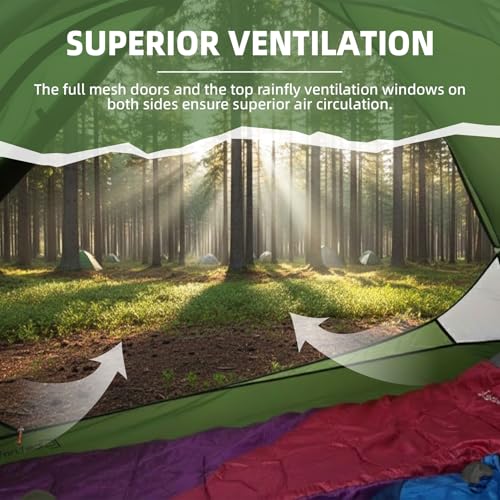
Owners note the ventilation is smartly balanced, dual mesh doors and vestibules reduce condensation without sacrificing warmth. The interior isn’t huge, but it fits two sleepers plus gear if you’re strategic. Where it loses points is durability: some users report pole issues over time, and the one-year warranty is shorter than competitors. Still, for mountaineering or long winter treks, this is the kind of shelter I’d trust in a storm.
Product photos
Forceatt 3-4 Season Backpacking Tent

Strengths
- Lightweight design
- Quick setup
- Strong pole quality
Trade-offs
- Not for heavy snow
- Condensation in humid weather
- Basic stake kit
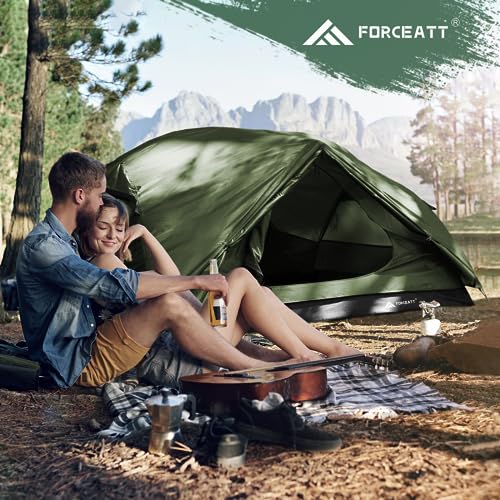
The Forceatt tent is a sleeper hit in the value category. At 5.5 lbs, it’s one of the lightest here, and the 7001-series aluminum poles are stronger than what you’d expect at this price. The 3000mm waterproof rating and welded floor mean solid rain protection, and the dual D-shaped doors with vestibules make it easy to manage gear in tight spaces.
What really sets it apart is the 3-minute setup claim, and owners confirm it’s fast. The smooth #8 zippers and reflective guylines add thoughtful touches. It’s not a true 4-season tent like the Clostnature or Underwood, but for 3-season use with occasional cold snaps, it holds up well. For the price, it’s hard to beat. My recommendation? Pair it with a footprint to extend floor life.
Product photos


REDCAMP Hammock Hot Tent

Strengths
- Spacious interior
- Stove-compatible
- Snow skirt included
Trade-offs
- Heavy for backpacking
- Tarp pole not included
- Assembly requires extra gear
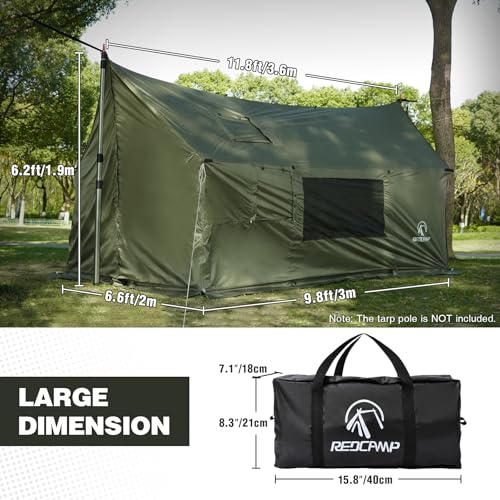
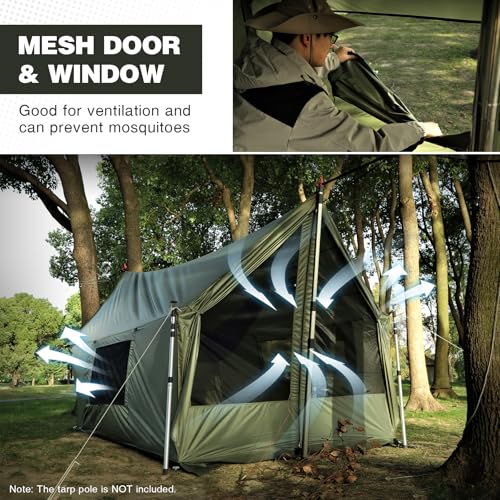
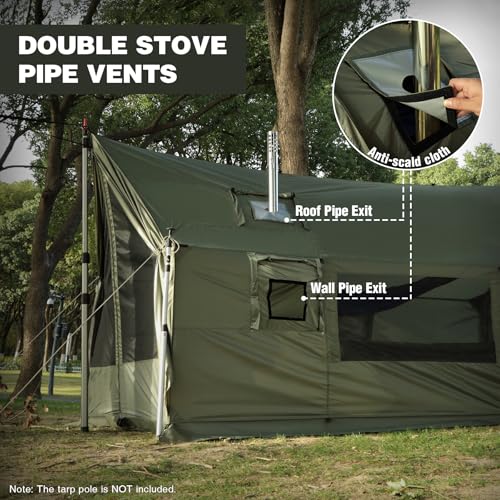
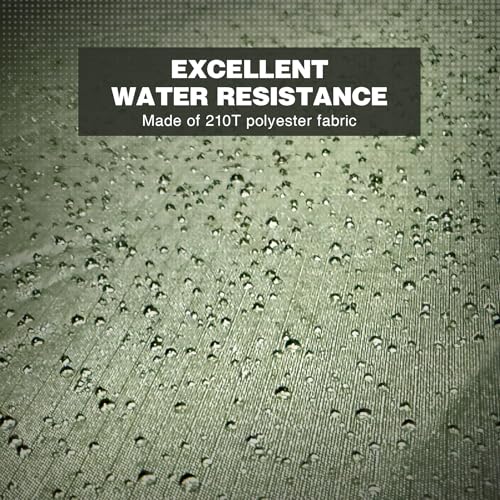
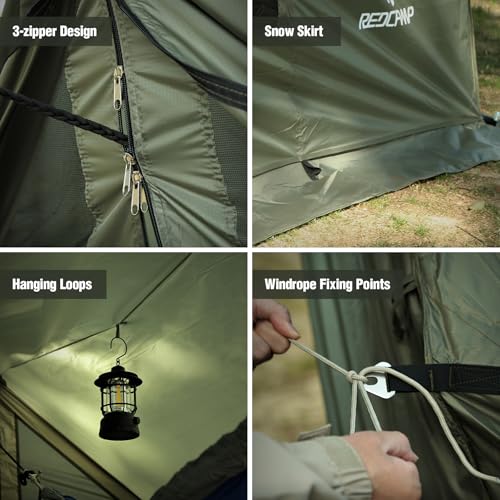
If you’re chasing warmth in brutal cold, this hot tent with stove jack is built for that mission. At nearly 12 feet long, it offers serious interior space, enough for two people and gear, or even a small group in survival or bushcraft scenarios. The 210T polyester with snow skirt and stove vent means it’s genuinely suited for winter use, and owners who’ve used it with small wood stoves report it can stay cozy even below freezing.
The lack of included tarp poles is a head-scratcher given the price, and the 7.9 lb weight rules it out for backpacking. But for car-based winter camping, ice fishing, or overlanding setups, it’s a standout. The three-zipper door design adds real convenience, especially when pairing with a hammock. Just remember: this isn’t a trekking tent. It’s a mobile winter cabin.
Product photos
BISINNA 4-Season Backpacking Tent
Strengths
- True 4-season build
- Affordable price
- Freestanding design
Trade-offs
- Average stake quality
- Minor condensation issues
- Limited headroom
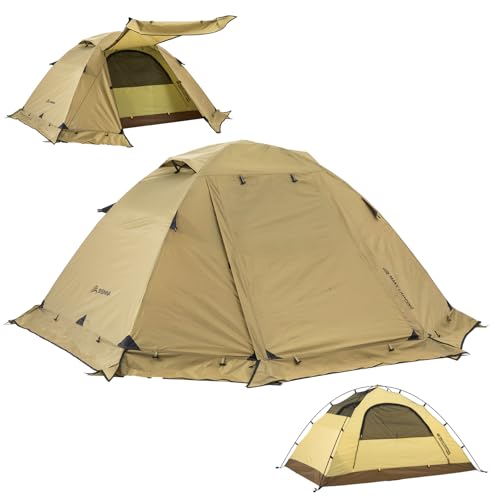
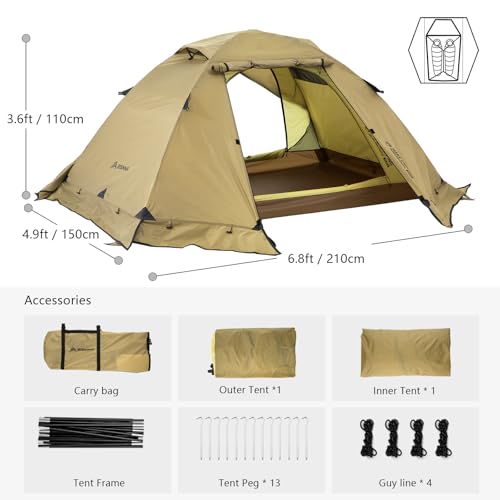
For budget-focused buyers who still want real cold-weather performance, the BISINNA tent delivers more than expected. The PU 3000mm coating and snow skirt give it legitimate 4-season chops, and at just 6.4 lbs, it’s not outrageously heavy for what it offers. Owners praise the freestanding design, it pitches fast with two aluminum poles, and the D-shaped doors with dual vestibules make gear storage practical in tight spaces.
Ventilation is solid thanks to two mesh doors and windows, though some users note condensation can build if you’re cooking inside or breathing heavily in sub-zero temps. It’s not as refined as pricier models, but for a couple doing winter hikes or someone needing a dependable cold-weather shelter without breaking the bank, this is a strong contender.
Product photos
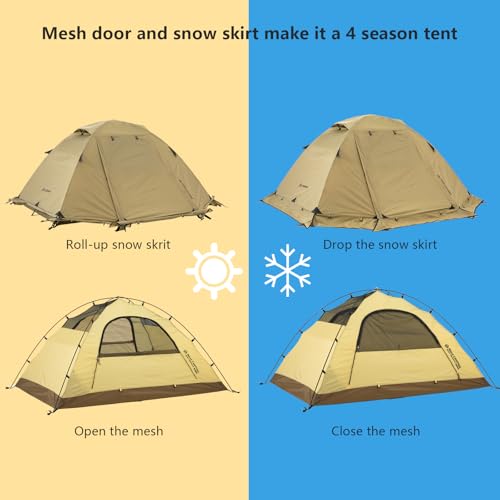
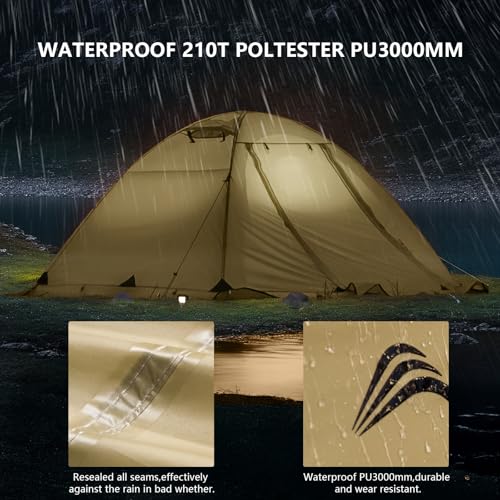
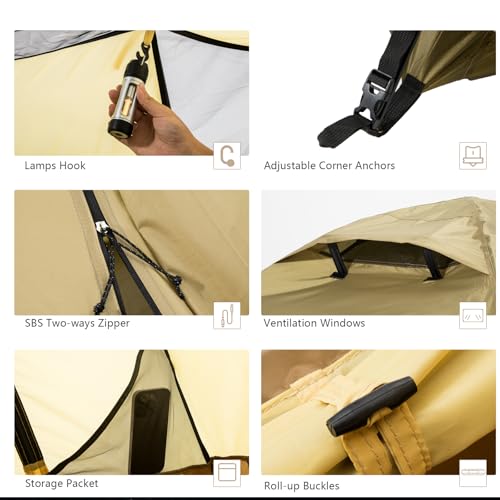
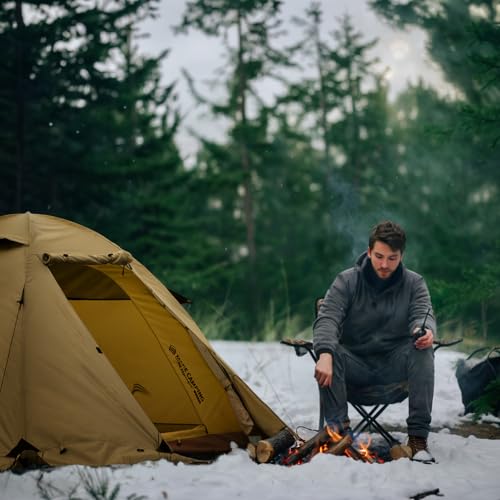
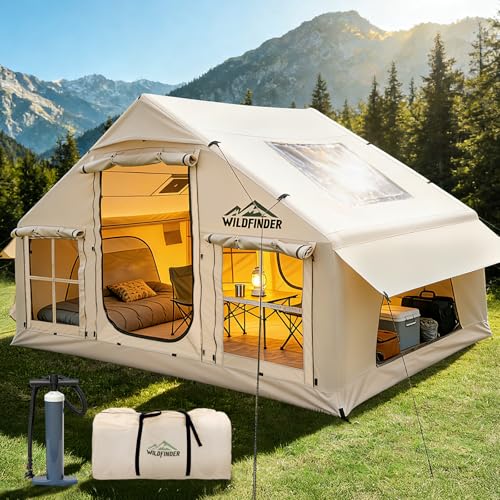
Inflatable Tent with Stove Jack
Strengths
- Blazing fast setup
- Spacious interior
- Stove jack compatible
Trade-offs
- Heavy and bulky
- Requires pump
- Not backpackable
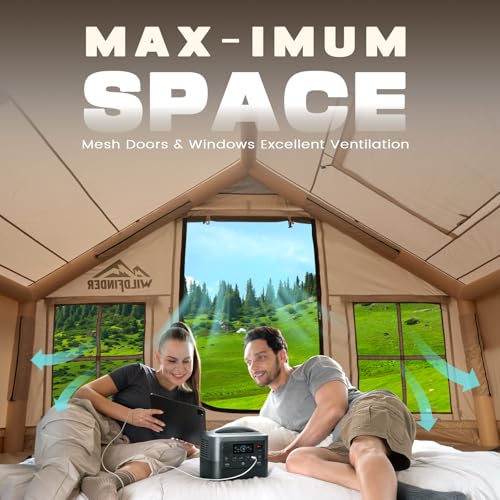
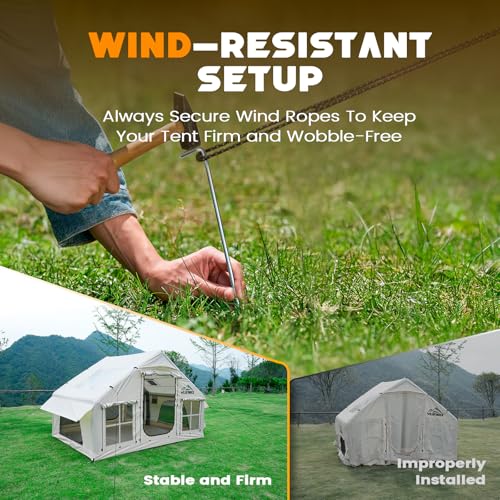
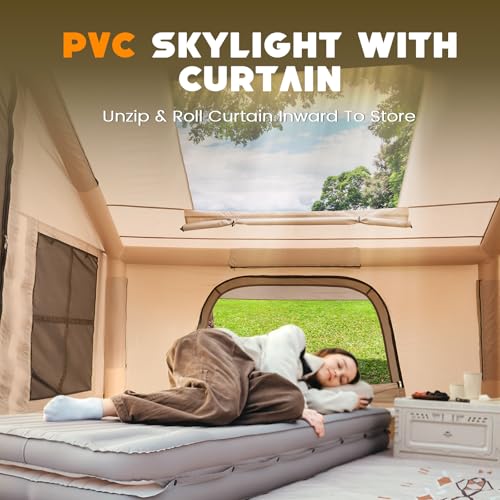
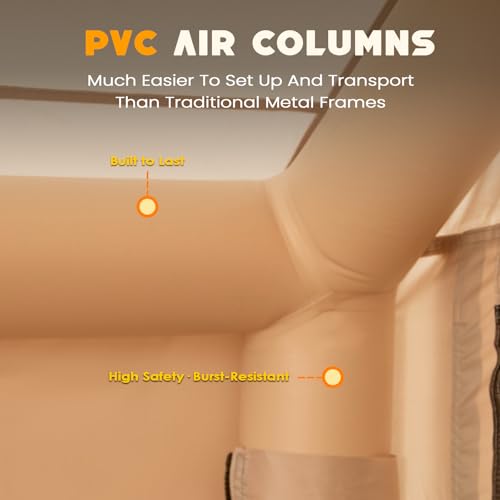
This inflatable tent is a standout for quick setup, literally. The TPU air beams mean you can have a full-size shelter standing in under 5 minutes, no poles to fumble with. The 4-6 person footprint and near 7-foot height make it feel more like a glamping dome than a backpacking tent, and the panoramic skylight is a hit for stargazers. Add a wood stove via the stove jack, and you’ve got a surprisingly cozy winter basecamp.
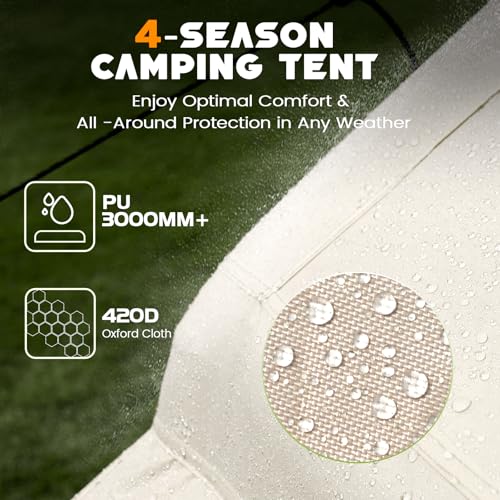
But that convenience comes with trade-offs. At over 20 pounds (likely more with pump), it’s strictly for car camping. And while the 420D Oxford fabric is tough, punctures in the air beams could mean a long repair job in the field. Owners love it for family trips and festivals, but nobody’s taking this into the backcountry. If you want warmth, space, and speed without hiking in, this tent nails it.
Product photos
Purebox 2-3 Person Dome Tent
Strengths
- Spacious for two
- Good ventilation
- Easy setup
Trade-offs
- Not true 4-season
- Bulkier than ultralight options
- Limited headroom
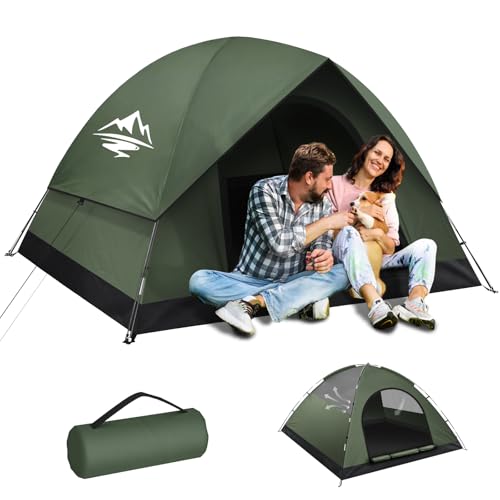
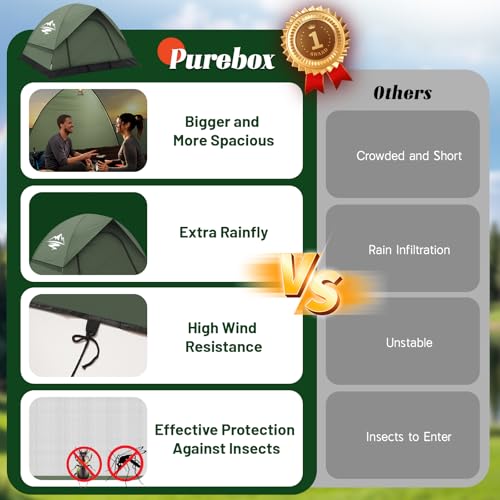
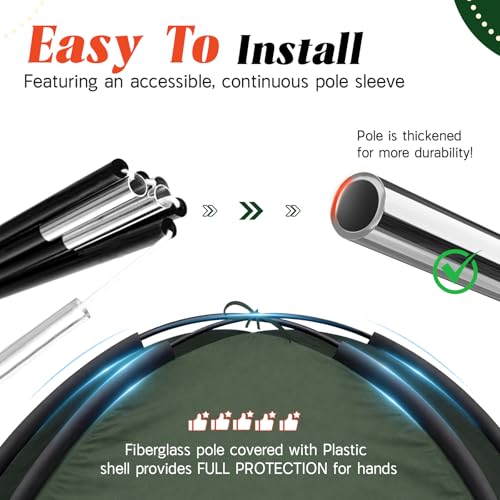
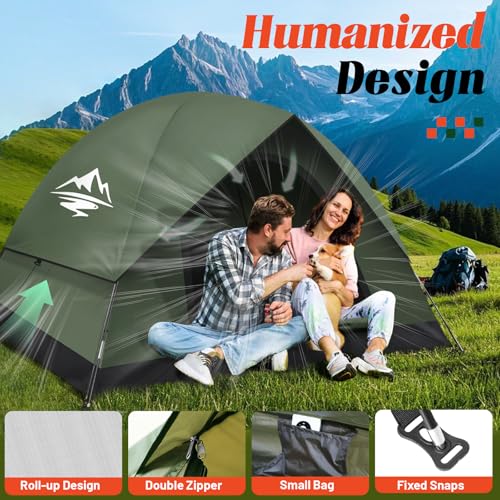
This dome tent checks a lot of boxes for casual campers and fair-weather backpackers. On paper, the 3-person capacity and 84-inch footprint suggest decent room, but owners consistently report it’s best for two adults with gear, which is typical in this class. The double-layer build with taped seams and a bathtub floor gives reliable wet-weather protection, and the three-sided mesh boosts airflow in mild conditions, reducing that sticky condensation common in budget designs.
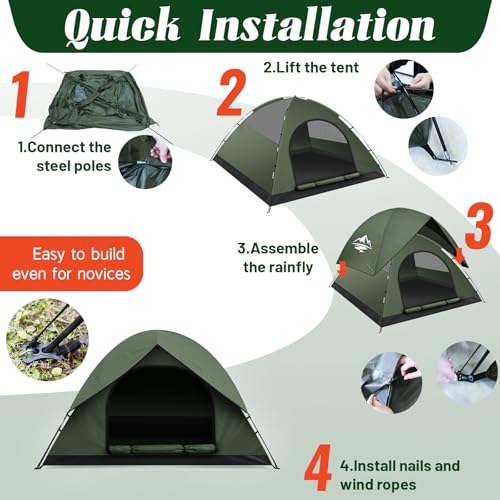
Where it stands out is ease of setup. The clip-and-pole system is straightforward, and the 6.2 lb weight keeps it packable for car campers or short hikes. But don’t be fooled by the ‘4-season’ claims some listings push, this is a solid 3-season shelter. It won’t hold up in heavy snow or sustained windstorms. For backyard hangs, spring hikes, or music festivals, it’s a smart, affordable pick.
Product photos
How We Picked These tents cold weather camping
I approach tent selection with a focus on realistic use – not just ticking boxes on a spec sheet. Rather than a hands-on lab test, this is a research-led comparison of published specifications and features, combined with careful consideration of owner reviews and expert opinions from sites dedicated to outdoor gear. I weighed each tent against criteria important for cold-weather performance, focusing on durability, weather protection, and usability.
For cold-weather tents, the most significant factors are waterproofness and wind resistance, alongside the ability to retain heat. A robust rainfly and sealed seams are critical to staying dry, while a sturdy frame and snow skirts prevent drafts and keep the tent secure in high winds. Beyond that, ventilation is key; condensation buildup can quickly negate the benefits of a waterproof tent, so effective airflow is a must. Understanding tent insulation methods is also essential for maximizing warmth.
Published specs reliably indicate waterproof ratings (PU coatings) and materials used in construction. However, I placed greater weight on owner feedback regarding real-world performance – how well the tent holds up in strong winds, how easy it is to set up in challenging conditions, and whether it truly stays dry during extended rain or snow. Reputation and long-term durability, gleaned from multiple sources, were also heavily considered when determining the final rankings.
How To Choose The tents cold weather camping
Finding the right shelter is crucial for enjoying cold weather camping, and there’s a surprising amount to consider beyond just a low temperature rating.
A quality tent for colder conditions prioritizes robust waterproofing (at least PU3000mm for the fly and floor), a full-coverage rainfly extending low to the ground to trap heat and block wind, and a strong frame capable of withstanding snow loads. Look for features like snow skirts, durable fabrics, and well-sealed seams to ensure a comfortable and safe experience.
Material & Construction
The materials a tent is made from are paramount, and it’s not always about spending the most. While higher denier fabrics are generally more durable, the weave and coating play a huge role. Don’t immediately dismiss polyester tents; modern polyester fabrics with PU coatings can be exceptionally waterproof and surprisingly durable, often outperforming heavier nylon options for the price. Pay attention to the floor material too. A thicker, more robust floor (like 70D nylon or polyester) is essential to resist abrasion and punctures, especially if you’re camping on rocky or icy ground.
Seasonality & Ventilation
Often, “four-season” is a marketing term, so dig deeper. True four-season tents are built with stronger frames to handle snow accumulation, and typically feature less mesh to retain heat. However, a totally sealed tent will quickly become a condensation chamber. Look for strategically placed vents – high and low – to encourage airflow even when fully rainfly is deployed. Some tents, like the REDCAMP Hammock Hot Tent, are specifically designed for cold weather with stove jacks, but understanding what is a hot tent and the safety considerations is vital before investing.
- Weight: Ultralight tents are great for backpacking, but may sacrifice durability. Expect to pay a premium for a lightweight, four-season model.
- Packed Size: If space is limited, a compact packed size is essential. Consider the trade-off between packability and interior space.
- Snow Skirts: These fabric extensions around the base of the tent prevent drafts and keep snow from entering, but they add weight and complexity. They’re most useful if you’re regularly camping in heavy snowfall.
Value & Usability
Don’t fall into the trap of thinking you always need the most expensive tent. The Forceatt 3-4 Season Backpacking Tent demonstrates that you can get a functional, waterproof shelter without breaking the bank. Consider how easy the tent is to set up – especially in challenging conditions. Freestanding designs are generally easier to pitch on uneven ground, and color-coded poles are a huge help. If you’re planning frequent cold weather adventures, investing in quality stakes and guylines is also a smart move, as flimsy ones are the first to fail. Before you buy, explore options for winter-ready tent models to find the best fit for your needs.
A good rule of thumb: prioritize a fully rainfly that reaches the ground over a fancy vestibule. Keeping the elements out is much more important than having extra storage space.
Tents Compared
Here’s a comparison of key specifications for cold weather camping tents.
| Product Title | Capacity | Weight (lbs) | Waterproof (mm) | Season Rating | Packed Size (in) | Special Features |
|---|---|---|---|---|---|---|
| Underwood 4-Season Backpacking Tent | 2 | 5.73 | 5000 | 4 | 5.9×16.54 | Snow Skirt |
| Clostnature 4-Season Ultralight Tent | 2 | 6.28 | 5000 | 4 | 16.5×5.9×5.9 | Snow Flaps |
| Forceatt 3-4 Season Backpacking Tent | 2 | 5.5 | 3000 | 3-4 | N/A | Vestibules |
| REDCAMP Hammock Hot Tent | N/A | 7.9 | N/A | 4 | N/A | Stove Jack |
| BISINNA 4-Season Backpacking Tent | 2 | 6.4 | 3000 | 4 | 18x7x7 | Snow Skirt |
| Inflatable Tent with Stove Jack | 4-6 | N/A | 3000 | 4 | N/A | Air Beams, Stove Jack |
| Purebox 2-3 Person Dome Tent | 2-3 | 6.2 | N/A | 3 | N/A | Blackout Rainfly |
Frequently Asked Questions
What waterproof rating is truly sufficient for cold weather camping?
A minimum of 3000mm for both the tent fly and floor is a good starting point, but I generally recommend looking for 5000mm or higher, especially if you anticipate prolonged exposure to wet conditions. Remember that a higher number indicates better waterproofness, and seam sealing is just as vital.
Are dome tents suitable for heavy snowfall?
Dome tents can work, but their pole structure needs to be robust enough to support the weight of the snow. A steeper slope on the tent walls helps snow shed more easily, and some models include reinforced poles or extra guylines for added stability – explore harsh-condition tent models to find options built for heavier loads.
Do darker-colored tents stay warmer than lighter ones?
Darker colors absorb more sunlight, which can contribute to a slightly warmer interior during the day, but the effect is minimal. Insulation and a well-designed tent structure are far more important for retaining heat than the tent’s color.
What’s the advantage of a tent with a snow skirt?
Snow skirts are fabric extensions around the tent’s base that prevent wind and snow from entering underneath the fly. They create a tighter seal and help trap heat, but they add weight and can be unnecessary if you’re not camping in consistently deep snow.
What should I prioritize if I’m on a tight budget?
Prioritize a fully enclosed rainfly that extends to the ground over extra features like large vestibules. A solid rainfly is the first line of defense against the elements; you can always add a tarp for additional storage or protection if needed. Look for durable winter tents that balance cost and functionality.
The Bottom Line
Choosing a cold-weather tent often comes down to balancing how much control you want over weight and pack size versus how much protection you absolutely require. For the best all-around performance and peace of mind in challenging conditions, I recommend the Underwood 4-Season Backpacking Tent. Its robust waterproofing, snow skirt, and solid construction offer a high level of confidence without a punishing weight penalty.
If you’re on a tighter budget, or need a versatile option for three-season use with occasional cold-weather capability, the Forceatt 3-4 Season Backpacking Tent is a fantastic choice. For those prioritizing a unique experience and the ability to stay incredibly warm, the REDCAMP Hammock Hot Tent is worth considering, but remember to research warmth tips for tent camping and safety precautions first.
Ultimately, no spec sheet can replace a well-considered setup and smart camping practices. Prioritize a fully enclosed tent with a rainfly that reaches the ground, practice your pitching skills, and don’t underestimate the importance of a good sleeping bag and insulating layers – those fundamentals will always matter more than any individual tent feature.
