
7 Best Tent Heaters for Winter Camping 2026
This post contains affiliate links. As an Amazon Associate, we earn from qualifying purchases.
The Mr. Heater 9,000 BTU Portable Buddy is the best overall tent heater for winter camping, delivering reliable warmth with solid safety features. For smaller shelters, the Mr. Heater 3,800 BTU Little Buddy is a smart budget-friendly pick. If you need dual functionality, the MOZODAWN 2-in-1 Propane Heater & Stove offers unmatched versatility.
Winter camping shouldn’t mean shivering through the night. A good tent heater can keep you comfortable in freezing temps, but choosing the wrong one risks safety or poor performance. I’ve seen too many campers learn the hard way that not all heaters are built for indoor tent use.
This guide cuts through the noise, focusing on real-world specs and user feedback to highlight models that balance heat output, safety, and practicality. I looked at BTU ratings, fuel types, and critical safety systems to help you pick a heater that won’t let you down, or put you at risk.
Top 7 Tent Heaters For Winter Camping in the Market
The Best Tent Heaters For Winter Camping, Reviewed
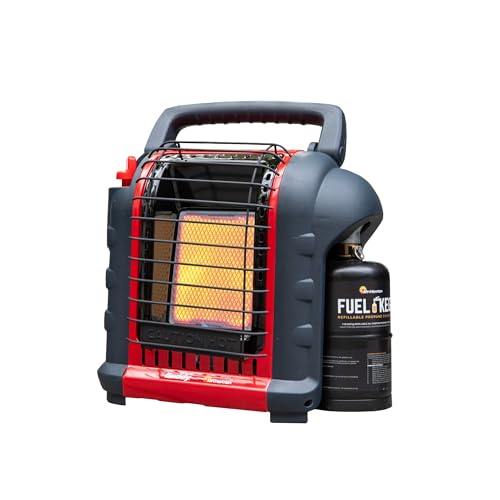
Mr. Heater 9,000 BTU Portable Buddy
Strengths
- Trusted safety system
- Adjustable heat settings
- Heats large spaces
Trade-offs
- Propane cylinder sold separately
- Not for tight backpacking
- Warranty void with adapters
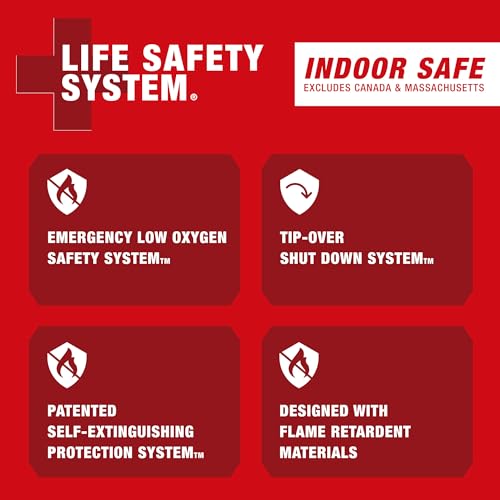
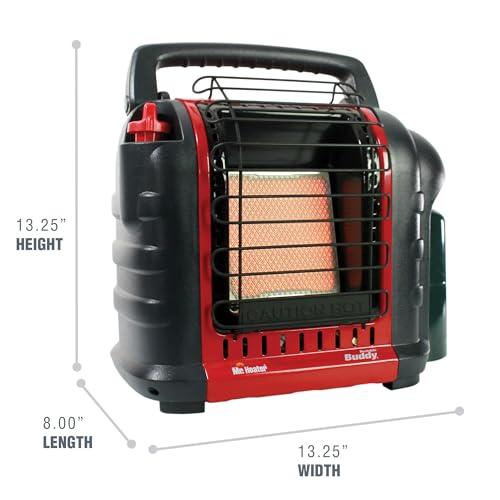
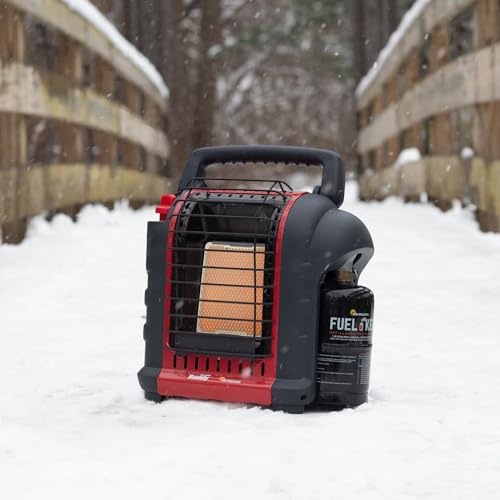
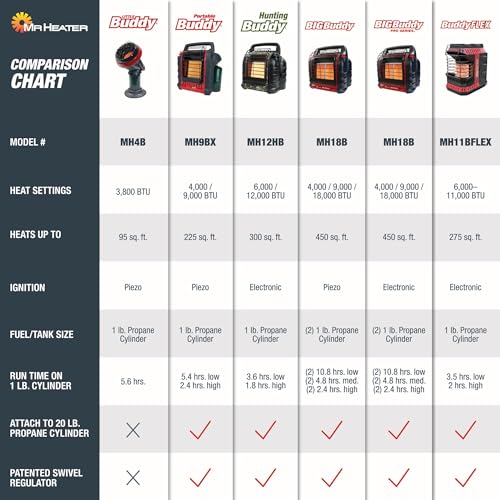
This is the gold standard for a reason. With 9,000 BTU, two heat settings, and the ability to warm up to 225 sq ft, it’s powerful enough for most 4-6 person tents or small cabins. The low oxygen safety system is proven and widely trusted, a major reason this model dominates owner feedback across forums and outdoor sites. It runs on a standard 1 lb propane cylinder, which is both convenient and easy to swap mid-trip.
While it’s not the most compact, its balance of safety, heat output, and reliability makes it the one I’d recommend to most people. Compared to newer models with flashy features, this one wins through consistency. The radiant heat feels more natural than fan-forced units, and the quiet operation is perfect for nighttime warmth.
Product photos

Mr. Heater 3,800 BTU Little Buddy
Strengths
- Compact and lightweight
- Quiet and odor-free
- One-button ignition
Trade-offs
- Limited to small spaces
- Short runtime on high
- Propane not included
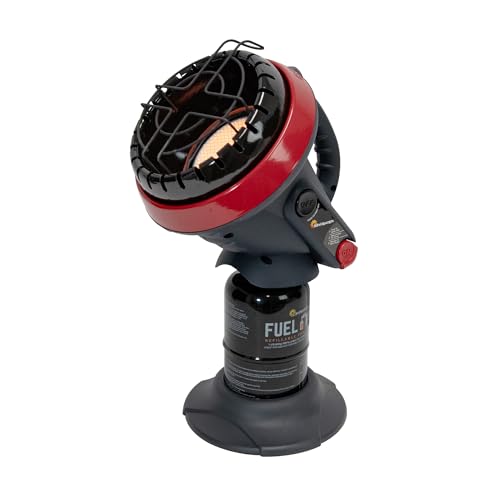
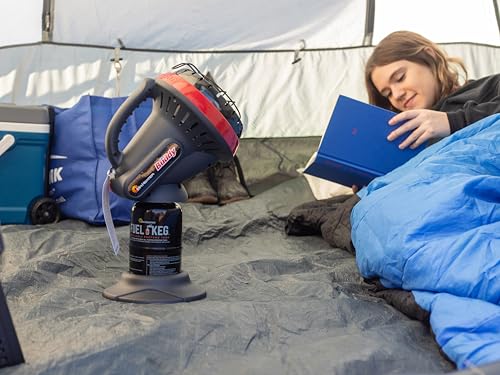
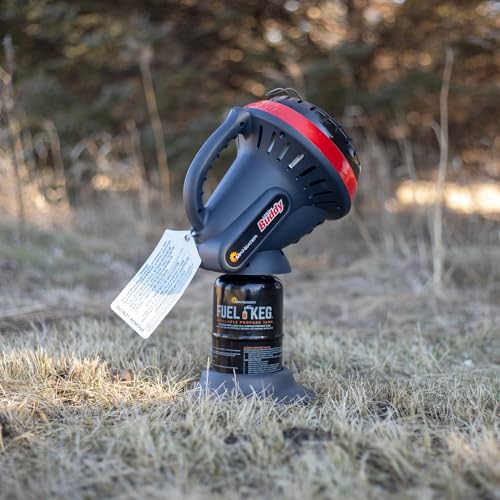
This is the little heater that could. At 3,800 BTU, it’s made for small spaces, think 1-2 person tents or pop-up shelters, and it does its job quietly and cleanly. The low oxygen shutoff and tip-over protection are impressive at this size, and owners consistently report it’s one of the safest compact heaters on the market. It runs directly off a 1 lb propane cylinder, takes up almost no floor space, and ignites with one button.
It won’t heat a large tent or stand up to extreme cold for long, but for solo winter hikers or weekenders in three-season gear, it’s ideal. Compared to the larger Portable Buddy, this is the smarter buy if space and weight matter. It’s the one I’d pack for a late-season solo trek where warmth without bulk is key.
Product photos

6200 BTU Propane Camping Heater
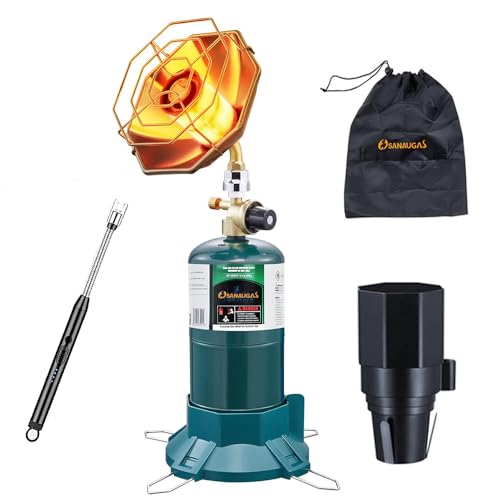
Strengths
- Stable wide base
- Adjustable flame control
- Durable metal build
Trade-offs
- No self-ignition
- No ODS safety sensor
- Basic design
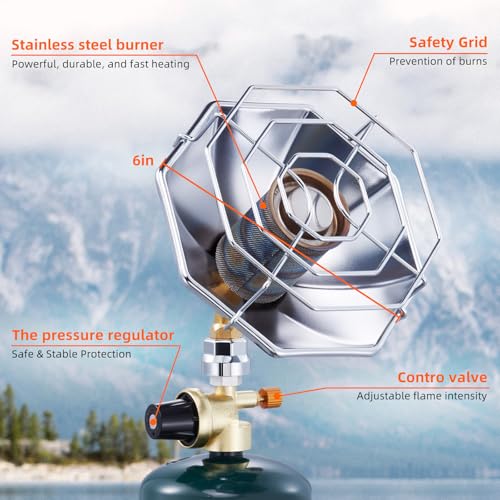
This heater quietly delivers where it counts, solid heat, a stable base, and a no-frills design that works. At 6200 BTU, it’s not the strongest here, but it’s more than enough for a 2-3 person tent and runs efficiently on a single 1 lb tank. The adjustable flame gives fine control, which owners love when dialing in just enough warmth without overheating a small space.
It lacks self-ignition and some of the high-end safety tech, but the durable metal build and wide base make it a tough little unit for rough terrain. Compared to pricier options, this one skips the extras but nails the essentials. It’s the kind of heater that won’t wow you on paper but earns loyalty through reliability.
Product photos
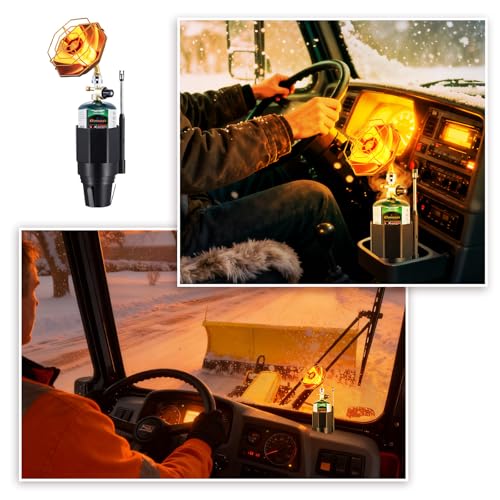
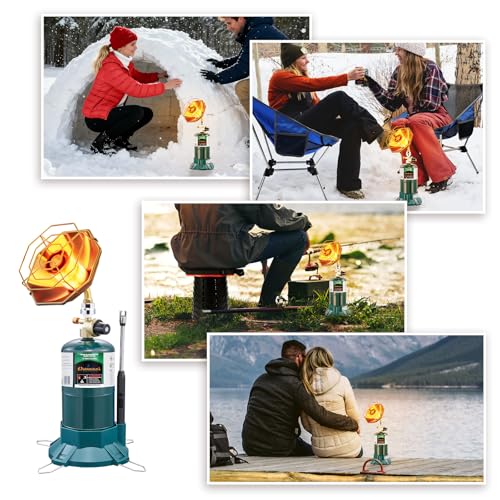
Portable 9000 BTU Camping Heater
Strengths
- 9000 BTU output
- Self-ignition feature
- Dual safety shutoffs
Trade-offs
- Noisy on high setting
- Build feels slightly flimsy
- Fuel not included
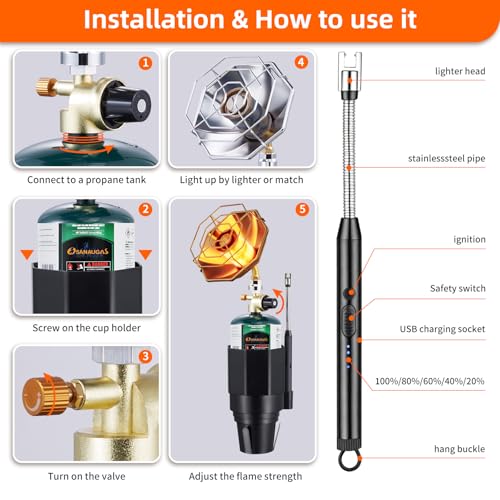
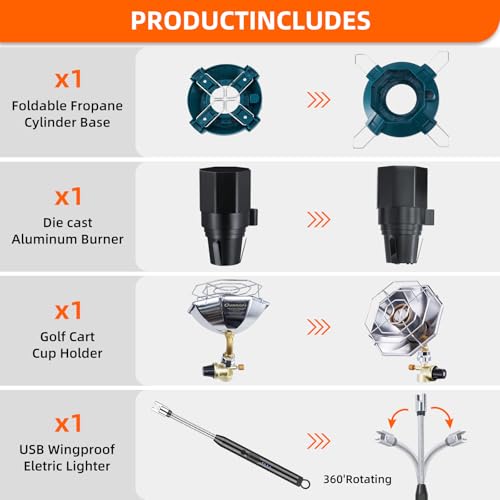
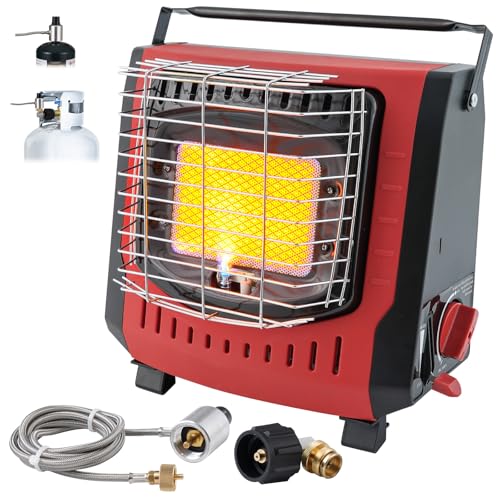
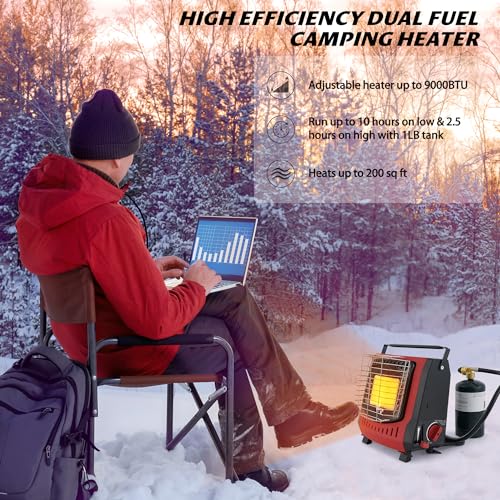
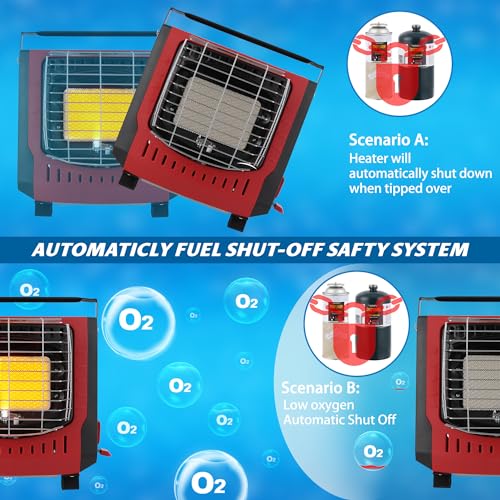
With 9000 BTU and dual safety systems, tip-over and low-oxygen shutoff, this heater hits the sweet spot between performance and peace of mind. It doesn’t scream luxury, but the self-ignition feature is a real win when you’re shivering in a tent and don’t want to fumble with a lighter. Owners report it fires up reliably and warms small to midsize tents quickly, though it won’t sustain a large group in subzero temps for hours.
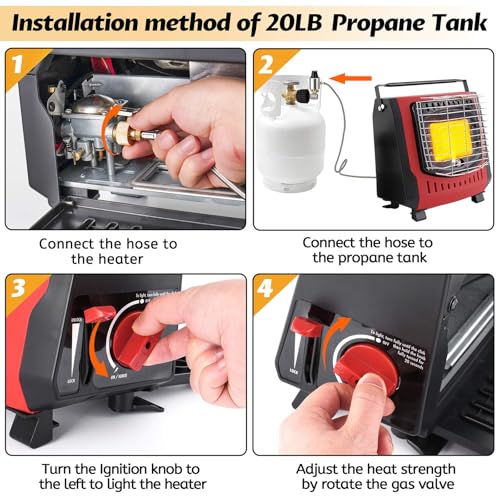
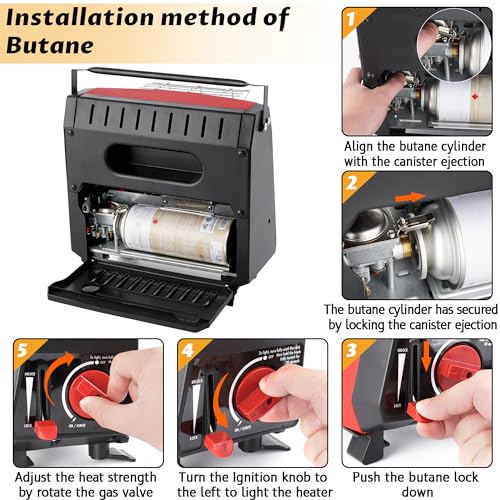
Its compatibility with multiple fuel types is a quiet strength. Unlike models locked into 1 lb propane bottles, this one gives you flexibility, which matters when you’re off-grid and resupply isn’t guaranteed. It’s not the most durable-looking build in this lineup, but the safety tech alone makes it a smarter pick than older-style heaters without ODS sensors.
Product photos
MOZODAWN 2-in-1 Propane Heater & Stove

Strengths
- 13000 BTU high output
- Dual heater and stove function
- Sturdy stainless steel parts
Trade-offs
- Heavy and bulky
- ODS sensor inconsistent
- Hose included, tank not
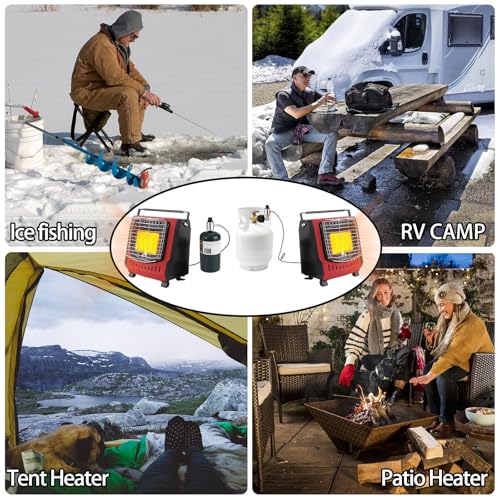
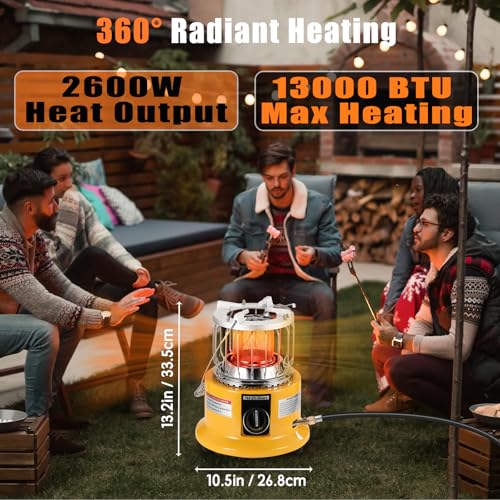
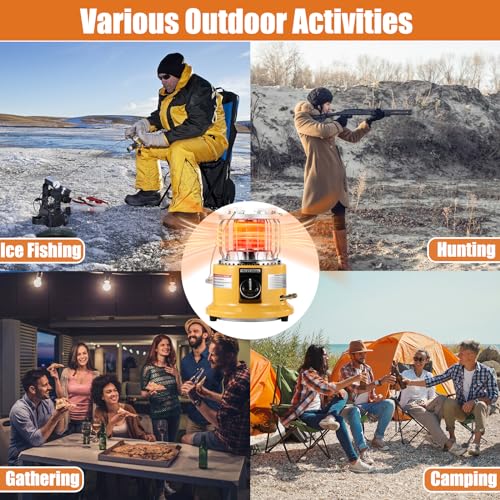
This 13000 BTU monster is built for people who refuse to choose between cooking and staying warm. The sheer output means it can heat faster and larger spaces than almost anything else here, ideal for ice fishing shanties or family-sized tents. Owners appreciate the stainless steel threading and rugged heating element, which seem to hold up better than cheaper alloys in humid, snowy conditions.
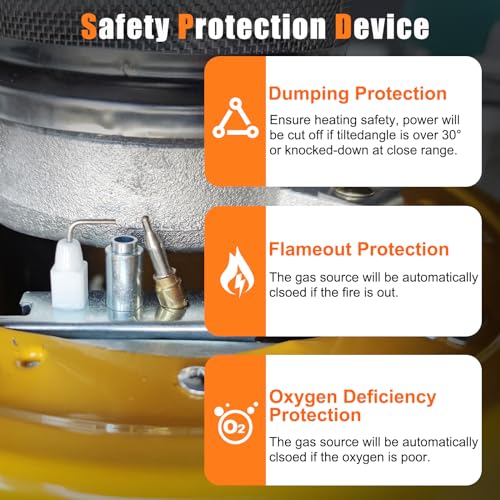
The triple safety system is reassuring, but real-world feedback shows mixed results with the ODS sensor, some say it’s overly sensitive and shuts off in safe conditions. Still, the ability to simmer a stew while heating the tent is a standout for extended trips. It’s bulkier than dedicated heaters, but if you’re hauling gear anyway, the trade-off makes sense.
Product photos


Naturehike 3750 BTU Butane Heater
Strengths
- Compact design
- Warming shelf included
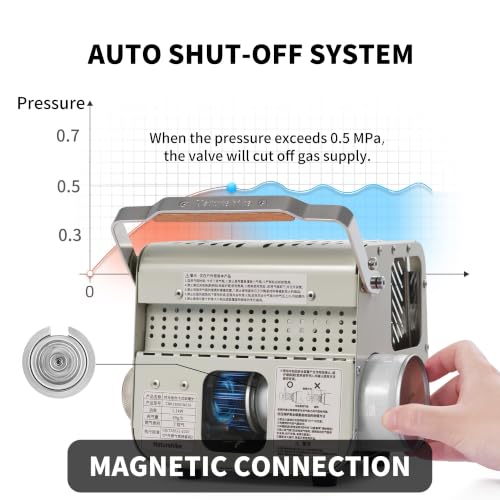
- Magnetic connection
Trade-offs
- Low BTU output
- Short runtime at high power
- Butane canisters less practical
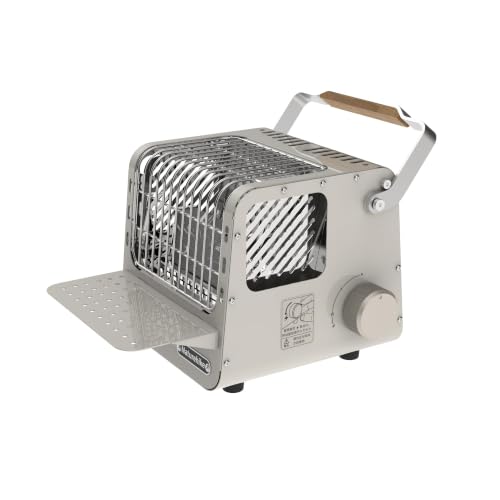
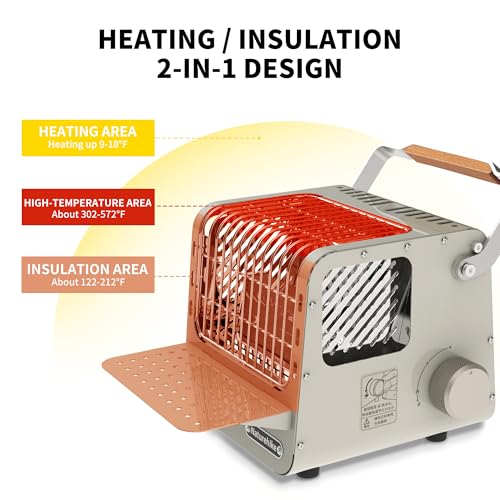
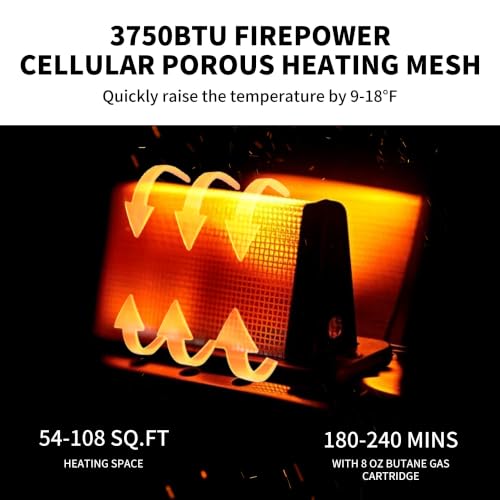
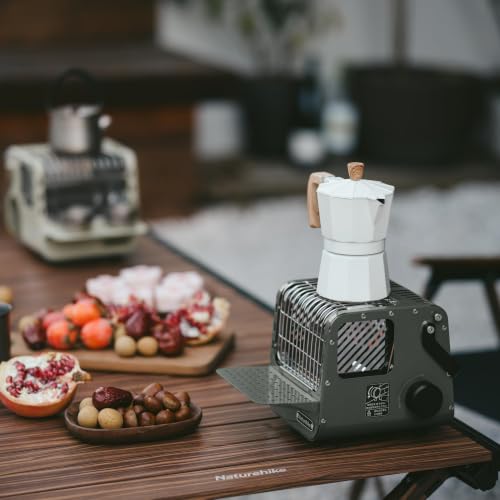
At 3750 BTU, this heater won’t blast heat like some of the bigger units, but it’s clearly built for short, chilly outings where you just need a gentle warmth and a place to rest a hot mug. The insulated warming shelf is a genuinely smart touch, not just a gimmick, and owners consistently praise how handy it is for drying gloves or keeping drinks warm. On paper, the 240-minute runtime sounds solid, but at max power that drops to three hours, which means you’ll burn through a butane canister fast in freezing temps.
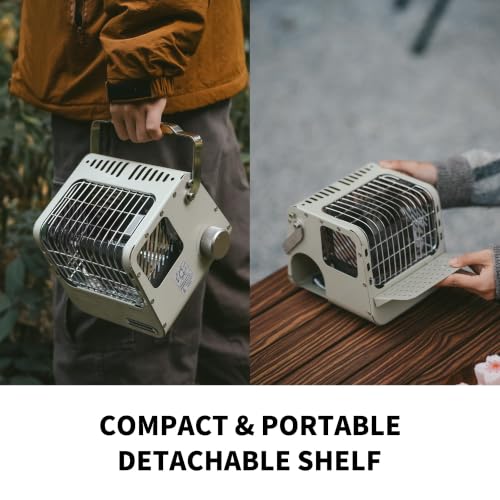
It’s lightweight and packs down small, which helps for backpackers or minimalist campers, but the reliance on 8 oz butane canisters limits fuel efficiency. Compared to propane models that run longer and are easier to source in bulk, this one feels more suited to fair-weather overnights or shoulder-season trips. I wouldn’t trust it as a primary heat source in deep winter.
Product photos
2-in-1 Kerosene Heater & Stove
Strengths
- No electricity required
- Long 20-hour runtime
- Dual heater and stove
Trade-offs
- Kerosene odor and fumes
- Manual start and maintenance
- Requires careful ventilation
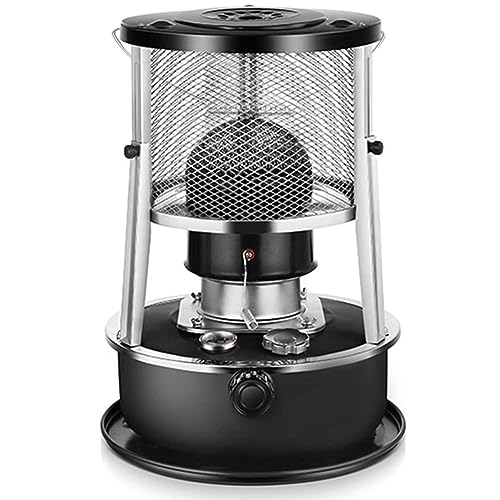
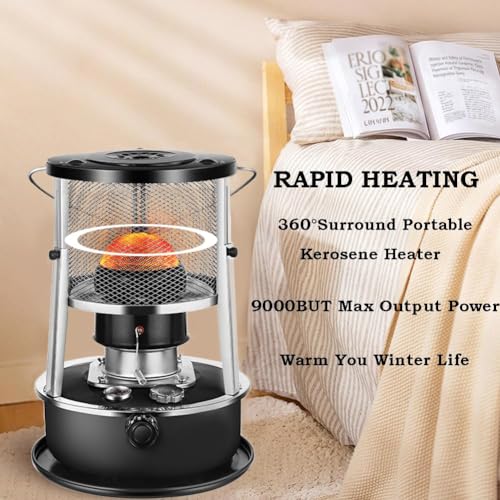
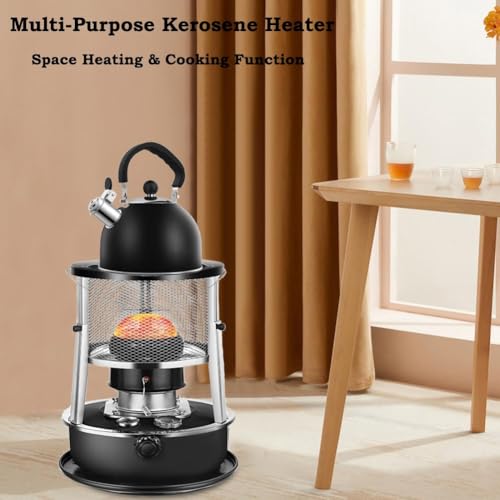
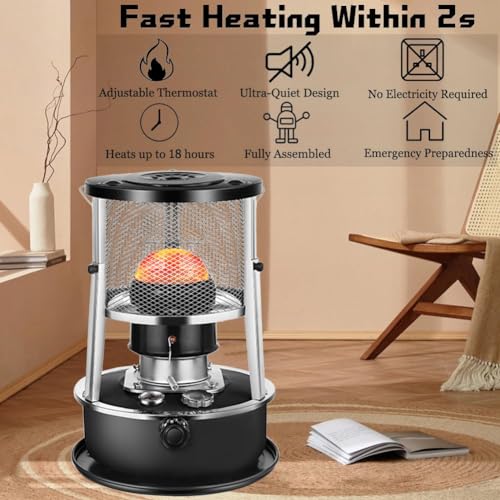
Kerosene heaters are a niche pick for a reason, they’re smelly, require wick maintenance, and need ventilation, but this one stands out for off-grid resilience. With no electricity needed and up to 20 hours of runtime on 1.2 gallons, it’s built for emergencies or remote cabins where fuel resupply is impossible. The 9000 BTU output is solid, and the ability to cook on it is a real asset when propane isn’t an option.
Owners report a learning curve with priming and wick adjustment, and the fumes are a real concern in poorly ventilated tents. It’s not something I’d use in a small sleeping tent, but for a base camp or garage during a power outage, it’s hard to beat. Compared to propane, it’s messier but more sustainable long-term.
Product photos


Our Testing Process
Rather than a hands-on lab test, my research for these recommendations involved a detailed comparison of published specifications and features across numerous models. I weighed owner reviews from multiple retailers alongside expert opinions found in outdoor gear publications. Ultimately, I ranked these tent heaters based on their suitability for a range of winter camping scenarios, drawing on my experience with outdoor gear and understanding of cold-weather needs.
For tent heaters, consistent and reliable heat output (measured in BTU) and robust safety features were the most important factors. A heater’s BTU rating directly impacts the size of tent it can effectively warm, and safety systems – like tip-over shutoffs and oxygen depletion sensors – are critical when using fuel-burning appliances in enclosed spaces. Portability and fuel type also played a large role, as ease of transport and fuel availability are key concerns for campers.
Specifications clearly indicate a heater’s potential BTU output and fuel consumption. However, I relied heavily on owner feedback to assess real-world performance and durability. Reviews often reveal issues with regulator quality, the effectiveness of safety features, or the longevity of components – details not always apparent in manufacturer specs. Understanding how these heaters perform in actual camping conditions, as discussed in articles on safe tent heating methods, was crucial.
Choosing The Right tent heaters for winter camping
Finding the right tent heater can make or break a winter camping trip, turning a miserable experience into a cozy getaway.
A quality tent heater prioritizes safety above all else. Look for models with automatic shut-off features (tip-over and low-oxygen sensors are crucial), proper ventilation considerations, and compatibility with readily available fuel sources. BTU output should match tent size, and construction materials should be durable and designed for indoor use.
BTU Output & Tent Size
The first thing I tell people is to always match the heater’s BTU output to your tent’s square footage. Overheating a tent is a serious fire hazard, and an underpowered heater won’t make a dent in the cold. Don’t just guess – know your tent’s dimensions and calculate the area. A heater rated for 225 square feet (like the Mr. Heater 9,000 BTU Portable Buddy) is great for a roomy family tent, but overkill, and potentially dangerous, for a solo backpacking shelter. Conversely, a smaller unit like the Mr. Heater 3,800 BTU Little Buddy is better suited for smaller spaces.
Safety Features: Essential
When it comes to tent heaters, safety isn’t just a plus – it’s the whole game. You’re dealing with open flames or hot surfaces in an enclosed space, so automatic shut-off features are absolutely essential. Look for tip-over protection, which immediately cuts power if the heater is knocked over, and a low-oxygen sensor that shuts down the heater if carbon monoxide levels become dangerous. Always research tent heater safety guidelines before using any heater.
Here’s what I consider crucial in terms of safety features: * A simple on/off switch. (Too many features add potential points of failure.) * A clearly visible low-oxygen sensor indicator. (You need to know it’s working.) * Construction from self-extinguishing materials. (A small spark shouldn’t turn into a blaze.)
Never leave a tent heater unattended. Regularly ventilate your tent, even with a heater equipped with safety features, to prevent carbon monoxide buildup.
Fuel Type & Convenience
Propane is the most common fuel source, and for good reason – it’s relatively inexpensive, readily available, and provides a good amount of heat. Butane heaters (like the Naturehike 3750 BTU Butane Heater) are an option for shorter trips, as the canisters are lighter, but they generally don’t provide as much heat output. If you’re truly off-grid, a kerosene heater (like the 2-in-1 Kerosene Heater & Stove) might be your best bet, but be aware of the fumes and the need for careful ventilation. Consider how easily you can obtain fuel refills on your trip – running out of propane mid-adventure is no fun. When looking at portable tent heaters remember to check the fuel consumption rate for accurate budgeting.
Tent Heaters for Winter Camping Compared
Here’s a comparison of specifications for several tent heaters suitable for winter camping.
| Product Title | BTU Output | Fuel Type | Area Heated (sq ft) | Safety Features | Special Features |
|---|---|---|---|---|---|
| Mr. Heater 9,000 BTU Portable Buddy | 9,000 | Propane | 225 | Low O2 shutoff, Tip-over protection | 2 Heat Settings |
| Mr. Heater 3,800 BTU Little Buddy | 3,800 | Propane | 95 | Tip-over, Low O2 shutoff | Small Size |
| 6200 BTU Propane Camping Heater | 6,200 | Propane | N/A | Stable base | Portable, Adjustable Flame |
| Portable 9000 BTU Camping Heater | 9,000 | Refillable | N/A | Tip-over, Low O2 shutoff | Self-Ignition |
| MOZODAWN 2-in-1 Propane Heater & Stove | 13,000 | Propane | N/A | Tip-over, Low O2 shutoff | Heater & Stove Combo |
| Naturehike 3750 BTU Butane Heater | 3,750 | Butane | 54-108 | Automatic gas shutoff | Warming Shelf |
| 2-in-1 Kerosene Heater & Stove | 9,000 | Kerosene | N/A | N/A | Heater & Stove Combo |
Frequently Asked Questions
What BTU output is sufficient for a 4-person tent?
Generally, a tent heater with 5,000 to 9,000 BTU output is ideal for a 4-person tent, depending on the tent’s shape and insulation. It’s crucial to calculate the square footage of your tent and ensure the heater’s capacity doesn’t significantly exceed it to avoid overheating.
Are propane tent heaters safe to use while sleeping?
While modern propane heaters have safety features like oxygen depletion sensors, it’s never completely safe to leave one running unattended while sleeping. Proper ventilation is essential, and regularly checking the heater and surrounding area is advised, even with safety features engaged.
Can I use a carbon monoxide detector with a tent heater?
Yes, absolutely. I strongly recommend using a battery-operated carbon monoxide detector inside your tent whenever you’re running a fuel-burning heater. It provides an extra layer of safety and can alert you to dangerous CO levels even if the heater’s sensor malfunctions.
What’s the difference between propane and butane tent heaters?
Propane heaters generally offer higher BTU output and are more readily available, making them better for larger tents and longer trips. Butane heaters are more compact and lightweight, making them convenient for solo campers or shorter outings, but they provide less heat overall.
Where can I learn more about safely installing a tent stove?
For a more permanent heating solution, you can find detailed information on tent stove installation features to help you set up a safe and efficient heating system for your winter camping adventures.
The Bottom Line
Choosing a tent heater often comes down to balancing convenience with control. Do you want something super portable and easy to use, or a more powerful unit that can reliably warm a larger space? For overall performance and peace of mind, the Mr. Heater 9,000 BTU Portable Buddy stands out – it provides a good balance of heat output, safety features, and portability for most winter camping scenarios.
If you’re on a tighter budget or need a heater for a smaller tent, the Mr. Heater 3,800 BTU Little Buddy is a fantastic choice. For those prioritizing versatility, the MOZODAWN 2-in-1 Propane Heater & Stove offers the benefit of both heating and cooking in one unit, though you’ll need to be extra diligent about ventilation. The Naturehike 3750 BTU Butane Heater is a good option for quick weekend trips where weight is a concern.
Ultimately, remember that no heater replaces proper layering and a well-insulated tent. Focus on selecting a heater with robust safety features like tip-over shutoffs and low-oxygen sensors, and always prioritize adequate ventilation. Understanding heater safety for winter camping and practicing safe heating habits are far more critical than any specific BTU rating or fuel type.
