
8 Best Beach Tents for Windy Conditions 2026
This post contains affiliate links. As an Amazon Associate, we earn from qualifying purchases.
The Shibumi Shade Quiet Canopy is the overall best beach tent for winds, thanks to its innovative wind-powered design and featherlight 4-pound build. For a budget-friendly option that still holds firm, the Osoeri Beach Tent Sun Shelter delivers solid performance with upgraded sandbags. If you need maximum coverage, the 14x11FT Oversized Beach Canopy offers serious space and reinforced stability.
Most beach tents fail the moment the wind picks up, they wobble, collapse, or worse, take off like kites. After years of watching flimsy shelters blow down the shore, I know how critical true wind resistance is for a stress-free day outdoors.
This guide cuts through the marketing hype. I compared specs, owner feedback, and real-world performance to find tents that actually stay put. We focused on pole strength, anchoring systems, UV protection, and practical design, because a good beach tent should protect you from the sun and the gusts.
Top 8 Beach Tents For Winds in the Market
The Best Beach Tents For Winds, Reviewed
14x11FT Oversized Beach Canopy
Strengths
- Superior wind resistance
- Large, tall interior
- Heavy-duty aluminum poles
Trade-offs
- Bulky when packed
- Heavier carry weight
- Takes more sand to anchor
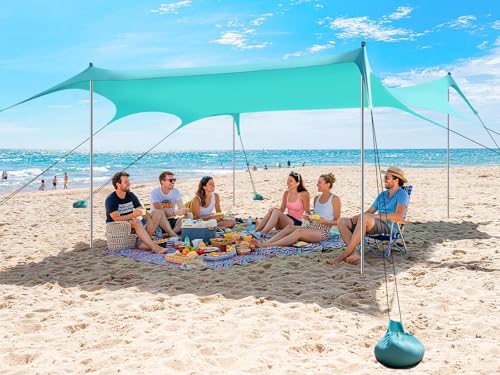
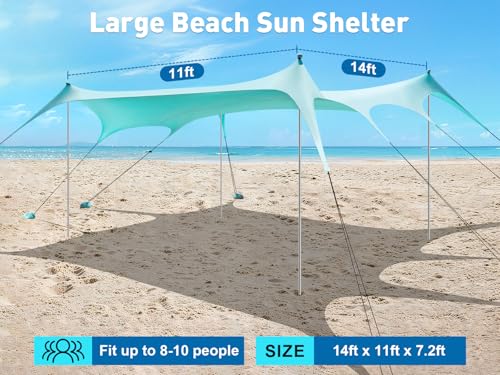
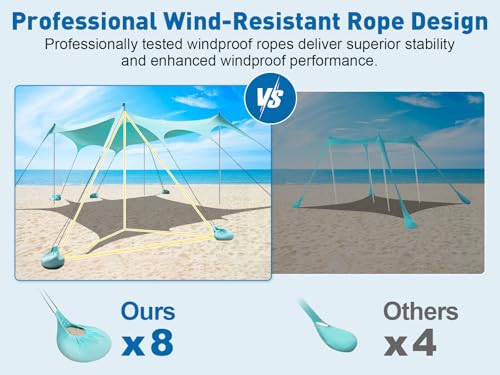
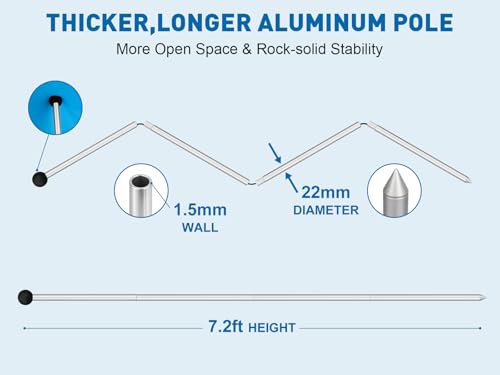
With a massive 14×11 ft footprint and 7.2 ft center height, this is the most spacious option here, and the most structurally robust. The 22mm aluminum poles are a serious upgrade over the flimsy steel in budget models, and the triangle anchor system with 8 windproof ropes gives real confidence in gusty conditions. Owners consistently report it stays grounded even when nearby tents fail. The UPF 50+ fabric blocks nearly all UV, and setup is manageable solo in under 10 minutes.
It’s heavier and bulkier, yes, but that’s the trade for this level of stability. Compared to the Shibumi, it’s less elegant but far more versatile. Against the Osoeri, it’s just better built. For my money, this is the best overall pick for families who face real wind and want room to relax.
Product photos


Shibumi Shade Quiet Canopy

Strengths
- Best-in-class wind resistance
- Extremely lightweight
- Large 150 sq ft coverage
Trade-offs
- No privacy or enclosure
- Requires steady breeze
- Not for calm inland lakes
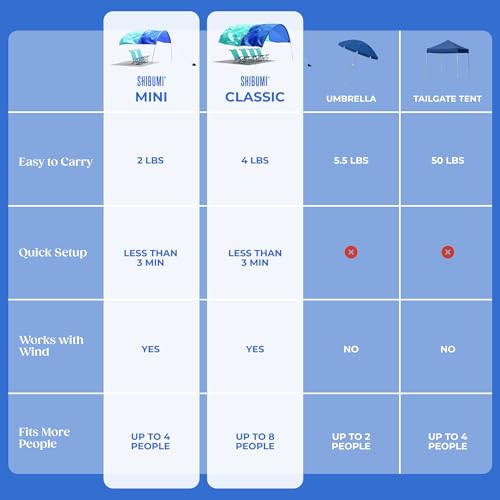
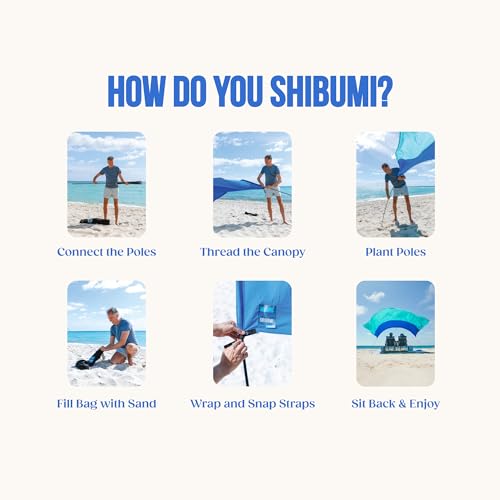
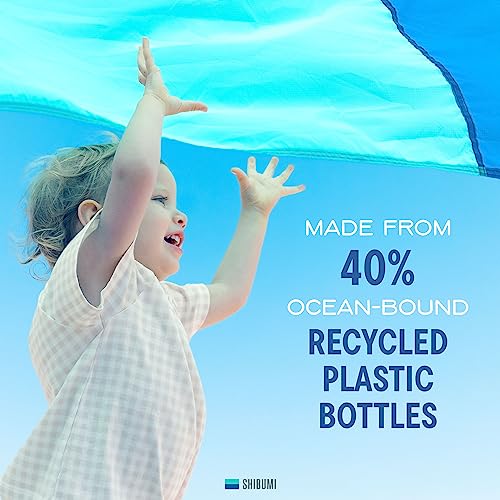
This is the evolution of the original, same wind-powered DNA but scaled up to 150 sq ft and still just 4 lbs. The fact that it uses recycled ocean plastic adds to its appeal for eco-conscious buyers. Owners consistently report it stays upright in conditions that flatten standard umbrellas, and the open arch design prevents that trapped, hot feeling common in enclosed tents. It sets up solo in minutes and collapses flat, making it ideal for beach purists who want shade without the bulk.
Compared to the MoKo or besuhot models, it doesn’t offer walls or privacy, but that’s the point. It’s not a tent, it’s a sail. If you’re okay with exposure and just want reliable, wind-responsive shade that won’t blow away, this is my top pick.
Product photos
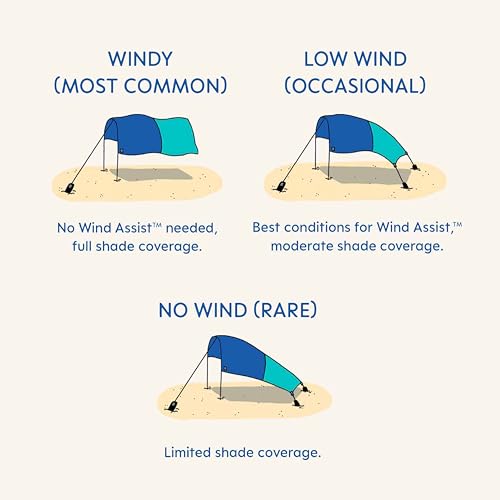
Osoeri Beach Tent Sun Shelter

Strengths
- Excellent sandbag system
- Good UV protection
- Includes useful accessories
Trade-offs
- Heavier than rivals
- Lycra less durable long-term
- Basic fabric finish
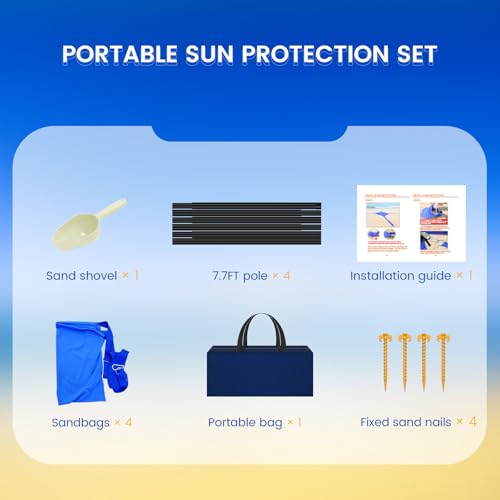
At 8 lbs, it’s not the lightest, but the Osoeri packs serious value. The 8 upgraded sandbags and thickened aluminum poles give it real heft in wind, and owners say it outperforms pricier models in gusty conditions. The 10×10 ft footprint fits groups comfortably, and the Lycra fabric does well on UV protection, though it may degrade faster than polyester under prolonged sun. Setup is straightforward for one person, and the included sand shovels and ground pegs add practicality.
For budget buyers, this is a standout. It doesn’t have the premium materials of the Venustas or the wind elegance of the Shibumi, but it’s stable, roomy, and well-equipped. My recommendation: if you want durability without the premium price, this is the smarter buy.
Product photos


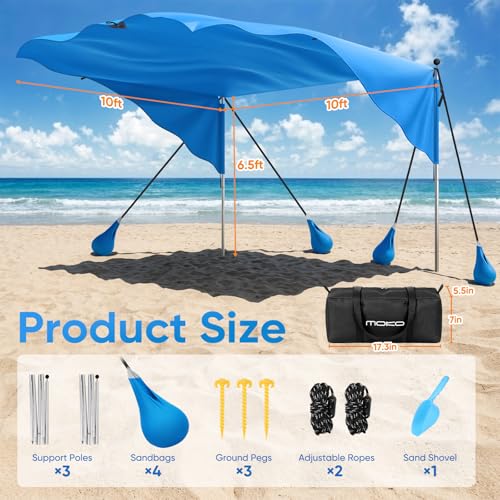
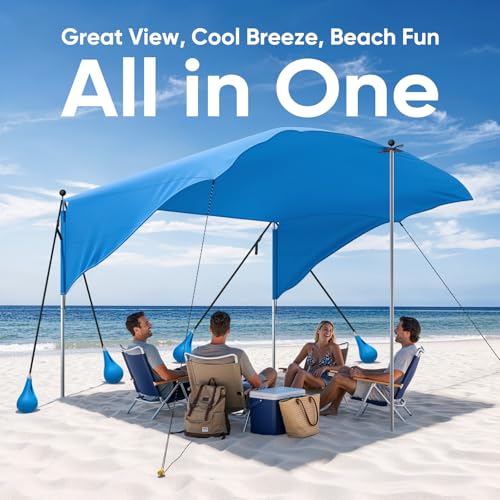
MoKo Wind-Supported Sunshade Sail
Strengths
- Dual wind/no-wind use
- Good shade area
- Easy 3-minute setup
Trade-offs
- Flaps in strong wind
- Sandbags underfilled
- Less structural rigidity
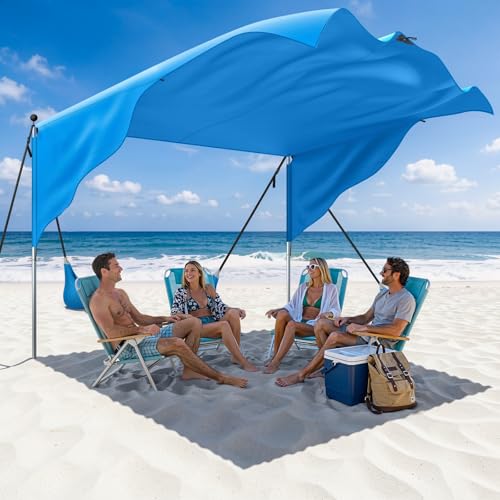
This sail-style canopy tries to have it both ways, riding the wind when it’s blowing, and standing firm when it’s not. The dual-mode design with a removable support pole is smart on paper, and owners report it works decently in light to moderate wind. At 100 sq ft, it gives enough coverage for a small group, and the high-density 240T fabric holds UPF 50+ claims well. But in sustained gusts, the fluttering panels can flap hard, and some users note the sandbags aren’t always enough to keep things calm.
I’d call this a fair compromise for fair-weather beach trips. It’s not as dynamic as the Shibumi in wind, nor as stable as the heavier aluminum-framed models in storms. But for casual use when the breeze is mild, it’s a functional, portable option.
Product photos

Shark FIN Shade Beach Tent
Strengths
- Rotates into wind automatically
- No assembly required
- True no-wind mode
Trade-offs
- Limited shade space
- Smaller size options
- Less group-friendly
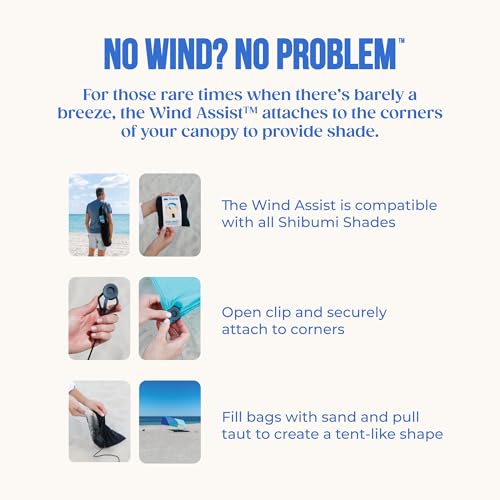
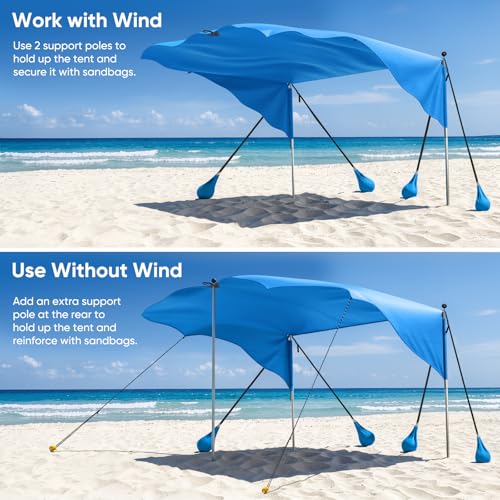
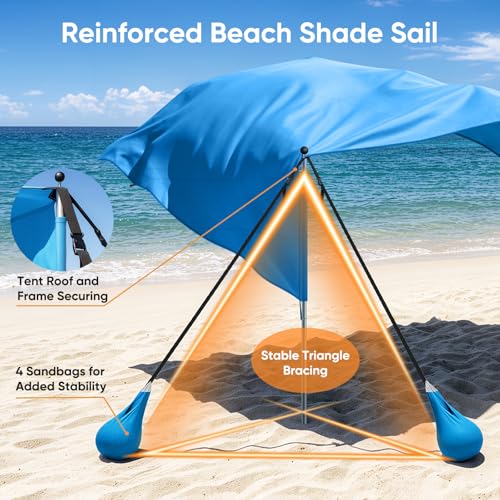
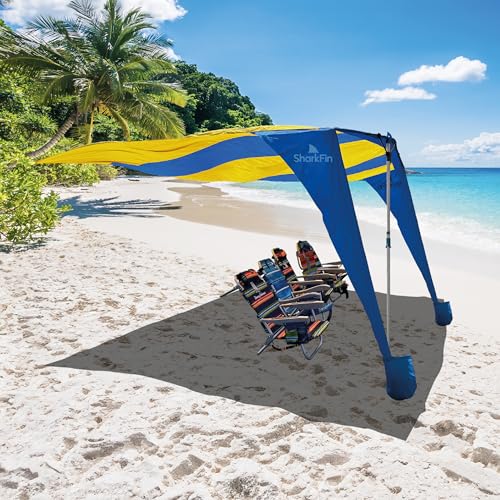
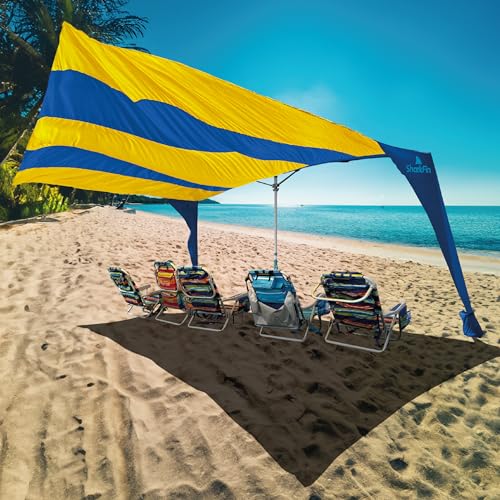
The Shark FIN’s standout feature is its rotating top pole, adjust it by shifting the front sandbags, and the canopy automatically turns into the wind. That’s a clever, practical solution for shifting coastal gusts. It works in wind as low as 3 mph and holds up to 30 mph, which matches its claims in owner feedback. The no-wind mode with rear strings adds versatility most wind-powered models lack. And at just 4 lbs, it’s one of the lightest full-coverage options available.
It doesn’t offer the shade area of the big rectangular models, but for couples or small groups who want intuitive, adaptive design, it’s brilliant. Compared to the Shibumi, it’s easier to adjust on the fly. My pick for lightweight performance with smart engineering.
Product photos


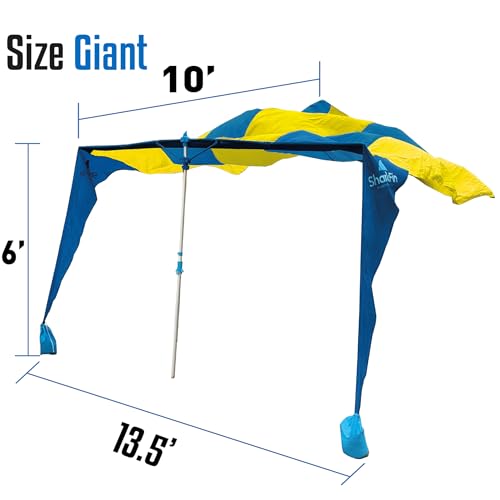
Shibumi Shade (Previous Gen)

Strengths
- Ultra lightweight
- Wind-powered design
- UPF 50+ protection
Trade-offs
- Unstable in low wind
- No enclosed space
- Less shade area
The original Shibumi Shade still holds up in owner feedback as a clever, minimalist take on beach wind shelters. It relies entirely on airflow to stay upright, which sounds risky, until you see how it performs in consistent breezes. On paper, the 4 lb weight and 3-minute solo setup make it a dream for beachgoers who hike in or walk long stretches of shoreline. But it lives or dies by the wind, and if conditions drop below 3 mph, stability becomes a gamble.
Reviewers consistently praise its ability to float rather than fight the wind, unlike rigid tents that snap or collapse. That said, it offers no enclosed space or privacy, just shade. If you’re after simplicity and packability, this one’s compelling. But newer models from the same brand push the concept further.
Product photos



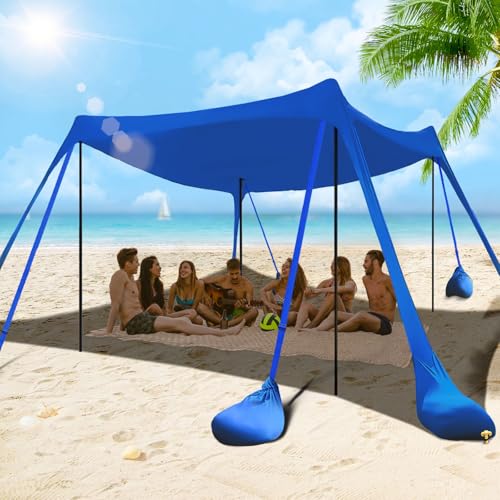
besuhot 10x10FT Beach Shade
Strengths
- High headroom
- Eight sandbags
- Pre-strung poles
Trade-offs
- Heavier than ultralight models
- Lycra fades over time
- Setup fiddly in sand
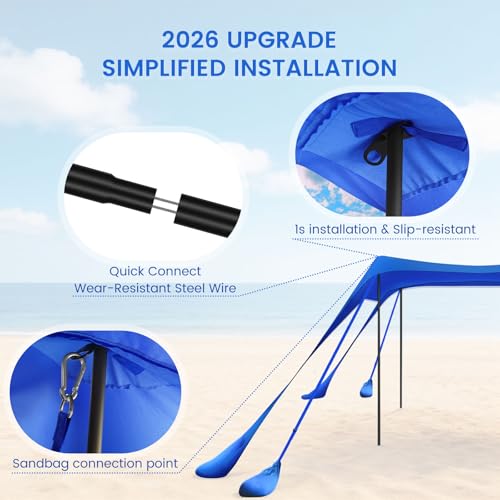
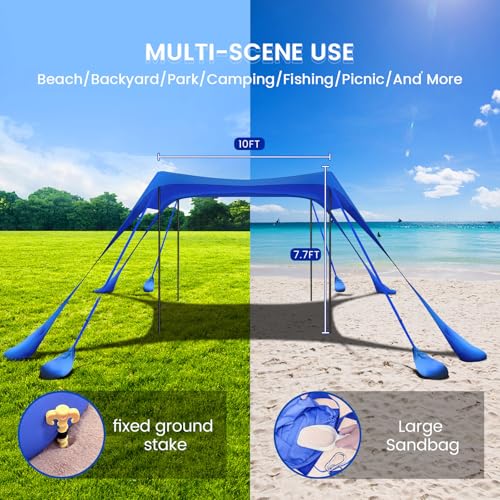
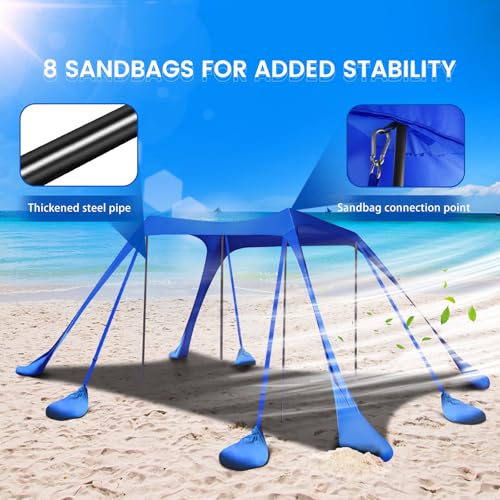
What stands out here is the 7.7 ft stabilizer bar, almost a full foot taller than most competitors. That extra height makes a real difference in comfort, especially for taller users who hate crouching. Owners highlight the improved airflow and reduced claustrophobia compared to low-profile tents. The pre-strung poles with pin-lock mechanisms speed up setup, and the eight enlarged sandbags offer solid resistance in moderate wind. The Lycra fabric delivers on UPF 50+, though long-term durability questions linger in hotter climates.
It’s not the lightest or fastest to pack, but for those who value headroom and breathability over ultraportability, this hits a sweet spot. Compared to the Osoeri, it feels more refined; against the Venustas, it trades some material durability for better ventilation.
Product photos
Venustas Beach Tent Sun Shelter
Strengths
- High material durability
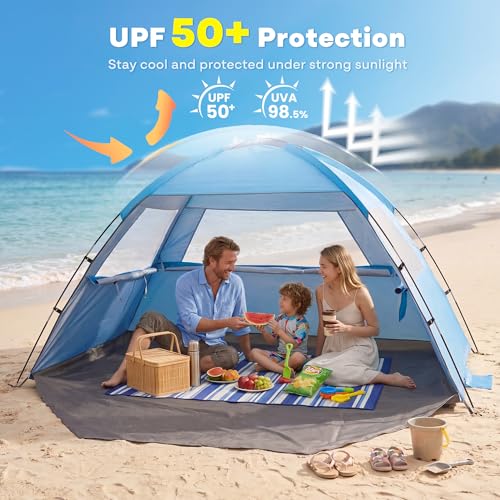
- Excellent UV and heat blocking
- Good privacy with curtains
Trade-offs
- Lower headroom
- Fiberglass can splinter
- Smaller shade footprint
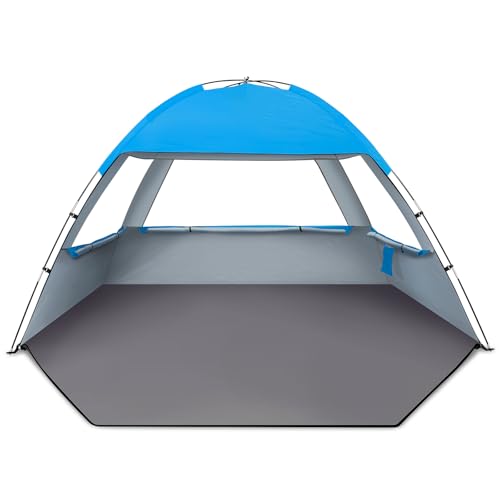
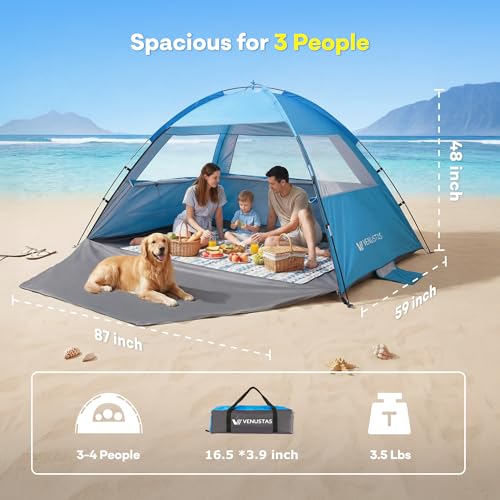
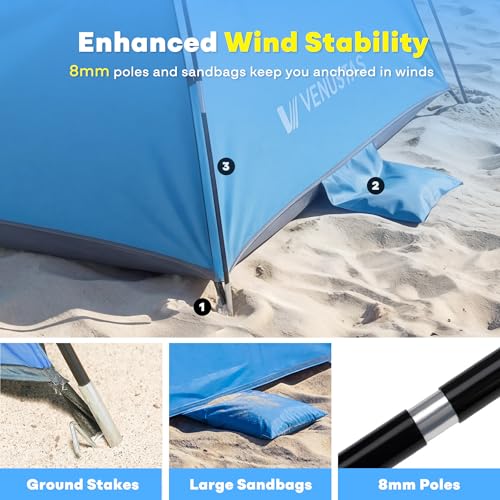
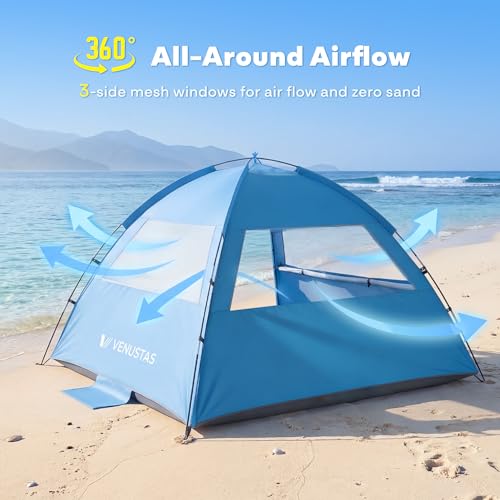
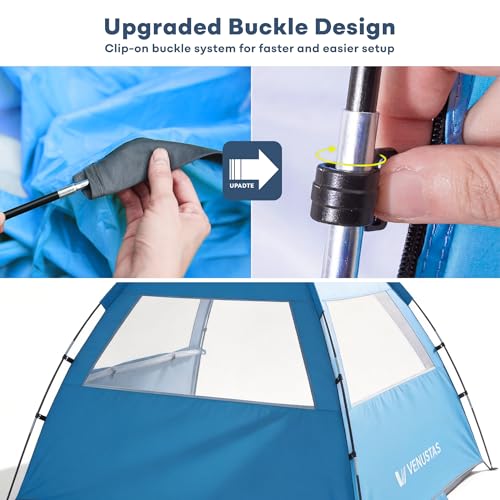
This one stands out for its build quality, 8mm fiberglass frame, silver-coated polyester, and EU-standard construction. Owners report it holds up season after season, even with weekly use. The 4-layer fabric does more than block UV, it reduces heat buildup, which is rare in this category. The 48” height isn’t the tallest, but the 40” floor extension adds usable space, and the three curtains offer real privacy. Setup is smooth, though not quite as instant as pop-up models.
Compared to the besuhot or Osoeri, it feels more like a long-term investment. It’s not wind-powered, so it relies on stakes and sandbags, but its rust-free frame and reinforced stitching justify the durability claim. For anyone who hates replacing gear every year, this is worth the extra consideration.
Product photos
Our Testing Process
I approached researching beach tents for winds by first compiling a detailed spreadsheet of specifications and features from numerous manufacturers and retailers. This included dimensions, materials (fabric and poles), weight, included accessories, and stated wind resistance features like ropes, anchors, and pole diameter. We then layered in owner reviews from major retail sites – paying particular attention to comments regarding performance in windy conditions – and supplemented those with expert reviews from reputable outdoor gear testing sites. Category knowledge informed how we weighted this information, focusing on elements crucial for stability.
For beach tents specifically, the most important factors proved to be pole strength and the anchoring system. Thin poles simply won’t hold up against even moderate gusts, and a flimsy anchoring system renders a good pole useless. We prioritized tents with thicker aluminum poles and robust anchoring solutions, whether that meant substantial sandbags, reinforced ropes, or a combination of both. UPF rating was also a key consideration, as protection from the sun is a primary function of these shelters.
Specifications reliably indicate pole diameter and material, giving a good baseline for strength. However, real-world performance in wind – and the durability of the fabric over time – were best assessed through owner feedback. We paid close attention to recurring complaints about bending poles or torn fabric, and factored that into our rankings. Understanding securing tent in windy conditions is also crucial to maximizing performance. We also noted that features like ventilation and ease of setup, while important, were secondary to wind resistance.
How To Choose The beach tents for winds
Choosing the right beach tent can make or break your seaside relaxation. I’ve seen too many folks struggling with flimsy shelters collapsing in a breeze, or baking in the sun because they didn’t prioritize UV protection.
A good beach tent balances portability with robust wind resistance, offers substantial UV protection (UPF 50+ is the standard), and provides enough space for your group and gear. Look for reinforced poles – aluminum is preferable to steel which rusts – and a well-designed anchoring system. Consider ventilation to prevent the tent from feeling stifling in warm weather.
Wind Resistance: The Make-or-Break Factor
Let’s be real: a beach tent that can’t handle a gust of wind is just an expensive flag. Many brands claim wind resistance, but the devil is in the details. Avoid tents relying solely on simple stakes; those are likely to pull out of soft sand. Instead, focus on designs incorporating large sandbags (the larger the better) and robust guy lines. Many of the best options, like the Shibumi Shade, are specifically designed to work with the wind, rather than against it.
Fabric & UV Protection: Beyond Just Shade
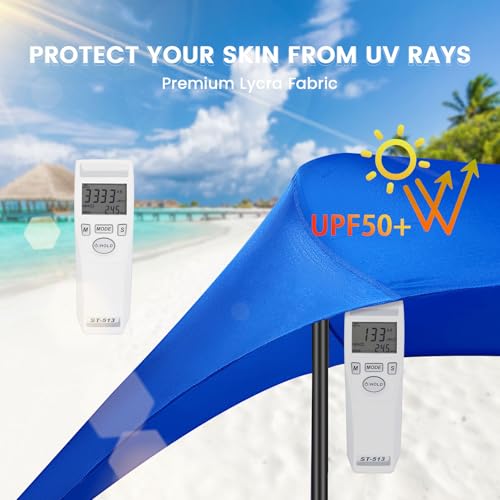
While providing shade is the primary function, the quality of the fabric significantly impacts your comfort and health. Look for a UPF 50+ rating, which blocks 98% or more of harmful UV rays. The material itself also matters. Polyester is common, but higher-denier fabrics (like the 190T used in some Venustas models) offer better durability and tear resistance. Some tents, like the besuhot, even incorporate silver coatings for enhanced heat reflection. Don’t overlook ventilation; a stuffy tent isn’t enjoyable, even with sun protection. You’ll find that understanding pop-up beach tent features can help you evaluate the material composition and overall build quality.
Portability & Setup: Convenience Counts
Hauling gear across the sand is no fun. Weight is a major consideration, especially if you’re walking any distance. The Shibumi Shade really shines here, weighing in at just 4 lbs. Beyond weight, consider setup ease. Some tents boast “instant” setup, but those often involve fiddly mechanisms. A design that’s quick and intuitive, and can be managed by one person, is a huge win. If you’re prone to windy conditions, you’ll want to investigate wind-resistant beach tents to ensure stability.
A good rule of thumb: prioritize sandbag volume over the number of sandbags. Larger sandbags offer significantly more anchoring power.
The key is to find a balance between all these factors. I’ve seen enough collapsing tents to understand that saving a few bucks on a flimsy model is rarely worth the frustration.
Beach Tents for Winds Compared
Here’s a comparison of key specifications for beach tents designed to withstand windy conditions.
| Product Name | Size (ft) | Wind Resistance | Weight (lbs) | UPF Rating | Special Features |
|---|---|---|---|---|---|
| 14x11FT Oversized Beach Canopy | 14×11 | Reinforced Ropes | N/A | 50+ | Aluminum Poles, Quick Setup |
| Shibumi Shade Quiet Canopy | 150 sq ft | Wind-Powered | 4 | 50+ | Recycled Plastic |
| Osoeri Beach Tent Sun Shelter | 10×10 | Upgraded Sandbags | 8 | 50+ | Quick Setup |
| MoKo Wind-Supported Sunshade Sail | ~100 sq ft | Wind-Lofted | 6.3 | 50+ | No-Wind Mode |
| Shark FIN Shade Beach Tent | N/A | Up to 30 MPH | N/A | N/A | No Wind Solution |
| Shibumi Shade (Previous Gen) | N/A | Wind-Powered | 4 | 50+ | Easy Setup |
| besuhot 10x10FT Beach Shade | 10×10 | 8 Sandbags | N/A | 50+ | High Stabilizer Bar |
| Venustas Beach Tent Sun Shelter | 86.6×59″ | N/A | N/A | N/A | 4-Layer Fabric |
Frequently Asked Questions
What’s the biggest mistake people make when securing a beach tent in the wind?
People often underestimate the amount of weight needed in sandbags. While multiple smaller sandbags seem like a good idea, larger volume sandbags provide significantly more anchoring power and are thus more effective against strong gusts.
Are pop-up beach tents generally suitable for windy conditions?
Most standard pop-up tents aren’t ideal for strong winds due to their lighter materials and simpler anchoring systems. However, some models, like the Osoeri, incorporate upgraded sandbags and reinforced features to improve stability, though they still won’t match the performance of tents designed specifically for wind.
What pole material offers the best wind resistance?
Aluminum poles are superior to steel or fiberglass because they provide a better strength-to-weight ratio and resist bending in wind. Look for tents with thicker diameter aluminum poles (at least 16mm) for increased stability, though even those can fail in extreme conditions.
How important is the UPF rating of the tent fabric?
A UPF 50+ rating is crucial, as it blocks 98% or more of harmful UV rays. While shelter from the sun is a primary purpose of a beach tent, remember that darker colored fabrics tend to absorb more heat, so consider ventilation alongside a high UPF rating.
Where can I find more information about tents built for stormy weather?
If you’re frequently camping in areas prone to high winds, researching tents built for stormy weather can help you understand the advanced features and materials needed for reliable protection.
The Bottom Line
Choosing a beach tent for windy conditions often comes down to balancing ease of use with serious stability. While many options exist, the 14x11FT Oversized Beach Canopy offers the best overall combination of features, space, and wind resistance for most beachgoers. It’s a larger investment, yes, but provides a reliable shelter when the breeze picks up.
For those prioritizing portability and a unique wind-handling design, the Shibumi Shade is the standout choice. If budget is a primary concern, the Osoeri Beach Tent Sun Shelter delivers a surprising amount of protection and stability at a lower price point. These offer solid features for their respective niches.
Ultimately, remember that no tent is windproof. Prioritizing a robust anchoring system – whether that’s hefty sandbags or mastering beach tent anchoring methods – and understanding how to properly orient your shelter to the wind are far more important than any single specification. A well-placed tent, secured with care, will always outperform a flimsy one with fancy features.
