
8 Best Beach Tents for 2026
This post contains affiliate links. As an Amazon Associate, we earn from qualifying purchases.
The Rhino Valley 10×10 Beach Tent is the best overall for its rugged build and serious wind resistance, while the Elegear CumbreX offers a lighter, more portable option without sacrificing protection. For budget-minded beachgoers, the NHOWIN 3-4 Person Tent delivers solid performance at a lower price.
Most beach tents fail in one of two ways, they either collapse in a gust or bake you in stagnant, hot air. I’ve seen too many people struggle with flimsy poles, poor ventilation, or shade that feels like an afterthought. After comparing the field and digging into owner feedback, I focused on what actually matters: real sun protection, stability in wind, and ease of use.
This guide cuts through the marketing and highlights beach tents that balance durability, space, and smart design, picked based on specs, consistent owner experiences, and the kind of details that make a real difference when you’re setting up on sand.
Top 8 Beach Tents in the Market
The Best Beach Tents, Reviewed
Elegear CumbreX Beach Tent

Strengths
- Award-winning canopy design
- 8.5mm fiberglass poles
- External snap-on setup
- UPF 50+ with cooling effect
- 360° ventilation and privacy floor
Trade-offs
- Higher price point
- Bulkier than basic pop-ups
- Canopy adds complexity
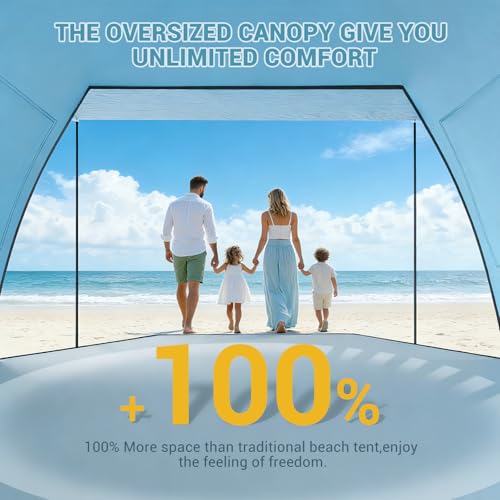
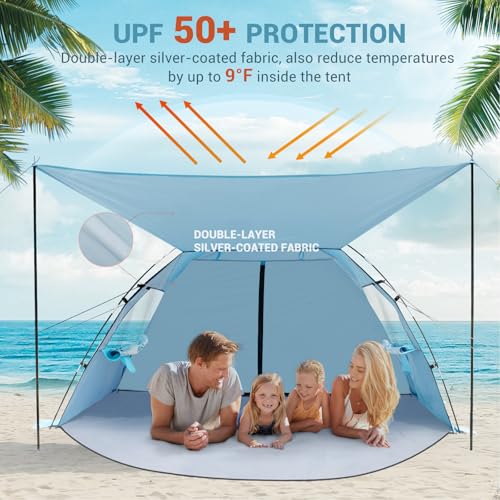
This is the tent I’d recommend to anyone who wants more space without doubling the hassle. The canopy design is brilliant – open it up and you nearly double the shaded area, which is perfect for group beach days. It’s no surprise it’s won design awards; the external snap-on system actually seems to cut setup time in half, and owners confirm it’s one of the few tents they can pitch solo in under three minutes.
The 8.5mm fiberglass poles are the thickest here, and paired with sandbags and extra stakes, they deliver real wind resistance. Reviewers note it stays put in moderate gusts where others fly. The double silver coating not only boosts UV protection but also cuts interior temps noticeably – a big win. And those interior pockets and hooks? Small luxuries, but they make the space feel more usable.
Product photos



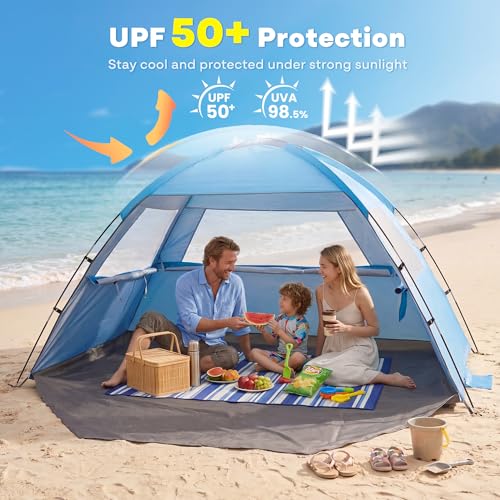
Venustas 3-8 Person Beach Tent
Strengths
- Great size-to-price ratio
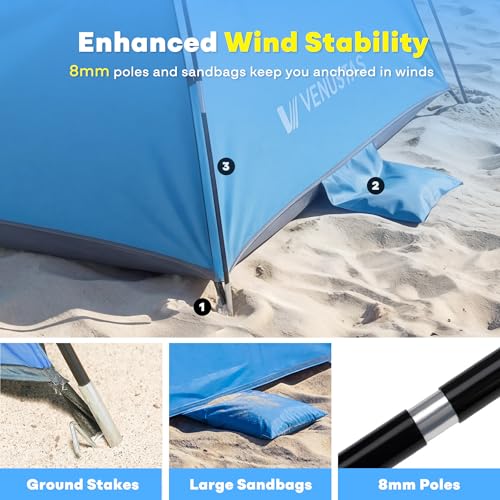
- 8mm fiberglass frame
- 4-layer UV protection
- Lightweight and portable
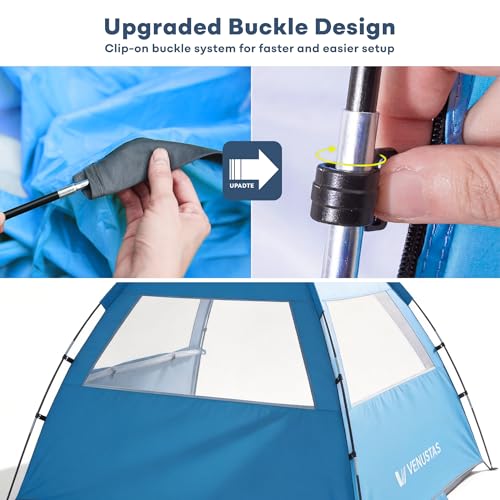
- EU/US patented design
Trade-offs
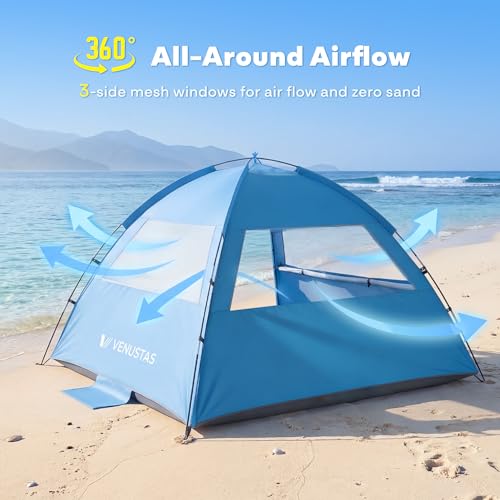
- Basic ventilation
- No canopy or extra shade
- Zippers feel a bit flimsy
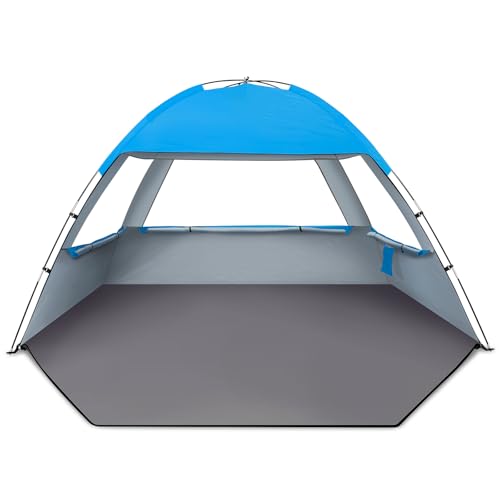
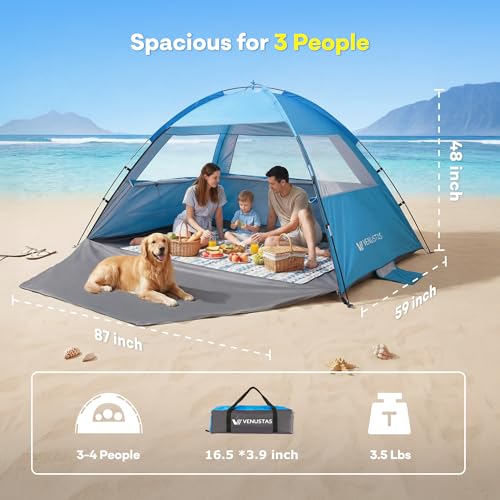
If you’re budget-conscious but don’t want to sacrifice size, this one punches above its weight. At 30% larger than most budget models, it gives real room for 3–4 people without the bulk. The 8mm frame matches pricier tents, and owners say it holds up well over multiple seasons – especially impressive given the price. The four-layer silver coating does its job, blocking UV and heat effectively, and the 40-inch floor extension is a nice touch for storing gear or keeping sand out.
It’s not flashy, but the ease of folding and compact carry bag make it a favorite for repeat beachgoers. The ventilation is adequate, though not class-leading – two mesh sides help, but it can feel stuffy in peak heat. Still, for the value, it’s hard to beat. I’d pick this over basic pop-ups any day if you want something sturdier and roomier without overspending.
Product photos
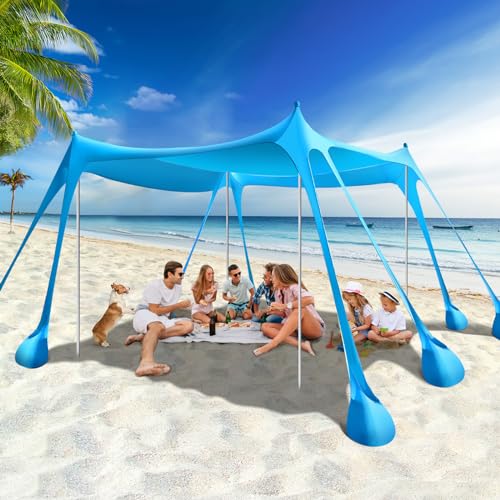
Rhino Valley 10×10 Beach Tent
Strengths
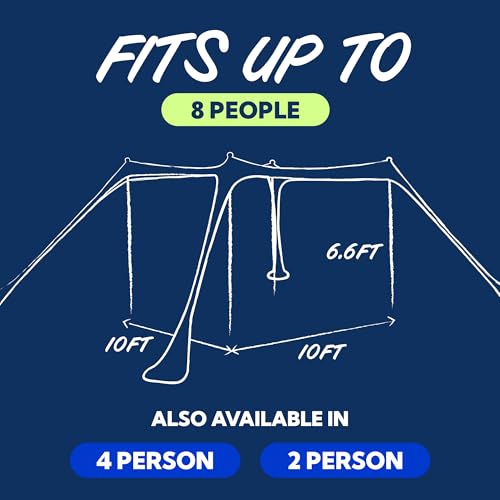
- Spacious 10×10 footprint
- Aluminum poles for rigidity
- 8 sandbags for stability
- Durable Lycra fabric
- Easy one-person setup
Trade-offs
- No mesh for airflow
- Heavy and bulky
- Lacks privacy features
When you need shade for six or eight people – plus chairs, coolers, and gear – this 10×10 model is built for the job. The aluminum poles are a standout; they don’t flex like fiberglass, and with 8 sandbags and 4 wind ropes, this thing digs in hard. Owners say it laughs off gusts that send other tents airborne. The Lycra fabric with triple stitching feels tough, and the vibrant color stands out on crowded beaches.
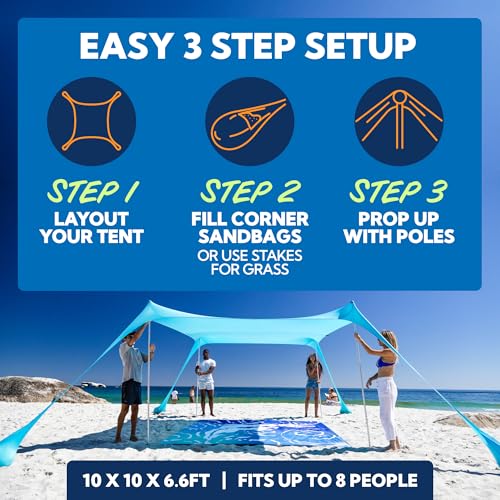
Setup is simple: unfurl, fill sandbags, add poles. The included shovel makes that easier. It’s not the lightest, but the trade-off is serious stability. Ventilation is open on all sides, which helps, but there’s no mesh – so it cools via airflow, not filtered breeze. For large groups, festivals, or all-day beach HQs, this is the shelter you build and stay in.
Product photos


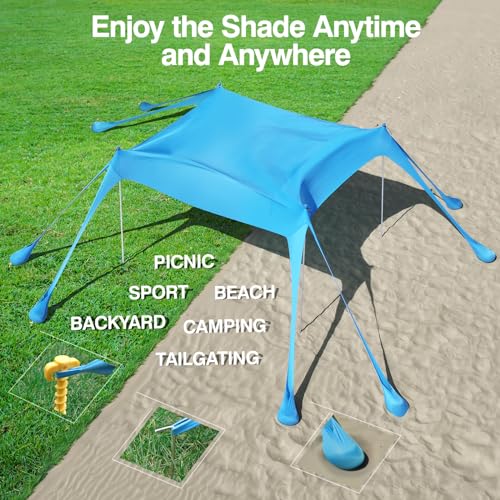
MoKo Adjustable Height Beach Cabana

Strengths
- Alloy steel poles
- Adjustable height up to 9 ft
- Triangular wind-resistant design
- Removable mesh side walls
- Sandbag-reinforced base
Trade-offs
- Higher price
- Slightly slower setup
- Fewer interior features
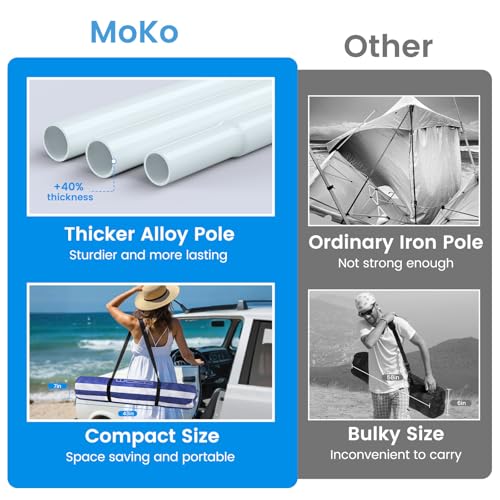
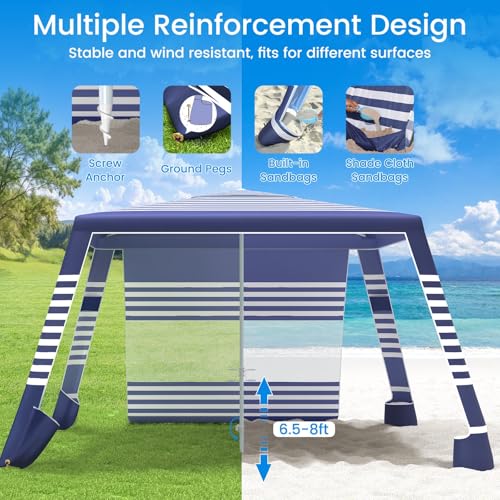
This isn’t a tent – it’s a beach fortress. The high-strength alloy steel poles are 40% thicker than average, and the triangular umbrella structure with top ventilation is engineered to shed wind, not fight it. Owners in coastal areas consistently report it stays upright in conditions that flatten other shelters. The sandbag-lined base and dual peg system lock it down like nothing else here.
The adjustable height (up to 9 feet) is a standout – you can stand fully upright and even fit chairs inside. The removable side walls with mesh middle offer both shade and airflow, and the 210D fabric is noticeably thicker than the standard 190T. It’s not the fastest to set up, but one person can do it, and the compact fold makes transport manageable. For wind resistance, this is the clear leader.
Product photos
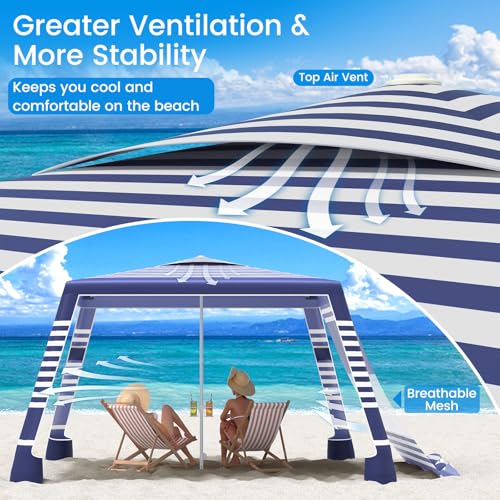

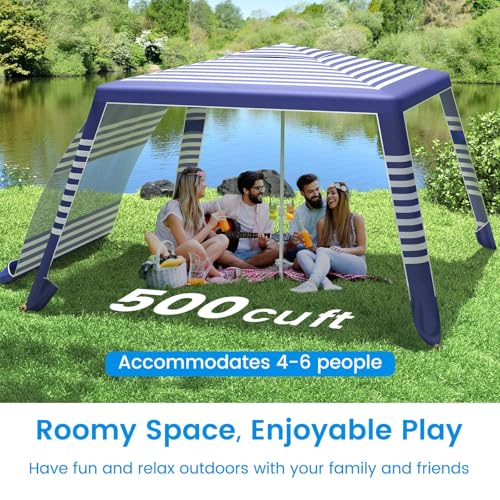
NHOWIN Large Quick-Setup Beach Tent
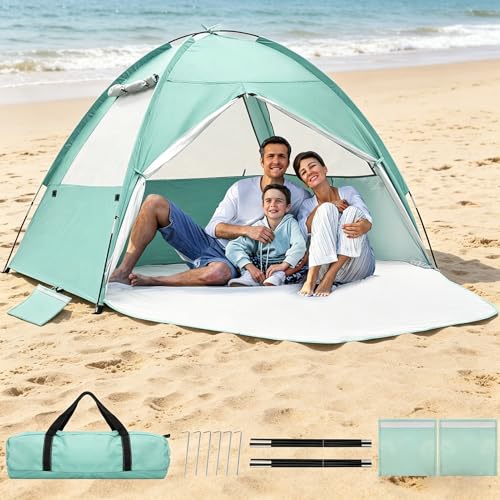
Strengths
- Extra-large interior space
- Fast 3-step setup
- 360° mesh ventilation
- Extended activity floor
- Built-in storage pockets
Trade-offs
- Heavier than lightweight models
- Takes more space to store
- Canopy not adjustable
This is the family workhorse of beach tents. At 95 x 79 inches, it’s massive – nearly 40% larger than standard models – and the 38-inch extended mat creates a real multi-zone space. Kids can play, adults can lounge, and there’s even room for a cooler. The 360° ventilation with three oversized mesh windows keeps it surprisingly cool, and reviewers say the interior stays about 15°F cooler than outside, which is impressive.
The 7mm poles aren’t the thickest, but the triple windproofing – pegs, sandbags, and guy lines – makes up for it. Setup in 60 seconds? That’s bold, but owners confirm it’s fast and intuitive. The two side pockets are practical, and the zip-down curtains add privacy when needed. Compared to pop-up models, this one feels more like a mini beach cabana than a throw-and-go shelter.
Product photos
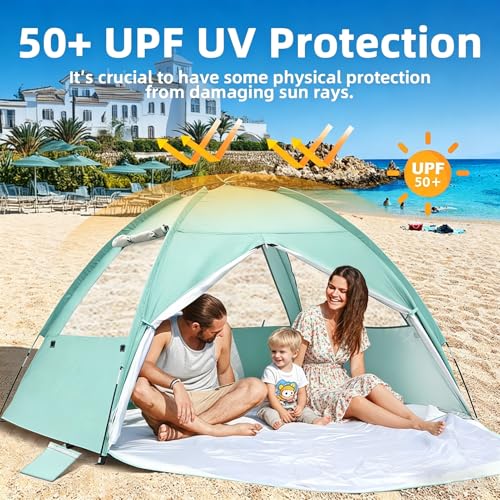

WhiteFang 3-Person Anti-UV Tent
Strengths
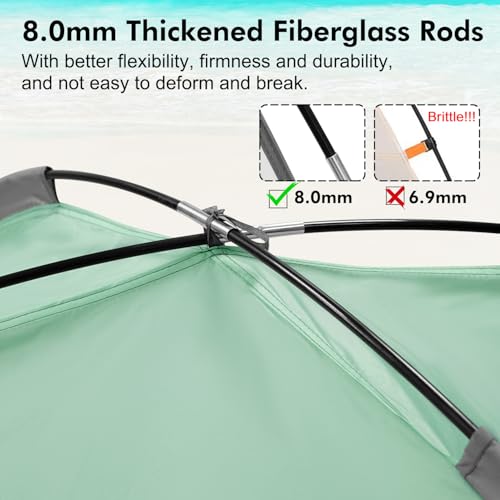
- 8.0mm fiberglass rods
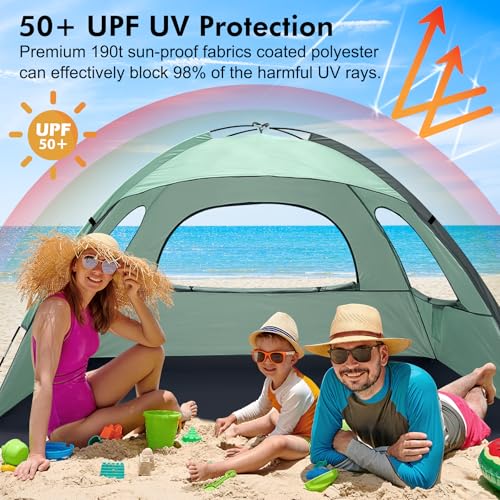
- UPF 50+ protection
- Extended zip-up floor
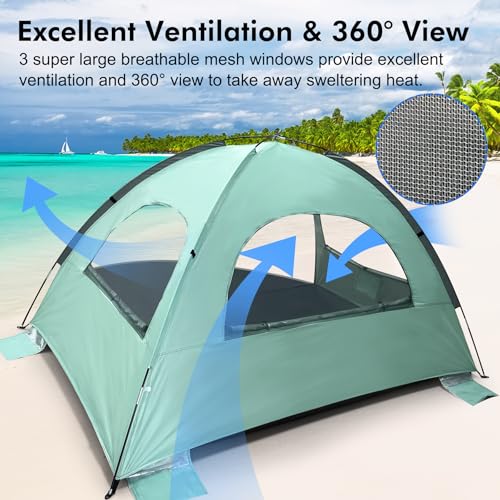
- Three large mesh windows
- Includes sandbags and stakes
Trade-offs
- Limited wind resistance
- Setup benefits from two people
- Floor zippers can snag
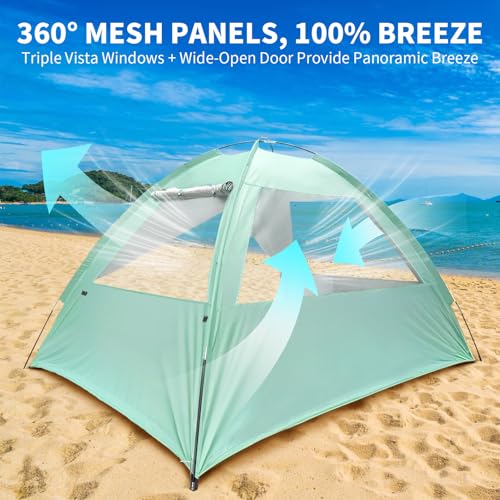
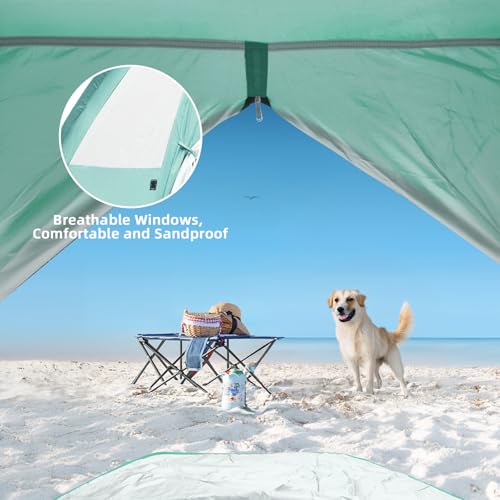
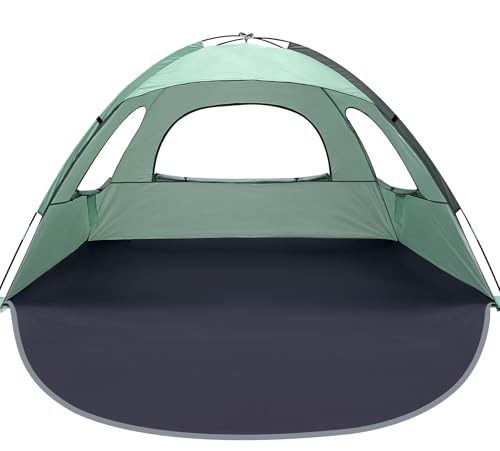
This tent makes a strong case for itself with that 8.0mm fiberglass frame – not the thickest out there, but solid for a 3-person model. The UPF 50+ rating is standard in this category, but the triple mesh windows stand out. Owners consistently report good airflow, which matters when you’re baking on hot sand. I like that the floor extends and zips up for privacy, a feature that sounds small but makes a real difference when someone needs to change or nurse.
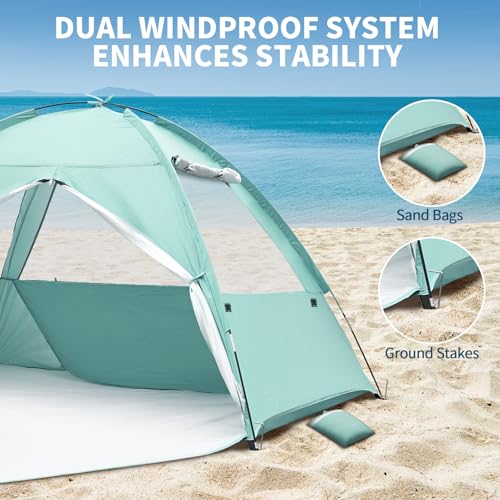
On paper, the mix of sandbags, stakes, and guy lines should deliver decent wind resistance, but reviewers note it still struggles in gusts over 20 mph unless very well anchored. It’s lightweight, which helps with portability, but that also means it’s not the most stable in rough conditions. Compared to heavier-duty options, this one leans into convenience over brute strength.
Product photos


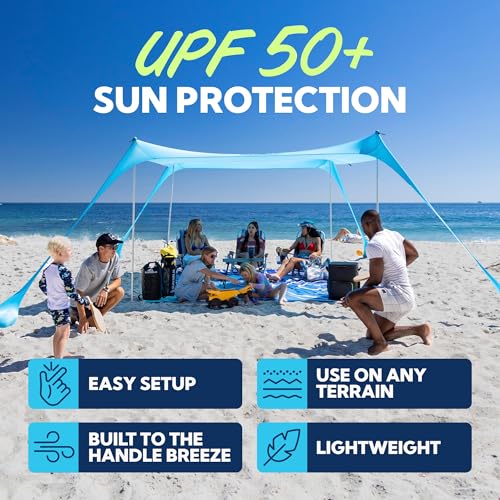
SUN NINJA Pop Up Beach Canopy
Strengths
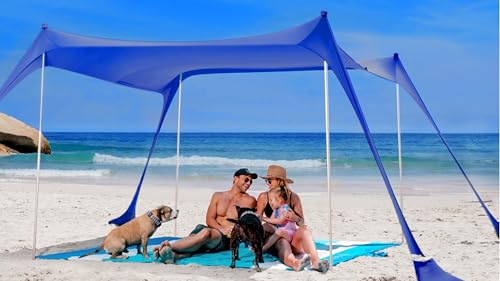
- True pop-up instant setup
- Includes sand shovel and pegs
- Large 10×10 footprint
- Stability poles included
- Highly portable
Trade-offs
- Poor ventilation
- Gets hot quickly
- Frame less durable over time
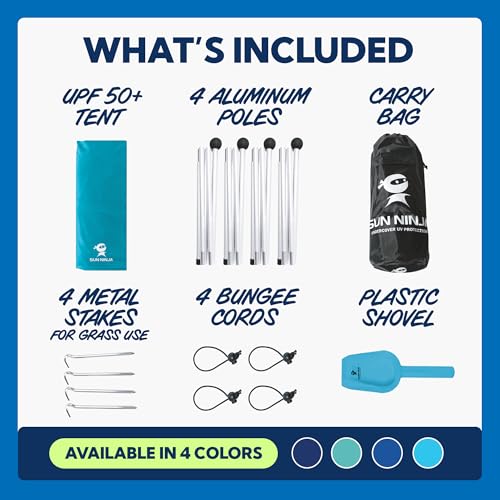
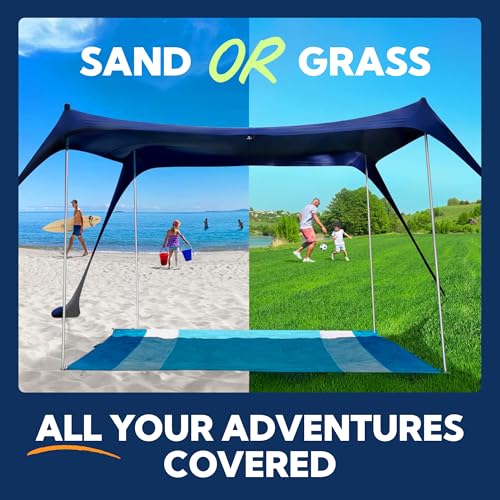
This is the definition of “set it and forget it.” The 10×10 pop-up design means instant shade with zero assembly fuss – just flip it out and stake it down. For anyone who hates wrestling with poles, this is a relief. The included sand shovel and stability poles are thoughtful touches that improve real-world usability. It’s marketed for 8 people, but in practice, that’s optimistic; 4–5 is more realistic if you want comfort.
The UPF 50+ fabric does its job, but without mesh panels, ventilation is weak. Owners report it gets hot fast in direct sun, and the lack of windows means you’re trading breathability for speed. It’s stable enough with the sandbags and pegs, but the pop-up frame isn’t as rigid as pole-supported models. If you value setup speed above all, this is a strong pick – but don’t expect airflow or long-term comfort in heat.
Product photos
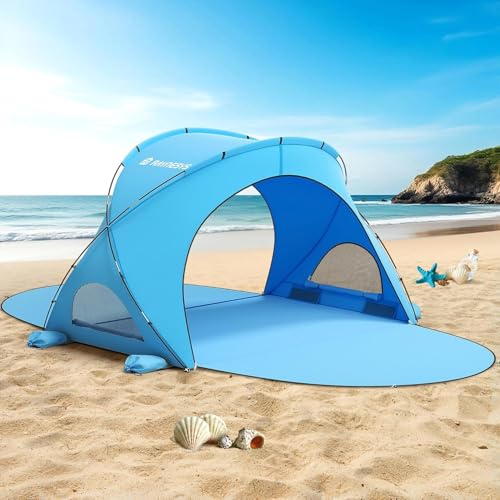
Raynesys Square-Top Beach Shelter
Strengths
- Excellent cross-ventilation
- Square-top for more space
- Water-resistant fabric
- Cross-support stability
- Easy one-person setup
Trade-offs
- Smaller footprint
- Doors can flap in wind
- Limited storage pockets
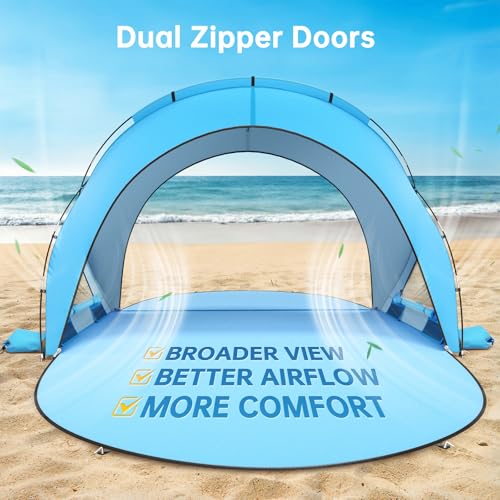
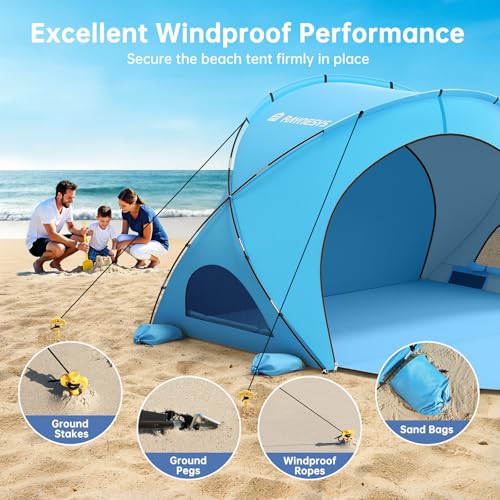
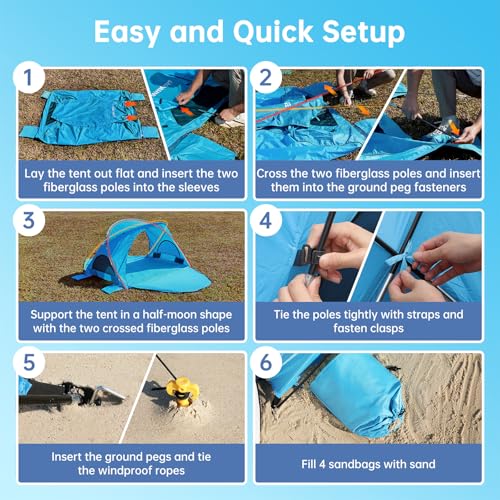
Ventilation is where this tent shines – literally. The square-top design gives more headroom, but it’s the two zippered doors and dual mesh windows that make it breathe so well. Owners consistently praise how much cooler it feels inside, even at noon. The cross-support pole structure adds stability, and with 12 pegs and sandbags, it anchors deeply. I’d trust this one more than most in breezy conditions, especially compared to flimsier pop-ups.
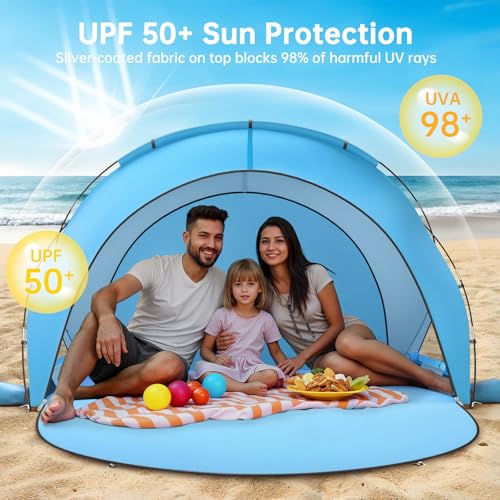
The fabric delivers solid UPF 50+ protection and handles light rain without leaking, which is more than many beach tents can claim. The doors doubling as an extended floor is clever – great for spreading out towels or setting up a snack zone. It’s not the roomiest for four, but for 1–3 people, it strikes a smart balance between airflow, protection, and packability.
Product photos
How We Picked These beach tents
I approached this research by comparing the published specifications and features of numerous beach tents, then weighing those details against owner reviews and expert opinions from reputable sources. Rather than a hands-on lab test, this is a research-led comparison focused on identifying patterns in performance and value. My goal was to understand which tents consistently deliver on their promises and best meet the needs of different beachgoers.
For beach tents, I placed the most weight on wind resistance and sun protection. A tent that can’t stay put in a breeze, or doesn’t offer adequate UV shielding, simply won’t provide a relaxing experience. Spaciousness was also key; families and larger groups need room to spread out, while individuals may prefer something more compact and portable. These factors directly impact usability and enjoyment.
Specifications reliably reveal material quality (like polyester denier and UV coatings) and structural details (pole thickness and frame material). However, I relied heavily on owner feedback to assess real-world performance – things like ease of beach tent setup guide and how well a tent holds up after repeated use. Reputation and brand consistency also played a role, especially when evaluating newer models without extensive owner reviews.
How To Pick The Right beach tents
Finding the right beach tent can make or break your day in the sun. It’s about more than just throwing up some shade; it’s about comfort, protection, and ease of use.
A quality beach tent prioritizes UV protection (UPF 50+ is a must), wind resistance through robust pole construction and anchoring systems, and thoughtful ventilation to prevent overheating. Look for durable, waterproof fabrics and designs that balance portability with interior space. Consider features like integrated storage and privacy options to enhance your beach experience.
Size and Capacity
Don’t underestimate the importance of space. A tent that seems big online can feel cramped once you’ve got towels, toys, and people inside. I often see people err on the side of too small, thinking they’ll save money or weight. Instead, think about your typical beach crew and add a buffer. A tent marketed for “4-5 people” will likely be snug with that many adults; consider sizing up if you want room to spread out. We’ve found that rectangular floor plans generally offer more usable space than square ones.
Wind Resistance and Construction
The beach is a breezy place, and a flimsy tent is a recipe for disaster (and embarrassment). A lot of tents claim wind resistance, but pay attention to the specifics. Thicker fiberglass or aluminum poles (8.0mm or greater is a good benchmark) are crucial. Equally important are the included anchoring systems. Sandbags are helpful, but don’t rely on them solely. Look for tents that include both robust stakes and guy lines. Some, like the Rhino Valley 10×10, go the extra mile with multiple anchor points. Don’t overlook the stitching; reinforced seams are a sign of a well-made tent.
- Basic stakes are often flimsy. Consider upgrading to heavier-duty sand stakes.
- Sandbags are great, but they add weight. Think about how far you’ll need to carry the tent.
- A well-designed frame is more important than just the pole material. Look for tents with cross-supports and stable base designs.
A beach tent that can’t stand up to a moderate breeze isn’t worth your money. Prioritize sturdy poles, ample anchoring points, and a well-engineered frame.
Portability and Setup
Let’s be real – nobody wants to wrestle with a complicated setup after a long drive to the beach. I’ve seen too many families spend half the day trying to get their tent up. “Pop-up” designs are the fastest, but they can be harder to collapse beach tent. Tents with simpler, snap-together pole systems are a good compromise. Consider the packed weight and size, too. If you’re walking any distance, you’ll want something lightweight and compact. Many of the better models, like those we review in our guide to the best beach tent models, come with a carrying bag – make sure it’s actually easy to get the tent back into the bag. If you’re concerned about sun protection while setting up, look for beach tents for sun protection that offer quick and simple deployment.
Beach Tents Compared
Here’s a comparison of key specifications for popular beach tents to help you make an informed decision.
| Product Title | Capacity | UV Protection | Waterproof | Setup Difficulty | Wind Resistance |
|---|---|---|---|---|---|
| Elegear CumbreX Beach Tent | 4-5 | UPF 50+ | Yes | Easy | High |
| Venustas 3-8 Person Beach Tent | 3-8 | UPF 50+ | Yes | Easy | N/A |
| Rhino Valley 10×10 Beach Tent | 4-8 | UPF 50+ | Yes | Easy | Very High |
| MoKo Adjustable Height Beach Cabana | 4-6 | UPF 50+ | N/A | Easy | High |
| NHOWIN Large Quick-Setup Beach Tent | 3-4 | UPF 50+ | Yes | Easy | High |
| WhiteFang 3-Person Anti-UV Tent | 3 | UPF 50+ | N/A | Easy | Medium |
| SUN NINJA Pop Up Beach Canopy | 8 | UPF 50+ | N/A | Very Easy | N/A |
| Raynesys Square-Top Beach Shelter | 1-3 | UPF 50+ | Yes | Easy | High |
Frequently Asked Questions
What level of UV protection should I look for in a beach tent?
You absolutely want a tent with a UPF 50+ rating. This blocks 98% of harmful UV rays, offering excellent sun protection for you and your family. Anything lower won’t provide sufficient shielding during prolonged sun exposure.
Are pop-up beach tents really as easy to set up as they seem?
Pop-up tents are generally the quickest to deploy, often in seconds. However, some can be surprisingly difficult to fold back down, and the mechanism can wear out over time with repeated use.
What’s the best way to secure a beach tent against the wind?
Beyond the included stakes, upgrading to heavier-duty sand stakes is a smart move. Utilizing all available guy lines and filling the provided sandbags (if any) is crucial for stability, especially on breezy days.
How important is the tent’s material when considering durability?
A polyester fabric with a higher denier (like 190T or 210T) indicates a more robust and tear-resistant material. Look for options with reinforced seams and waterproof coatings for increased longevity and protection from the elements.
What should I consider if I need a tent for a large family?
If you’re shopping for family-friendly beach tents, prioritize capacity and floor space. A rectangular shape will maximize usable area, and features like multiple windows and ventilation points will improve comfort for everyone inside.
The Bottom Line
Choosing a beach tent often comes down to balancing convenience with resilience. While a quick setup is appealing, a tent that collapses in the first gust of wind isn’t much use. For overall performance and peace of mind, I believe the Rhino Valley 10×10 Beach Tent strikes the best balance – its robust construction and multiple anchoring points offer serious stability, and owners consistently praise its ability to withstand strong winds.
If you’re on a tighter budget, the WhiteFang 3-Person Anti-UV Tent delivers solid UV protection and a simple setup at a very competitive price. For those needing maximum capacity and prioritizing speed, the SUN NINJA Pop Up Beach Canopy is a great choice, though you’ll sacrifice some wind resistance. And if you want an instant beach tent that doesn’t feel flimsy, the Elegear CumbreX Beach Tent is a solid pick for families.
Ultimately, the best beach tent is the one that fits your needs and priorities. Don’t get hung up on fancy features or the highest specs. Focus on a tent with a sturdy frame, reliable UV protection, and a setup you can manage easily – those are the fundamentals that will make your beach days more enjoyable, year after year.
