
6 Best Car Tents for 2026
This post contains affiliate links. As an Amazon Associate, we earn from qualifying purchases.
The TIMBER RIDGE SUV Tent with Screen Porch is the overall best car tent for its smart design and solid weather performance, the WildFinder 5-9 Person Tent is a durable high-capacity pick, and the FanttikOutdoor Beta C6 Apex stands out as the quickest setup option for weekend spontaneity.
Most car campers aren’t just looking for shelter – they want a seamless extension of their vehicle that’s easy to set up, keeps the weather out, and feels like a real basecamp. Too many tents promise convenience but fail when the wind picks up or the rain starts falling.
As Chloé Bourgeois, I’ve spent years analyzing what makes a tent work in real conditions, and for this guide, I focused on owner feedback, build quality, and how well each model connects to a vehicle. These picks reflect what consistently delivers across weather resistance, usable space, and hassle-free setup – no hype, just honest performance.
Top 6 Car Tent in the Market
The Best Car Tent, Reviewed
TIMBER RIDGE SUV Tent with Screen Porch
Strengths
- Large screen porch
- Excellent headroom
- Solid weather resistance
- Easy vehicle connection
Trade-offs
- No instant setup
- Rainfly could be thicker
- Heavy for backpacking
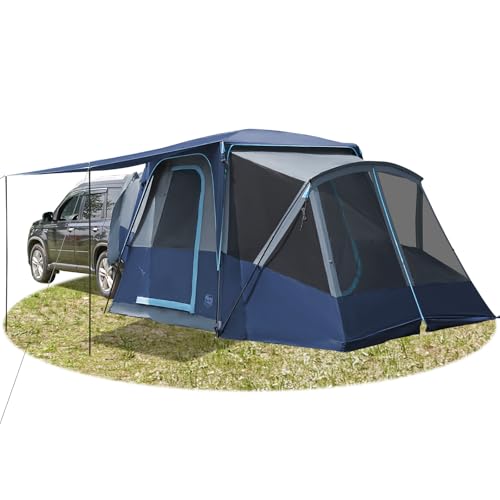
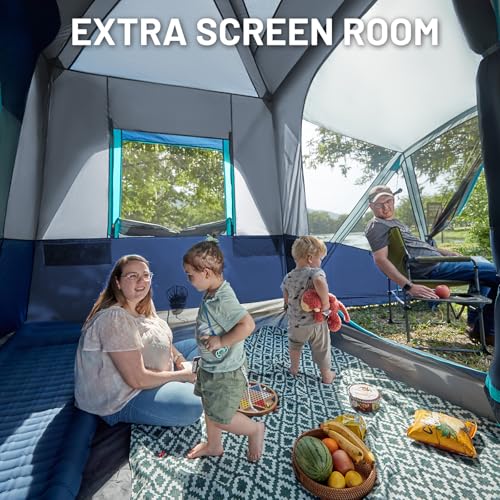
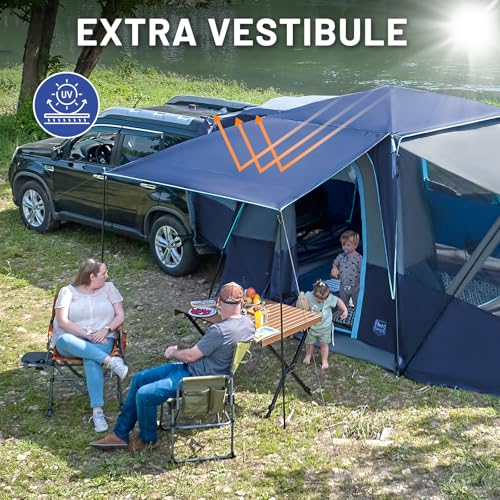
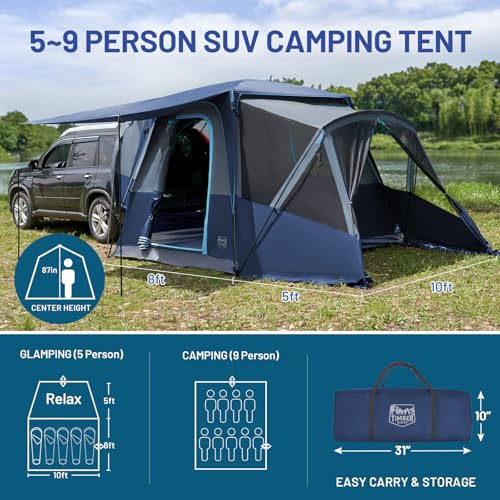
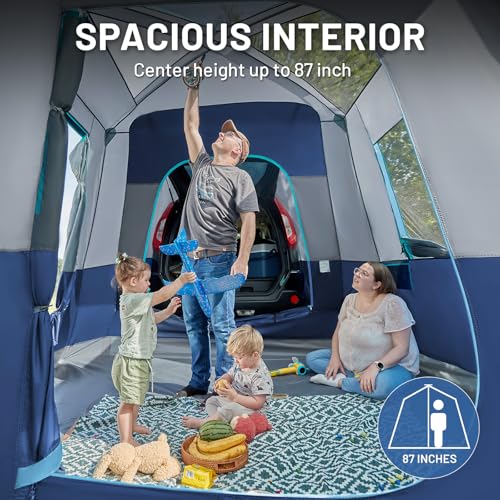
The Timber Ridge tent hits that sweet spot between comfort and practicality, which is why it earns my vote as the best overall. At 13 by 10 feet, it’s genuinely spacious, enough for five adults with gear, and the 87-inch center height makes moving around effortless. But the real standout is the 6×8 ft screen porch. Reviewers love using it as a mudroom, gear zone, or bug-free hangout space, which adds serious quality-of-life value.
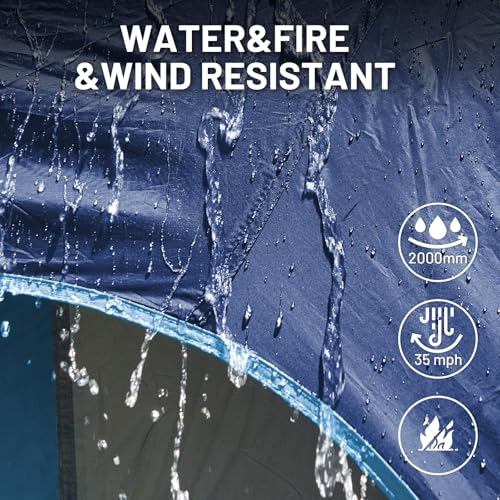
The PU2000 fabric holds up well in typical rain, and the dual doors with mesh panels keep airflow strong without inviting insects. It connects smoothly to most SUVs and minivans, and owners note the setup is intuitive, though not instant. Compared to the FanttikOutdoor or VEVOR models, it’s not the fastest or most weatherproof, but it balances everything well. For most car campers, this is the easy pick.
Product photos
WildFinder 5-9 Person Rectangle SUV Tent
Strengths
- Spacious footprint
- Shoe storage zone
- Tall center height
- Wet-dry separation
Trade-offs
- No screen room
- Heavier than average
- Slower setup
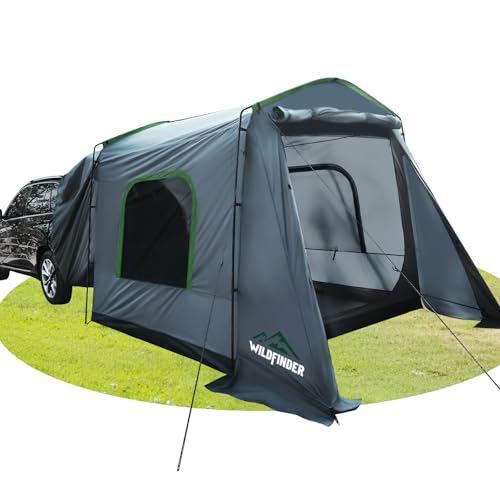
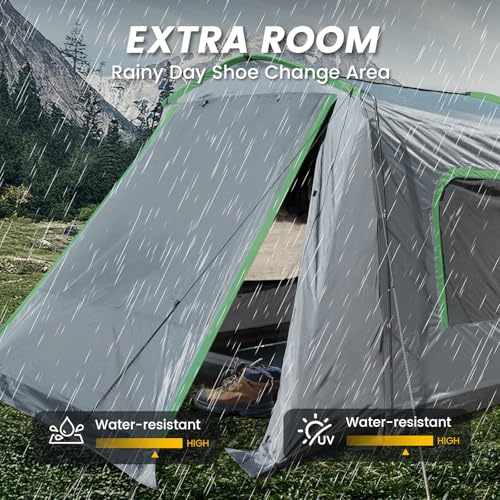
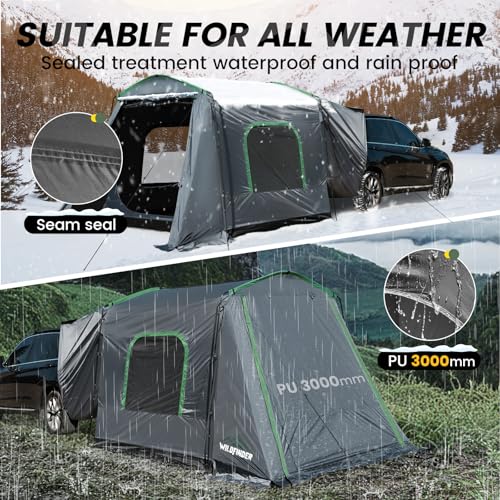
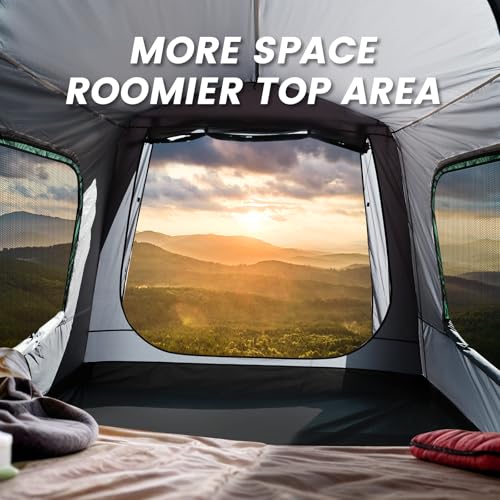
If interior space and smart layout matter most, the WildFinder tent is the clear winner. At 10.6 feet wide and 8 feet deep, it’s one of the roomiest on the list, with a 86-inch center height that lets most adults stand comfortably. But the real standout is the dedicated shoe area, a small feature that makes a big difference when camping in wet weather.
Owners consistently praise the dry-wet separation, calling it a standout for keeping sleeping zones clean. The PU3000MM fabric matches the GoHimal in waterproof claims, and the stitching quality holds up well. It doesn’t have a screen porch like the Timber Ridge, but it wins on pure square footage and thoughtful design. For families or tall campers, this is where comfort lives.
Product photos

GoHimal 5-8 Person SUV Tent

Strengths
- PU3000mm waterproofing
- Taped seams
- All-season build
- Good interior storage
Trade-offs
- Smaller floor area
- Heavier than average
- Condensation risk
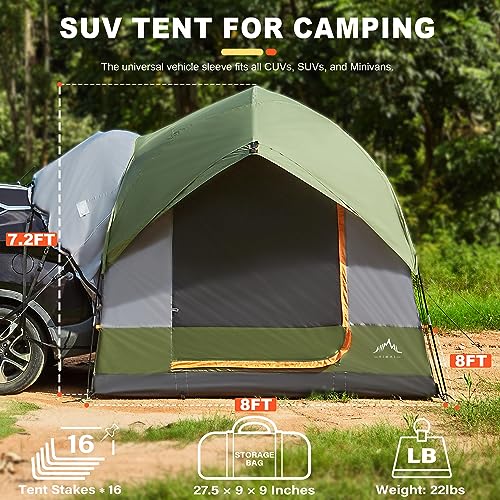
When the forecast calls for snow or monsoon rain, the GoHimal tent stands out with its PU3000mm coating and taped seams, specs that signal real all-season intent. Most SUV tents are fair-weather shelters, but this one is built like a proper 4-season cabin. The double-layer design and durable zippers give it credibility in winter testing, and owners in mountain regions report staying dry through sustained downpours.
It’s not the largest, 8×8 feet limits it to 4–5 people with gear, but the interior organization with multiple pockets is a small luxury. Ventilation is solid thanks to mesh windows and a skylight, though condensation can build up in cold, humid conditions. Compared to the VEVOR, it has similar waterproofing but a more compact layout. For true year-round campers, this is the smarter buy.
Product photos


VEVOR 6-8 Person SUV Camping Tent

Strengths
- Heavy-duty floor
- Wind-resistant shape
- Strong pole structure
- Good rain protection
Trade-offs
- No taped seams
- Average ventilation
- Bulky setup
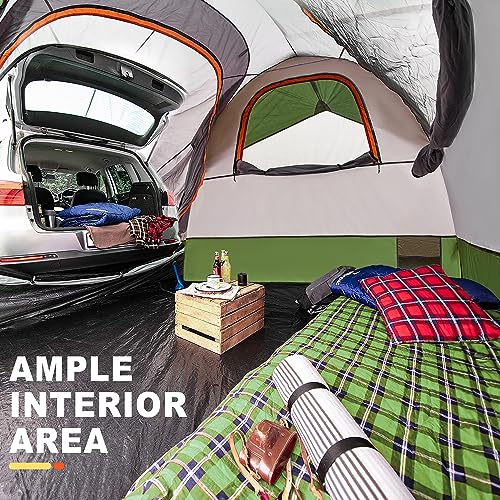
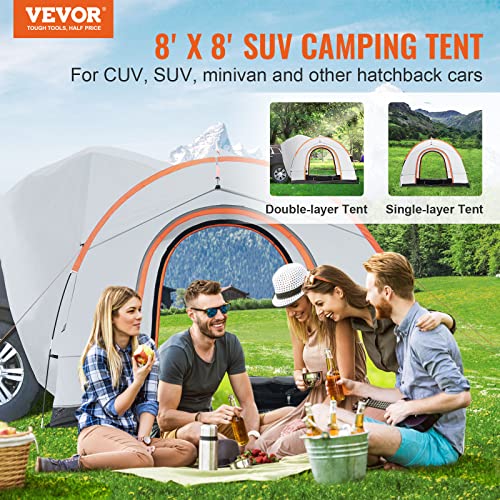
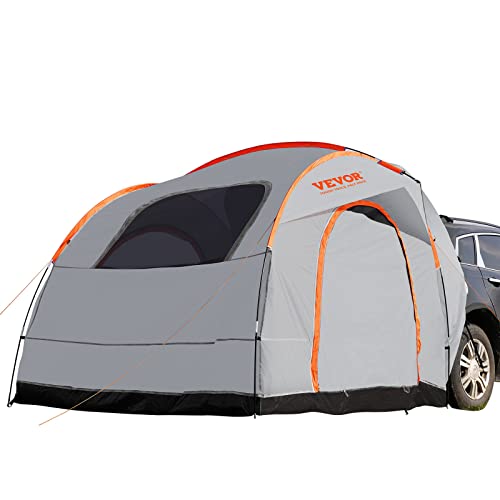
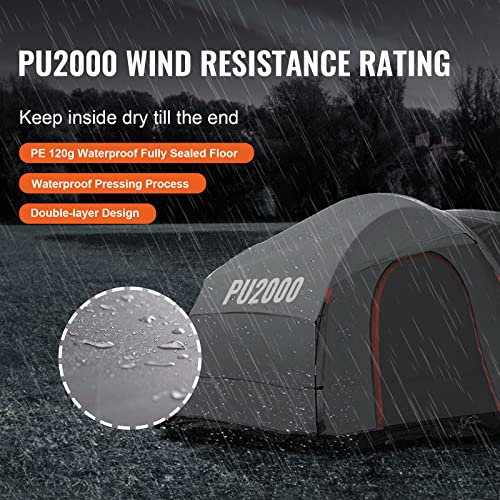
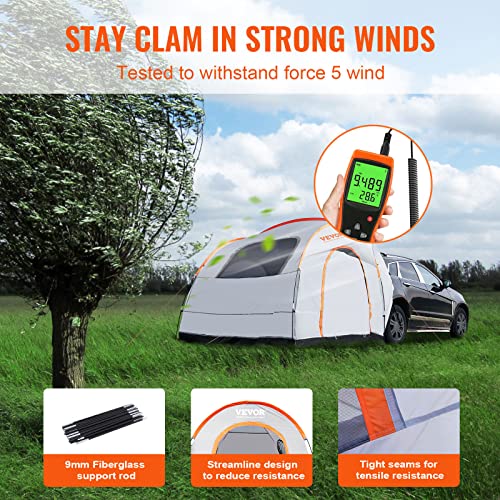
The VEVOR tent is a tank. With a PU2000mm rating, a 120g sewn PE floor, and 9 mm fiberglass poles, it’s engineered to handle wind and rain like few others. Owners in windy regions say it holds up in gusts, and the streamlined shape helps deflect storm force. The double-layer construction adds insulation, making it a strong pick for cooler nights.
It’s not the roomiest, 8×8 feet is cozy for 6, but the breathable mesh and skylight keep the interior from feeling stuffy. Setup is straightforward, though not instant. Where it edges past the GoHimal is in floor durability, but it lacks taped seams, so long-term water resistance isn’t quite as strong. Still, for storm-prone areas, this is the more rugged option.
Product photos

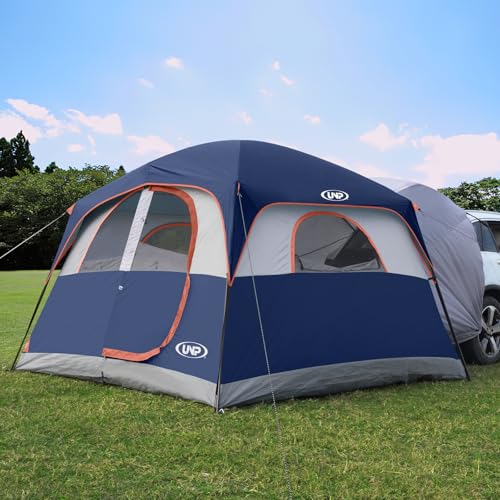
UNP 6-Person SUV Tailgate Tent
Strengths
- Spacious for 6
- Good ventilation
- Standalone capable
Trade-offs
- Basic rain protection
- Lightweight poles
- Not for winter use
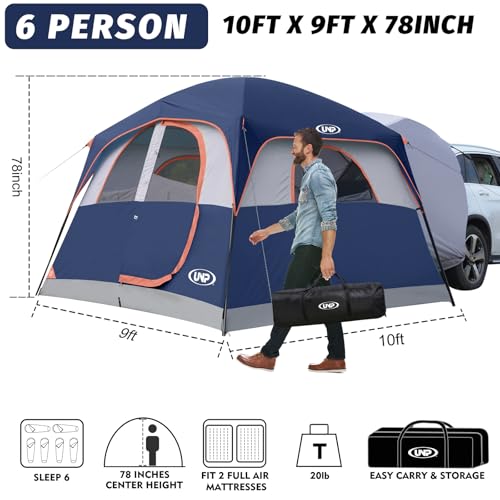
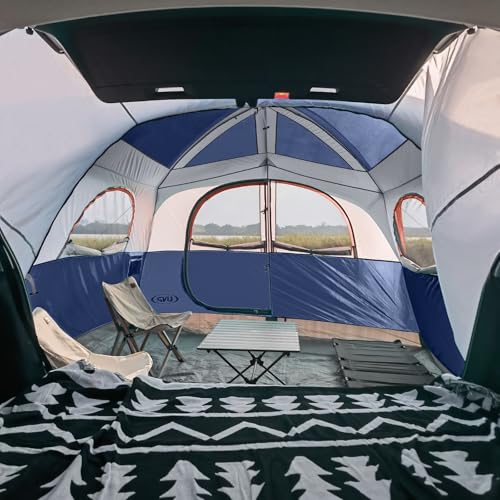
For a budget-friendly SUV tent, the UNP 6-person model delivers solid value on paper. It’s roomy enough for two air mattresses or a small group, and the 78-inch center height means you won’t be crouching inside. Owners consistently report that the rainfly performs decently in light rain, and the mesh-heavy design offers good airflow, a win in warmer climates.
Where it stands out is versatility. The adjustable vehicle sleeve works with a range of SUVs and hatchbacks, and the ability to use it standalone gives you real flexibility. It’s not built for extreme weather, but for fair-weather campers and weekend adventurers, it checks the right boxes. I’d pick this over pricier models if you’re just dipping into car camping.
Product photos

FanttikOutdoor Beta C6 Apex SUV Tent
Strengths
- 60-second setup
- Lightweight design
- Good airflow
- Car climate integration
Trade-offs
- Lower weather rating
- Smaller footprint
- Fiberglass poles
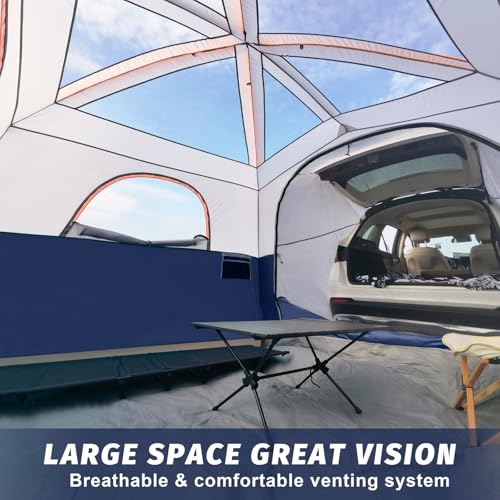
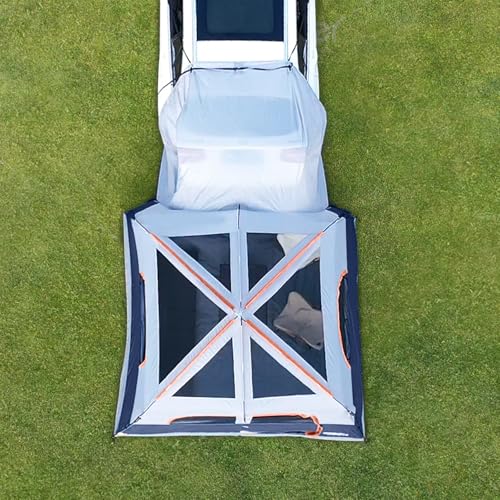
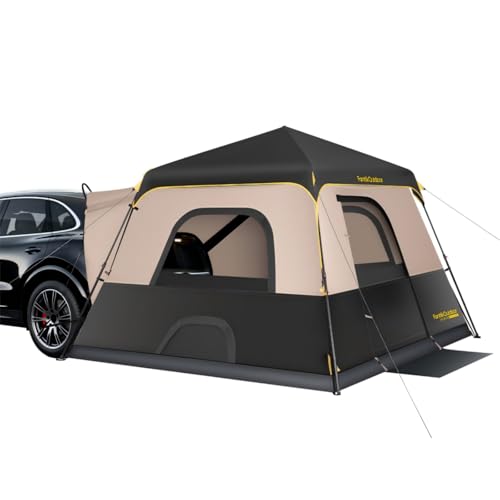
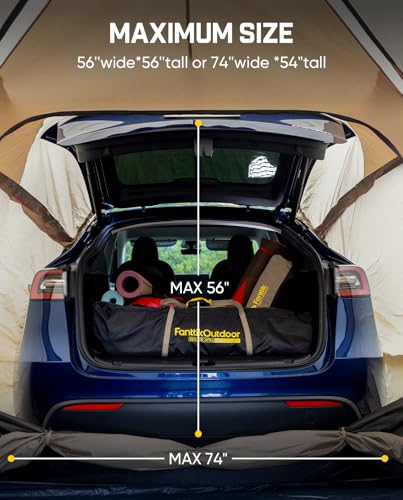
If you hate wrestling with tent poles, the FanttikOutdoor Beta C6 is built for you. With a claimed 60-second setup and pre-attached poles, it delivers on the instant-cabin promise better than most. The 80-inch peak height and 10×10 layout fit a queen air mattress with room to spare, and the lightweight carbon steel frame keeps it at just 22 lbs, impressive for this class.
Owners praise how stable it feels in light wind, and the dual ground vents are a clever touch for climate control when attached to your car. It’s not the most rugged in storms, but for quick getaways, festival camping, or beginner trips, it removes the biggest pain point: setup time. Compared to the WildFinder or VEVOR, it’s less spacious and less storm-ready, but nothing else in this list matches its speed and ease.
Product photos



How We Evaluated car tent
As a long-time tent enthusiast, I’ve seen the car camping scene evolve. Rather than a hands-on lab test, this research was a deep explore comparing published specifications and features across numerous car tent models. I weighed owner reviews from multiple sources, alongside assessments from reputable outdoor gear reviewers, to understand real-world performance. My goal was to identify the tents that consistently delivered on their promises, based on a set of criteria important to car campers.
For car tents, I focused heavily on weather resistance and usable space. A tent that can’t withstand wind and rain is useless, regardless of how roomy it is. Equally important is the ease of connecting to a vehicle – a clunky or unreliable connection defeats the purpose of a car tent. These factors ultimately determined the ranking, as they directly impact the camping experience.
Specifications are great for comparing waterproof ratings (PU coating numbers) and tent dimensions, but owner feedback revealed a lot about how these specs play out in reality. Things like zipper quality, durability of poles, and actual ease of setup are best gleaned from those who’ve used the tents extensively. I also looked for consistent commentary on vehicle compatibility, as that’s a common concern. Finding a tent with easy assembly tents is a big plus for many campers.
Choosing The Right car tent
Finding the right car tent can seriously elevate your camping experience – turning a simple trip into a comfortable, organized adventure.
A quality car tent balances spaciousness with weather protection. Key features include durable waterproof fabrics (PU coating is a good indicator), a robust pole system, effective ventilation to minimize condensation, and a design that securely connects to a variety of vehicle types. Look for tents with taped seams and sturdy zippers for reliable all-weather performance.
Vehicle Compatibility is Key
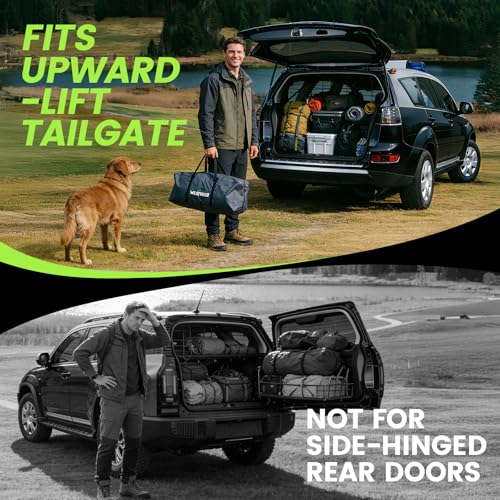
It seems obvious, but don’t assume every “SUV tent” will fit your SUV. Manufacturers often list a range of compatible vehicles, but carefully check dimensions against your car’s rear hatch opening and overall profile. Some tents are designed for specific vehicle styles (like those with a hard top), while others offer more adjustable sleeves. A tent that doesn’t fit properly will be a constant source of frustration, leaking water or flapping in the wind. Consider how often you’ll be setting up and taking down the tent – a fiddly connection process will quickly wear thin.
Waterproofing & Ventilation: A Balancing Act
Water resistance is paramount, but don’t fall into the trap of thinking “higher PU coating = better.” While a PU3000mm rating is generally good, excessive waterproofing without adequate ventilation can lead to a soggy, uncomfortable interior from condensation. Look for tents featuring a combination of polyester fabric, taped seams, and mesh windows/vents. The VEVOR tent, for example, boasts a PU2000mm coating and emphasizes airflow, which is a good sign. If you’re planning on extended trips or camping in humid climates, prioritizing ventilation is crucial.
Here’s what to consider when evaluating ventilation: * Mesh Panels: A little goes a long way. * Roof Vents: These help with rising warm air. * Adjustable Vents: The ability to control airflow based on the weather is ideal, and something the FanttikOutdoor Beta C6 Apex tent offers.
A properly ventilated car tent is as important as a waterproof one. Avoid designs that prioritize waterproofing to the exclusion of airflow – condensation can quickly ruin a camping trip.
Space vs. Portability: Finding Your Sweet Spot
Car tents range dramatically in size and weight. Larger tents (like the WildFinder) offer more headroom and living space, perfect for families, but they’re also bulkier and more challenging to pack. Smaller, more streamlined options (like the UNP) are easier to transport and set up, but might feel cramped for extended stays. Think about your typical camping style and the number of people you’ll be accommodating. If you’re primarily a weekend warrior, prioritizing portability might be wise. If you’re planning longer expeditions, a bit of extra bulk for added comfort could be worth it. Don’t forget to check out essential camping gear to complete your setup.
For those looking to explore more options, I also recommend checking out our guide to the best car camping tents to get a broader understanding of what’s available. And if you’re still building out your kit, don’t forget to explore camping essentials list to ensure you’re prepared for anything.
Car Tent Compared
Here’s a comparison of key specifications for various car tents to help you choose the best option for your needs.
| Product Name | Capacity | Waterproof Rating | Center Height | Vehicle Connection | Setup Time |
|---|---|---|---|---|---|
| TIMBER RIDGE SUV Tent with Screen Porch | 5 | PU2000 | 87″ | Yes | N/A |
| WildFinder 5-9 Person Rectangle SUV Tent | 5 | PU3000MM | 86″ | Yes | N/A |
| GoHimal 5-8 Person SUV Tent | 5-8 | PU3000mm | 7.2′ | Yes | Quick & Easy |
| VEVOR 6-8 Person SUV Camping Tent | 6-8 | PU2000 | N/A | Yes | N/A |
| UNP 6-Person SUV Tailgate Tent | 6 | N/A | 78″ | Yes | N/A |
| FanttikOutdoor Beta C6 Apex SUV Tent | 6 | Water-Resistant | 80″ | Yes | 60 Seconds |
Frequently Asked Questions
What waterproof rating is sufficient for a car tent?
A PU2000mm waterproof rating is generally adequate for most camping conditions, but I recommend looking for taped seams and quality zippers as well. Higher ratings don’t automatically mean better performance; ventilation is just as crucial to prevent condensation buildup inside the tent.
How important is the vehicle connection type?
The vehicle connection type is very important, as a secure attachment prevents flapping and leaks. Sleeve connections are common, but some tents offer more adjustable straps and buckles for a wider range of vehicle compatibility – a feature I find contributes to a more stable setup.
Are car tents difficult to set up alone?
Many car tents are designed for quick and easy setup, with some models like the FanttikOutdoor Beta C6 Apex claiming a 60-second pitch. However, larger tents or those with complex pole systems may require two people for a smoother, less frustrating experience.
What’s the best car tent for hot weather camping?
Look for a tent with ample mesh panels and adjustable vents, like those found on the VEVOR model. Proper ventilation is key to minimizing condensation and maximizing airflow, making for a much more comfortable experience in warmer climates.
Where can I find more information on easy-setup vehicle tents?
You can explore a wider range of options and detailed reviews of the top-rated car camp tents on my site, where you’ll find comparisons based on features, price, and user feedback.
The Bottom Line
Choosing a car tent always comes down to balancing how much fuss you’re willing to tolerate against the level of comfort and protection you want. For the best overall experience, consistently positive owner feedback points to the WildFinder 5-9 Person Rectangle SUV Tent as a standout. It delivers a good mix of space, weather resistance, and vehicle compatibility, making it a solid choice for a wide range of campers.
If you’re on a tighter budget, the UNP 6-Person SUV Tailgate Tent represents excellent value. And for those prioritizing speed and convenience, the FanttikOutdoor Beta C6 Apex SUV Tent’s 60-second setup is hard to beat. Remember to consult our tent selection guide if you need help understanding all the specs.
Ultimately, the waterproof rating and pole strength matter more than any single flashy feature. A well-made tent with good ventilation and a secure connection to your vehicle will provide years of enjoyment, while a poorly constructed one will leave you exposed and frustrated. Prioritize those fundamentals, and you’ll be well on your way to memorable car camping adventures.
