
8 Best Grow Lights for 3×3 Tent 2026
This post contains affiliate links. As an Amazon Associate, we earn from qualifying purchases.
The ECOHOM Bar 320W stands out as the best overall grow light for a 3×3 tent, delivering strong PPFD and full-spectrum coverage with solid build quality. For budget-conscious growers, the MARS HYDRO TS1000 offers surprising performance at a lower price, while the KOSCHEAL KS2000 adds versatility with UV/IR and a veg/bloom switch.
Choosing the right grow light for a 3×3 tent means balancing power, spectrum, and heat without overspending or overwhelming your plants. Too many options promise big yields but fall short in real-world use.
As Chloé Bourgeois, I’ve spent years evaluating gear that performs under pressure, whether on the trail or in controlled environments like grow tents. This guide cuts through the hype, focusing on specs, verified owner feedback, and what actually matters for healthy plant growth in a compact space.
Top 8 Grow Lights For 33 Tent in the Market
The Best Grow Lights For 33 Tent, Reviewed
ECOHOM Bar 320W LED Grow Light
Strengths
- Detachable driver
- High efficacy
- Daisy chain up to 50
- 660nm + 730nm red
- Passive cooling
Trade-offs
- Higher price point
- Bars are fixed length
- No built-in app control
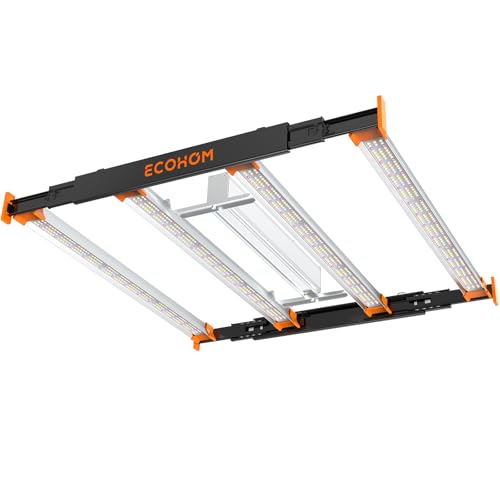
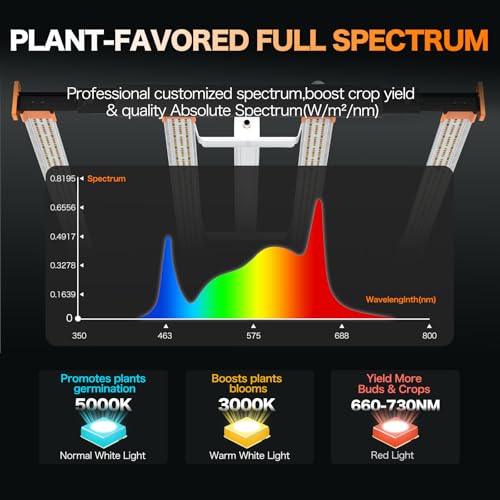
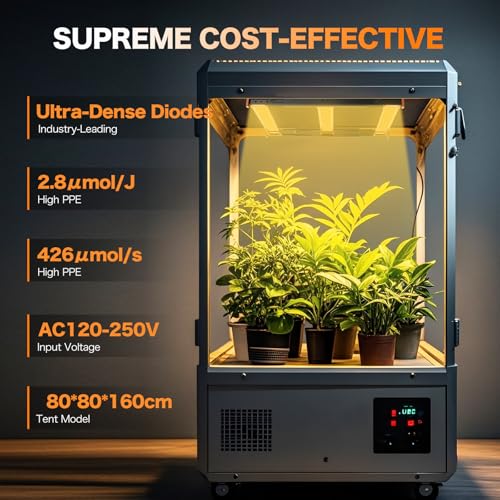
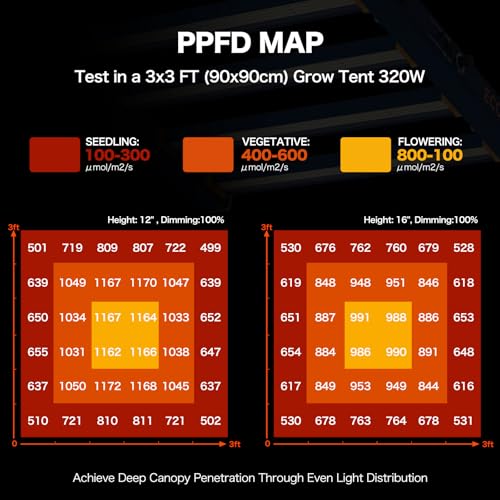
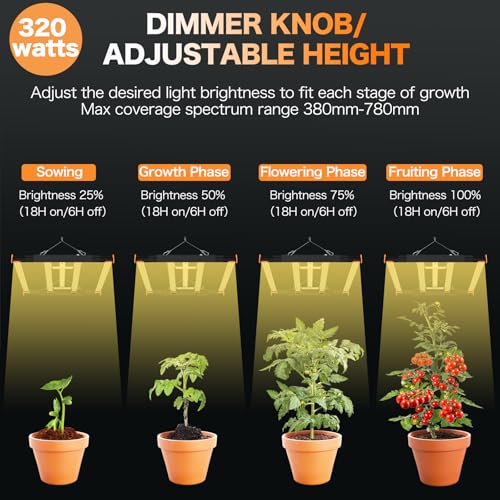
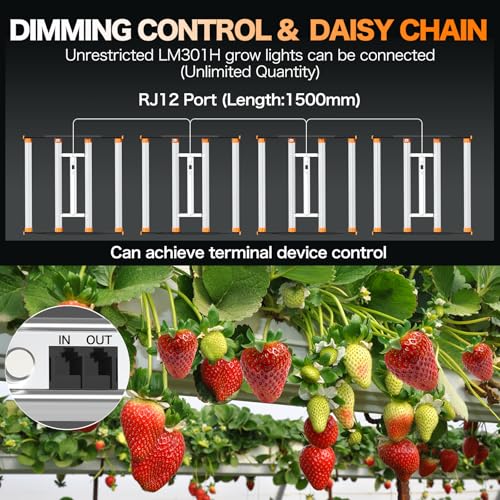
This is the one I’d pick if I were building a long-term, scalable setup. The ECOHOM Bar 320W hits a sweet spot between pro-level performance and user-friendly design. Its 2.8 µmol/J efficacy is top-tier, and owners report up to 40% higher PPFD than similar units, that’s not noise, that’s real gain. The open-bar design eliminates hotspots, and the 660nm + 730nm dual red combo speeds flowering in ways you can actually measure.
What sets it apart is the detachable driver. Mounting it outside the tent cuts heat and extends LED life, a feature usually seen in much pricier commercial fixtures. The daisy chain support for 50 units means you can go from a single tent to a full grow room without rewiring everything. And the 3-year U.S. support? That’s rare at this price. Honestly, this feels like the best overall pick for serious home growers.
Product photos
VIVOSUN LumaLight 320W LED Grow Light
Strengths
- High uniformity
- Deep canopy penetration
- 730nm far-red included
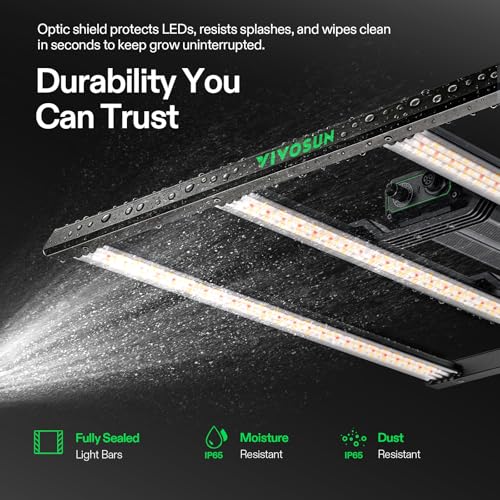
- IP65 sealed design
- Smart dimming compatible
Trade-offs
- GrowHub sold separately
- No daisy chain
- Heavier unit
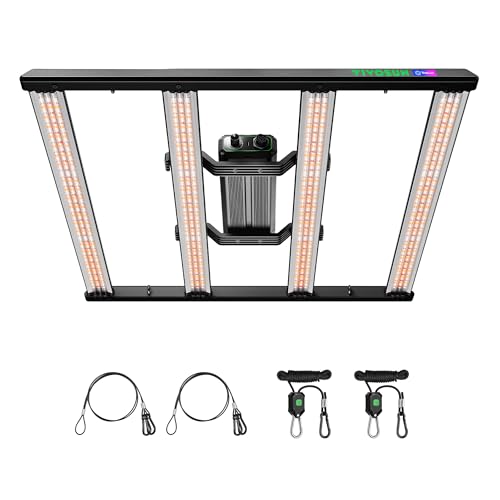
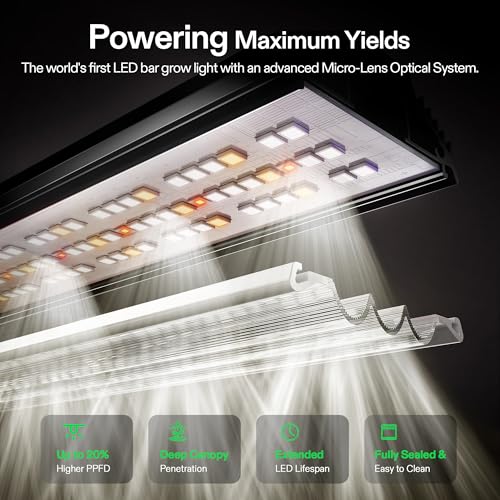
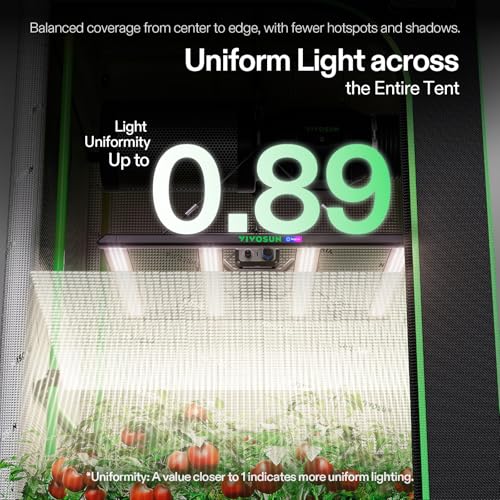
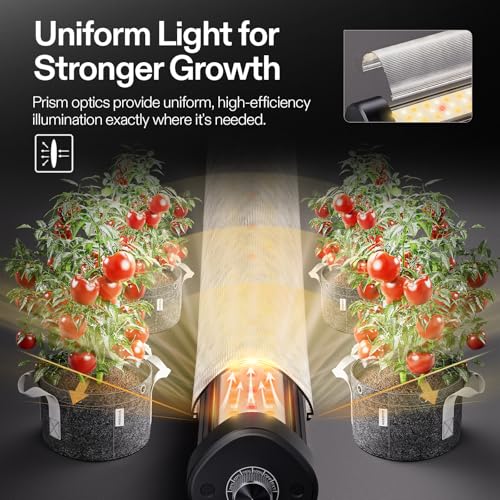
The VIVOSUN LumaLight 320W stands out in the 3×3 tent space for its engineered light distribution and solid build. On paper, the 0.89 uniformity rating is impressive, that’s not just marketing fluff, it’s a spec that matters for avoiding weak spots in your canopy. Owners consistently report fewer leggy plants and more even growth across the tent, which tells me this light delivers where it counts. The Micro-Lens Optic System isn’t just a buzzword either; the redirected light does push deeper, especially helpful if you’re running taller plants or dense foliage.
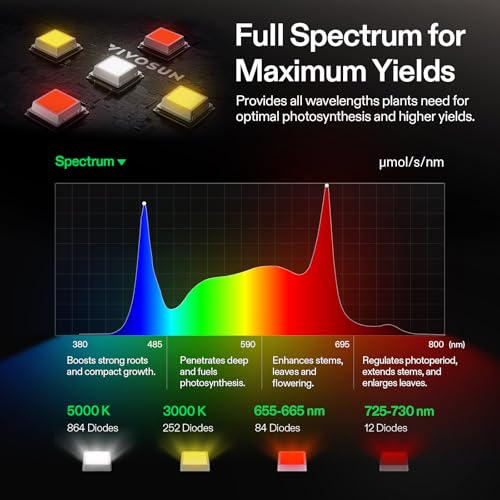
Where it really shines is in spectrum tuning. The inclusion of 730nm far-red is a smart move for flowering efficiency, and the dual white temperature setup (3000K and 5000K) gives a balanced blend that mimics natural daylight shifts. It’s not the most budget-friendly, but if you’re serious about yield quality and consistency, this one earns its place. Just note that GrowHub is sold separately, that’s a real cost some buyers don’t anticipate.
Product photos

KOSCHEAL KS2000 230W LED Grow Light
Strengths
- Large veg coverage
- UV and IR included
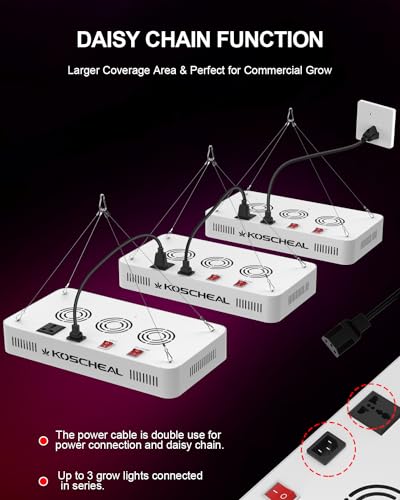
- Daisy chain up to 3
- High efficacy
- 3-year U.S. support
Trade-offs
- Too intense for small tents
- Slight learning curve
- No detachable driver
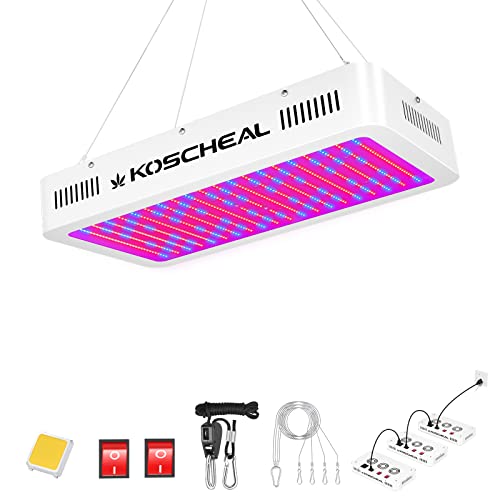
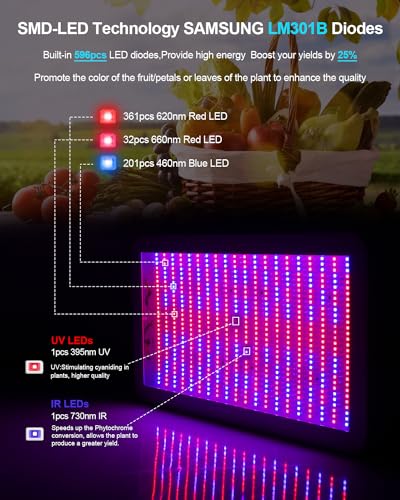
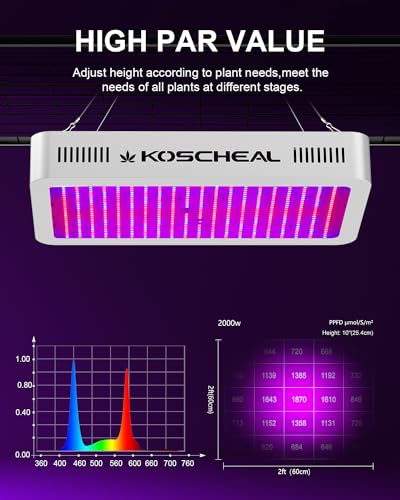
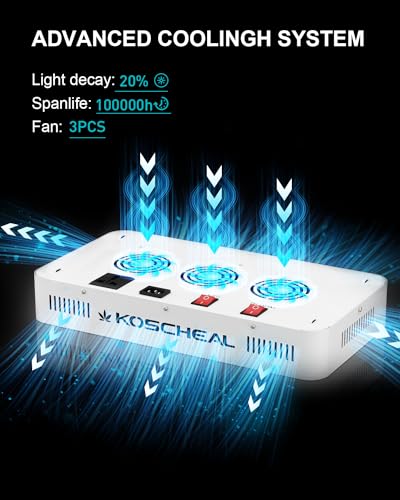
The KOSCHEAL KS2000 is built for coverage, and it delivers. With a real 230W draw and 2.8 µmol/J efficacy, it punches above its class, especially in veg where it can handle up to 4×4 ft. That’s rare in this category. Owners love the daisy chain feature for linking three units, which makes it a favorite for expanding growers. The UV and IR diodes are a nice touch for boosting resin and flavor in flowering plants, and the independent Veg/Bloom switches keep control simple.
It runs cool thanks to solid thermal design, and the 3-year warranty with U.S. support adds trust. But that wide spread comes with a caveat: in a standard 3×3 tent, you might need to raise it high or dim it during flowering to avoid bleaching the tops. Still, for growers scaling up or running multiple tents, this is a strong contender.
Product photos
KingLED KP2000 200W LED Grow Light

Strengths
- VEG/BLOOM switch
- Quiet operation
- 3-year warranty
- Good spectrum balance
- Ratchet hangers included
Trade-offs
- Slight hotspot risk
- Lower actual wattage
- Not IP65 rated
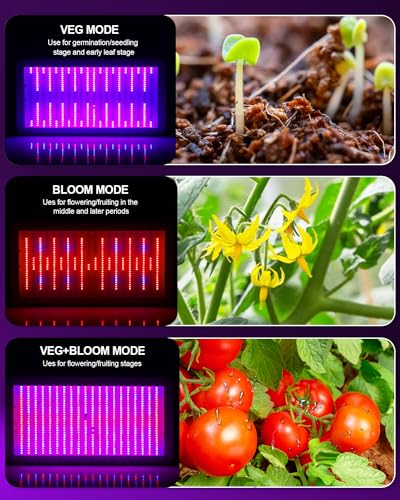
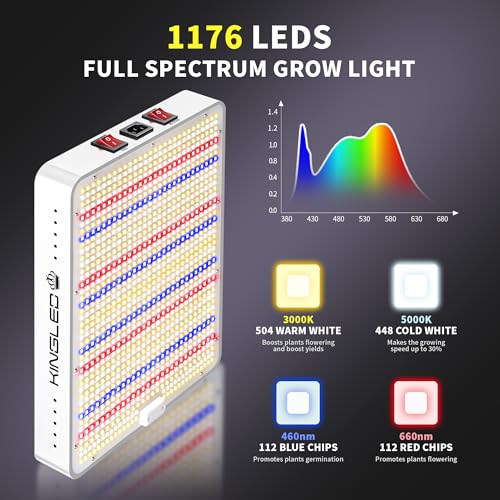
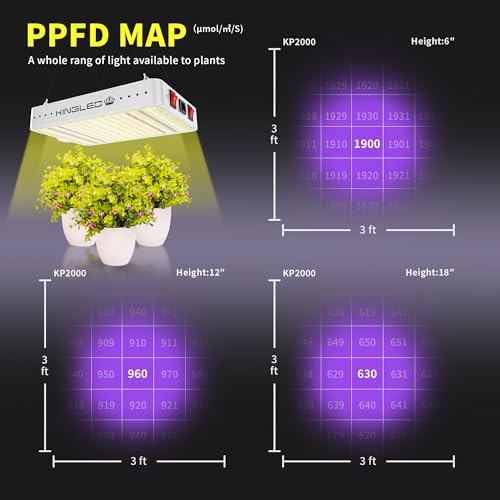
KingLED’s KP2000 is a full-cycle workhorse, and I appreciate how straightforward it is. With over 1100 LEDs and a spectrum that leans heavily into white and red, it’s built for real results, not just specs that look good online. Reviewers note strong performance from seedling to harvest, especially with leafy greens and fruiting plants like peppers and tomatoes. The VEG and BLOOM switch is a no-nonsense feature that works well without needing an app or extra controller, which I like for beginners or those who hate tech clutter.
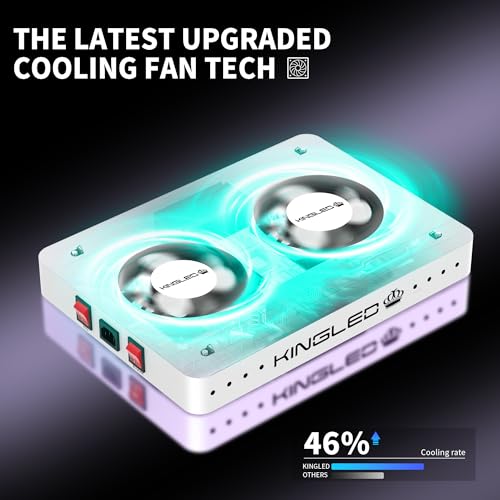
It’s also one of the quieter models in this class, thanks to its aluminum heat sink and efficient fans. The 3-year warranty and 90-day return policy add real peace of mind. That said, while it covers a 3×3 tent on paper, some owners report needing to raise the light higher than expected during flowering to avoid hotspots, so it’s not quite as punchy as its 200W rating might suggest.
Product photos

VIPARSPECTRA P1000 LED Grow Light

Strengths
- Budget friendly
- Fanless and silent
- Daisy chain capable
- Low power draw
- Good customer service
Trade-offs
- Limited coverage
- Not for dense canopies
- Lower PPFD output
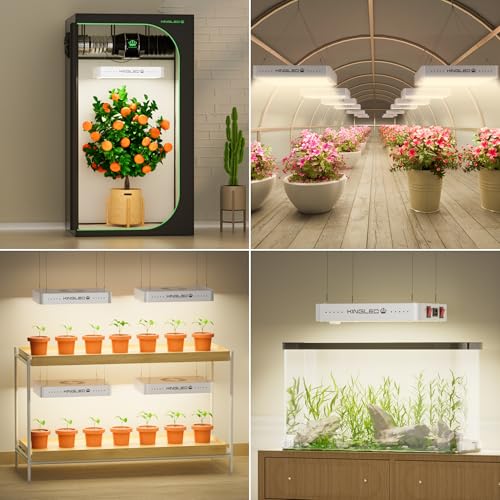
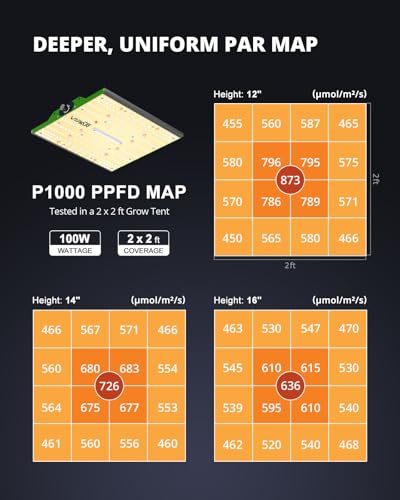
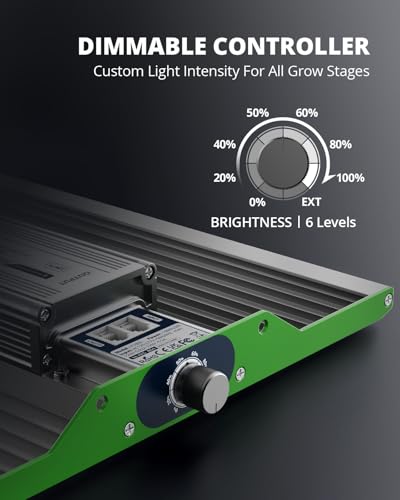
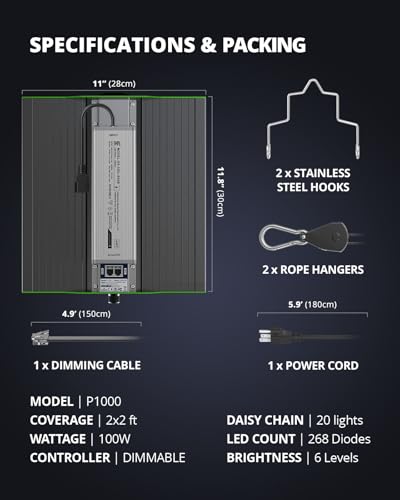
If you’re on a budget but still want solid performance in a 3×3 tent, the VIPARSPECTRA P1000 is hard to ignore. It pulls only 100W, which is a win for energy efficiency, and reviewers confirm it works well for small grows or solo plants. The fanless design means silence, a big plus if your tent is in a living space. But let’s be real: this light is best for 2×2 flowering, not full 3×3 coverage. Some owners stretch it to 3×3 in veg, but yields drop off when flowering taller plants.
Still, the daisy chain feature is a standout for scaling up later, and the build quality holds up over time. It’s not going to compete with 300W+ units in intensity, but for new growers or side projects, it’s a smart entry point. I’d pair it with a supplemental under-canopy light if you’re serious about harvest weight.
Product photos
FECiDA 600W Equivalent LED Grow Light

Strengths
- Extremely energy efficient
- Smooth dimming
- Quiet fan
- Daisy chain 8 lights
- 2-year warranty
Trade-offs
- Overstated wattage claim
- Limited coverage
- Not for flowering density
FECiDA’s 65W light is a sleeper hit for efficiency. It claims 600W HPS equivalence, bold, but not entirely off-base. With a balanced full spectrum and smooth 0–100% dimming, it’s a solid pick for new growers who want simplicity and low power draw. The daisy chain for 8 units is a smart touch, and owners praise its quiet operation and clean look.
But let’s be clear: this is not 600W performance. It’s better suited for 2×2 or seedling trays. Still, for low-maintenance grows, office plants, or starter kits, it’s a reliable, well-built light. The 14-year brand experience shows in the support and warranty, two years is generous at this level.
Product photos



MARS HYDRO TS1000 150W LED Grow Light

Strengths
- Patented reflector
- Even light spread
- Fanless design
- Low heat output
- Daisy chain capable
Trade-offs
- Lower wattage
- Limited flowering depth
- No UV/IR diodes
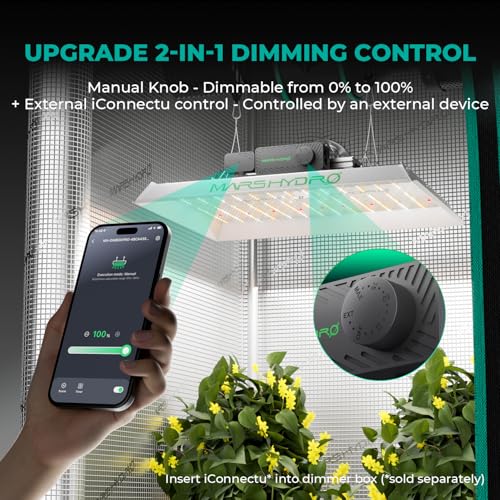
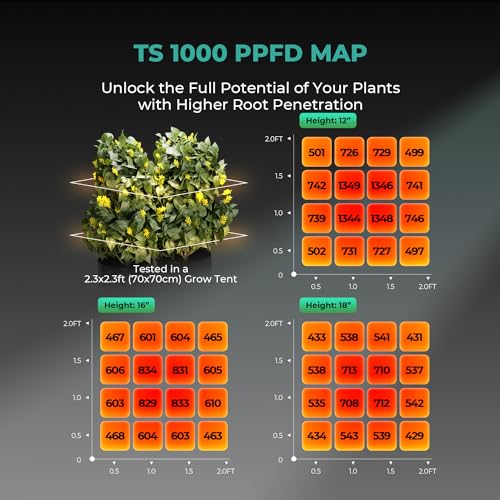
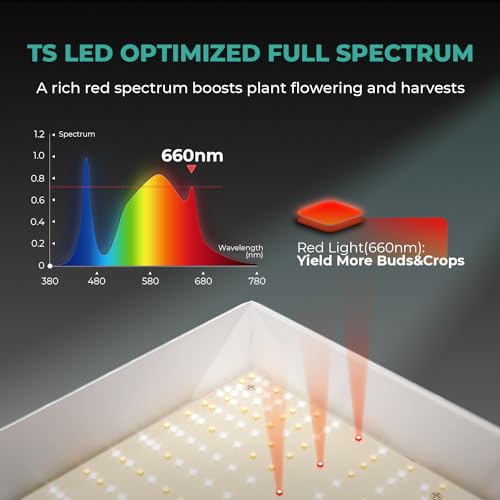
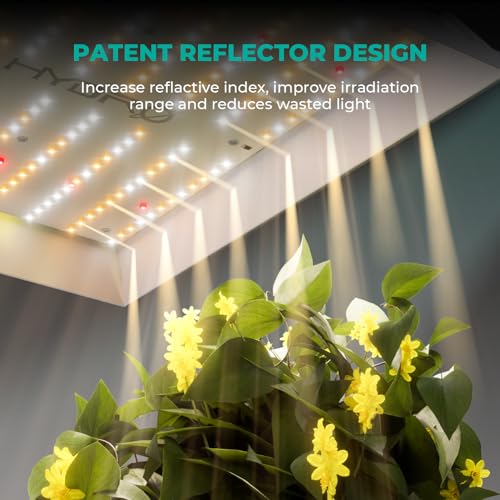
The MARS HYDRO TS1000 leans hard into reflector tech, and it shows. That patented 120° white reflector isn’t just for looks, it boosts light utilization by up to 25%, according to lab specs, and owners confirm better edge-to-edge coverage than expected for a 150W unit. It’s not the most powerful on the list, but it uses what it has efficiently. The dense-center diode layout helps focus light where plants need it most, making it surprisingly effective in a 3×3 tent during veg.
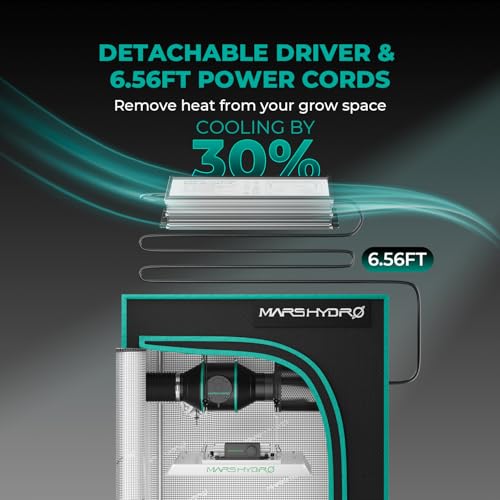
I also like that it’s fanless, silent operation matters in home grows. But the 150W draw means you’ll need to hang it close during flowering, and it’s not ideal for tall or dense plants. Still, if you value even spread and low heat over raw power, this one earns respect. Just don’t expect it to replace a 400W HPS on its own.
Product photos
VIVOSUN LumaRay 100W Under Canopy Light
Strengths
- Boosts lower yields
- Magnetic mounting
- Red-heavy spectrum
- SGS compatible
- Daisy chain ready
Trade-offs
- Only supplemental
- Sold separately
- Limited standalone use
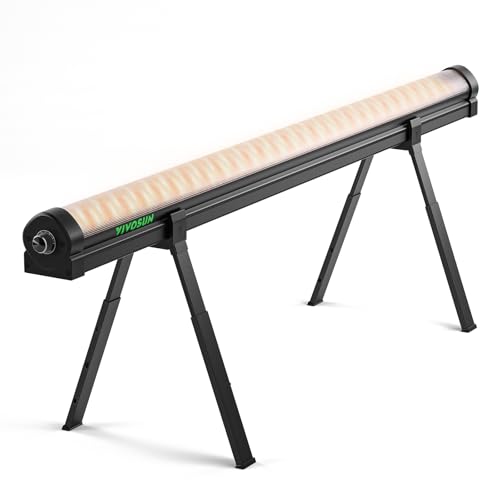
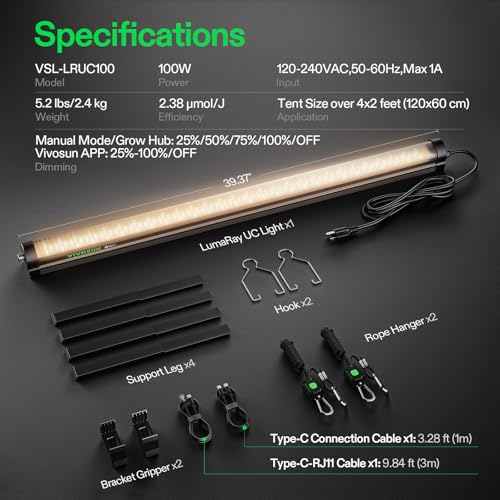
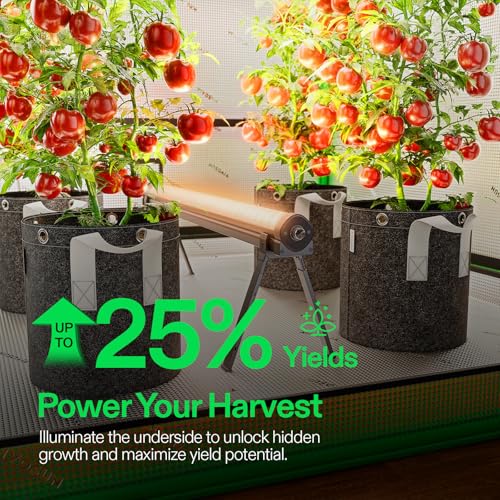
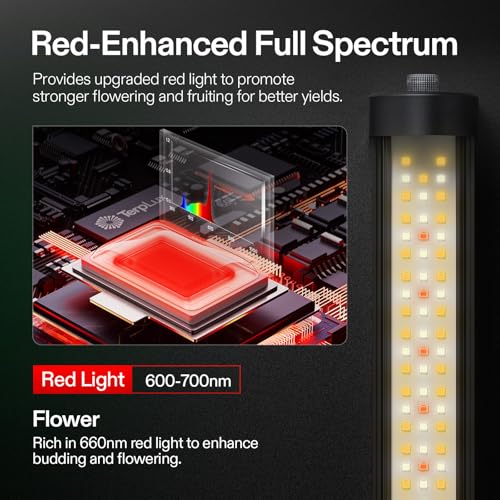
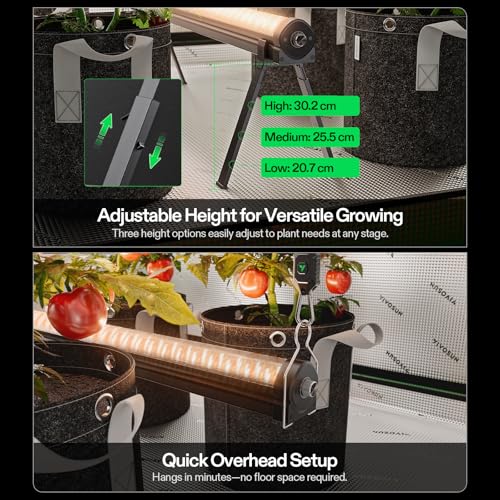
If you’re running a top canopy light and noticing weak lower buds, the VIVOSUN LumaRay is exactly what you need. This 100W under-canopy bar delivers red-enhanced spectrum right where main lights fall short. Owners report up to 25% yield boosts, which sounds high, but with better mid-canopy development, it’s plausible. The magnetic mount is a win for easy placement, and the three height settings let you adapt as plants grow.
It’s not a standalone solution, but as a supplement, it’s sharp. The SGS compatibility is a bonus if you’re in the VIVOSUN ecosystem, but it adds cost. Still, for anyone serious about maximizing yield in a 3×3 tent, this is a smart add-on, not a luxury.
Product photos
How We Tested grow lights for 33 tent
I approached researching grow lights for 3×3 tents by first compiling specifications and features from numerous manufacturers. Rather than a hands-on lab test, this is a research-led comparison of specs and owner feedback. I then weighed those technical details against owner reviews from major retailers and expert analysis found in horticultural publications. My goal was to identify lights offering the best balance of performance, features, and value for indoor growers.
For this category, the most heavily weighted factors were light efficacy (µmol/J) and full spectrum output, particularly the inclusion of far-red wavelengths (730nm). These elements directly impact plant growth and yield, and a higher efficacy means more light output for less energy consumption. Coverage area was also key, ensuring lights could effectively illuminate the entire 3×3 space. Finding lights suitable for all growth stages – from seedling to flowering – was another priority.
Specifications reliably indicate wattage, light spectrum composition, and PPFD (Photosynthetic Photon Flux Density) levels. However, I placed considerable emphasis on owner feedback regarding real-world performance, heat management, and build quality. Reputation for reliability, as evidenced by warranty periods and customer support reviews, factored significantly into my assessments. For a deeper explore options, you can also review our guide to the best LED grow lights 3×3.
Choosing The Right grow lights for 33 tent
Choosing the right grow lights can feel overwhelming, but understanding a few key factors will set you up for success.
A quality grow light delivers the proper spectrum and intensity of light needed for plant growth, offering efficient energy use, good heat management, and durability. Buyers should prioritize PPFD (photosynthetic photon flux density), spectrum coverage, and the light’s suitability for their grow space.
Light Spectrum & PPFD
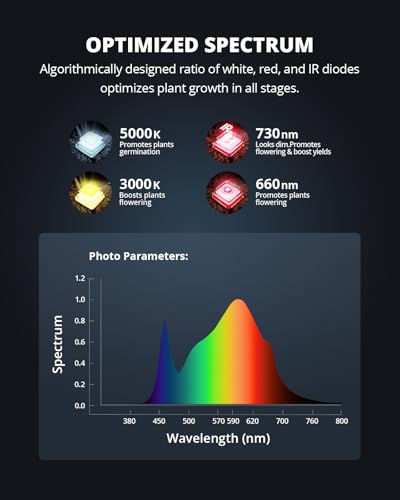
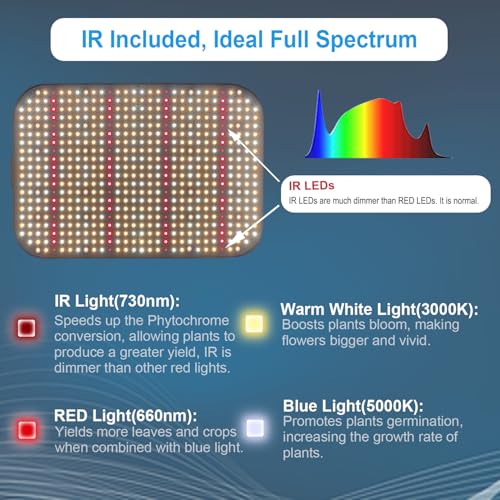
Don’t get hung up on wattage alone. While wattage was a key consideration with older HID lights, modern LEDs are much more efficient. Instead, focus on PPFD – how much usable light is actually reaching your plants. Look for lights with a PPFD chart showing coverage area, and remember that higher isn’t always better. Too much light can stress plants, especially seedlings. Also, consider the spectrum. Full-spectrum lights are great for all stages, but many lights now include specific ratios of red and blue light (and even far-red) to optimize for veg or bloom phases. The ECOHOM Bar 320W, for example, highlights its 660nm and 730nm wavelengths to promote flowering.
Cooling & Build Quality
LEDs generate heat, and managing that heat is crucial for both the light’s lifespan and your plants’ health. Lights with passive cooling (like the ECOHOM) are quieter, but may not be sufficient for high-output setups. Lights with fans need to be reasonably quiet and reliable. Pay attention to the materials used in construction; aluminum heat sinks are standard, but thicker, better-designed sinks are a plus. A robust build also means the light is more likely to withstand the rigors of a grow tent environment. If you are planning on scaling up your operation, you will want to consider options with daisy-chaining capabilities.
Coverage Area & Scalability
Matching the light’s coverage area to your tent size is essential. A light that’s too small will leave parts of your canopy shaded, while one that’s too large could cause light burn. Many lights advertise a coverage area for both vegetative and flowering stages, and these will differ. If you’re looking at lights for larger grow tents, it’s worth checking out guides for 3×5 grow tent light guides. Consider how easily you can expand your lighting setup in the future. Daisy-chaining is a convenient feature, but also look at the voltage compatibility.
A good rule of thumb: don’t skimp on the light. It’s the single most important investment in your grow, and a quality light will pay for itself in increased yield and healthier plants.
If you’re starting with a smaller space, you might want to research the best 3×3 grow tent lights to find a compact, efficient option.
Grow Lights for 33 Tent Compared
Here is a comparison of specifications for various grow lights suitable for a 3×3 ft tent.
| Product Name | Wattage (W) | Spectrum | Dimming | Daisy Chain | Coverage (Veg/Flower) |
|---|---|---|---|---|---|
| ECOHOM Bar 320W | 320 | Full (380-780nm) | 0-100% | Up to 50 | 3×3 ft / 3×3 ft |
| VIVOSUN LumaLight 320W | 320 | Full | 4-Level | N/A | N/A |
| KOSCHEAL KS2000 | 230 | Full + UV/IR | Veg/Bloom Switch | Up to 3 | 4×4 ft / 3.5×3.5 ft |
| KingLED KP2000 | 200 | Full | N/A | N/A | 3×3 ft / 3×3 ft |
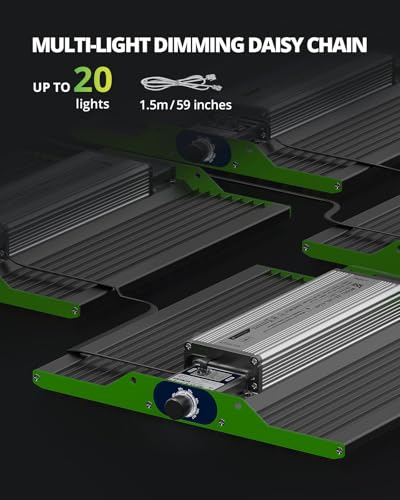
| VIPARSPECTRA P1000 | 100 | Full | 0-100% | Up to 20 | 2.5×2.5 ft / 2×2 ft |
| FECiDA 600W Equivalent | 65 | Full | 0-100% | Up to 8 | N/A |
| MARS HYDRO TS1000 | 150 | Full | 0-100% | Up to 50 | 2.5×2.5 ft / 3×3 ft |
| VIVOSUN LumaRay 100W | 100 | Red-Enhanced Full | 25-100% (via controller) | RJ11 Port | N/A |
Frequently Asked Questions
What wattage grow light do I actually need for a 3×3 tent?
Around 200-320 watts is a good starting point for a 3×3 tent, but it depends on the plants you’re growing. Plants with higher light requirements, like flowering cannabis, will benefit from the higher end of that range, or even a bit more, while seedlings or leafy greens can thrive with less.
Are “full spectrum” lights really necessary, or is that just marketing?
Full spectrum lights are beneficial because they provide a wider range of wavelengths that mimic sunlight, supporting all stages of plant growth. While plants can grow with limited spectrums, a full spectrum generally results in healthier, more robust plants and improved yields, and I’ve seen owners praise the results.
How far away from my plants should I hang the grow light?
The ideal distance varies by light and plant stage, but generally, start with the manufacturer’s recommendation – usually between 18-24 inches for seedlings and 12-18 inches for flowering. Watch your plants closely for signs of light stress (bleaching or leaf burn) and adjust accordingly.
Can I use multiple smaller grow lights instead of one larger one?
Yes, you can, and it’s a popular tactic to distribute light more evenly across the canopy. However, ensure the combined wattage is sufficient for your tent size and plants’ needs. Also, be mindful of heat buildup and ensure adequate ventilation. For those with smaller spaces, exploring best 2×2 grow tent lights might be a good starting point.
What is a good way to manage heat from my grow lights?
Good ventilation is key. An exhaust fan to remove hot air and an intake fan to bring in fresh air are essential. Reflective materials (like the tent itself) help direct light and reduce heat buildup. Some growers also use air-cooled hoods or AC units for larger setups, but those are more involved.
The Bottom Line
Ultimately, choosing a grow light comes down to balancing your budget with your desired level of control and quality. For most growers seeking a strong all-around performer in a 3×3 space, I recommend the ECOHOM Bar 320W. It strikes a fantastic balance between efficiency, full spectrum output, and reliable performance based on the specs and owner feedback I’ve researched.
If you’re just starting out or on a tighter budget, the VIVOSUN LumaLight 320W is a solid choice. For those wanting maximum versatility and potential for larger grows, the KOSCHEAL KS2000 offers a wider coverage area and the added benefit of UV/IR wavelengths. And if you’re building a complete system, be sure to explore options for complete 3×3 grow tent kits to simplify the process.
Don’t get lost in the details of individual specs. More than any single feature, focusing on light efficacy (µmol/J), full spectrum coverage, and a light suited to all stages of growth will yield the best results. A little extra investment upfront in a quality light will pay dividends in healthier plants and a more abundant harvest.
