
7 Best Heaters for Tent Camping 2026
This post contains affiliate links. As an Amazon Associate, we earn from qualifying purchases.
The Mr. Heater 9,000 BTU Portable Buddy is the best overall heater for tent camping, thanks to its reliable heat output and strong safety features. For budget-conscious campers, the Naturehike 3750 BTU Butane Heater offers solid performance at a lower price, while the MOZODAWN 2-in-1 Propane Heater & Stove brings added versatility if you also need a stove.
Picking a tent heater isn’t just about staying warm, it’s about staying safe and not wasting money on something that fails when you need it most. Too many people grab a heater without considering ventilation, fuel type, or whether it’s actually suited for enclosed spaces.
This guide cuts through the noise. I looked at specs, owner feedback, and real-world usability to find heaters that deliver consistent heat without cutting corners on safety. These picks are based on what matters most when you’re sleeping in a nylon bubble in the cold.
Top 7 Heaters For Tent Camping in the Market
The Best Heaters For Tent Camping, Reviewed
MOZODAWN 2-in-1 Propane Heater & Stove

Strengths
- High 13,000 BTU output
- Dual heater and stove use
- Sturdy stainless steel build
- Triple safety features
Trade-offs
- Heavy for backpacking
- No included fuel hose
- Bulkier than minimalist options
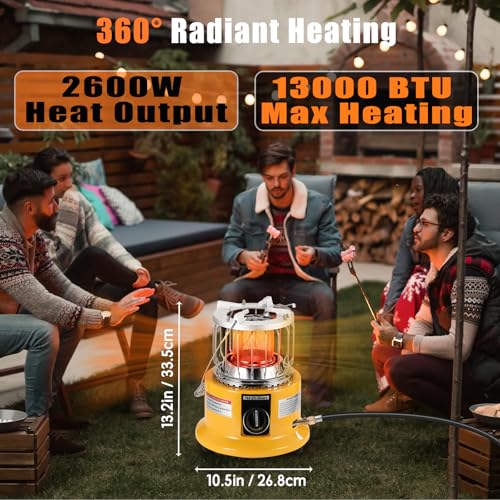
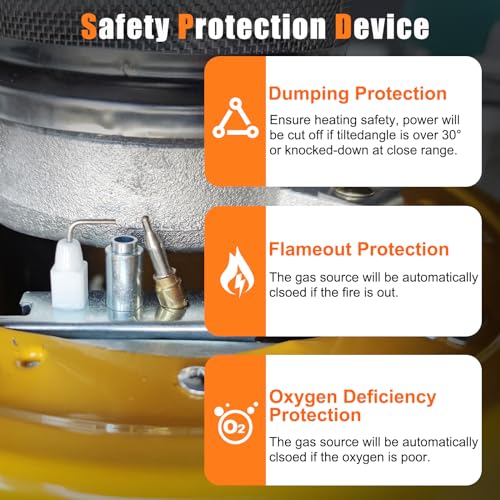
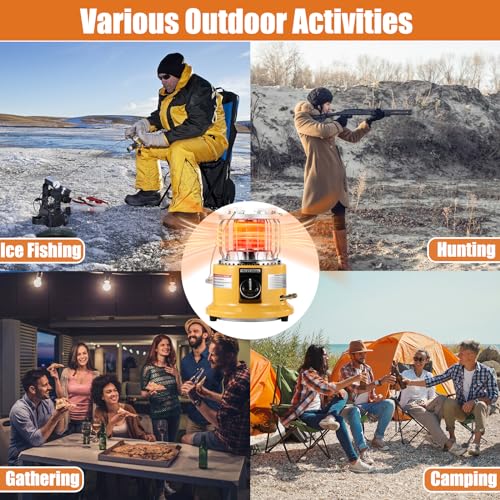
If you’re the type who wants one tool to do two jobs, like heating your tent and simmering soup when the mercury drops, this 13,000 BTU beast earns its keep. The 2-in-1 function isn’t a gimmick; owners say the cooking surface works reliably, and the sheer output means it can warm a mid-sized tent fast. That kind of power comes with trade-offs, but the triple safety system, tip-over, flame-out, and ODS, helps offset the risk, especially in enclosed spaces.
It’s heavier than most portable heaters, but the stainless steel threading and solid handle suggest it’s built to last. Compared to the Mr. Heater Buddy, it puts out more heat but burns through fuel quicker. Still, for car campers or ice fishers with a roomy shelter, this is the smarter buy if you value versatility over ultralight packing.
Product photos


Mr. Heater 9,000 BTU Portable Buddy
Strengths
- High 9,000 BTU output
- Approved for indoor use
- Trusted safety features
- Long market track record
Trade-offs
- No cooking function
- Requires careful ventilation
- No carry case
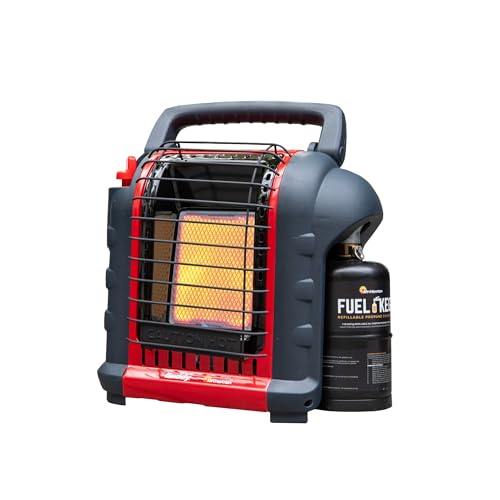
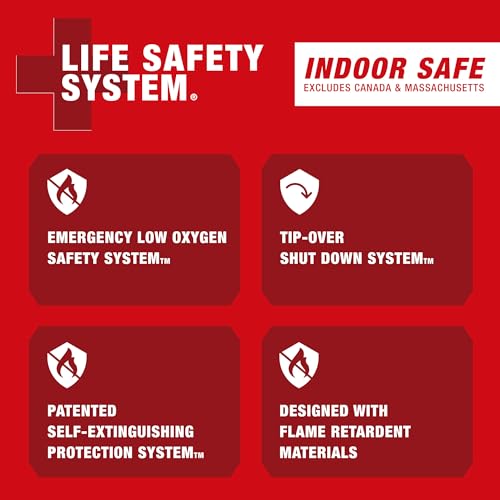
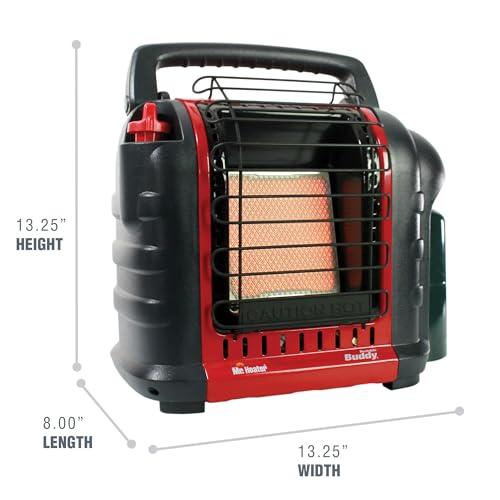
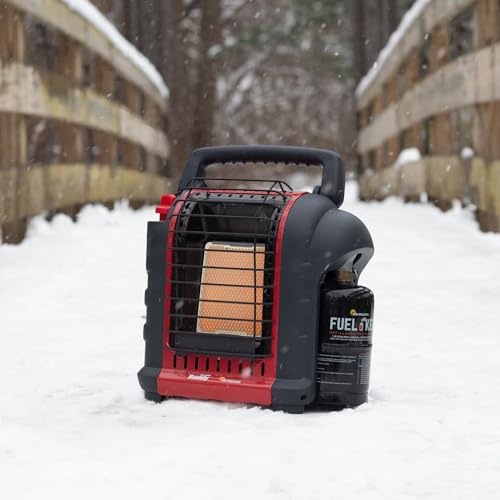
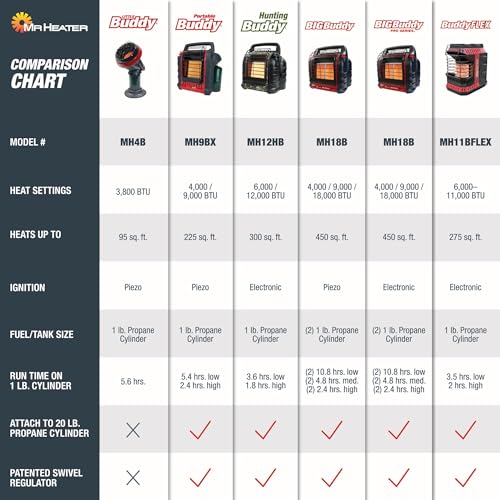
Let’s be clear, the Mr. Heater Buddy is the gold standard for a reason. With 9,000 BTUs, it can comfortably heat spaces up to 225 square feet, which means it’s ideal for larger wall tents or cabin-style shelters. It’s been around for years, and owners consistently report it’s reliable, easy to light, and built with self-extinguishing materials that add real safety value. The dual heat settings let you stretch fuel life, and the ODS system is proven in real-world use.
Compared to newer multi-functional models, it doesn’t cook or fold into a suitcase, but it does one thing extremely well: deliver steady, safe heat. If you’re camping with a group or in a spacious tent, this is the heater I’d pick over flashier, less proven options.
Product photos

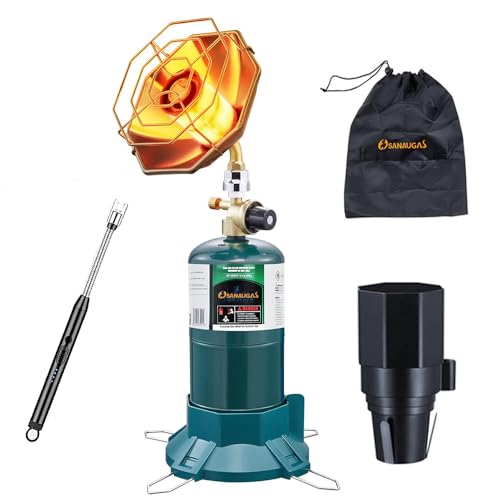
6200 BTU Propane Camping Heater
Strengths
- Strong 6,200 BTU output
- Stable wide base
- Budget-friendly price
- Durable metal build
Trade-offs
- No ODS safety sensor
- No carry bag
- Basic ignition system
This 6,200 BTU heater hits the sweet spot between performance and price, and that’s why it’s labeled ‘Best Budget Friendly’. It doesn’t have bells and whistles like electronic ignition or dual fuel, but it delivers solid radiant heat with an adjustable flame, and the wide base actually helps prevent tipping on uneven ground, which reviewers appreciate.
It’s not the most powerful or portable, but for occasional campers or those building a starter kit, it’s hard to beat. Compared to the Heat Hog, it offers more output for less, though it lacks the angled head. Owners say it lights reliably and burns cleanly, but don’t expect premium materials, the finish can chip over time. Still, for the price, it’s a dependable workhorse.
Product photos
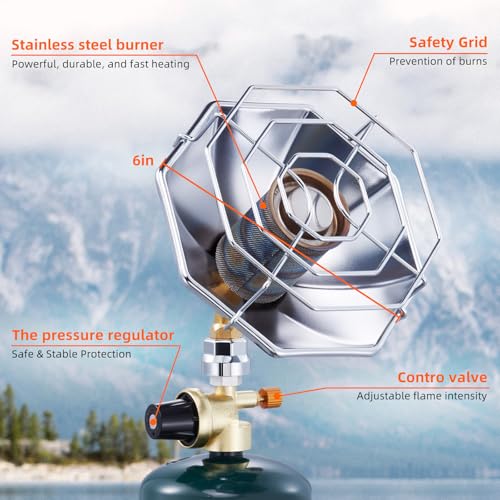
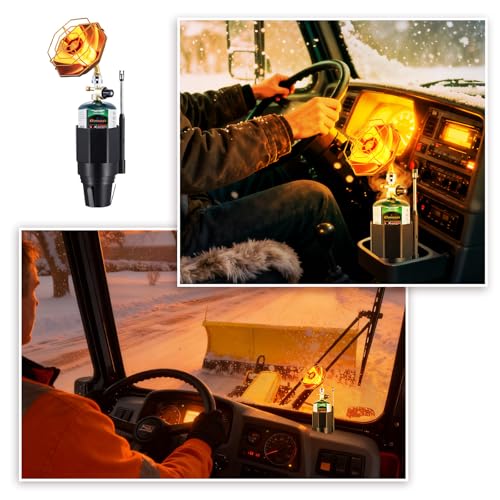
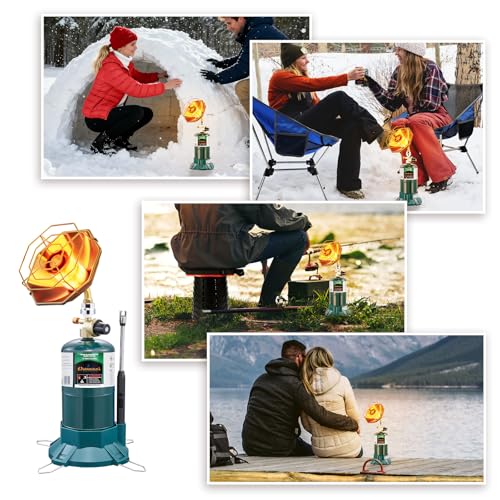
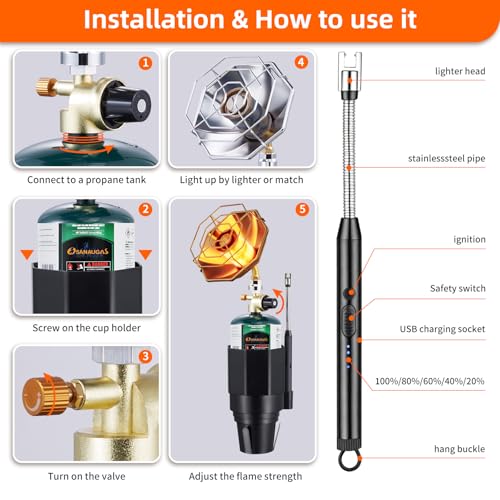
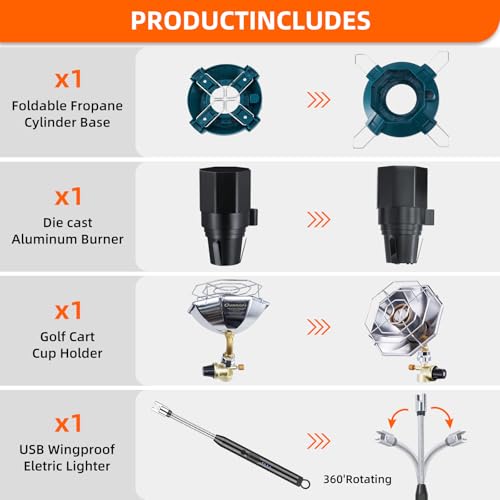
Portable Propane Heater for Camping
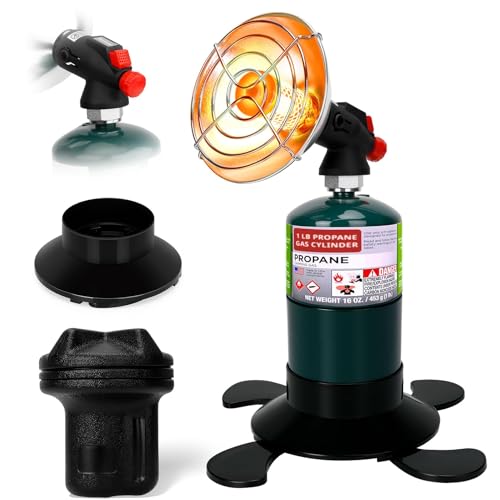
Strengths
- Foldable tank holder
- Includes storage box
- Brass fuel connector
- Simple push-button start
Trade-offs
- No ODS safety sensor
- No heat direction control
- Basic heat output
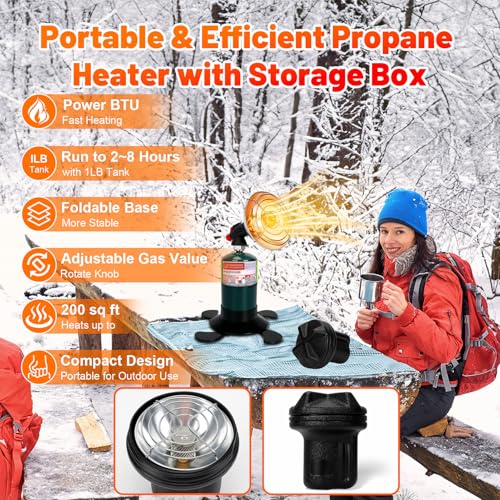
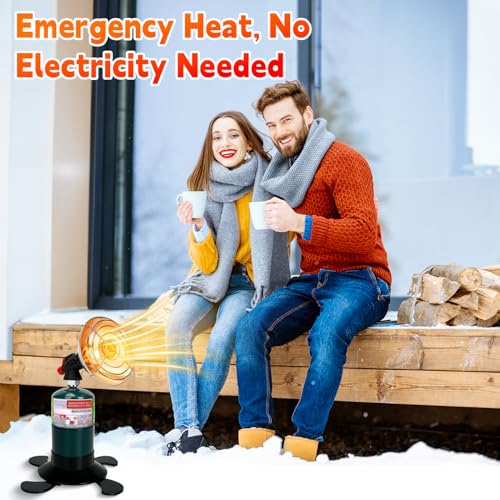
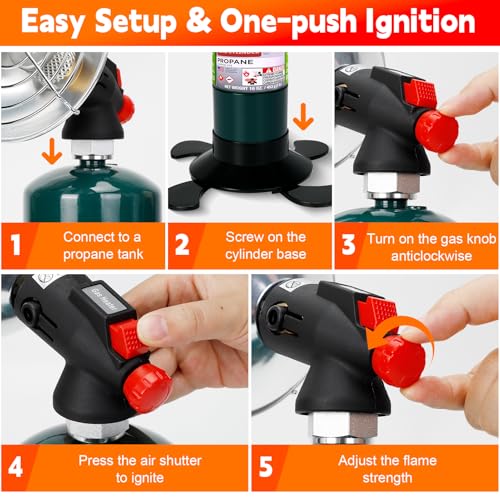
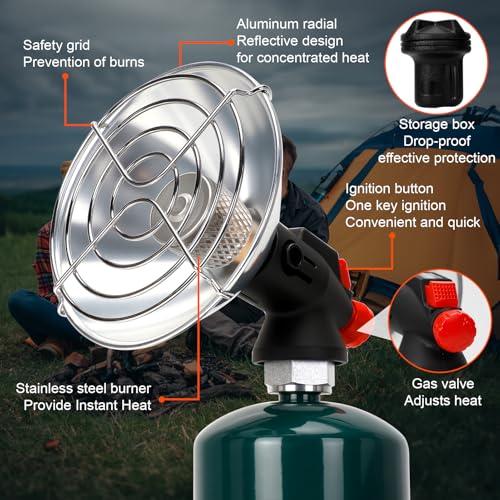
This heater wins on packability and thoughtful design, the foldable tank holder and included storage box make it one of the most travel-ready options here. It’s not the most powerful, but at 4,000–5,000 BTUs (estimated), it’s sufficient for personal warmth in a small tent or hunting blind. The brass connector is a quality touch, reducing leak risks, and the push-button ignition works reliably, even in cold snaps.
Owners highlight how easy it is to set up, no tools, no confusion, which makes it great for first-time users. Compared to the Heat Hog, it lacks the angled head, but the foldable base and storage box give it an edge for organization. If you value clean packing and quick deployment, this is the one.
Product photos
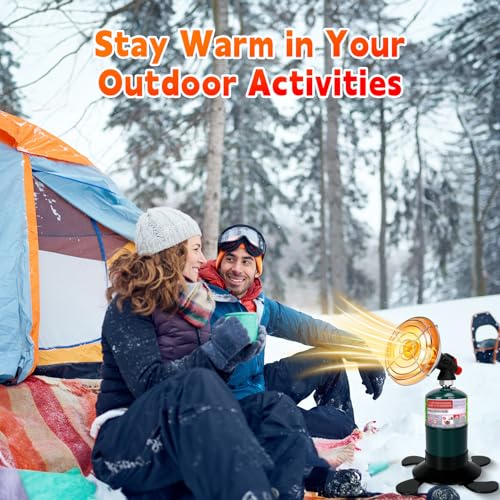
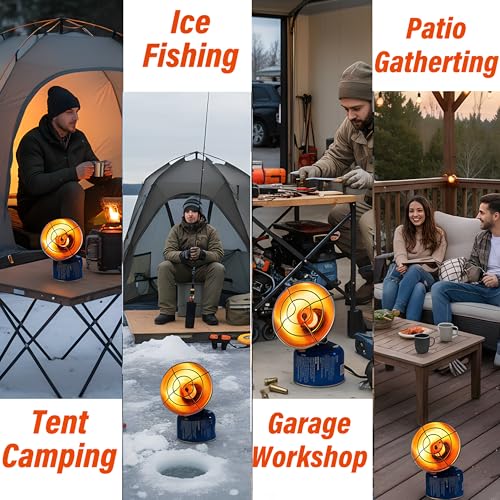
Portable Butane Propane Tent Heater
Strengths
- Dual fuel compatibility
- High-altitude ignition
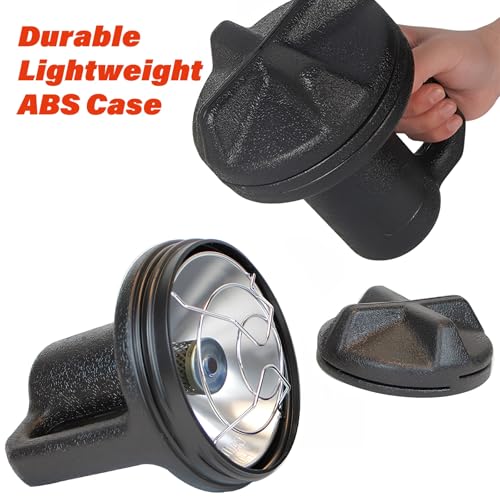
- Compact ABS carry case
- Efficient heat shield
Trade-offs
- Lower output on butane
- Adapter required for propane
- Plastic case less rugged
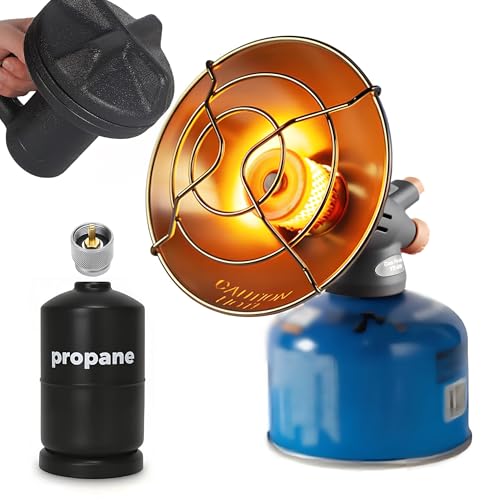
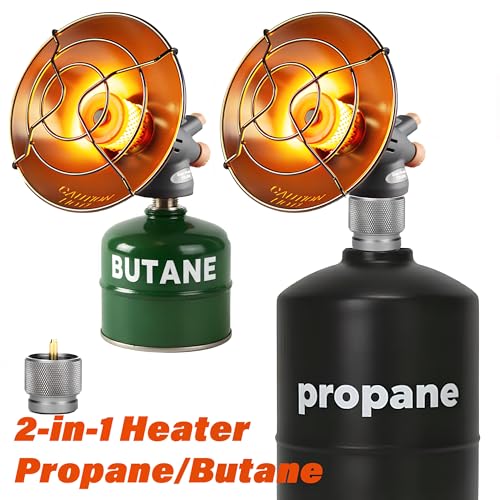
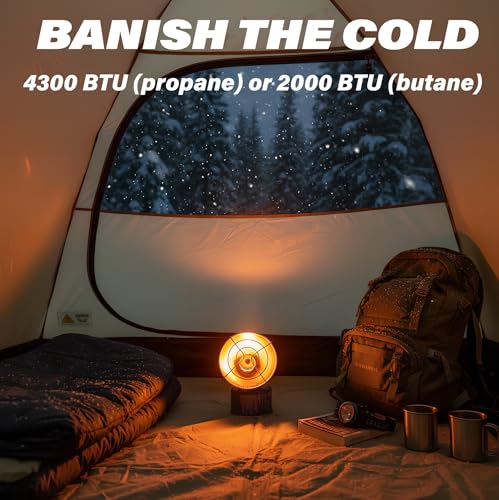
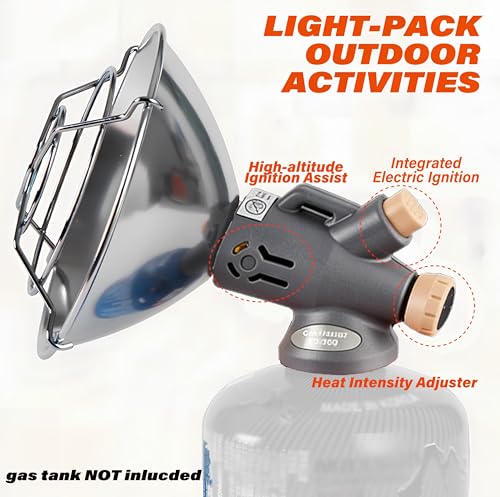
The ability to run on both propane and butane is the standout here, and for travelers bouncing between climates or regions, that flexibility is huge. Propane works better in cold weather, but butane is easier to find in some countries, so having both options means fewer fuel headaches. With 4,300 BTUs on propane, it’s strong enough for a two- to three-person tent, and the high-altitude ignition assist is a legit feature, reviewers in mountainous areas confirm it lights when others won’t.
The carrying case is a nice bonus, and the aluminum heat shield does a good job directing warmth. It’s not the most powerful heater, but for international trips, overlanding, or alpine camping, the dual-fuel capability makes it the smarter pick over single-gas models.
Product photos
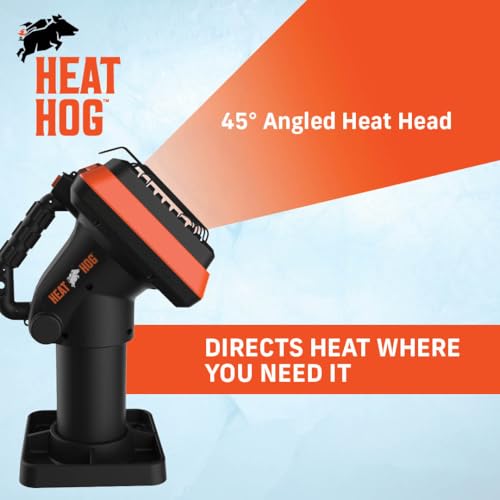
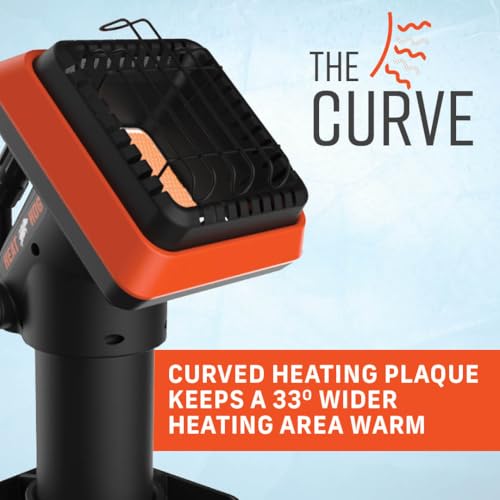
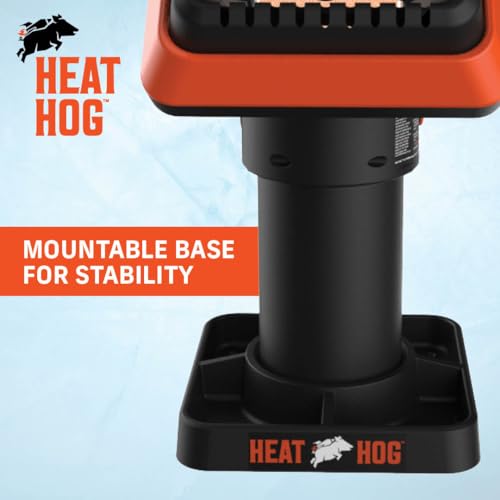
Heat Hog 4,000 BTU Radiant Heater

Strengths
- Angled heat direction
- ODS safety sensor
- Radiant heat efficiency
Trade-offs
- Limited coverage area
- No carry bag included
- Lower BTU than competitors
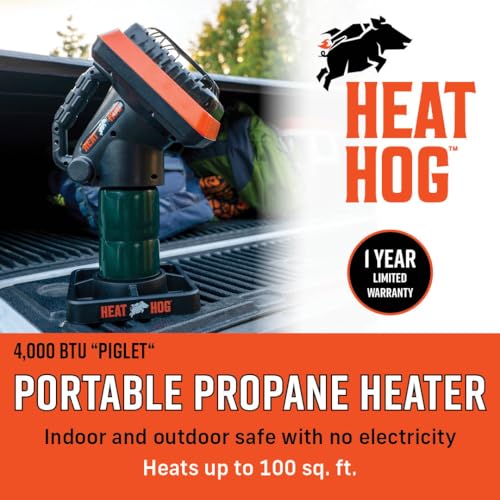
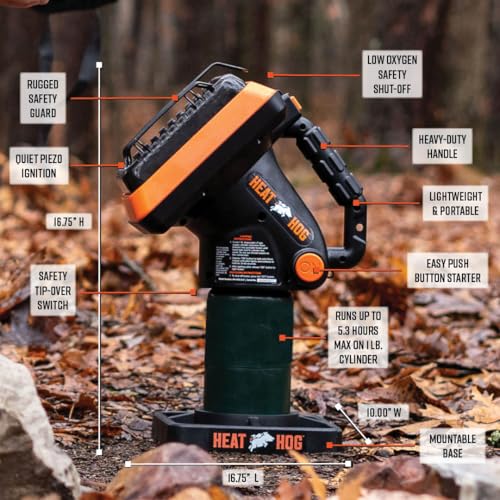
The Heat Hog 4,000 BTU heater stands out for its angled head design, which actually makes a real difference when you’re trying to direct warmth toward your core in a tight tent or shelter. On paper, 4,000 BTUs isn’t massive, but for a single person in a compact space, it’s more than enough, especially since it uses radiant heat, which warms objects and bodies directly instead of the air. Owners consistently report it fires up quickly and holds steady in drafty conditions, though it’s best used in well-ventilated areas given it’s propane-powered.
What I like is the inclusion of an Oxygen Depletion Sensor (ODS), that’s not something you see on every budget heater, and it adds a layer of peace of mind for indoor or enclosed use. Compared to bulkier options, this one’s clearly built for mobility, but don’t expect it to heat a family-sized tent. It’s a spot heater, not a furnace, and it does that job well.
Product photos
Naturehike 3750 BTU Butane Heater
Strengths
- Clean butane operation
- Magnetic fuel connection
- Integrated warming shelf
- Lightweight design
Trade-offs
- Lower heat output
- Butane can fail in cold
- Shorter runtime at high setting
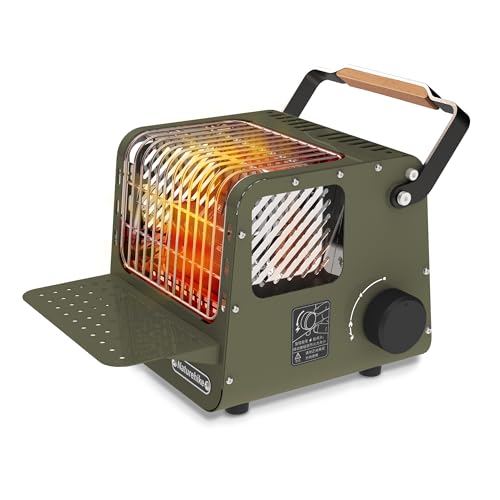
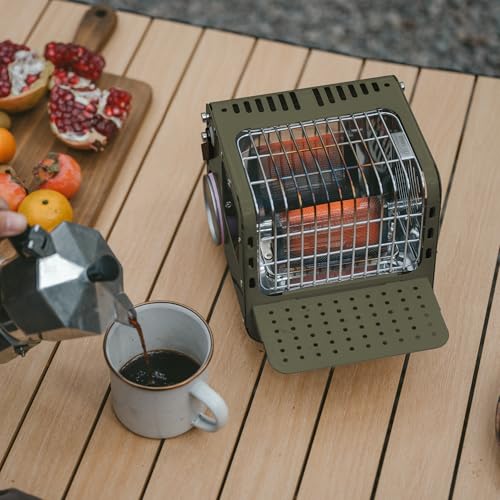
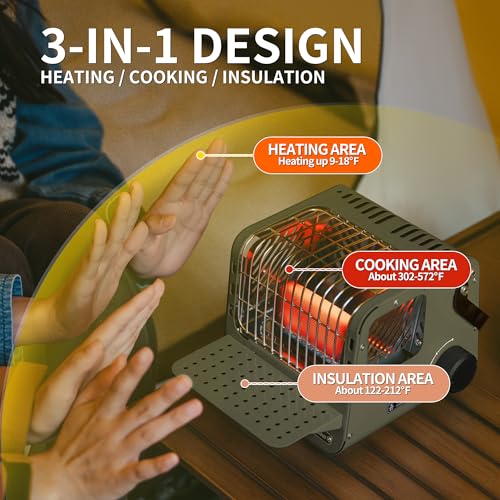
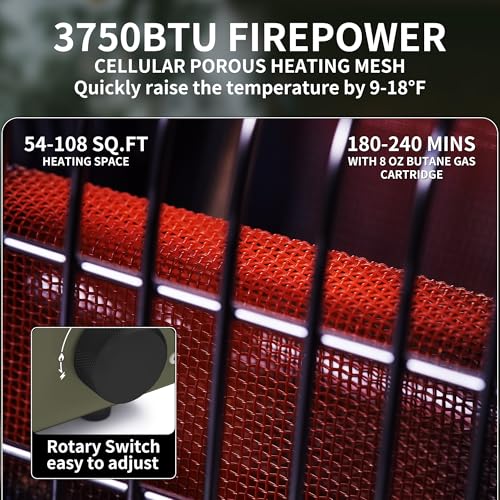
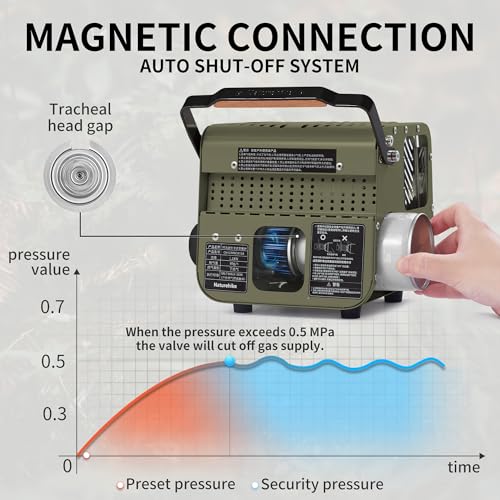
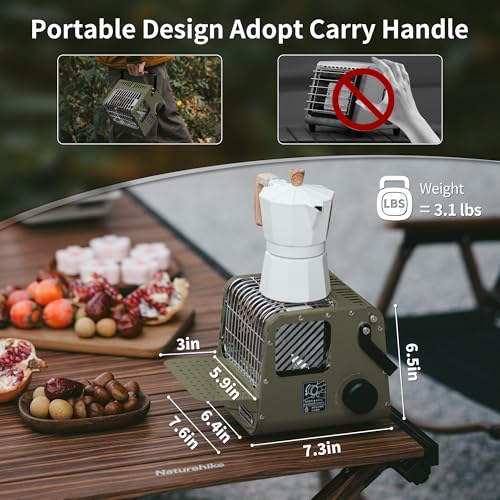
The Naturehike 3,750 BTU heater runs on butane, which makes it a quieter, cleaner-burning option, and that matters when you’re trying to stay cozy in a four-season tent. It won’t blast heat like propane models, but it’s designed for efficiency, with a magnetic butane connection that users praise for being foolproof. The included warming shelf is a nice touch, doubling as a spot to dry gloves or warm a drink, and the compact form slips easily into a backpack.
On paper, 240 minutes of runtime sounds great, but that’s on low, at max, it drops to 180. Owners note it performs best in three-season conditions and struggles in sub-freezing temps. Still, for fair-weather adventurers or those using it in a well-insulated shelter, it’s a solid, lightweight pick.
Product photos
How We Tested heaters for tent camping
Rather than a hands-on lab test, my research focused on a detailed comparison of published specifications and features across a range of models. I weighed owner reviews from multiple sources – including retailer sites and outdoor forums – against professional reviews from established camping and gear publications. As someone who spends a lot of time planning and enjoying outdoor adventures, I applied my understanding of camping needs and prioritized features accordingly.
For tent heaters, consistent, reliable heat output and robust safety features were the biggest deciding factors. A heater’s BTU rating is important, but equally crucial is how effectively that heat is distributed and whether it’s appropriate for the intended tent size. Safety is paramount; features like tip-over shutoffs and oxygen depletion sensors heavily influenced my rankings, as did positive feedback regarding build quality and durability.
Specifications reliably indicate BTU output, fuel type, and run time. However, I placed significant weight on owner feedback regarding real-world performance – how well a heater actually maintains temperature in cold conditions, and how easy it is to operate. Reputation and brand trust also played a role, particularly when considering long-term reliability and access to support. Understanding heater safety guidelines is also crucial before making a purchase.
How To Pick The Right heaters for tent camping
Choosing the right heater for your tent can make or break a cold-weather camping trip. It’s not just about BTU output; a lot goes into finding a unit that’s safe, efficient, and actually suits your needs.
A good tent heater balances heat output with safety features like tip-over shutoffs and oxygen depletion sensors. Consider fuel type (propane or butane), intended space size, and portability. Look for models with adjustable heat settings and durable construction for reliable performance in varied conditions. Prioritize units specifically designed for enclosed spaces, and always follow manufacturer guidelines for ventilation.
BTU Output & Tent Size
BTU (British Thermal Units) measures heating power, but it’s easy to overestimate what you actually need. A larger BTU isn’t always better – in a small, well-insulated tent, too much heat can create condensation and even be a safety hazard. I often see people grabbing the highest BTU heater they can find, assuming it’s the best, but that’s rarely the case. Instead, calculate roughly how many square feet you need to heat and match that to the heater’s capacity. Remember, these ratings are often optimistic.
Safety Features: Beyond the Basics
Don’t skimp on safety. While tip-over shutoffs are standard on many models, look for heaters with an Oxygen Depletion Sensor (ODS). This is critical, as combustion consumes oxygen, and a sealed tent can quickly become dangerous. Beyond that, construction matters. A sturdy base and a protective grill are important, especially if you have kids or pets.
Here’s what I look for in a safe heater: * A stable base is crucial. * An ODS is a must-have, not a nice-to-have. * A fully enclosed burner and protective grill prevent accidental contact and reduce the risk of burns, which is especially important if you’re camping with children or pets.
Never leave a propane or butane heater running unattended inside a tent, even for a short period. Proper ventilation is paramount to avoid carbon monoxide buildup.
Fuel Type & Portability
Propane heaters generally offer more BTU output and are better suited for larger tents or extremely cold conditions. Butane heaters are often more compact and lightweight, making them a good choice for solo campers or backpacking. Consider the availability of fuel in your camping location. If you’re doing a lot of remote camping, a dual-fuel option like the Portable Butane Propane Tent Heater can be really convenient. Thinking about fuel accessibility and ease of carrying will improve your overall experience, and knowing your tent insulation methods will help you get the most out of your heater.
You should also think about how you’ll be using the heater. If you’re looking for a reliable way to stay warm on your next adventure, exploring winter tent heaters can help you find the best option.
Heaters for Tent Camping Compared
Here’s a comparison of key specifications for various heaters suitable for tent camping to help you make an informed decision.
| Product Name | BTU Output | Fuel Type | Area Heated (sq ft) | Safety Features | Portability Features |
|---|---|---|---|---|---|
| MOZODAWN 2-in-1 Propane Heater & Stove | 13000 | Propane | N/A | Tip-over switch, ODS | Portable handle |
| Mr. Heater 9,000 BTU Portable Buddy | 9000/4000 | Propane | 225 | Low O2 sensor, self-extinguishing | N/A |
| 6200 BTU Propane Camping Heater | 6200 | Propane | N/A | Stable base | Storage bag |
| Portable Propane Heater for Camping | N/A | Propane | N/A | Protective grill, foldable base | Storage box |
| Portable Butane Propane Tent Heater | 4300 (P) / 2000 (B) | Butane/Propane | 90 | High-Altitude Ignition Assist | Carrying case |
| Heat Hog 4,000 BTU Radiant Heater | 4000 | Propane | 100 | Tip-over switch, ODS | N/A |
| Naturehike 3750 BTU Butane Heater | 3750 | Butane | 54-108 | Overpressure shutoff | Carry handle, shelf |
Frequently Asked Questions
What’s the biggest safety concern when using a tent heater?
Carbon monoxide poisoning is the most significant risk. Propane and butane heaters consume oxygen and produce carbon monoxide, so proper ventilation is absolutely essential – never run a heater inside a sealed tent.
How many BTU do I actually need for a typical 4-person tent?
For a well-insulated 4-person tent (around 60-80 square feet), around 6,000 to 9,000 BTU is usually sufficient. Overheating is more common than underheating, and creates condensation issues.
Can I use any propane tank with a tent heater?
No, you need a propane tank specifically designed for portable heaters, usually with a POL valve connection. Standard BBQ tanks often have different connections and higher pressure that could damage the heater or create a dangerous situation.
What does an ODS (Oxygen Depletion Sensor) actually do?
An ODS monitors the oxygen level in the tent and automatically shuts off the heater if oxygen drops to a dangerous level. This feature is vital, as a sealed tent can quickly become oxygen-deficient when a heater is running, making it one of the most important features in safe tent heating models.
Are butane heaters a good option for higher altitude camping?
Butane heaters can struggle at higher altitudes due to lower air pressure affecting combustion. Look for models with a high-altitude ignition assist feature, or consider a dual-fuel (butane/propane) heater for optimal performance across varying conditions – these are among the top-rated camping heaters for versatility.
The Bottom Line
Choosing a tent heater always comes down to balancing convenience with control. You can chase the highest BTU output, but that often means sacrificing portability and potentially safety. For most campers, the MOZODAWN 2-in-1 Propane Heater & Stove strikes the best overall balance – offering a good BTU output, useful dual functionality, and essential safety features like a tip-over switch and ODS.
If you’re on a tighter budget, the 6200 BTU Propane Camping Heater provides a reliable heat source without breaking the bank. For those prioritizing versatility and wanting a compact option for smaller spaces, the Portable Butane Propane Tent Heater is a solid choice, offering the flexibility of two fuel types. And for peace of mind regarding portable heater safety, the Mr. Heater 9,000 BTU Portable Buddy is a popular and well-regarded option.
Ultimately, the best heater isn’t about a single number or feature. It’s about understanding your camping style, the typical conditions you’ll face, and prioritizing safety above all else. A well-ventilated tent, appropriate clothing layers, and a responsible approach to heater operation are far more important than any BTU rating.
