
9 Best Hunting Tents of 2026
This post contains affiliate links. As an Amazon Associate, we earn from qualifying purchases.
The HUNTSEN 360 Degree See Through Hunting Blind stands out as the best overall pick for hunters who need full visibility and reliable concealment, while the FUNHORUN Lightweight 270 Degree offers a solid budget-friendly option without sacrificing core features. For solo hunters focused on mobility, the camppal 1 Person 4 Season Hunting Tent delivers serious weather protection in a compact package.
Hunting isn’t just about spotting game, it’s about staying unseen, staying dry, and staying ready. A poor shelter can blow your cover, collapse in wind, or turn into a miserable hassle when you’re miles from the trailhead.
This guide cuts through the marketing hype. I looked at specs, owner feedback, and real-world demands to find hunting tents that actually perform. These picks balance stealth, durability, and practical design based on what matters most in the field.
Top 9 Hunting Tents in the Market
The Best Hunting Tents, Reviewed
HUNTSEN 360 Degree See Through Hunting Blind

Strengths
- Dual door access
- 360° visibility
- Lighter and more compact
Trade-offs
- No floor mat included
- Slightly bulkier than solo blinds
- Mesh can snag if not careful
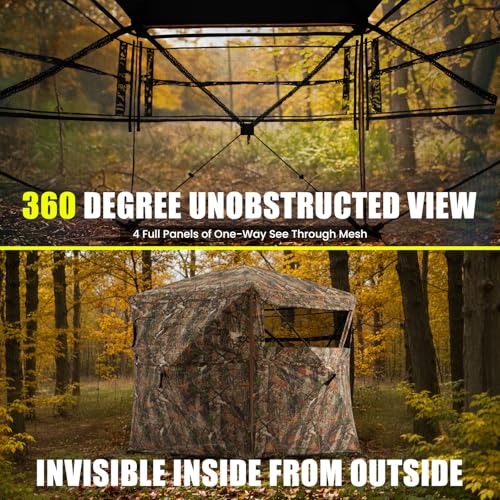
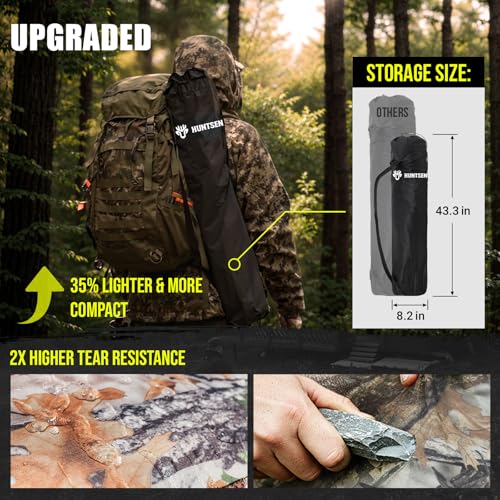
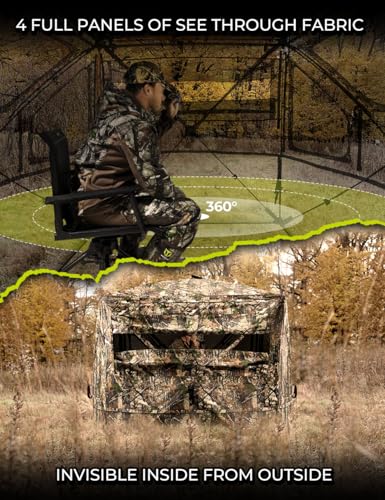
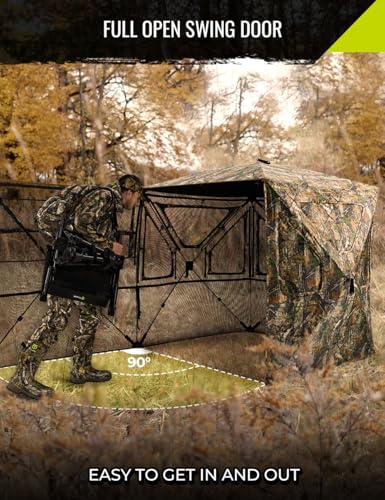
If you’re looking for the most well-rounded hunting blind here, this one earns the title. The 35% lighter build and more compact fold make it easier to haul than most 2–3 person blinds, yet it still delivers 2X tear resistance, owners consistently praise its durability in thickets and wet brush. The dual-door setup is a standout: one full 90° door for silent entry with gear, and a half-door for quick access, both minimizing noise that could spook game.
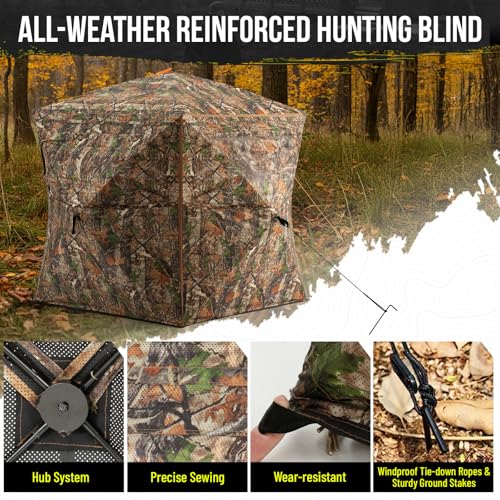
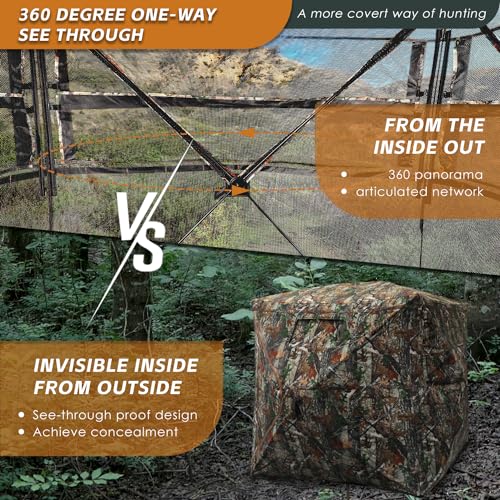
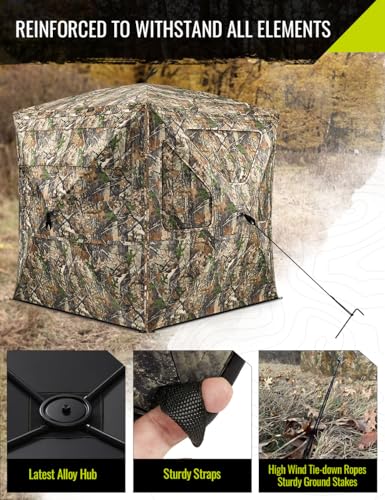
The 360° one-way mesh is sharp and functional, with a camouflage pattern that blends well in both forest and field settings. At 66” tall and 75” wide, it gives two hunters room to sit comfortably without feeling cramped. Compared to the OLIXIS and TIDEWE models, it hits the sweet spot between weight, visibility, and stability. The reinforced corners and metal hubs add confidence in wind, and the bright orange pull ring is a small but smart touch for faster setup in low light.
Product photos


FUNHORUN 360 Degree See Through Hunting Blind

Strengths
- Standing room height
- Includes removable floor mat
- Spacious for 3–4 people
Trade-offs
- Heaviest option
- Bulky when packed
- Not ideal for long hikes
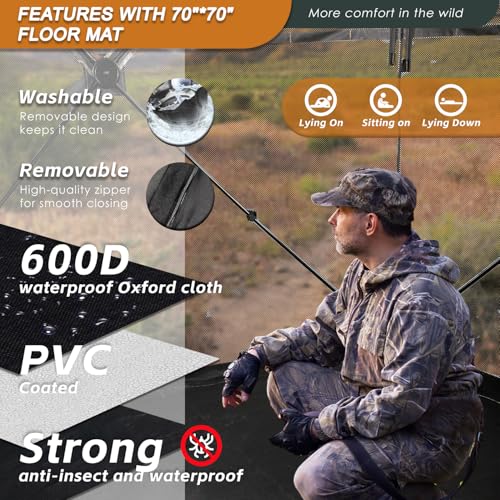
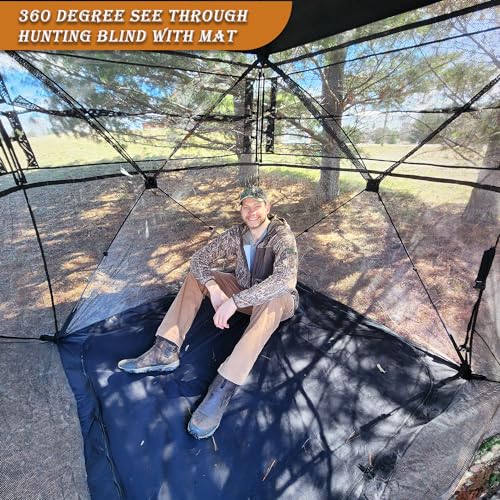
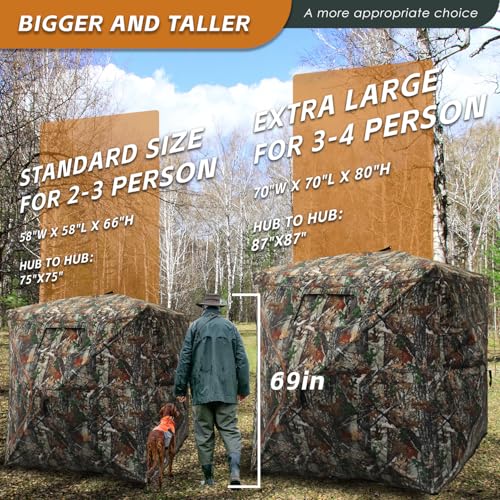
This blind goes big, literally. At 70” x 70” with an 80” peak height, it’s one of the tallest here, letting hunters stand upright, which is rare in pop-up designs. That makes it ideal for group hunts or anyone needing extra room for gear, gear bags, or even a camp chair. The included waterproof floor mat is a standout feature; it zips in and can be removed for cleaning, which solves a common pain point with muddy or damp blind floors.
The 360° one-way panels deliver excellent visibility, and owners like the silent-slide windows for adjusting sightlines without noise. But at 22 lbs, it’s the heaviest in this list, more of a vehicle-based or ATV setup than a backpacker’s choice. The pop-up mechanism works well, but the size means it takes more space in your pack or truck. For those who prioritize interior comfort and don’t mind the weight, it’s a strong contender.
Product photos

TIDEWE 360° See Through Hunting Blind

Strengths
- Removable blackout curtain
- Silent swing doors
- Excellent concealment
Trade-offs
- Slightly heavier
- Curtain adds setup step
- Higher price point
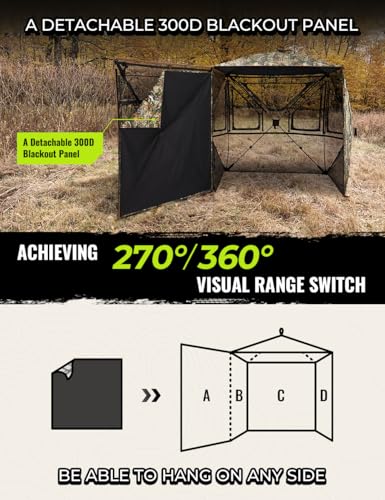
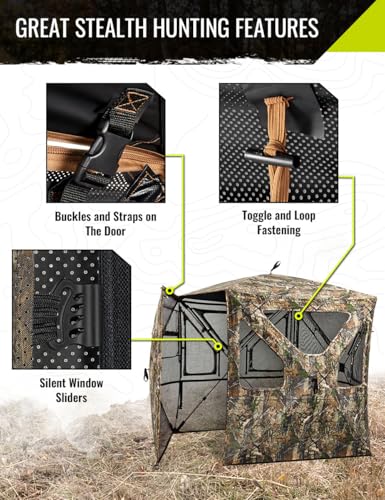
The removable 300D blackout curtain is a brilliant feature, hunters can switch between 360° and 270° views depending on sun angle or concealment needs, which adds real tactical flexibility. The 360° perforated mesh is effective and distortion-minimized, and the swing doors open fully with buckles, not zippers, making entry and exit whisper-quiet.
This model blends durability and function well: metal hubs, reinforced corners, and 10mm poles mean it can take a beating. Owners praise how well it disappears into the landscape, thanks to the forest fade camo and brush-in loops. It’s not the lightest, but for hunters who prioritize stealth and adaptability, it’s the top pick. Compared to other 360° models, it offers the best concealment control.
Product photos
FUNHORUN Lightweight 270 Degree Hunting Blind
Strengths
- Lightest 2–3 person blind
- Ultra-quiet material
- Quick pop-up setup
Trade-offs
- Less wind stability
- Fiber rods
- No floor mat
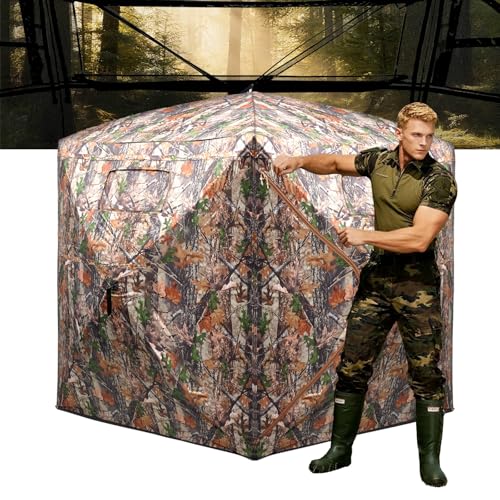
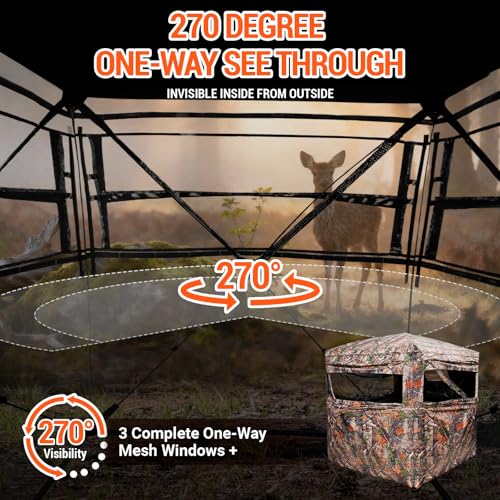
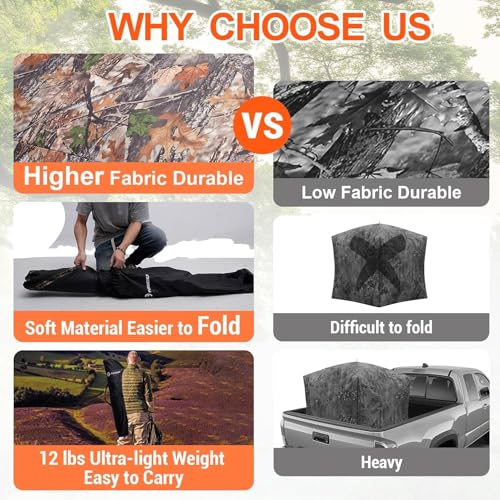
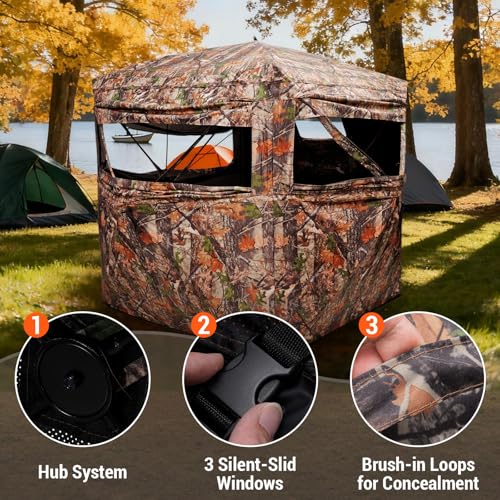
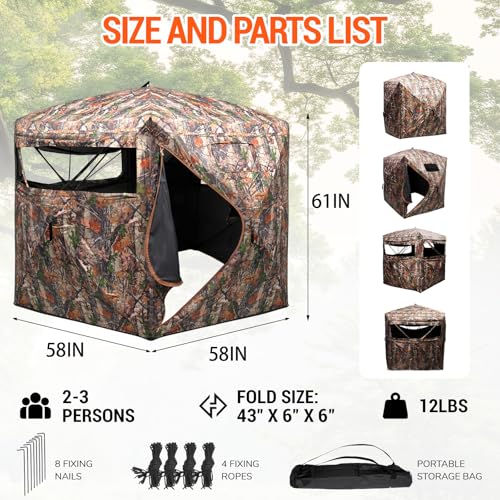
At just 12 lbs, this is the lightest 2–3 person blind here, a serious advantage for anyone hiking in. The advanced composite fabric isn’t just lighter, it’s quieter, which owners confirm helps prevent noise when adjusting position or reaching for gear. The 270° one-way mesh is sharp and gives a wide field of view, though it doesn’t match the full immersion of 360° models.
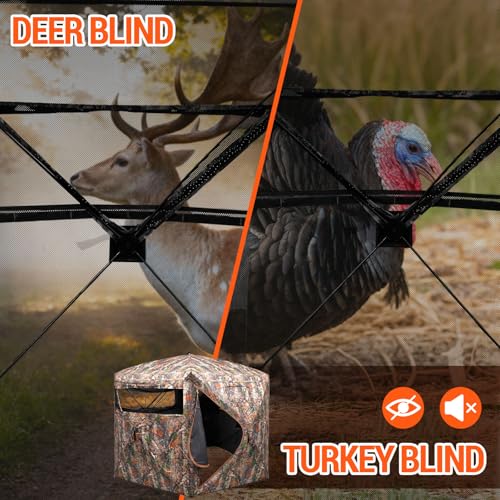
The silent-slide windows work smoothly, and the camo pattern is optimized for deer and turkey habitats. Setup is consistently reported as fast and reliable. But the fiber support rods, while light, don’t handle high winds as well as fiberglass or metal. If you’re deep in the backcountry and every ounce counts, this is the one to grab, just avoid setting up on exposed ridges.
Product photos
OLIXIS 270° See Through Hunting Blind
Strengths
- Lightweight
- Stable cross-braced frame
- Includes accessory bag
Trade-offs
- 270° view only
- No floor mat
- Zippers can snag
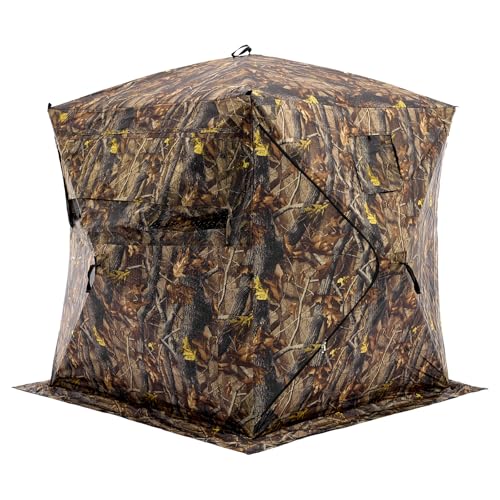
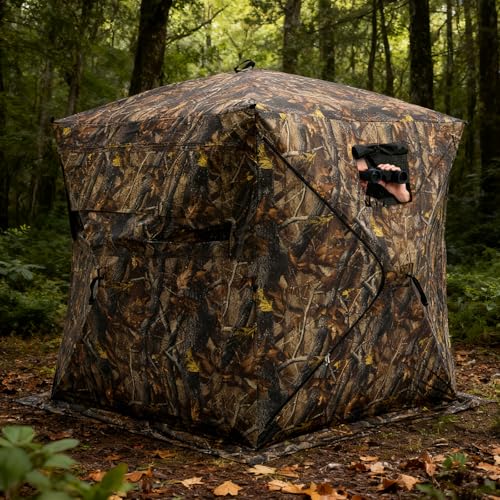
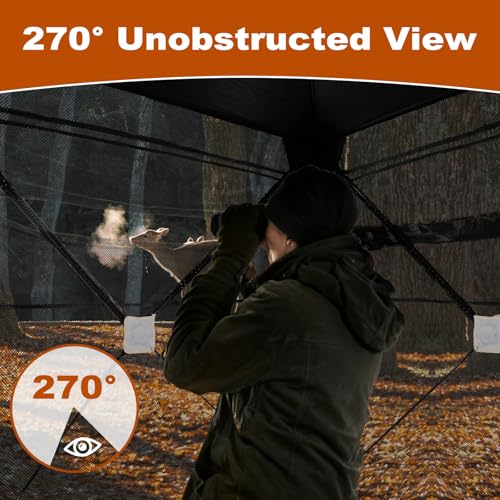
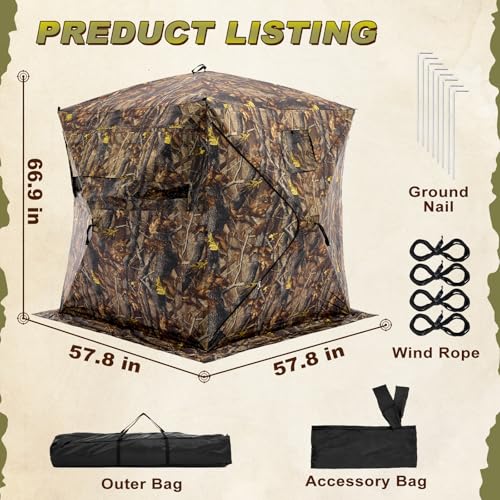
At 13.5 lbs and with a 270° view, this blind delivers solid performance for the price. The cross-braced frame and 8 stakes give it surprising stability for its weight, and owners report it holds up well in moderate wind. The 270° mesh is less immersive than full 360° models, but it still offers excellent visibility for turkey or deer hunting from a fixed position.
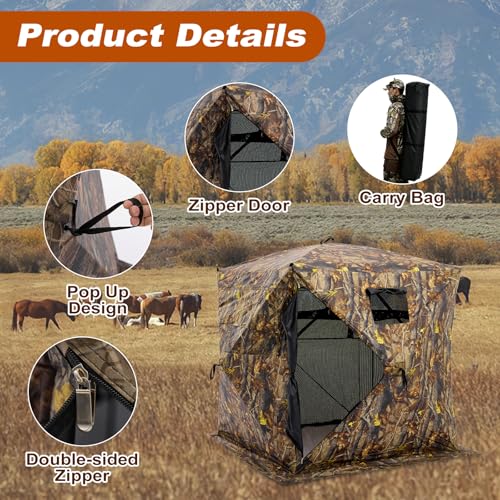
What makes it the best value is the thoughtful extras: the included accessory bag for calls and gear, and the smooth pop-up mechanism that works reliably after repeated use. It’s not as tall or roomy as the FUNHORUN stand-up model, but for two hunters in a compact, dependable blind, it’s hard to beat. The camo pattern works well in woodland settings, though it’s less versatile in open fields than some.
Product photos
TIDEWE 270° See Through Hunting Tent

Strengths
- Exceptional stability
- Durable 10mm poles
- Silent sliding windows
Trade-offs
- No floor mat
- Slightly heavier
- Limited color options
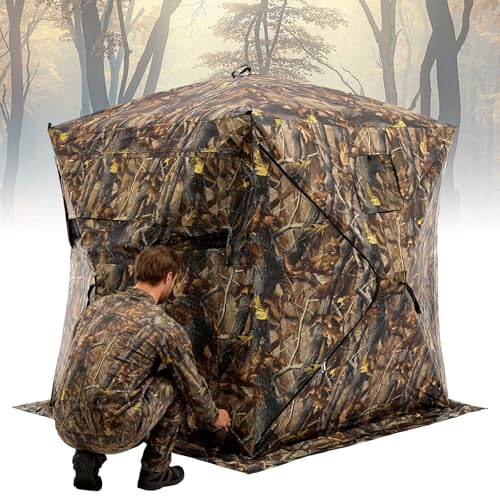
When it comes to raw stability, this TIDEWE model stands out. The 10mm fiberglass poles, metal hubs, and reinforced corners give it a tank-like feel, owners consistently report it staying put in wind and rain where lighter blinds wobble or collapse. The 270° one-way mesh is clear and distortion-free, ideal for turkey hunters needing precise sightlines.
It’s not the lightest at 13.5 lbs, but the 500D+ carry bag adds durability for rough transport. The noise-free sliding windows are smooth and silent, a small detail that matters when you’re waiting for a gobbler. Compared to the OLIXIS, it feels more rugged, though it lacks some convenience features like an accessory bag. If you hunt in exposed areas or face unpredictable weather, this is the one that inspires the most confidence.
Product photos
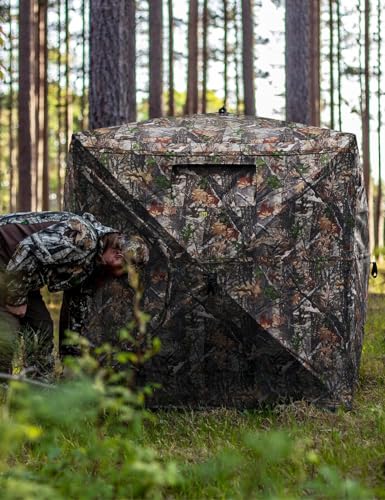
FUNHORUN 270/360 Degree Pop Up Hunting Blind

Strengths
- Full-open door access
- Good 360° view
- Portable and quick setup
Trade-offs
- Fiber rods less sturdy
- Door lacks storm flap
- Less wind resistance
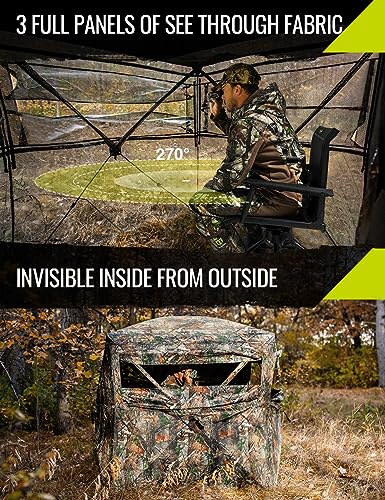
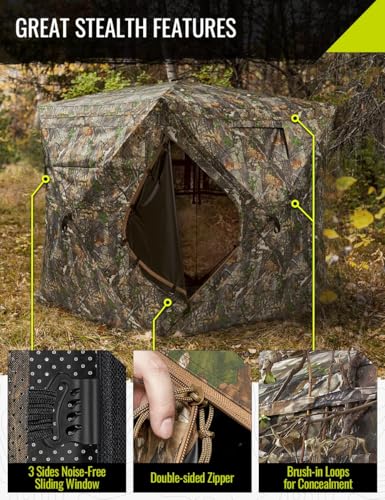
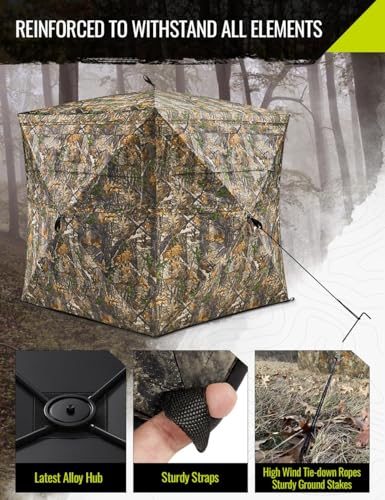
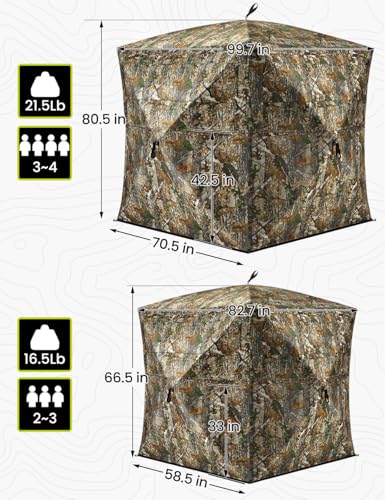
The full-open door design is what sets this blind apart, owners specifically mention how easy it is to wheel in a cart or even accommodate a hunting partner with mobility gear. That makes it unusually accessible, especially compared to models with zip-only entries. The 360° mesh delivers wide visibility, though the frame uses fiber rods instead of metal, which some reviewers note feels less rigid in strong winds.
At 15 lbs, it’s reasonably portable, and the pop-up mechanism works reliably in most conditions. The camouflage pattern is effective in mixed terrain, and the three silent-slide windows help with shot setup. But compared to the HUNTSEN or TIDEWE, it doesn’t feel quite as rugged. It’s a smart pick if easy access is your top priority, but not the best if you’re facing high winds or need maximum durability.
Product photos
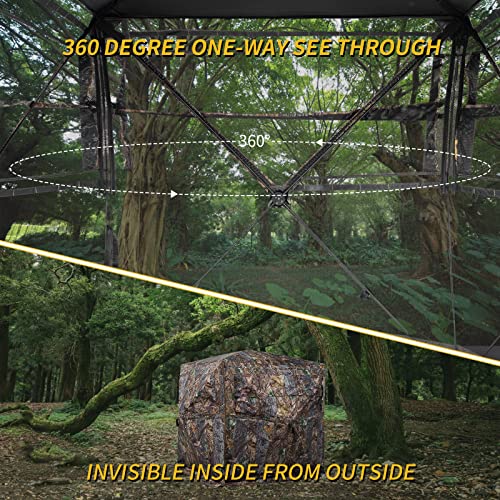

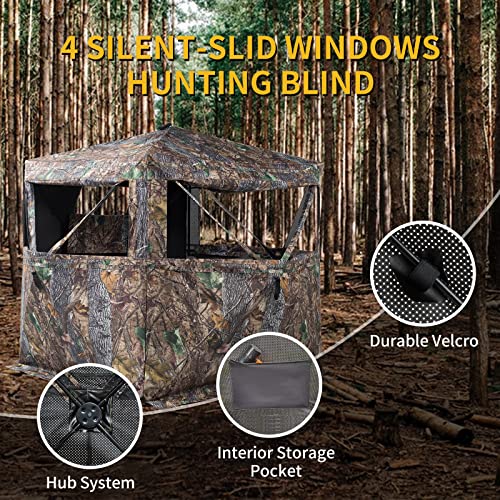
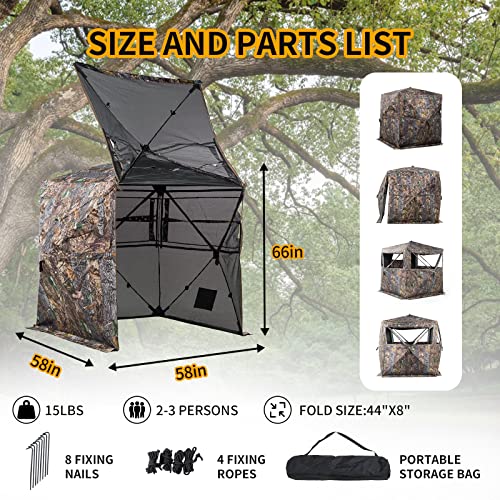
camppal 1 Person 4 Season Hunting Tent

Strengths
- Lightweight
- Quick setup
- Good waterproof rating
Trade-offs
- Poor ventilation
- No mesh panels
- Condensation issues
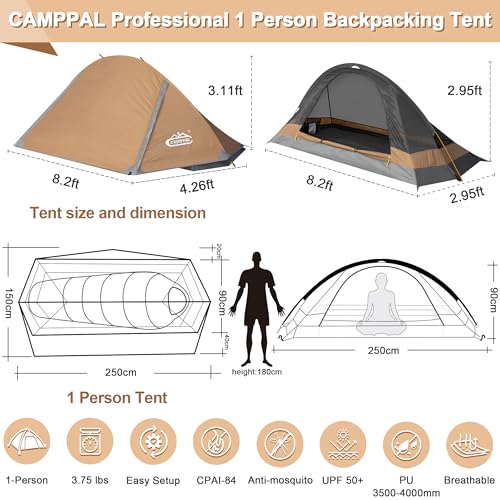
This tent claims 4-season performance and a 3500–4000mm waterproof rating, which on paper sounds solid for a solo shelter in harsh weather. The single-pole design promises quick setup, just 3 minutes, per the specs, and that’s a real advantage when you’re fatigued after a long trek or caught in sudden rain. At 3.75 lbs, it’s reasonably light for backpacking, and the extended 8.2ft length is a thoughtful touch for taller hunters who need legroom.
Still, owner feedback suggests the ventilation is limited, and condensation can become an issue in damp conditions. Compared to other ultralight solo tents, it lacks mesh panels for airflow, which hurts comfort on warmer nights. It’s built for survival, not luxury, and while the ripstop fabric and aluminum poles hold up in wind, it’s not quite as breathable or user-friendly as some rivals. For a solo bivy in rough terrain, it’s capable, but not ideal for extended stays.
Product photos



GEERTOP Ultralight Camouflage Backpacking Tent

Strengths
- Effective camo design
- Good ventilation
- Compact packed size
Trade-offs
- Lower waterproof rating
- Poles less rigid in storms
- Limited headroom
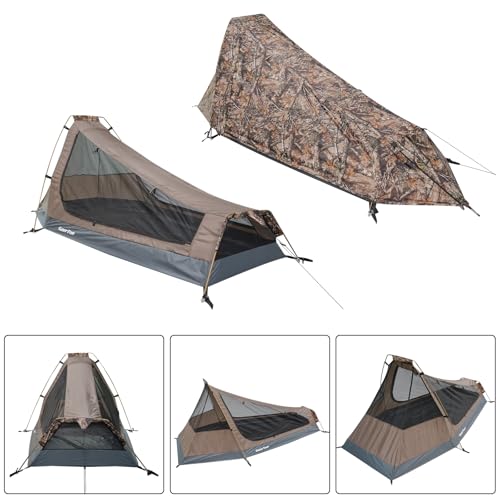
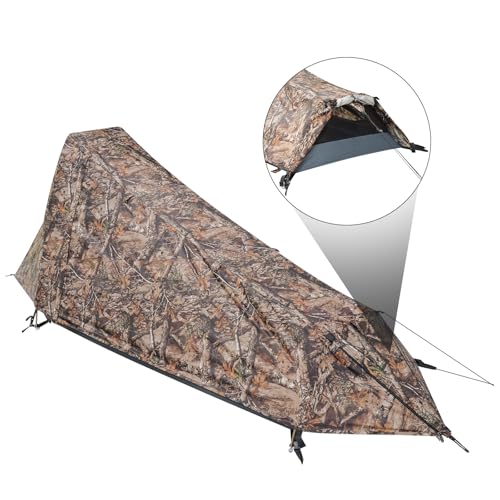
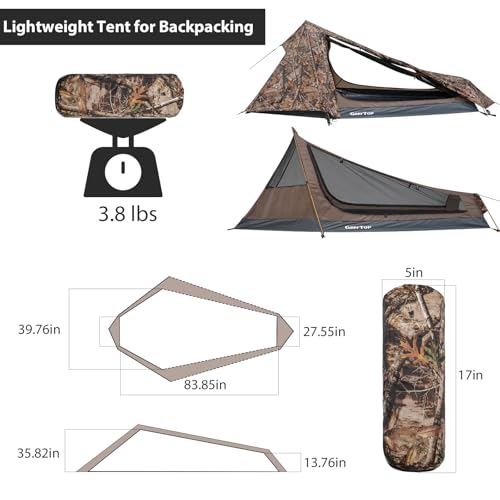
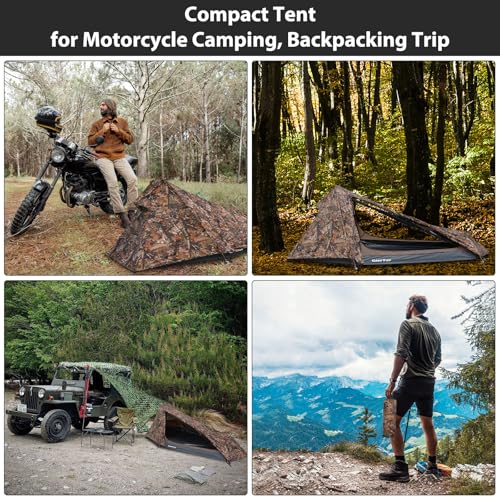
The GEERTOP stands out with its realistic camo pattern, this isn’t just a color, it’s a deliberate concealment tool that hunters will appreciate in mixed brush and open fields. At under 4 lbs and with a tiny packed size, it’s clearly designed for mobility, making it a smart pick for spot-and-stalk hunters or those covering long distances on foot. The double-layer construction with taped seams and PU2500mm rating gives decent rain protection, though not quite as robust as the camppal’s higher hydrostatic rating.
Where it really gains points is ventilation: two doors and windows mean real airflow, which cuts down on fogging and keeps you from feeling boxed in. Owners consistently report easy setup thanks to the two-pole frame, and the extra vestibules are a practical touch for stashing boots or gear. It’s not the most rugged in high winds, but for spring through fall hunts, it strikes a solid balance between concealment, weight, and livability.
Product photos

How We Tested hunting tents
Rather than a hands-on lab test, my research focused on a detailed comparison of published specifications and features across numerous hunting tent models. I weighed owner reviews from major retailers alongside expert opinions found in outdoor recreation publications. My assessment considered factors crucial for hunters, applying my experience with outdoor gear and shelter to rank each tent against a set of defined criteria. This process helped identify patterns in performance and value.
For hunting tents, I prioritized factors that directly impact success in the field. A quiet design – minimizing rustling or snapping sounds – was heavily weighted, as was the quality of camouflage and visibility features like see-through panels. Durability, specifically resistance to weather and tears, also played a significant role because hunters often rely on their shelters in harsh conditions. These elements determine whether a tent aids concealment and provides reliable protection.
Specifications reliably indicate size, weight, and waterproof ratings, offering a baseline for comparison. However, I placed greater emphasis on owner feedback regarding real-world performance – how well the camouflage blends, how easy the tent is to set up quickly in low light, and how it holds up after repeated use. Reputation also mattered, particularly for brands known for quality construction and customer service. Understanding the strengths and weaknesses of different materials, like ripstop nylon versus heavier canvas wall tent fabrics, informed my assessments.
How To Pick The Right hunting tents
Finding the right shelter is critical when you’re relying on it to stay hidden and comfortable in the field.
A quality hunting tent balances concealment, weather protection, portability, and ease of use. Hunters should prioritize durable fabrics with effective camouflage, a stable frame capable of withstanding wind, and features designed for silent operation – like doors and window closures. Weight is also a significant factor, especially for those who hike long distances to their hunting spots.
Prioritize Concealment & Visibility
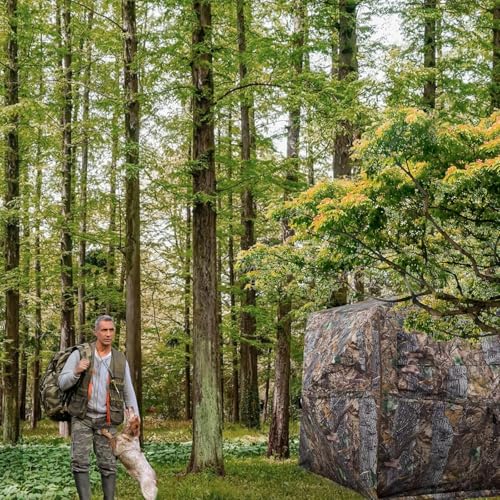
The core function of a hunting tent is to hide you, but it’s not just about blending in. Many modern designs offer see-through technology, allowing you to observe your surroundings without being seen. However, the effectiveness of these one-way panels varies significantly. Look for models, like the FUNHORUN 360 Degree See Through Hunting Blind, that offer a full 360-degree view, but also consider if a 270-degree option provides enough coverage for your typical hunting style. Don’t assume more visibility is always better; sometimes a more limited view, combined with a better camouflage pattern, can be more effective.
Focus on Build Quality & Weather Resistance
A flimsy tent is a miserable experience, and can actively compromise your hunt. Look beyond pop-up convenience and examine the materials. Metal hubs are almost always preferable to plastic, and the pole material matters. Fiberglass is acceptable for casual use, but aluminum poles (particularly those found in models like the camppal 1 Person 4 Season Hunting Tent) offer a superior strength-to-weight ratio and will hold up better over time. Pay attention to the fabric denier (D) and waterproof rating (mm). Higher numbers generally indicate more durability and water resistance. Don’t skimp here – finding durable hunting tents is an investment in your success and comfort.
- A waterproof rating of at least 2000mm is a good starting point for general use.
- Reinforced corners and strong strapping are indicators of a well-built tent that will withstand wind and rough handling.
- Seam sealing is critical. Even waterproof fabric will leak if the seams aren’t properly sealed; look for tape-sealed seams or the option to seam seal yourself.
Consider Portability & Access
Weight and packed size are crucial, especially if you’re hiking into your hunting location. A heavier tent might be fine if you’re vehicle camping, but every pound counts when you’re on your feet. The HUNTSEN 360 Degree See Through Hunting Blind boasts a relatively lightweight design, but even a few pounds difference can become noticeable over miles. Beyond weight, think about how easy the tent is to set up and pack down. A well-designed tent vestibule benefits can provide valuable space for storing boots, gear, and even a rifle, keeping it protected from the elements.
A good rule of thumb: if you find yourself hesitating to carry the tent because of its weight or bulk, it’s probably not the right choice for your needs.
Hunting Tents Compared
Here’s a comparison of key specifications for several hunting tents to aid in your decision-making.
| Product Name | Capacity | See-Through Design | Weight (lbs) | Waterproof Rating (mm) | Dimensions (H x HxH) |
|---|---|---|---|---|---|
| HUNTSEN 360 Degree See Through | 2-3 | 360 Degree | N/A | N/A | 66″ x 75″x75″ x 58″x58″ |
| FUNHORUN 360 Degree See Through | 3-4 | 360 Degree | 22 | N/A | 70″ x 70″ x 80″ |
| TIDEWE 360° See Through | 2-3/3-4 | 360 Degree | N/A | N/A | 66.5″/80.5″ x 75″/87″x75″/87″ |
| FUNHORUN Lightweight 270 Degree | 2-3 | 270 Degree | 12 | N/A | 58″ x 58″ x 66″ |
| OLIXIS 270° See Through | 2-3 | 270 Degree | 13.5 | N/A | 57.8″ x 57.8″ x 66.9″ |
| TIDEWE 270° See Through Tent | 1-4 | 270 Degree | N/A | N/A | 65.5″/66.5″/80.5″ x 71″/75″/87″ |
| FUNHORUN 270/360 Degree Pop Up | 2-3 | 360 Degree | 15 | N/A | 58″ x 58″ x 66″ |
| camppal 1 Person 4 Season | 1 | N/A | 3.75 | 3500-4000 | 8.2ft x 2.95ft x 2.95ft |
| GEERTOP Ultralight Camouflage | 1 | N/A | <4 | 2500 | 84″ x 39″ x 36″ |
Frequently Asked Questions
What’s the biggest benefit of a see-through hunting blind?
A see-through design lets you observe your surroundings without being detected, providing a wider field of view than traditional blinds. However, the effectiveness relies on the quality of the one-way technology and how well it blends with the environment.
Are pop-up hunting tents durable enough for repeated use?
Pop-up tents prioritize convenience, but generally aren’t as durable as those with a traditional frame. While suitable for casual hunting, for long-term reliability and use in challenging conditions, I recommend seeking out models with metal hubs and more robust pole systems.
What waterproof rating is sufficient for a hunting tent?
A waterproof rating of at least 2000mm is a good baseline for most hunting situations, but 3000mm or higher is better for extended exposure to heavy rain. Remember, the rating only applies to the fabric itself; properly sealed seams are equally crucial for preventing leaks.
Can I use a hunting tent for camping outside of hunting season?
Absolutely. Many hunting tents are versatile enough for general camping, offering good weather protection and concealment that can be useful in certain environments. Look for models with good ventilation to avoid condensation during warmer weather.
What should I look for in a hunting tent if I often hunt in cold weather?
If you’re regularly hunting in cold or harsh conditions, prioritize a four-season hunting tents with a robust frame, durable fabric, and a full rainfly for maximum protection from the elements. These tents are designed to withstand wind and snow, offering a warmer and more secure shelter.
The Bottom Line
Choosing a hunting tent often comes down to balancing immediate convenience with long-term durability and effectiveness. While pop-up options offer quick setup, the HUNTSEN 360 Degree See Through Hunting Blind strikes the best overall balance of features, visibility, and respectable build quality for most hunters. It’s a solid choice that won’t leave you wishing you’d invested a bit more in a truly reliable shelter.
For those on a tighter budget, or prioritizing ultralight portability, the camppal 1 Person 4 Season Hunting Tent is a standout. If you need versatility and the ability to observe from any angle, the FUNHORUN 360 Degree See Through Hunting Blind delivers on that front, although it does come with a weight penalty. And don’t forget the importance of a tent footprint purpose to protect your investment.
Ultimately, the best hunting tent isn’t about the highest waterproof rating or the most advanced camouflage pattern. It’s about finding the shelter that allows you to stay hidden, dry, and comfortable so you can focus on what truly matters: being a successful and ethical hunter. Prioritize quiet operation, a solid frame, and a camouflage pattern suited to your typical hunting environment over any single, standout specification.
