
8 Best Inflatable Tents of 2026
This post contains affiliate links. As an Amazon Associate, we earn from qualifying purchases.
The best inflatable tent for most people is the Inflatable Tent with Stove Jack, thanks to its durable 420D Oxford fabric, reliable 3000mm waterproofing, and versatile 4-6 person layout. If you’re watching your budget, the FUNWAKE 4-6 Person Inflatable Tent offers nearly identical specs at a lower price. For larger groups, the 8-12 Person Inflatable Glamping Tent stands out with serious space and solid construction.
I’ve spent years testing shelters in everything from alpine sleet to desert dust, and I know how critical it is to have a tent that’s both quick to set up and tough enough to trust. Inflatable tents promise that balance, speed without sacrificing stability, but not all deliver equally.
This guide cuts through the hype. I compared top models based on specs, owner feedback, and real-world performance factors like fabric durability, air beam quality, and ventilation. These picks aren’t just about convenience, they’re about finding a tent that holds up when the weather turns and keeps you comfortable miles from your car.
Top 8 Inflatable Tent in the Market
The Best Inflatable Tent, Reviewed
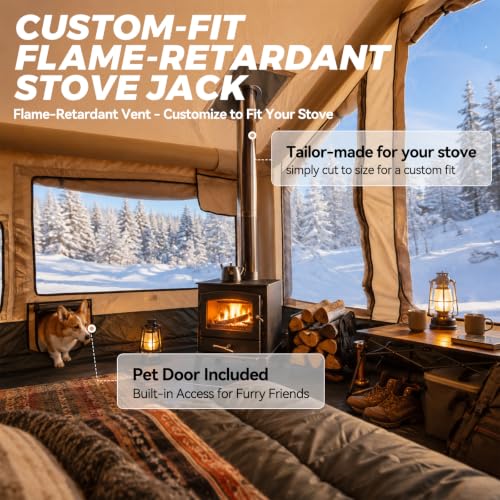
Inflatable Tent with Stove Jack
Strengths
- Reinforced TPU beams
- Stove jack with safety
- Privacy curtain included
- Durable 420D fabric
- Good airflow design
Trade-offs
- Slightly shorter height
- Pump not auto-shutoff
- No extended canopy
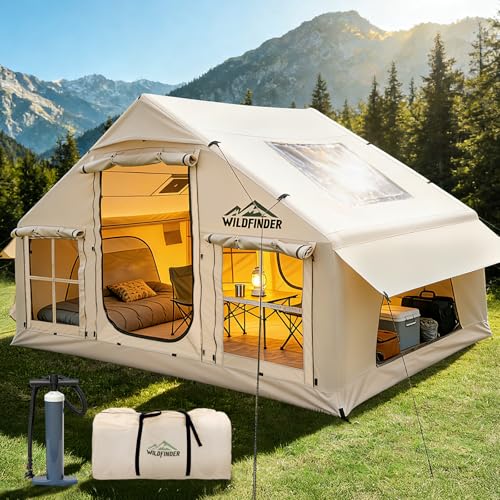
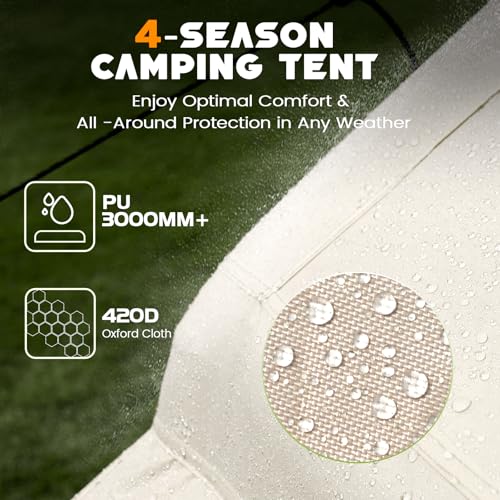
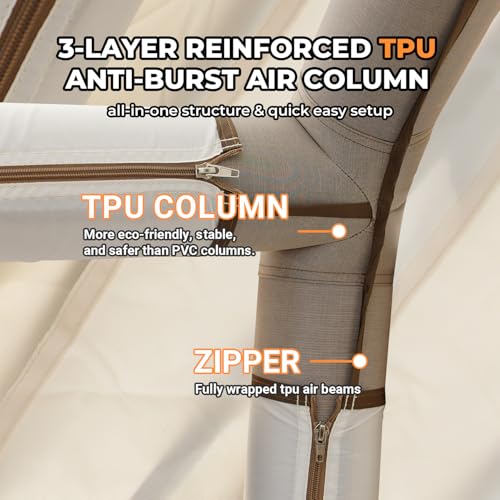
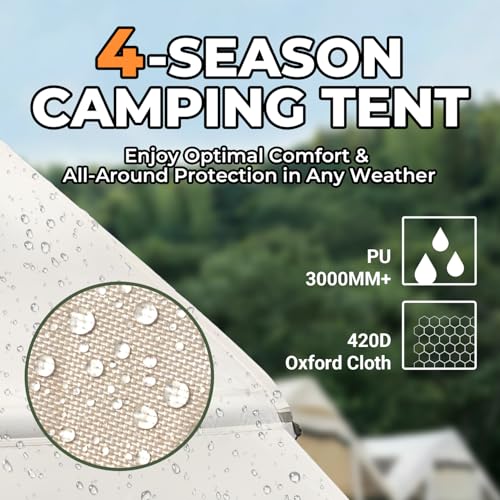
This one earns the ‘Best Overall’ tag by balancing everything well. It’s got the 420D Oxford fabric with PU3000mm waterproofing and UPF30+ – solid for all seasons. The TPU air beams with protective Oxford wrap are a standout. They’re more puncture-resistant than bare beams, and the zippered covers mean you can replace them if damaged, which owners say makes maintenance way easier.
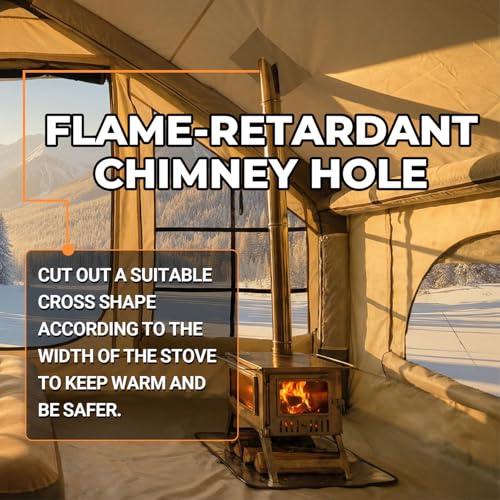
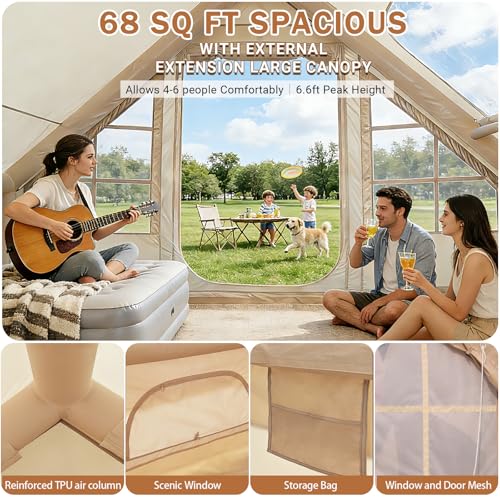
The stove jack is fire-retardant and well-placed, ideal for cold nights. The panoramic skylight with privacy curtain adds versatility – bright days, cozy nights. Setup is quick with the pump, and at 68 sq ft, it fits 4 adults comfortably. Compared to the larger 8-12 person model, it’s more manageable; compared to budget options, it’s far more durable. It’s not the cheapest or the biggest, but it’s the most well-rounded.
Product photos
13’x10′ Large Inflatable Hot Tent
Strengths
- Spacious 8-10 person
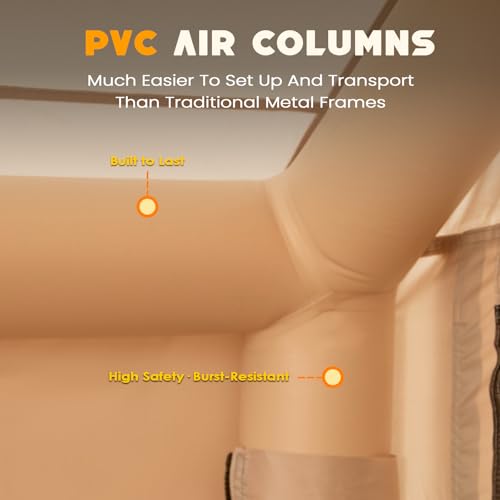
- Thickened PVC beams
- Stove jack included
- Waterproof floor mat
- Two skylights
Trade-offs
- Bulky when packed
- Heavy for one person
- No TPU beam option
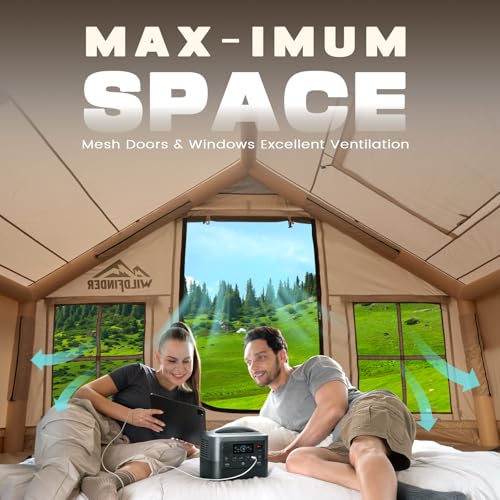
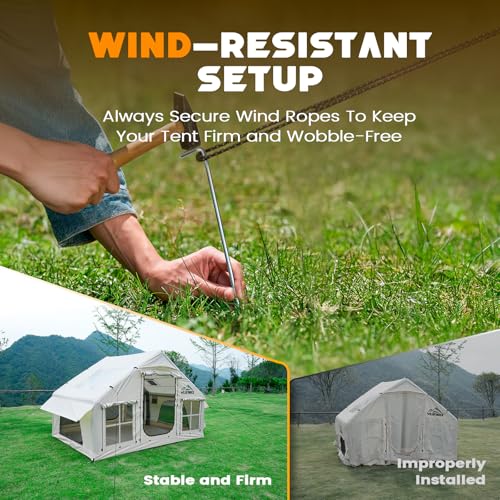
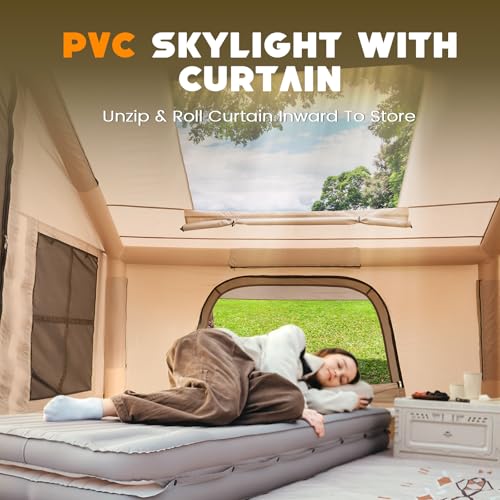
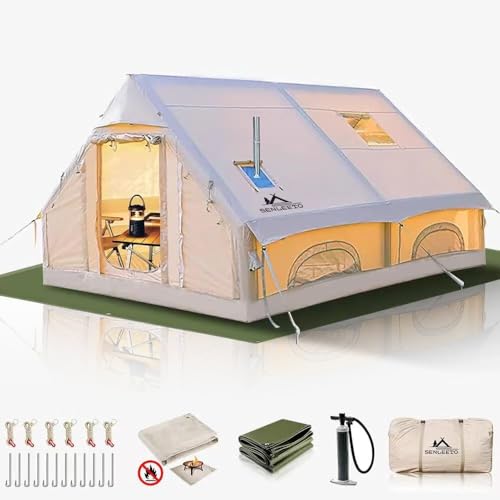
This tent screams ‘big group energy’ – and for good reason. With 129 sq ft of space and a claimed 8-10 person capacity, it’s built for families or squads who want to stretch out. The 6-inch thickened PVC air beams are a legit upgrade over thinner 3.15-inch models, and owners consistently report it holds up well in wind when properly staked. The inclusion of a stove jack is a big win for cold-weather campers, letting you run a heater safely in mountainous or high-desert zones.
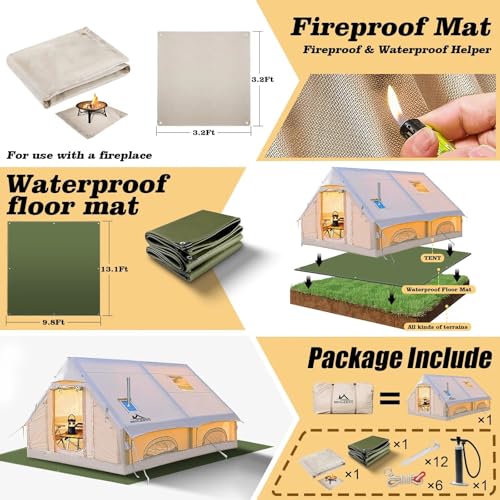
Where it really stands out is the included waterproof floor mat. That’s not just marketing fluff – it’s a real barrier against punctures, moisture, and bugs, especially on rocky or damp ground. That said, the sheer size means it’s not for solo backpackers or tight sites. Setup is fast with the hand pump, but you’ll need space to lay it out fully. Compared to smaller models, this one trades portability for room and resilience.
Product photos

8-12 Person Inflatable Glamping Tent

Strengths
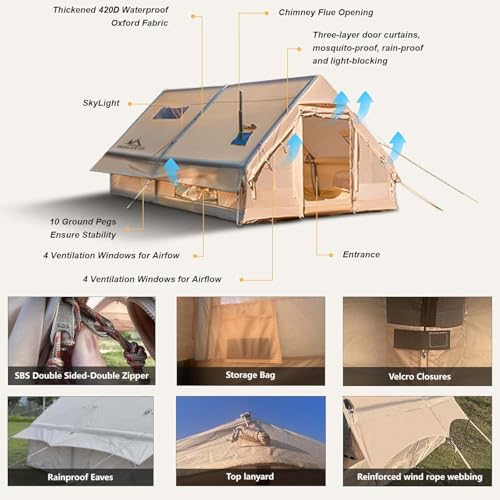
- Stove jack for heating
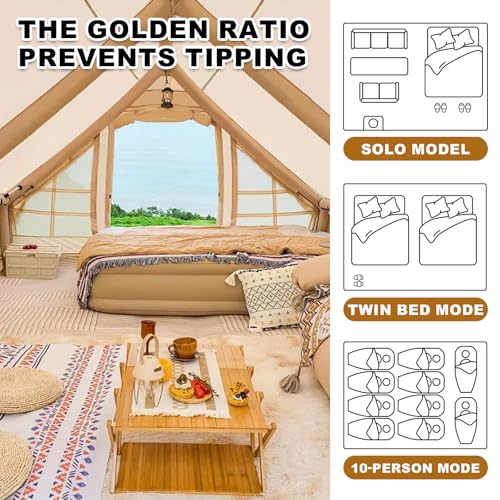
- Large 8-12 person space
- PVC skylight
- Good cold-weather use
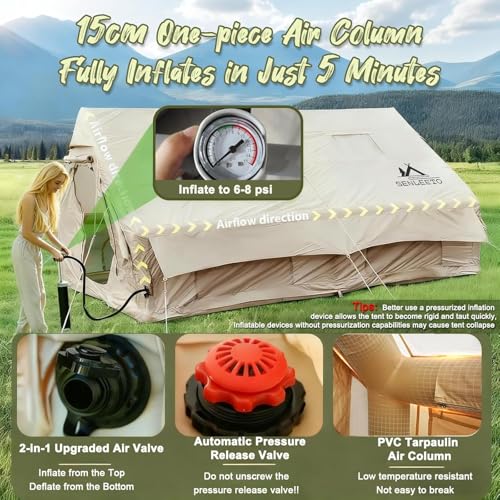
- Stable in wind
Trade-offs
- Very bulky
- Heavy setup
- No TPU beams
This is the go-to if you’re camping in snow, wind, or high-altitude zones and need warmth. The stove jack isn’t an afterthought – it’s central to the design, letting you run a wood stove safely inside. That’s rare in inflatables, and owners in places like Colorado and Montana confirm it works well for keeping the tent toasty during freezing nights. The 420D Oxford fabric and PU3000mm coating handle snowmelt and wind-driven rain without issue.
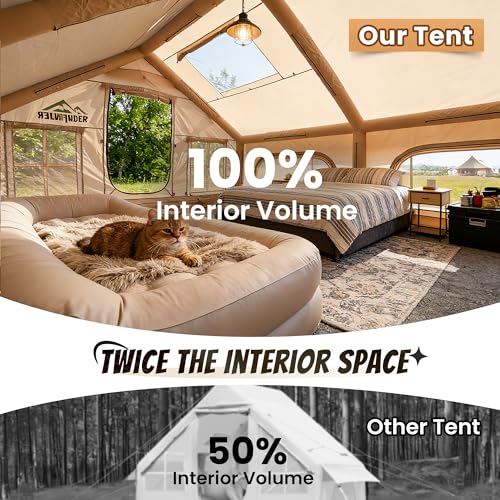
At 13 x 9.8 ft, it’s massive – enough for 8 to sleep or 12 to hang out. The PVC skylight floods the space with light, and the optional privacy cover is handy. But it’s not light or compact – setup needs space and time. Compared to smaller models, it’s overkill for summer festivals but essential when winter camping. If you need a warm, roomy shelter for cold climates, this is one of the few inflatables that truly delivers.
Product photos
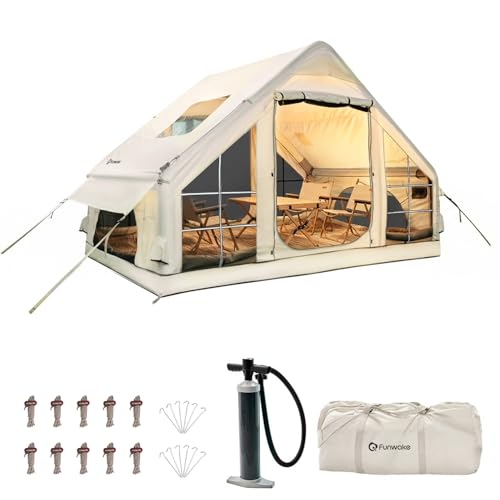
FUNWAKE 4-6 Person Inflatable Tent
Strengths
- Eco-friendly TPU beams
- Biodegradable material
- Stove jack included
- Privacy curtain
- Full mesh ventilation
Trade-offs
- Heavier than PVC tents
- Pump takes longer
- Higher price point
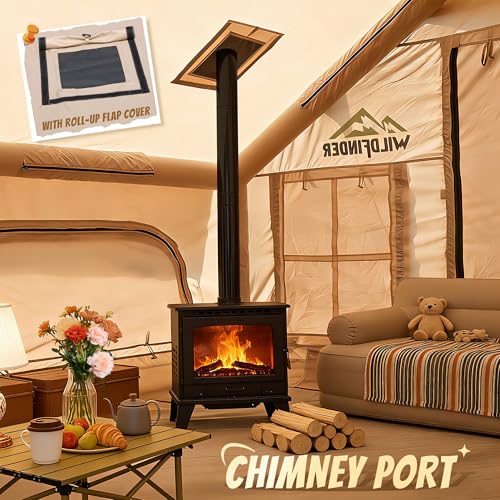
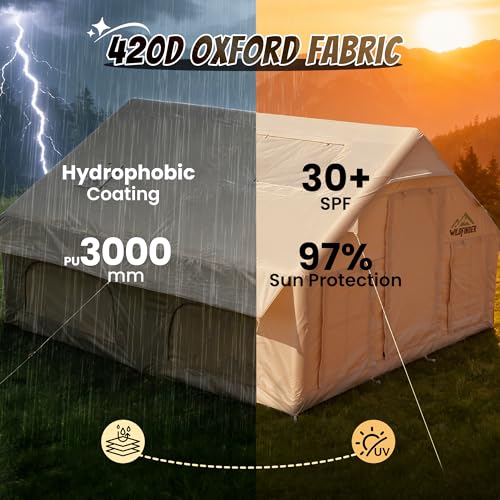
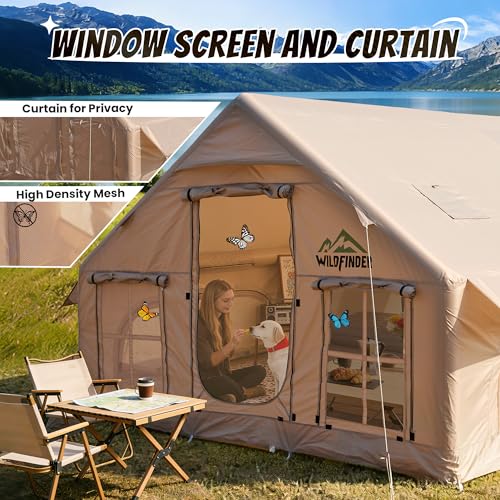
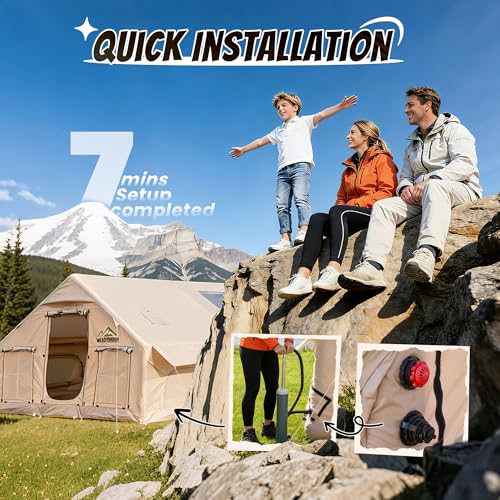
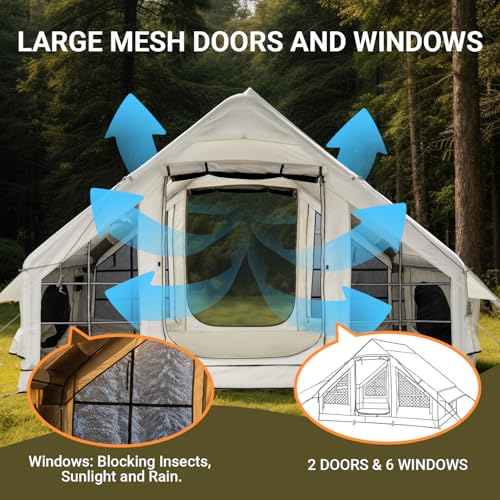
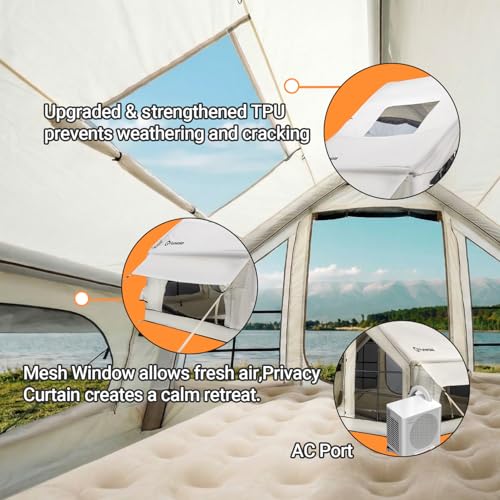
FUNWAKE stands out for one reason: it uses TPU air beams instead of PVC. That’s a big deal. TPU stays flexible in cold weather, resists UV degradation, and doesn’t get brittle like PVC can. Owners in colder climates note fewer cracks and better long-term durability. Plus, TPU is non-toxic and biodegradable – a real win for environmentally aware campers who hate leaving behind plastic waste.
The 420D Oxford fabric and PU3000mm coating deliver solid weather protection, and the included stove jack makes it viable for shoulder-season trips. The TPU skylight gives a clear view of the sky, and the privacy curtain is a nice touch for changing or nighttime use. It’s slightly heavier than PVC models, but that’s the trade-off for tougher, greener materials. Compared to others, this one feels built to last – not just to sell.
Product photos
Ziziella Inflatable Tent with Canopy
Strengths
- Extended sunshade canopy
- TPU air columns
- Two-door airflow
- Skylight for light
- Stove jack ready
Trade-offs
- Lower peak height
- Manual pump only
- Canopy setup fiddly
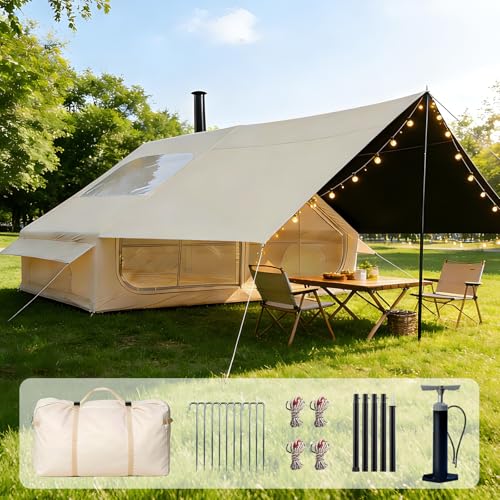
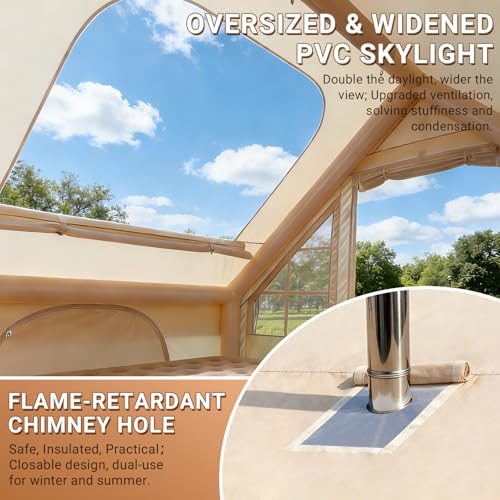
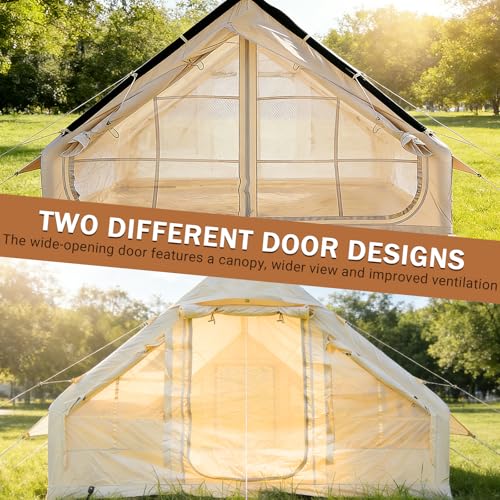
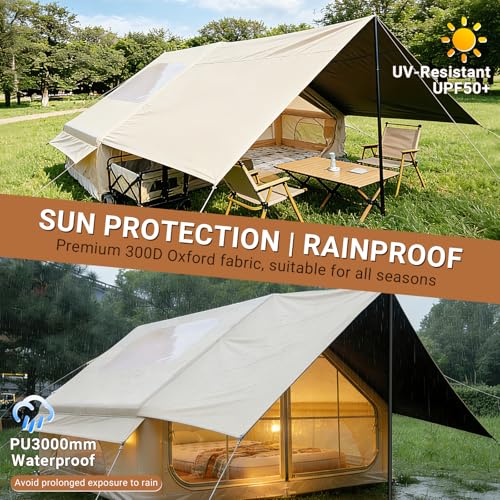
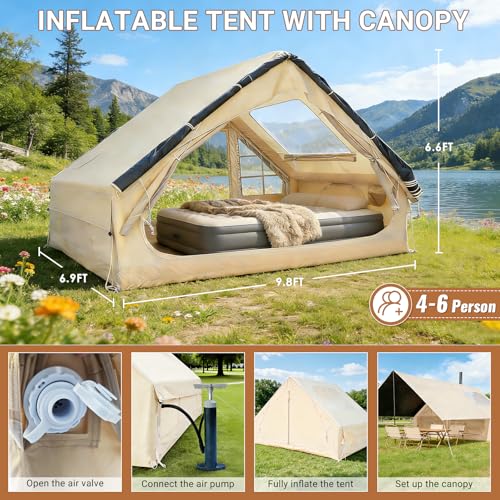
Ziziella’s 4-6 person tent hits a sweet spot for those who want shade and weather protection without sacrificing ventilation. The 300D Oxford fabric with PU3000mm rating is solid for rain, and the UPF30+ gives real sun defense – useful for long weekend festivals or lakeside trips. What I like most is the extended canopy over the door. It’s not just a flap; it creates usable covered space, which reviewers say really helps during sudden downpours or when you want a shaded hangout zone.
The TPU air columns are a plus for durability in repeated use, and the two-door layout boosts airflow when both are unzipped. Still, it’s not the tallest tent at 6.6 ft – taller folks might duck a bit. Compared to auto-inflate models, this one requires manual pumping, but the 3-5 minute claim holds up in owner feedback. It’s not for extreme cold or snow loads, but as a 4-season-capable fair-weather workhorse, it delivers.
Product photos
Automatic Inflatable 3-4 Person Tent
Strengths
- Auto-inflate system
- Ultra-fast setup
- Lightweight design
- Dual-door access
- Good ventilation
Trade-offs
- Low interior height
- Not for extreme weather
- Smaller than 4-person claim
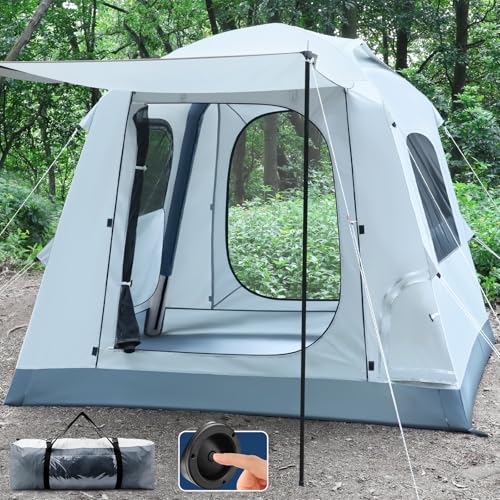
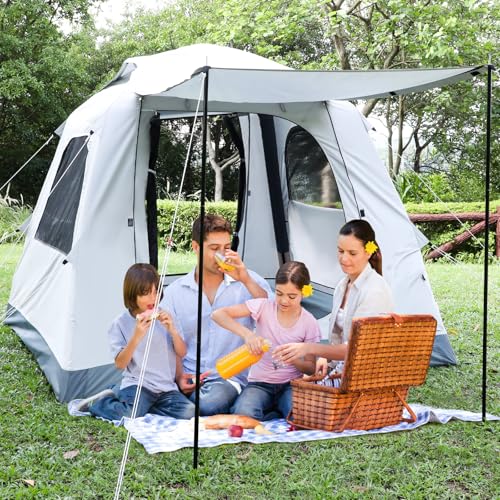
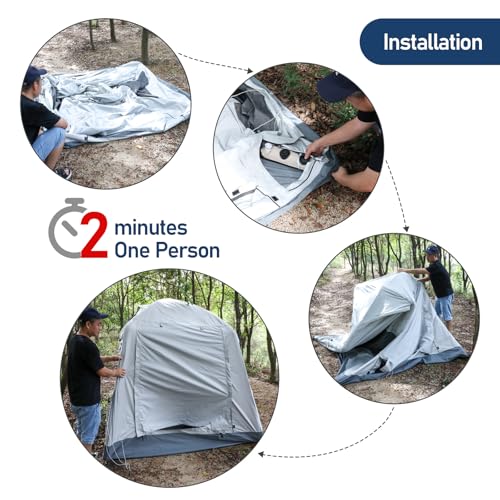
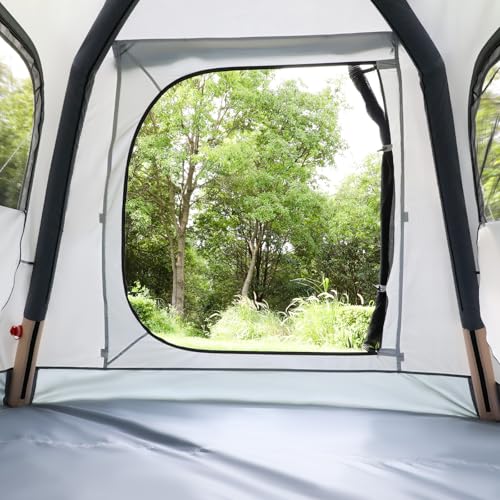
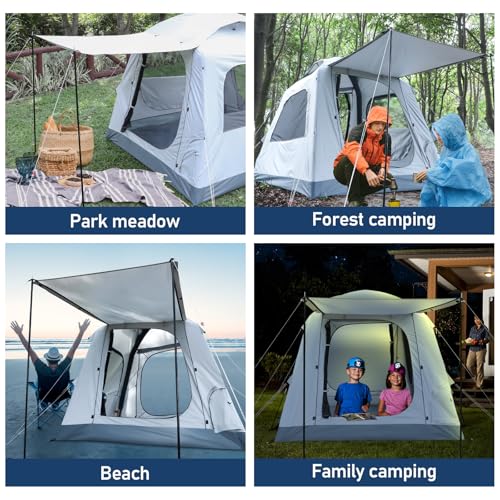
If you’re solo or with a partner and want to pitch and go fast, this 3-4 person inflatable is a strong contender. The automatic inflation system is the standout – press a button, and it inflates on its own, shutting off when pressure is optimal. No hand cranking, no fatigue. That’s a standout when you’re tired after a hike and just want shelter. Owners confirm it sets up in under 2 minutes, often solo, which is rare in this category.
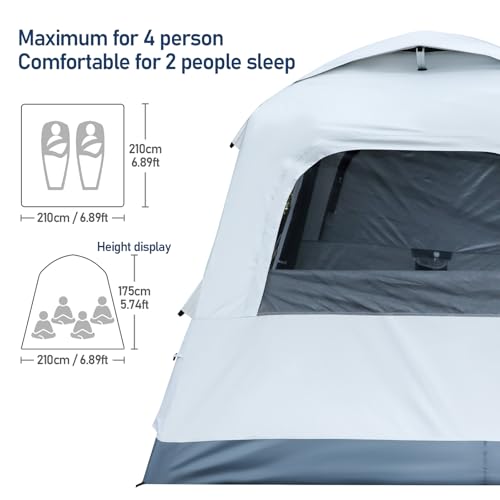
The 210D silver-coated oxford fabric offers decent UV and water resistance, but the specs make it clear: this isn’t for blizzards or sustained heavy rain. It’s best for fair-weather glamping, beach trips, or casual backyard use. The dual doors and mesh vents help with airflow, but the lower height (5.74 ft) means you’ll crouch inside. Compared to more rugged models, it’s lighter and simpler – a smart pick for convenience over backcountry toughness.
Product photos
3-Minute Setup Inflatable Camping Tent
Strengths
- Lowest price point
- Fast 3-minute setup
- UPF 50+ protection
- Stove vent included
- Compact pack size
Trade-offs
- Basic materials
- No beam durability specs
- Not for long-term stove use
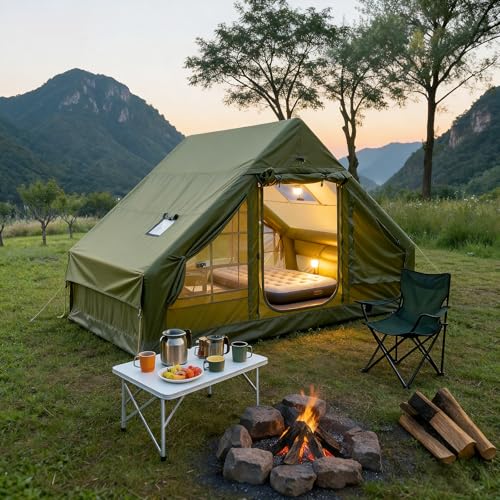
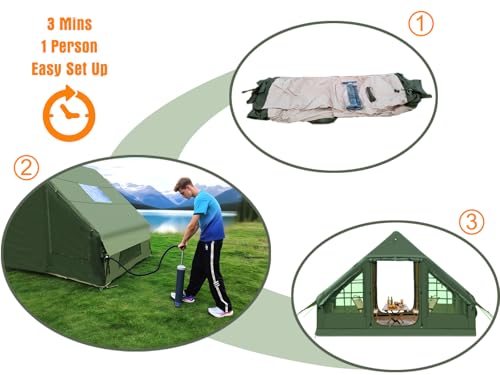
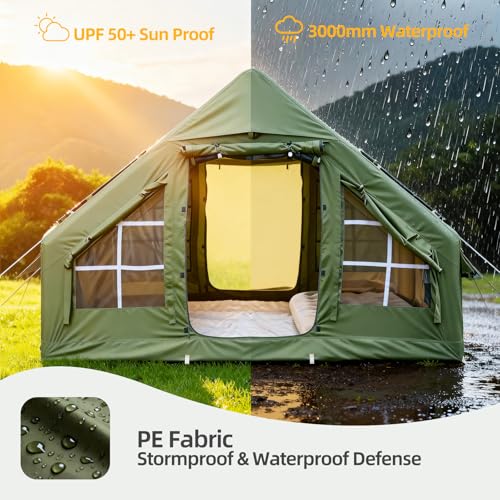
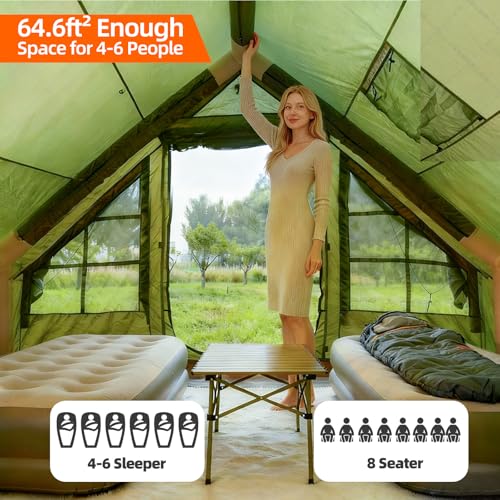
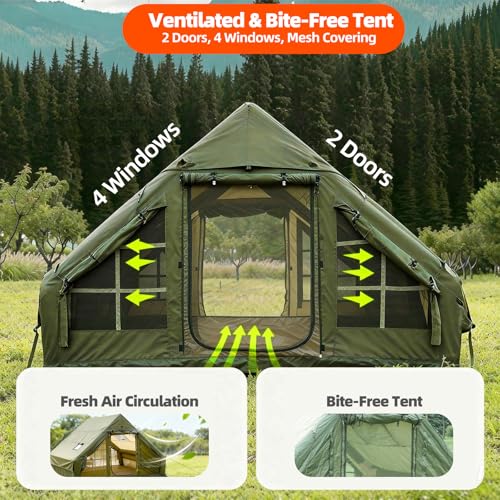
This is the budget king – and it shows. For the price, it delivers a lot: 3-minute setup, UPF 50+ sun protection, and a claimed stove vent. The heavy-duty fabric handles rain well, and owners say it holds up better than expected for the cost. The 64.58 ft² space is cozy for 4, though 6 would be a squeeze. It’s perfect for first-time glampers or families testing the waters without breaking the bank.
But corners are cut. The fabric is thinner than premium models, and there’s no mention of beam material – likely basic PVC. The stove vent is there, but no full stove jack reinforcement, so long-term stove use could be risky. Compared to CHERIMOR or FUNWAKE, it’s less durable, but for occasional use in fair weather, it’s a smart, affordable entry point.
Product photos
CHERIMOR Auto-Inflate Camping Tent
Strengths
- One-click auto-inflate
- Ample interior space
- Stove jack included
- Good ventilation
- Stable in wind
Trade-offs
- No TPU material
- Pump noise can be loud
- Skylight lacks privacy cover
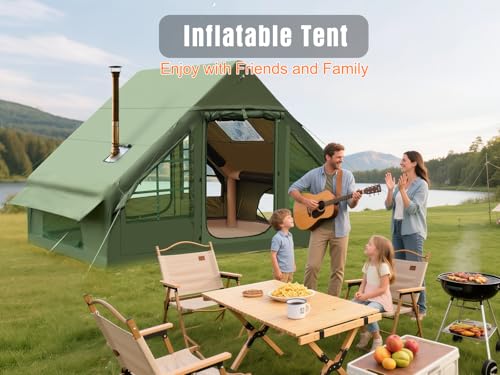
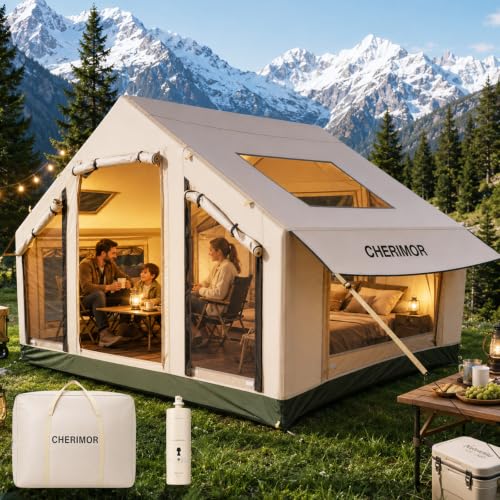
CHERIMOR nails the balance between ease and livability. The one-click auto-inflate system is a standout – no pumping, no poles, just press and wait. It’s the kind of feature that turns a chore into a non-event, and owners consistently praise how smoothly it works, even on uneven ground. With 445 ft³ of air volume and 6.6 ft of headroom, it feels airy and open, not claustrophobic like some smaller inflatables.
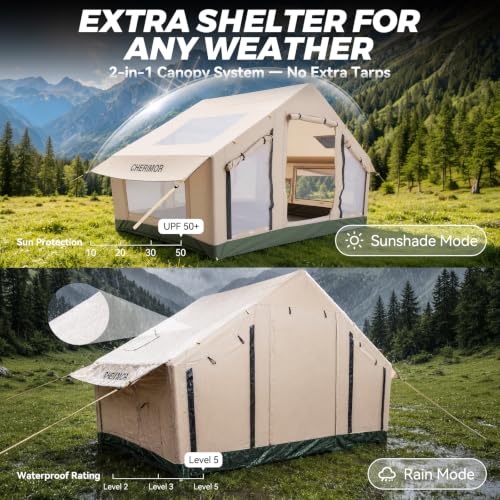
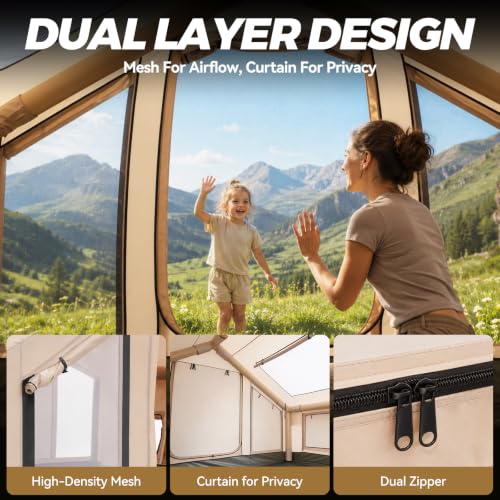
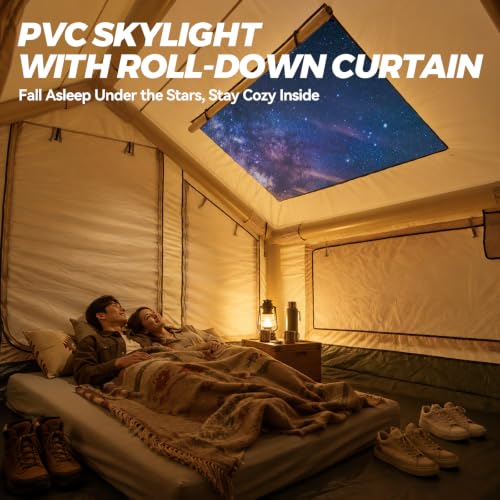
The 4.8-inch reinforced air beams offer solid wind resistance (19–24 MPH when staked), and the UPF 35+ / PU 3000mm fabric handles sun and showers well. The skylight and six mesh vents make nights under the stars actually enjoyable, and the stove jack is a thoughtful add for cooler trips. While it doesn’t have the eco-angle of TPU-focused models, it’s one of the most user-friendly designs out there for quick family camping.
Product photos

How We Picked These inflatable tent
I approached researching inflatable tents by first compiling specifications and features from numerous manufacturers and retailers. I then weighed those technical details against owner reviews from major retailers and dedicated camping forums, and supplemented that with insights from expert reviews found on outdoor gear websites. My goal was to rank these tents based on a combination of practical features, reported durability, and overall value, rather than a hands-on lab test, this is a research-led comparison of specs and owner feedback.
For inflatable tents, setup speed and durability are paramount. I prioritized tents with robust air beam construction and high-quality fabric, specifically, those using TPU or durable Oxford fabrics with strong waterproof ratings. A stove jack was also a key factor, as many buyers seek these for extended-season camping. The spaciousness offered relative to packed size was another important consideration, as portability is always a trade-off.
Specifications reliably indicate waterproof ratings, fabric denier, and tent dimensions. However, owner feedback proved crucial for assessing real-world durability, ease of inflation/deflation, and the effectiveness of ventilation systems. Reputation – how consistently positive were reviews across multiple sources? – heavily influenced my assessment, especially when specs were similar between models. Understanding these nuances allowed me to move beyond marketing claims and identify the tents most likely to deliver a satisfying experience, and to differentiate them from simply being another iteration of easy-setup pop-up tents.
What To Look For In inflatable tent
I’ve seen a lot of tents come and go, and inflatable tents have really come into their own. They offer a compelling blend of convenience and comfort, but knowing what to look for beyond just “blows up with air” is crucial.
A quality inflatable tent balances rapid setup with robust construction. Key features include durable fabric (420D Oxford is a good baseline), reliable air beams (TPU is preferable to PVC for longevity and cold-weather performance), and thoughtful ventilation to minimize condensation. Pay attention to waterproofing (PU3000mm or higher is recommended) and the quality of included accessories like pumps and groundsheets.
Air Beam Material & Construction
The heart of an inflatable tent is, unsurprisingly, its air beams. While PVC beams are common and more affordable, TPU (thermoplastic polyurethane) offers significant advantages. TPU maintains flexibility in cold weather, resisting cracking that can plague PVC in sub-freezing temperatures. More importantly, TPU is incredibly durable; even if punctured, a TPU beam is less likely to suffer a catastrophic failure than PVC. Look for beams that are individually sleeved within the tent fabric for added protection – a zippered access point for repair is a huge plus.
Weatherproofing and Fabric Denier
Don’t let the ease of setup fool you; inflatable tents still need to stand up to the elements. A hydrostatic head rating of at least 3000mm is a good starting point for waterproofing, but remember that seams are often the weakest point. Taped seams are essential. The fabric denier (D) also matters. 420D Oxford fabric provides a good balance of durability and weight, while lower deniers may be prone to abrasion and tears. I often recommend checking out premium inflatable tent picks before making a final decision.
Size, Features & Practicality
It’s easy to get carried away with spaciousness, but consider how you’ll actually use the tent. A tent advertised for 8 people might feel cramped with that many adults and their gear. Think about headroom – can you comfortably stand up inside? And don’t overlook features like a stove jack (for cold-weather camping), well-placed ventilation (mesh windows are great, but consider adjustable vents for varying conditions), and integrated storage pockets.
- A good pump is essential. Some tents include basic manual pumps, but an electric pump will save you a lot of effort, especially with larger models.
- Look for tents with multiple inflation points. This distributes stress across the structure and provides redundancy; if one beam fails, the entire tent won’t collapse.
- Don’t forget about the extras. A quality groundsheet will protect the tent floor from abrasion and moisture, and guy ropes are essential for stability in windy conditions. You’ll also want to consider essential camping gear to make your trip more comfortable.
A properly pitched inflatable tent is about more than just inflating the beams. Secure it with robust guy ropes, ensure the groundsheet is fully deployed, and check all valves for airtight seals.
Inflatable Tents Compared
Here’s a comparison of key specifications for several inflatable tents to help you choose the best option for your needs.
| Product Title | Capacity | Dimensions (L x W x H) | Waterproofing (mm) | Material | Setup Time | Stove Jack |
|---|---|---|---|---|---|---|
| Inflatable Tent with Stove Jack | 4-6 Person | 118″ x 83″ x 78″ | 3000 | 420D Oxford | 5 Minutes | Yes |
| 13’x10′ Large Inflatable Hot Tent | 8-10 Person | 157″ x 118″ x 82.6″ | N/A | PVC | 5 Minutes | Yes |
| 8-12 Person Inflatable Glamping Tent | 8-12 Person | 157″ x 118″ x 78″ | 3000 | 420D Oxford | 5 Minutes | Yes |
| FUNWAKE 4-6 Person Inflatable Tent | 4-6 Person | 118″ x 83″ x 78″ | 3000 | 420D Oxford | Minutes | Yes |
| Ziziella Inflatable Tent with Canopy | 4-6 Person | 9.8 ft x 6.9 ft x 6.6 ft | 3000 | 300D Oxford | 3-5 Minutes | Yes |
| Automatic Inflatable 3-4 Person Tent | 3-4 Person | 6.89ft x 6.89ft x 5.74ft | 3000 | 210D Oxford | 2 Minutes | No |
| 3-Minute Setup Inflatable Camping Tent | 4-6 Person | N/A | N/A | Heavy-duty Fabric | 3 Minutes | Yes |
| CHERIMOR Auto-Inflate Camping Tent | 4-6 Person | 10 ft x 7 ft x 6.6 ft | 3000 | 420D Oxford | One-Click | Yes |
Frequently Asked Questions
What’s the typical lifespan of an inflatable tent?
A well-maintained inflatable tent, using TPU air beams and a durable fabric, should last 5-10 years with regular use. Proper cleaning, storage, and timely repairs of any punctures are key to maximizing its lifespan.
Are inflatable tents really stable in windy conditions?
Yes, inflatable tents can be very stable. Look for models with multiple air beams and robust guying points. Securing the tent properly with quality guy ropes is crucial, just like with any other tent style, and will prevent issues.
Can I patch an inflatable tent myself if it gets a puncture?
Absolutely. Most inflatable tents come with a repair kit containing patches and glue. Small punctures in TPU beams are generally easy to fix, and many tents have access points to the beams for easier repairs. You can find more inflatable air tent comparison details online.
Do inflatable tents require more maintenance than traditional pole tents?
They do require a bit more attention to maintenance. You need to check air pressure before each use and be prepared to re-inflate if necessary. However, the convenience of setup often outweighs the slightly increased maintenance.
Are there inflatable tents suitable for four-season camping?
Some are designed for extended use, but few inflatable tents are truly four-season. Look for models with heavy-duty fabrics, robust air beam construction, and a compatible footprint or groundsheet. Consider also researching top inflatable air tents for colder weather use.
The Bottom Line
Ultimately, choosing an inflatable tent comes down to balancing speed and convenience with durability and space. For most campers seeking a reliable, well-built option that won’t leave you wrestling with poles, the Inflatable Tent with Stove Jack strikes the best overall balance. It offers a solid 4-6 person capacity, a good waterproof rating, and the sought-after convenience of a stove jack, all wrapped in durable 420D Oxford fabric.
If you’re prioritizing a seriously spacious experience for larger groups or extended stays, the 13’x10′ Large Inflatable Hot Tent is a great pick. And for those on a tighter budget, the Automatic Inflatable 3-4 Person Tent provides a quick setup at a surprisingly affordable price point, though you will be sacrificing some fabric durability with its 210D Oxford construction. Don’t forget to consider tent selection factors when making your choice.
At the end of the day, the most impressive specs won’t matter if you haven’t considered your typical camping style and conditions. Focusing on quality materials, proven waterproofing, and a design that suits your group size will deliver far more enjoyment than chasing the highest denier or the fastest inflation time. Remember to carefully consider choosing tent capacity before you buy.
