
8 Best Pop Up Beach Tents of 2026
This post contains affiliate links. As an Amazon Associate, we earn from qualifying purchases.
The Elegear CumbreX Beach Tent is the best overall pop up beach tent thanks to its spacious design, UPF 50+ protection, and solid wind resistance, while the TOBTOS UPF 50+ Pop Up Tent stands out as a lightweight, quick-deploy option for couples or small families. For those on a budget, the Gorich 3-4 Person Beach Tent delivers strong performance without the high price.
Beach days should mean relaxation, not wrestling with a flimsy tent in the wind or baking under inadequate shade. Too many pop up tents look good on paper but fail when sand, sun, and gusts hit.
As someone who’s spent years evaluating shelters for real outdoor use, I focused this guide on what actually matters: space, sun protection, and stability. These picks are based on specs, owner feedback, and common pain points from real beachgoers, not just marketing promises.
Top 8 Pop Up Beach Tents in the Market
The Best Pop Up Beach Tents, Reviewed
Elegear CumbreX Beach Tent

Strengths
- Canopy extends usable space
- 8.5mm fiberglass poles
- Snap-on installation
Trade-offs
- Higher price point
- Slightly heavier
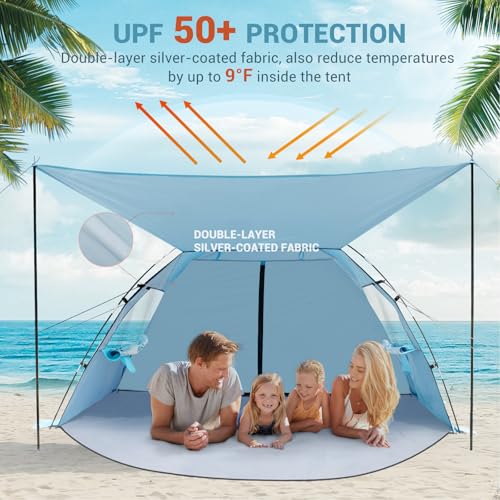
This is the most thoughtfully engineered pop-up tent on the list, and it shows. The double silver-coated PU2000 fabric with UPF 50+ and waterproofing is a standout, and the 8.5mm fiberglass poles are the thickest here, contributing to a 50% claimed wind resistance boost. More importantly, owners confirm it feels sturdier in gusts than thinner-framed models.
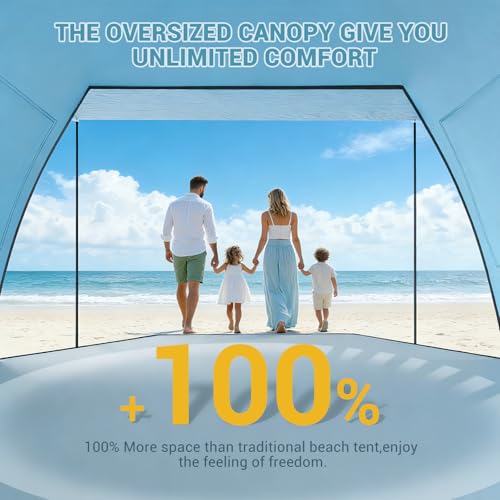
The built-in canopy design is the real standout: it doubles usable space and creates a shaded lounge area without extra setup. Combined with 360° ventilation, interior pockets, and a zippered privacy floor, it’s clear this was designed by people who’ve actually used beach tents. While it’s not the lightest, its snap-on installation cuts setup time in half compared to traditional pop-ups. I’d pick this over every other model if you want the most versatile, durable, and feature-rich shelter.
Product photos



WhiteFang Deluxe XL Beach Tent

Strengths
- XL interior space
- Thorough anchoring kit
- Affordable price point
Trade-offs
- Basic ventilation design
- No canopy extension
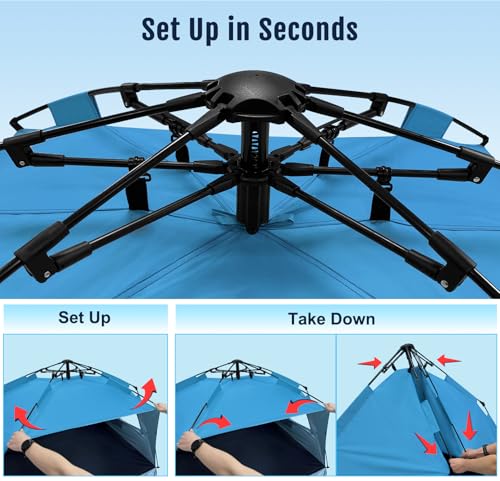
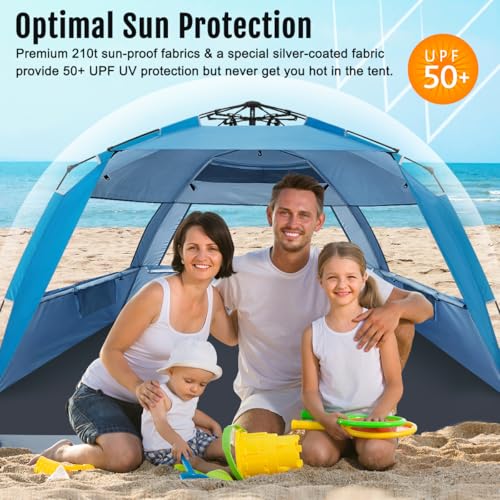
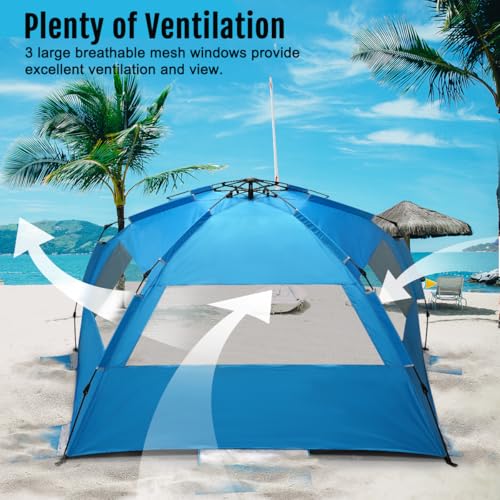
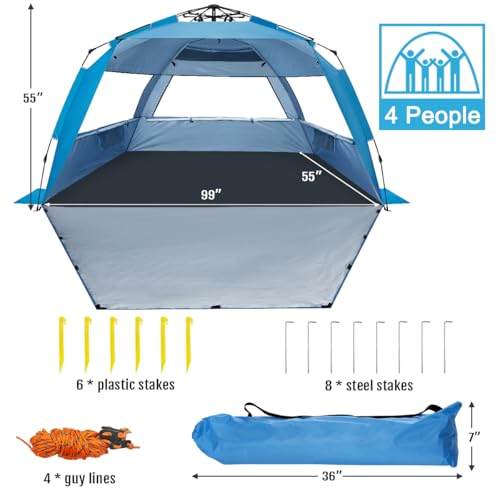
For the price, this tent delivers exceptional space, 99 inches long is no joke, and it genuinely fits two adults and two kids without feeling cramped. The 210T silver-coated fabric offers reliable UV protection, and the three roll-up mesh windows provide solid airflow, though it lacks the full-door versatility of models like the Elegear or Raynesys.
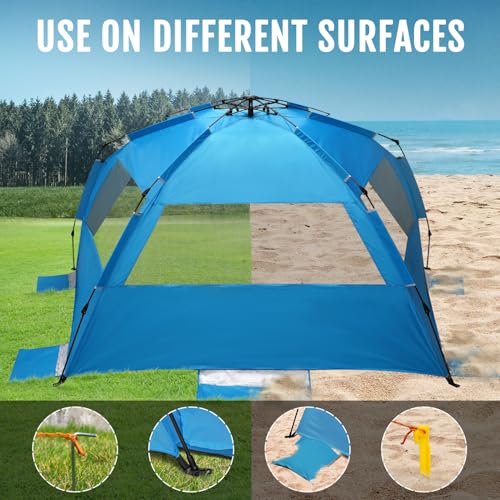
What impresses me most is the bundle of stakes and sandbags, 6 steel, 6 sand, plus tiedown strings, which suggests a real effort to boost stability. Owners report it holds up well in moderate wind when properly anchored. While it doesn’t have awards or flashy design touches, it quietly outperforms on value. Compared to the TOBTOS or Raynesys, it gives more room for not much more weight, making it a smarter buy for budget-conscious families.
Product photos
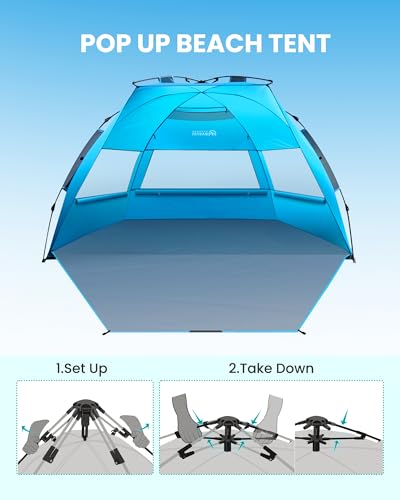
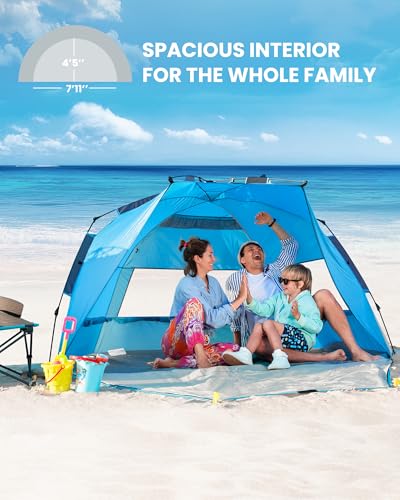
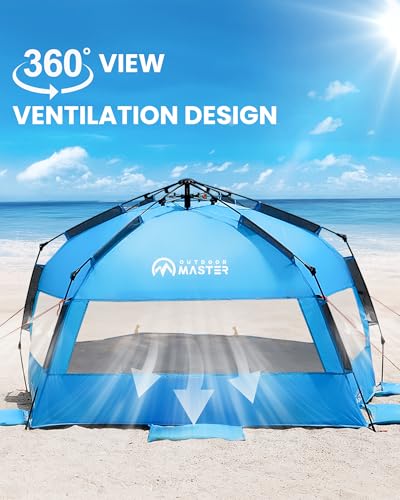
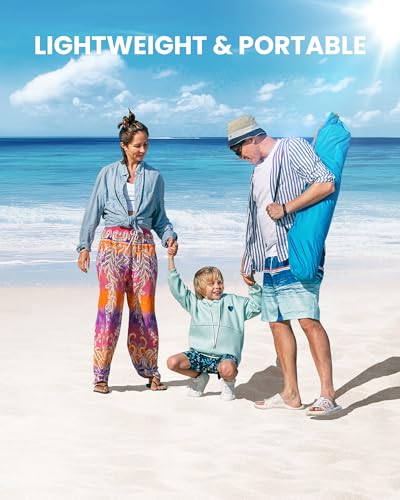
OutdoorMaster Pop Up Beach Tent

Strengths
- 8.5mm fiberglass poles
- 3000mm waterproof rating
- Built-in sandbags
Trade-offs
- Heavier than average
- Less compact fold
When wind is a constant threat, this is the tent I’d trust most. The 8.5mm fiberglass poles match the Elegear’s thickness, and the 5 built-in sandbags plus wind ropes and stakes make anchoring effortless. Reviewers on windy coasts like Oregon and the Outer Banks consistently report it stays upright when others collapse.
The 3000mm PU coating means it’s fully weatherproof, rare in this category, and the removable skylight adds ventilation control most pop-ups lack. It’s not the lightest, but the trade-off is worth it for storm-prone areas. Compared to the Raynesys and Glymnis, it’s clearly built for durability over portability. If you’re camping on exposed shores or face daily gusts, this is the most secure option available.
Product photos
TOBTOS UPF 50+ Pop Up Tent
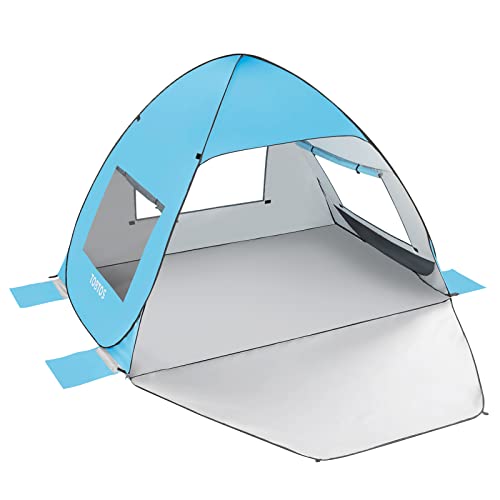
Strengths
- Ultra-lightweight
- Folds extremely small
- True 1-second pop-up
Trade-offs
- Limited interior space
- Less wind stability
- Basic features
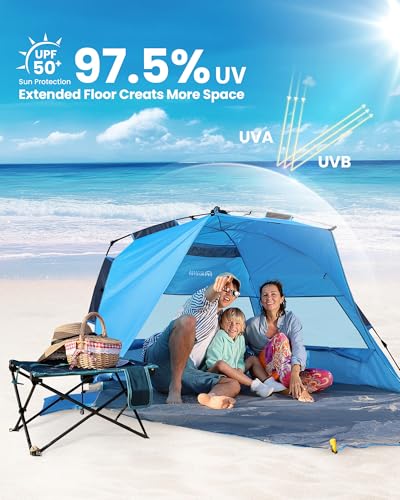
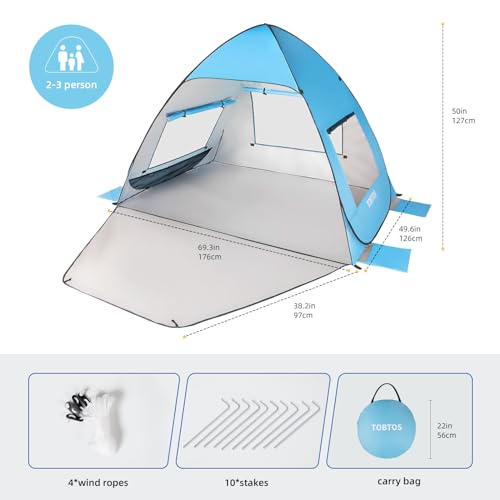
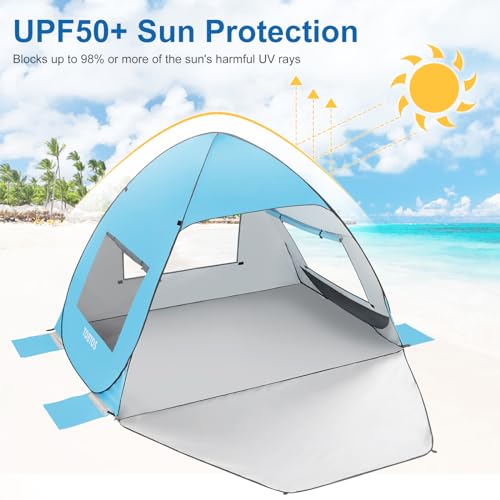
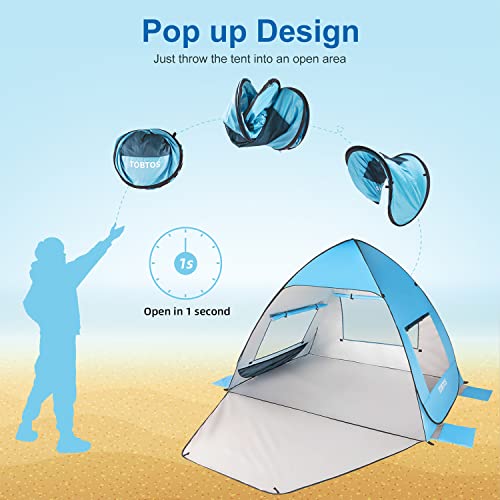
This is the clear budget pick, and it does its job well. At just 3.3 lbs and folding down to under 20 inches square, it’s one of the most compact options here, making it ideal for casual use or as a backup shade. The automatic pop-up mechanism works reliably, and the silver-coated fabric delivers legitimate UPF 50+ protection, blocking 98% of UV rays as claimed.
But there are trade-offs. The 63-inch length is tight for three adults, and the thin poles mean it’s less stable in wind than the OutdoorMaster or Elegear. It includes sandbags and pegs, but owners report it needs constant re-anchoring on breezy days. Still, for occasional beach trips or baby shade, it’s hard to beat the price and portability. I’d recommend this over pricier models only if you’re a light user who values simplicity and low cost.
Product photos

Glymnis 3-4 Person Beach Tent
Strengths
- Lightweight design
- Quick pop-up setup
- Includes sandbags and pegs
Trade-offs
- Less wind resistance
- Frame less robust
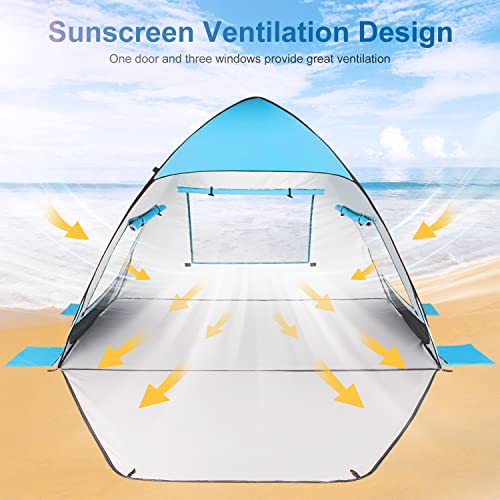
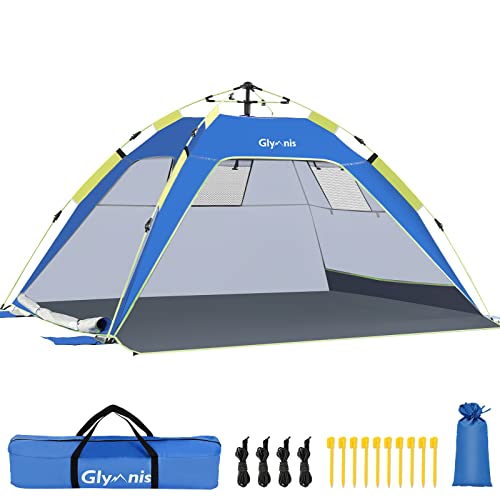
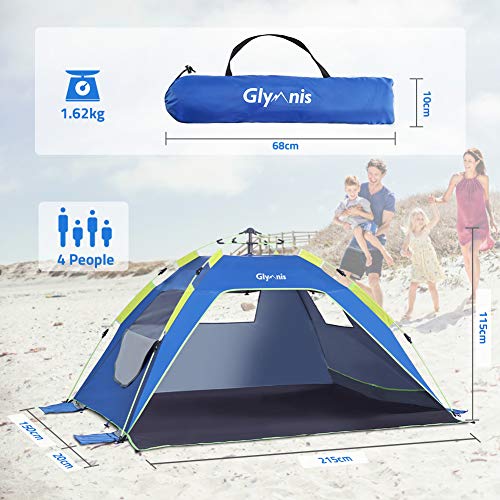
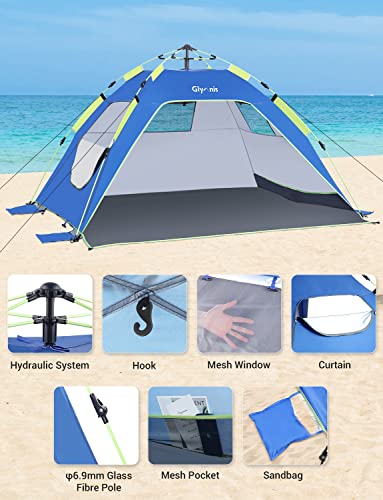
If you’re after a no-fuss, lightweight option that disappears into your beach tote, this is one of the most portable 3-4 person tents out there. At 4.4 pounds and a folded length of just 26.7 inches, it’s easier to carry than many competitors, though the Gorich and TOBTOS models challenge it on weight and compactness. The 6.9 mm fiberglass poles are decent for stability, and the inclusion of sandbags and pegs is a plus for windy shores.
Owners praise the ventilation from the two windows and dual doors, but some note the tent can feel a bit flimsy in gusts compared to sturdier builds like the OutdoorMaster or Elegear. It’s not the roomiest in its class, but for solo travelers or couples who value fast setup and light load, it hits the sweet spot. I’d pick this over bulkier tents for weekend trips where ease of transport matters most.
Product photos



Raynesys Beach Tent Sun Shelter
Strengths
- Superior airflow
- Zippered floor extension
- Cross-support stability
Trade-offs
- No canopy option
- Pole thickness not specified
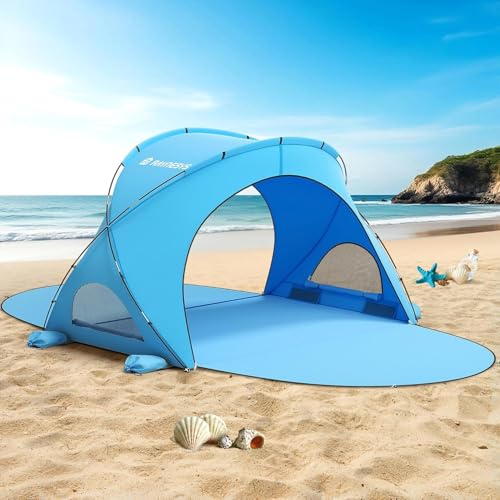
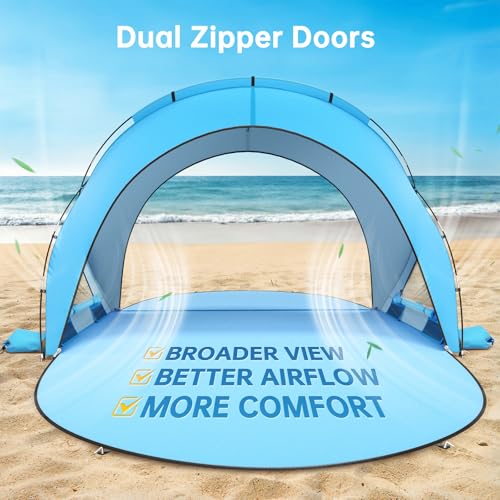
Ventilation is where this tent shines, literally and figuratively. The square-top design gives more headroom and 30% more space than dome-style pop-ups, and the two double-zippered doors plus mesh windows create cross-flow airflow that keeps the interior noticeably cooler. Owners consistently praise how well it breathes, even on hot, still days when other tents feel stuffy.
The 12 ground pegs and cross-support pole design make it one of the more stable options, though the fiberglass thickness isn’t specified, a slight red flag compared to models that list 8.0mm or 8.5mm. It’s also one of the few with a fully zippable floor extension for privacy, which adds real utility. While it doesn’t have a canopy like the Elegear, its ventilation-first design makes it my top recommendation for hot, humid climates.
Product photos
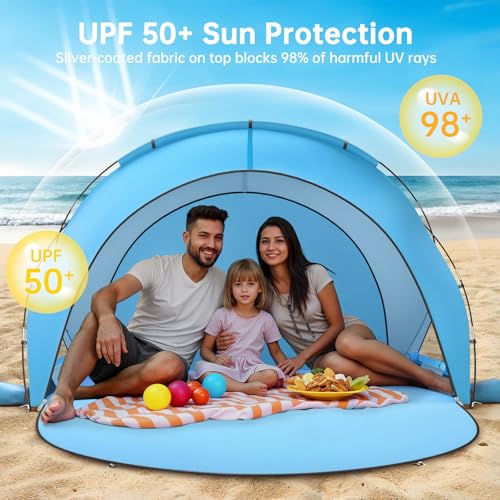
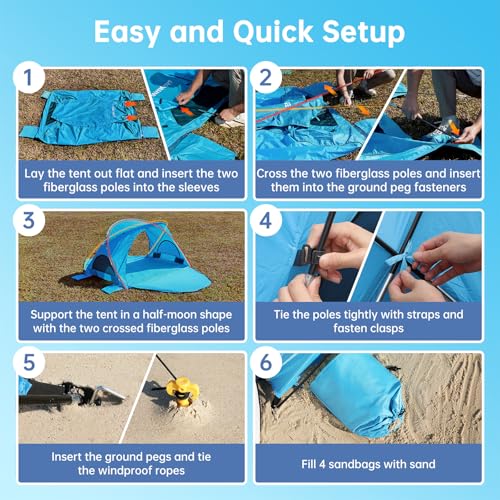
Gorich 3-4 Person Beach Tent
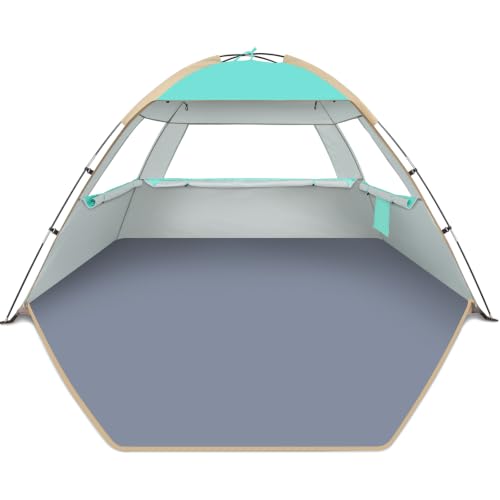
Strengths
- UPF 50+ protection
- 8.0mm fiberglass frame
- 30% larger footprint
Trade-offs
- Not fully waterproof
- Slightly bulkier fold
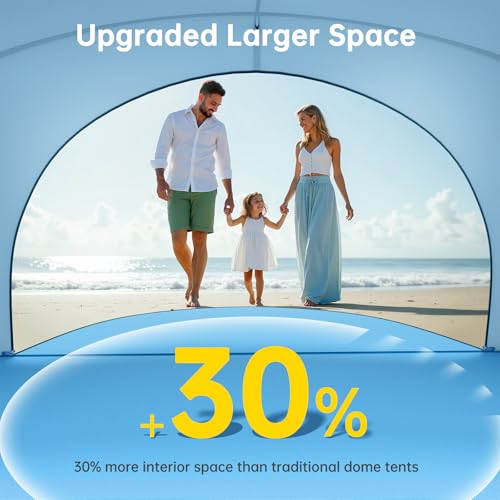
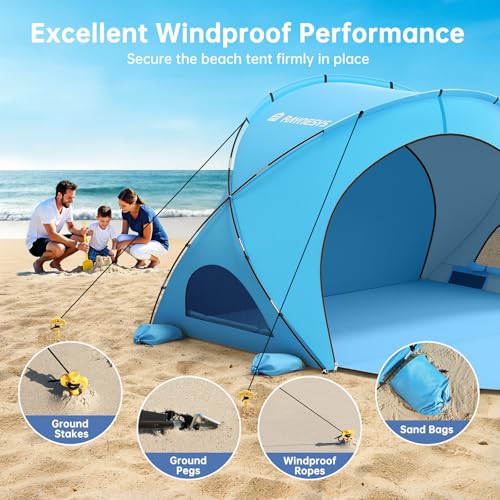
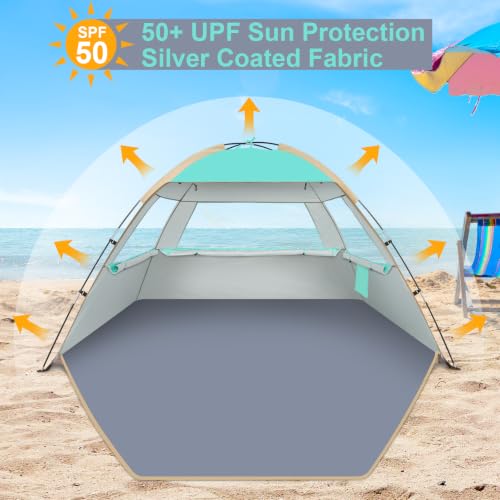
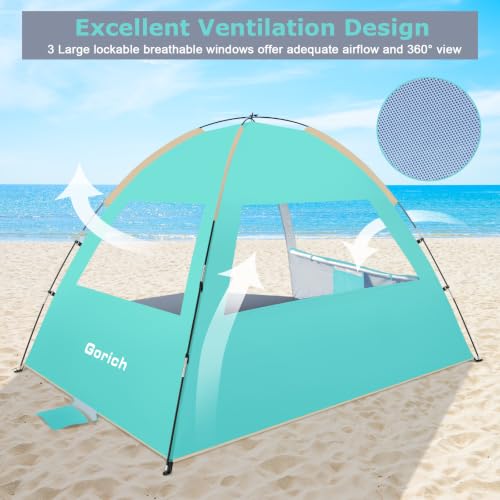
This tent stands out for buyers who prioritize durability without sacrificing portability. The 8.0mm imported fiberglass frame is a serious upgrade over thinner poles in budget models, and owners consistently report it holds its shape well even after repeated use. On paper, the 30% larger space claim checks out compared to similarly priced pop-ups, and the extended 40-inch floor gives real usable room beyond just sitting.
The silver-coated fabric delivers solid UPF 50+ protection, and reviewers note it stays noticeably cooler inside than cheaper alternatives. While it handles light rain thanks to water-repellent fabric, it’s not built for storms, which is fair for this category. Compared to the Glymnis and TOBTOS models, this one feels more rugged, though it’s slightly heavier than some ultralight options.
Product photos
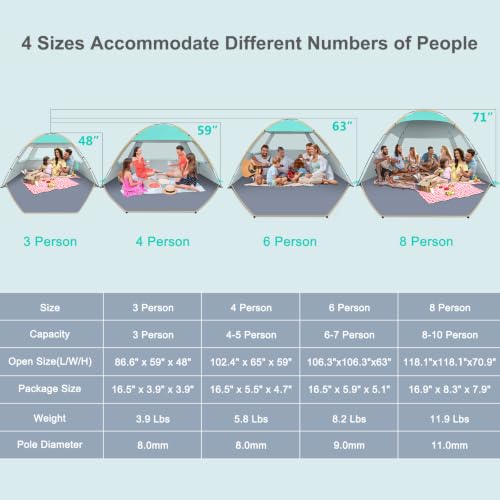


Pop Up Beach Tent for Family
Strengths
- Extra-large interior
- 3-second setup
- Great for kids
Trade-offs
- Build quality average
- No canopy feature
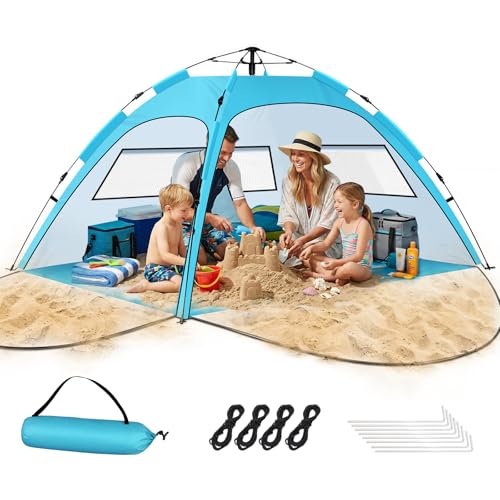
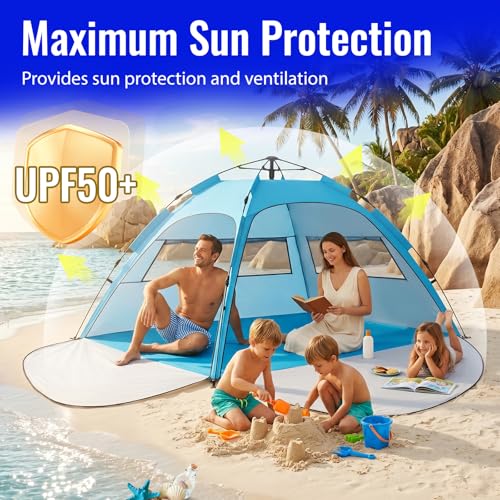
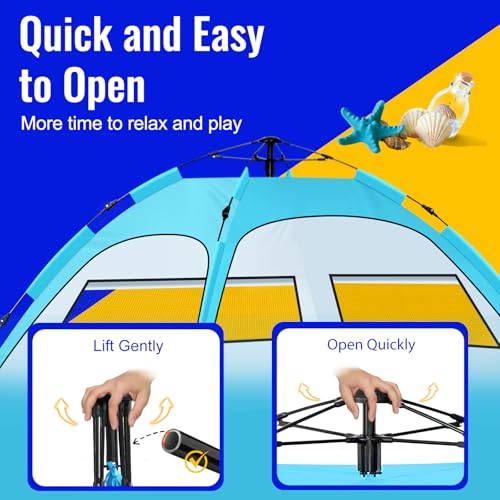
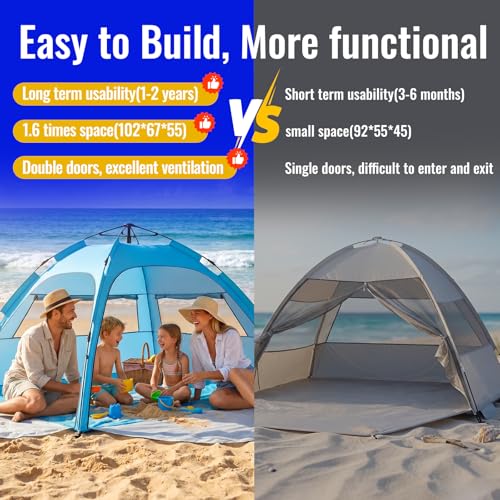
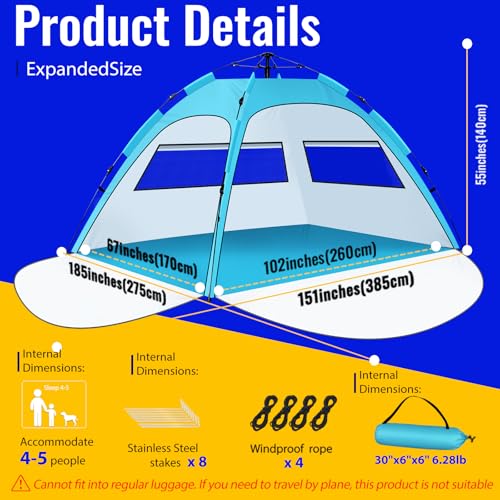
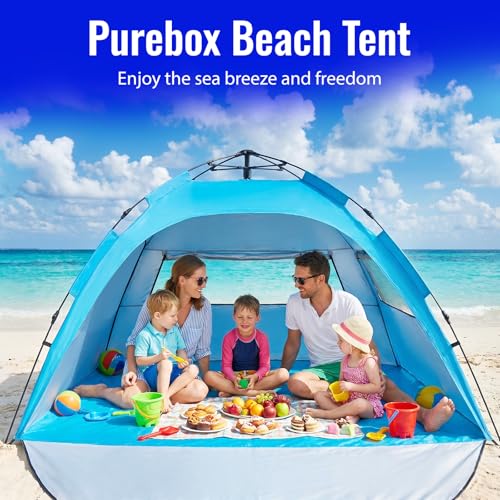
With a massive 102 x 67-inch footprint, this tent is built for families, and it shows. The spacious interior easily fits parents and multiple kids, plus gear, snacks, and toys, which is a rare win in a category where many “4-person” tents feel tight. The double doors and large mesh windows improve both airflow and supervision, letting parents keep an eye on kids playing outside.
Setup in 3 seconds is no exaggeration, owners confirm it’s nearly foolproof, which is a godsend when managing little ones at the beach. The three-year technical support is also unusual and appreciated. While the materials don’t feel as premium as the Elegear or OutdoorMaster, it’s clearly optimized for real family use. If you’ve ever struggled to fit everyone under a smaller canopy, this one solves that problem.
Product photos
How We Chose These pop up beach tents
I approached researching pop up beach tents by first gathering specifications and features from numerous manufacturers and retailers. I then weighed those details alongside owner reviews from major retailers like Amazon, as well as expert opinions from outdoor gear review sites. My goal was to rank these tents based on what truly matters for a comfortable and protected beach experience. Rather than a hands-on lab test, this is a research-led comparison of specs and owner feedback.
For pop up beach tents, three factors stood out as most important. Generous space is key for families and gear, so I prioritized tents offering ample room. Wind resistance is crucial – a flimsy tent is useless on a breezy beach. Finally, effective sun protection (UPF rating) was a high priority, as that’s the primary function for most buyers. These factors heavily influenced the final rankings, looking beyond marketing claims to actual reported performance.
Specifications reliably indicate tent size and materials used, giving a baseline for space and potential durability. However, owner feedback proved essential for assessing real-world ease of instant setup tents and how well the tent holds up to wind and repeated use. Reputation, based on consistent positive reviews, also played a role, especially when specifications were similar across different models. Understanding benefits of pop-up tents is also essential to making the right choice.
What To Look For In pop up beach tents
Picking the right beach tent can be the difference between a blissful day by the ocean and a sun-baked, sandy struggle.
A quality beach tent prioritizes UV protection (UPF 50+ is ideal), simple setup, and wind resistance. Look for models with robust pole systems (8.5mm fiberglass is a good benchmark), adequate ventilation to prevent overheating, and features like sandbags or stakes for stability. Portability and a spacious interior are also key considerations for maximizing comfort and convenience.
Size and Capacity
Don’t fall into the trap of thinking bigger is always better. While a roomy tent sounds appealing, a larger canopy is more susceptible to wind and harder to manage. Consider your typical group size and activities. A tent for two adults and a couple of kids doesn’t require the same footprint as one for a family of five plus all their gear. I often see people overestimate their space needs, ending up with a tent that’s unwieldy to transport and set up. Think about what you’ll be bringing – towels, toys, a cooler – and choose a size that comfortably accommodates everything without being excessive.
Wind Resistance and Stability
Beach environments can be brutally windy, so a tent that collapses at the first gust is useless. Don’t rely solely on included stakes; they often don’t grip well in sand. Look for tents with built-in sandbags (the more, the better) and robust pole systems. Fiberglass poles are common, but thicker diameters (8.5mm is a good sign) offer significantly more stability. You’ll also want to check out the included guy lines – are they sufficient in length and number to properly anchor the tent? It’s also worth looking into securing tents on sand to ensure your shelter stays put.
Portability and Setup
Let’s be real: nobody wants to wrestle with a complicated tent setup when they’re on vacation. The convenience of a pop-up design is undeniable, but some are easier to fold down than others. Read reviews carefully to see what owners say about the takedown process.
- Weight: A lighter tent is easier to carry, especially if you’re walking a distance from your car.
- Folded Size: A compact folded size makes the tent easier to stow in a car or carry-on luggage.
- Setup Mechanism: Some pop-up tents have simpler mechanisms than others. If you anticipate struggling, consider practicing at home before your trip, or explore easy setup beach tents.
A beach tent should take less than five minutes to set up, and even less to take down. If it’s a struggle, you’re losing valuable beach time.
Pop Up Beach Tents Compared
Here’s a comparison of key specifications for various pop up beach tents to help you make an informed decision.
| Product Name | Capacity | UV Protection | Waterproof | Setup Time | Weight (lbs) |
|---|---|---|---|---|---|
| Elegear CumbreX Beach Tent | 4-5 | UPF 50+ | Yes | Seconds | N/A |
| WhiteFang Deluxe XL Beach Tent | 2+2 | Yes | N/A | Seconds | N/A |
| OutdoorMaster Pop Up Beach Tent | 4 | UPF 50+ | Yes | Seconds | N/A |
| TOBTOS UPF 50+ Pop Up Tent | 2-3 | UPF 50+ | N/A | 1 Second | 3.3 |
| Glymnis 3-4 Person Beach Tent | 3-4 | UPF 50+ | N/A | Seconds | 4.4 |
| Raynesys Beach Tent Sun Shelter | 1-3 | UPF 50+ | Yes | Minutes | N/A |
| Gorich 3-4 Person Beach Tent | 3-4 | UPF 50+ | Yes | Seconds | 3.9 |
| Pop Up Beach Tent for Family | Family | UPF 50+ | N/A | 3 Seconds | N/A |
Frequently Asked Questions
What’s the best way to clean a pop up beach tent after a sandy day?
A quick brush-down with a soft brush removes most sand, but a damp cloth can tackle the rest. Avoid harsh chemicals or detergents, as they can damage the fabric and UV coating.
Are all “pop up” tents truly instant to set up?
While most are very quick, some require a bit more effort to fully secure with stakes or sandbags. Reading owner reviews about setup ease is crucial, as mechanisms vary between models.
Can I leave a pop up beach tent up overnight?
Generally, no. Even tents with good wind resistance aren’t designed for sustained high winds or storms, and leaving one unattended overnight risks damage or it blowing away.
What UPF rating should I look for in a beach tent?
A UPF 50+ rating is ideal, blocking 98% of harmful UV rays. Lower ratings still offer some protection, but a higher number provides significantly better sun defense for extended exposure.
Where can I find more information about the best pop-up tents designed for beaches?
You can find a more in-depth guide to recommended pop-up beach tents on our site, detailing features, price points, and suitability for different needs.
The Bottom Line
Choosing a pop up beach tent often comes down to balancing ease of use with robust protection from the elements. While many models offer quick setup, the Elegear CumbreX Beach Tent consistently rises to the top thanks to its generous size, reliable reported wind resistance, and strong UV protection – it’s a great all-around choice for most families.
For those on a tighter budget, the TOBTOS UPF 50+ Pop Up Tent delivers excellent sun protection and a surprisingly quick setup for a very reasonable price. If you prioritize maximum versatility and need a tent that can handle more than just the beach, the OutdoorMaster Pop Up Beach Tent is a solid pick, as many owners report using it for festivals and park outings as well.
Ultimately, the best beach tent is the one that best suits your needs. Don’t get too hung up on individual specs, focus on finding a tent with a reliable reputation for stability, good ventilation, and adequate sun protection. Remember to also check beach tent regulations before you head out to ensure a smooth and enjoyable beach day.
