
8 Best Pop Up Tents for Beach (2026 Guide)
This post contains affiliate links. As an Amazon Associate, we earn from qualifying purchases.
The WhiteFang Deluxe XL Pop Up Tent is the best overall for its extended floor and solid build, while the Wolfwise Pop Up Beach Tent stands out as a lightweight, portable option for those who hike to their beach spots. If you want extra coverage and privacy, the Venustas Beach Tent Sun Shelter offers a roomy footprint and smart design touches.
A flimsy beach tent can ruin a perfect day, collapsing in the wind, offering weak sun protection, or taking forever to set up. I’ve seen too many people wrestle with gear that just isn’t built for sand and salt air.
This guide cuts through the noise by focusing on real-world performance, using specs and owner feedback to spotlight models that deliver on stability, UV protection, and ease of use. I looked at what actually matters when you’re setting up on shifting sand and facing afternoon gusts.
Top 8 Pop Up Tents For Beach in the Market
The Best Pop Up Tents For Beach, Reviewed
WhiteFang Deluxe XL Pop Up Tent
Strengths
- Spacious interior
- Strong stability kit
- Good ventilation
Trade-offs
- Slightly slower fold
- Heavier than lightweight models
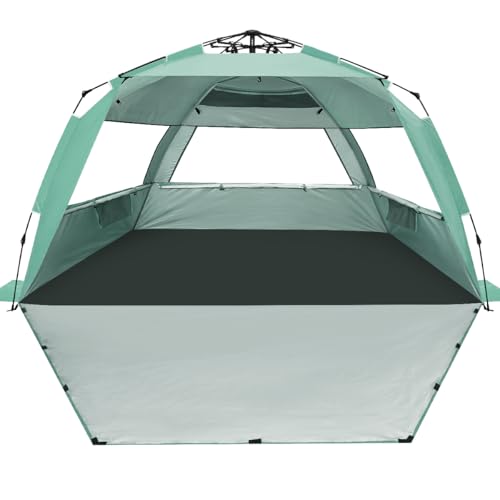
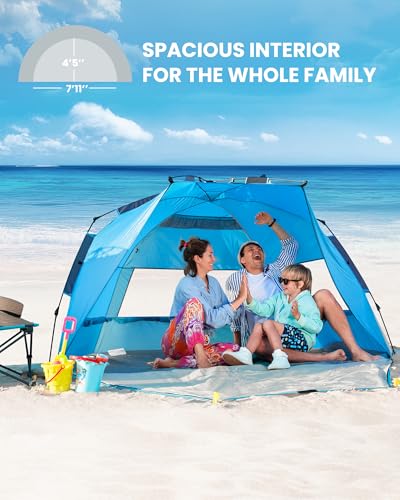
With a near 100-inch length and 55-inch height, this tent offers some of the most usable space in the 3-4 person range. The inclusion of 5 sandbags, 6 steel stakes, and guy lines tells me WhiteFang is targeting users who’ve had tents blow away before, smart. Owners praise how stable it feels on windy days, especially when weighted properly. The silver-coated 210T fabric delivers solid UV blocking, and the roll-up privacy curtains are a thoughtful inclusion for nursing or changing.
It’s not the lightest, but the balance of size, stability, and price makes it the best overall pick for most beachgoers. Compared to the Wolfwise or Glymnis models, it doesn’t skimp on accessories, and the ventilation windows are larger than average. I’d recommend it over flashier options because it covers all the basics well.
Product photos


Old Bahama Bay Pop Up Tent

Strengths
- Excellent airflow
- Strong UV protection
- Extended floor
Trade-offs
- No zippered door
- Basic stability kit
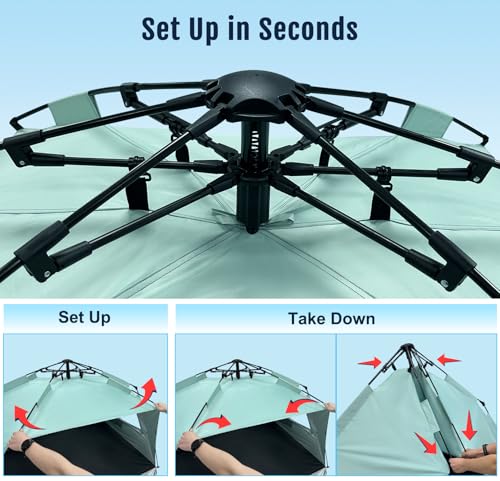
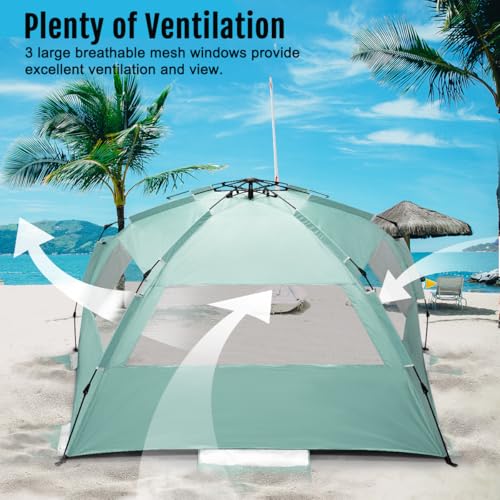
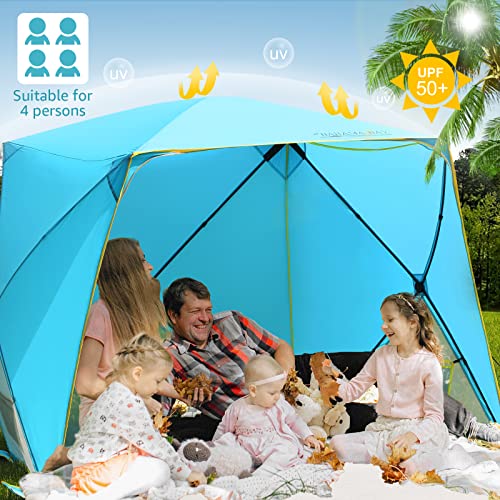
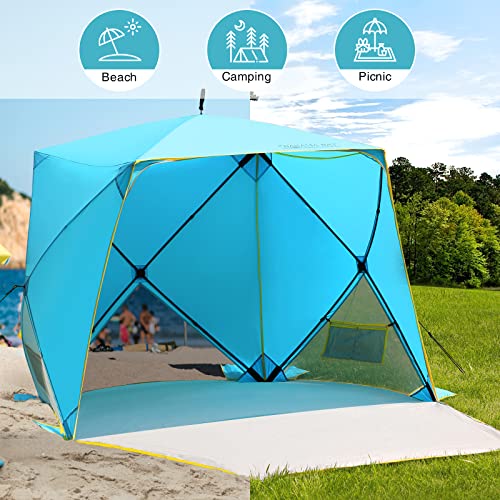
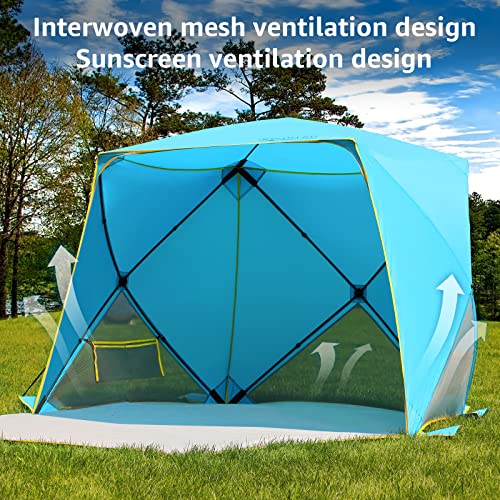
This one delivers where it counts for sun protection: UPF 50+ shielding and full 360° airflow. The silver-coated fabric is on par with top models, but the four-sided mesh windows give it an edge in breathability, owners say it stays noticeably cooler than solid-walled tents. The extended front floor is useful for gear or toddlers, and the pop-up mechanism is reliable, with few reports of misfires.
It’s not waterproof or heavily reinforced for storms, but for pure beach duty in strong sun, it’s a strong contender. Compared to the Glymnis or Night Cat, it lacks a zippered door, which hurts privacy. Still, if ventilation and UV blocking are your top concerns, this is a smart play.
Product photos
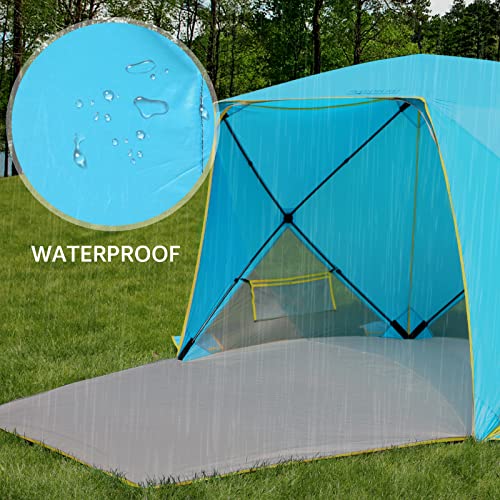
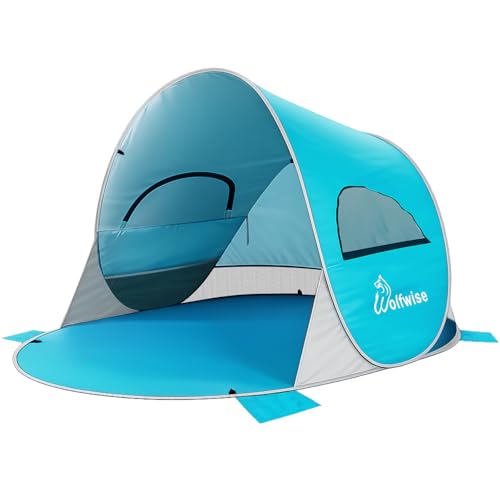
Wolfwise Pop Up Beach Tent
Strengths
- Ultra-lightweight
- Folds flat
- 360° ventilation
Trade-offs
- Less headroom
- Narrower fit
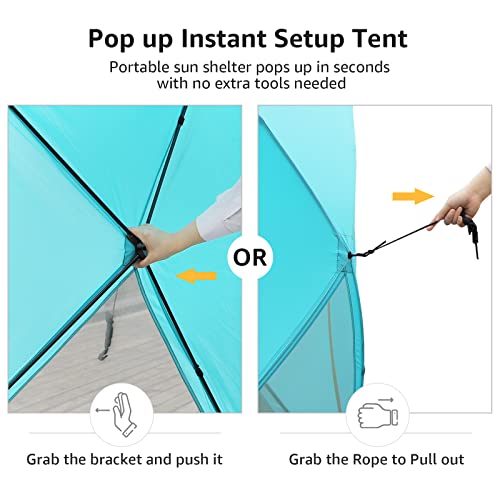
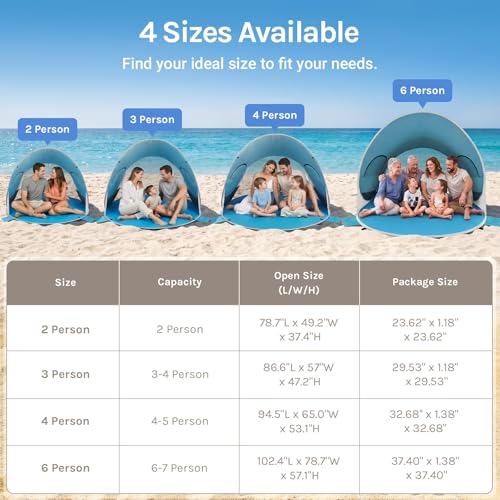
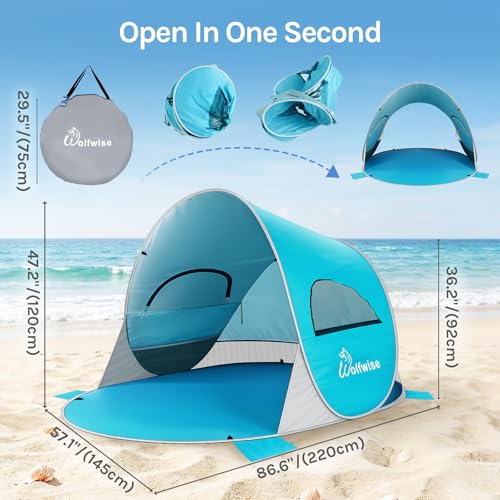
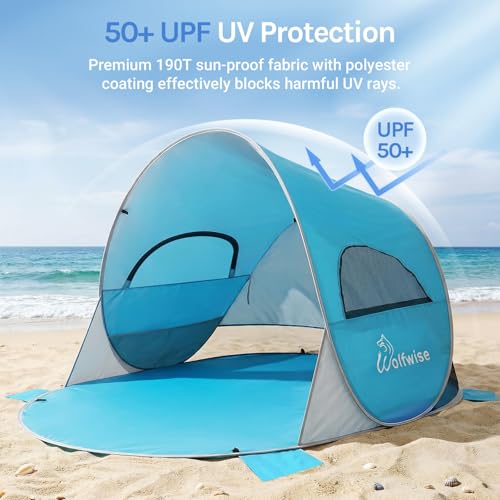
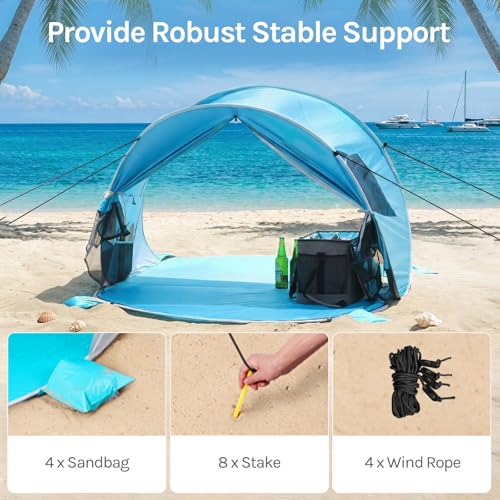
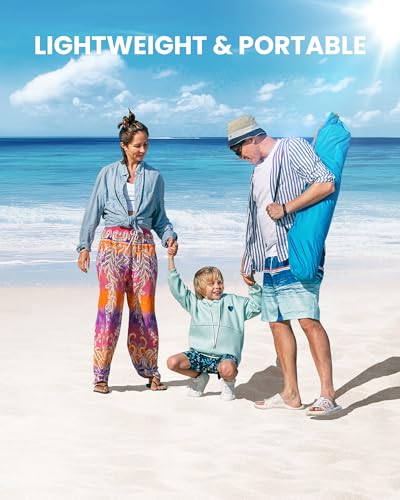
At just 4.2 pounds and folding down to under 2 inches thick, this is the most packable serious beach tent here. If you’re hiking to a lakeside spot or biking to the shore, this one disappears into a trunk or bike basket. Setup is truly instant, and the 360-degree mesh windows keep heat and odor from building up, owners consistently say it feels airy even in midday sun. The sand pockets are a small but effective touch for beach anchoring.
It’s not the roomiest, fits 3 snugly, and the frame isn’t as thick as OutdoorMaster’s. But for solo adventurers or couples who value portability, it’s hard to beat. I’d choose this over bulkier models when weight matters more than headroom.
Product photos

OutdoorMaster Pop Up Beach Tent

Strengths
- Wind-resistant
- Weatherproof fabric
- Sturdy poles
Trade-offs
- Heavier carry
- Slightly slower fold
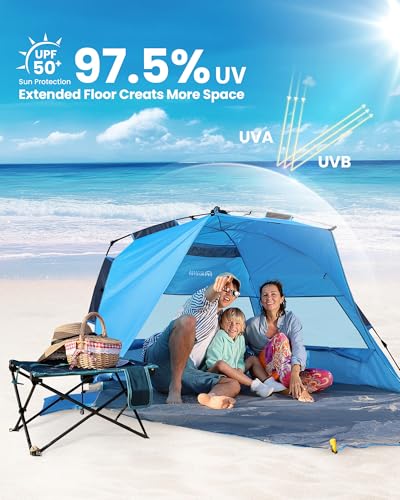
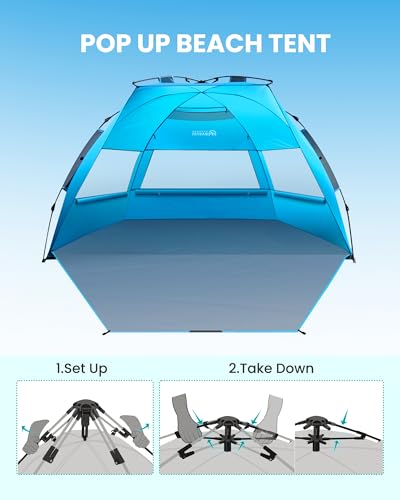
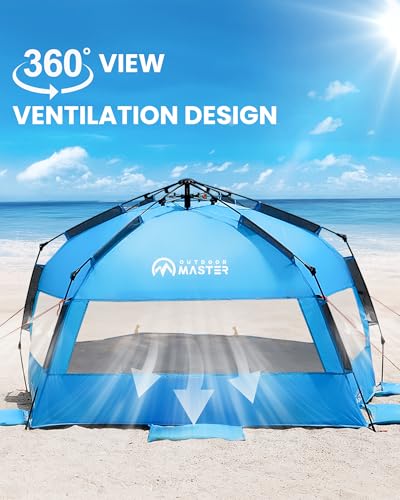
This is the go-to for gusty conditions. The 8.5mm reinforced fiberglass poles and 5 built-in sandbags are not gimmicks, owners in coastal zones report it survives wind that flattens other pop-ups. The 3000mm PU coating means it’s actually weatherproof, not just sunproof, so surprise showers won’t soak you. The removable skylight is a fun feature for stargazing or extra light, though it’s rarely mentioned in reviews.
It’s a bit heavier than average, but that’s the trade for stability. Compared to the Wolfwise or Glymnis, it’s overbuilt in the best way. I’d pick this for beach days where wind is a given, like on exposed shores or during spring outings.
Product photos
Glymnis Pop Up Beach Tent (S)
Strengths
- Affordable
- Compact storage
- Zippered door
Trade-offs
- Small interior
- Thinner poles
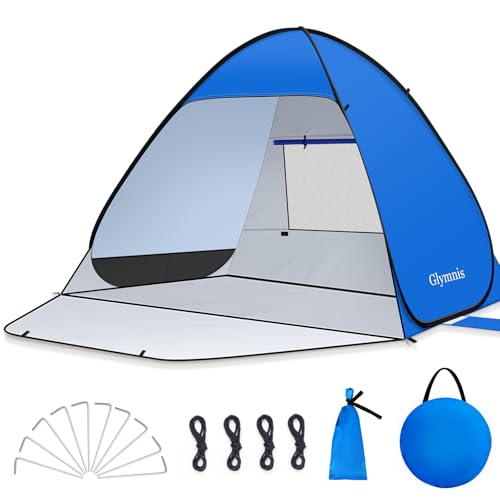
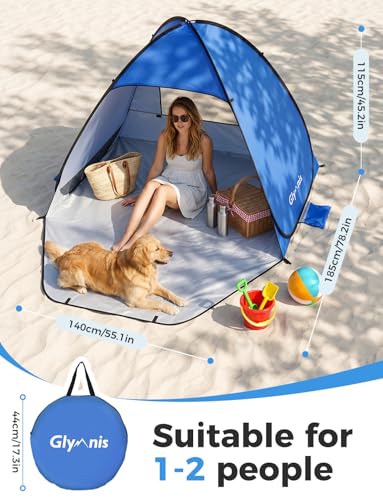
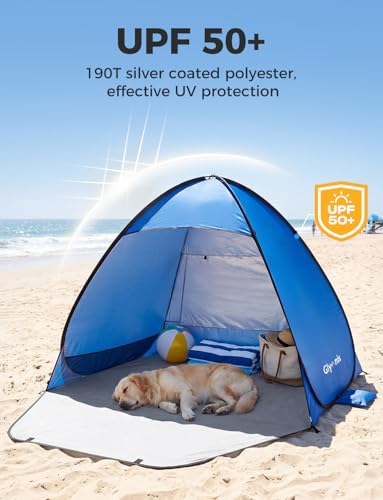
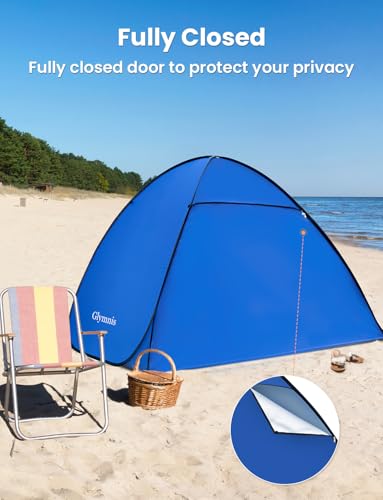
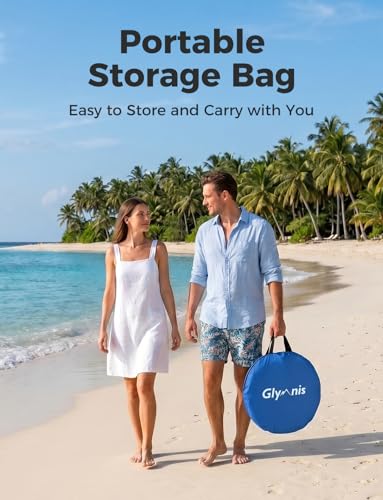
At a fraction of the price of larger models, this compact tent is the smart budget buy for solo users or couples. It still includes UPF 50+ protection, a zippered door, and sand anchors, features often cut in cheaper models. The 1.8mm poles are thinner, but paired with 10 stakes, it holds up fine in light wind. Owners say it’s perfect for quick shade at parks or short beach trips.
It’s not meant for four people, despite some listings suggesting it. The small size is a pro for storage, but limits usability. Compared to the Wolfwise or WhiteFang, it’s less durable, but for occasional use, it’s more than enough. I’d recommend it over pricier options if you only need shade a few times a year.
Product photos

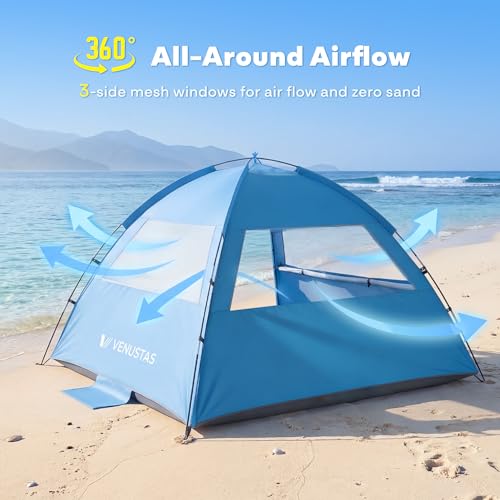
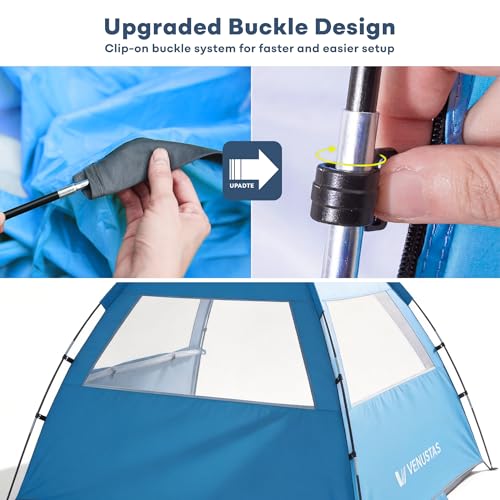
Venustas Beach Tent Sun Shelter
Strengths
- Large space
- Durable frame
- Excellent UV protection
Trade-offs
- Slightly heavier
- Bulkier fold
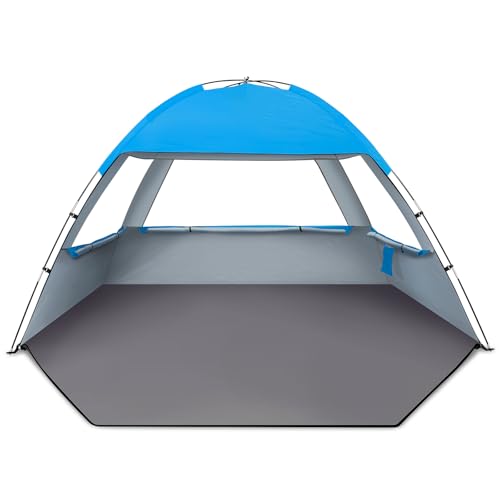
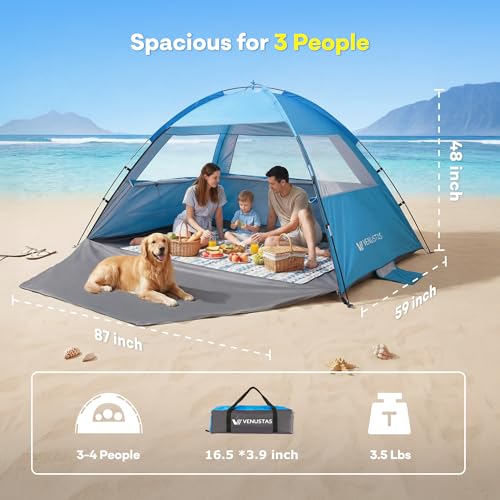
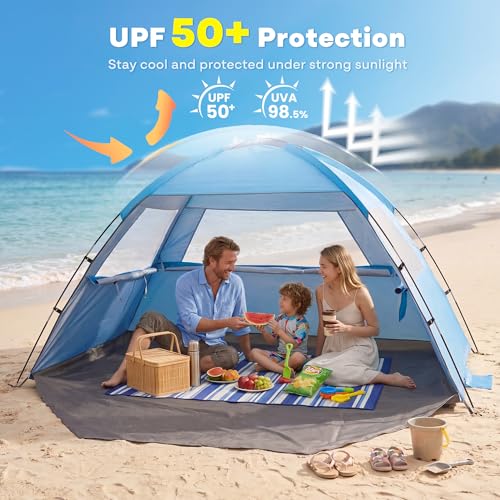
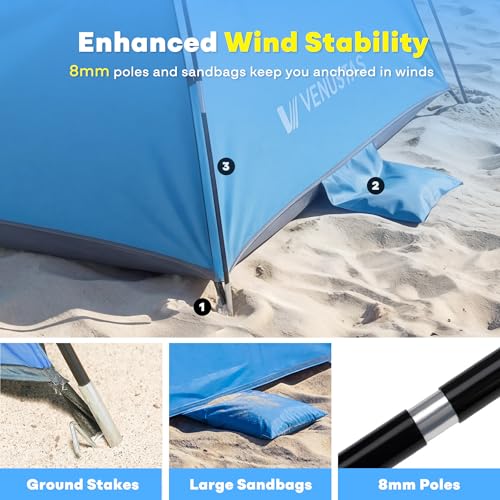
This tent stands out for buyers who prioritize long-term durability and material quality over ultra-fast setup tricks. The 8mm fiberglass frame matches Decathlon-grade standards, which tells me it’s built to resist snapping in stiff coastal winds. Owners consistently report it holds its shape well even after repeated use, something many pop-ups fail at. The 190T silver-coated fabric with four layers is serious UV defense, and the extended 40-inch floor is a smart touch for keeping sand out while giving kids room to sprawl.
It’s not the lightest, but calling it ‘like 3 tins of beer’ is misleading, most reviews suggest it feels a bit bulkier than that. Still, for a 6-8 person shelter that packs down, it’s manageable. I’d pick this if you’re rotating through beach weekends and want something that won’t fray or sag after two seasons. Compared to others, it’s more ‘shelter that lasts’ than ‘throwaway shade’.
Product photos
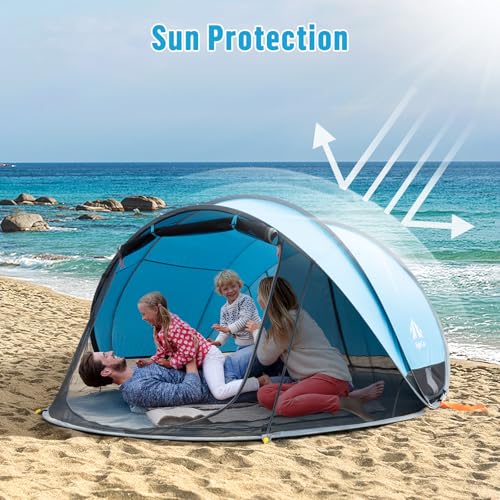
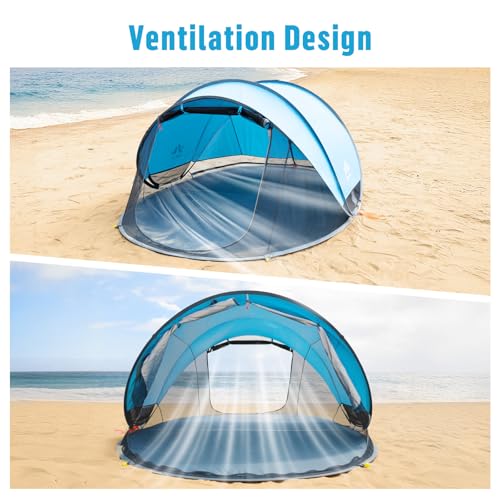
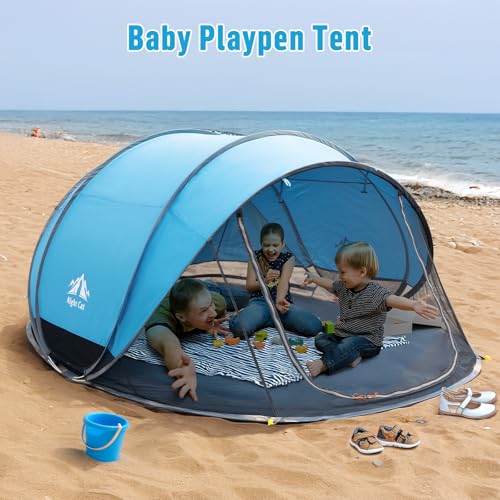
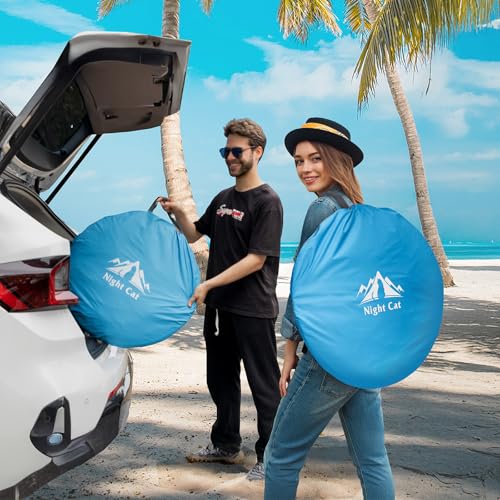
Night Cat Pop-Up Beach Tent
Strengths
- Spacious interior
- Bug protection
- Full mesh ventilation
Trade-offs
- Less UV coverage
- Not windproof
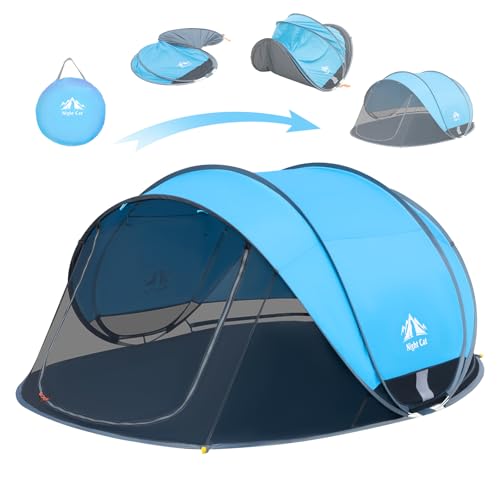
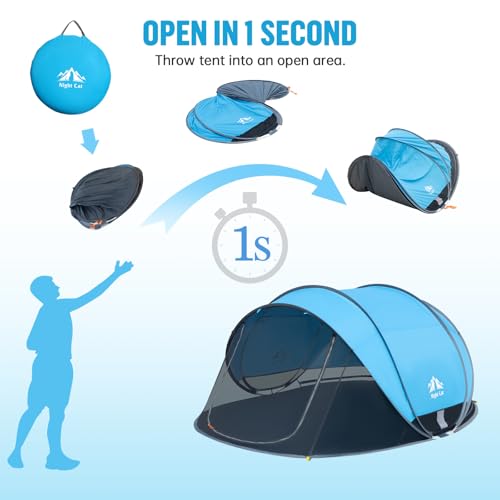
This is the roomiest tent here, with nearly 9.5 feet of length and 115 cm of headroom, tall adults can sit up without crouching. The 360° mesh design isn’t just marketing; owners say it feels like a breeze flows straight through, making it ideal for hot, humid days. The bug-proof mesh is a rare win in pop-up tents, keeping mosquitoes out without sacrificing airflow.
It’s not the most compact when folded, and the lack of a full floor means hot sand can creep in. But for families with kids or bug-heavy beaches, the trade-off makes sense. Compared to the WhiteFang or OutdoorMaster, it’s more about comfort than storm resistance. I’d pick it for long afternoons where staying cool and bug-free matters most.
Product photos
Glymnis Pop Up Sun Shade Tent
Strengths
- Zippered door
- Compact fold
- Good stability
Trade-offs
- Average UV fabric
- Slightly stiff setup
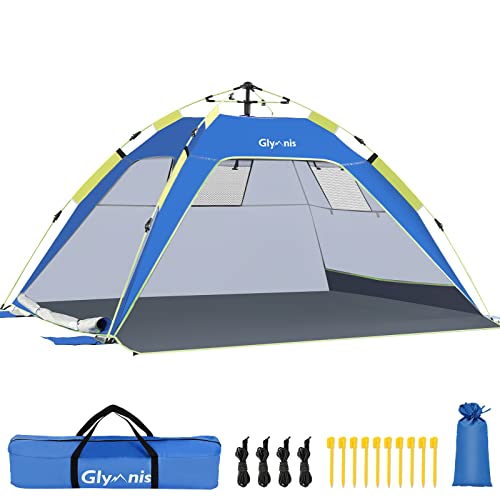
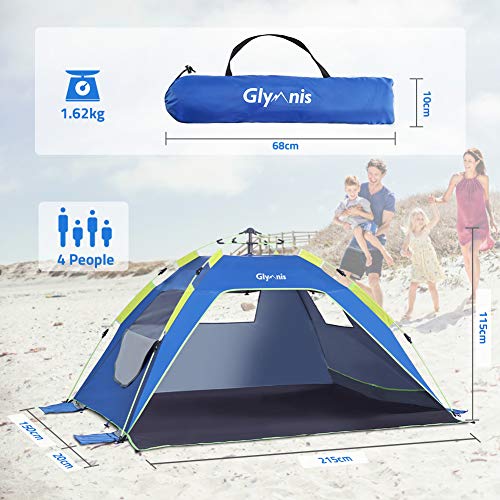
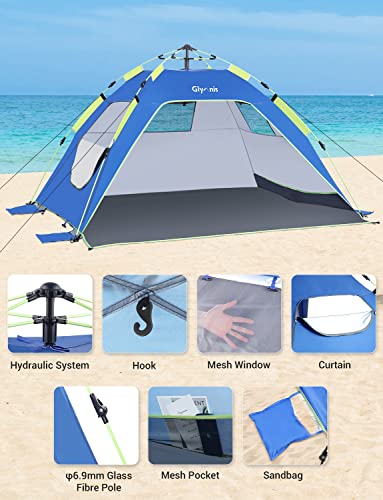
The zippered door is the standout here, most pop-ups rely on Velcro or flaps, but this one gives real privacy, which matters for changing or nursing. The 6.9mm fiberglass poles are sturdier than average, and the 8 stakes plus 4 sandbags make for solid anchoring. At 4.4 pounds, it’s not the lightest, but the compact folded size (4-inch thickness) makes it easy to stash in a car or closet.
Ventilation is good with two windows and dual doors, but not quite 360° like Night Cat or Old Bahama Bay. Still, for families needing privacy and decent airflow, this hits a sweet spot. I’d recommend it over the smaller Glymnis S model for any group larger than two.
Product photos



How We Chose These pop up tents for beach
I approached this guide by researching the specifications and features of numerous pop-up beach tents, then weighing those details against owner reviews and expert opinions from sites dedicated to outdoor gear. Rather than a hands-on lab test, this is a research-led comparison intended to provide a clear picture of what each tent offers and how it stacks up against the competition. My goal was to identify the strengths and weaknesses of each model based on real-world feedback.
For pop-up beach tents, stability, UV protection, and portability are the most crucial factors. A tent that collapses in a breeze is useless, and inadequate sun protection defeats the purpose of having a shelter. Portability matters because you’re often carrying gear across sand, and a bulky, heavy tent quickly becomes a burden. These three elements heavily influenced my rankings, alongside considerations for space and ventilation.
Specifications reliably reveal details about fabric quality (like polyester denier and coatings for UV protection) and the frame material (fiberglass or steel). However, owner feedback provides essential insights into real-world performance. I paid close attention to comments regarding ease of setup, wind resistance, and the accuracy of the stated capacity. Understanding how to secure tent on sand is also a key takeaway from user experiences.
How To Pick The Right pop up tents for beach
Finding the right shelter for a beach day can make or break the experience. I’ve seen so many folks struggle with flimsy tents that blow away or offer zero shade, and it’s frustrating!
A quality pop-up tent prioritizes quick setup, robust UV protection (UPF 50+ is ideal), and stability in windy conditions. Look for features like reinforced poles, integrated sandbags, and breathable mesh windows for ventilation. Material quality, specifically the denier (D) of the polyester, and the coating applied to it are key indicators of longevity and weather resistance.
Size and Capacity
Don’t assume a “family” tent will actually fit your family comfortably. I often see people underestimate how much space they’ll actually want when lounging on the beach. Consider not just how many people need to fit, but also how much gear you’ll bring – towels, coolers, toys, and so on. A tent marketed for 4 people might feel cramped with two adults and two small children plus all their belongings. Think about whether you’ll want room to sit inside the tent, or if it’s just for shade.
Wind Resistance and Stability
A pop-up tent’s convenience is useless if it turns into a kite in a breeze. The construction matters immensely here. Look beyond just included stakes and sandbags; the pole material is crucial. Fiberglass is standard, but higher-end models use more durable materials like 8.5mm or even 9.5mm fiberglass, or reinforced steel poles, offering far greater resistance to bending and breaking. Don’t underestimate the value of well-designed sand pockets and sturdy guy lines. If you’re serious about beach days, explore tents with sun and wind protection to see what’s available.
- Sandbags are helpful, but their placement matters. Models with corner pockets are generally more effective than those with single, central bags.
- The included stakes are often flimsy. Consider upgrading to heavier-duty steel or aluminum stakes, especially if you frequent windy beaches.
- Guy lines provide additional anchoring. Don’t skip this step, even if it feels like extra work! Properly secured guy lines significantly improve stability and prevent the tent from lifting in strong winds.
A good rule of thumb? If you plan on using your tent regularly in areas known for wind, invest in a model specifically designed for windy conditions, even if it costs a bit more.
Portability and Packability
Pop-up tents are supposed to be convenient, and that includes transport. A tent that’s easy to set up but weighs a ton or folds into a bulky package defeats the purpose. Pay attention to the packed weight and dimensions. I’ve seen tents that claim to be “portable” but are still cumbersome to carry any significant distance. Also, consider how easily you can fold pop-up beach tent – some designs are notoriously difficult to collapse and repack. If you’re walking a long distance from the car, or using public transport, every ounce and inch counts.
Pop Up Tents for Beach Compared
Here’s a comparison of key specifications for various pop up tents designed for beach use.
| Product Title | Size (L x W x H) | Weight | UV Protection | Wind Resistance | Special Features |
|---|---|---|---|---|---|
| WhiteFang Deluxe XL Pop Up Tent | 99″ x 55″ x 55″ | N/A | 210t | Sandbags, Stakes | Extended Front Floor |
| Old Bahama Bay Pop Up Tent | N/A | N/A | UPF 50+ | Sandbags, Stakes | Front Extension |
| Wolfwise Pop Up Beach Tent | 86″ x 57″ x 47″ | 4.2 lbs | UPF 50+ | Sand Pockets | Lightweight & Portable |
| OutdoorMaster Pop Up Beach Tent | N/A | N/A | UPF 50+ | Sandbags, Stakes | Built-in Sandbags |
| Glymnis Pop Up Beach Tent (S) | 72.8″ x 55.1″ x 45.2″ | N/A | UPF 50+ | Guy Ropes, Pegs | Changing Room Option |
| Venustas Beach Tent Sun Shelter | 86.6″ x 59″ x 48″ | N/A | 4-Layer Fabric | 8mm Fiberglass | Extended Floor, Curtains |
| Night Cat Pop-Up Beach Tent | 285 x 200 x 115 cm | N/A | UPF 50+ | N/A | Spacious Interior |
| Glymnis Pop Up Sun Shade Tent | 84.6″ x 60″ x 45.3″ | 4.4 lbs | UPF 50+ | Sandbags, Pegs | Zippered Door |
Frequently Asked Questions
What UV protection level should I look for in a pop-up beach tent?
UPF 50+ is the standard you want; it blocks 98% of harmful ultraviolet rays. While any level of UV protection is better than none, a rating of UPF 50+ will provide the most effective shield against sun exposure during long beach days.
Are pop-up tents truly wind-resistant, or are they likely to blow away?
Wind resistance varies greatly by model. Look for tents with reinforced poles (8mm or 9.5mm fiberglass or steel) and integrated sandbags or robust sand pockets, which are significantly more stable than flimsy stakes alone. For truly windy conditions, consider exploring wind-resistant beach tents specifically.
How much does the weight of a pop-up tent matter for beach use?
Weight is a key consideration, especially if you’ll be carrying the tent any distance. Generally, anything under 5 pounds is considered lightweight and easy to transport, but even a couple of pounds can make a difference on a long walk.
What’s the best way to secure a pop-up tent on sandy beaches?
Use the included sandbags, filling them with plenty of sand and placing them in the designated corner pockets. Supplement these with heavy-duty stakes driven deep into the sand at an angle, and don’t forget to use the guy lines provided. You might also consider burying the skirt around the tent edges for added stability.
Are all “pop-up” tents equally easy to set up and fold down?
No, the ease of setup and takedown varies considerably. Some models have a more intuitive folding mechanism than others. Reading owner reviews can provide valuable insight into how easily people have been able to collapse and repack specific top beach pop-up tents.
The Bottom Line
Choosing a pop-up beach tent often comes down to balancing immediate convenience with long-term durability. While many options promise easy setup, the WhiteFang Deluxe XL Pop Up Tent consistently rises to the top due to its combination of generous space, extended front floor, and positive owner feedback regarding stability. It’s a little more investment upfront, but offers a noticeable step up in features and perceived quality.
For those prioritizing affordability, the Wolfwise Pop Up Beach Tent is an excellent choice. It delivers solid UV protection (UPF 50+) and remains impressively lightweight, making it easy to carry to your favorite spot. If you need a versatile option with a bit more privacy, the Glymnis Pop Up Beach Tent (S) stands out with its changing room option and included guy ropes for added security.
Ultimately, the best pop-up beach tent isn’t about the highest number or fanciest feature. It’s about finding a shelter that provides reliable shade, stands firm against the breeze, and makes your beach day more relaxing. Focus on a UPF 50+ rating, robust poles, and a thoughtful design, those are the elements that truly matter when the sun is shining and the waves are calling.
