
8 Best Pop Up Tents Waterproof 2026
This post contains affiliate links. As an Amazon Associate, we earn from qualifying purchases.
The Mimajor 4-Person Instant Camping Tent stands out as the best overall waterproof pop up tent, combining a strong 3500mm rating, excellent ventilation, and quick setup. For budget-conscious buyers, the Night Cat 2-Person Pop Up Tent offers surprising performance at just 3 pounds, while the CROWN SHADES 10×10 Pop Up Canopy delivers unmatched versatility for larger group shelters.
If you’ve ever scrambled to set up a tent in a sudden downpour, you know how critical real waterproofing is. Too many pop up tents promise instant shelter but fail when the rain hits hard.
This guide cuts through the marketing hype, focusing on tested specs and real owner experiences to find pop up tents that actually keep you dry. I looked at waterproof ratings, fabric durability, and ventilation across the top models, weighing what matters most for quick, reliable shelter in wet conditions.
Top 8 Pop Up Tents Waterproof in the Market
The Best Pop Up Tents Waterproof, Reviewed
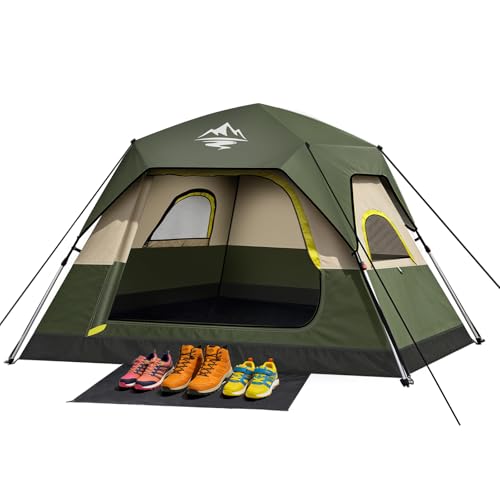
Mimajor 4-Person Instant Camping Tent
Strengths
- 3500mm waterproof rating
- Full rainfly
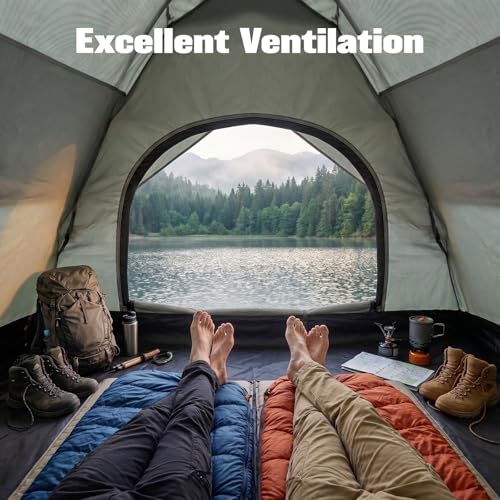
- Excellent ventilation
- Spacious 8×8 ft footprint
- Thoughtful interior features
Trade-offs
- Slightly heavier
- Rainfly must be removed for stargazing
- Not for backpacking
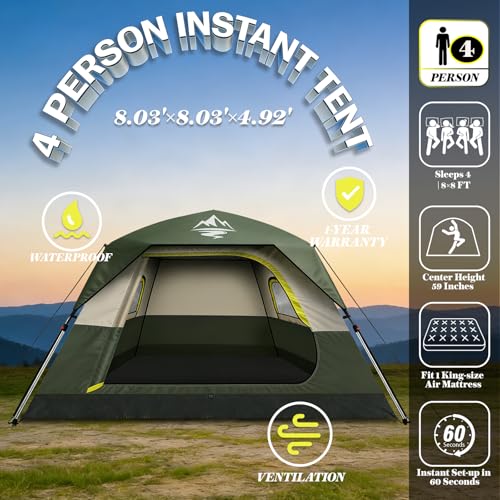
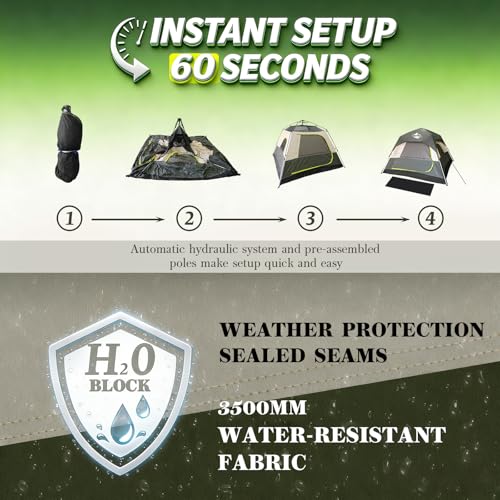
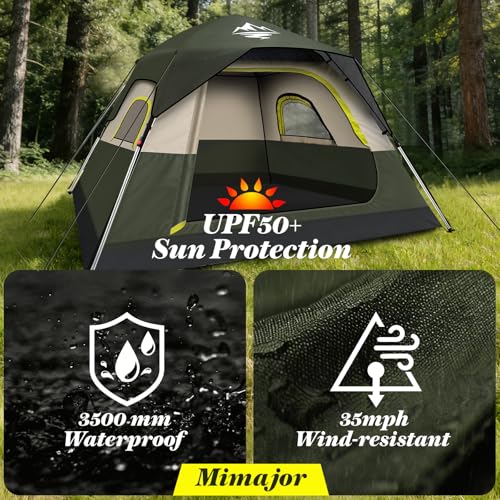
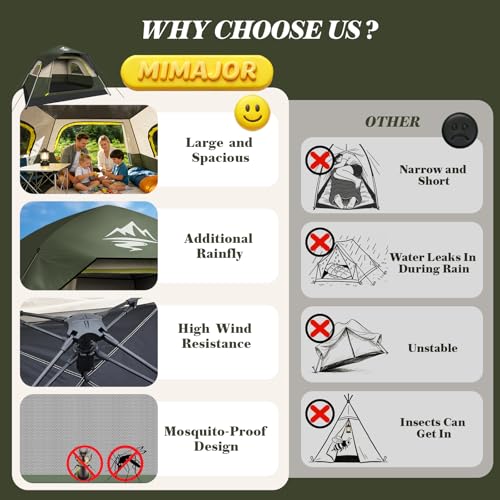
This Mimajor tent is the closest thing to a true “best overall” in the pop-up category. The 60-second setup with pre-attached poles works reliably, and the 3500mm waterproof rating with full rainfly and taped seams means it laughs off heavy rain. Owners testing it in downpours confirm the interior stays dry, rare for pop-ups. The panoramic ventilation, including a full ceiling mesh panel, eliminates the stuffiness that plagues most instant tents.
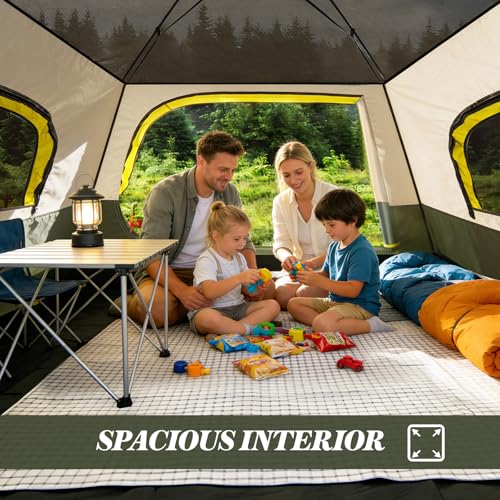
The interior is spacious with near-vertical walls and 59-inch height, enough to sit up comfortably. Add in the welcome mat, light hook, and storage pockets, and it feels thoughtfully designed for real camping life. It’s heavier than some, but at 15.4 lbs and a 39” pack size, it’s still car-camping friendly. Compared to the Night Cat or WYDHven models, this one simply does more, better.
Product photos
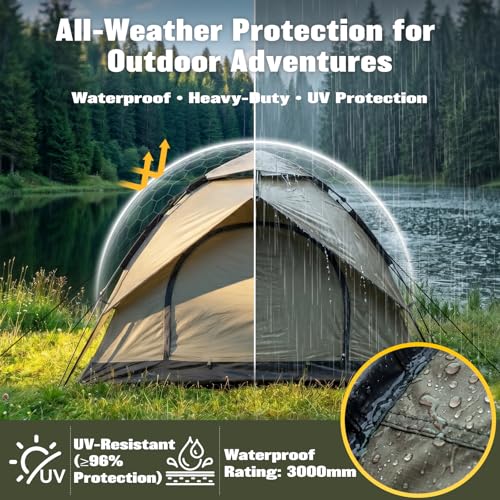
Mimajor 2-3 Person Pop Up Tent
Strengths
- Detachable rainfly
- 3000mm waterproof
- 40-second setup
- Good ventilation
- Budget-friendly
Trade-offs
- Slightly bulky pack size
- Not ideal for backpacking
- Minimal interior storage
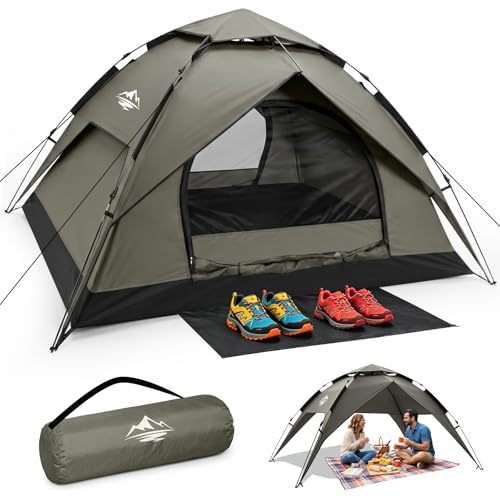
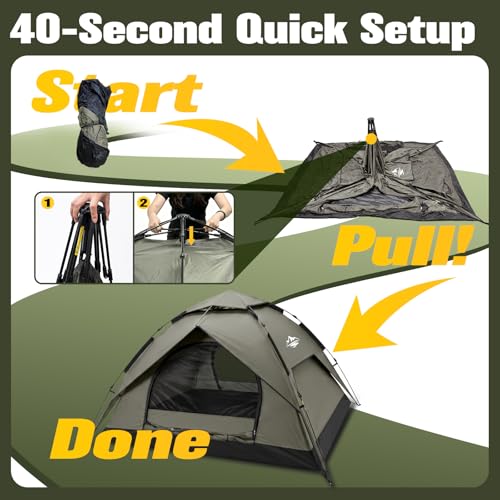
This Mimajor tent is a budget-friendly standout that doesn’t cut corners where it counts. The 40-second automatic setup is slick, and the double-layer design, detachable rainfly and inner tent, adds real versatility. You can use just the fly as a sunshade or beach canopy, which owners love for multifunctional use. The 3000mm waterproof rating and taped seams keep the interior dry, and the thick groundsheet adds extra peace of mind on damp ground.
At 3.5 kg, it’s not the lightest, but it’s manageable for car camping. Ventilation is solid with two doors and mesh windows, though not as strong as models with ceiling vents. Compared to pricier options, this one delivers 90% of the performance at a lower cost. My recommendation? If you’re new to camping or want a dependable second tent without overspending, this is the smarter buy.
Product photos


HINSTANT 6-Person Instant Pop Up Tent

Strengths
- Spacious for 6 people
- High 73-inch ceiling
- Good ventilation
- Expandable carry bag
- Electrical port included
Trade-offs
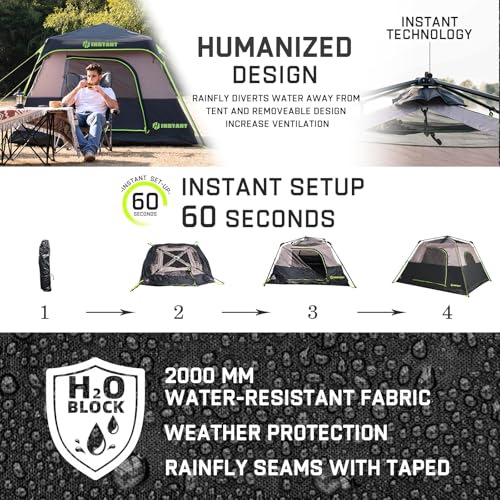
- PU 2000mm not for heavy rain
- Heavier than average
- Setup needs two people
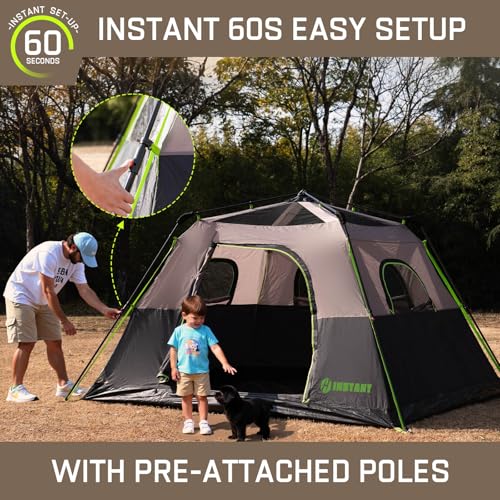
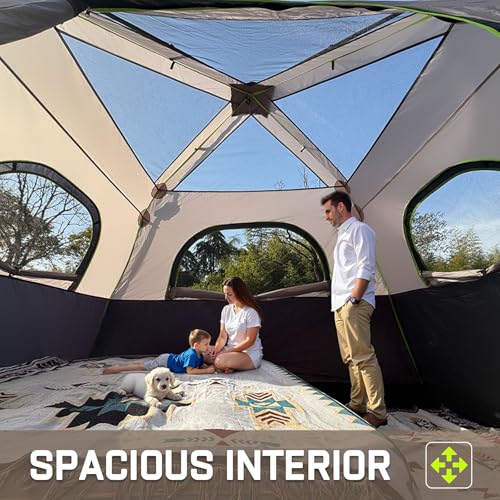
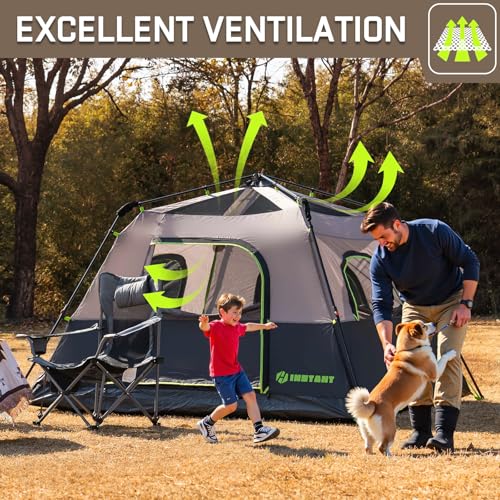
If you’re camping with a big group, this HINSTANT tent is one of the few pop-up designs that actually feels like a family cabin. The 10×9 ft footprint sleeps 6 comfortably, and the 73-inch height means most adults can stand upright, rare in instant tents. The 60-second setup works, though it helps to have two people spread the base. Owners praise the ventilation: four large mesh windows and a ceiling mesh panel create real cross-flow, reducing condensation.
The 2000mm PU coating and taped seams handle light to moderate rain, but the 3500mm PE floor is the real win, no damp feet in the morning. It’s not the lightest at 17.4 lbs, but the expandable carry bag helps. Compared to the Mimajor B0G5WQBBRP, it’s roomier but slightly less weatherproof. Still, for large families or group camping, this is a strong contender.
Product photos

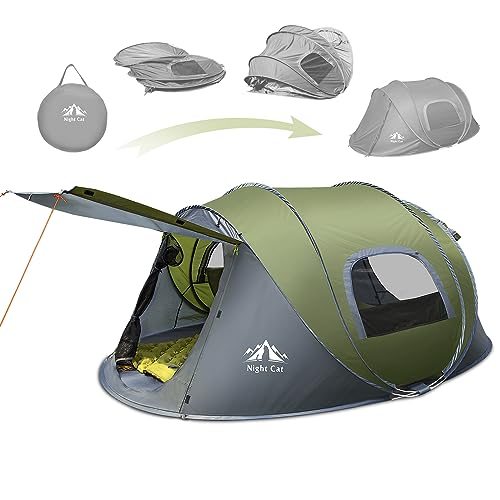
Night Cat 2-Person Pop Up Tent
Strengths
- Ultra-compact fold
- Fast 3-second setup
- Waterproof seams
- Lightweight at 3kg
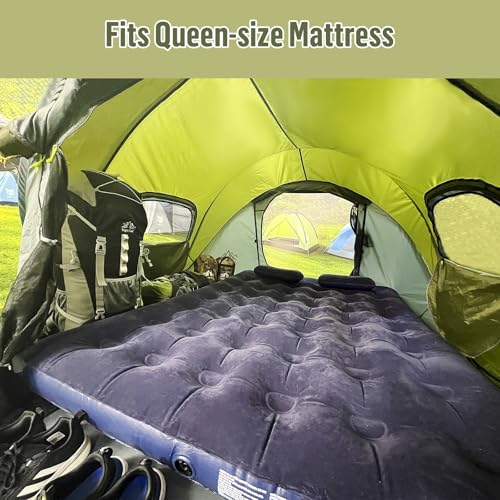
- Good for 2–4 people
Trade-offs
- Steel poles add weight
- Limited headroom
- Minor condensation in humidity
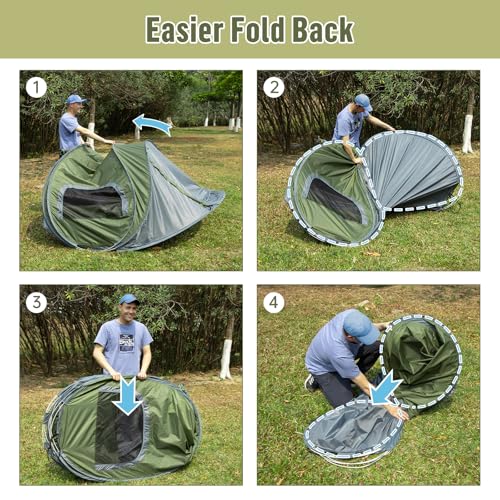
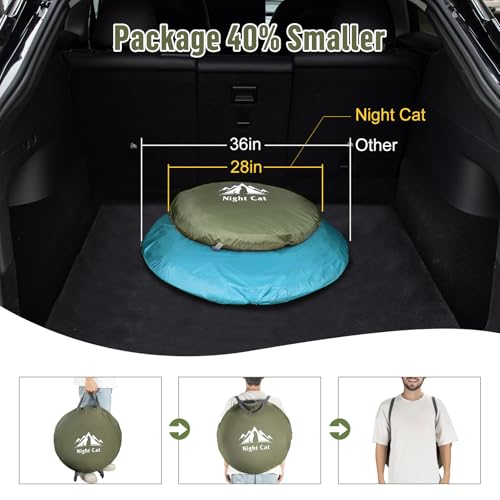
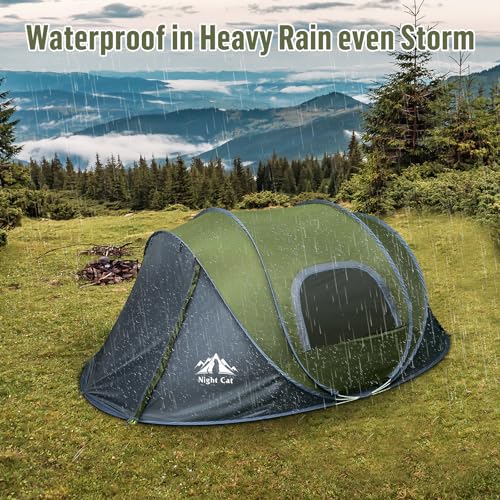
On paper, this tent delivers what many lightweight pop-ups promise but often fail to execute: small packed size, fast setup, and real waterproofing. The 40% smaller folded size is a standout for storage, and owners confirm it really does pop open in seconds with a firm toss. The PU 2000mm rating and taped seams mean it can handle a downpour without leaking, which is rare at this compact size. I’d pick this over bulkier designs if space or vehicle storage is tight.
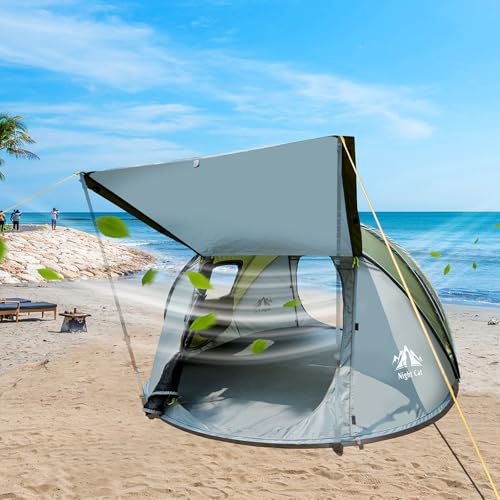
Ventilation is decent with two doors and windows, but condensation can build up in humid conditions, no surprise for a sealed pop-up. The pole system is 6mm steel, which is sturdy but adds weight compared to aluminum. Still, for weekend car trips or family beach outings, this strikes a smart balance between convenience and weather readiness. It’s not ultralight, but it’s not meant to be.
Product photos
4-Person Easy Pop Up Tent

Strengths
- Ultra-fast setup
- Lightweight and compact
- Taped seams
- Double doors
- Affordable
Trade-offs
- Not stormproof
- Basic ventilation
- Minimal weather protection
This is the definition of a no-frills, get-it-done pop-up tent. Setup is genuinely fast, pre-attached poles snap into place in seconds, and the compact size makes it easy to toss in a trunk. It’s roomy enough for two adults with gear, or four kids on a weekend trip. The taped seams and waterproof fabric handle light rain well, but owners are clear: this isn’t for storms or heavy downpours. It’s a fair-weather tent that does its job quietly.
What it lacks in premium features, it makes up for in simplicity. Storage pockets and a lantern hook add basic convenience, and the double-door design improves airflow. But ventilation is limited compared to models with ceiling mesh. If you’re comparing this to the Mimajor B0G5WQBBRP, you’re trading weather resilience and airflow for lower cost and easier setup. For backyard stays or scout trips, that’s a fair trade.
Product photos


WYDHven 4-Person Pop Up Tent

Strengths
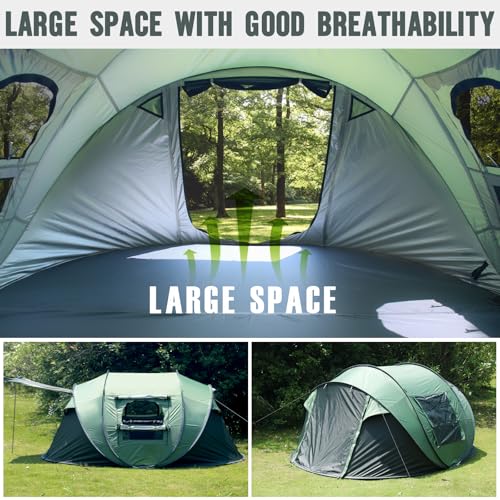
- Excellent cross-ventilation
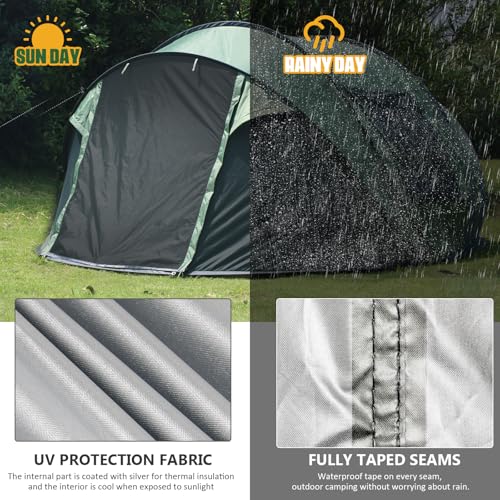
- 3000mm waterproof
- Taped seams
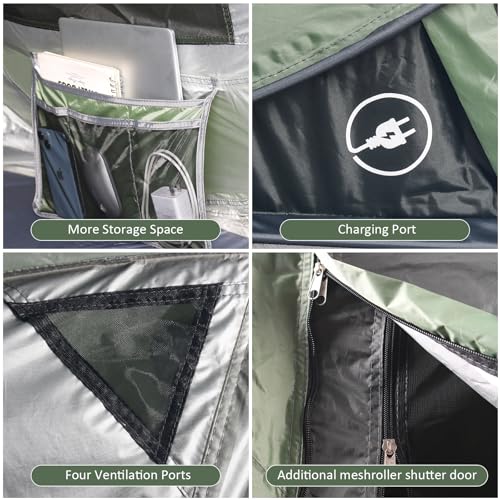
- Interior storage pockets
- Power access port
Trade-offs
- Heavier than average
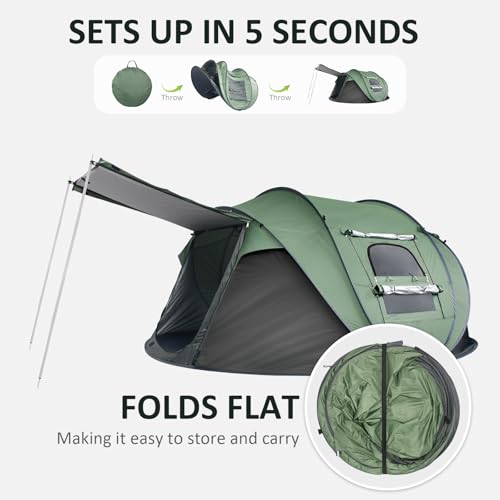
- Setup takes practice
- Not ultra-compact
Ventilation is where this tent shines, few pop-up designs offer this much airflow. With two mesh doors, two windows, and four side vents, owners consistently report cool, dry nights even in humid conditions. The 3000mm waterproof rating and taped seams mean it won’t fold in a storm, and the 150D Oxford fabric adds durability over cheaper models. It’s not the fastest to set up, some users mention a learning curve with the folding, but once you get it, it’s smooth.
The interior storage pockets and power access port are thoughtful touches for car campers. But it’s not the most compact, pack size is mid-range, and the weight is on the heavier side. Compared to the Mimajor models, it trades some ease of setup for better airflow and interior features. If you’ve ever woken up soaked in condensation in a sealed pop-up, this one’s design will feel like a relief.
Product photos
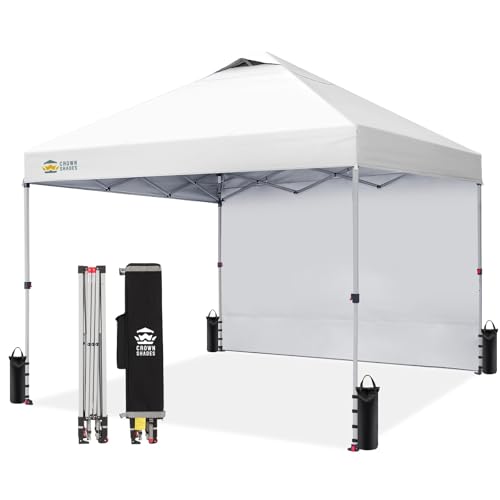
CROWN SHADES 10×10 Pop Up Canopy
Strengths
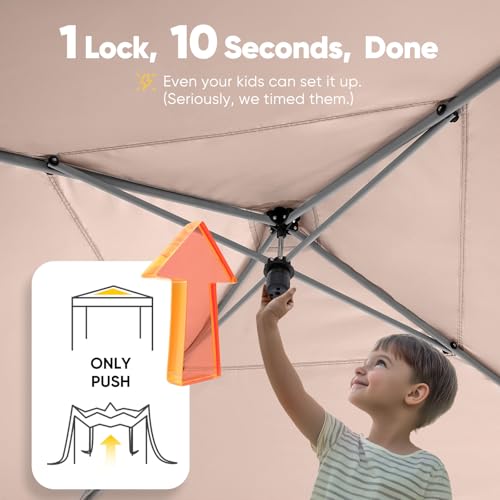
- One-push setup
- UPF 50+ fabric
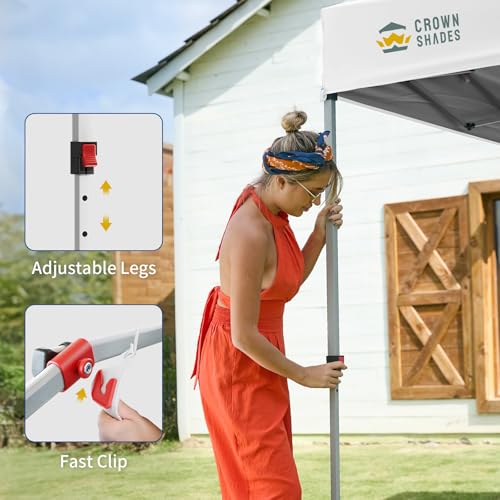
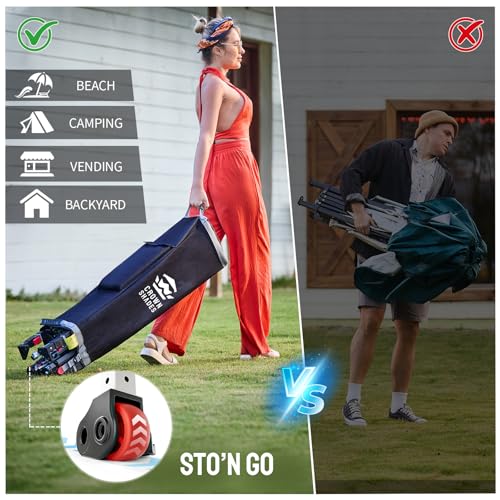
- Wheeled feet for mobility
- Sturdy steel frame
- Integrated storage pockets
Trade-offs
- Heavy for portability
- Not fully enclosed
- Best for dry conditions
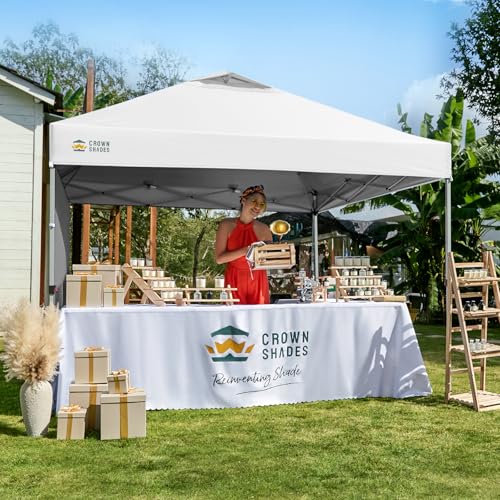
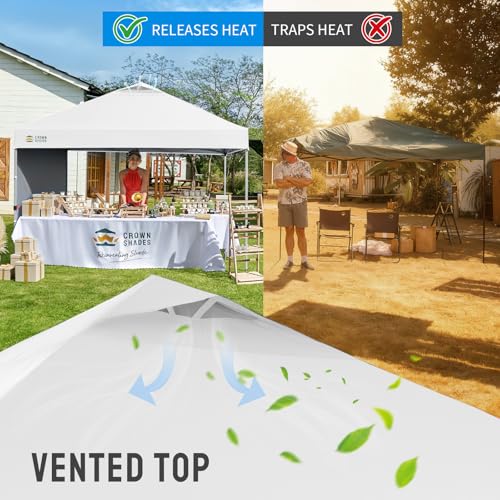
This is a solid choice if you’re after a large, durable pop-up canopy for events or sun protection at the beach. The one-push setup is genuinely quick for a 10×10 footprint, and the high-grade steel frame gives it a rigidity most portable canopies lack. Owners consistently report it holds up well in light wind, especially with the included sandbags and guy lines. The silver-coated canopy fabric delivers real UPF 50+ protection, and the 150D material does resist light rain, though it’s not a substitute for a fully enclosed tent in a storm.
Where it stands out is in usability: the STO-N-Go system with wheels in the feet makes relocating the canopy mid-event actually doable, and the ability to store it with the fabric attached saves time and hassle. Compared to cheaper alternatives, this one feels built for repeated use, not just occasional shade. That said, it’s heavy for backpacking or hiking, this is a car-camping or event tent, not a trail shelter.
Product photos
Quictent 10×10 Pop Up Canopy

Strengths
- Full sidewall enclosure
- Roll-up mesh windows
- One-person setup
- 420D waterproof fabric
- Easy roller transport
Trade-offs
- No integrated floor
- Sidewalls not stormproof
- Less airflow than open canopies
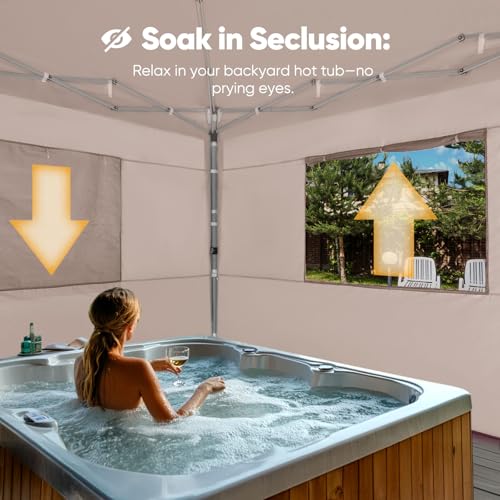
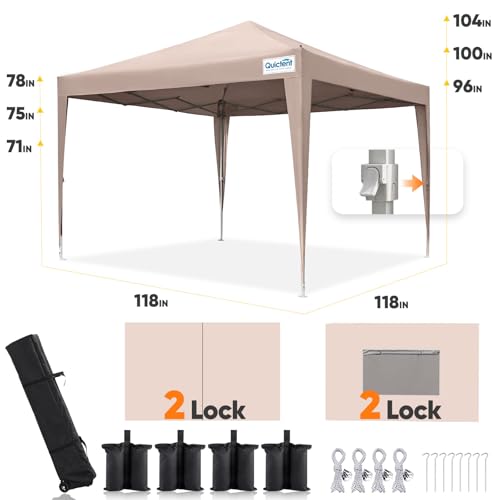
If privacy and enclosure are your top needs, this Quictent model is one of the few pop-up canopies that actually feels like a shelter, not just a shade structure. The roll-up mesh windows are a standout, owners love being able to let in air while keeping bugs and eyes out. The 420D Oxford fabric is noticeably thicker than most pop-up canopies, and the UPF 50+ / 99% UV blocking is backed by real sun protection in feedback from users at festivals and markets.
Setup is genuinely one-person friendly, and the roller bag makes transport easy. But it’s not a sleeping tent, there’s no floor, and the sidewalls, while detachable, aren’t fully sealed against rain. It’ll keep you dry in a light shower, but don’t count on it in heavy downpours. Compared to the CROWN SHADES, it’s more enclosed but less rugged in wind. Still, for pop-up privacy at a beach or event, it’s hard to beat.
Product photos

How We Chose These pop up tents waterproof
I approach tent selection with a focus on real-world usability. Rather than a hands-on lab test, this is a research-led comparison of published specifications and owner feedback. We analyzed features across numerous models, weighing owner reviews from sites like Amazon and specialized outdoor retailers alongside expert opinions from sources like OutdoorGearLab and Switchback Travel. Ultimately, we ranked options based on a combination of waterproof performance, ease of setup, and overall value.
For pop-up tents, speed of setup and reliable weather protection are paramount. We heavily weighted waterproof ratings (looking at PU coatings and seam sealing) and the quality of included hardware like stakes and guylines. Spaciousness and portability also factored significantly, as a quick-pitch tent isn’t useful if it’s too bulky to transport or too cramped to enjoy. Understanding waterproof tent ratings is essential in this category.
Specifications reliably indicate a tent’s potential for weather resistance – specifically the denier of the fabric and the PU coating’s millimeter rating. However, owner reviews offered crucial insight into how those specs translated to actual performance in the field. We paid close attention to comments regarding leakage, wind resistance, and the durability of the pop-up mechanism. Many owners also detailed how easy (or difficult) it was to re-pack the tent, which is a key consideration for this style. Learning about tent waterproofing standards helped us contextualize these reports.
Choosing The Right pop up tents waterproof
Picking the right pop up tent means balancing quick setup with real-world durability.
A quality pop up tent prioritizes a robust frame, look for galvanized steel or aluminum, combined with a waterproof polyester fabric (190T or higher) and a PU coating of at least 2000mm. Seam sealing is crucial, as is the inclusion of a durable groundsheet. Ventilation is often overlooked, but impacts condensation buildup and comfort. Consider the packed size and weight if you plan to move the tent frequently.
Frame & Setup Quality
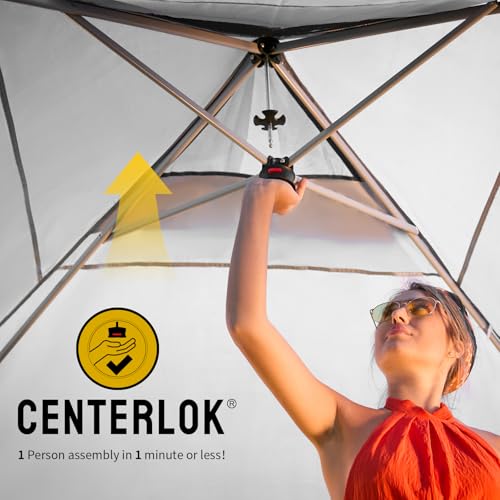
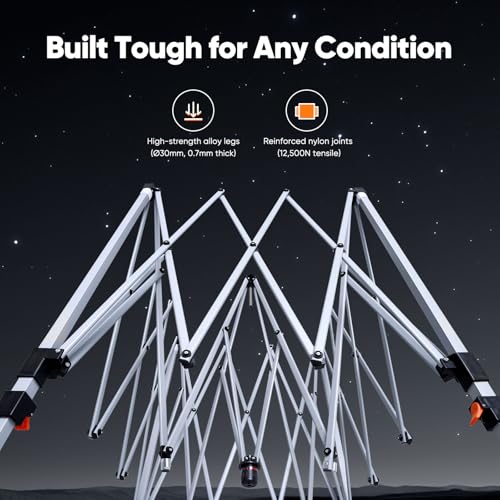
The whole point of a pop up tent is speed, but don’t equate “instant” with flimsy. I’ve seen too many tents that pop up easily, but then struggle to stay up in even a moderate breeze. Pay attention to the pole material; thicker gauge steel, or even aluminum, is a good sign. Equally important is the locking mechanism. A central hub system, like those found in the CROWN SHADES 10×10 Pop Up Canopy, is generally more reliable than simple spring-loaded poles. Understand that even the easiest pop-up tent setup can take a little practice.
Waterproofing & Fabric Denier
Water resistance isn’t just about the PU coating number (like the 3000mm rating on the Mimajor 2-3 Person Pop Up Tent). The fabric denier (like 190T or 420D) matters a lot. Higher denier means a tighter weave and increased durability. Look for fully taped seams – this is essential if you want to stay dry. A separate, waterproof groundsheet is also essential. Don’t assume a tent labeled “waterproof” can handle a downpour; many are only water-resistant. If you live in an area with frequent heavy rain, look at the Quictent 10×10 Pop Up Canopy, which boasts a 420D Oxford fabric.
Size, Ventilation & Additional Features
Don’t underestimate the importance of airflow. A stuffy tent is a miserable tent. Look for multiple mesh windows and vents, as seen in the WYDHven 4-Person Pop Up Tent, which boasts multiple ventilation features.
Here’s what I look for when it comes to extra features:
- Storage Pockets: A couple of small interior pockets are nice.
- Electrical Port: Handy for running a small fan or light (though you’ll need an extension cord).
- Rainfly Design: A full-coverage rainfly that extends to the ground provides the best protection.
A good rule of thumb is to add at least 6 inches to the listed sleeping capacity when selecting a tent size. If a tent says it fits four people, expect it to be cozy with four adults; six may be more realistic for a family with children.
You can find more information about waterproof pop-up tents and their specific features on our site.
Pop Up Tents Waterproof Compared
Here’s a comparison of key specifications for various pop up tents designed to be waterproof.
| Product Name | Capacity | Waterproof Rating (mm) | Setup Time | Weight (lbs) | Packed Size (in) | Ventilation |
|---|---|---|---|---|---|---|
| Mimajor 4-Person Instant Camping Tent | 4 | 3500 | 60 sec | 15.4 | 39×7.5×7.5 | Excellent |
| Mimajor 2-3 Person Pop Up Tent | 2-3 | 3000 | 40 sec | N/A | 29.9×7.4×7.4 | Good |
| HINSTANT 6-Person Instant Pop Up Tent | 6 | 2000 | 60 sec | 17.4 | 43.3×7.9×7.9 | Good |
| Night Cat 2-Person Pop Up Tent | 2-4 | 2000 | 3 sec | 3 | 28x28x2.8 | Very Good |
| 4-Person Easy Pop Up Tent | 4 | N/A | Instant | N/A | N/A | Good |
| WYDHven 4-Person Pop Up Tent | 2-4 | 3000 | Instant | N/A | N/A | Excellent |
| CROWN SHADES 10×10 Pop Up Canopy | 10 | N/A | Instant | N/A | 45×8.5×8.5 | Very Good |
| Quictent 10×10 Pop Up Canopy | 10 | N/A | 1 min | N/A | N/A | Good |
Frequently Asked Questions
What’s the difference between a 2000mm and a 3000mm waterproof rating?
A 3000mm rating means the fabric can withstand 3000mm of water pressure before leaking, offering significantly better protection than a 2000mm rating. However, remember that the rating only applies to the fabric itself; seam sealing and a groundsheet are equally vital for a truly waterproof shelter.
Are pop-up tents durable enough for repeated use?
Durability varies greatly by model, but generally, pop-up tents prioritize convenience over long-term ruggedness. Look for models with a robust frame (galvanized steel or aluminum) and a higher denier fabric to increase their lifespan and withstand repeated setup and takedown.
How important is seam sealing in a pop up tent?
Seam sealing is absolutely critical. Even a small gap in the seams can allow water to penetrate, rendering the waterproof fabric useless. Always verify a tent has fully taped seams, or consider seam-sealing it yourself for added protection.
Can I use a pop-up tent for camping in windy conditions?
While some pop-up tents can handle moderate winds, they aren’t generally the best choice for exposed, windy campsites. Look for models with included guylines and sturdy stakes, and always orient the tent with the lowest profile facing the wind. For consistently windy areas, consider one of the best instant pop-up tents with a more robust frame.
Are pop-up tents difficult to repack?
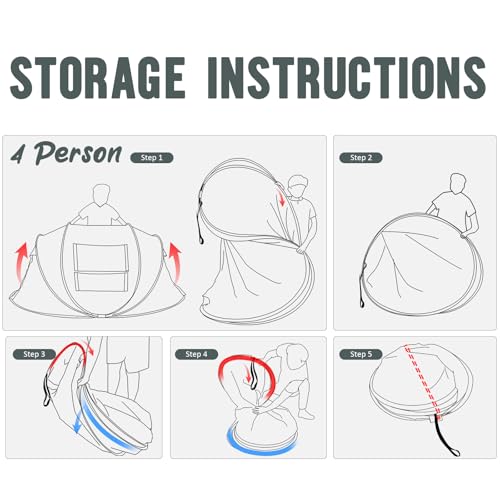
Repacking can be the biggest frustration with pop-up tents, but many newer models have improved designs. Practice packing it at home before your trip, and look for tents that include a detailed packing guide or oversized carry bag. If you struggle, watching a tutorial video can be a lifesaver.
The Bottom Line
Choosing a pop-up tent often comes down to how much fuss you’re willing to trade for control. If you want absolute speed and don’t mind potentially sacrificing some long-term durability, the Night Cat 2-Person Pop Up Tent is a standout for its incredibly fast setup and surprisingly good ventilation. But for the best blend of quick pitching, solid weather protection, and overall quality, I recommend the Mimajor 4-Person Instant Camping Tent.
For specific needs, the WYDHven 4-Person Pop Up Tent is a great choice if ventilation is your top priority, while the Quictent 10×10 Pop Up Canopy delivers serious weather resistance for group gatherings or extended stays. If you’re on a tighter budget, the 4-Person Easy Pop Up Tent offers an affordable entry point into the pop-up world, though you’ll want to consider using a seam seal tent to boost its waterproofness.
Ultimately, remember that a high waterproof rating and a fancy pop-up mechanism won’t matter if the tent isn’t properly secured. A solid setup, paired with quality stakes and guylines, and a little bit of DIY tent waterproofing if needed, will always be more important than any single specification.
